



Baby Food Market Size, Key Companies, Company Product Portfolio, Manufacturing Output, Raw Material Cost, Consumer Demand, Supply Chain Analysis, Company Market Share, and Competitive Landscape
Baby Food Market (By Category: Organic, Conventional; By Types: Milk Formula, Dried, Ready-to-Feed, Other; By Distribution Channel: Drugstores/ Pharmacies, Supermarkets/Hypermarkets, Convenience Store, Online Channels, Other Distribution Channels; By Ingredients: Fats and Oils, Lactose, Protein, Flour, Flavour Enhancer, Vitamins & Minerals, Others; By Formulation: Powder, Liquid; By Health Benefit: Brain & Eye Development, Muscular Growth, Bones & Teeth Development, Blood Enhancement, Nervous System, Vascular System, Body Energy, Other) - Global Industry Analysis, Size, Trends, Leading Companies, Regional Outlook, and Forecast 2026 to 2035.
Source: https://www.precedenceresearch.com/baby-food-market
 Get a Sample
 Table Of Content


What is Baby Food Market Size?
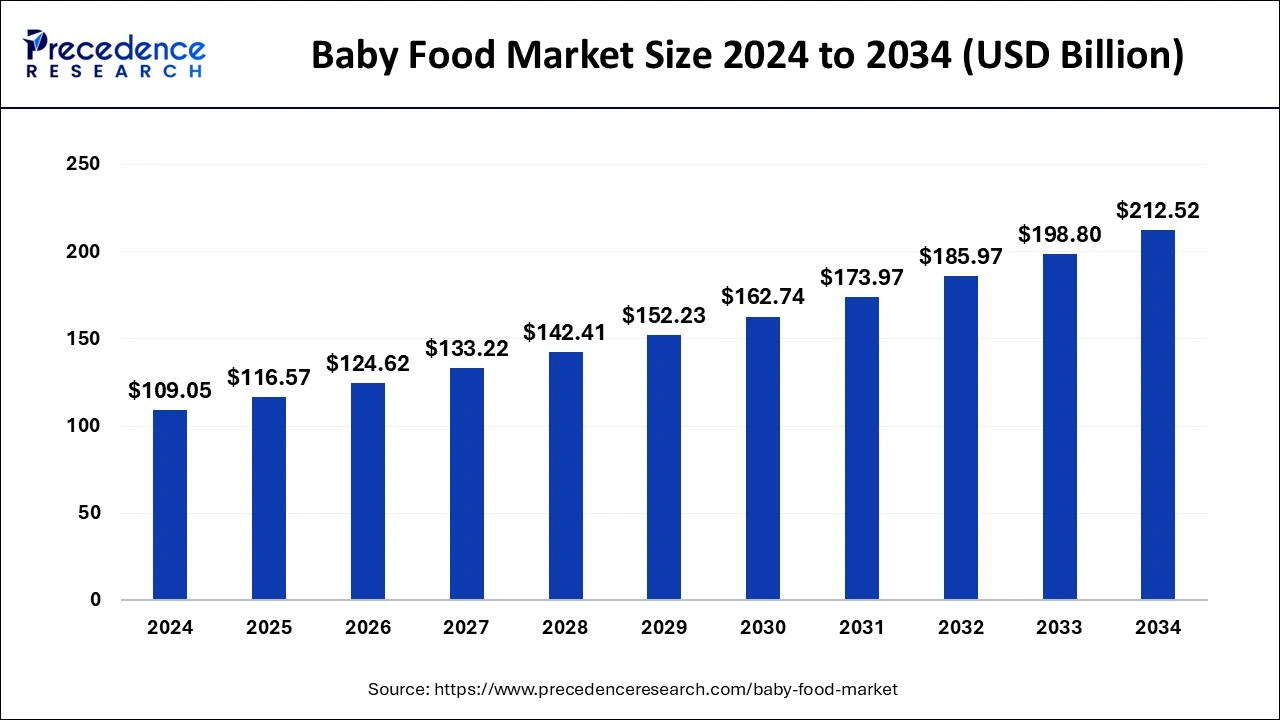
The global baby food market size is worth around USD 124.62 billion in 2026 and is anticipated to reach around USD 225.64 billion by 2035, growing at a CAGR of 6.83% from 2026 to 2035. This market is proliferating due to increasing awareness regarding the benefits of high-quality baby nutrition requirements.
Market Highlights
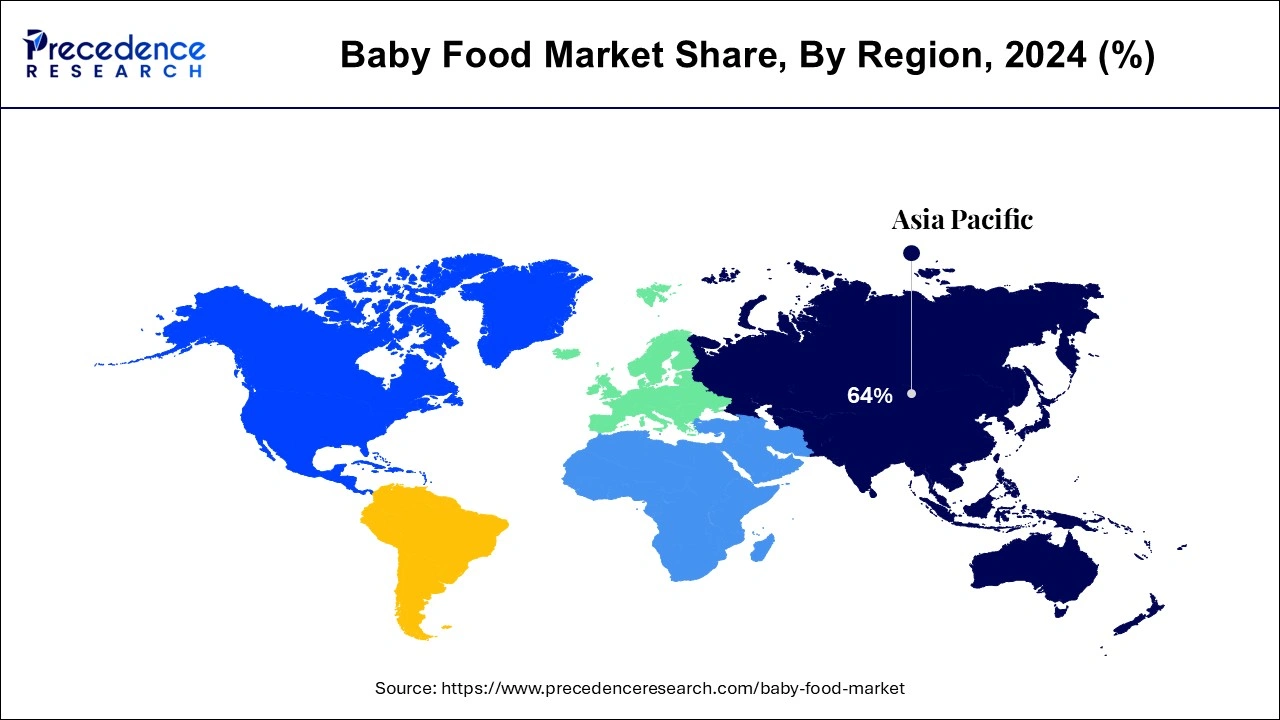
- Asia Pacific dominated the global market with the largest market share of 64% in 2025.
- North America is projected to expand at the notable CAGR during the forecast period.
- By type, the ready to eat segment has held the largest market share in 2025.
- By distribution channel, the hypermarket segment captured the biggest market share in 2025.
Market Overview
Baby food is any soft or easily consumed food other than breast milk, which is primarily intended for consumption by babies to provide necessary nutrients and energy essential for their growth. The demand for such products is evolving steadily in today's market landscape due to the rising numbers of working women, increasing parental concerns about infant nutrition, and time constraints on a global scale. Rising parental awareness regarding infant nutrition and the benefits of high-quality baby food products is also a significant driver propelling the market forward.
Several companies all over the world are focusing on new formulations and organic ingredients, pushing specialized formulations such as DHA-enhanced or prebiotic variants. The increasing demand for controlled nutrient-release systems has also led to increased investments and partnerships.
AI Integration in the Baby Food Market
With the integration of artificial intelligence in the baby food market there is a huge aspect of evolution. It helps to track the market issues associated with baby food and supports better formulation which can add extra benefits for the baby's development. It can detect any ingredient mismatch that can affect the market growth. AI influences market development by gathering consumer reviews that can help in better decision-making and identifying the quality of raw materials. It can detect nutritional benefits required for a baby and help to keep the quality intact. It can also help in developing personalized nutritional plans according to the requirements.
Baby Food Market Growth Factors
- A rising number of working women influence the baby food market to fulfil the nutrition requirements of the baby.
- The growing non-lactation problem influences the market players to develop enhanced quality baby food which results in the development of the market.
- The rising population also contributes profoundly to this market by raising the demand for baby food.
- Continuous enhancement of products by market players increases the reliability of the consumers which ultimately increases the demand of the market.
- Rising knowledge about its effect on the developing brain, nervous system, and muscles increases the usage of baby food.
Baby Food Market Trends
- Mandatory Labeling Requirements: Governments all over the world now require clear labeling of nutritional content, age suitability, and allergen warnings. Claims such as “organic,” “iron-fortified,” or “sugar-free” must be backed by compliance with official definitions and testing protocols.
- Health Consciousness: There is a growing trend among parents to prioritize health and nutrition for their children. This focus on organic ingredients reflects a desire to avoid harmful additives and chemicals, leading to increased demand for organic baby food.
- Sustainability Initiatives: Brands are increasingly adopting sustainable practices, such as eco-friendly packaging and responsible sourcing. This indicates a shift towards environmental consciousness among consumers, who prefer products that align with their values.
- E-commerce Growth: The rise of online shopping platforms is transforming how consumers access organic baby food. This suggests that convenience and accessibility are becoming key factors in purchasing decisions, allowing parents to explore a wider range of products.
Baby Food Market Outlook
- Industry Growth Overview: The market is expected to expand due to increasing awareness of infant nutrition and rising disposable incomes. Baby food encompasses infant formula, baby cereals, purees, snacks, and toddler milks specifically designed for children under the age of three. Although birth rates are declining in many regions, there is a notable increase in parental willingness to invest more resources per child, indicating a shift from volume-based growth to value-driven growth within this sector.
- Startup Ecosystem: There are currently 34 innovative baby food startups, such as Bobbie, Slurrp Farm, Else Nutrition, Cerebelly, and PlantBaby. Among these, 14 startups have secured funding, with five achieving Series A+ funding. India leads this emerging market with 14 companies, followed by the U.S. with 3 companies, and Canada with 3 companies. Over the past decade, an average of two new companies has entered this market annually.
- Major Investors: Key industry players such as Nestlé, Danone, Hain Celestial, Abbott Laboratories, and Hero Group are focusing on innovation and international expansion. Many local brands are diversifying their product ranges and enhancing their regional presence. For instance, Bebe Burp, a baby food brand from Mighty Steps Pvt Ltd, recently completed a Pre Series A funding round, raising ₹8 crore from the Gruhas Collective Consumer Fund.
Trade Analysis of the Baby Food
- Baby food is exported to more than 80 countries worldwide. Russia dominates the international baby food export market with 7,413 shipments, representing an impressive 28% market share. South Africa follows with 4,016 shipments, approximately 15%, while Poland ranks third with 3,629 shipments, accounting for roughly 14%.
- Uzbekistan, Turkey, and Lesotho collectively represent nearly 60% of global baby food imports. Uzbekistan leads this category with 8,348 shipments, holding around 30% of the market share, followed by Turkey with 4,594 shipments with approximately 17% share, and Lesotho with 3,828 shipments with 14% share.
Market Report Coverage and Key Metrics
| Report Coverage | Details |
| Market Size in 2025 | USD 116.57 Billion |
| Market Size in 2026 | USD 124.62 Billion |
| Market Size by 2035 | USD 225.64 Billion |
| Market Growth Rate from 2026 to 2035 | CAGR of 6.83% |
| Largest Market | Asia Pacific |
| Base Year | 2025 |
| Forecast Period | 2026 to 2035 |
| Segments Covered | Category, Types, Distribution Channel, Ingredients, Formulation, Health Benefit, and Region |
| Regions Covered | North America, Europe, Asia-Pacific, Latin America and Middle East & Africa |
Market Dynamics
Driver
Increasing Health Consciousness
An increasing shift towards health consciousness among parents is a key driver that is propelling the market forward. This trend is further being driven by a growing awareness of nutrition and the long-term health implications of early dietary choices. Parents are increasingly seeking products that are organic, free from artificial additives, and rich in essential nutrients. Recent reports indicate that the demand for organic baby food has surged, with a significant percentage of parents prioritizing organic options for their infants. This shift not only reflects a desire for healthier options but also highlights a broader societal trend towards wellness and preventive health measures.
Restraint
Shifting Preferences of Parents
Despite promising growth prospects, the market does have its fair share of challenges. One such challenge is the shifting preferences of parents and adherence to health recommendations. These factors are often influenced by various socio-economic and cultural factors. The transition from breast milk to solid foods is generally suggested at 6 months of age, and thus parents choose homemade foods as it is the most natural and hygienic method to provide fresh, tasty, and nutritious ingredients to their babies. This sudden shift may slow down market expansion.
Opportunity
Innovations and Technological Advancements
Innovations and technological advancements in the manufacturing and packaging industry have significantly changed the baby food market, opening up various opportunities. These innovations are also impacted by changing consumer preferences and continue to transform the baby food market. While launches are rapidly growing across all categories, infant foods or milk formulas are still prominent with new product innovations in terms of flavors and packaging. Furthermore, progress in pediatrics and nutritional science is helping producers to develop new baby formulas that can effectively meet the needs of growing infants.
Technological advancements are also playing a crucial role in shaping the market. Innovations in food processing and preservation techniques have now enabled manufacturers to enhance product quality while still maintaining nutritional integrity. Additionally, the integration of smart technology in production processes allows for better quality control and efficiency. This not only helps to reduce waste but also meets the rising consumer demand for transparency in food sourcing and production.
Segments Insights
Category Insights
Which Category Dominated the Baby Food Market?
The organic segment dominated the market in 2025. This is because organic baby food is of extremely good quality and has more nutritional value. Parents are always likely to prioritize their child's growth and are also willing to pay more if it means their child is getting all the nutritional benefits, thus leading to this segment's expansion.
The conventional segment is expected to grow at the fastest CAGR throughout the forecast period. The consumption of conventional products is increasing rapidly due to their easy availability and affordability. Moreover, conventional products require minimal investment in production as compared to organic products, which further helps to boost the production capacity.
Type Insights
Which Type Segment Led the Baby Food Market?
The ready-to-feed baby food segment led the market in 2025. This segment includes foods like porridge, purees, and squash, appealing to health-conscious parents looking for on-the-go organic options. As the number of working women is increasing in the economy across the world, this segment is expected to grow. Growth trends indicate a strong inclination towards convenient and portable options, further highlighted by the rapid rise of the snacks segment.
The dried segment is expected to grow rapidly during the forecast period. This particular segment includes cereals, fruits, and vegetables. This segment offers a balance of nutrition and convenience, appealing to parents' desire for quality while also being on the go. Factors driving this growth include an increase in dual-income households, heightened awareness of nutrition, and a preference for unprocessed food.
Distribution Channel Insights
Which Distribution Channel Dominated the Market in 2025?
The supermarkets/hypermarkets segment dominated the global market in 2025 due to its extensive reach and convenience for consumers. These stores provide a wide range of organic baby food products, thus attracting a significant number of shoppers looking for organic options in one-stop shopping environments. This segment also provides aggressive marketing and lucrative pricing schemes, which make it more popular.
The online channels segment is expected to witness the fastest growth during the forecast years, driven by convenience and a broader selection. The growth of online retail can be attributed to various factors such as the rising digital penetration, changing consumer shopping behaviors, and a significant increase in smartphone usage. This channel is appealing to tech-savvy parents who prioritize convenience and are seeking a broader array of baby food options.
Ingredients Insights
Why did the Fats and Oils Segment Dominate the Baby Food Market?
The fats and oils segment dominated the market in 2025. These are highly in demand as fats and oils contain high nutritional value essential for infants. Fats are an important source of energy and play a crucial role in the development of the brain. Healthy fats and oils are widely integrated in baby formulations to closely match the nutritional composition of breast milk. Rising demand for nutritionally complete baby food is expected to maintain this segment's market position.
The vitamins and minerals segment is expected to have the fastest CAGR throughout the forecast period. This is because vitamins and minerals play a vital role in cognitive development and immune support for infants. Their established presence is bolstered by extensive education among parents about the importance of vitamins like A, D, and C for infants' health.
Formulation Insights
Which Formulation Segment Held the Largest Market Share in 2025?
The powder segment held the largest baby food market share in 2025. The rising demand for powder formula is due to several reasons, such as convenience, nutritional balance, cost-effectiveness, accessibility, and others. These are easy-to-store and hassle-free products that require mixing with water or breast milk while using. This segment also helps fulfill all the nutrition required by the baby, and it can be created according to individual requirements.
The liquid segment is expected to witness rapid growth during the forecast period, primarily due to its affordability and versatility. It allows parents to customize servings according to their child's preferences, ensuring nutritional adequacy. This segment targets the growing trend of health awareness among caregivers and reflects changing lifestyles, with products designed to be both portable and wholesome.
Health Benefits Insights
Which Health Benefits Segment Dominated the Baby Food Market?
The brain and eye development segment dominated the market in 2025. This dominance is due to the growing demand for products and formulations that support healthy cognitive development and visual development during the infancy stage. Parents are increasingly looking for products that are fortified with nutrients like DHA, ARA, choline, iron, and lutein, which are essential for brain function and vision.
The nervous system segment is expected to have the fastest growth throughout the forecast period due to the increasing awareness of promoting healthy nerve development as well as developing the child's overall neurological functions. Ingredients like vitamin B, iodine, and omega-3 fatty acids are increasingly popular in this segment and have thus gained popularity amongst parents who are looking for complete nutritional support.
Regional Insights
Asia Pacific Baby Food Market Size and Growth 2026 to 2035
The Asia Pacific baby food market size is exhibited at USD 74.60 billion in 2025 and is projected to be worth around USD 145.83 billion by 2035, growing at a CAGR of 6.93% from 2026 to 2035
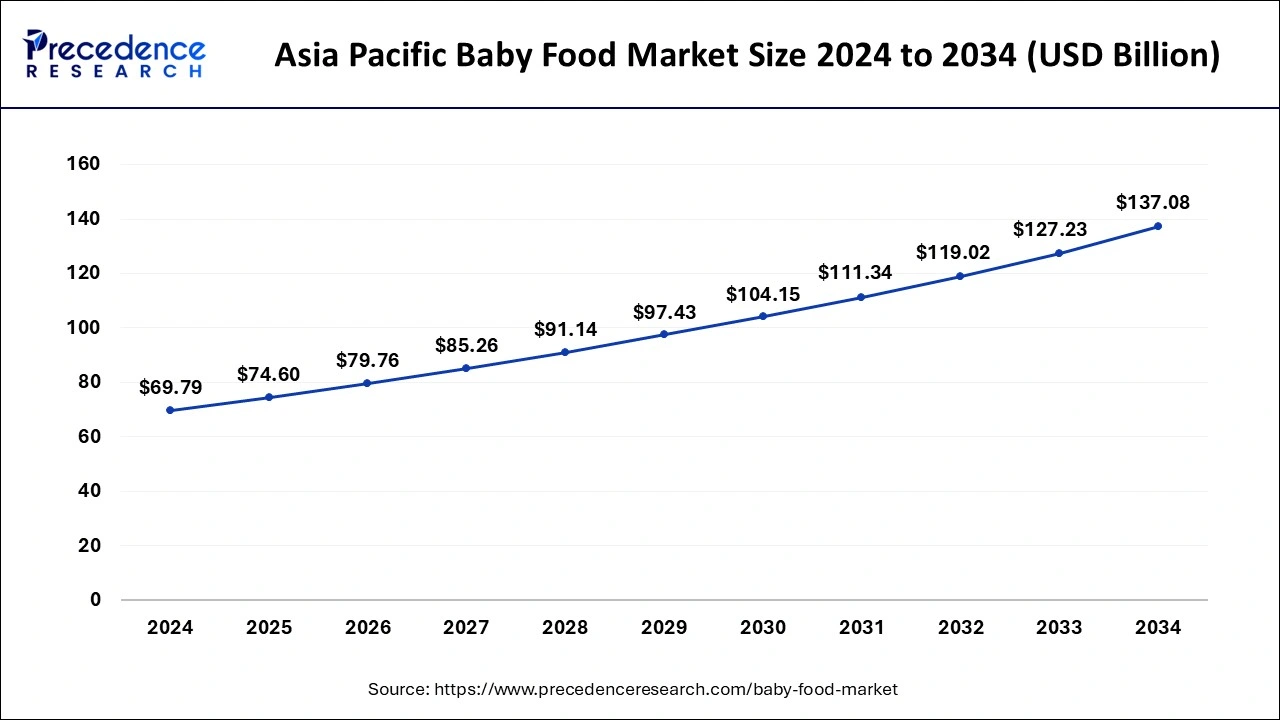
The Asia Pacific market had the largest revenue in the previous years and it is expected to exhibit promising gains during the forecast period. As there is an increase in the working women population and an awareness of various baby food products that provide the nutrition and ensure the health of the babies the market is expected to grow. Due to diverse distribution options and strong marketing channels, the market shall grow during the forecast.
China Baby Food Market Trends
In Asia Pacific, China led the marketplace in Asia owing to rapid urbanization, rising birth rates, and a surge in disposable incomes. Also, the sudden transition from a one-child policy to a three-child policy raises the potential consumer base for the market. Chinese parents have higher disposable income as compared to other countries in the region, which can be spent on organic, high-end, and safe infant food products.
What Potentiates the Market in Europe?
As a large number of raw material providers for the baby food are present in the European region. Stringent regulations and cutthroat competition among the manufacturers had led to a diversification in the product portfolio and an increase in the nutritional value of the food. The major players are actively engaged in mergers and acquisitions in order to provide a competitive edge. The global players also ensure partnership with the medium,small retailers or enterprise in order to provide the preferred baby food. Lot of revenue is spent on marketing and creating awareness regarding the products that these companies offer. So, the global food market is expected to grow during the forecast.
UK Baby Food Market Trends
In Europe, the UK dominated the marketplace in Europe for the year 2025 due to the growing parental awareness regarding organic nutrition along with the concerns regarding traditional food products. Moreover, an increasing preference for simple and transparent ingredients, free from pesticides and additives is boosting the demand for organic baby food.
What are the Advancements in the Baby Food Market in North America?
North America is considered a significant region in the baby food market. This is mainly due to rising parental awareness regarding infant nutrition and the benefits of high-quality baby food products. Parents are increasingly seeking healthy, safe, organic, and natural baby foods in order to ensure that their infants get optimal nutrition for adequate growth and development. Busy lifestyles have also increased the demand for convenient and ready-to-eat baby food options. Additionally, the increasing number of working mothers and the rise in dual-income households have fueled the demand for packaged baby food products.
U.S. Market Trends
The region's growth is driven by increasing health consciousness among parents, rising disposable incomes, and stringent regulations promoting organic products. The demand for organic baby food is further fueled by a growing preference for natural ingredients and transparency in food sourcing. Moreover, the rising standards of living and consumers' awareness regarding the benefits of infant products further contribute to the growth of this region.
What are the Key Trends in the Baby Food Market in Latin America?
Latin America is expected to experience an opportunistic rise in the market in the upcoming years. This growth is driven by factors such as a growing middle-class population and their increasing ability to afford premium baby food products. Rapid urbanization led to an increase in working mothers who prefer ready-to-feed baby food products due to time constraints. Health awareness is another significant factor, as parents are increasingly seeking natural and organic baby food options for their children. Additionally, the region is also witnessing the expansion of modern retail channels, including supermarkets and e-commerce, which have improved accessibility to baby food products.
Brazil Market Trends
The region's expansion is driven by increasing urbanization, rising disposable incomes, and a growing awareness of health and nutrition among parents. The market landscape features both international brands and local players, which helps in creating a dynamic market environment. Several market players are seen expanding their presence in the region, catering to the evolving preferences of parents seeking healthier options for their children.
How is the Middle East and Africa Region Growing in the Baby Food Market?
The Middle East & Africa (MEA) offers significant opportunities in the baby food market, driven by strong competition among global brands, local manufacturers, as well as organic and clean-label producers. Various companies in the region are actively investing in research and development to introduce new flavors, nutritional profiles, and convenient packaging formats. This growth and development are due to increasing urbanization efforts and a growing emphasis on early childhood nutrition. Regulatory agencies in the region are also playing a vital role by setting up stringent quality and safety standards, ensuring that products meet international norms.
Saudi Arabia Market Trends
The growth in this region is driven by increasing awareness of health and nutrition, coupled with rising disposable incomes. The market landscape is characterized by a growing number of startups and established market players, all of whom are focusing on quality and sustainability. As consumer preferences shift towards healthier options, the market is poised for significant growth in the coming years.
Value Chain Analysis
- Raw Material Sourcing : This stage involves procuring materials like milk, cereals, fruits, vegetables, and protein sources. These ingredients must meet high, stringent food safety and quality standards, as these are meant to be consumed by infants.
Key Players: Arla Foods, Cargill, Fonterra - Manufacturing Process: In this stage, manufacturers produce infant formulas, cereals, purees, snacks, and even ready-to-feed meal packs.
Key Players: Nestle, Danone, Abbott - Distribution Process; In this stage, baby food is sold through supermarkets, pharmacies, pediatric clinics, and even online platforms.
Key Players: Walmart, CVS Health, Walgreens
Market Competitive Landscape: Leading Companies and Strategies
The global baby food market is currently characterized by a dynamic competitive landscape, driven by increasing consumer demand for healthier, organic options for infants. Key players such as Nestle, Danone, and Hipp are strategically positioned to leverage this trend through innovation and regional expansion.
In terms of business tactics, market players are increasingly localizing manufacturing to reduce supply chain complexities and enhance responsiveness to market demands. The market structure appears to be moderately fragmented, with several players competing for market share, yet the influence of major market players remains substantial. This competitive structure allows for a diverse range of products, catering to diverse consumer preferences while also fostering innovation across the sector.
Baby Food Market Companies
- Nestlé (Gerber Products Company)
- Danone S.A.
- Reckitt Benckiser (Mead Johnson & Company, LLC)
- Abbott
- Feihe International Inc.
- Fries land Campina
- Bellamy's Organic
- Kraft Heinz
- HiPP GmbH & Co. Vertrieb KG
- Perrigo
- Arla Food
Recent Developments
- In August 2025, Nestle announced the launch of a new line of organic baby food products specifically designed for infants with dietary restrictions. This strategic move is indicative of Nestle's commitment to inclusivity and health, potentially capturing a niche market segment that has been underserved. By addressing specific dietary needs, Nestle not only broadens its consumer base but also reinforces its position as a leader in the organic baby food sector. (Source: https://www.nestle.com)
- In July 2025, Hipp expanded its distribution network in Asia by collaborating with local retailers to increase accessibility to its organic products. This strategic expansion not only enhances Hipp's market presence but also reflects a growing trend of international market players tapping into emerging markets. By localizing its distribution, Hipp is likely to gain a competitive advantage in regions where organic baby food demand is on the rise. (Source: https://www.hipp.com)
- In October 2024, Nestle India launched 14 variants of its baby food brand Cerelac without refined sugar. This development follows a global controversy regarding the company's practice of adding sugar to its baby food products in developing South Asian countries, including India. The company reports that it has decreased the added sugar content by 30% in its products over the past five years. (Source: https://www.business-standard.com)
- In August 2024, Happa Foods, a leading baby food start-up, announced its expansion into the global market, introducing its organic fruit and vegetable-based baby meals to six countries: Kuwait, Oman, Maldives, Kenya, Seychelles, and the UAE. This milestone marks Happa Foods as the first Indian brand to export baby puree, heralding a new era in the Indian baby food industry. (Source: https://www.zawya.com)
- In October 2024, Nestle announced the launch of Cerelac variants with zero refined sugar for the Indian market, putting to rest concerns about added sugar in the baby food product. According to the FMCG giant's exchange filing, the cereal-based product range will now include 21 variants, of which 14 will be free of refined sugar. (Source: https://www.business-standard.com)
- In August 2024, Today, M&S launched its first-ever baby club ‘The Parent Hood' exclusive to members of M&S' loyalty program, Sparks. As more families choose to shop at M&S; family shoppers +24% in Food and with an expanding customer base in Clothing & Home, this year, M&S is doubling down on its intent to continue to broaden its appeal for families. (Source: https://corporate.marksandspencer.com)
- In August 2024, Happa Foods announced the launch of its baby food start-up. It is considered the first baby food in India to export baby puree.
- In October 2024, Nestle announced the launch of ‘no refined sugar' cerelac for infants.
Segments Covered in the Report
By Category
- Organic
- Conventional
By Types
- Milk Formula
- Dried
- Ready-to-Feed
- Other
By Distribution Channel
- Drugstores/ Pharmacies
- Supermarkets/Hypermarkets
- Convenience Store
- Online Channels
- Other Distribution Channels
By Ingredients
- Fats and Oils
- Lactose
- Protein
- Flour
- Flavour Enhancer
- Vitamins & Minerals
- Others
By Formulation
- Powder
- Liquid
By Health Benefit
- Brain & Eye Development
- Muscular Growth
- Bones & Teeth Development
- Blood Enhancement
- Nervous System
- Vascular System
- Body Energy
- Other
By Region
- North America
- Latin America
- Europe
- Asia-pacific
- Middle and East Africa
For inquiries regarding discounts, bulk purchases, or customization requests, please contact us at sales@precedenceresearch.com
Frequently Asked Questions
Tags





Ask For Sample
No cookie-cutter, only authentic analysis – take the 1st step to become a Precedence Research client
 Get a Sample




 sales@precedenceresearch.com
 Schedule a Meeting
