


Blood Pressure Monitoring Devices Market Trends, Leading Companies, Company Revenue / Sales Performance, Procedure Volume, Healthcare Spending, Technology Adoption, Reimbursement Analysis, Competitive Landscape, and Growth Outlook
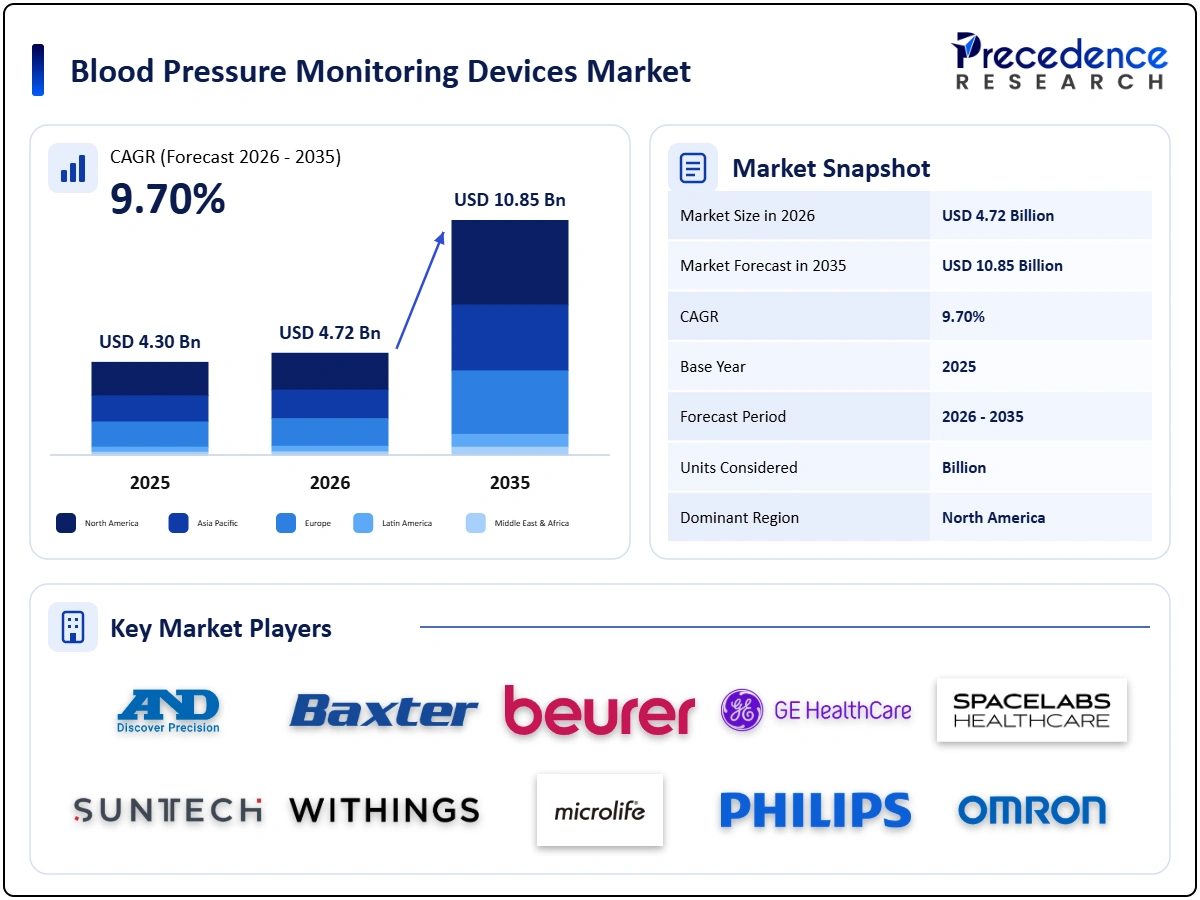
Payal Rabde, a Healthcare Industry Expert, highlights that the blood pressure monitoring devices market has reached USD 4.72 billion in 2026 and is on track to reach USD 10.85 billion by 2035, advancing at a CAGR of 9.7%. Key blood pressure monitoring devices market companies shaping the market include Omron Healthcare, Baxter (Welch Allyn), A&D Company, while major growth segments span product, connectivity, end use and region.
Source: https://www.precedenceresearch.com/blood-pressure-monitoring-devices-market
 Get a Sample
 Table Of Content
Key Takeaways
Market Size & Growth Outlook
- Market size in 2025: USD 4.30 billion
- Estimated market size in 2026: USD 4.72 billion
- Projected market size by 2035: USD 10.85 billion
- CAGR (2026-2035): 9.7%
Regional Market Spotlight
- North America led the market with a 36% share, equivalent to USD 1.55 billion in 2025.
- In 2025, Asia Pacific accounted for 28% of the market, valued at USD 1.20 billion. From 2025 to 2035, the region is projected to register a CAGR of 11.24%, making Asia Pacific the fastest-growing regional market.
- Europe accounted for 27% of the market, worth USD 1.16 billion in 2025.
Segmental Spotlight
- By product, digital blood pressure monitors held the largest share in 2025, at 58%, worth USD 2.49 billion.
- By connectivity, non-connected devices accounted for the largest share in 2025, at 62%, valued at USD 2.67 billion.
- By end use, homecare held the largest share in 2025, at 48%, equivalent to USD 2.06 billion.
Blood Pressure Monitoring Devices Market Size and Forecast, 2025-2035 (USD Billion)
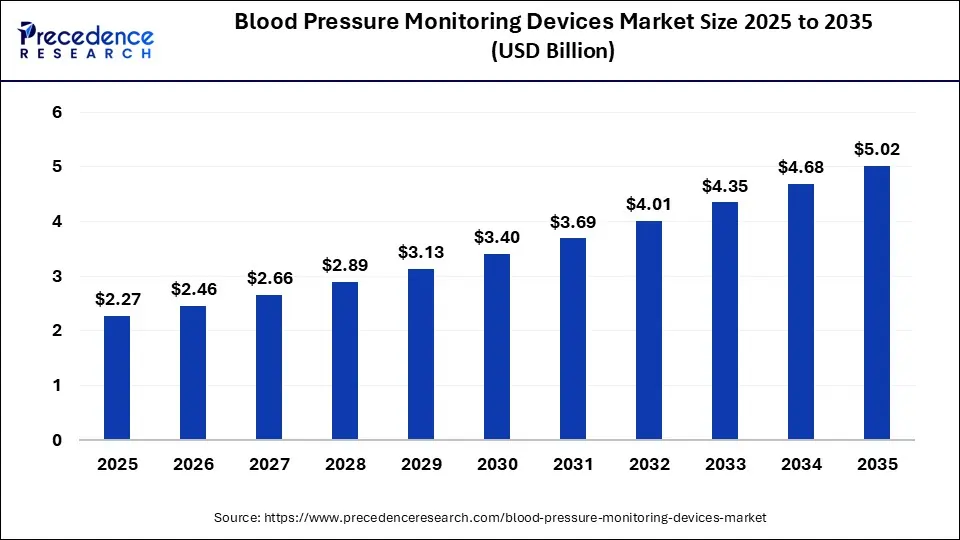
Note: 2025 is the base year; 2026-2035 values are forecasts.
Sources: Expert interviews, secondary sources, Precedence Research database, and Precedence Research analysts.
The blood pressure monitoring devices market is projected to increase from USD 4.30 billion in 2025 to USD 10.85 billion by 2035, driven by the growing global prevalence of hypertension, ageing populations, and increasing adoption of home-based and ambulatory blood pressure monitoring solutions.
Rising demand for remote patient monitoring, smartphone-connected devices, and wearable blood pressure technologies is supporting market expansion. Growing reimbursement for remote monitoring programmes and advancements in cuffless monitoring technologies are expected to support market growth to USD 6.83 billion by 2030, with a CAGR of 9.70% from 2026 to 2035.
Analyst View: Our market estimates are based on unit sales of blood pressure monitoring devices across product categories, connectivity types, end-use settings, and geographic regions, multiplied by their respective average selling prices. The methodology accounts for demand across affordable home monitors, hospital-grade equipment, and ambulatory monitoring systems. Unit sales are assessed using hypertension prevalence, device replacement cycles, hospital procurement, and remote patient monitoring adoption. We cross-checked the estimates against revenues reported by leading device manufacturers and published market assessments.
Market Trends
- Advancements in wearable technology are supporting the development of wrist-worn and other cuffless monitoring solutions that track blood pressure-related trends during daily activities.
- Healthcare providers are adopting remote patient monitoring programs to monitor blood pressure, improve treatment adherence, and support long-term hypertension management.
- Growing demand for Bluetooth- and Wi-Fi-enabled blood pressure monitors is allowing users to transfer readings to smartphone apps and share health information with healthcare professionals.
- AI-enabled digital health platforms can analyze longitudinal blood pressure readings, identify changes in measurement patterns, and support risk stratification and personalized hypertension management.
- Wider access to clinically validated blood pressure monitors through pharmacies is enhancing consumer access to home monitoring solutions.
- Growing clinical attention to nighttime blood pressure patterns is supporting demand for ambulatory blood pressure monitoring, while wearable technologies are emerging as an additional approach to tracking longer-term trends.
Blood Pressure Monitoring Devices Market Drivers, Restraints, and Opportunities
Driver
The increasing global prevalence of hypertension is driving the demand for BP monitoring devices. Growing awareness of cardiovascular diseases and clinical recommendations for regular home blood pressure monitoring are encouraging device adoption. Ageing patient populations, expanding healthcare infrastructure, and reimbursement pathways for eligible remote patient monitoring services, particularly in the U.S., are supporting the adoption of connected blood pressure monitoring solutions. Additionally, connected devices improve the accessibility of blood pressure readings and support continuous communication between patients and healthcare providers.
Restraint
Accuracy, clinical validation, and regulatory authorization remain important challenges in the blood pressure monitoring devices market, particularly for emerging cuffless technologies. Some products require periodic calibration against conventional cuff-based measurements, while others are marketed for general wellness rather than medical diagnosis. Concerns regarding measurement reliability, patient data privacy, cybersecurity, and price competition may also constrain adoption, particularly among healthcare providers operating under limited procurement budgets.
Opportunity
The development of cuffless wearable monitors presents significant opportunities for manufacturers seeking to expand beyond traditional blood pressure measurement devices.
Increasing adoption of remote patient monitoring services, integration with smartwatches, and growing home healthcare demand across Asia Pacific are expected to create additional revenue prospects. Furthermore, pharmacy-based hypertension screening programmes and the integration of connected monitors with digital healthcare platforms could support broader market penetration.
Blood Pressure Monitoring Devices Market Segmentation: 2025 Share and Size
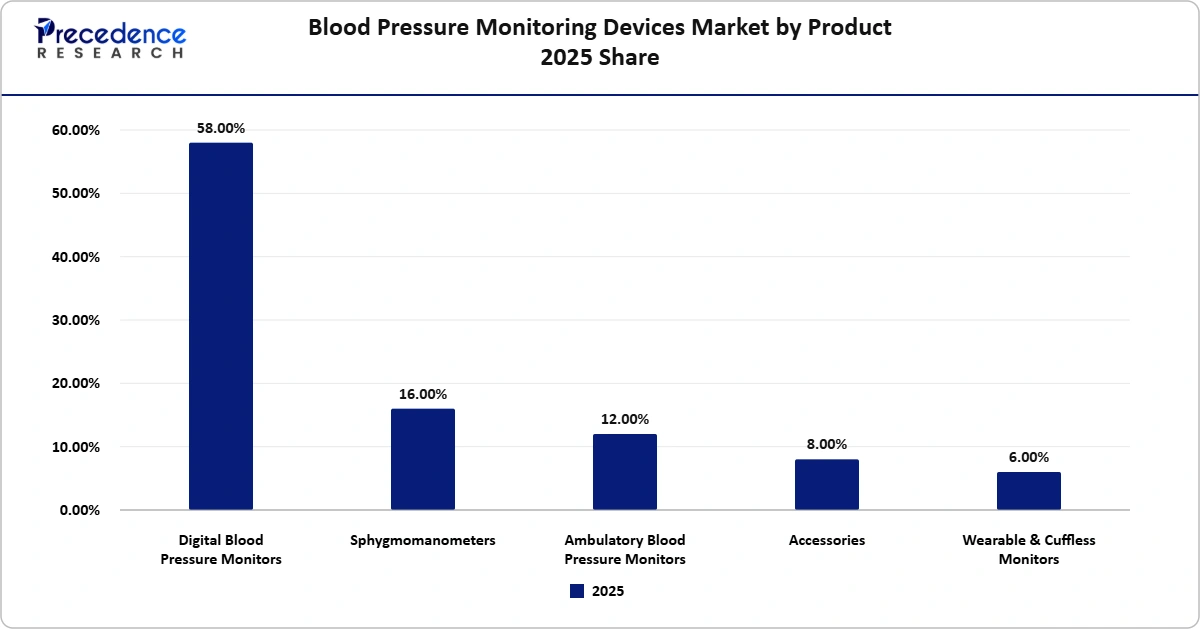
Blood Pressure Monitoring Devices Market By Product 2025 Share & Size
Note: 2025 is the base year; 2035 values are forecasts.
Sources: Expert interviews, secondary sources, Precedence Research database and Precedence Research analysts.
In 2025, digital blood pressure monitors dominated the market, accounting for 58% of the market, valued at USD 2.49 billion. Sphygmomanometers followed with a 16% share,
equivalent to USD 0.69 billion, while ambulatory blood pressure monitors accounted for 12%, valued at USD 0.52 billion. Accessories captured 8% of the market, worth USD 0.34 billion, whereas wearable and cuffless monitors accounted for the remaining 6%, valued at USD 0.26 billion. Although digital monitors represent the largest product segment, wearable and cuffless monitors are expected to register the fastest growth in the forecast period.
Digital Blood Pressure Monitors dominated the market with a 58% share, valued at USD 2.49 billion in 2025. These devices, including automatic upper-arm and wrist monitors, are popular for home monitoring due to their affordability, ease of use, and clinical validation. Healthcare professionals recommend these devices for hypertension diagnosis and management, solidifying their dominance in the market.
Sphygmomanometers accounted for 16% of the market, equivalent to USD 0.69 billion in 2025. These devices include aneroid and mercury-free manual blood pressure monitors commonly used by physicians, nurses, and other healthcare professionals. Their continued use in hospitals, clinics, and primary healthcare settings supports constant market demand.
Ambulatory Blood Pressure Monitors captured 12% of the market, valued at USD 0.52 billion in 2025, and are anticipated to reach USD 1.27 billion by 2035, recording a CAGR of 9.47%. These devices automatically record blood pressure readings over 24 hours or longer, allowing healthcare professionals to assess blood pressure variations throughout daily activities and sleep. Growth of these devices is driven by their role in confirming hypertension, identifying white-coat and masked hypertension, and assessing treatment effectiveness.
Blood Pressure Monitoring Devices Market By Connectivity 2025 Share & Size
| Segments | 2025 Share | 2025 Value (USD Billion) | 2035 Value (USD Billion) | CAGR 2026-2035 |
| Non-Connected | 62.00% | 2.67 | 5.79 | 8.07% |
| Connected | 38.00% | 1.63 | 5.06 | 11.97% |
Note: 2025 is the base year; 2035 values are forecasts.
Sources: Expert interviews, secondary sources, Precedence Research database and Precedence Research analysts.
In 2025, non-connected blood pressure monitoring devices dominated the connectivity segment, accounting for 62% of the market, valued at USD 2.67 billion. Connected devices represented the remaining 38%, equivalent to USD 1.63 billion. Although non-connected devices hold the largest market share, connected monitors are expected to experience faster growth during the forecast period, supported by increasing digital healthcare adoption and remote patient monitoring.
Non-Connected Devices accounted for 62% of the market, worth USD 2.67 billion in 2025, and are projected to reach USD 5.79 billion by 2035, growing at a CAGR of 8.07%. These devices are popular due to their low cost, ease of use, and availability in both homecare and clinical settings. Many traditional digital monitors store readings on the device itself without needing wireless transmission, making them appealing to cost-conscious consumers and healthcare facilities.
Connected Devices captured 38% of the market, equivalent to USD 1.63 billion in 2025, and are anticipated to reach USD 5.06 billion by 2035, expanding at a CAGR of 11.97%. These devices utilize Bluetooth or Wi-Fi to transfer blood pressure readings to smartphones, cloud platforms, and healthcare providers. The rise in remote patient monitoring and digital health applications is driving demand, with their capacity for longitudinal tracking and improved patient-clinician communication enhancing growth.
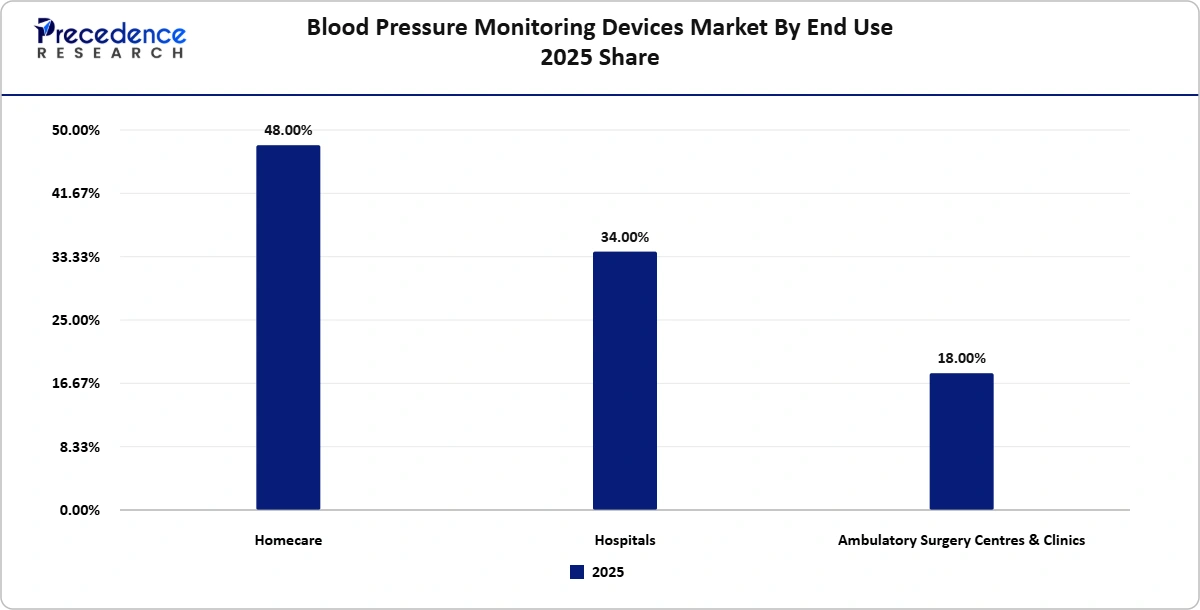
Blood Pressure Monitoring Devices Market By End Use 2025 Share & Size
Note: 2025 is the base year; 2035 values are forecasts.
Sources: Expert interviews, secondary sources, Precedence Research database and Precedence Research analysts.
In 2025, homecare emerged as the leading end-use segment, accounting for 48% of the market, valued at USD 2.06 billion. Hospitals followed with a 34% share, equivalent to USD 1.46 billion, while ambulatory surgery centres and clinics accounted for 18%, valued at USD 0.77 billion.
The homecare segment led the end-use market with USD 2.06 billion in 2025, accounting for 48% of global revenue. Rising hypertension prevalence and clinical recommendations for regular blood pressure monitoring at home drive demand for digital monitoring devices. Wider availability of affordable, smartphone-connected monitors and the expansion of home healthcare services further support segment growth.
Hospitals accounted for 34% of the market, valued at USD 1.46 billion in 2025, and are expected to reach USD 3.70 billion by 2035, registering a CAGR of 9.74%. Hospitals use a wide range of blood pressure monitoring equipment, including digital monitors, sphygmomanometers, and ambulatory monitoring systems, across inpatient wards, emergency departments, and outpatient clinics. Increasing patient admissions, cardiovascular disease management requirements, and investments in hospital monitoring infrastructure are sustaining demand.
Ambulatory Surgery Centres and Clinics held the remaining 18% of the market, valued at USD 0.77 billion in 2025. This segment is expected to grow comparatively faster as healthcare delivery increasingly shifts toward outpatient settings. Clinics and ambulatory surgery centres are adopting automated blood pressure measurement systems to improve patient assessment, streamline clinical workflows, and support routine hypertension screening.
Analyst View: Digital blood pressure monitors, non-connected devices, and homecare applications account for the largest portions of the market because of their established adoption and affordability. Our analysis indicates that connected devices, wearable and cuffless monitors, and outpatient healthcare facilities will gain market share during the forecast period. Demand for remote monitoring, advances in wearable technologies, and increasing integration of digital health platforms are expected to influence growth in the future.
Regional Analysis of Blood Pressure Monitoring Devices Market
Blood Pressure Monitoring Devices Market By Region 2025 Share & Size
Note: 2025 is the base year; 2035 values are forecasts.
Sources: Expert interviews, secondary sources, Precedence Research database and Precedence Research analysts.
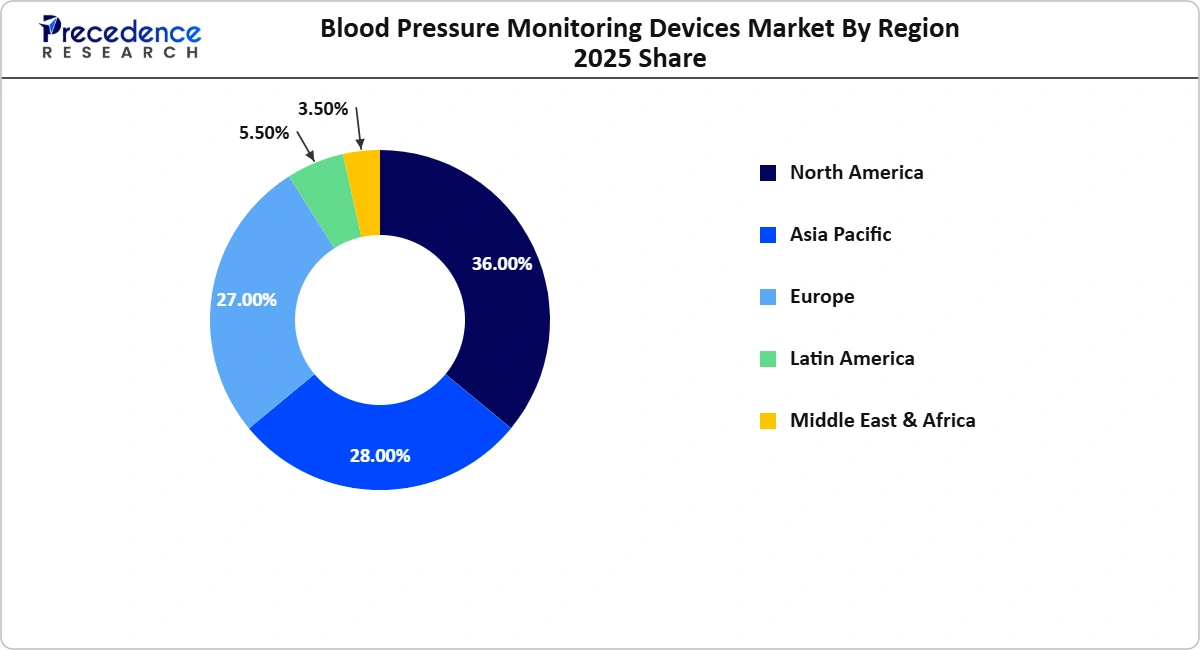
In 2025, North America dominated the global blood pressure monitoring devices market, accounting for 36% of the total market, valued at USD 1.55 billion. Asia Pacific followed with a 28% share, equivalent to USD 1.20 billion, while Europe represented 27%, valued at USD 1.16 billion. Latin America accounted for 5.5% of the market, worth USD 0.24 billion, whereas the Middle East and Africa held the remaining 3.5% of the market, valued at USD 0.15 billion.
North America led the market with USD 1.55 billion in 2025, accounting for 36% of global revenue. The region's strong position reflects the high prevalence of hypertension, growing adoption of home blood pressure monitoring, and well-established healthcare infrastructure. Reimbursement support for remote patient monitoring in the U.S., along with the presence of leading medical device manufacturers and digital health companies, further drives market growth.
Asia Pacific accounted for 28% of the market, equivalent to USD 1.20 billion in 2025, and is expected to reach USD 3.49 billion by 2035, recording the fastest CAGR of 11.24%. The region's growth is driven by the substantial population affected by hypertension in China and India, ageing populations in Japan and South Korea, and increasing awareness of cardiovascular health. Growing healthcare expenditure, easy access to affordable home monitoring devices, and the presence of manufacturers such as Omron, A&D, and Chinese medical device companies are supporting adoption in the region.
Europe represented 27% of the market, valued at USD 1.16 billion in 2025. Europe has strong healthcare systems, effective blood pressure screening, and high awareness of hypertension management. Medical device manufacturers like Microlife, Beurer, and Withings, along with growing digital healthcare initiatives, are advancing the use of modern monitoring solutions.
Latin America captured 5.5% of the market, equivalent to USD 0.24 billion in 2025. Rising awareness of hypertension and cardiovascular diseases, improved healthcare access, and increased sales of home blood pressure monitors are supporting market growth in regions such as Brazil and Mexico.
The Middle East and Africa accounted for 3.5% of the market, valued at USD 0.15 billion in 2025. The market expansion in the region is driven by high hypertension rates, rising healthcare investments, and better diagnostic infrastructure. Increased use of home monitoring devices and healthcare facility investments, especially in Gulf countries, are anticipated to provide growth opportunities.
Analyst View: North America maintains its leading position in the market, supported by established healthcare infrastructure, widespread home monitoring adoption, and reimbursement opportunities for eligible remote patient monitoring services. We expect Asia Pacific to record the fastest growth through 2035, driven by its large hypertension patient population, rising healthcare awareness, expanding medical device manufacturing capabilities, and increasing affordability of home monitoring solutions. The growing adoption of connected devices and wearable technologies is expected to create additional opportunities across both developed and emerging regional markets.
Competitive LandscapeTop
Top 10 Companies in the Blood Pressure Monitoring Devices Market, 2025
| Rank | Company Name | Market-Specific Revenue (USD Billion) | 2025 Share | Key Products / Business | Headquarters |
| 1 | Omron Healthcare | 1.05 | 24.42% | Home blood pressure monitors | Japan |
| 2 | Baxter (Welch Allyn) | 0.2 | 4.65% | Clinical blood pressure devices | United States |
| 3 | A&D Company | 0.18 | 4.19% | Home and clinical blood pressure monitors | Japan |
| 4 | Microlife | 0.16 | 3.72% | Home blood pressure monitors | Switzerland |
| 5 | Beurer | 0.12 | 2.79% | Home blood pressure monitors | Germany |
| 6 | Philips | 0.1 | 2.33% | Patient monitoring blood pressure | Netherlands |
| 7 | GE HealthCare | 0.1 | 2.33% | Patient monitoring blood pressure | United States |
| 8 | Withings | 0.08 | 1.86% | Connected blood pressure monitors | France |
| 9 | Spacelabs Healthcare | 0.07 | 1.63% | Ambulatory blood pressure monitors | United States |
| 10 | SunTech Medical | 0.06 | 1.40% | Clinical and ambulatory monitors | United States |
Note: Company revenues and shares are 2025 estimates.
Sources: Company press releases, expert interviews, secondary sources, Precedence Research database and Precedence Research analysts.
The top 10 companies accounted for an estimated 49.3% of the global blood pressure monitoring devices market revenue in 2025, while the remaining 50.7% was held by other manufacturers, including regional device producers, private-label suppliers, and emerging digital health companies.
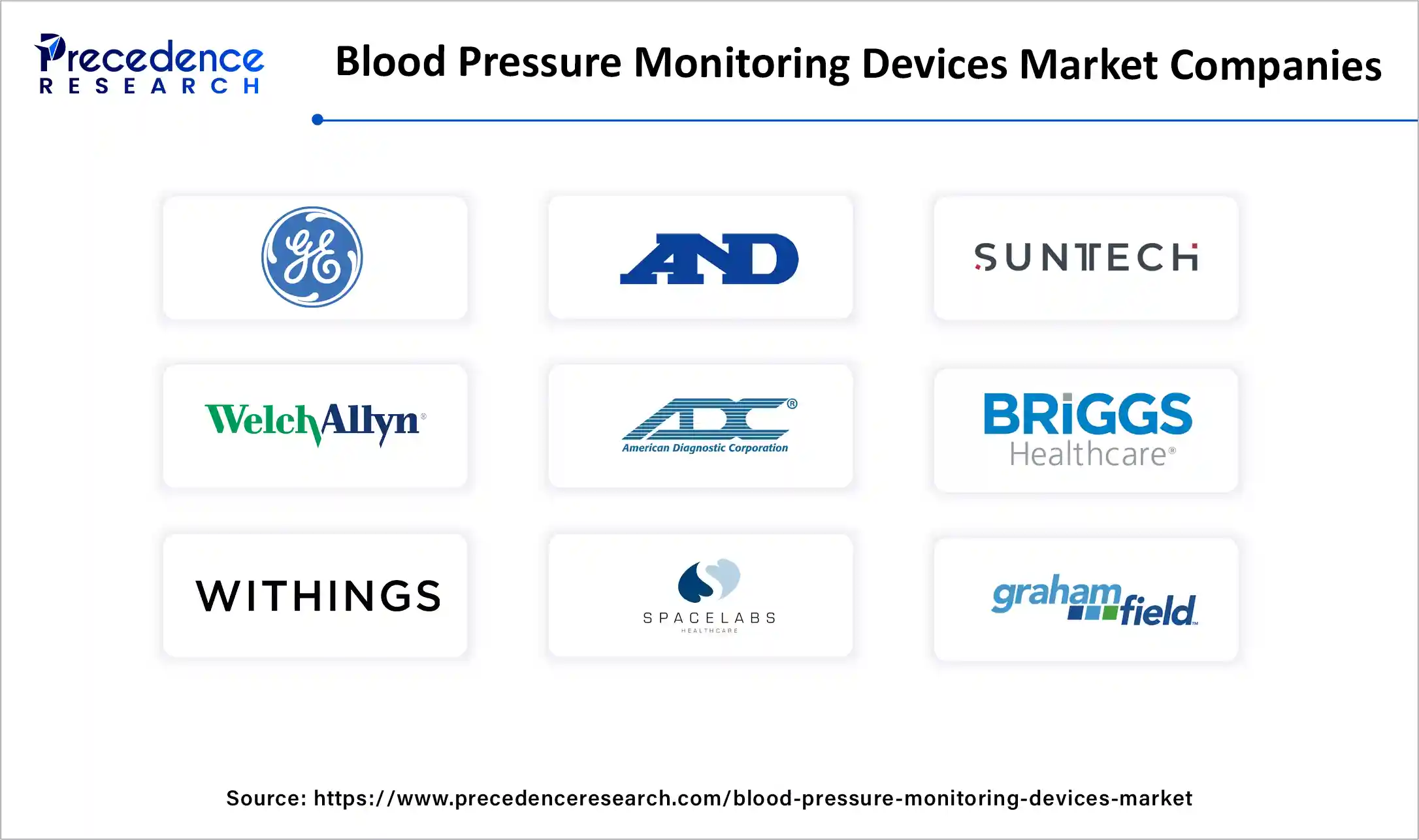
Omron Healthcare held the largest market share, with an estimated 24.42% of 2025 revenue (USD 1.05 billion), followed by Baxter (Welch Allyn) at 4.65% (USD 0.20 billion) and A&D Company at 4.19% (USD 0.18 billion). Omron Healthcare leads the market with the world's largest range of home blood pressure monitors, distributed across more than 100 countries. Baxter competes through its Welch Allyn portfolio of clinical blood pressure devices, while A&D Company supplies both home and clinical monitors. Microlife, Beurer, Philips, GE HealthCare, Withings, Spacelabs Healthcare, and SunTech Medical compete through home monitoring devices, patient monitoring systems, connected devices, and ambulatory blood pressure monitors.
The market is moderately concentrated, with Omron maintaining a strong position in home blood pressure monitoring. Competition centres on clinical validation, measurement accuracy, ease of use, connectivity, mobile applications, pricing, and retail and pharmacy distribution. Emerging companies offering cuffless and wearable blood pressure monitoring technologies are introducing new competitive dynamics and challenging established device manufacturers.
Companies Ecosystem
The blood pressure monitoring devices ecosystem links sensor and component suppliers with device makers, digital health platforms, retailers and pharmacies, healthcare providers and patients.
| Ecosystem Stage | Role in the Market | Key Companies |
| Components & Sensors | Supply sensors and parts | Sensor and electronics suppliers |
| Device Makers | Make monitors | Omron, A&D, Microlife, Beurer, Withings, Hilo |
| Digital Platforms | Collect and share readings | Remote patient monitoring and app providers |
| Retail & Distribution | Sell devices | Pharmacies, retailers, e-commerce, medical distributors |
| Providers & Patients | Measure and manage hypertension | Hospitals, clinics, patients |
Sources: Company press releases, expert interviews, secondary sources, Precedence Research database and Precedence Research analysts.
Precedence Research Companies Quadrant
The Precedence Research Companies Quadrant positions key participants in the blood pressure monitoring devices market by market strength, reflecting revenue scale, market share, and geographic reach, and by innovation and growth strategy, reflecting product portfolio breadth, R&D intensity, and partnerships. Positions reflect each company's estimated 2025 blood pressure monitoring revenue and our assessment of its product innovation, connectivity, and reach.
Sources: Company press releases, expert interviews, secondary sources, Precedence Research database and Precedence Research analysts.
- Leaders: Omron Healthcare, Baxter (Welch Allyn), A&D Company, Microlife, Beurer, and Philips combine large blood pressure monitoring revenue with broad, validated product ranges.
- Innovators: GE HealthCare, Withings, Spacelabs Healthcare, and SunTech Medical bring connected and new monitoring technologies.
Recent Developments
- July 2026: Hilo, the health brand developed by Aktiia, launched Hilo Core in the U.S. The product combines a wrist-worn band, a mobile application, and an FDA-cleared upper-arm cuff to support blood pressure trend tracking. Hilo Core is marketed as a general-wellness product and is not itself FDA-cleared as a medical device.
- July 2025: Aktiia received FDA 510(k) clearance for its G0 Blood Pressure Monitoring System, an over-the-counter system combining a wrist-worn optical monitor with an oscillometric cuff for calibration and home-use spot-check measurements.
Blood Pressure Monitoring Devices Market Segments
By Product
- Digital Blood Pressure Monitors
- Sphygmomanometers
- Ambulatory Blood Pressure Monitors
- Accessories
- Wearable & Cuffless Monitors
By Connectivity
- Non-Connected
- Connected
By End Use
- Homecare
- Hospitals
- Ambulatory Surgery Centres & Clinics
By Region
- North America (U.S., Canada, Mexico)
- Europe (Germany, U.K., France, Italy, Spain, Rest of Europe)
- Asia Pacific (China, Japan, India, South Korea, Taiwan, Rest of Asia Pacific)
- Latin America (Brazil, Argentina, Rest of Latin America)
- Middle East & Africa (GCC, South Africa, Rest of MEA)
Research Methodology: The global blood pressure monitoring devices market was defined based on revenue generated from conventional digital blood pressure monitors, manual sphygmomanometers, ambulatory monitoring systems, wearable and cuffless devices, and associated accessories included within the defined market scope. The 2025 base-year estimate was developed using a bottom-up methodology based on device sales volumes and average selling prices across product categories, connectivity configurations, end-use settings, and geographic regions. Demand estimates considered hypertension prevalence, home monitoring adoption, hospital procurement, device replacement cycles, and the expansion of remote patient monitoring programmes. The resulting market estimates were cross-checked against company disclosures and available industry estimates. Company-level revenue was allocated according to the relevant blood pressure monitoring product portfolios rather than total corporate revenue. Forecasts from 2026 to 2035 were developed using segment-specific growth assumptions reflecting product adoption, pricing trends, technological advancements, healthcare expenditure, and regional market conditions. All segment, regional, and company estimates were reconciled against the global market baseline to maintain consistency and avoid double counting.
Analyst View: The blood pressure monitoring devices market is driven by the growing global burden of hypertension and the increasing adoption of home-based and remote patient monitoring. Our assessment is that future market expansion will depend on rising demand for convenient home monitoring solutions, wider adoption of connected devices, and technological advancements in wearable and cuffless blood pressure measurement. Established manufacturers such as Omron will continue to benefit from strong brand recognition and extensive distribution networks, while clinical device manufacturers will compete through measurement accuracy and clinical validation. We expect connected monitoring ecosystems, remote patient management, and wearable technologies to create additional growth opportunities.
Sources and References
1. Pulse 2.0. "Hilo Launches Blood Pressure Monitoring System In The U.S. Following $19 Million Funding Extension". July 2026. News. https://pulse2.com/hilo-launches-blood-pressure-monitoring-system-in-the-u-s-following-19-million-funding-extension/
2. MassDevice. "FDA clears Aktiia over-the-counter G0 cuffless blood pressure monitor". July 2025. News. https://www.massdevice.com/fda-clears-aktiia-over-the-counter-g0-cuffless-blood-pressure-monitor/
3. Medical Device Network. “Hilo Introduces Blood Pressure Monitoring System in the US”. July 2026. News. https://www.medicaldevice-network.com/news/hilo-blood-pressure-monitoring-system-us/
4. MobiHealthNews. “Aktiia Gets FDA Clearance for OTC Cuffless Blood Pressure Monitor”. July 2025. News. https://www.mobihealthnews.com/news/aktiia-gets-fda-clearance-otc-cuffless-blood-pressure-monitor
5. U.S. Food and Drug Administration (FDA). “510(k) Premarket Notification: G0 Blood Pressure Monitoring System (K250415)”. July 2025. Regulatory Clearance. https://www.accessdata.fda.gov/scripts/cdrh/cfdocs/cfpmn/pmn.cfm?ID=K250415
For inquiries regarding discounts, bulk purchases, or customization requests, please contact us at sales@precedenceresearch.com
Frequently Asked Questions





Ask For Sample
No cookie-cutter, only authentic analysis – take the 1st step to become a Precedence Research client
 Get a Sample




 sales@precedenceresearch.com
 Schedule a Meeting