



Canine Vaccines Market Size, Share and Trends 2026 to 2035
Canine Vaccines Market (By Technology: Inactivated, Live Attenuated, Recombinant, Others; By Disease Type: Canine Influenza, Lyme Disease, Rabies, Leptospirosis, Others; By Route of Administration: Oral, Parenteral, Intranasal; By Distribution Channel: Veterinary Hospitals, Veterinary Clinics, Pharmacies & Drug Stores) - Global Industry Analysis, Size, Trends, Leading Companies, Regional Outlook, and Forecast 2026 to 2035
Source: https://www.precedenceresearch.com/canine-vaccines-market
 Get a Sample
 Table Of Content


What is the Canine Vaccines Market Size?
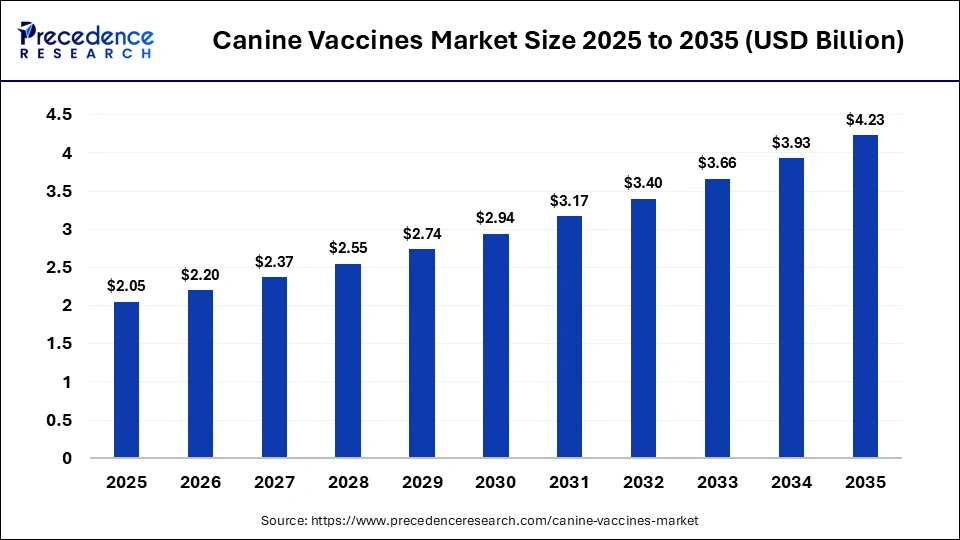
The global canine vaccines market size was calculated at USD 2.05 billion in 2025 and is predicted to increase from USD 2.20 billion in 2026 to approximately USD 4.23 billion by 2035, expanding at a CAGR of 7.51% from 2026 to 2035. The growth of the canine vaccines s is primarily driven by increasing awareness among pet owners about the importance of vaccination and the rising prevalence of infectious diseases in dogs. Additionally, advancements in vaccine technology and the expanding pet healthcare industry contribute significantly to market expansion.
Market Highlights
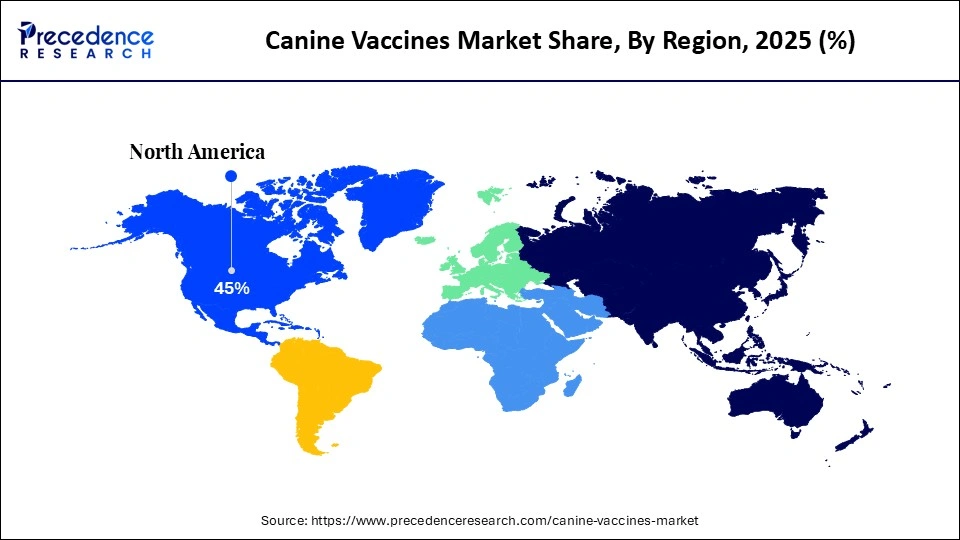
- North America dominated the canine vaccines market with the largest market share of with the largest market share of 45% in 2025.
- Asia Pacific is seen to grow at the fastest rate during the forecast period.
- By technology, the inactivated vaccines held a dominant position in the market with the largest share in 2025.
- By technology, the attenuated vaccines segment is expected to grow at the fastest CAGR in the market between 2026 and 2035.
- By disease type, the canine influenza held a dominant position in the market with the largest share in 2025.
- By disease type, the rabies segment is expected to grow at the fastest CAGR in the market between 2026 and 2035.
- By route of administration, the oral segment held a dominant position in the market with the largest share in 2025.
- By route of administration, the intranasal segment is expected to grow at the fastest CAGR in the market between 2026 and 2035
- By distribution channel, the veterinary hospital segment held a dominant position in the market with the largest share in 2025.
- By distribution channel, the veterinary clinics segment is expected to grow at the fastest CAGR in the market between 2026 and 2035
Key Technological Shift in Canine Vaccines Market
The canine vaccines market is undergoing significant technological transformation driven by advances in immunology, biotechnology, and digital health integration. One of the most important shifts is the growing adoption of recombinant and subunit vaccines, which offer improved safety profiles by eliminating the risk associated with live pathogens while maintaining strong immunogenicity.
Alongside this, DNA- and RNA-based vaccine platforms are gaining research attention, enabling faster development cycles and more precise antigen targeting for emerging and region-specific canine diseases. Another major technological shift is the development of multivalent and combination vaccines that protect against multiple pathogens in a single dose, improving compliance and reducing stress for animals and owners.
Key Market Trends
- The canine vaccines market is witnessing strong growth trends driven by rising pet ownership and increasing humanization of companion animals.
- Pet owners are becoming more willing to invest in preventive healthcare, leading to higher vaccination rates and adherence to recommended immunization schedules.
- This shift is supported by growing awareness of zoonotic diseases and the role of vaccination in protecting both animal and public health.
- Another notable trend is the increasing demand for customized and risk-based vaccination programs tailored to a dog's age, lifestyle, and geographic exposure.
- Veterinary clinics are moving away from one-size-fits-all protocols toward individualized vaccine plans, which is driving demand for a broader portfolio of vaccine products.
- The market is also seeing expansion of veterinary healthcare infrastructure, including specialty clinics and corporate veterinary chains, which improves vaccine access and distribution.
Market Scope
| Report Coverage | Details |
| Market Size in 2025 | USD 2.05 Billion |
| Market Size in 2026 | USD 2.20 Billion |
| Market Size by 2035 | USD 4.23 Billion |
| Market Growth Rate from 2026 to 2035 | CAGR of 7.51% |
| Dominating Region | North America |
| Fastest Growing Region | Asia Pacific |
| Base Year | 2025 |
| Forecast Period | 2026 to 2035 |
| Segments Covered | Technology, Disease Type, Route of Administration, Distribution Channel, and Region |
| Regions Covered | North America, Europe, Asia-Pacific, Latin America, and Middle East & Africa |
Segment Insights
Technology Insights
Why Inactivated Vaccines Dominated the Canine Vaccines Market?
The inactivated vaccines dominated the canine vaccines market by the year 2025, driven by a good safety profile and are widely accepted by veterinarians. These vaccines include attenuated pathogens, which removes the chance of reverting to the virulent form, hence are appropriate in immunocompromised or young animals. They have a high stability and extended shelf life, allowing mass distribution to different veterinary environments.
The reason is that inactivated vaccines have been used as a regular immunization program, which strengthens the demand. There are also regulatory confidence and extensive clinical experience that enhance their market position. Consequently, they have continued to be popular in most standard vaccination schedules.
The live attenuated vaccines segment is projected to grow CAGR between 2026-2035, driven by the stimulation of robust and sustained immune response. These vaccines are very similar to natural infection and in many cases need fewer booster doses. The innovations in attenuation methods have led to enhanced safety and high efficacy.
Adoption is being encouraged by growth in demand in high-risk canine populations to have fast and long-lasting immunity. These vaccines are substituting others against infectious diseases, where strong coverage is much needed, among veterinarians. It is this effectiveness and innovation that are boosting their market expansion.
Disease Type Insights
Why Canine Influenza Dominated the Canine Vaccines Market?
Canine influenza dominated the canine vaccines market in the year 2025, because it is highly transmissible and outbreaks of the disease are recurring among the canines. Prevention of diseases through vaccination has been increased due to the sensitization of pet owners and veterinarians. Influenza vaccination is usually required by boarding facilities, daycare centers, and shelters, and contributes to demand. The risk of the disease becoming viral in overcrowded dog settings strengthens preventive strategies. The vaccination is considered an essential tool that helps to minimize the cases of infections and the severity of the disease.
Rabies is projected to grow CAGR between 2026-2035, driven by the tough public health policies and the strengthening of the mandatory vaccination policies. Rabies, being a zoonotic disease with mortal outcomes, prevention of the disease among the authorities and the owners of pets is of high priority. Rapid growth in travel and movement across the border with pets is escalating the necessity to immunize against rabies in a documented manner. Better access to rabies vaccines in the form of veterinary services is also facilitating uptake. Compliance is being reinforced by awareness campaigns on the safety of the population.
Route of Administration Insights
Why Oral Dominated the Canine Vaccines Market?
Oral segment dominated the canine vaccines market in the year 2025, because it is easy to administer and less stressful to the animals during the process of being vaccinated. Oral vaccines are also useful, especially in mass immunization and shelter places where time handling should be minimized. They facilitate improved adherence by the pet owners and the caregivers. The developments in the formulation have enhanced antigen stability and immunity response through oral delivery. This path also minimizes the chances of needle injuries and infections.
The company projected the fastest growing CAGR in the canine vaccines market between the year 2026-2035, due to the ability to achieve robust mucosal immunity. They particularly work with respiratory infections, offering quick protection in the area. Rapid development of immunity complicates intranasal vaccines as an option in settings prone to outbreaks. Better administration tools have increased ease and accuracy of delivery. It is becoming more widely known by veterinarians that needle-free nasal vaccines have advantages.
Distribution Channel Insights
How Veterinary Hospitals Dominated the Canine Vaccines Market?
The veterinary hospitals dominated the canine vaccines market in the year 2025, because they dealt with both preventive and curative care. These centres process both the number of regular vaccinations and more complicated cases. Proper handling of the vaccine is guaranteed by the availability of trained personnel and cold-chain facilities. Hospitals usually act as a referral centre, which strengthens high vaccine usage. Standard systems of procurement also help in ensuring that there is a regular supply.
The veterinary clinics the fastest growing CAGR in the canine vaccines market between the year 2026-2035, driven by urban and semi-urban locations. A routine pet care clinic also has the advantage of easily accessing the services of vaccination. A growing market is being gained by rising independent and chain clinics. They are also oriented to preventive health care that has been increasing in awareness of vaccination. Individualized treatment and reduced waiting time will appeal to owners of pets.
Regional Insights
How Big is the North America Canine Vaccines Market Size?
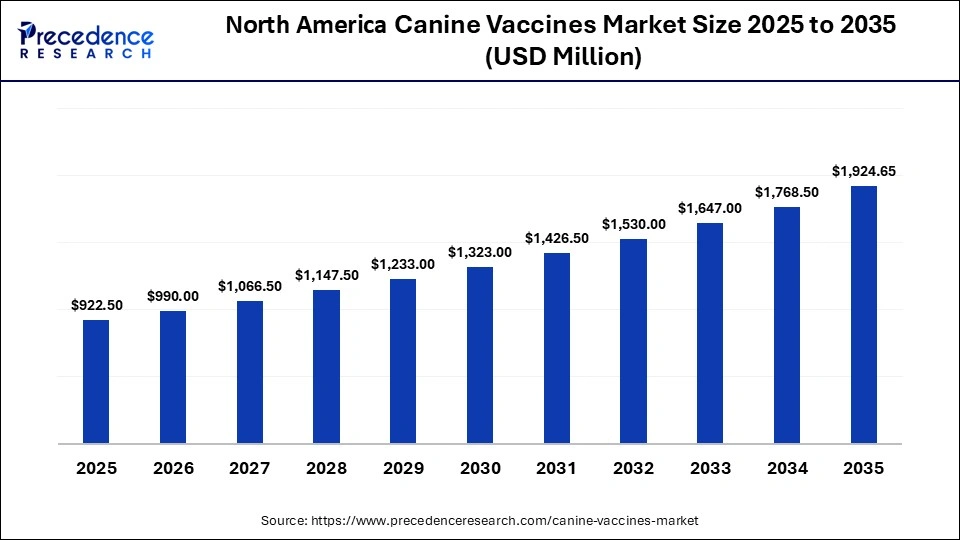
The North America canine vaccines market size is estimated at USD 922.50 million in 2025 and is projected to reach approximately USD 1,924.65 million by 2035, with a 7.63% CAGR from 2026 to 2035.
Why North America Dominated the Canine Vaccines Market?
North America dominated the canine vaccines market in the year 2025, because of large pet ownership and awareness of preventive veterinary care. The area boasts of an excellent network of veterinary healthcare facilities such as sophisticated clinics, diagnostic facilities, and specialty hospitals. The trends of humanization of pets have promoted regular vaccination and booster coverage, which promotes a steady market demand.
Good penetration of major veterinary pharmaceutical firms also consolidates a supply of products and innovation. Regularities have focused on the safety and efficacy of vaccines, which establish confidence in veterinarians and pet owners. All these contribute towards the dominant role of North America in the market.
What is the Size of the U.S. Canine VaccinesMarket?
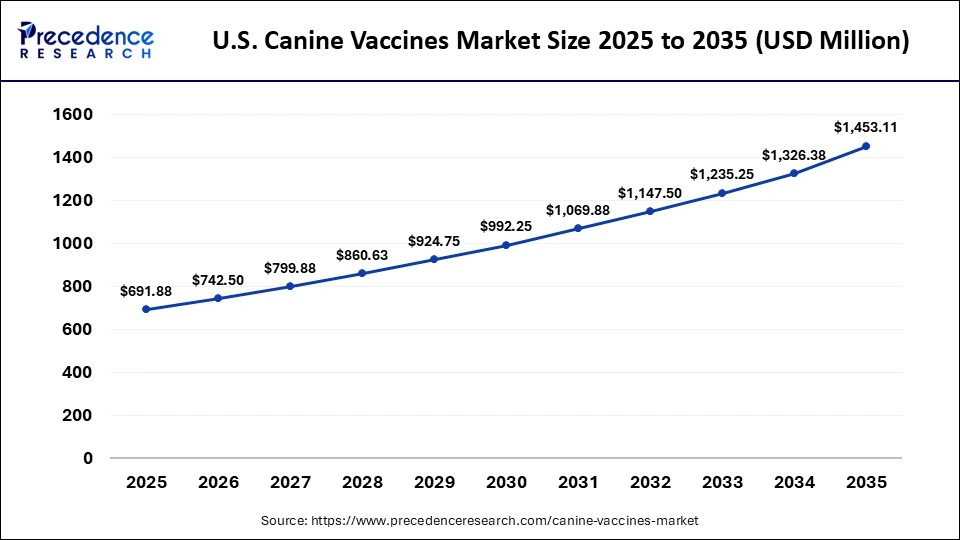
The U.S. canine vaccines market size is calculated at USD 691.88 million in 2025 and is expected to reach nearly USD 1,453.11 million in 2035, accelerating at a strong CAGR of 7.70% between 2026 and 2035.
U.S. Canine Vaccines Market Trends
the U.S. is the greatest donor due to the high number of companion animals and high expenditure on healthcare per pet. The extensive use of pet insurances in U.S. also promotes the routine vaccinations. Such a role is also played by Canada, which is backed by rising pet adoption and high-quality veterinary programs on the health of the population. The emphasis of prevention of zoonotic diseases in the country strengthens the vaccine coverage in both urban and semi-urban regions. The developed networks in distribution provide wide coverage of vaccines in clinics and hospitals. Consequently, North America has a mature market profile.
How Asia Pacific is Fastest Growing in the Canine Vaccines Market?
The Asia Pacific is projected to fastest growing CAGR in between the year 2026 to 2035, which is backed up by the increasing pet owners and the increased awareness of animal health in various countries. However, greater emphasis on preventive veterinary care is increasing vaccination rates, especially in urban areas. Corporate veterinary chains, alongside specialty clinic expansion, is enhancing the access to advanced vaccination services. Market growth is also facilitated by regulatory focus on animal welfare and prevention of diseases. Vaccine formulations and delivery processes are also becoming popular in the region. These dynamics make the region an important growth engine.
India Canine Vaccines Market Trends
India enjoys a good reputation for preventative care measures and good adherence to immunization advice. The country has a high growth rate, with the growing awareness of controlling infectious diseases and the growing number of pet insurance policies. The states are also developing since the vet services are growing and the disposable income is rising. The harmonization of veterinary regulations that exists in cross-border is easing product approvals and access to markets. All these trends at the country level are increasing the growth of the market in India.
Canine Vaccines Market Value Chain Analysis
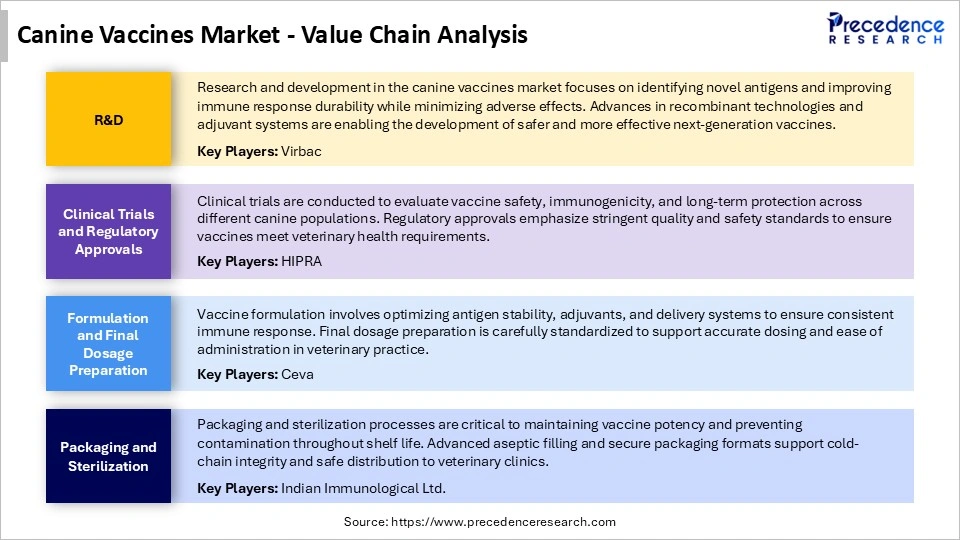
Who are the Major Players in the Global Canine Vaccines Market?
The major players in the canine vaccines market include Zoetis, Virbac, Elanco, Merck & Co., Inc., Ceva Santé Animale, Boehringer Ingelheim International GmbH, Phibro Animal Health Corporation, IDEXX, HESTER BIOSCIENCES LIMITED, and Indian Immunologicals Ltd.
Recent Developments
- In January 2026, The Indian government has introduced national guidelines to standardize veterinary hospitals and clinics by defining minimum infrastructure, staffing, and service standards. The framework establishes a tiered system of care to improve access, quality, and consistency of animal healthcare across the country.
- In January 2026, A recently imported warmblood horse in Maryland tested positive for equine influenza after showing respiratory symptoms shortly after arrival from Europe. The case underscores the high contagiousness of the virus and reinforces the importance of vaccination, quarantine, and strict biosecurity measures in preventing its spread.
Segment Covered in the Report
By Technology
- Inactivated
- Live Attenuated
- Recombinant
- Others
By Disease Type
- Canine Influenza
- Lyme Disease
- Rabies
- Leptospirosis
- Others
By Route of Administration
- Oral
- Parenteral
- Intranasal
By Distribution Channel
- Veterinary Hospitals
- Veterinary Clinics
- Pharmacies & Drug Stores
By Region
- North America
- Europe
- Asia-Pacific
- Latin America
- Middle East & Africa
For inquiries regarding discounts, bulk purchases, or customization requests, please contact us at sales@precedenceresearch.com
Frequently Asked Questions





Ask For Sample
No cookie-cutter, only authentic analysis – take the 1st step to become a Precedence Research client
 Get a Sample




 sales@precedenceresearch.com
 Schedule a Meeting
