


Canned Mushroom Market Size, Key Companies, Trends, Segments, and Forecast 2026-2035
Canned Mushroom Market (By Product: Button Mushroom, Shiitake Mushroom, Oyster Mushroom , Morel Mushroom, Others; By Nature: Organic, Conventional; By Form: Whole, Sliced, Chopped, Others; By Application: Household, Restaurants; By Distribution Channel:  Supermarkets/Hypermarkets, Departmental Store, Convenience Store, Online, Others) - Global Industry Analysis, Size, Trends, Leading Companies, Regional Outlook, and Forecast 2026 to 2035
Source: https://www.precedenceresearch.com/canned-mushroom-market
 Get a Sample
 Table Of Content


What is the Canned Mushroom Market Size?
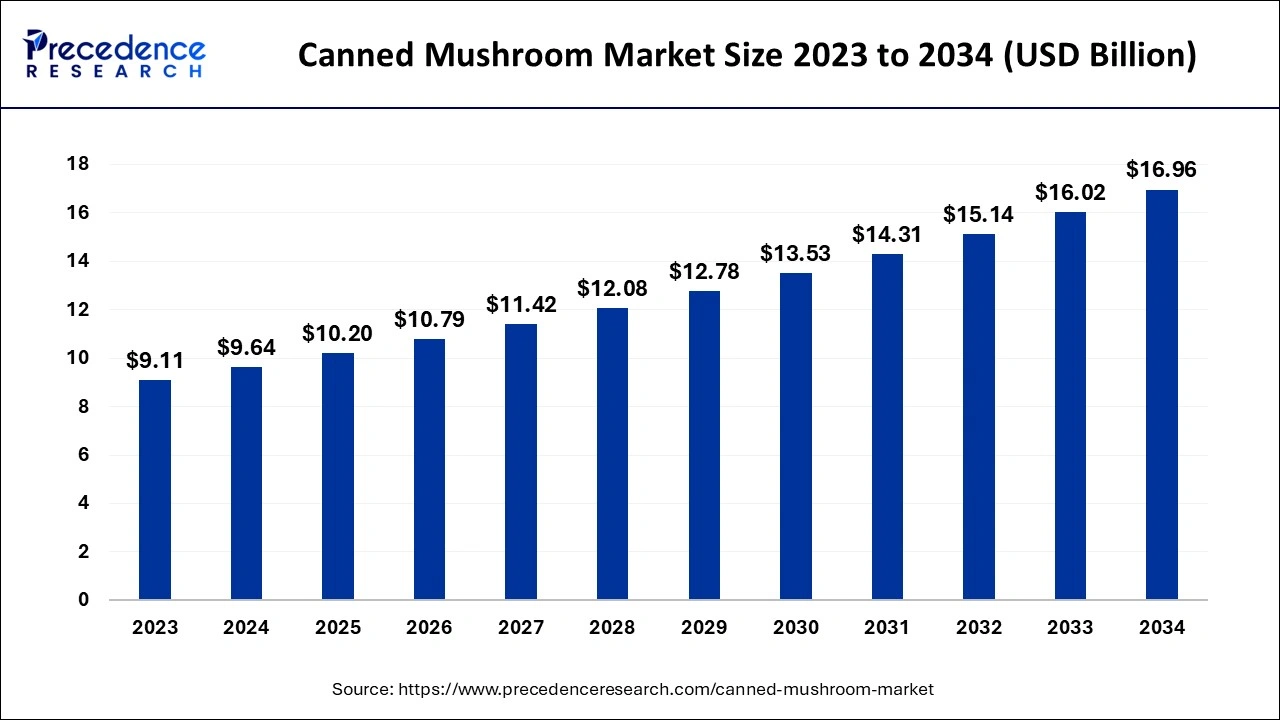
The global canned mushroom market size is estimated at USD 10.79 billion in 2026 and is projected to reach approximately USD 17.86 billion by 2035, representing a CAGR of 5.76% from 2026 to 2035.
Canned Mushroom Market Key Takeaways
- It is projected to reach USD 17.86 billion by 2035.
- The market is expected to grow at a CAGR of 5.76% from 2026 to 2035.
- Asia Pacific dominated the canned mushroom market with the largest market share of 36% in 2026.
- North America's canned mushroom market is expected to grow at the fastest rate during the forecast period.
- By product, the button mushroom segment contributed the biggest market share of 58% in 2026.
- By product, the shiitake mushroom segment is expected to grow at the fastest CAGR of 6.52% over the forecast period.
- By nature, the conventional segment led the market in 2026.
- By nature, the organic segment is anticipated to show the fastest growth during the projected period.
- By form, the whole segment dominated the canned mushroom market in 2026.
- By form, the sliced segment is anticipated to grow at a faster rate during the studied period.
- By application, the household segment dominated the market in 2026
- with the largest market share.
- By application, the restaurant segment is projected to grow at a notable CAGR of 6.18% during the forecast period.
- By distribution channel, the supermarket/hypermarket segment accounted for the highest market share of 46% in 2026.
- By distribution channel, the online segment is expected to expand at a solid CAGR of 7.33% during the projected period.
What is a canned mushroom?
A mushroom is a fruiting body of a fungus that is fleshy and bears spores. Mushrooms provide nutrients and are generally low in calories. Their nutritional composition varies by species and preparation. There are many different varieties of canned mushrooms on the market, such as chanterelle, white button, Portobello, and Crimin mushrooms. The convenience of using canned mushrooms, which need less preparation time, has led to their increasing popularity.
How is AI impacting the food industry?
Improved productivity and safety are further benefits of using artificial intelligence in the food manufacturing process. The methods used for quality control are being revolutionized by automated AI-driven inspection systems. These technologies can enhance supply chain management and anticipate contamination hazards by utilizing predictive analytics. Artificial Intelligence machine vision systems are skilled in examining product quality, guaranteeing that only the best products make it to consumers.
Canned Mushroom Market Growth Factors
- The growing working population and busy lifestyle of consumers are expected to fuel market growth soon.
- A rising focus on product development and packaging through Product development can propel canned mushroom market growth shortly.
Market Outlook
- Industry Growth Overview: The canned mushroom market is growing, driven by rising innovations in sustainable packaging, partnerships with health-focused brands, and improved demand from the foodservice sector.
- Global Expansion: The canned mushroom market is experiencing global expansion, as canned mushrooms are standard for their nutritional value, including vitamins, high protein, and minerals, while being low in fat, calories, and cholesterol. This perception drives demand as customers become more health-aware. Asia Pacific is dominated in the market due to increasing urbanization, suitability, and rising middle-class incomes.
- Major investors: Major investors in the canned mushroom market are usually large, recognized food processing and agricultural corporations, rather than venture capital organizations or individual investors. It includes Bonduelle Group, B&G Foods, Inc., Greenyard NV, Costa Group Holdings Ltd., and other
Market Dynamics
Driver
Advancements in scanning technologies
Ongoing advancements in scanning technologies are making canned Mushrooms a more feasible option for consumers. Leading the market players utilize new technologies in canning to ensure good taste, flavor, and nutritional value in the Product. Additionally, Containers that are sustainable and foolproof are becoming popular as packaging items. This packaging can Prevent mushrooms from spoilage, which increases its shelf life.
Restraint
Health concerns and preference for fresh mushrooms
Increasing consumer preference for fresh and frozen mushrooms Can potentially limit the market growth. Companies often use sodium in tinned mushrooms to preserve them for a longer duration of time, which can cause health concerns among Consumers. However, this can lead consumers to seek fresh mushrooms over canned ones, hindering the consumer base for the sector.
Opportunity
Increasing convenience food demand
The need for easy and fast food items is on the rise across the globe due to hectic ways of living. Hence, the demand for this product is Meant to rise as a time-saving option for people. Tinned mushrooms are easy products that consumers prefer to utilize for making various dishes. Therefore, manufacturers can benefit from the convenience food craze. Furthermore, Canned mushrooms enable users to add flavors and nutrients to dishes without requiring much time for raw mushrooms.
Segment Insights
Product Insights
The button mushroom segment dominated the canned mushroom market in 2026. The dominance of the segment can be attributed to the widespread use of these mushrooms in the culinary world. They are also known for their smooth texture and mild flavor, which makes them a staple in numerous cuisines worldwide. Additionally, button mushrooms are low in salt and high in potassium, which helps the heart function steadily.
The shiitake mushroom segment is expected to grow at the fastest rate in the canned mushroom market over the forecast period. This is because Shiitake mushrooms are utilized in the production of pharmaceutical and healthcare products. Their application as an important al ingredient in the healthcare industry fuels the segment growth in the market. Also, people are becoming more aware of their health and fitness, which, in turn, leads them to consume nutritious food.
Nature Insights
The conventional segment led the canned mushroom market in 2026. the dominance of the segment can be linked to the rising demand for canned mushrooms in the conventional market coupled with the cost-effectiveness of conventional farming methods. Moreover, conventional canned mushrooms have a longer shelf life because of the preservatives used.
The organic segment is anticipated to show the fastest growth in the canned mushroom market during the projected period. The growth of the segment can be driven by the rising trend of plant-based food and growing concerns about environmental sustainability which encourage customers to purchase organic consumables. Furthermore, increasing consumer health awareness will propel the demand for organic mushrooms.
Form Insights
In 2026, the whole segment dominated the canned mushroom market by holding the largest market share. This is because of rising consumer inclination toward ready-to-use and convenience food products. Whole canned mushrooms provide convenience in various culinary applications, including pizzas and salads, soups, and stews for both professional chefs. And home cooks. This factor has a special relevance in today's fast-paced lifestyle, where consumers seek time-cutting options.
The sliced segment is anticipated to grow at the fastest rate in the canned mushroom market during the studied period. The growth of the segment can be linked to the increasing demand for easy-to-use food products and advantages offered by sliced mushrooms for consumers. Additionally, the reduced labor cost and preparation time associated with utilizing sliced mushrooms for various businesses further fuels the demand for this segment in the market.
Application Insights
The household segment dominated the canned mushroom market in 2026. The rising popularity of home meal preparation and cooking is the key driver of the household segment. Interest in home cooking and experimenting with recipes may support household demand.
The restaurant segment is projected to witness the fastest growth in the canned mushroom market during the forecast period. The extended shelf life of canned mushrooms and ease of storage propels the segment's growth. Moreover, then the cost-effectiveness of canned mushrooms is one of the important factors boosting their demand in the restaurant segment. Restaurants are constantly seeking ways to stimulate their food costs.
Distribution Channel Insights
The supermarket/hypermarket segment led the canned mushroom market in 2026. The dominance of the segment can be attributed to the ease of purchasing along with the bulk purchase facility offered by Supermarkets/Hypermarket to the consumers. Also, the extensive range of canned mushrooms offered by supermarkets and hypermarkets propels the growing demand for canned mushrooms.
The online segment is expected to show the fastest growth in the canned mushroom market during the projected period. Consumers can search for a wide range of canned mushroom products, read reviews, compare prices, and make purchases from their homes. Furthermore, personalized recommendations and targeted advertising offered by online channels have improved the shopping experience, which enables consumers to purchase canned mushrooms online.
Regional Insights
What is the Asia Pacific Canned Mushroom Market Size?
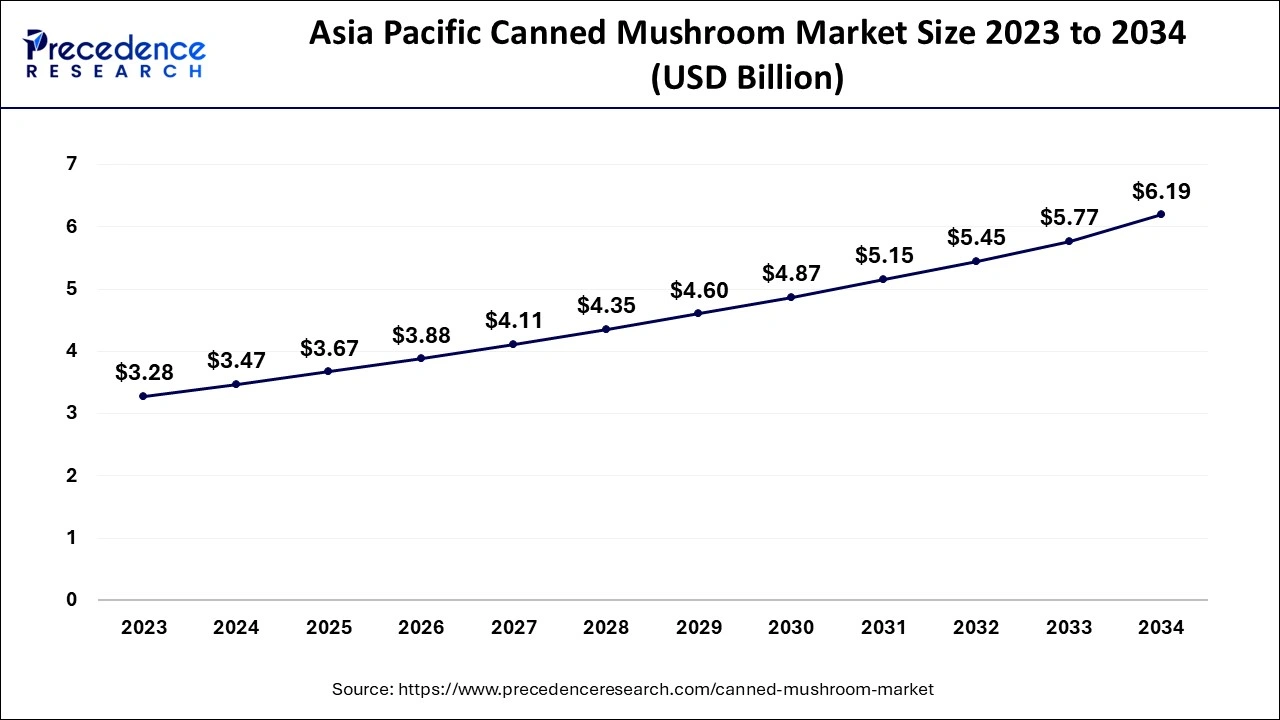
The Asia Pacific canned mushroom market size is exhibited at USD 3.88 billion in 2026 and is projected to be worth around USD 6.54 billion by 2035, growing at a CAGR of 5.95% from 2026 to 2035.
Asia Pacific: Advanced farming techniques
Asia Pacific dominated the canned mushroom market in 2026. The dominance of the region can be attributed to the changing lifestyles and growing urbanization in the region which has led consumers to prefer convenient and ready-to-eat food products, such as canned mushrooms. Moreover, the rising middle class in nations like India and China fuels the demand for diverse and nutritious food options. Growing awareness of the health benefits of the consumption of mushrooms further contributes to this trend.
India: Large-scale cultivation
In India, comprehensive production capacity, high domestic consumption driven by increasing spending and busy lifestyles, and significant use in popular regional cuisines. The country benefits from progressive cultivation technology, including controlled-environment farming, which increases effectiveness and production. There is a rising customer awareness of the health advantages of mushrooms, like their high nutritional content and antioxidants
North America: Health and dietary trends
North America's canned mushroom market is expected to grow at the fastest rate during the forecast period. The growth of the segment can be linked to the convenience offered by this type of food in households and restaurants, where swift ingredient management is important. Furthermore, In the North American region, the United States shows robust growth credited to the increasing consumption of processed food products and the nutritional benefits offered by canned mushrooms.
U.S.: Consumer lifestyle and convenience
In the U.S., increasing customer demand for convenient and time-saving meal choices, the long shelf life and cost-effectiveness of canned mushrooms, and the ingredient's adaptability and health advantages. The growing popularity of plant-driven and meat-substitute diets further drives growth as mushrooms are seen as a nutritious and versatile substitute.
Europe: Demand for convenience
Europe is experiencing substantial growth in the market due to increasing urbanization and busy lifestyles are increasing demand for ready-to-eat, convenient products. Around 63% of employed Europeans prefer pre-packaged or pre-sliced ingredients, making canned mushrooms a popular choice for quick meal services. Increasing awareness of the health advantages of mushrooms, like their nutritional value and role as a source of antioxidants, is driving market growth.
UK: Innovation and Quality Improvement
In the UK, development in canning and packaging knowledge has improved the texture, taste, and nutritional value of canned mushrooms, helping to dispel previous biases against canned food. Novelties include BPA-free cans, reduced-sodium choices, and organic variants, which appeal to health-aware customers.
Value Chain Analysis - Canned Mushroom Market
- Raw Material:
The raw materials for canned mushrooms are fresh mushrooms and a processing brine made of salt, water, and often citric acid.
Key Players: B&G Foods and Giorgio Fresh Co. - Synthesis and Processing:
The synthesis and processing of canned mushrooms contribute a standard series of food preservation steps focused on microbial safety and quality retention. The white button mushroom is the type most usually used for profitable canning.
Key Players: Okechamp SA and Bonduelle SA - Compound Formulation and Blending:
The compound formulation and blending for canned mushrooms mainly include preparing a brine solution containing salt (NaCl) and acidity regulators (citric acid) to ensure preservation and desirable color.
Key Players: Monterey Mushrooms Inc., and Greenyard NV
Canned Mushroom Market Companies
- Bonduelle Group: Offers a wide range of canned vegetables, including mushrooms, focusing on healthy, ready-to-eat food products with strong global distribution and sustainable sourcing practices.
- Greenyard NV: Provides canned and preserved mushrooms along with fresh and frozen produce, emphasising integrated supply chain solutions and high-quality food processing.
- B&G Foods Inc.: Delivers branded canned food products, including mushrooms, targeting retail markets with convenient, shelf-stable, and affordable food options.
- The Mushroom Company: Specialises in processed mushroom products, offering canned, fresh, and value-added mushrooms for retail, foodservice, and industrial customers.
- Monterey Mushroom Inc.: Offers a variety of mushroom products, including canned and fresh options, focusing on innovation, organic production, and sustainable farming.
- Dhruv Agro: Provides canned and processed mushrooms mainly for export markets, focusing on quality production and cost-effective solutions.
- Prochamp B.V.: Produces and supplies canned mushrooms and mushroom-based products, with a strong presence in European markets and private label offerings.
- Monaghan Mushroom Ltd.: Offers a broad range of mushroom products, including canned variants, focusing on premium quality, innovation, and global distribution.
- Shanghai Finc Foods Co. Ltd.: Specialises in canned mushrooms and other processed foods, with strong manufacturing capabilities and export-oriented operations.
Recent Developments
- In November 2025, the Mushroom harvest was launched at DCTC Jammu in India through the efforts of people like Sandeep Kumar, by the Department of Agriculture Production and Farmers Welfare Jammu. This program stressed the importance of cultivating mushrooms under controlled conditions and adding value to them for increasing the incomes of farmers.(Source: https://www.verticalfarmdaily.com )
Canned Mushroom Market Segments
By Product
- Button Mushroom
- Shiitake Mushroom
- Oyster Mushroom
- Morel Mushroom
- Others
By Nature
- Organic
- Conventional
By Form
- Whole
- Sliced
- Chopped
- Others
By Application
- Household
- Restaurants
By Distribution Channel
- Supermarkets/Hypermarkets
- Departmental Store
- Convenience Store
- Online
- Others
By Geography
- North America
- Asia Pacific
- Europe
- Latin America
- Middle East & Africa
For inquiries regarding discounts, bulk purchases, or customization requests, please contact us at sales@precedenceresearch.com
Frequently Asked Questions
Tags





Ask For Sample
No cookie-cutter, only authentic analysis – take the 1st step to become a Precedence Research client
 Get a Sample




 sales@precedenceresearch.com
 Schedule a Meeting