



Global Car Rental Market Size, Key Companies, Company Market Share, Vehicle Production Volume, Sales Performance, Export & Import Analysis, Technology Adoption, Competitive Positioning, and Demand Trends
This report provides a comprehensive analysis of the global car rental market, covering market size, CAGR, revenue forecasts, key growth drivers, emerging industry trends, and the impact of artificial intelligence on fleet management and customer experience. It also examines market segmentation, regional performance, competitive landscape, leading company strategies, technological advancements, investment opportunities, and the challenges shaping the industry. Additionally, the report highlights the growing adoption of electric vehicles, digital booking platforms, shared mobility services, and subscription-based rental models, offering valuable insights into the market's future outlook through 2035.
Source: https://www.precedenceresearch.com/car-rental-market
 Get a Sample
 Table Of Content


Why is Demand for Car Rental Services Increasing Worldwide?
The global car rental market size is estimated at USD 152.99 billion in 2025 and is predicted to increase from USD 166.30 billion in 2026 to approximately USD 348.69 billion by 2035, expanding at a CAGR of 8.59% from 2026 to 2035. The market is driven by rising travel and tourism, increasing business travel, growing demand for flexible mobility solutions, expanding digital booking platforms, and the increasing adoption of electric and shared rental vehicles.
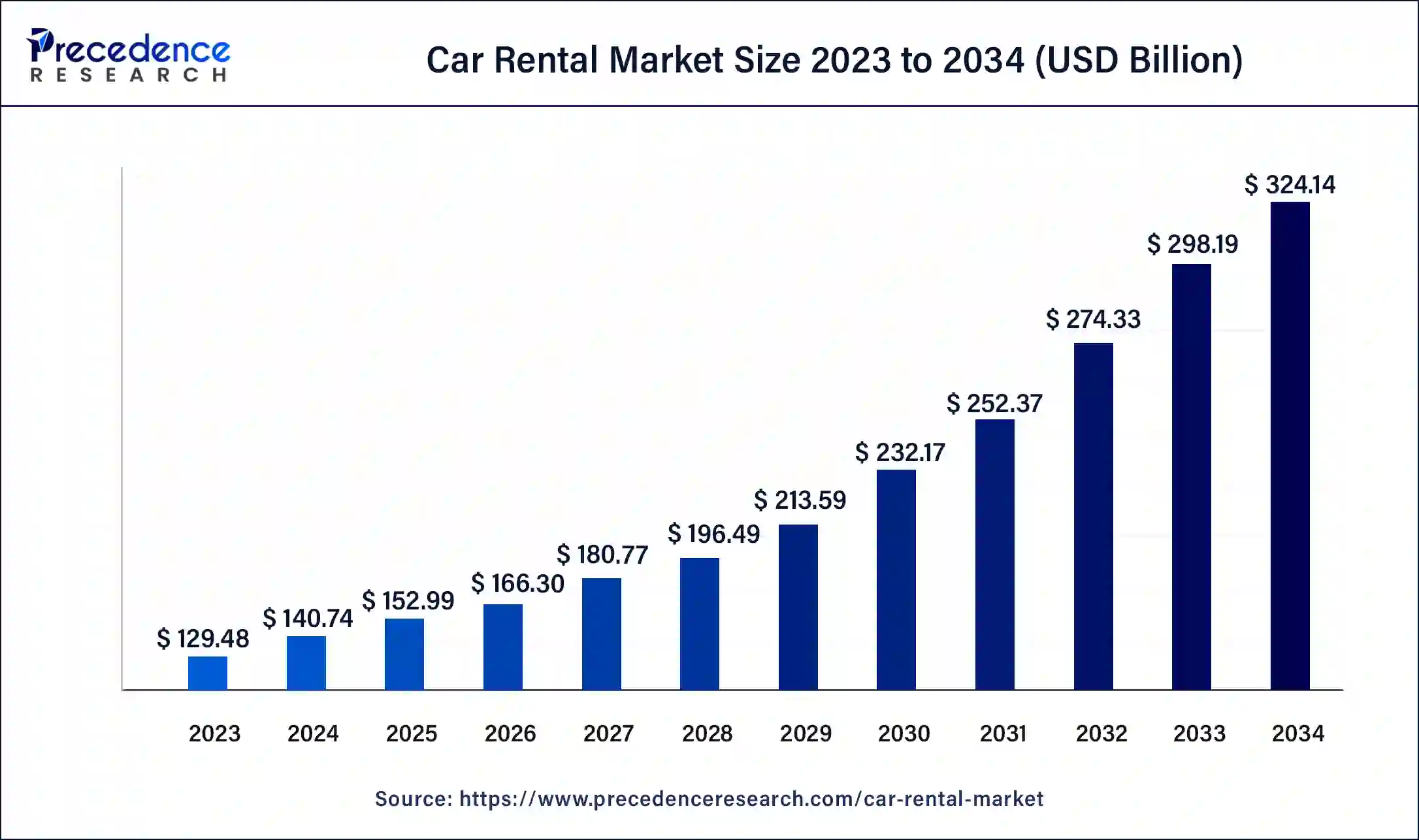
Market Highlights
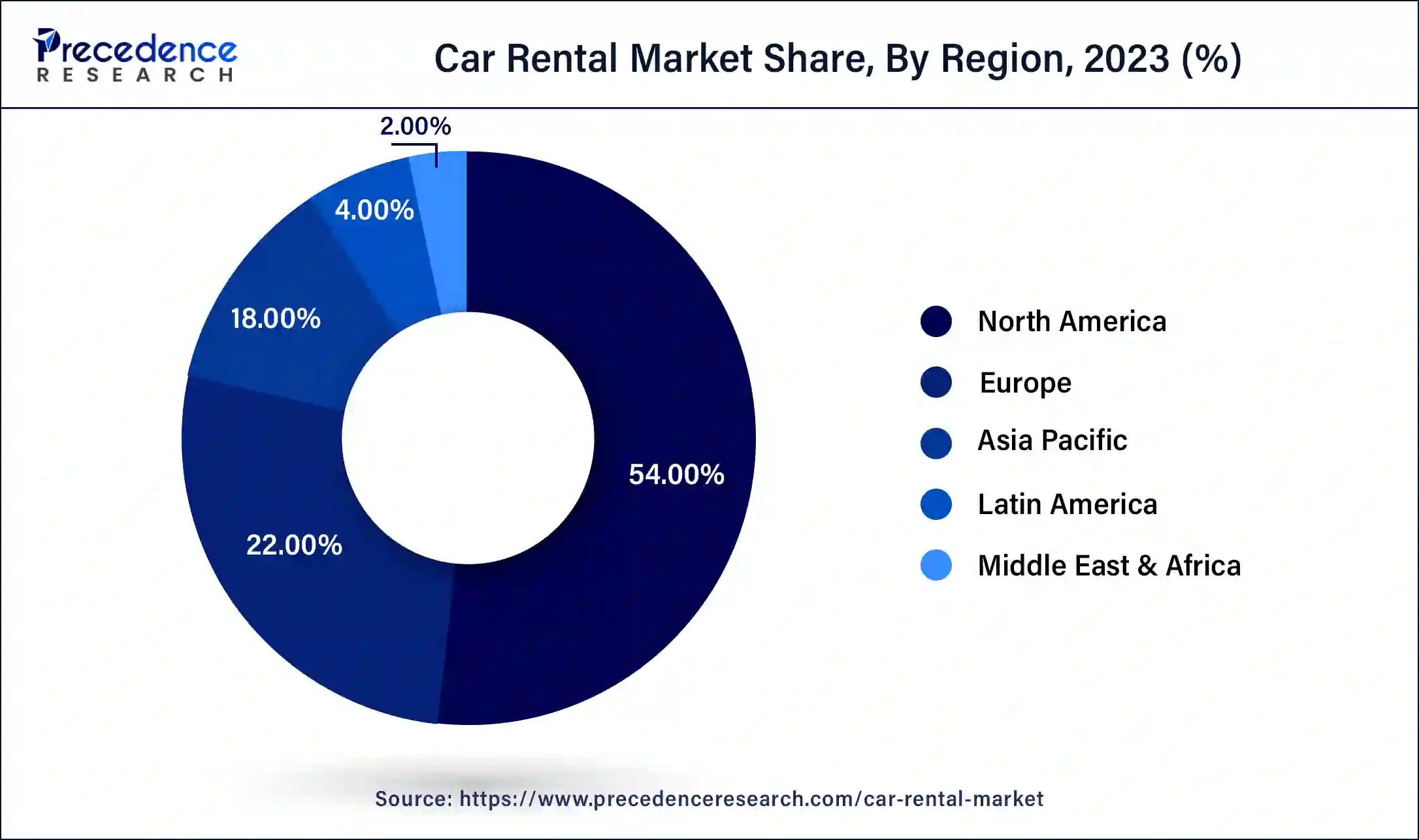
- The North America region has captured a market share of around 54% in 2025.
- Asia Pacific is expected to grow at the fastest CAGR in the market during the forecast period.
- By vehicle type, the economy cars segment held a market share of around 35% in 2025.
- By vehicle type, the executive cars segment is expected to grow at the fastest CAGR of 5.8% in the market between 2026 and 2035.
- By application, the airport transport segment accounted for 43% of the total revenue share in 2025.
- By application, local usage segment is registering growth at a CAGR of 6.8% over the forecast period.
Market Overview
The car rental market refers to the industry that provides temporary access to vehicles on a rental basis, ranging from short-term rentals for travel and leisure to long-term leasing solutions for businesses and individuals. It serves both personal and commercial mobility needs through airport rentals, local rental services, and increasingly digital, app-based platforms. The market is growing due to rising global tourism, increasing business travel, urbanization, demand for flexible and cost-effective transportation, and the rapid expansion of online booking systems and shared mobility services.
Impact of Artificial Intelligence on the Car Rental Market
AI is significantly transforming the car rental market by enabling more data-driven and automated decision-making across pricing, fleet management, and customer service. It enhances revenue optimization through dynamic pricing models that adjust rental rates in real time based on demand patterns, seasonality, and competitor activity. AI also improves operational efficiency by forecasting vehicle demand, optimizing fleet allocation, and enabling predictive maintenance to reduce downtime. Additionally, it enhances customer experience through chatbots, personalized offers, automated check-ins, and improved fraud detection systems.
Car Rental Market Trends
- Online Booking: Car rental companies now offer a wide range of vehicle options through digital platforms, making online booking a preferred choice among users. The convenience of reserving a vehicle remotely via mobile devices, along with seamless payment and confirmation processes, is a key factor driving this shift from traditional booking methods.
- Technological Advancements: Technology is playing a transformative role in the car rental industry, with companies increasingly adopting AI-driven platforms and multi-payment systems to enhance operational efficiency and customer convenience. These innovations are helping brands improve service quality and strengthen their market presence.
- Increased Focus on Hygiene: Post-pandemic, regular sanitization and deep cleaning have become essential practices in the car rental sector. Companies are aligning with health and safety guidelines issued by organizations such as OSHA and the WTTC to ensure passenger safety and build customer trust.
- Rising Demand for Luxury Cars: Younger consumers are increasingly opting for rental vehicles instead of ownership, driving demand for luxury and premium cars. This shift reflects a preference for comfort, experience, and flexibility over the responsibilities associated with owning a vehicle.
- Remote Damage Assessment: The adoption of AI and machine learning for remote vehicle inspection is gaining momentum, allowing rental companies to detect and assess damages more accurately than manual inspections. These systems improve with continuous data input, enhancing overall efficiency and reliability.
- Subscription Models: Subscription-based car rental services are becoming more popular, offering users flexible access to multiple vehicles without long-term ownership commitments. These models often include insurance, maintenance, and roadside assistance, making them a convenient alternative to traditional rentals.
Car Rental Market Outlook
- Industry Growth Overview: The car rental sector is growing consistently thanks to increasing travel spending, urbanization, and need for flexible transport solutions. The digital platforms enabling booking, subscription services, and short-year rental have considerably increased the scope of clients worldwide.
- Global Expansion: The car rental companies enhance their global presence by penetrating new markets, widening airport and urban rental networks, and cooperating with travelling platforms. Notable growth is observed in Asia-Pacific, Latin America, and the Middle East.
- Sustainability Trends: Sustainability trends have great implications for the industry. Providers are launching electric and hybrid fleets, implementing the carbon reduction strategies, and transforming the business into paperless operations. Moreover, companies invest in energy-saving fleet management and sustainable mobility services.
- Startup Ecosystem: The entry of start-up companies into the car rental market is transforming it with apps for booking, AI-based fleet optimization technologies, contactless rentals, and peer-to-peer car sharing. These companies change the market via their customer-oriented technological approach.
Car Rental Market Growth Factors
The technology plays vital role for the growth and development of car rental market. The increased adoption of car rental software by key market players is driving the growth of the market. Moreover, the business of car rental service is quite profitable, where venture capitalists and angel investors are funding the startups to start their own car rental services. The startups such as Turo, Getaround, Zoomcar, Zipcar, Socar, and Kovi are the new market players in the car rental market. The increased in internet penetration will create lucrative opportunities for the growth of the car rental market.
The digitalization of developing and underdeveloped regions is also helping the market to grow at a rapid pace. Furthermore, the digital technologies have also helped market players to collect, store, and analyze passenger data to build long-term relationship with its customers. However, the rise in low-cost public transportation may hamper the growth of car rental market. The government of developed regions is implementing policies for the growth of public transport industry. These government policies include a greater number of public buses and low-cost tickets. Thus, the increase in government activities and initiatives for the development of public transport infrastructure will restrict the growth of car rental market.
The factors such as rise in trend of on-demand transportation services and low rate of car ownership among millennials propel the growth of car rental market. Moreover, the adoption of car rental management technology will provide growth opportunities for car rental market players. However, the low rate of internet penetration in developing regions is hampering the growth of the market during the forecast period.
Market Report Coverage and Key Metrics
| Report Coverage | Details |
| Market Size in 2025 | USD 152.99 Billion |
| Market Size in 2026 | USD 166.30 billion |
| Market Size by 2035 | USD 348.69 Billion |
| Growth Rate from 2026 to 2035 | CAGR of 8.59% |
| Largest Market | North America |
| Fastest Growing Market | Asia Pacific |
| Base Year | 2025 |
| Forecast Period | 2026 to 2035 |
| Segments Covered | By Vehicle, By Application, and By Rental Duration, and region |
| Regions Covered | North America, Europe, Asia-Pacific, Latin America, and Middle East & Africa |
Market Dynamics
Driver
Rise of Access-Based Models
Growing vehicle ownership costs, rapid urbanization, and changing lifestyle preferences are driving a shift from ownership to access-based mobility solutions. In major cities, limited parking availability, high maintenance expenses, and increasing environmental concerns are encouraging consumers to rethink traditional car ownership. As a result, users are increasingly opting for services that provide on-demand vehicle access without the financial and logistical burdens of ownership.
Restraint
Ownership and Operational Challenges
Car rental operations face challenges related to liability and insurance complexities, especially when vehicles are used by multiple drivers over short durations. Fleet management also involves issues such as wear and tear, which increases maintenance costs and impacts resale value. Additionally, while rentals are cost-effective for occasional users, frequent usage can lead to higher cumulative expenses, limiting affordability for some customers.
Opportunity
Sustainable and Electrification Mobility
A major opportunity in the car rental industry lies in the shift toward electrification and sustainable mobility solutions. With rising environmental concerns and supportive government policies, electric vehicles (EVs) are gaining strong traction. Car rental companies are increasingly integrating EVs into their fleets, offering customers lower emissions, reduced operating costs, and a quieter, more comfortable driving experience while contributing to sustainability goals.
Recent Strategic Acquisitions Reshape the Rentals Cars Market
- In July 2026, Roadzen signed a definitive agreement to acquire a leading European managing general agent (MGA) specializing in short-term car rental insurance for US$15 million. The acquisition will strengthen its AI-driven underwriting, pricing, and automated claims capabilities across European rental markets. (Source: https://www.insurancebusinessmag.com)
- In March 2026, Tokyo Century agreed to acquire Australia's Bargain Car Rentals for approximately US$127 million. The deal expands its international mobility portfolio and strengthens its presence in Australia's growing vehicle rental industry. (Source: https://asia.nikkei.com)
- In December 2025, Enterprise Mobility, parent company of Enterprise Rent-A-Car, acquired Hogan Transport Services. The acquisition expands Enterprise's commercial truck rental and fleet management capabilities while strengthening transportation and logistics solutions for business customers. (Source: https://www.ccjdigital.com)
Segments Analysis
Vehicle Type Insights
How did the Economy Cars Segment Dominated the Car Rental Market in 2025?
The economy cars segment dominated the market with the largest share in 2025 due to its strong value proposition, primarily driven by exceptional fuel efficiency and affordability. These vehicles are designed for optimal mileage, enabling users to travel longer distances with lower fuel consumption and reduced overall travel costs. Additionally, economy cars contribute to lower carbon emissions, making them an environmentally favorable choice for cost-conscious and sustainability-focused consumers.
The executive cars segment is projected to register the fastest CAGR during the forecast period, driven by rising demand from business travelers and corporate clients. Executive rentals offer superior comfort, premium features, and convenience, particularly for airport pickups and business mobility needs. This segment also benefits from the growing preference for hassle-free, high-end travel experiences.
Application Type Insights
The Airport Transport Segment Dominated the Market in 2025
The airport transport segment dominated the car rental market while holding a major share in 2025 due to its strong alignment with frequent travel demand and flexible booking options. Rental services cater to diverse requirements such as hourly rides, one-way transfers, and full-day bookings, serving both individual and corporate travelers. Availability of multiple vehicle categories, including SUVs, vans, and sedans, further strengthens its dominance.
The local usage segment is expected to grow at the fastest CAGR during the forecast period, supported by the expansion of the sharing economy and peer-to-peer rental platforms. These models enable individuals to rent out personal vehicles, improving asset utilization and reducing the need for additional vehicle production. This trend also promotes sustainable mobility and strengthens community-based transportation networks.
Rental Duration Insights
How Does the Short-Term Segment Dominated the Car Rental Market in 2025?
The short-term segment dominated the market in 2025, as it caters to temporary mobility needs, typically ranging from a few hours to up to two weeks. It is widely preferred for business trips, vacations, and emergency transportation due to its flexibility and convenience. Customers can easily rent and return vehicles without long-term commitments, making it a highly accessible option.
The long-term segment is expected to witness the fastest growth during the forecast period, driven by increasing demand for extended mobility solutions. These rentals, spanning several months, offer cost advantages, flexibility, and reduced ownership burdens. They are particularly popular among corporate users and individuals seeking alternatives to vehicle ownership without long-term financial commitments.
Regional Analysis
U.S. Car Rental Market Size and Growth 2026 to 2035
The U.S. car rental market size is estimated at USD 58.17 billion in 2025 and is predicted to be worth around USD 135.08 billion by 2035, at a CAGR of 7.98% from 2026 to 2035.
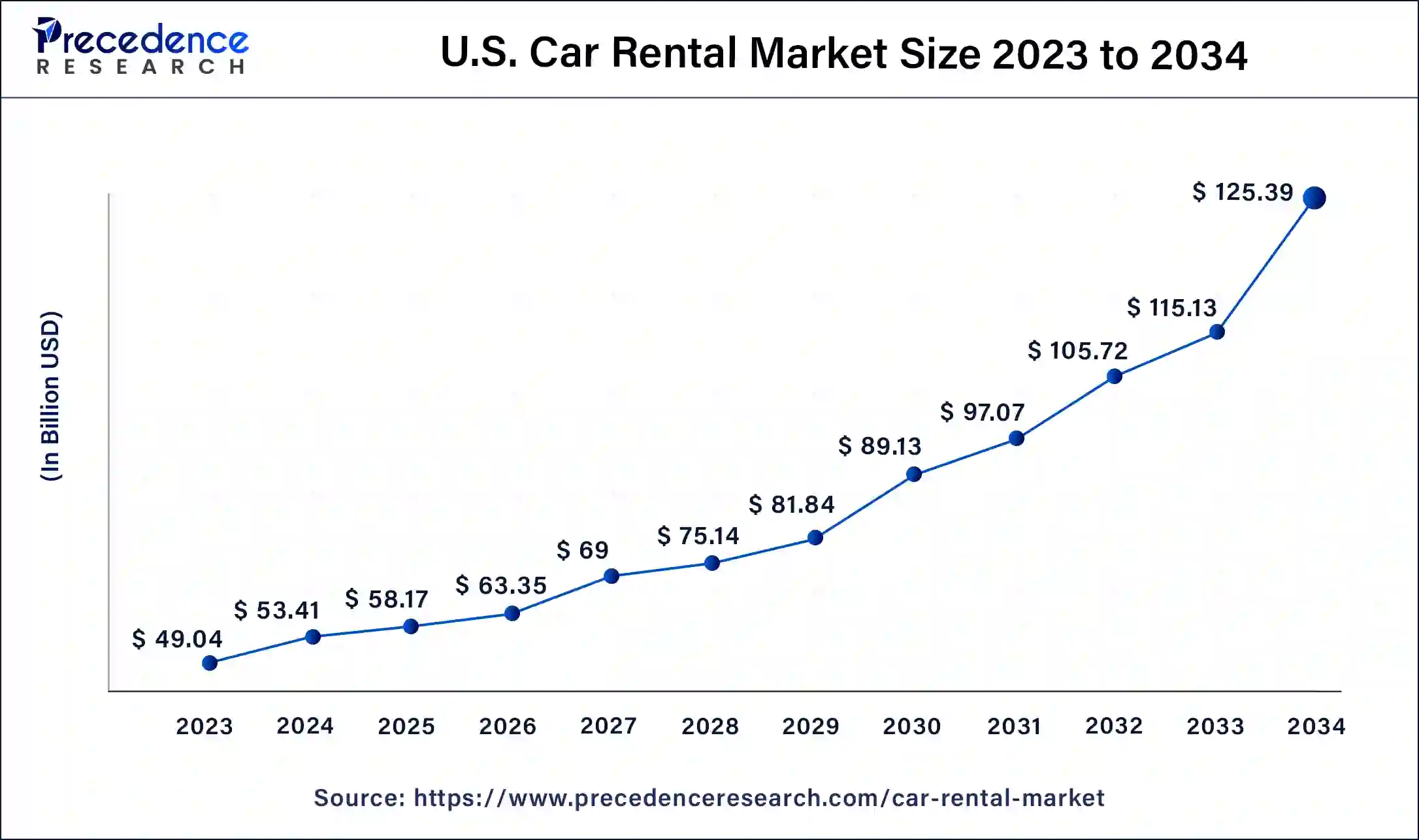
Based on the region, the North America region held 54% revenue share in 2024. The surge in number of leisure and business tours across the North America region is boosting the growth of market. The trips to North American cities such as New York, Los Angeles, Chicago, San Francisco, and Las Vegas are also paving way for the growth of the car rental market.
The U.S. is major contributor to the car rental market in North America. The market growth is driven by re-emergence of travel and tourism for both domestic and international tourism, flexibility offered by rental car service providers, growing use of online booking platforms offering a cost-effective and convenient option for travellers, rising popularity of electric vehicles (EVs), implementation of advance technological solutions such as self-serving kiosks and increased demand of rental cars in popular tourist destinations such as Florida, California, Las Vegas and New York.
- For instance, in March 2025, SIXT USA, a part of Sixt SE- a globally leading premium mobility services company, opened its newest U.S. rental car branch in Hollywood, Florida at the iconic Seminole Hard Rock Hotel & Casino. The newly launched branch will offer exceptional service for both hotel guests and area travellers by providing direct acces to SIXT's top-tier fleet.
Canada Market Trends
The car rental market in Canada is growing due to rising domestic and international tourism, which increases demand for short-term mobility solutions across major cities and tourist destinations. Urbanization, along with the high cost of vehicle ownership and maintenance, is encouraging more consumers to opt for rental and shared mobility services instead of buying cars. Additionally, the expansion of digital booking platforms, airport connectivity, and growing business travel activity is further supporting market growth.
What Makes Asia Pacific the Fastest-Growing Region in the Car Rental Market?
The Asia-Pacific is expected to grow at a CAGR of 8.4% during the forecast period. The rise in consumer spending for tourism and traveling combined with rising disposable income is driving the growth of car rental market in the Asia-Pacific region during the forecast period. The market players such as Uber, Avis, Ola, Hertz, Didi Chuxing, Sixt, Zoomcar, Europcar, GrabTaxi, Hailo, Line Taxi, and Blue Bird are offering car rental services in the Asia-Pacific region.
- For instance, in April 2025, Go Wheelo, a leading two-wheeler rental aggregation platform in India, expanded its service offerings with the launch of its new vertical for car rentals with the aim of providing smart, sustainable and accessible travel options for everyone.
China Car Rental Market Trends
China is a major contributor to the car rental market. The growing business travel and rapid growth in the tourism industry increase demand for car rentals. The rising disposable incomes and strong government support for domestic tourism help in the market growth. The growing infrastructure development, like scenic routes & highways, helps market growth. The ongoing technological advancements, like mobile apps and online platforms, increase the adoption of car rentals. The rising traffic congestion problems and rapid urbanization drive the overall growth of the market.
- In May 2025, Baidu, Apollo, and CAR Inc. launched an autonomous car rental service in China. The service is available in the second quarter of the year and provides users with driverless vehicles for flexible travel to tourist spots & cultural landmarks. It supports various users like international tourists, individuals with disabilities, the elderly, and unlicensed drivers.
How is India growing in the car rental market?
India is growing in the car rental market. The well-established tourism landscape, including offbeat & popular destinations, increases demand for rental cars. The growing improvements in the infrastructure of roads, like highways, and growing tourism help in the market growth. The higher disposable incomes and increased middle-class population fuel demand for car rentals.
The growing expansion of the hospitality & tourism sector and the growing preference for domestic travel increase demand for car rentals. The growing preference for personalised travel & road trips and increasing demand for luxury cars by foreign tourists, millennials, and Gen Z drives the overall growth of the market.
- In December 2024, Zoomcar launched Zoomcar Cabs rental service with drivers. The customer can select a car category like hatchback, sedan, and others. The customer needs to add a pickup location and have full control of their destination, stops, and route.
How is the Opportunistic Rise of Europe in the Car Rental Market?
Europe is growing in the car rental market. The growing business-related & leisure tourism and travel in the region increases demand for rental cars. The growing traffic congestions and urban population in various cities helps in the market growth. The growing disposable incomes increase the adoption of rental cars. The availability of mobile applications and online booking platforms drives the market growth.
UK Car Rental Market Analysis
In the UK, the market is growing due to a surge in both business and leisure travel, rising disposable incomes, and increasing urbanization. The adoption of digital booking platforms and mobile apps makes rentals more convenient and cost-effective. Additionally, traffic congestion in major cities encourages people to rent cars instead of owning them, boosting market growth.
Germany Market Trends
Germany is a major contributor to the European car rental market due to its strong automotive industry, high domestic and international tourism, and extensive business travel activity. The country hosts major global airports and corporate hubs, which drive consistent demand for both short-term and long-term rental services. Additionally, Germany's well-developed road infrastructure and presence of leading rental companies further strengthen its dominance in the regional market.
What Are the Driving Factors of The Car Rental Market in Latin America?
Latin America is becoming an important player in the global automotive market, mainly driven by a surge in tourism post-pandemic, increased urbanization, and the adoption of digital booking platforms. Rising tourism in the region has greatly increased the demand for leisure vehicle rentals, with governments placing priority on this sector, as evidenced by recent travel and hospitality revamps. The adoption of mobile applications, IoT-enabled fleet management, and digital contactless rental processes is simplifying the rental experience.
Brazil Market Trends
Brazil holds a significant position in the region, shifting towards subscription models and green mobility, driven by corporate demand and a move away from ownership. Supported by the MOVER program's green incentives, major companies like Localiza are expanding their fleets, while Toyota's investments bolster local hybrid production, transforming the landscape into one focused on sustainability and service.
How is the Middle East and Africa Performing in The Car Rental Market?
The Middle East and Africa are experiencing notable growth due to booming tourism, substantial infrastructure investments, and digital transformation. Major events and relaxed visa policies have led to increased tourist inflows, driving up short-term car rentals. Significant investment in road networks and smart city initiatives is improving overall driving feasibility. Mobile-first platforms, keyless entry, and self-service kiosks are streamlining bookings, especially in the UAE and Qatar.
UAE Market Trends
The UAE's premium tourism-driven car rental market is accelerating through digital-first, contactless app bookings and rapid fleet expansions to accommodate surging visitor numbers, particularly in Dubai and Abu Dhabi. Modernization efforts are substantial, featuring the integration of AI and IoT into smart city projects, along with significant EV adoption to align with sustainability goals, solidifying its status as a high-tech mobility hub.
Government Initiatives for the Car Rental Market
- Federal Government Rental Car Program of the U.S.: The U.S. Government Rental Car Program provides consistent rental rates, both unlimited mileage, insurance, and standard rental benefits with respect to business trips, promoting unchanging level of demand and efficiency of the operations of rental companies. Federal subsidies for electric vehicles, as well as state-level incentives like California's fleet electrification grants, drive rental companies to implement electric vehicles into their fleets and minimize running costs as they accelerate fleet decarbonization.
- Europe- Electric Vehicle Rental Assistance: A number of European countries implement tax credits for EV rentals and give out grants for installation of EV chargers at work premises enabling rental enterprises to save on costs of ownership of vehicles and promote electric vehicles in the transportation sphere.
- India: India has initiated the FAME II program and incentives for electric vehicles, where this program will assist people in motivating them to buy electric vehicles in exchange for incentives under the FAME II scheme. With the introduction of electric vehicle rental systems, the rent or service fee has seen a reduction of the Goods and Services Tax (GST) to 5% from the earlier 28% for a conventional vehicle thus enabling the customers to rent the electric vehicle at reduced fees.
- Boston: Cities such as Boston have also started implementing their shared mobility programs by creating dedicated parking space for car-sharing and giving their support for usage of zero-emission modes of transport thus allowing more accessibility and addressing urban congestion issues.
Future Outlook and Strategic Recommendations for the Car Rental Market
- Industry Future Perspective: The automobile rental industry is likely to see a sustained growth path due to factors related to the increase of corporate and leisure trips and urbanization. The growing preference of people for the availability and use of the shared transport instead of owning cars will also play its role. Online rental platforms, advanced vehicle features, including electric ones, will enable users to benefit from better service.
- New Business Models: More and more rental companies are starting to develop new business models based on short-term rentals, peer-to-peer rentals, subscriptions based rental, as well as corporate rental models. Integration with Mobility-as-a-Service platforms, Artificial Intelligence-based fleet management, and contactless rentals will also help to make these businesses more profitable.
- Stakeholders Strategic Recommendations: Car rental companies should focus on the electrification of their fleets and invest in connected vehicle technologies, using predictive maintenance of their vehicles, and pricing strategies based on data analytics. At the same time, they should think about entering the new underdeveloped markets, developing digital ecosystems, and forming business partnerships with electric vehicle producers, charging stations providers, and travel websites.
Supply Chain Analysis
Procurement and Asset Management
- This involves acquiring vehicles, financing, and initial registration to meet sustainability goals, and planning the fleet mix.
- Key Players: Avis Budget Group, Enterprise Holdings, Hertz, Sixt, Toyota Rent-a-Car, and Localiza.
Fleet Operations and Technology Integration
- This focuses on preparing vehicles for rent, managing maintenance, and implementing digital systems for tracking and efficiency.
- Key Players: Geotab, ATOM Mobility, Wirelesscar, and Avis Budget Group.
Marketing and Distribution
- This focuses on attracting customers through various digital and physical channels, with a strong trend toward online booking.
- Key Players: Expedia, Booking.com, Skyscanner, Uber Rent, and CarTrawler.
Logistics, Delivery, and Customer Service
- This encompasses the customer interaction, from pickup to return, with an increasing focus on off-airport and last-mile delivery.
- Key Players: Enterprise Rent-A-Car, Hertz, Europcar, and Sixt.
Market Competitive Landscape: Leading Companies and Strategies
The car rental market is moderately consolidated, with a few global players such as Enterprise Holdings, Hertz Corporation, Avis Budget Group, Sixt SE, and Europcar Mobility Group dominating the market. The market is highly competitive, driven by fleet scale, pricing efficiency, and strong geographic presence. Key players are increasingly adopting AI-based dynamic pricing, expanding electric vehicle (EV) fleets, and investing in digital booking platforms to enhance customer convenience. Strategic partnerships with airlines, hotels, and travel aggregators, along with loyalty programs and subscription-based rental models, are also being used to strengthen customer retention and improve utilization rates.
Looking ahead, key players must focus on fleet electrification, integrated mobility ecosystems, and deeper digital transformation to remain competitive. Companies must also invest in sustainable mobility solutions, including EV infrastructure partnerships and carbon-neutral rental offerings, as environmental regulations and consumer preferences shift.
Top Companies Operating in the Market & Their Offerings
- Enterprise Holdings Inc.: Enterprise Holdings operates Enterprise Rent-A-Car, National, and Alamo brands, offering a wide vehicle selection, flexible rental terms, local airport and neighborhood pick-ups, roadside assistance, loyalty programs, and customer-focused services for business and leisure travelers globally.
- The Hertz Corporation: Hertz provides car and truck rentals worldwide with economy to premium vehicles, digital reservations, Hertz Gold Plus Rewards, roadside support, and optional protections, serving business, leisure, and long-term renters through airports and city locations.
- Toyota Rent a Car: Toyota Rent a Car offers reliable Toyota vehicles for daily, weekly, and long term rentals, emphasizing fuel efficiency and safety, with convenient booking, customer support, and options suitable for family, business, and tourism travel needs.
- Sixt SE: Sixt SE delivers premium car rentals across global markets with a modern fleet including luxury, sports, and electric vehicles, online/mobile reservations, corporate solutions, loyalty benefits, and flexible pickup/drop off at airports and city hubs.
- Alamo Rent a Car LLC: Alamo focuses on affordable, family friendly car rentals with straightforward pricing, online check in, unlimited mileage (in many markets), airport locations, and deals tailored to leisure travelers and vacationers.
- Carzonrent India Pvt Ltd: Carzonrent India offers self-drive and chauffeur-driven rentals, corporate mobility, airport transfers, and subscription models with varied vehicles, 24/7 support, digital booking, and customized plans for business and tourism travel.
- Localiza: Localiza provides extensive car rental and fleet management in Latin America, with diverse vehicles, online/mobile booking, loyalty perks, flexible terms, airport and city locations, and tailored solutions for business, tourism, and everyday use.
Car Rental Market Companies
- Avis Budget Group
- Europecar
- Enterprise Holdings Inc.
- The Hertz Corporation
- Toyota Rent-a-Car
- Sixt SE
- Alamo Rent-a-Car LLC
- Carzonrent India Pvt Ltd
- Localiza
- ANI Technologies Pvt. Ltd
Recent Developments
- In May 2026, Kia introduced a Battery-as-a-Service (BaaS) scheme for the Carens Clavis EV, reducing the upfront purchase price to ₹12.84 lakh while charging ₹3.3 per kilometre for battery usage, making EV ownership more financially accessible.(Source: https://www.autox.com)
- In June 2026, Perodua launched UCar-e, an app-based car rental service for selected Malaysian universities, enabling students and staff to book vehicles conveniently through a mobile application as part of its broader mobility-as-a-lifestyle strategy. (Source: https://www.zigwheels.my)
- In November 2025, SelfDrive Mobility launched the Middle East's first conversational AI-powered car rental reservation system, SIA, supporting over 40 languages to deliver faster, human-like booking experiences and enhance customer engagement across the region. (Source: https://www.khaleejtimes.com)
- In December 2025, RateGain Travel Technologies disclosed Rev-AI-Clarity, a current AI-linked revenue assistant that is crafted for the car rental world. It includes the Rev-AI suite, which is a solution that shifts complicated performance and demand data into conversational highlights that have allowed revenue teams to make data-driven and quicker decisions with enhanced confidence and clarity. (Source: https://travel.economictimes.indiatimes.com)
- In July 2025, a Beijing-based rental company named CAR Inc. officially partnered with Baidu Apollo, which is the autonomous driving wing for the online group Baidu, to serve short-term vehicle rentals. This service will apply Baidu Apollo's Level 4 autonomous driving stage, with a vehicle that is automatically directed to return and pickup locations as mentioned by the user. (Source: https://www.electrive.com)
- In April 2026, Roamly, which is an InsurTech that concentrates on mobility insurance solutions, revealed a usage-dependent commercial insurance product for autonomous fleets, which covers the amount in real-time and lowers the amount when vehicles run in autopilot mode, in a merger with Tesla. (Source: https://fintech.global)
- In May 2026, RateHawk introduced car rental services for travel advisors in the U.S. and Canada, enhancing integrated travel bookings with accommodations, flights, transfers, and car rentals ahead of the summer season. (Source: https://www.traveldailynews.com)
- In February 2026, Europcar expanded its mobility portfolio with rental cars, subscriptions, sharing options, and digital services, emphasizing flexible, sustainable solutions, electromobility, and corporate partnerships. (Source: https://vision-mobility.de)
- In April 2025, SelfDrive Mobility, a leading mobility tech company, launched car rental services offering Zero Deposit across daily, weekly and monthly rental plans providing a flexible and cost-effective solution to traditional leasing. The service is launched in five key markets, including Qatar, Bahrain, the Kingdom of Saudi Arabia, the UAE and the UK with the aim of simplifying and improving customer rental experience.
- In April 2025, Dollar Car Rental UAE launched a digital-first travel solution at the Arabian Travel Market (ATM) 2025 with new customer-centric offerings which align with the future of global tourism and are set to revolutionize mobility services.
- In February 2025, Poppy Mobility, a leading car-sharing and rental operator in Belgium, announced the launch of its remote-driving technology for delivering rental cars in collaboration with Ush, a developer of autonomous and remote-controlled vehicle solutions. Requests for rental vehicle can be done via the Poppy app by users, which will then remotely be driven to the user's real-time location by Ush's remote driving operator.
Segments Covered in the Report
By Vehicle Type
- Luxury Cars
- Economy Cars
- SUVs
- Executive Cars
- MUVs
By Application Type
- Local Usage
- Outstation
- Airport Transport
- Others
By Rental Duration
- Long-term
- Short-term
By Region
- North America
- Europe
- Asia-Pacific
- Latin America
- Middle East & Africa
For inquiries regarding discounts, bulk purchases, or customization requests, please contact us at sales@precedenceresearch.com
Frequently Asked Questions
Tags





Ask For Sample
No cookie-cutter, only authentic analysis – take the 1st step to become a Precedence Research client
 Get a Sample




 sales@precedenceresearch.com
 Schedule a Meeting
