


Cephalosporin Drugs Market Size, Leading Companies, Drug Generations, Applications, Regional Outlook, and Growth Forecast
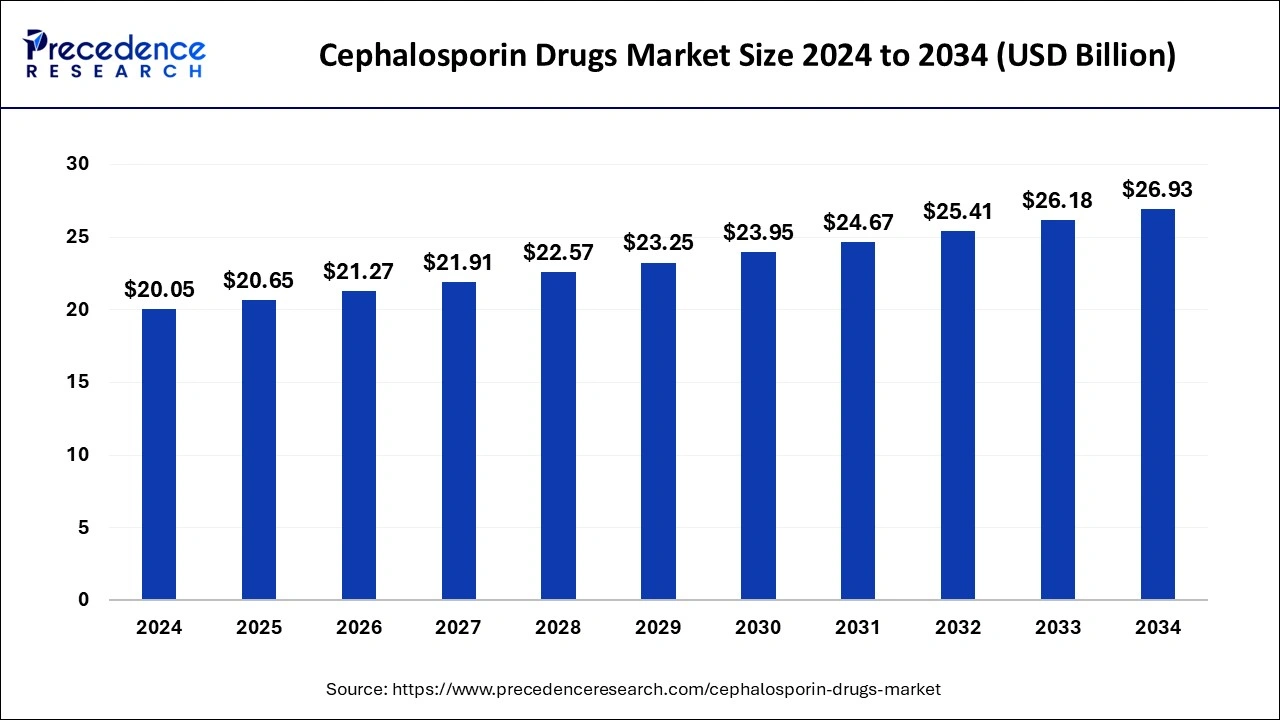
The global cephalosporin drugs market is projected to expand from USD 21.27 billion in 2026 to USD 27.69 billion by 2035, at a CAGR of 2.98%. This growth is driven by the increasing incidence of bacterial infections, advancements in drug formulations, and growing healthcare investments, particularly across North America and Asia Pacific.
Source: https://www.precedenceresearch.com/cephalosporin-drugs-market
 Get a Sample
 Table Of Content


Cephalosporin Drugs Market Size and Forecast 2026 to 2035
The global cephalosporin drugs market size was valued at USD 21.27 billion in 2026 and is projected to reach approximately USD 27.69 billion by 2035, expanding at a CAGR of 2.98% from 2026 to 2035. The rising prevalence of bacterial infections is observed to drive the growth of the market.
Market Highlights
- The global cephalosporin drugs market was valued at USD 21.27 billion in 2026.
- It is projected to reach USD 27.69 billion by 2035.
- The cephalosporin drugs market is expected to grow at a CAGR of 2.98% from 2026 to 2035.
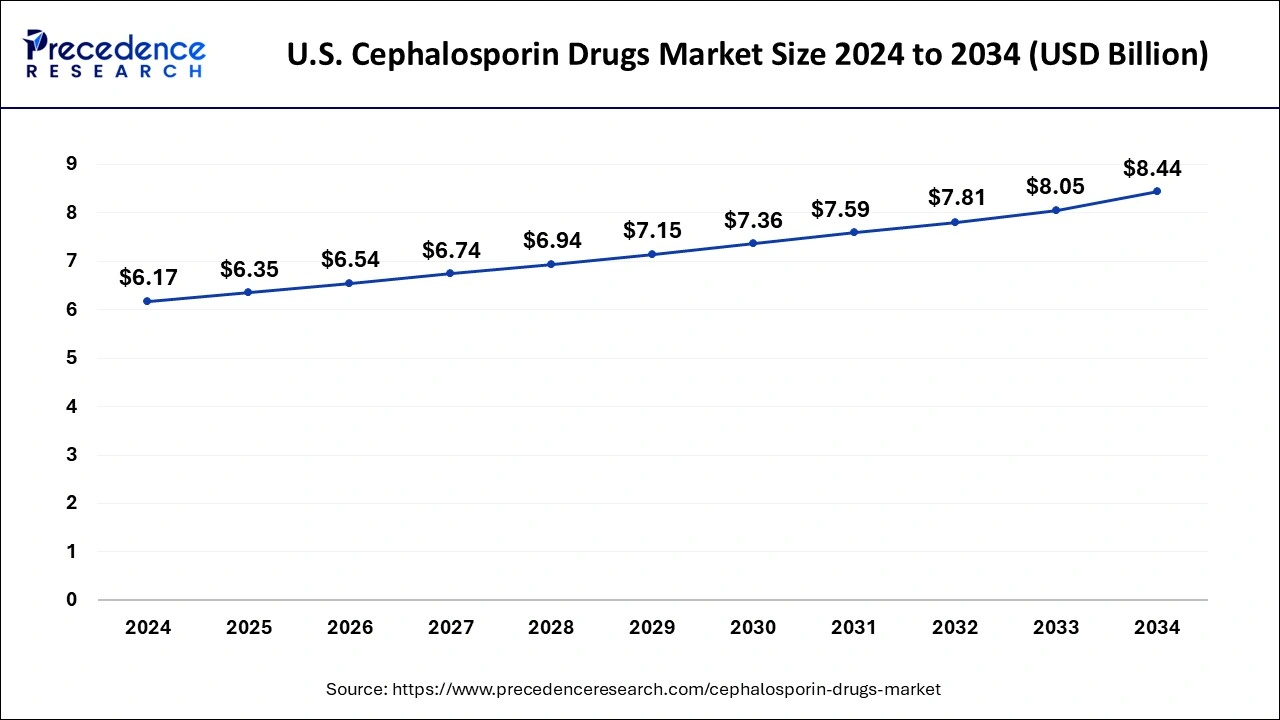
- The North America cephalosporin drugs market accounted for USD 7.98 billion in 2025 and is estimated to attain around USD 10.73 billion by 2035.
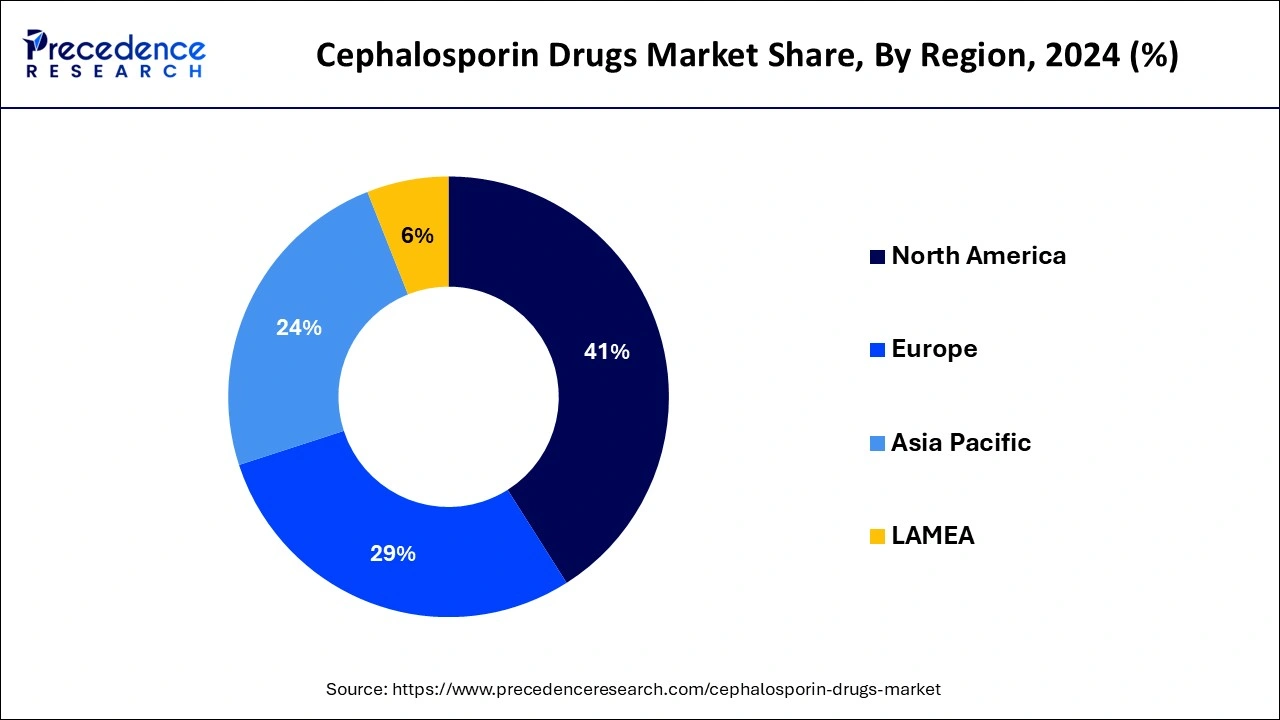
- North America accounted for approximately market share in 2025.
- Asia Pacific is expected to witness the fastest growth in the market during the forecast period.
- By generation, the second-generation segment accounted for the largest market share in 2025.
- By generation, the third-generation segment is expected to grow significantly during the forecast period.
- By route of administration, the oral segment has held the largest market share of 57% in 2025.
- By route of administration, the injection segment is expected to grow significantly during the forecast period.
- By application, the skin infection accounted for the largest market share in 2025.
- By application, the respiratory tract infection segment is expected to witness a significant rate of growth during the forecast period.
Market Overview
The cephalosporin drugs market is the industry that deals with the production and distribution of therapeutics used in the treatment of bacterial infections. Cephalosporins are available in oral and parenteral formulations, with the route of administration depending on the specific drug, formulation, infection, and clinical setting. Depending on the specific agent and clinical indication, cephalosporins are used to treat selected bacterial infections, including certain skin and soft-tissue, urinary tract, respiratory, ear, bloodstream, and central nervous system infections. The cephalosporin drugs market encompasses a diverse range of medications, including first- through fourth-generation cephalosporins, with newer agents such as ceftaroline and ceftobiprole sometimes classified as fifth-generation cephalosporins, each with varying spectra of activity, pharmacokinetic properties, and clinical indications. These drugs are available in various formulations, including oral tablets, capsules, injections, and intravenous (IV) infusions, providing flexibility in treatment options for healthcare providers
Cephalosporin Drugs Market Growth Factors
- The continued burden of bacterial infections supports demand for effective antibacterial therapies, although antibiotic stewardship and resistance influence treatment selection and utilization
- The burden of bacterial infections remains an important demand factor for antibacterial therapies, with cephalosporin use varying according to pathogen susceptibility, treatment guidelines, and clinical indication.
- The rising investments in the research and development activities in the latest drug formulation and the rising demand for the antibiotics are driving the expansion of the market.
- Expanding healthcare infrastructure and increasing investment in the pharmaceutical industry are driving the research on innovation of the new drug development that also contributed to the expansion of the market.
- The increasing number of infectious diseases due to the rising urbanization and industrialization that affecting the environment by the increased level of carbon emission which is hazardous to the human health that causes the increased number of infectious diseases.
Market Dynamics
Driver
Improving healthcare infrastructure
The rising investments in healthcare infrastructure for the improvisation purpose and efforts by pharmaceutical companies for the development of drug formulations are driving the growth of the cephalosporin drugs market. Moreover, upgradation of healthcare facilities in economically developing countries results in better quality medical infrastructure. The increasing prevalence of bacterial infections has increased the demand for effective treatment medicine that drives the advancements in drug development for bacterial treatment medicines. The rising investments by the public and private sector in the development of healthcare facilities, especially in developing economies and the increasing awareness campaign for bacterial infections are also propelling the growth of the cephalosporin drugs market.
Restraint
Side effects of the drugs
The side effects associated with the cephalosporin drugs are generally observed to limit the growth of the cephalosporin drugs market. Cephalosporins can cause adverse effects, including gastrointestinal reactions and hypersensitivity reactions in susceptible patients. Antimicrobial resistance (AMR) is a major concern in healthcare worldwide, posing a significant threat to the effectiveness of antibiotics, including cephalosporins. Overuse and misuse of antibiotics have led to the emergence of multidrug-resistant bacteria, reducing the efficacy of cephalosporin drugs in treating bacterial infections. Antimicrobial resistance can reduce the clinical effectiveness of susceptible cephalosporins and influence prescribing decisions, creating pressure on utilization and encouraging development and adoption of alternative or newer antibacterial therapies. Additionally, Antimicrobial stewardship initiatives can moderate inappropriate antibiotic use by promoting evidence-based prescribing, which may constrain unnecessary utilization while supporting appropriate use of cephalosporins.
Opportunity
Advancements in drug formulation
The technological advancements in the pharmaceutical industry and the rising research and development activities for the upgradation of drug formulation processes is observed to open lucrative opportunities for the cephalosporin drugs market. Industry players are focused on such developments, especially for better efficiency and faster recovery time, which supports the expansion of the market. The advancements in the cephalosporin drugs such as third generation and forth generation cephalosporin drugs that used in enhance the resistance against the infectious diseases and broader spectrum of bacteria. The rising investments in the research and development activities by the major pharmaceutical companies for launch of the effective medications for infectious diseases propels the market's expansion.
Segments Insights
Generation Insights
The second-generation segment dominated the cephalosporin drugs market with the largest share in 2025. The growth of the second-generation segment is attributed to its wider application in the treatment of selected bacterial infections. Second-generation cephalosporin is used in targeting the gram-positive and gram-negative bacteria. Second-generation agents are used for selected respiratory, urinary, skin and soft-tissue, and other bacterial infections, depending on the specific drug and susceptibility profile impetigo, intraabdominal infection, joint infection, kidney infections, lyme disease, meningitis, otitis media, pelvic inflammatory disease, peritonitis, pneumonia, sepsis, septicemia, sinusitis, skin and structure infection, skin or soft tissue infection, strep throat, surgical prophylaxis, tonsillitis/pharyngitis, upper respiratory tract infection, urinary tract infection and wound infections. The second-generation cephalosporin drug includes cefaclor (Ceclor), cefuroxime (Ceftin), and ceprozil (Cefzil).
The third-generation segment is expected to witness a significant rate of growth during the forecast period. Third-generation cephalosporins generally provide broader activity against Gram-negative organisms than earlier generations, although activity varies by individual agent and pathogen cephalosporin drug generation. The third-generation cephalosporin is used for selected serious bacterial infections. Some of the expamples of third generation cephalosporin includes cefixime, ceftibuten, and cefpodoxime.
Route of Administration Insights
The oral segment held the largest market share in the cephalosporin drugs market in 2025. The growth of the segment is increasing owing to the convenience to the patients. The oral segment includes the capsules, tablets, and oral suspensions which makes administration of medicines by the patients easier. Oral administration minimizes the healthcare costs related to the outpatient's care. Oral cephalosporins are used for selected bacterial infections when oral therapy is clinically appropriate such as urinary tract infections, respiratory tract infections, skin and soft tissue infections. The easy availability of the bacterial infection oral drug with enhanced treatment efficiency and ease in administration is observed to further promote the expansion of the market.
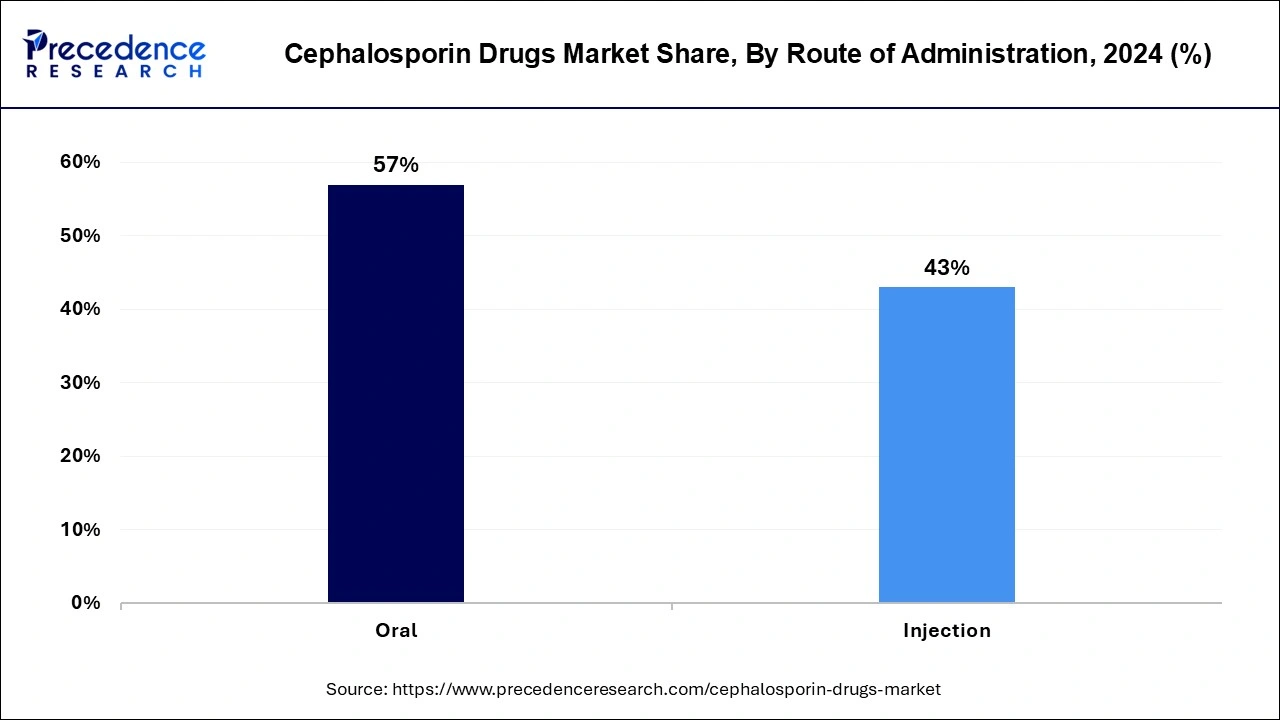
The injection segment is expected to grow as parenteral cephalosporins remain important for hospitalized patients and serious infections requiring injectable therapy. The administration of therapeutics via injections has become popular in recent years due to its effective and faster delivery of drug directly to the bloodstream. The injection cephalosporin drug is administered by injection for the critically infected patients in the hospital and in healthcare facilities. The segment includes intramuscular (IM) injections, and intravenous (IV) to fight against the various infectious diseases.
Application Insights
The skin infection segment accounted for the largest share of the cephalosporin drugs market in 2025, according to the report's market model. The growth of the segment is attributed to the rising skin infections in the people due to the bacterial infections and environmental pollution that drives the demand for the cephalosporin drugs in the skin infections. The abscesses, cellulitis, and impetigo, are some of the skin infections that are drives the demand for the cephalosprin drugs market. Cephalosporins may support resolution of susceptible bacterial infections when prescribed according to clinical guidelines and antimicrobial susceptibility, and prevents the spread of infections. The rising environmental pollution is also one of the major factor for rise in the skin infections.
The respiratory tract infection segment is expected to grow at a notable rate during the forecast period. supported by demand for treatment of susceptible bacterial respiratory infections The growth of the segment is rising owing to the geriatric population and environmental pollution causing the increased rate of respiratory infection among the people. Cephalosporins are used for selected bacterial respiratory infections when the pathogen is susceptible and treatment guidelines support their use.
Regional Insights
North America Leads Cephalosporin Drugs Market Growth
North America led the cephalosporin drugs market with the largest market share in 2025. The expansion of the market in the region is due to the rising prevalence of bacterial infections in the population are driving the demand for the cephalosporin drugs market. The region's high healthcare spending per capita and widespread access to health insurance coverage ensure broad access to prescription medications, including cephalosporin drugs, for patients in need. This favorable reimbursement environment encourages healthcare providers to prescribe cephalosporins as frontline treatments for bacterial infections.
North America is home to several leading pharmaceutical companies that specialize in the research, development, manufacturing, and marketing of cephalosporin drugs. These companies benefit from access to advanced research facilities, skilled workforce, and robust intellectual property protections, enabling them to innovate and commercialize new cephalosporin formulations.
U.S. Cephalosporin Drugs Market Size and Growth 2025 to 2035
The U.S. cephalosporin drugs market size was exhibited at USD 6.35 billion in 2025 and is projected to be worth around USD 8.67 billion by 2035, growing at a CAGR of 3.16% from 2026 to 2035.
Asia Pacific is expected to witness the fastest growth in the market during the forecast period. The growth of the market is owing to the increasing population of the region and the improving healthcare infrastructure. Countries in Asia Pacific experience a significant burden of bacterial infections, including respiratory tract infections, urinary tract infections, skin and soft tissue infections, and bloodstream infections. The region's large population, dense urban areas, and modern lifestyle factors contribute to the spread of infectious diseases, driving demand for cephalosporin drugs.
Recent Developments
- In April 2024, the U.S. FDA approved Zevtera (ceftobiprole medocaril sodium) for adults with Staphylococcus aureus bacteremia and acute bacterial skin and skin-structure infections, and for adults and pediatric patients aged 3 months to under 18 years with community-acquired bacterial pneumonia
Cephalosporin Drugs Market Companies
- Bristol-Myers Squibb Company
- F. Hoffmann-La Roche Ltd.
- GlaxoSmithKline plc
- Lupin Limited
- Merck & Co. Inc.
- Novartis International AG (Sandoz)
- Pfizer Inc.
- Sanofi S.A.
- Teva Pharmaceutical Industries Ltd.
- Abbott Laboratories
- Sun Pharmaceutical Industries Limited
Segments Covered in the Report
By Generation
- First Generation
- Second Generation
- Third Generation
- Fourth Generation
- Fifth Generation
By Routes of Administration
- Oral
- Injection
By Application
- Skin Infection
- Respiratory Tract
- Ear Infection
- Urinary Tract Infection
- Sexually Transmitted Infection
By Geography
- North America
- Europe
- Asia-Pacific
- Latin America
- Middle East and Africa
For inquiries regarding discounts, bulk purchases, or customization requests, please contact us at sales@precedenceresearch.com
Frequently Asked Questions





Ask For Sample
No cookie-cutter, only authentic analysis – take the 1st step to become a Precedence Research client
 Get a Sample




 sales@precedenceresearch.com
 Schedule a Meeting