



Cholestatic Pruritus Market Size, Companies, Share, Patient Volume, Treatment Adoption Rates, Pricing Analysis, Regulatory Landscape, Competitive Positioning, and Demand Forecast
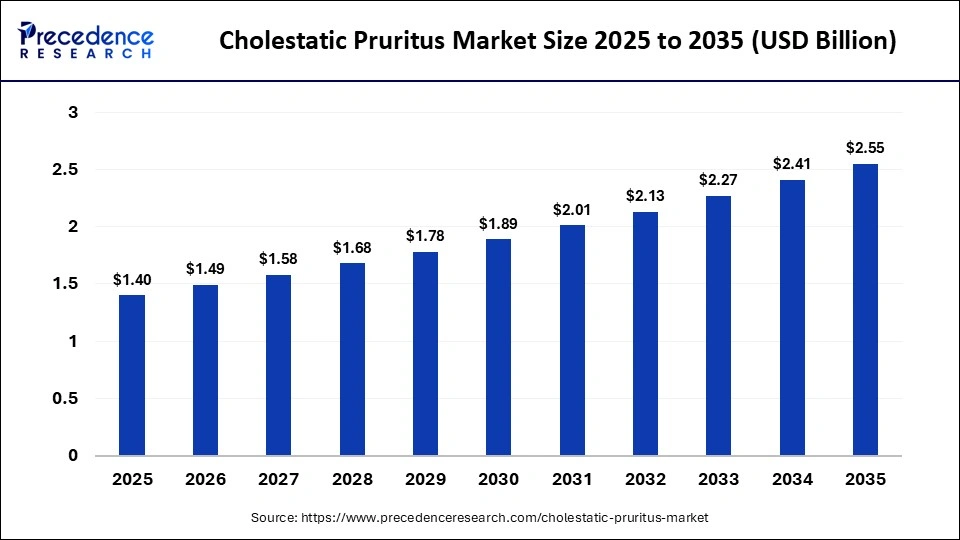
Rohan Patil, a Healthcare Industry Expert, highlights that the cholestatic pruritus market has reached USD 1.49 billion in 2026 and is on track to reach USD 2.55 billion by 2035, advancing at a CAGR of 6.20%. Key cholestatic pruritus market companies shaping the market include Allergan, Mundipharma, Intercept Pharmaceuticals, Eisai Co., Ltd., Gilead Sciences, while major growth segments span By Treatment Type, By Disease Type, By End-Use.
Source: https://www.precedenceresearch.com/cholestatic-pruritus-market
 Get a Sample
 Table Of Content


What is the Cholestatic Pruritus Market Size in 2026?
The global cholestatic pruritus market size accounted for USD 1.40 billion in 2025 and is predicted to increase from USD 1.49 billion in 2026 to approximately USD 2.55 billion by 2035, expanding at a CAGR of 6.20% from 2026 to 2035. The market is expanding due to the increasing prevalence of liver diseases such as ICP and PBS, improved diagnostic methods, and well-developed pipelines for the introduction of novel drugs.
Key Takeaways
- North America held the largest market share of 35% in 2025.
- Europe is expected to witness the fastest CAGR during the foreseeable period.
- By treatment type, the pharmacological treatments segment held the largest market share of 75% in 2025.
- By treatment type, the non-pharmacological treatments segment is the second-largest shareholder and is expected to grow at a significant rate between 2026 and 2035.
- By disease type, the primary biliary cholangitis segment held the largest market share of 60% in 2025.
- By disease type, the cholestasis hepatic failure segment is the second-largest shareholder and is expected to grow at a significant rate between 2026 and 2035.
- By end use, the hospitals segment held the largest market share of 50% in 2025.
- By end use, the clinics segment is the second-largest shareholder and is expected to grow at a significant rate between 2026 and 2035.
The Rise of the Cholestatic Pruritus Market
Cholestatic pruritus is a disease that causes a debilitating itching sensation that arises due to a liver dysfunction that disrupts bile flow, like PBC. It shows severe symptoms like sleep deprivation, fatigue, and, in severe cases, it may turn into depression. Doctors use blood tests for liver function, imaging, and liver biopsy in some critical cases to diagnose the root causes of liver issues. A bile flow is reduced or stopped in cholestasis, which leads to an impairment in the movement of bile from the liver to the small intestine.
The cholestatic pruritus market deals with the diagnosis, management, and treatment of chronic itching. Targeted therapies are mainly used by healthcare professionals to combat this issue with the help of approved drugs like LIVMARLI. The development and sales of drugs specifically designed to reduce bile acid buildup and treat pruritus further supports the market growth. The market is rapidly expanding due to factors like increasing healthcare awareness, diagnostic treatment for cholestatic pruritus, emerging targeted therapies, and rising cases of liver dysfunction across the globe.
Cholestatic Pruritus Market Trends
- The market is rapidly shifting from traditional to targeted treatments such as IBAT inhibitors like odevixibat and maralilixibat, which can absorb bile acids effectively, that reduce systematic acid levels, which is a primary reason for itching.
- The growth of research and development across the cholestatic pruritus market is highly focused on rare and devastating pediatric liver diseases like Alagille syndrome. The approval for drugs to combat such sensitive cases signals strong regulatory backup to resolve overlooked needs in pediatric patients.
- New treatments are largely focusing on offering quality of life to the patient, beyond just managing liver damage symptoms. It is possible by reducing the intense and unbearable itching related to liver diseases like PSC and PBC.
- The market is witnessing an increasing awareness about cholestatic pruritus along with enhanced diagnostic tools like genetic testing to treat primary biliary cholangitis and intrahepatic cholestasis of pregnancy, supporting the market expansion on a large scale.
Market Scope
| Report Coverage | Details |
| Market Size in 2025 | USD 1.40 Billion |
| Market Size in 2026 | USD 1.49 Billion |
| Market Size by 2035 | USD 2.55 Billion |
| Market Growth Rate from 2026 to 2035 | CAGR of 6.20% |
| Dominating Region | North America |
| Fastest Growing Region | Asia Pacific |
| Base Year | 2025 |
| Forecast Period | 2026 to 2035 |
| Segments Covered | Treatment Type, Disease Type, End-Use, and Region |
| Regions Covered | North America, Europe, Asia-Pacific, Latin America, and Middle East & Africa |
Market Dynamics
Drivers
Rising Health Impairment and Extensive R&D
The primary factor fueling the growth of the cholestatic pruritus market is the rising cases of chronic liver dysfunction, which is an underlying reason for cholestatic liver diseases. Cholestatic is merely a symptom of bile acid accumulation due to conditions like PBC, PSC, and ICP. The major factors that cause this condition include obesity, autoimmune disorders, alcohol abuse, and viral hepatitis. These diseases have become very common in recent years, which has fueled better diagnosis. The R&D prioritizes combating the underlying cause instead of working on symptoms only.
Restraint
Expensive Therapies
The cholestatic pruritus market is witnessing a leading bottleneck in terms of the high cost of advanced therapies and diagnostic methods, which are a primary and critical stage of treating cholestatic pruritus. Effective treatments are still being developed, and patients need to pay more than for conventional treatment. Also, there are no standardized diagnostic criteria to diagnose the issue. This may cause delays in effective treatment, hindering market growth.
Opportunity
Increasing Demand for Targeted Therapies
The industry is observing the most significant opportunity to grow in terms of clinical development of targeted therapies like IBAT inhibitors and novel antipruritic. The cholestatic pruritus market is rapidly shifting towards targeted therapies like ileal bile acid transporter inhibitors like maralixibat, which offer targeted relief by addressing the root cause of disease, acid build-up, more effectively. Many companies are heavily investing in the area and are focused on pipeline assets, creating a lucrative opportunity for the market to expand globally.
Segmental Insights
Treatment Type Insights
Cholestatic Pruritus Market Share, By Treatment Type, 2025-2035 (%)
| Treatment Type | 2025 | 2035 | CAGR (%) |
| Pharmacological Treatments | 75.00% | 78.00% | 6.50% |
| Non-pharmacological Treatments | 25.00% | 22.00% | 5.00% |
The Pharmacological Treatments Segment Held the Highest Market Share of 75% in 2025
The pharmacological treatments segment dominated the cholestatic pruritus market with a share of 75% in 2025 due to its complex pathophysiology that needs systematic intervention to treat cholestatic pruritus. Pharmacological agents are specifically designed to target specific molecules. As the source is internal, only systematic pharmacological treatments can effectively reduce serum levels of the pruritogenic. Also, clinical guidelines like those from the EASL and AASLD mandate strict regulations that further increase demand for pharmaceutical drugs.
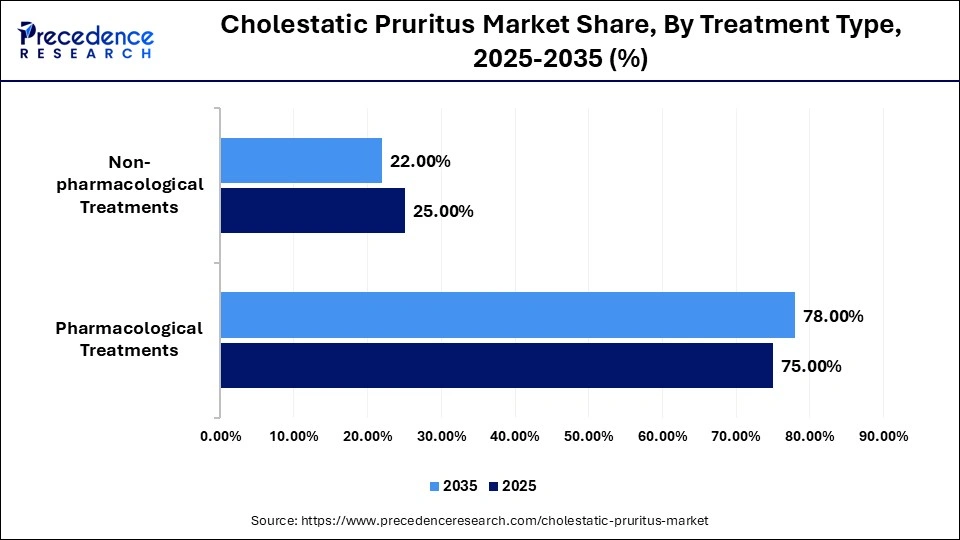
The non-pharmacological treatments segment is the second-largest shareholder and is expected to grow at a significant rate between 2026 and 2035. These treatments are largely growing in the cholestatic pruritus market due to the refractory nature of itch that limits the success of initial drug therapies, and the increasing prevalence of adverse effects related to conventional medications. Non-pharmacological treatments are relatively safe and non-invasive, which is crucial for advanced liver disease and pregnancy-related cholestasis. Treatments like UVB phototherapy and liver transplant procedures are some of the most popular and trustworthy non-pharmacological treatments, supporting the segmental growth.
Disease Type Insights
Cholestatic Pruritus Market Share, By Disease Type, 2025-2035 (%)
| Disease Type | 2025 | 2035 | CAGR (%) |
| Primary Biliary Cholangitis (PBC) | 60.00% | 62.00% | 6.20% |
| Primary Sclerosing Cholangitis (PSC) | 15.00% | 14.00% | 5.00% |
| Cholestasis due to Hepatic Failure | 20.00% | 19.00% | 5.50% |
| Others | 5.00% | 5.00% | 3.00% |
The Primary Biliary Cholangitis Segment Held the Highest Market Share of 60% in 2025
The primary biliary cholangitis segment dominated the cholestatic pruritus market with a share of 60% in 2025 because it is the leading cause of chronic cholestasis in adults. Up to 75-80% of patients with PUT experience pruritus during the disease course, and nearly 37% of patients reported clinically significant debilitating itching for which they never took any treatment, which shows a huge unmet need. PBC is one of the most frequently occurring autoimmune diseases among females in the age group of 40-70. Therapeutic development and regulatory approvals have impacted the market growth significantly. For example, in March 2026, linerixibat was approved by the U.S. FDA for cholestatic pruritus, making a major shift in resolving the long-standing need for effective PBC treatment.
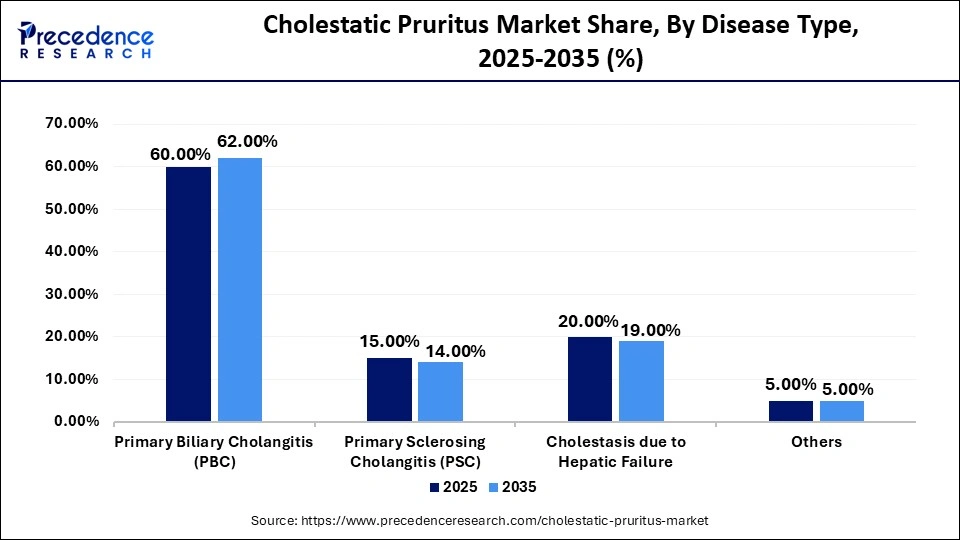
The cholestasis hepatic failure segment is the second-largest shareholder in the cholestatic pruritus market and is expected to grow at a significant rate between 2026 and 2035. The segment is rapidly growing as liver disease processes pruritus is the most witnessed symptom that creates a high demand for therapeutic options that can offer liver failure management, minimize pruritogenic, and offer relief from continuous symptoms. The segment is largely driven by the unmatched effectiveness of therapies that reduce bile acids and improve liver function at the same time.
The primary sclerosing cholangitis segment held a market share of 15% in the cholestatic pruritus market in 2025. The segment is growing due to the increasing prevalence and severity of debilitating itch in PSC patients, which demands long-term symptomatic management of the disease. The chronic itching causes severe depression, sleep deprivation, and, in extreme cases, liver transplantation is needed. PSC often impacts younger patients, and it is strongly related to inflammatory bowel disease, creating a huge need for precise treatment.
End Use Insights
The Hospitals Segment Held the Highest Market Share of 50% in 2025
The hospitals segment dominated the cholestatic pruritus market in 2025 with the highest share of 50%, primarily due to the severity of this condition that needs specialized care and treatment under skilled professionals and management of refractory cases. Cholestatic pruritus is a severe condition that is highly debilitating and associated with primary biliary cholangitis. Hospitals offer the required facilities to diagnose the root cause of the disease that cannot be treated at home or any other primary care centers. It further requires expertise from different domains, like hepatologists, dermatologists, and pharmacists. Current treatments show significant side effects that require continuous monitoring to avoid liver damage, making a hospital-based care center a prime requirement for patients.
Cholestatic Pruritus Market Share, By End-Use, 2025-2035 (%)
| End-Use | 2025 | 2035 | CAGR (%) |
| Hospitals | 50.00% | 48.00% | 5.50% |
| Clinics | 30.00% | 32.00% | 6.00% |
| Ambulatory Surgery Centers | 10.00% | 11.00% | 7.50% |
| Homecare Settings | 10.00% | 9.00% | 4.00% |
The clinics segment is the second-largest shareholder in the cholestatic pruritus market and is expected to grow at a significant rate between 2026 and 2035. The segment is growing as the condition needs specialized management and close monitoring, which is possible in the clinics. Cholestatic pruritus often needs a multidisciplinary and stepwise approach that can be handled best in the clinics. The market is inclining towards novel therapies such as inhibitors, vaccines, and targeted drugs, which are generally expensive but managed by clinics.
The ambulatory surgical centers segment held a market share of 10% in 2025. The segment is expanding in the cholestatic pruritus market due to the growing shift towards outpatient methods, lower costs, and improved patient convenience as compared to hospitals. Ambulatory surgical centers eliminate the need for an overnight stay in the hospital by offering diagnostic procedures like endoscopy or therapeutic infusion within a few hours in an ASC, supporting the segment growth.
The home care settings segment held a market share of 10% in 2025. The segment is expanding primarily due to the increasing focus on improving the quality of life of patients, advancements in oral therapies, and the convenience of managing continuous itching. Also, the rapid integration of digital health tools like remote consultations and symptom tracking applications allows patients to manage their conditions effectively at home.
Regional Insights
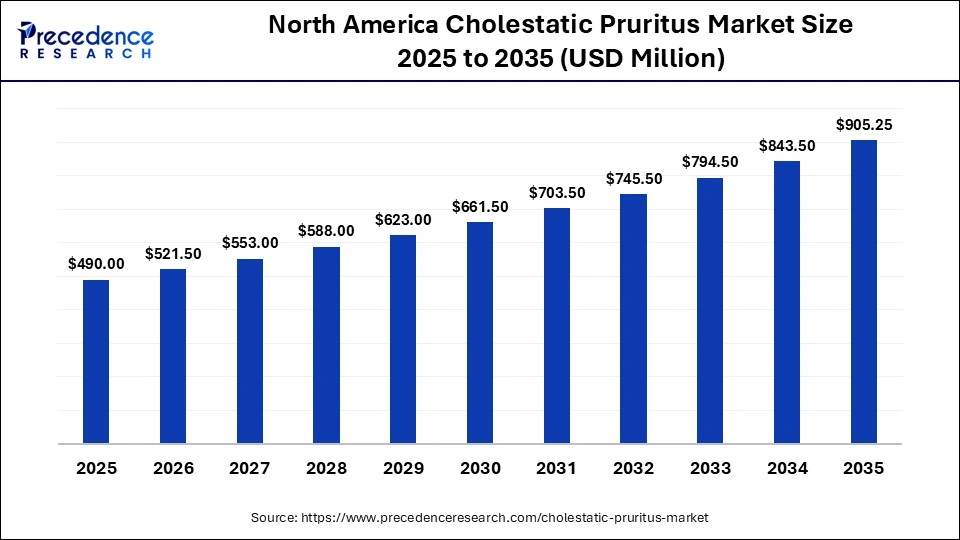
North America Cholestatic Pruritus Market Size and Growth 2026 to 2035
The North America cholestatic pruritus market size is estimated at USD 490.00 million in 2025 and is projected to reach approximately USD 905.25 million by 2035, with a 6.33% CAGR from 2026 to 2035.
North America Held the Highest Market Share of 35% in 2025
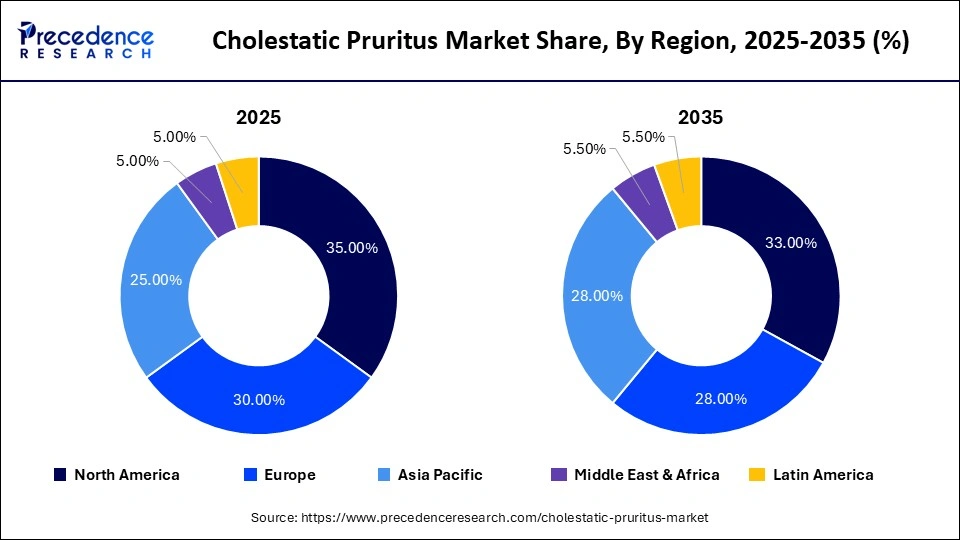
North America led the cholestatic pruritus market with a share of 35% in 2025 due to factors like high disease prevalence, advanced technological infrastructure in the healthcare system, massive investment to support healthcare facilities, and reimbursement policies for novel therapies. The region has a high incidence of chronic liver diseases that turn into cholestatic pruritus along with PBC and PSC. According to the sources, the U.S. recorded nearly 108,000 PBC cases in the year 2024.
The region is heavily dominated by the adoption of drugs like volixibat, TH104, and linerixibat, along with well-established treatments. A high concentration of key pharmaceutical companies and top-tier research institutes in the region further supports the market growth and clinical trial adoption of new treatments effectively.
U.S. Cholestatic Pruritus Market Size and Growth 2026 to 2035
The U.S. cholestatic pruritus market size is calculated at USD 367.50 million in 2025 and is expected to reach nearly USD 683.46 million in 2035, accelerating at a strong CAGR of 6.40% between 2026 and 2035.
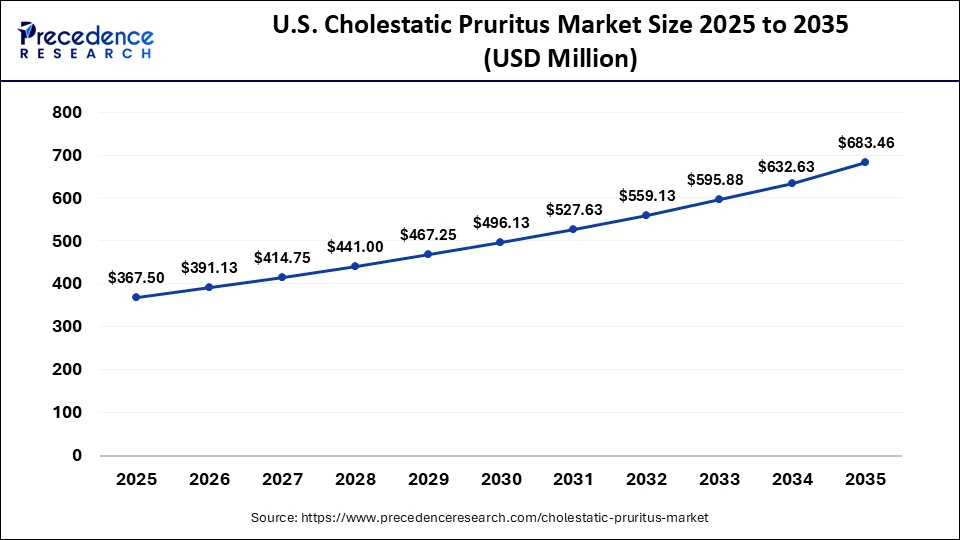
U.S. Cholestatic Pruritus Market Analysis
The U.S. holds a leading position in the market's expansion in North America due to the increasing cases of cholestatic pruritus conditions like primary biliary cholangitis, coupled with geriatric population growth, who are highly susceptible to such diseases. The FDA frequently approves new and specialized treatments for cholestatic pruritus and offers patients early access to such medications for faster results. Also, significant investment by the government to advance diagnostic technologies and overall healthcare infrastructure adds to market expansion.
Europe is expected to witness the Fastest CAGR during the Foreseeable period
The cholestatic pruritus market is majorly driven in Europe due to the leading factors like the growing cases of underlying liver diseases, advancement in therapies of pharmacology, improved diagnostic capabilities, and increased disease awareness. The market is shifting from less effective remedies toward novel targeted therapies, along with newly approved therapies like PPAR agonists, and oral treatments like odevixibat that target underlying acid metabolism.
Additionally, increased spending on healthcare in European countries, along with strong reimbursement policies, further ensures wider access to high-efficacy and expensive drugs for everyone. Regulatory bodies like the European Medicines Agency are largely focusing on accelerating approval of programs for targeted therapies or treatments and have further supported the region's expansion.
Germany Cholestatic Pruritus Market Analysis
Germany is witnessing a rapid growth rate in the cholestatic pruritus market owing to the high adoption of novel therapies and R&D investment, robust healthcare infrastructure, highly structured treatment guidelines, and increased disease awareness. Supportive government policies and health insurance frameworks encourage the adoption of new and targeted treatments irrespective of their cost. Additionally, the rapid adoption of telemedicine, digital symptom-tracking apps, and remote consultations in improving treatment adherence enables better disease management in the region. The increasing focus on personalized treatment is another driving factor in the region.
Asia Pacific is significantly growing with a market share of 25% in 2025.
Asia Pacific is witnessing a significant growth rate with a share of 25% in the cholestatic pruritus market in 2025. The region's growth is attributed to the enhanced healthcare infrastructure, with governments massively spending on healthcare to offer precise health benefits and effective treatments with novel drugs amid rising cases of liver disorders. Patients are shifting towards innovative therapies like oral bile acid modulators, which are gaining popularity as an effective drug for cholestatic pruritus disease.
China Cholestatic Pruritus Market Analysis
China is at the forefront of the cholestatic pruritus market growth due to the high prevalence of liver dysfunction, increasing diagnosis rates, and strong government pushes towards innovative drug approvals. The regulatory landscape in China is highly evolving, with faster approval rates for innovative medicines developed for chronic diseases. It includes the introduction of advanced bile acid modulators with targeted therapies, supporting the region's expansion.
Cholestatic Pruritus Market Companies
- Allergan
- Mundipharma
- Intercept Pharmaceuticals
- Eisai Co., Ltd.
- Gilead Sciences
- Novartis AG
- Zydus Cadila
- AbbVie Inc.
- Bristol-Myers Squibb
- Johnson & Johnson
- Amgen Inc.
- Pfizer Inc.
- Lilly
- Orphazyme
- Takeda Pharmaceuticals
Recent Developments
- In March 2026, the US FDA approved Lynavoy or Linerixibat for cholestatic pruritus in patients with primary biliary cholangitis symptoms to minimize various reasons of chronic itching. Lynavoy is renowned as an ileal bile acid transporter inhibitor, and is the first medicine approved in the U.S. for the treatment of cholestatic pruritus in patients with PBC. This approval was based on the positive GLISTEN phase III trial with regulatory reviews underway in Canada, the UK, China, and the EU. (Source: https://www.gsk.com)
- In November 2025, Maralixibat provides clinically meaningful pruritus reductions in PSC symptoms, which is a minimally absorbed ileal bile acid transporter inhibitor with many experiencing complete relief by using it. Maralixibat is proven to reduce enterohepatic bile acid recirculation, pruritus, and serum bile acids. It has led to its approval for the treatment of cholestatic pruritus in Alagille syndrome and progressive familial intrahepatic cholestasis.(Source: Https://rare-liver-disorders.ime.springerhealthcare.com)
Segments Covered in the Report
By Treatment Type
- Pharmacological Treatments
- Ursodeoxycholic Acid (UDCA)
- Antihistamines
- Opioid Antagonists
- Glucocorticoids
- Topical Steroids
- Others
- Non-pharmacological Treatments
- Phototherapy
- Plasmapheresis
- Liver Transplantation
By Disease Type
- Primary Biliary Cholangitis (PBC)
- Primary Sclerosing Cholangitis (PSC)
- Cholestasis due to Hepatic Failure
- Others
By End-Use
- Hospitals
- Clinics
- Ambulatory Surgery Centres
- Homecare Settings
By Region
- North America
- Latin America
- Europe
- Asia-pacific
- Middle and East Africa
For inquiries regarding discounts, bulk purchases, or customization requests, please contact us at sales@precedenceresearch.com
Frequently Asked Questions
Tags





Ask For Sample
No cookie-cutter, only authentic analysis – take the 1st step to become a Precedence Research client
 Get a Sample




 sales@precedenceresearch.com
 Schedule a Meeting
