



Digital Radiography Market Size, Key Companies, Company Market Share, Patient Volume, Treatment Adoption Rates, Pricing Analysis, Regulatory Landscape, Competitive Positioning, and Demand Forecast
Digital Radiography Market (By Product: Stationary, Portable; By Application: Cardiovascular Imaging, Chest Imaging, Dental Imaging, Digital Mammography, Orthopedic Imaging, Other; By Technology: Direct, Computed; By Method: Computed Radiography (CR), Direct Radiography (DR); By End User: Diagnostic Clinics, Other End Users, Hospitals) - Global Industry Analysis, Size, Trends, Leading Companies, Regional Outlook, and Forecast 2026 to 2035
Source: https://www.precedenceresearch.com/digital-radiography-market
 Get a Sample
 Table Of Content


What is the Digital Radiography Market Size?
The global digital radiography market size is calculated at USD 2.76 billion in 2025 and is predicted to increase from USD 2.94 billion in 2026 to approximately USD 5.11 billion by 2035, expanding at a CAGR of 6.35% from 2026 to 2035. The digital radiography market is driven by advanced imaging demand, rising diseases, and healthcare technology advancements.
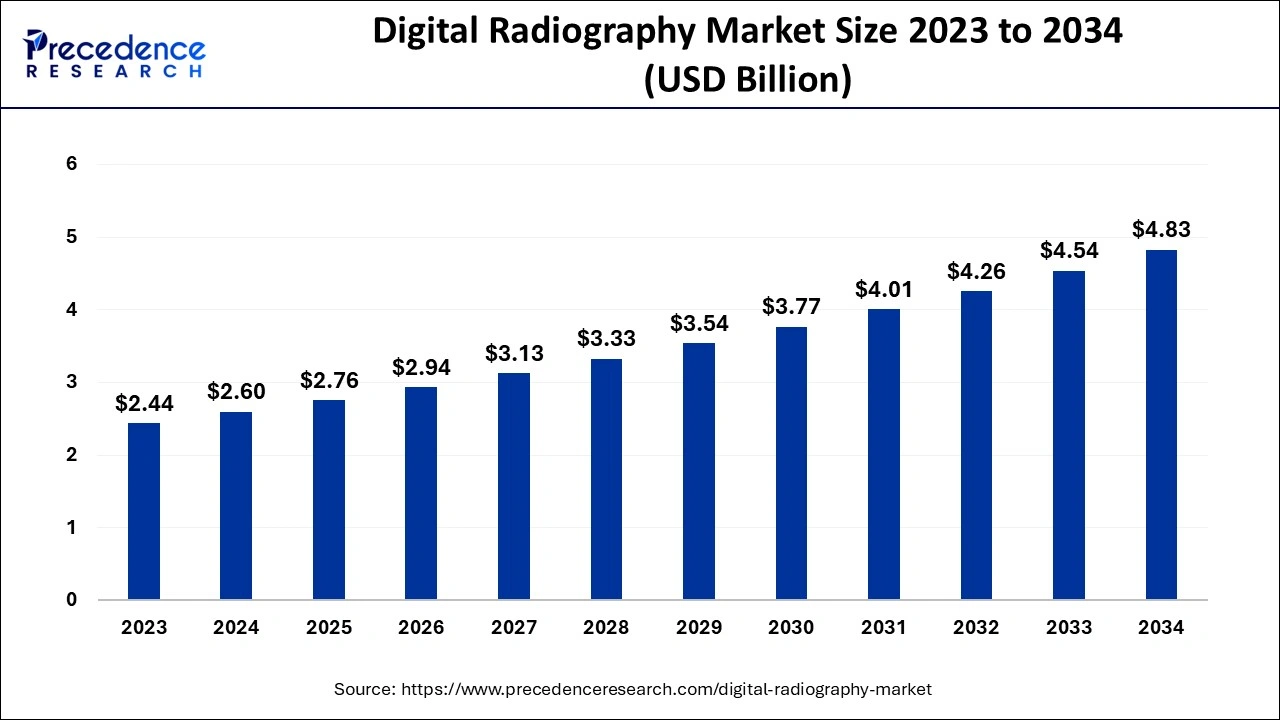
Digital Radiography Market Key Takeaways
- By Region, North America held a majority revenue share of the digital radiography market in 2025.
- By Region, Asia Pacific is expected to grow at the fastest CAGR in the market during the forecast period.
- By product, the portable segment held a dominant position in the market in 2025.
- By product, the stationary segment is expected to grow at the fastest CAGR in the market between 2026 and 2035.
- By application, the dental imaging segment accounted for a considerable revenue market in 2025.
- By application, the cardiovascular imaging segment is expected to grow with the highest CAGR market during the studied years.
- By technology, the direct segment led the global market in 2025.
- By technology, the computed segment is expected to expand rapidly in the market with a CAGR in the coming years.
- By method, the computed radiography segment registered its dominance over the global market in 2025.
- By method, the direct radiography segment is expected to witness the fastest growth in the market with a CAGR over the forecast period.
- By end user, the hospitals segment dominated the global market in 2025.
- By end user, the diagnostic clinics segment is expected to gain the highest market share with a CAGR between 2026 and 2035.
Artificial Intelligence The Next Growth Catalyst in Digital Radiography
AI is revolutionizing the digital radiography industry by dramatically improving diagnostic speed and accuracy, particularly in detecting subtle abnormalities like lung nodules or fractures. AI algorithms are being integrated directly into imaging workflows to automatically flag critical cases, such as pneumothorax or hemorrhages, enabling faster triage in emergencies.
Furthermore, AI enhances image quality by automatically optimizing patient positioning and reducing noise, which reduces the need for repeat scans and lowers radiation exposure for patients.
Digital Radiography Market Growth Factors
The growth of global digital radiography market is being driven by the growing number of cancer and dental disorder diseases. According to the American Heart Association's, cardiovascular disease is the leading cause of death in the U.S., accounting for 874,613 deaths in 2019. On average, someone died of a stroke every 3 minutes 30 seconds and someone died of a myocardial infarction every 40 seconds in 2019. In addition, technological developments and adoption of new and innovative technologies are driving the growth of global digital radiography market.
Digital X-ray systems, mammography systems, fluoroscopy systems, mobile C-arms, mobile X-ray systems, and robotic X-ray systems are all available from market participants. To improve and retain its market position, it relies on inorganic and organic growth tactics, such as new product launches, collaborations, and agreements. In the previous three years, they've released a number of items in the digital X-ray industry and are always working on new product development. The company has a large regional footprint and is continually pursuing strategic deals and alliances to help the industry flourish.
Market Outlook
- Market Growth Overview: The digital radiography market is expected to grow significantly between 2026 and 2035, driven by the increasing disease burdens, integration of AI for image analysis, better digital detectors for faster acquisition, and rising dental sector adoption.
- Sustainability Trends: Sustainability trends involve energy efficiency and management, designing a circular economy and upgrades, and the rising use of eco-friendly design and materials.
- Major Investors: Major investors in the market include GE Healthcare, Siemens Healthineers, Koninklijke Philips, Fujifilm, Canon, and Carestream Health.
Strategic Growth Opportunities
- High Growth Commercial Opportunities: With the increasing demand for offering more and better digital radiography systems, AI-enabled diagnostics, and digital health care solutions, the market shows tremendous commercial prospects. The increasing usage in hospitals and diagnostic centers is likely to drive up revenue.
- Emerging Technology Opportunities: Advancements toward technological progress include the integration of artificial intelligence, cloud-based imaging, mobile diagnostics, and mobility-based imaging. These innovations improve the accuracy of the pictures, the workflows' efficiency, and outcomes for patients.
- Geographic Expansion Opportunities: Asia-Pacific, particularly, is improving healthcare infrastructure and growing demand for diagnostic imaging, providing a growth opportunity in the emerging market. The emerging market of the Asia-Pacific is promising because of the enhancing healthcare infrastructure and increasing requirement for diagnostic imaging services.
Future Outlook and Strategic Recommendations
- Long-Term Industry Outlook: The digital radiography market is expected to increase during the forecast period, primarily due to the growing adoption of new technologies and an increasing need for early detection and diagnosis of different diseases. The market's future will be shaped by the ongoing spread of AI and digital healthcare solutions.
- Emerging Business Models: Business opportunities are arising with cloud imaging services, AI-as-a-service platforms, models based on Healthcare subscriptions, and remote diagnostics. These will make large-scale, low-cost, and readily available imaging services possible.
- Key Recommendations for Stakeholders: Market players should be conscious of innovation, strategic partnerships, and even cost-efficient imaging solution development. To improve competitive positioning, it will be crucial for the stakeholders to invest in integrating AI, taking advantage of emerging markets, and developing provider-oriented solutions.
Market Scope
| Report Coverage | Details |
| Market Size in 2025 | USD 2.76 Billion |
| Market Size in 2026 | USD 2.94 Billion |
| Market Size by 2035 | USD 5.11 Billion |
| Growth Rate from 2026 to 2035 | CAGR of 6.35% |
| Base Year | 2025 |
| Forecast Period | 2026 to 2035 |
| Segments Covered | Product, Application, Technology, Method, End User, and Geography |
Market Dynamics
Driver
Rising Adoption of Advanced Diagnostic Imaging Technologies
With the continuous growth of demand for quicker and more precise diagnostic imaging solutions, the digital radiography market is projected to skyrocket. As an increasing number of people are developing chronic diseases and trauma, there is a greater demand for advanced imaging systems. Technological advancements such as wireless imaging solutions and AI workflows are helping to fuel market growth.
Restraint
High Cost of Digital Radiography Systems
The high price of equipment installation and maintenance hampers digital radiography market growth. For smaller health care facilities, the advanced imaging systems involve significant capital expenditure, so they are rare. Software upgrade and technical support costs are high and pose an extra financial problem. Advanced technologies in radiography are not available in many developing countries, due to budget issues. Lack of skilled professionals for operating sophisticated systems can impact adoption.
Opportunity
Integration of AI and Cloud-Based Imaging Solutions
Integrating AI, cloud-based platforms, and remote diagnosis are promising avenues for the digital radiography market. Cloud-based systems allow for the transmission of medical images and their remote delivery, storage, and sharing in a secure environment. Digital imaging solutions are in demand as more people are using health sector services such as telemedicine.
Segment Insights
Product Insights
The portable system segment dominated the digital radiography market in 2025. Factors like the growing quantity of diagnostic imaging due to the ageing population and the widespread deployment of portable radiology systems throughout diagnostic centers. In addition, an increase in ailments such as vascular, dental, and cancer, particularly breast disorders and others, is propelling the portable digital radiography segment forward. The government's support for numerous radiology research programs is also propelling the sector forward.
The stationary system segment is the fastest growing segment of the market in 2023. The rise in the prevalence of chronic diseases and cancer is driving the expansion of the stationary digital radiography system market. Many patients, particularly in developing nations, have imaging tests every year. Furthermore, future population expansion will increase demand for digital radiological detectors, boosting the segment's growth. One of the significant digital radiography market trends is that older persons acquire age-related diseases, necessitating the usage of a variety of radiographic tests.
Technology Insights
The direct digital radiography segment dominated the market in 2025. Direct digital radiography is a type of x-ray examination that produces a digital radiologic image on a supercomputer very quickly. This technique captures information during object examination using x-ray subtle plates, which are then transferred to a processor without the obligation of the middle cassette. A detector sensor alters the incident x-ray radiation to an equal electric control, which is then translated to a digital image.
The computed digital radiography segment is the fastest growing segment in 2025. When imaging plates are subjected to X-rays or gamma rays, the energy of the incoming radiation is recorded in a specific phosphor layer in computed digital radiography. The latent picture from the plate is then read out using a scanner, which stimulates it with a very precisely focused laser beam. The plate produces blue light with an intensity proportionate to the quantity of radiation acknowledged during the contact when triggered.
Application Insights
The dental radiology segment dominated the digital radiography market in 2025. Digital radiography is used in dental radiology on a large scale. Instead of film, digital imaging uses a hard sensor, such as a connected or wireless hard sensor, or phosphor plate sensors, known as a receptor. Pixels are grouped in a matrix of rows and columns in digital images.
The cardiovascular imaging segment is the fastest growing segment in 2025. One of the primary factors projected to boost the segment is rising demand for technologically advanced breast cancer screening systems. The Medical Imaging Modernization Act of 2015, which was enacted to stimulate technical breakthroughs, led in a boom in demand for digital radiography systems.
The chest imaging segment is projected to grow at a notable pace because doctors are choosing to use it more extensively for diagnosis of chest-related diseases, especially respiratory ones, and for monitoring patients' lungs. Digital chest imaging solutions are becoming more common in the hospital and diagnostic center environments. The use of AI-assisted analysis tools is improving the accuracy of detection of pulmonary abnormalities.
The digital mammography segment is expected to witness steady growth during the forecast period due to its increasing role in breast cancer screening and early diagnosis. The awareness about breast cancer detection has boosted the demand for advanced imaging solutions. Digital mammography offers better image quality and quicker diagnostic workflows.
Method Insights
Why Did the Computed Radiography Segment Dominate the Digital Radiography Market?
The computed radiography segment dominated the market in 2025 because of its lower cost and synchronicity with the existing X-ray systems. With computed radiography, the health care environment can safely and economically move from traditional imaging systems with minimal changes. It provides better image processing as well as digital storage.
The direct radiography segment is expected to grow significantly during the forecast period as demand for a quick imaging solution for enhanced diagnostic accuracy is rising. With direct radiography systems, the image is captured directly. Healthcare organizations are increasingly turning to these systems to enhance their workflow efficiency and patient flow. As detectors get better, the images will get better, and the amount of radiation will be lower.
End User Insights
How the Hospitals Segment Dominated the Digital Radiography Market?
The hospitals segment dominated the market in 2025. Digital radiography systems are needed in hospitals for handling emergencies, for routine diagnosis, and for specialized imaging procedures. In large healthcare facilities, there are greater possibilities to invest in advanced imaging technologies. Upgrading of equipment is facilitated by higher levels of modernization schemes in hospitals.
The diagnostic clinics segment is expected to grow steadily during the forecast period owing to the rise in demand for imaging services and a rising number of accessible specialized diagnostic clinics. The growing patient preference for outpatient diagnostic services is encouraging expansion of clinics. Technology developments are enabling miniaturization and cost reduction of the systems for smaller facilities.
Regional Insights
What Made North America the Dominant Region in the Digital Radiography Market?
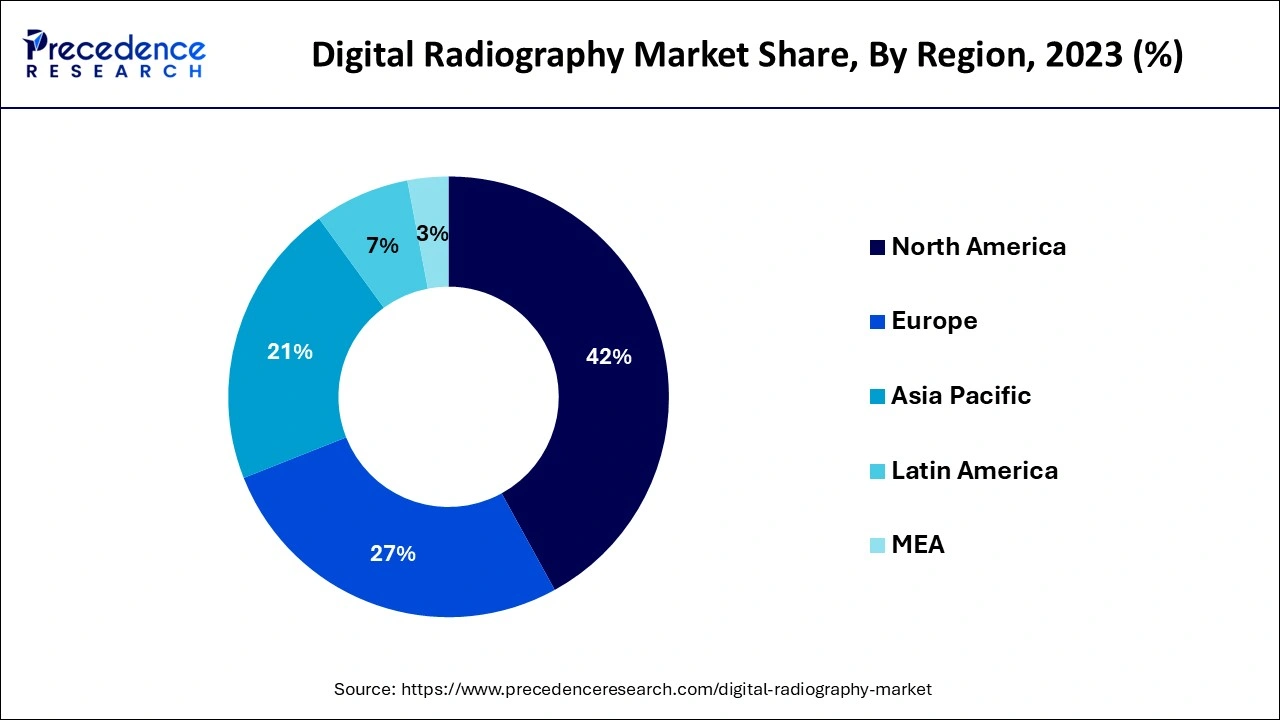
North America dominated the market while holding the largest share in 2025. This is mainly due to its advanced healthcare infrastructure, high adoption of cutting-edge imaging technologies, and widespread availability of digital radiography systems in hospitals and diagnostic centers. The region also benefits from strong government healthcare funding, favorable reimbursement policies, significant investments in R&D, and a high prevalence of chronic diseases that drive demand for accurate and efficient diagnostic imaging solutions.
What is the U.S. Digital Radiography Market Size?
The U.S. is a major contributor to the North American market. One of the main factors driving market growth in the U.S. is the increasing prevalence of chronic disorders. Additionally, the presence of major market players and their adoption of key strategies are also supporting market expansion. Canon Medical System USA, Inc., for example, recently introduced the OMNERA 500. A Digital Radiography System, which features advanced intelligent auto-positioning capability to improve workflow
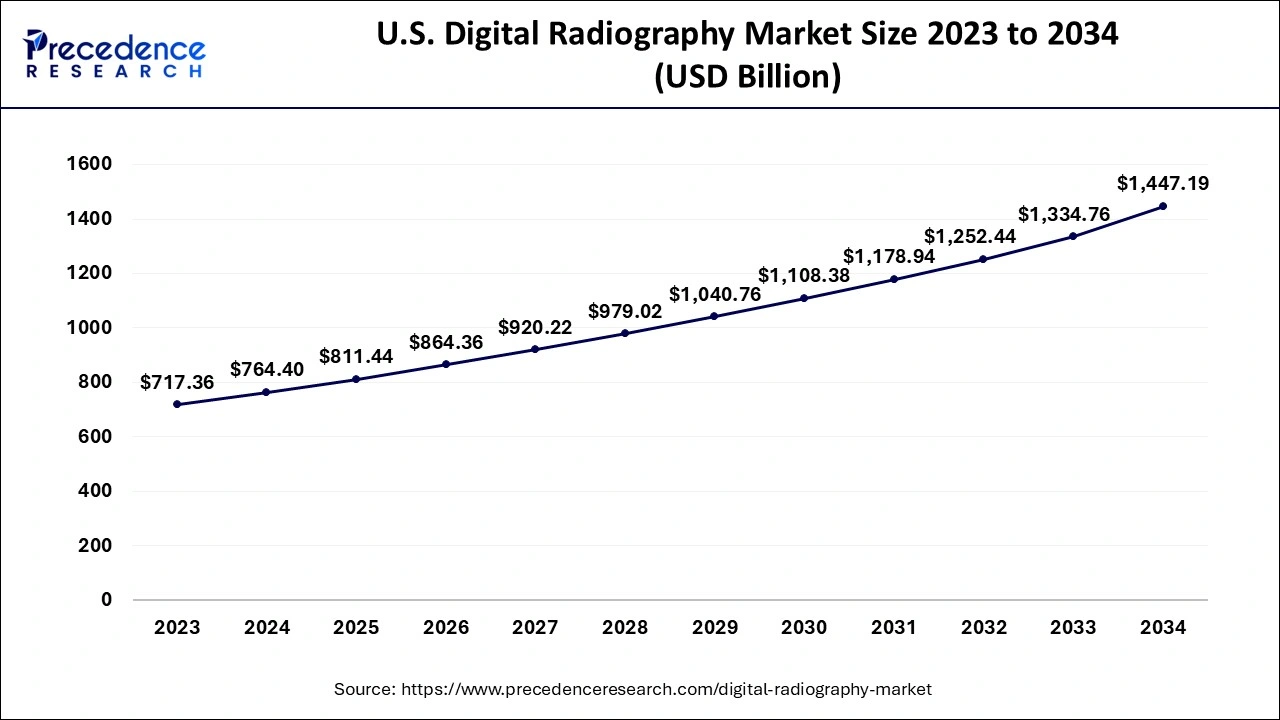
The U.S. digital radiography market size is evaluated at USD 864.36 million in 2026 and is predicted to be worth around USD 1,525.10 million by 2035, rising at a CAGR of 6.51% from 2026 to 2035.
Why Asia-Pacific region is growing faster in the digital radiography market?
Asia-Pacific is expected to develop at the fastest rate during the forecast period. China, India, and Japan dominate the digital radiography market in Asia-Pacific region. The growing cases of target diseases, as well as favorable government measures, are driving the digital radiography market in Asia Pacific. These aspects contribute to the growth of the digital radiography systems market in this region, as well as attracting foreign investment and partnerships. Low hospital budgets, expensive equipment costs, and a lack of government investment in some countries, on the other hand, are constraining the market's growth in Asia Pacific.
India Digital Radiography Market Analysis
The market in India is being driven by increasing adoption of advanced imaging technologies in hospitals, diagnostic centers, and specialty clinics to improve accuracy, efficiency, and patient care. Government initiatives, such as the planned 20% capital subsidy for domestic manufacturing of medtech components announced in August 2024, are encouraging local production and reducing dependence on imports. Additionally, events such as the second Regional Open Digital Health Summit (RODHS) 2025, held in November 2025, highlight India's focus on digital public health infrastructure and the integration of technology into healthcare delivery.
What Makes Europe a Notably Growing Area in the Digital Radiography Market?
Europe is expected to grow at a notable rate in the market in the upcoming period. This growth is driven by the rising demand for early disease detection, growing healthcare awareness, and well-established healthcare infrastructure. There is high adoption of innovative imaging technologies and a strong focus on improving diagnostic efficiency and patient outcomes. Supportive government initiatives, favorable reimbursement policies, and increasing investment in healthcare digitization and AI‑enabled imaging solutions further drive market growth.
Germany Digital Radiography Market Trends
Germany's raid coverage of AI-driven diagnostics and high-mobility, low-dose imaging solutions that prioritize patient safety and clinical efficiency. As hospitals integrate these advanced systems into unified digital health networks, there is an increasing emphasis on telemedicine connectivity and sustainable manufacturing to meet national climate mandates. This technological shift is most evident in the surge of point-of-care mobile systems, which offer the flexibility required for modern diagnostic workflows.
What are the Major Factors Contributing to the Digital Radiography Market within Latin America?
The market in Latin America is propelled by major digital health and AI initiatives aimed at integrating medical imaging technologies like digital X-rays. The Pan American Health Organization (PAHO/WHO) digital health program promotes the adoption of connected, accessible, and interoperable health systems. The rising demand for accurate, high‑quality diagnostic imaging across hospitals and diagnostic centers also contributes to regional market growth.
Brazil Market Trends
Brazil digital radiography market is anticipated to grow significantly, owing to growing investments in healthcare and the surge in demand for advanced and high-quality imaging facilities. A rising incidence of chronic diseases makes it more and more important to have efficient imaging technologies. Healthcare providers are turning to digital radiography for greater diagnostic accuracy and streamlined workflows. Adoption of imaging services continues to rise due to growing awareness of diseases at an early stage.
What Opportunities Exist in the Middle East & Africa for the Digital Radiography Market?
The Middle East & Africa (MEA) offers significant opportunities for the market, driven by government-led programs to deploy AI-powered X-ray systems and advanced digital radiography. These efforts also aim to improve public health screening for diseases such as TB. Governments and healthcare providers are increasingly investing in modernizing healthcare infrastructure and expanding access to advanced diagnostic imaging systems, particularly in leading countries like Saudi Arabia, the UAE, Egypt, and South Africa, boosting the market growth.
Saudi Arabia Market Trends
Saudi Arabia market is anticipated to grow significantly due to the healthcare infrastructure development and enhanced adoption of advanced healthcare technologies. The government has been encouraging the modernisation of diagnostics facilities through health initiatives. The increasing demand for early disease detection is driving the growth of the digital radiography system market. Hospitals and clinics are investing in advanced imaging equipment to better the patients' care.
Value Chain Analysis
- R&D: The R&D stages for digital radiography include research and concept development, design and creation, verification and validation, regulatory approval, and manufacturing and commercialization.
Key Players: GE HealthCare, Siemens Healthineers, Koninklijke Philips N.V., FUJIFILM Holdings Corporation, Carestream Health, Canon Medical Systems Corporation. - Distribution to Hospitals, Pharmacies: The various distribution channels focus on supply chain optimization and meeting the growing demand for early diagnosis.
Key Players: GE HealthCare, Siemens Healthineers, Philips Healthcare, Carestream Health, Fujifilm Holdings Corporation. - Patient Support and Services: Patient support and related services include improved communication and education, shorter waiting times, quicker diagnosis, minimized radiation exposure, and personalized diagnostic approaches.
Key Players: Canon Medical Systems, Carestream Health, Philips Healthcare, Siemens Healthineers, GE HealthCare, Hologic.
Competitive Landscape
The digital radiography market is highly competitive, with the major players being the Agfa-Gevaert Group, Canon Inc., detection technology, the Fujifilm Holding and Hitachi, Ltd. The companies are driving towards technology, AI integration, and product innovation to develop a competitive edge. The ongoing investment in research and development is leading to enhancements in image quality and workflow efficiency, as well as in diagnostic accuracy.
Market players are penetrating deeper into the market by entering healthcare technology, introducing new products, and forming partnerships with global market players. Businesses embrace Artificial Intelligence, Cloud-based imaging, and Digital Healthcare apps for acquiring a competitive advantage. The competitive market is being driven by the increasing demand for early diagnosis, growing investments in the healthcare sector, and the recognition and adoption of high-tech imaging systems.
Digital Radiography Market Top Companies
- Agfa-Gevaert group: Agfa-Gevaert provides advanced digital radiography (DR) solutions, including high-performance detectors and its MUSICA image processing software, which are designed to enhance diagnostic quality and speed.
- Cannon Inc.: Canon is a major contributor through its development of high-resolution digital flat-panel detectors (FPDs) for both static and dynamic imaging in medical, dental, and veterinary applications.
- Detection Technology: Detection Technology specializes in supplying high-performance, cost-effective X-ray detectors (both CMOS and TFT) for various medical imaging applications.
- Fujifilm Holdings: Fujifilm is a pioneer in digital X-ray, offering a broad portfolio of DR systems, including the first glass-free detector series and lightweight portable solutions.
- Hitachi, Ltd.: Hitachi provides high-end imaging technology, including digital radiography systems that integrate with advanced diagnostic suites and hospital IT environments.
- General Electric (GE Healthcare): GE Healthcare provides a complete portfolio of digital radiography systems, such as the Definium and Optima XR series, known for high image quality and reliability.
Other Major Key Players
- Medtronics
- Koninklijke Phillips
- Samsung Electronics Co Ltd.
Collaboration Landscape
- In May 2026, Fujifilm's collaboration with mTuitive was enhanced with the introduction of a new technology to connect to structured reporting technologies on enterprise imaging platforms. The union was intended to enhance clinical workflows, diagnostic effectiveness, and facilitate initiatives of precision medicine. (Source: https://www.fujifilm.com)
- In March 2026, Fujifilm continued its partnership with Porunai Hospitals, rolling out advanced diagnostic imaging solutions, such as digital radiography technology. It highlighted the project with the development of good imaging capacity, including the most recent development of advanced diagnostic infrastructure, built up to improve healthcare provision. (Source: https://www.fujifilm.com)
- In February 2026, Canon Medical introduced a line of new radiography products for mobile imaging to enable flexible radiography applications throughout the spectrum of radiography systems, from lab to field, print to fax, and print to view. The side-by-side development of bedside imaging support for hospitals and healthcare facilities helped to improve workflow and function. (Source: https://eu.medical.canon)
Recent Developments
- CombiDiagnost R90, a high-quality digital radiography-based fluoroscopy structure, was given FDA 510(k) approval by Koninklijke Philips N.V. in March 2021.
- Mireye Imaging Inc. announced the release of an artificial intelligence-based Software for X-ray Patient Positioning in January 2022. This advanced and innovative imaging technology mechanizes the patient location process for X-ray inspections, eliminating the need for manual dimensions and body part alignment.
- In May 2018, ScreenPoint Medical and Siemens Healthineers teamed. Siemens was able to build artificial intelligence-powered breast imaging solutions as a result of this collaboration.
- In April 2019, Varex Imaging Corporation completed its acquisition of Direct Conversion, a leading manufacturer and marketer of linear array digital detectors based in Stockholm.
- Canon Medical USA announced the SOLTUS 500 Mobile Digital X-ray system in August 2020, which contains features that help speed up bedside exams while also improving efficiency and productivity.
- At the Radiological Society of North America's annual meeting in November 2018, Siemens Healthineers unveiled Multix Impact, a floor-mounted radiology system.
- In November 2025, Hologic expanded its digital pathology capabilities with CE marking for its Genius Digital Diagnostics System in the European Union, allowing for imaging and reviewing both cell and tissue specimens.
(Source: https://www.hologic.com) - In March 2025, Canon Medical Systems, USA announced the FDA approval and broader market availability of its automated hybrid solution called Adora DRFi for radiography and fluoroscopy.
(Source: https://us.medical.canon)
Segments Covered in the Report
By Product
- Stationary
- Portable
By Application
- Cardiovascular Imaging
- Chest Imaging
- Dental Imaging
- Digital Mammography
- Orthopedic Imaging
- Other
By Technology
- Direct
- Charged Couple Device (CCD)
- Flat Panel Detector
- Computed
By Method
- Computed Radiography (CR)
- Direct Radiography (DR)
By End User
- Diagnostic Clinics
- Other End Users
- Hospitals
By Geography
- North America
- Europe
- Asia-Pacific
- Latin America
- Middle East & Africa (MEA)
For inquiries regarding discounts, bulk purchases, or customization requests, please contact us at sales@precedenceresearch.com
Frequently Asked Questions
Tags





Ask For Sample
No cookie-cutter, only authentic analysis – take the 1st step to become a Precedence Research client
 Get a Sample
.webp)



 sales@precedenceresearch.com
 Schedule a Meeting
