



Breast Imaging Market Size, Key Companies, Company Market Share, Patient Volume, Treatment Adoption Rates, Pricing Analysis, Regulatory Landscape, Competitive Positioning, and Demand Forecast
Deepa Pandey, a Healthcare Industry Expert, highlights that the breast imaging market has reached USD 6.20 billion in 2026 and is on track to reach USD 14.71 billion by 2035, advancing at a CAGR of 9.02%. Key breast imaging market companies shaping the market include Hologic, Inc. (US), Koninklijke Philips N.V. (Netherlands) while major growth segments span technology, end user, region.
Source: https://www.precedenceresearch.com/breast-imaging-market
 Get a Sample
 Table Of Content


What is the Breast Imaging Market Size?
The global breast imaging market size is calculated at USD 6.20 billion in 2025 and is predicted to increase from USD 6.77 billion in 2026 to approximately USD 14.71 billion by 2035, expanding at a CAGR of 9.02% from 2026 to 2035. Breast imaging has become a crucial aspect of women's health, which plays a vital role in the early detection and diagnosis of breast-related conditions and breast cancer.
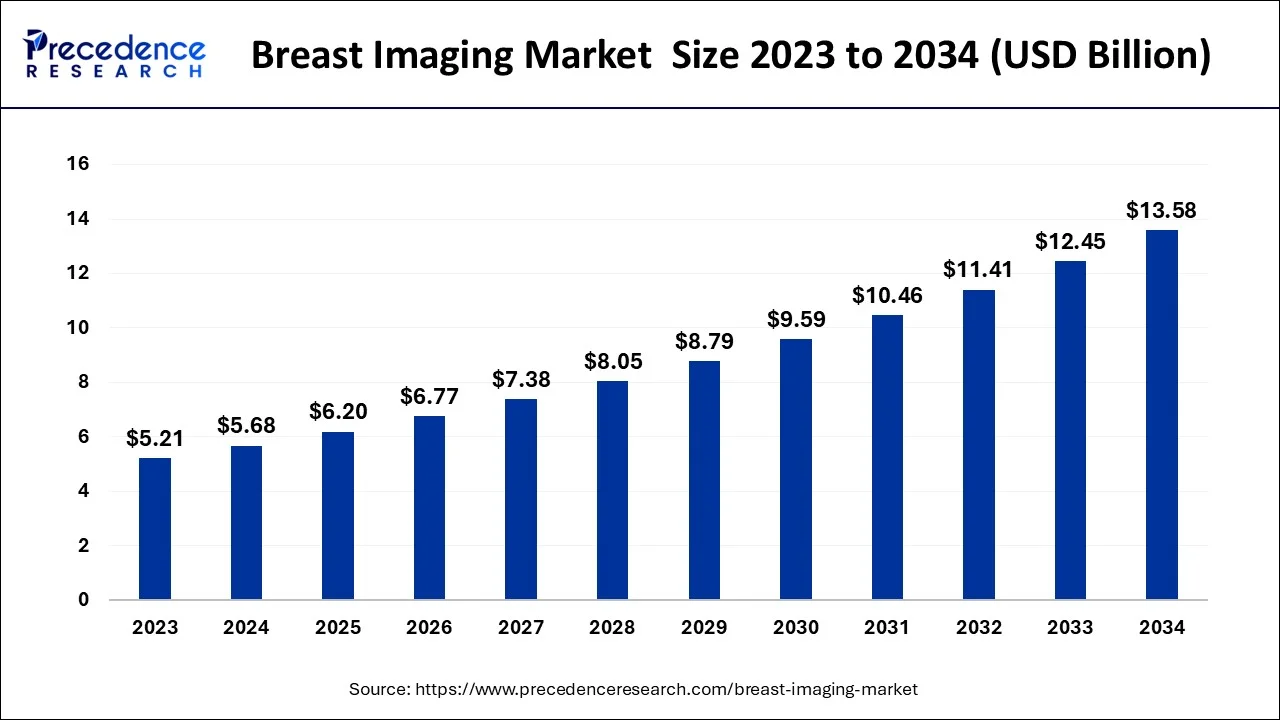
Breast Imaging Market Key Takeaways
- By technology, the Non-Ionizing technology segment has captured revenue share of over 65% in 2025.
- By end user, hospitals segment has generated revenue share of over 42.5% in 2025. However, the diagnostic imaging centers segment is poised to grow at a strongest CAGR from 2026 to 2035.
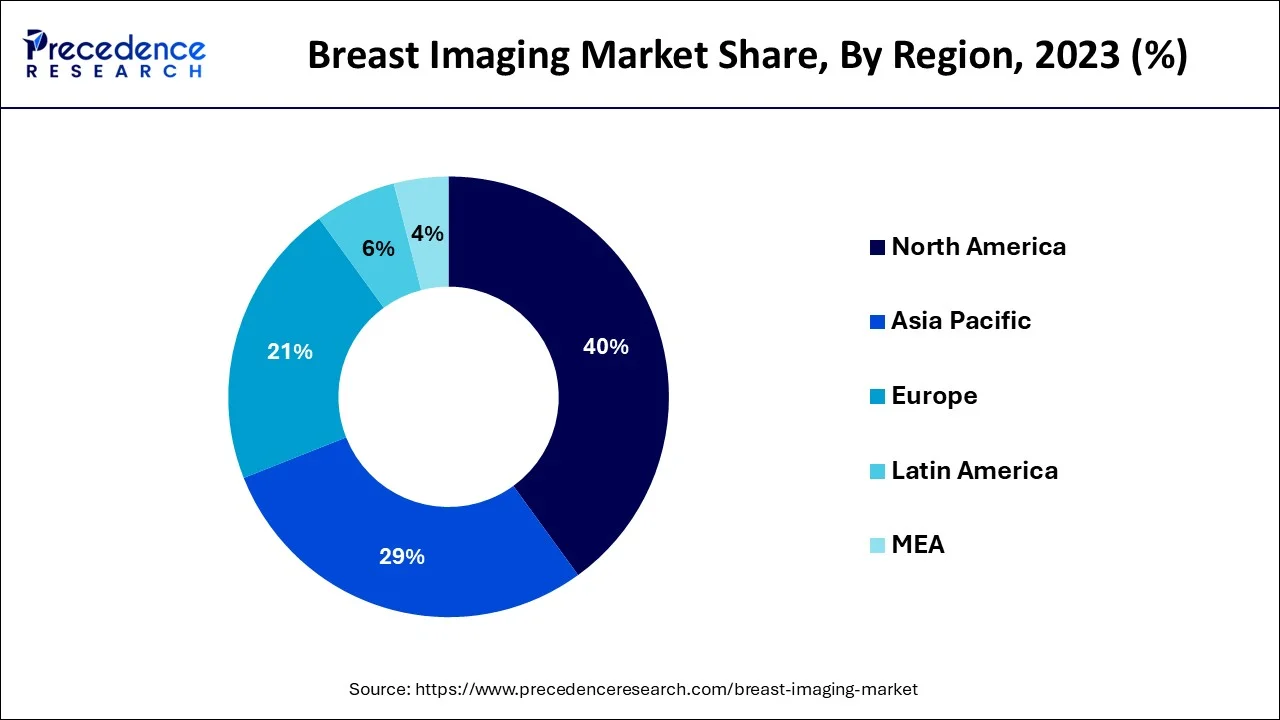
- North America has accounted share of 40% in terms of revenue.
- Asia-Pacific will experience the strongest growth rate between 2026 to 2035.
Strategic Overview of the Global Breast Imaging Industry
The medical technology which is used in order to detect and identify breast cancer is known as breast imaging. It helps in detecting many different types of disorders related to the breasts with the help of the radiological pictures through the use of the medical technology. There are many different types of technologies used for breast imaging like breast ultrasonography, mammography, magnetic resonance imaging, and nuclear imaging. All of these technologies are used in order to understand the presence of breast cancer and other disorders related to the breast and this technology helps in detecting the possibilities of the disorders or cancer in the earlier stages and this is extremely beneficial as it detects cancer at a stage where it can be treated. Breast cancer happens to be one of the biggest cause of mortality in women the demand for and the development of the technologies which are used in breast imaging have increased in the recent years as it helps in early detection and treatment.
Artificial Intelligence: The Next Growth Catalyst in Breast Imaging
AI is significantly impacting the breast imaging market by enhancing the accuracy and efficiency of cancer detection, which is driving substantial market growth. Deep learning algorithms, a core component of these AI tools, are becoming highly adept at identifying subtle anomalies in mammograms and other imaging modalities like ultrasound and MRI, sometimes even surpassing human experts in performance.
This technology directly addresses critical challenges such as radiologist shortages and heavy workloads by acting as a reliable second reader or triage tool, which helps prioritize high-risk cases and can reduce reading times and false positives by as much as 50% and 70% respectively. Furthermore, AI is moving beyond simple detection to include advanced applications like personalized risk assessment and prediction of treatment outcomes, allowing for highly tailored patient care strategies.
What are the Growth Factors in the Breast Imaging Market?
With the help of the non-ionizing and ionizing radiation which is used in detecting the tumors of the breast imaging technique has grown well in the recent years. As the doctors make use of this technology in order to diagnose the presence of breast cancer in the earlier stages as and when the symptoms appear the demand for this technology is expected to grow in the coming years.
As the cases of breast cancer have increased in the recent years the demand for this technology is expected to grow well in the coming year. Early detection is one of the major factors that will help in the growth of the market during the forecast period. With the help of this technology other disorders which are related to the breast of a women can also be detected due to which the market will continue to grow well in the coming year.
Constant research and development in this field has launched different types of equipments of the advanced type that help in breast imaging. The demand for softwares has also grown due to the increased amount of funds received in this field. Geriatric women population is one of the factors that have led to an increase in the cases of breast cancer. Recently the use of systems that make use of hybrid imaging have also developed and this is expected to provide good amount of growth opportunities in the coming years for all the companies operational in the market.
- There has been an increase in the prevalence of the breast cancer which will lead to the growth of the market of breast imaging in the coming years.
- Increased incidences of breast cancer due to the use of therapies for hormone replacement.
- Increase rate of mortality is associated with breast cancer is one of the factors that will help in the growth of the market in the coming years.
- Breast imaging market is supported by the increased awareness about the use of the technologies that help in detecting different types of breast diseases at earlier stages.
Breast Imaging Market Outlook
- Industry Growth Overview: The breast imaging market is projected to experience rapid growth between 2025 and 2030 as a result of increasing rates of breast cancer screenings, the need for earlier diagnoses, and the increased use of advanced modalities such as 3D mammography and contrast-enhanced imaging. The growing demand for breast imaging services in hospitals and diagnostic imaging centers in North America and the Asia-Pacific region is contributing to this growth.
- Sustainability Trends: Sustainability will continue to influence breast imaging equipment design with the increased demand for energy-efficient imaging systems, reduced radiation exposure, and recyclable component materials. Manufacturers will continue to conduct research and development on low-dose imaging systems and environmentally conscious consumables. Manufacturers in the European Union have been required to develop greener and safer breast imaging technologies by European Union regulations.
- Global Expansion: Major breast imaging manufacturers have expanded their markets into Asia Pacific, Eastern Europe, and Latin America in order to take advantage of the rising demand for breast imaging programs and the relative lack of competition. Manufacturers have increased the number of service networks, opened more training centers, and built manufacturing facilities to reduce costs and provide greater access to their products. Global equipment manufacturers are focusing on the rapidly expanding urban diagnostic markets.
- Major Investors: The breast imaging market has always attracted private equity and strategic investors due to its clinical relevance, consistent demand, and technology-driven profitability. Investor interest in AI-enabled imaging firms, digital mammography producers, and breast MRI technology developers focused on accuracy in detection and developing integrated breast cancer screening solutions for prevention, detection, & treatment.
- Startup Ecosystem: The best innovation being developed by startup Companies, achieving funding using a business model based on rapid Detections, Cloud-based analytics, & affordable solutions for low-resource markets in the USA, Israel, and India. These start-ups have developed second-generation technology that is democratizing access to screening mammography.
Strategic Growth Opportunities in the Breast Imaging Market
Shifted Focus on Abbreviated Breast MRI Protocols
- In recent years, there has been increased attention on abbreviated breast MRI in breast cancer staging to monitor response to chemotherapy. MRI potentially helps in the assessment of patient response with locally advanced breast cancer. It also helps in the assessment of in vivo response to chemotherapeutic agents. It will offer more tailored surgical and oncologic management.
Technological Improvements aiming to Increase Specificity
- Breast MRI has advanced the diagnosis and treatment of patients with breast cancer with a high sensitivity and high specificity. Clinical indications have expanded from breast cancer staging to high-risk screening, monitoring response of locally advanced breast cancer to neoadjuvant chemotherapy, and problem solving due to new technical developments. Breast MRI remains the most specific and sensitive imaging modality to assess treatment response in women who are treated with chemotherapy. These advanced technologies also help to evaluate morphologic features, changes in tumor volume, enhancement, and pre-surgical planning.
Breast Ultrasound Approach Delivering Efficiency
- It helps to distinguish fluid from solid breast masses with high accuracy. Research focuses on combining this technique with light to create photoacoustic images. It aims to further distinguish the type of tumor as benign or malignant. Significant efforts are made to improve the processing of ultrasound signals.
AI-Powered Mammography Technology Helps Solve Critical Breast Cancer Cases
- AI shows immense potential to help radiologists detect cancerous tissue immediately and accurately and predict the risk of breast cancer among women. Research suggests that AI can spot cancer in a mammogram or other breast imaging that can be missed by a trained radiologist. Some European countries expanded access to AI-assisted breast cancer screening.
Market Scope
| Report Coverage | Details |
| Market Size in 2025 | USD 6.20 Billion |
| Market Size in 2026 | USD 6.77 Billion |
| Market Size by 2035 | USD 14.71 Billion |
| Growth Rate from 2026 to 2035 | CAGR of 9.02% |
| Base Year | 2025 |
| Forecast Period | 2026 to 2035 |
| Segments Covered | Technology, End User, and Geography |
Market Dynamics
Market Drivers
- Use of the hybrid imaging technology - Constant research and development in the field have provided a few advanced techniques that will help in the growth of the market. The demand for various technologies in a combination in order to detect breast cancer have increased to a great extent. PET scan, MRI and CT scans are used in combination in order to understand the details of the anatomy of the give an organ. Due to the use of a combination of technologies the detection quality has increased to a great extent.
- Increased cases of breast cancer in the recent years- The use of various technologies for detecting breast cancer have increased as the cases of breast cancer in women have also increased to a great extent. In the coming years it is estimated that there shall be an increase in the number due to various reasons.
- Government initiatives- initiatives taken by the government in various regions across the world will increase the awareness regarding the benefits associated with the early diagnosis and more and more people will seek medical help. The use of advanced technology in the detection of breast cancer will help in the growth of the market in the coming years. As the geriatric population across the world especially the women geriatric population has increased there has also been an increased number of investments coming in from the private as well as the public sectors in order to reduce the cases of breast cancer and this is expected to be a major driver which will support the market growth in the coming years.
Market Challenges
- Exposure to radiation- Even though the technology used in detecting breast cancer is the only way possible for the diagnosis the use of the ionizing radiations poses a threat to the health of the person. This type of radiation is used in different types of imaging techniques like mammography, DBT, WBCT, BSGI, PEM, CEM.
- Expensive nature- In the developing regions across the world one of the major challenges that hampers the growth of the market is the high-cost technology. This is a factor that will hamper the growth of the market. Dairy embarrassment policy is in many underdeveloped and developing nations is not favorable and this happens to be another challenge in the growth of the market.
Market Opportunities
- Increase in the research and development activities are expected to provide good opportunities- Technological development in the field is possible due to the increased amount of research done in the field and the different types of developmental activities which have been beneficial for the growth of the market. Constant research and development will boost the market growth in the coming years
- Emerging markets- In most of the developing countries it is very important to detect the presence of breast cancer in the earlier stages as there is high mortality rate in patients that suffer with breast cancer and detecting the presence of breast cancer in the later stages has led to a lot of deaths in the recent years. The use of this technology has increased to a great extent for the developing regions like the Asia Pacific region
Segments Insights
Technology Insights
On the basis of the technology, the ionizing segment is expected to have the largest market share in the coming years. The segment had dominated the market in the past with our largest market share in terms of revenue and it will continue to grow well in the coming years. The introduction of new technologies that are used in breast imaging with the help of the ionizing technology will lead to the growth of the market in the coming years period the advancements in the currently existing technologies which makes use of ionization will receive major investments which will help in the growth of the market during the forecast period. Most of the market players are constantly engaged on increasing the amount of investments made in the technology in order to provide better products in the market due to which the ionizing technology segment is expected to grow well as its demand is expected to grow.
3D breast tomosynthesis is a type of technology that makes use of ionizing radiation. This type of technology is expected to grow with the highest compound annual growth rate in the coming year. As the images obtained through the use of this technology are sharp and the recall rates are also less the market is expected to grow well in the coming years. When it comes to the use of the non ionizing technology the breast ultrasound method is expected to have a larger share in the market as there are many benefits associated with the use of this technology like higher sensitivity and less risk of being exposed to the radiation. These are the factors that will lead to the growth of the market.
The non-ionizing breast imaging segment is expected to grow at a significant rate in the market during the forecast period due to primary non-ionizing modalities like breast ultrasound and breast magnetic resonance imaging that are the most widely used non-ionizing breast imaging methods. It is ideal for the young population, patients who need serial tracking, and pregnant women.
End User Insights
On the basis of the end user the hospital segment is expected to have the largest market share in the coming years. The segment has dominated the market in the past with the highest share in terms of revenue. As there has been an increase in the investments made in the healthcare structure across the world this development will help in the growth of the market in the coming years.
Investments have made it possible to purchase better infrastructure and equipment's for diagnosis. It has also been beneficial as it has provided good health coverage in all the health care services that are hospital based. These are the main factors that will help in the growth of the hospital segment in the coming years.
The diagnostic imaging centers segment is estimated to grow at the fastest rate in the market during the predicted timeframe due to its potential in delivering accurate diagnosis and timely treatment of medical conditions. They provide many imaging services from MRIs to X-rays, which help to identify, monitor, and treat several health conditions.
Regional Insights
What is the U.S. Breast Imaging Market Size?
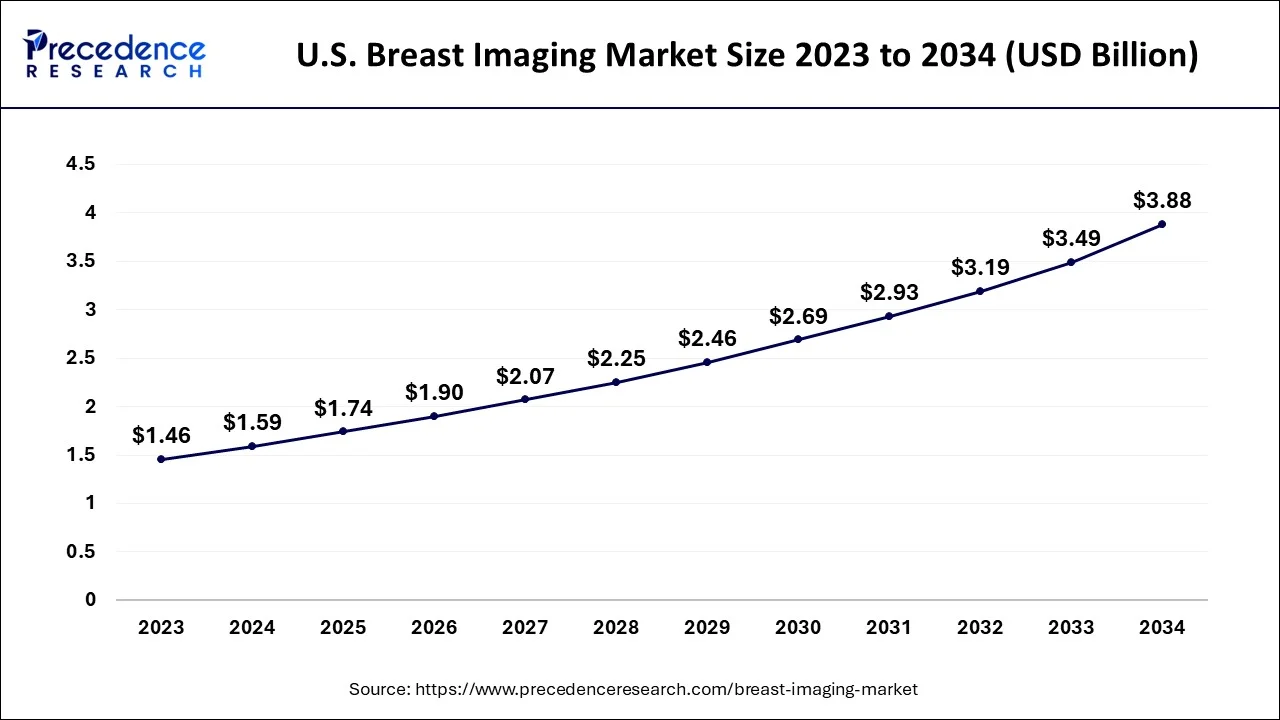
The U.S. breast imaging market size is evaluated at USD 1.90 billion in 2026 and is predicted to be worth around USD 4.21 billion by 2035, rising at a CAGR of 9.29% from 2026 to 2035.
How does North America dominate the Breast Imaging Market in 2025?
North America dominated the market in 2025, owing to new regulatory mandates, high adoption of advanced imaging technologies, rising incidence of breast cancer, and favorable reimbursement policies. Government interventions are supporting the rapid adoption of AI-driven diagnostic workflows and digital breast tomosynthesis. Federal public health campaigns expanded state-sponsored, free diagnostic clinics and accelerated early detection across the nation. Direct federal investments are made into portable, point-of-care low-dose and ultrasound mammography units.
North American region is expected to have a dominant position in the coming years. This region has dominated the market in the past with the largest market share in terms of revenue and it will continue to grow well in the coming years.
U.S. Breast Imaging Market Trends
The U.S. is experiencing a strong migration from traditional 2D mammography to advanced digital systems, market is moving towards tailoring screening protocols based on individual patient risk profiles, including genetic factors and breast density. Growth in non-ionizing modalities and expansion of care settings.
Asia Pacific Breast Imaging Market Trends
The Asia Pacific region is expected to grow with a higher compound annual growth rate as compared to the other regions of the world in the coming years. As the economic growth of many countries in the Asia Pacific region is high the market for breast imaging is also expected to grow well. As the cases of breast cancer having increased in this region the demand for diagnosis is also expected to grow.
Government of various nations in the Asia Pacific region are constantly engaged in providing better infrastructure for the healthcare sector. There are various programs conducted by the government of various nations in order to promote the awareness of the screening programs which help in early detection of breast cancer and this is a major factor that will help in the growth of the market in the coming years.
China Breast Imaging Market Trends
The Chinese increasing cancer burden and government screening initiatives. The market predominantly utilizes ionizing technologies like digital mammography, with strong growth in advanced modalities such as DBT and ultrasound, driven by the prevalence of dense breast tissue. AI integration is a key trend enhancing diagnostic efficiency and accuracy, and while hospitals hold the largest market share, specialty clinics are a fast-growing segment.
Why Europe is Growing in the Breast Imaging Market?
Europe is considered to be a significantly growing area, due to the growing breast cancer rates among women and the strong presence of advanced technology increase the adoption of breast imaging. Government screening initiatives and the huge imaging procedures increase the adoption of breast imaging. The popularity of 3D mammography and the presence of companies like GE Healthcare & Philips drive the overall market growth.
Germany Market Trends
Germany is substantially growing in the market. The expansion of routine screening and the availability of social health insurance increase the adoption of breast imaging. The biennial screening program and the advanced healthcare base increase the adoption of breast imaging. The ongoing AI integration in breast imaging and the expanding government funding support the overall growth of the market.
Why did Latin America grow rapidly in the Breast Imaging Market?
A tremendous growth in Latin America was due to the increased awareness of breast cancer and the government's interest in increasing access to screening. Hospitals moved from film mammograms to digital, and from plain or routine ultrasound devices to 3D/4D ultrasound devices. In addition, private clinics increased capacity and services in larger cities, while radiologists received additional training, which resulted in better images to read. Affordable digital imaging devices, mobile screening programs, and tele-radiology opportunities emerged in the region.
Brazil Breast Imaging Market Trends
Brazil led Latin America due to the presence of a larger number of hospitals and diagnostic centers than any other country in the region. In addition, the government supports the early detection of breast cancer and encourages women to seek routine check-ups. Most major urban areas in Brazil invested in new state-of-the-art digital mammography and ultrasound devices. Even private hospital facilities were upgrading their imaging equipment.
Why did the Middle East & Africa region grow rapidly in the Breast Imaging Market?
Awareness of cancer increased in the Middle East and Africa region, and improvements to cancer screening programs by the government have led to high growth in that region. Many of the large cities in those countries have constructed new modern diagnostic facilities and have invested in digital mammography solutions, while many of the private hospitals have invested in improving diagnostic equipment in order to attract potentially more patients.
Although rural areas in many of these countries have still been limited with regard to availability of diagnostic options, many of these countries have created mobile units that can be taken into the more remote areas of the country to help close these diagnostic imaging gaps.
The UAE Breast Imaging Market Trends
The UAE is one of the leading regional countries in investing significantly in emerging healthcare technologies. In addition to investing in high-end digital mammography, ultrasound, and MRI technology, hospitals and technology companies in the UAE are also capitalizing on growing awareness of early detection through ongoing education campaigns as well as expansion of private clinic services. In addition to being a supporter of digital reporting and AI-based solutions to help screen breast cancer, the UAE has many opportunities for imaging startups as well as medical technology innovators.
Government Initiatives in the Breast Imaging Market
China
- In March 2026, Premier Li Qiang published the government work report at the inauguration of the fourth session of the 14th National People's Congress in Beijing. It underscored China's commitment to promoting foreign investment and new development. The country will prioritize high-standard research, development, and design. It will also encourage foreign-funded enterprises to reinvest in China and expand production locally. (Source: https://www.chinadaily.com)
United States
- In June 2025, the American College of Radiology reported that seven states enacted breast health legislation, including Florida, Oklahoma, Texas, Arkansas, Colorado, Utah, and Virginia, to expand access to breast cancer screenings. The American College of Radiology has tracked more than 50 bills related to breast health and is collaborating with state radiological societies. These measures focused on reducing patient cost-sharing for supplemental and diagnostic imaging. (Source: https://www.acr.org)
Germany
- In December 2025, research findings stated that the UK and Germany have taken measures such as joint research funding, new collaboration on quantum standards, and support for cutting-edge facilities. They have made a long-term scientific partnership with a new investment package to boost quantum innovation. (Source: https://www.openaccessgovernment.org)
Brazil
- In June 2026, FEMAMA, the Brazilian Federation of Philanthropic Institutions for Breast Health, announced that it has made significant efforts in Brazil to expand access to genetic testing and improve early detection. It has opened the door to more personalised, earlier breast and ovarian cancer care. (Source: https://www.uicc.org)
Saudi Arabia
- In June 2026, QT Imaging Holdings, Inc. announced that it has received Saudi Arabia FDA regulatory approval for its Breast Acoustic CT scanner for use as a medical device in Saudi Arabia. The Saudi Food and Drug Authority (SFDA) approval has enabled the marketing, selling, and deployment of QT Imaging's Breast Acoustic CT scanner throughout Saudi Arabia, which remains one of the largest markets in the Middle East. (Source: https://www.qtimaging.com)
Investments in the Breast Imaging Market
- In August 2026, Hologic Inc. reported that the U.S. breast cancer diagnostics market has risen from USD 5,878.0 million in 2025 to USD 12,451.97 million by 2036 at 6.9% CAGR. The major growth drivers are the rising incidence of cancer, regulatory and clinical guideline mandates, early detection, and AI integration. (Source: https://www.openpr.com)
- In June 2026, Koninklijke Philips N.V. (Philips Foundation) announced that it has enabled access to healthcare for 69 million people. It has supported 44 active grant-based projects, mobilized EUR 31.2 million in co-investment, and managed a total of 14 impact investments by the end of 2025 to improve access to healthcare. (Source: https://www.philips.com)
- In June 2026, Fujifilm Holdings Corporation announced the first installation of its AI-powered digital mammography system at NM Medical in India. FUJIFILM India is committed to enabling early breast cancer detection and strengthening preventive healthcare infrastructure through advanced imaging innovation. (Source: https://www.fujifilm.com)
Collaborations in the Breast Imaging Market
- In June 2026, four leading Canadian healthcare providers united on Sectra's cloud solution to enhance patient care and city-wide radiology collaboration. Our regional teams gain more reliable and faster access to images. (Source: https://news.cision.com)
- In July 2026, Philips and the University of Washington collaborated to accelerate innovation in advanced MRI care. This collaboration aims to combine MRI research, clinical expertise, and AI to explore non-contrast breast imaging. It will test a new approach to innovation that is closer to clinical practice. Source: https://www.philips.com)
- In March 2026, Stanford Radiology and GE HealthCare established a center of excellence to advance innovations for next-generation imaging. This center will coordinate research programs across computed tomography, magnetic resonance imaging, AI, molecular imaging, interventional radiology, and pharmaceutical diagnostics. (Source: https://med.stanford.edu)
Value Chain Analysis of the Breast Imaging Market
- Research & Development (R&D) and Design
This foundational stage involves innovating new medical devices, improving existing products, and developing advanced software like AI algorithms for enhanced diagnostics.
Key Players: GE HealthCare, Hologic, Inc., Siemens Healthineers, Koninklijke Philips N.V., FUJIFILM Holdings, iCAD, Inc. - Manufacturing
This stage involves the high-precision production and assembly of complex breast imaging equipment, software, and accessories.
Key Players: Hologic, Inc., GE HealthCare, Siemens Healthineers, Canon Inc., and Metaltronica S.p.A - Distribution and Sales
Products are moved from manufacturing facilities to end-users, involving complex logistics, inventory management, and strategic marketing efforts to promote device value propositions.
Key Players: RadNet - Installation, Training, and Service
Following sales, this stage involves the crucial installation of equipment, comprehensive training for healthcare professionals, and ongoing maintenance and support to ensure optimal functionality.
Key Players: GE HealthCare, Siemens Healthineers, and Koninklijke Philips N.V. - End-User Operations (Hospitals, Clinics, etc.)
At this final stage, healthcare providers utilize the breast imaging technology to perform screening, diagnosis, and patient care procedures.
Competitive Landscape
The breast imaging market is driven by the critical importance of regular breast screenings, such as breast ultrasound and mammography, to identify abnormalities at an early stage. Comprehensive breast imaging services, advanced imaging technology, and experienced radiologists ensure accurate and timely diagnostics for women. Top companies like Siemens Healthineers have targeted contrast-enhanced mammography upgrades and AI-enhanced dashboards. Moreover, Hologic Inc. has launched 3D mammography systems, biopsy guiding systems, and tissue markers. The R&D focus areas are deep learning, dose reduction, and density compliance, automated lesion marking, cloud-based Picture Archiving and Communication System (PACS) integration, screening platforms, deep learning mammography, AI and hardware innovations, etc.
Top Companies in the Breast Imaging Market & Their Offerings:
- Hologic, Inc.
Hologic is a market leader, particularly dominant in the US, widely recognized for its pioneering role and market share in digital breast tomosynthesis (DBT/3D mammography) systems and integrated software solutions. - Koninklijke Philips N.V. (Netherlands)
Philips contributes to the breast imaging market by offering a comprehensive suite of imaging solutions, notably advanced ultrasound and MRI systems that are essential supplemental screening tools, especially for women with dense breast tissue. - Fujifilm Holdings Corporation (Japan)
Fujifilm impacts the market by providing high-quality digital mammography and ultrasound equipment, leveraging its expertise in imaging technology to deliver clarity and diagnostic accuracy. - GE HealthCare (US)
GE HealthCare maintains a strong global presence across the entire imaging value chain, offering a wide range of mammography, ultrasound, MRI, and molecular imaging solutions. - Siemens Healthineers (Germany)
Siemens Healthineers contributes significantly with high-end, innovative breast imaging technologies, particularly advanced mammography and MRI systems designed for high precision and patient comfort.
Recent Developments
- In January 2026, iSono Health launched a wearable 3D breast ultrasound platform, ATUSA. The platform offers full-volume 3D scans and is designed for women's breast health. The platform operates under a USaaS model and is a cost-effective solution. The platform is a hands-free system and features cloud-based AI. (Source: https://appliedradiology.com)
- In December 2025, DeepHealth launched Breast Suite. The suite is AI-powered and combines technologies from iCAD. The suite improves the accuracy of diagnostics and offers automated density assessment. The suite offers timely alerts, intelligent reporting, and a prioritized worklist. (Source: https://deephealth.com)
- In December 2025, Novarad launched the breast imaging platform, MammolQ. The platform offers multi-modality viewing and improved mammogram visualization. The platform offers rapid image preprocessing and is integrated with AI features. The platform offers enhanced visualization of mammograms and is developed for high-volume breast imaging. (Source: https://www.diagnosticimaging.com)
- In June 2025, Clairity, Inc. received FDA De Novo authorization for its novel, image-based prognostic platform that predicts a woman's five-year breast cancer risk from a routine screening mammogram. Clairity announced the launch of its leading health system through 2025, with this authorization. (Source: https://www.news-medical.net)
- In July 2025, SimonMed Imaging announced the launch of two new AI-assisted services, Mammogram+ and Mammogram+ Heart, to push early detection of breast cancer and cardiovascular risk assessment simultaneously. These two offerings are AI-enhanced services to support early breast cancer detection and prevention care. (Source: https://www.auntminnie.com)
Segments covered in the report
By Technology
- Ionizing Breast Imaging
- Mammography
- Full-field Digital Mammography (FFDM)
- 3D Breast Tomosynthesis
- Analog Mammography
- Positron Emission Tomography-Computed Tomography (PET-CT)
- Positron Emission Mammography (PEM)
- Molecular Breast Imaging (MBI)
- Cone-beam Computed Tomography (CBCT)
- Mammography
- Non-ionizing Breast Imaging
- Breast Ultrasound
- Breast MRI
- Breast thermography
- Automated Whole-breast Ultrasound (AWBU)
- Electric Impedance Tomography
- Optical Imaging
By End User
- Hospitals
- Diagnostic Imaging Centers
- Ambulatory Surgical Centers
- Others
By Geography
- North America
- Europe
- Asia-Pacific
- Latin America
- Middle East & Africa (MEA)
For inquiries regarding discounts, bulk purchases, or customization requests, please contact us at sales@precedenceresearch.com
Frequently Asked Questions
Tags





Ask For Sample
No cookie-cutter, only authentic analysis – take the 1st step to become a Precedence Research client
 Get a Sample
.webp)



 sales@precedenceresearch.com
 Schedule a Meeting
