



Hydroxychloroquine Market Size, Companies, Share, Patient Volume, Treatment Adoption Rates, Pricing Analysis, Regulatory Landscape, Competitive Positioning, and Demand Forecast
Hydroxychloroquine Market (By Disease Indications: Malaria, COVID-19, Rheumatoid Arthritis, Others; By Distribution Channel: Hospital Pharmacy, Retail Pharmacy, Online Stores) - Global Industry Analysis, Size, Trends, Leading Companies, Regional Outlook, and Forecast 2026 to 2035
Source: https://www.precedenceresearch.com/hydroxychloroquine-market
 Get a Sample
 Table Of Content


What is Hydroxychloroquine Market Size?
The global hydroxychloroquine market size was calculated at USD 264.18 million in 2025 and is predicted to increase from USD 335.54 million in 2026 to approximately USD 2,885.89 million by 2035, expanding at a CAGR of 27.01% from 2026 to 2035. This market is growing due to the high use of hydroxychloroquine in treating autoimmune diseases like rheumatoid arthritis and lupus, along with steady demand for affordable essential medicines.
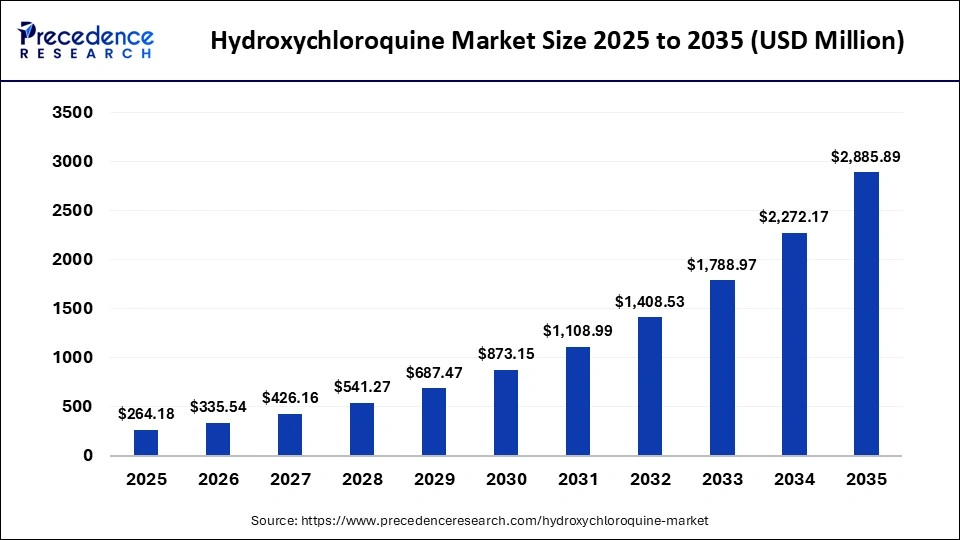
Market Highlights
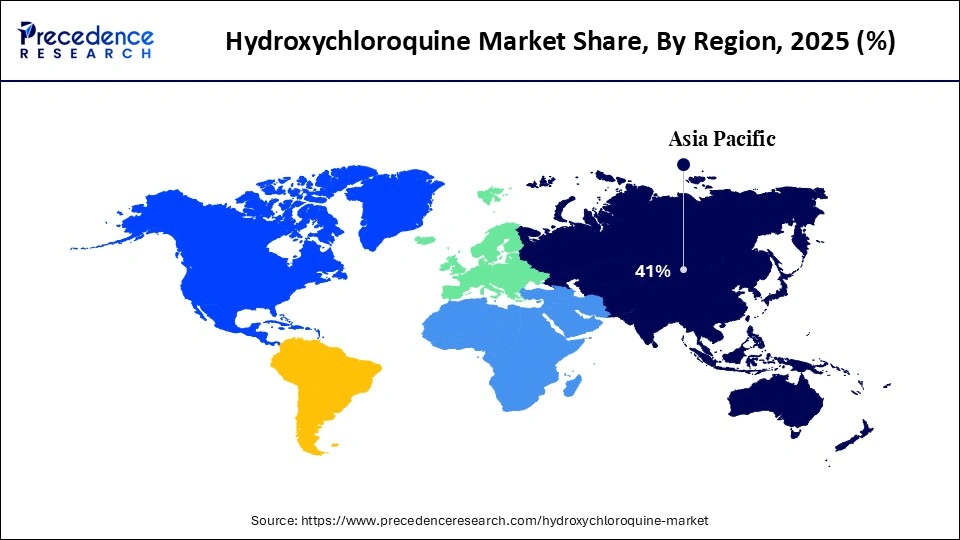
- Asia Pacific dominated the market with the largest market share of 41% in 2025.
- Europe is expected to grow at the fastest CAGR between 2026 and 2035.
- By disease indication, the malaria segment held the biggest market share in 2025.
- By disease indication, the COVID-19 segment is expected to expand at a significant CAGR between 2026 and 2035.
- By distribution channel, the hospital pharmacy segment contributed the highest market share in 2025.
- By distribution channel, the retail pharmacy segment is expected to grow at a strong CAGR between 2026 and 2035.
What drives the growth of the hydroxychloroquine market?
The market includes the production and sale of Hydroxychloroquine, a medication primarily used to prevent and treat malaria, as well as manage autoimmune conditions such as rheumatoid arthritis and lupus. The drug offers benefits like reducing inflammation, modulating immune responses, and providing effective prophylaxis against malaria in endemic regions.
The hydroxychloroquine market is witnessing steady growth due to its high use in the management of autoimmune diseases like systemic lupus erythematosus and rheumatoid arthritis. Furthermore, the increasing incidence of autoimmune and chronic inflammatory diseases, particularly in older populations, is likely to drive the market. The market continues to grow due to the expanding availability of generic formulations and their broad distribution through hospital and retail pharmacies.
How is Artificial Intelligence Influencing the Hydroxychloroquine Market?
Artificial intelligence is influencing the hydroxychloroquine market by enhancing supply chain efficiency, demand forecasting, and drug research. Pharmaceutical companies used AI tools to predict market demand, analyze patient data, and optimize treatment outcomes. Additionally, AI-powered pharmacovigilance and quality control systems enhanced manufacturing reliability and regulatory compliance, ensuring consistent market growth.
On 15 April 2025, Johnson & Johnson shifted its AI strategy to prioritize high‑impact applications, including drug supply chain management, deploying AI systems that provide real‑time insights into inventory and demand to improve operational responsiveness across its pharmaceutical divisions. Similarly, in 2024–2025, Novo Nordisk implemented AI‑driven forecasting tools that cut forecast errors by up to 50 % and significantly reduced overstock, demonstrating how predictive analytics can optimize pharmaceutical supply chains and improve the availability of medications.
Key Trends in the Hydroxychloroquine Market
- Rising long-term use of hydroxychloroquine for treating autoimmune disorders such as lupus and rheumatoid arthritis.
- Growing availability of low-cost generic versions across emerging and developed markets.
- Increased focus on quality assurance and regulatory compliance in drug manufacturing.
- Adoption of AI and data analytics for demand forecasting and inventory management.
- Expansion of hospital and retail pharmacy distribution networks.
- Steady demand from public healthcare systems due to inclusion in essential medicines lists.
- Improved patient monitoring through digital health and pharmacovigilance tools.
- Growing investments in supply chain resilience to avoid drug shortages.
Future Market Outlook
- Expanding autoimmune disease patient base driven by aging populations.
- Growth potential in emerging markets with improving healthcare access.
- Increased government procurement and public health programs.
- Opportunities for manufacturers to launch high-quality branded generics.
- Integration of AI-based systems to optimize production efficiency and reduce costs.
- Expansion of online and e-pharmacy sales channels.
- Strategic partnerships between pharmaceutical companies and healthcare providers.
- Rising demand for stable, long-term therapy drugs supporting chronic disease management.
How are Government Initiatives Supporting the Hydroxychloroquine Market?
Government initiatives are supporting the hydroxychloroquine market through stringent regulations, supply management guidelines, and regulated distribution. Prescription monitoring export laws and pricing controls have been put in place by authorities to guard against abuse while maintaining supply for authorized medical uses. Furthermore, stable demand across important regions is still influenced by inclusion in national treatment guidelines and public healthcare procurement programs.
Is the Hydroxychloroquine Market Delivering Sustainable ROI?
The hydroxychloroquine market offers a stable and low-risk ROI due to low manufacturing costs, off-patent status, and consistent demand for malaria and autoimmune treatments. Predictable sales volumes for manufacturers are ensured by extensive government procurement and inclusion in lists of essential medications. Furthermore, consistent cash flows are maintained by long-term treatment utilization and high hospital pharmacy demand. Reliable, sustainable returns are still supported by bulk production and effective supply chains, even though pricing competition restricts large margins.
What Makes Hydroxychloroquine a Resilient Solution in the Pharmaceutical Industry?
The pharmaceutical industry has found hydroxychloroquine to be a robust solution because of its established effectiveness and extensive clinical use. Commonly prescribed for malaria, lupus, and rheumatoid arthritis, it has earned the trust of healthcare providers and patients worldwide. Its affordability, generic availability, and inclusion on essential medicine lists across multiple countries ensure consistent demand, making it a stable and reliable option in both developed and emerging markets.
Adaptability and supply stability also contribute to its resilience. During new health emergencies, the medication has occasionally been investigated for off-label uses, which can momentarily increase demand. Furthermore, hydroxychloroquine can continue to be a stable presence in the pharmaceutical market despite shifting healthcare dynamics because of a strong supply chain and a well-established worldwide manufacturing network that lowers the risk of shortages.
Why is Hydroxychloroquine Considered a Low-Risk Market?
|
Factor |
Explanation |
Impact on Market |
|
Off-Patent Drug Status |
Hydroxychloroquine is an established, off-patent drug with no IP uncertainty or patent expiry risks. |
Reduces legal and exclusivity-related risks. |
|
Stable Therapeutic Use |
Widely prescribed for malaria and chronic autoimmune diseases like lupus and rheumatoid arthritis. |
Ensure consistent, long-term demand. |
|
Low Manufacturing Cost |
Simple chemical synthesis and well-established API production processes. |
Limits cost volatility and margin pressure. |
|
Essential Medicines Listing |
Included in the WHO and national essential medicines list across many countries. |
Guarantees baseline demand from public healthcare systems. |
|
Government & Hospital Procurement |
Large-volume, recurring purchases through hospitals and government tenders. |
Provides predictable revenue streams. |
|
Strong Generic Competition |
Multiple manufacturers ensure supply continuity and prevent shortages. |
Lowers supply disruption risk. |
|
Well-Defined Regulatory Pathways |
Clear approval, quality, and pharmacovigilance frameworks globally. |
Minimizes regulatory uncertainty. |
|
Chronic Treatment Duration |
Long-term usage in autoimmune conditions leads to repeat prescriptions. |
Improves sales visibility and forecasting accuracy. |
Market Scope
| Report Coverage | Details |
| Market Size in 2025 | USD 264.18 Million |
| Market Size in 2026 | USD 335.54 Million |
| Market Size by 2035 | USD 2,885.89 Million |
| Market Growth Rate from 2026 to 2035 | CAGR of 27.01% |
| Dominating Region | Asia Pacific |
| Fastest Growing Region | Europe |
| Base Year | 2025 |
| Forecast Period | 2026 to 2035 |
| Segments Covered | By Disease Indications, Distribution Channel, and region |
| Regions Covered | North America, Europe, Asia-Pacific, Latin America, and Middle East & Africa |
Segmental Insights
Disease Indications Insights
What made malaria the dominant segment in the hydroxychloroquine market?
The malaria segment dominated the market with the largest share in 2025 because the medication has long been used as a first-line and preventive treatment for malaria. Strong reliance on hydroxychloroquine for prophylaxis and treatment, particularly in the Asia Pacific and some parts of Africa, fueled steady demand. Additional factors supporting the segment's dominance include the affordability of hydroxychloroquine and government-sponsored malaria control initiatives. Additionally, the high prevalence of malaria in tropical and subtropical regions ensures continuous consumption, making it the largest application segment for Hydroxychloroquine.
The COVID-19 segment is expected to grow at the fastest CAGR in the coming years due to early investigations and clinical studies exploring its potential as a treatment or prophylactic option during the pandemic. Various nations' emergency preparedness laws, stockpiling plans, and ongoing clinical research also drive segmental growth. Demand from institutions has been maintained by the continuous assessment of hydroxychloroquine for treatment regimens and emergency use. The segment's growth is supported by increased government attention to pandemic preparedness and medication availability.
Distribution Channel Insights
Why did the hospital pharmacy segment dominate the hydroxychloroquine market?
The hospital pharmacy segment dominated the market in 2025 because the drug is primarily used in regulated clinical settings and requires prescriptions. Treatments for autoimmune diseases, malaria, and COVID-19 were mainly distributed through hospitals, ensuring controlled administration. This dominance was further reinforced by government procurement programs and centralized supply chains.
The retail pharmacy segment is expected to grow at the fastest CAGR in the coming years due to the expansion of pharmacy networks and improved access to prescription medications for patients. Increased awareness of managing chronic diseases, such as autoimmune disorders, is driving more outpatient demand through retail channels. Additionally, rising private healthcare spending and better prescription monitoring systems are supporting wider distribution and accelerating segment growth.
Regional Analysis
What is the Asia Pacific Hydroxychloroquine Market Size?
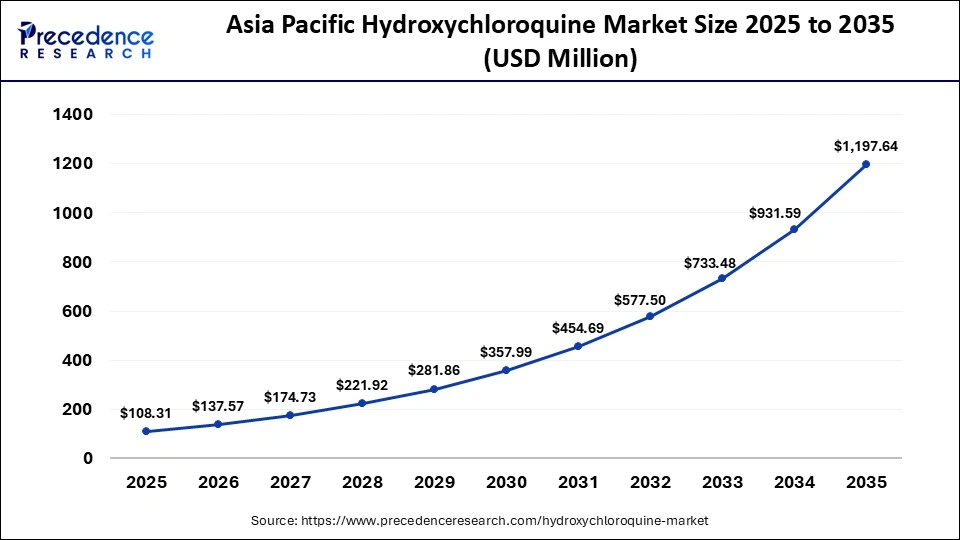
The Asia Pacific hydroxychloroquine market size is expected to be worth USD 108.31 million by 2035, increasing from USD 1,197.64 million by 2025, growing at a CAGR of 27.16% from 2026 to 2035.
Why did Asia Pacific dominate the hydroxychloroquine market?
Asia Pacific dominated the market by capturing the largest share in 2025 because of a high rate of malaria, sizable patient bases, and robust pharmaceutical production capabilities. As significant producers and exporters of hydroxychloroquine, nations like India are essential in guaranteeing its accessibility. Regional dominance is further reinforced by government-led disease control initiatives and the availability of reasonably priced pharmaceuticals. Strong demand for autoimmune disease management, growing healthcare infrastructure, and large patient populations further supported market leadership.
India Hydroxychloroquine Market Trends
India leads the market within Asia Pacific because of the strong domestic demand for malaria treatment and a well-established pharmaceutical manufacturing base. The nation is one of the world's top producers of hydroxychloroquine, thanks to its extensive API manufacturing, economical production, and government-sponsored public healthcare procurement. Strong exporting capabilities and widespread use in national malaria control initiatives further strengthened India's leading position.
What makes Europe the fastest-growing region in the market?
Europe is expected to grow at the fastest CAGR in the coming years due to increasing public healthcare investments, expanding treatment coverage, and ongoing clinical research activities. In Europe, countries such as Germany and France are focusing on regulated supply, hospital-based distribution, and pharmaceutical innovation. Meanwhile, growing domestic demand, export activity, and government procurement programs are driving rapid market growth.
Germany Hydroxychloroquine Market Trends
The market in Germany is growing, driven by increased healthcare spending, research activity, and strong institutional procurement frameworks. Growing focus on emergency preparedness, regulated supply chains, and pharmaceutical innovation is supporting market expansion. Additionally, Germany's leadership in clinical research and healthcare infrastructure is reinforcing future growth prospects.
How is the opportunistic rise of North America in the Market?
North America is expected to experience an opportunistic rise in the hydroxychloroquine market because of the drug's steady demand for treating rheumatoid arthritis, lupus, and malaria. Cost-effectiveness, generic availability, and inclusion in essential medicine programs, which guarantee broad access, all contribute to market resilience. In nations like Canada and Mexico, robust healthcare systems, effective distribution systems, and government assistance all contribute to a steady supply, which keeps the market stable in the area.
U.S. Hydroxychloroquine Market Trends
The U.S. Hydroxychloroquine market remains robust, driven by FDA-approved indications and the high prevalence of autoimmune diseases. Generics are favored for their accessibility and affordability, while strong pharmaceutical supply chains and a well-established domestic manufacturing base ensure steady availability. Ongoing research into potential off-label applications further supports consistent demand and market growth.
How is the Hydroxychloroquine Market Evolving in Latin America?
Latin America is expected to show notable growth during the forecast period. As a cost-effective treatment for rheumatoid arthritis and lupus, hydroxychloroquine is gaining traction in emerging economies in Latin America. Moreover, increased investment in healthcare infrastructure is thus expanding access to these medications. The cost of medicines in Latin America is now increasingly moving toward online platforms, with users prioritizing convenience and affordability.
Brazil Market Trends
The enduring market growth in Brazil is sustained by its traditional usage as a primary treatment for lupus, rheumatoid arthritis, and malaria. The rise in consumption during the pandemic was most pronounced in the Midwest, South, and North regions, following strong political endorsements in those areas.
Will the Middle East and Africa Grow in the Hydroxychloroquine Market?
The Middle East and Africa region is considered to be a significantly growing area, due to increased investments in healthcare infrastructure and enhanced diagnostic rates in countries such as Saudi Arabia, expanding the target patient population. Producers are increasingly providing consistent supplies to the region, and online pharmacies are increasing in popularity, enhancing accessibility, mainly in remote areas.
UAE Market Trends
The market is primarily propelled by the management of rheumatoid arthritis and lupus, alongside the steady need for malaria treatment. Hospital pharmacies remain the main channel, with increasing retail and online pharmacy penetration.
Who are the Major Players in the Global Hydroxychloroquine Market?
The major players in the hydroxychloroquine market include Sanofi, Zydus Cadila, Ipca Laboratories Ltd, Sandoz International GmbH (part of Novartis AG), Mylan N.V., Teva Pharmaceutical Industries Ltd, and Bayer AG.
Other Major Key Players
- Sanofi: Sanofi is a major producer of hydroxychloroquine, which is approved for treating systemic lupus erythematosus, malaria, and rheumatoid arthritis.
- Ipca Laboratories Ltd: Ipca Laboratories Ltd holds a supreme position in both manufacturing and supply, mainly as one of the world's largest manufacturers of the API and finished formulations. The firm offers a broad range of HCQ products, including 200mg and 400mg tablets, thus, marketed under the brand name HCQS.
- Teva Pharmaceutical Industries Ltd: Teva Pharmaceutical Industries Ltd provides Hydroxychloroquine Sulfate Tablets, USP (200 mg), a generic version of Plaquenil, accepted by the FDA for the treatment of lupus erythematosus, malaria, and rheumatoid arthritis.
Recent Developments
- In October 2025, TrialNet launched a new prevention study assessing hydroxychloroquine's potential to delay progression of early-stage Type 1 diabetes, marking an expansion of clinical research applications beyond traditional uses. This research launch signals renewed scientific interest in potential new therapeutic utilities. Enrollment began for participants ages 3 and up in the U.S., highlighting hydroxychloroquine's role in chronic disease research. (Source: https://www.trialnet.org)
- In May 2025, New Zealand's Pharmac announced that Ipca-Hydroxychloroquine replaced Plaquenil as the funded brand, improving subsidised access under the national medicines scheme. The change reflects a strategic market availability event rather than a traditional commercial product launch. This government announcement influences prescribing and reimbursement for hydroxychloroquine in New Zealand. (Source: https://www.pharmac.govt.nz)
Segments Covered in the Report
By Disease Indications
- Malaria
- COVID-19
- Rheumatoid Arthritis
- Others
By Distribution Channel
- Hospital Pharmacy
- Retail Pharmacy
- Online Stores
By Region
- North America
- Europe
- Asia-Pacific
- Latin America
- Middle East & Africa
For inquiries regarding discounts, bulk purchases, or customization requests, please contact us at sales@precedenceresearch.com
Frequently Asked Questions
Tags





Ask For Sample
No cookie-cutter, only authentic analysis – take the 1st step to become a Precedence Research client
 Get a Sample
.webp)



 sales@precedenceresearch.com
 Schedule a Meeting
