



Image Guided Radiation Therapy Market Size, Companies, Share, Patient Volume, Treatment Adoption Rates, Pricing Analysis, Regulatory Landscape, Competitive Positioning, and Demand Forecast
Image Guided Radiation Therapy Market (By Product:Systems & Equipment,Software Solutions;By Procedure:Intensity-Modulated Radiation Therapy (IMRT), 3D Conformal Radiation Therapy, Stereotactic Radiation Therapy, Proton Beam Therapy, Particle Therapy; By Technology:Cone-Beam CT (CBCT), MRI-Guided Radiotherapy, Ultrasound-Guided Radiotherapy, Fluoroscopy-Based Radiotherapy, Others; By Application:Breast Cancer, Prostate Cancer, Lung Cancer, Head & Neck Cancer, Gastrointestinal Cancer, Gynecological Cancer; By End User:Hospitals,Independent Radiotherapy Centers, Research Institutes & Cancer Centers) - Global Industry Analysis, Size, Trends, Leading Companies, Regional Outlook, and Forecast 2026 to 2035
Source: https://www.precedenceresearch.com/image-guided-radiation-therapy-market
 Get a Sample
 Table Of Content


What is the Image Guided Radiation Therapy Market Size in 2026?
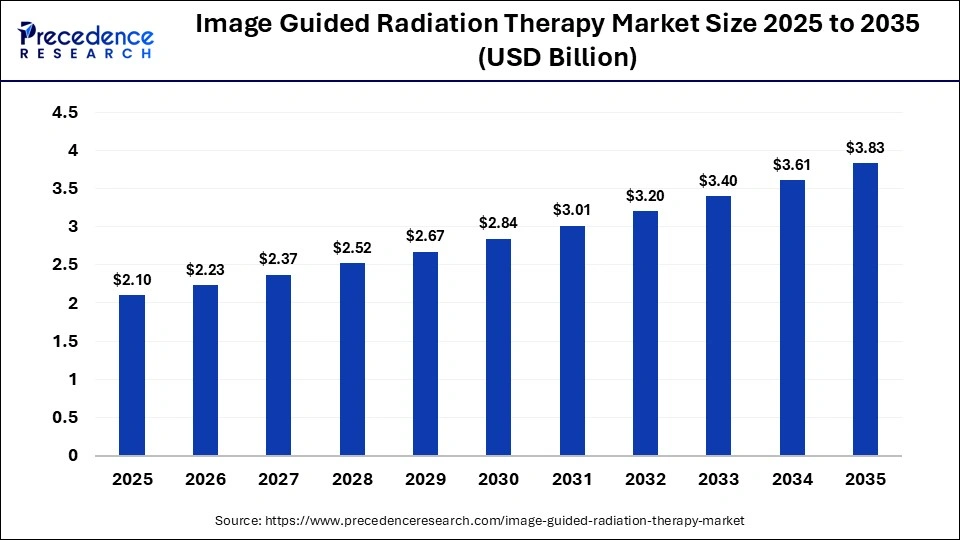
The global image guided radiation therapy market size was estimated at USD 2.1 billion in 2025 and is predicted to increase from USD 2.23 billion in 2026 to approximately USD 3.83 billion by 2035, expanding at a CAGR of 6.20% from 2026 to 2035. The market is driven by the rising global cancer burden and demand for high-precision radiation treatment.
Key Takeaways
- North America dominated the global market with a share of 40% in 2025.
- The Asia Pacific is expected to grow at the fastest CAGR of 6.5% in the market during the forecast period.
- By product, the systems & equipment segment held a dominant position in the market with a share of 65% in 2025.
- By product, the software solutions segment is expected to grow at the fastest CAGR of 5.1% in the market between 2026 and 2035.
- By procedure, the intensity-modulated radiation therapy segment accounted for a considerable revenue share of 39% in the market in 2025.
- By procedure, the stereotactic radiation therapy segment is expected to grow with the highest CAGR of 5.3% in the market during the studied years.
- By technology, the cone-beam CT segment led the global market with a share of 36% in 2025.
- By technology, the MRI-guided radiotherapy segment is expected to expand rapidly in the market with a CAGR of 5.4% in the coming years.
- By application, the breast cancer segment registered its dominance in the global market with a share of 24% in 2025.
- By application, the prostate cancer segment is expected to grow at a CAGR of 5.5% over the forecast period.
- By end user, the hospitals segment dominated the global market with a share of 56% in 2025.
- By end user, the independent radiotherapy centers segment is expected to expand at a CAGR of 5.7% between 2026 and 2035.
Market Overview
Image-guided radiation therapy (IGRT) is an advanced radiotherapy that uses imaging technologies, such as CT, MRI, ultrasound, and cone-beam CT, and offers the most effective way of identifying tumors before the treatment procedure and throughout the radiotherapy process. IGRT allows clinicians to optimize radiation to the tumor and its surroundings by offering real-time visualization of the tumor, its position, and the position of the surrounding organs throughout the treatment. The increasing global cancer burden and the increase in the necessity to develop precision oncology and personalized therapies for cancer patients are the factors contributing to the utilization of IGRT technologies. The improving tendency in the sphere of healthcare is the increased concern of healthcare workers with the improvement of therapeutic effectiveness and patient safety.
How is AI Impacting the Image Guided Radiation Therapy Market?
The image guided radiation therapy market is being revolutionized with artificial intelligence that enhances accuracy, efficiency, and individualization of radiation treatment. Artificial intelligence is finding applications in the analysis of medical images and the detection of tumor and helps clinicians compile accurate radiation treatment plans. AI is used to assist with automated contouring and adaptive radiation therapy, which is a hugely time-saving solution in the workflow of oncology departments and makes the planning of treatment much more efficient. The widespread adoption of digital technologies in the hospital industry, the use of AI in enhancing IGRT system adoption and effectiveness is likely to rise and be more effective globally.
Image Guided Radiation Therapy Market Trends
- Artificial Intelligence (AI) Integration: AI is driving automation in IGRT systems, improving tumor detection, treatment planning, and radiation delivery. AI-based clinical analytics enhance decision-making, reduce planning time, and enable more accurate and personalized radiation therapies.
- Cone-Beam CT Adoption: Cone-beam computed tomography (CBCT) is increasingly used in IGRT for high-resolution, real-time imaging, improving tumor localization, patient positioning, and overall treatment accuracy.Precision Oncology Influence: The focus on precision oncology is boosting IGRT adoption, as highly targeted therapies minimize damage to surrounding healthy tissues while improving curative outcomes and patient survival.
- Investment in Advanced Infrastructure: Hospitals and cancer centers are investing heavily in sophisticated radiotherapy devices with integrated imaging, supporting the broader adoption of IGRT technologies in both developed and emerging regions.
Market Scope
| Report Coverage | Details |
| Market Size in 2025 | USD 2.1 Billion |
| Market Size in 2026 | USD 2.23 Billion |
| Market Size by 2035 | USD 3.83 Billion |
| Market Growth Rate from 2026 to 2035 | CAGR of 6.20% |
| Dominating Region | North America |
| Fastest Growing Region | Asia Pacific |
| Base Year | 2025 |
| Forecast Period | 2026 to 2035 |
| Segments Covered | Process, Product Type, Vertical, and region |
| Regions Covered | North America, Europe, Asia-Pacific, Latin America, and Middle East & Africa |
Segment Insights
Product Insights
How Does the Systems & Equipment Segment Hold the Largest Share of the Market?
The systems & equipment segment held a dominant position in the image guided radiation therapy market with the largest share of 65% in 2025, as advanced imaging and radiation delivery systems are critical for effective cancer treatment. The segment's dominance is further reinforced by increasing investments in modern radiotherapy facilities by hospitals and cancer centers aimed at improving treatment accuracy and patient outcomes. The demand is further reinforced by continuous technological advancements, including integrated imaging-guided linear accelerators and adaptive radiotherapy systems, while the expansion of specialized oncology centers and the rising global prevalence of cancer continue to drive the adoption of IGRT systems and equipment in healthcare facilities.
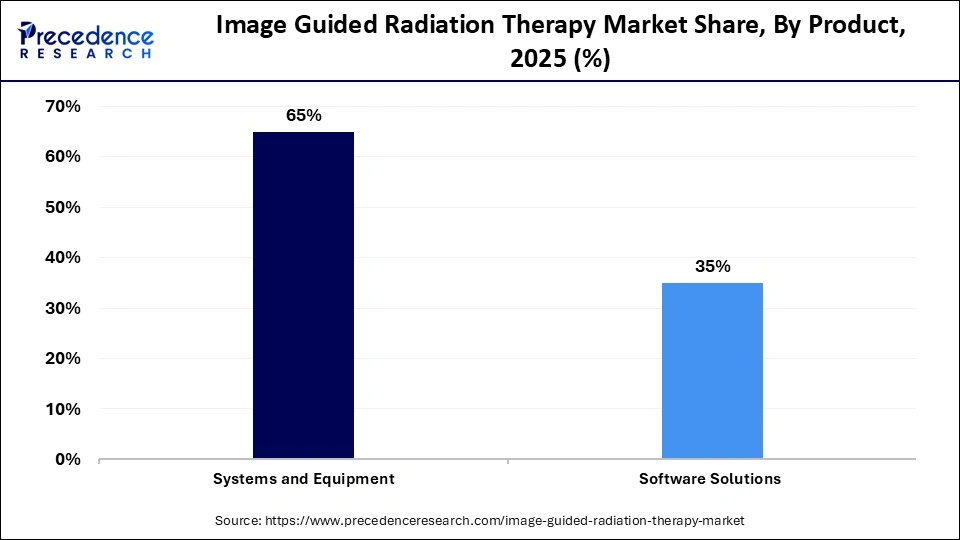
The software solutions segment is expected to grow at the fastest CAGR of 5.1% in the market between 2026 and 2035 due to the rising need to have sophisticated treatment planning, imaging analysis, and workflow management systems. Software platforms are crucial to handle large volumes of imaging data generated during radiotherapy, helping clinicians make accurate and efficient decisions. Innovations in software enhance clinical efficiency, reduce treatment planning time, and minimize human error. Also, the increasing adoption of cloud-based solutions and digital health technologies is making these platforms more accessible and scalable for healthcare providers.
Procedure Insights
Why Did the Intensity-Modulated Radiation Therapy Segment Dominate the Market?
The intensity-modulated radiation therapy (IMRT) segment dominated the image guided radiation therapy market with a share of 39% in 2025, due to its ability to deliver highly targeted radiation doses while sparing surrounding healthy tissues. IMRT uses advanced, computer-controlled linear accelerators to precisely regulate beam intensity, making it highly effective for complex tumors such as those in the prostate, head and neck, and brain. Additionally, advancements in treatment planning systems and integrated imaging have improved the accuracy and efficiency of IMRT procedures, establishing it as one of the most widely adopted radiation therapy techniques.
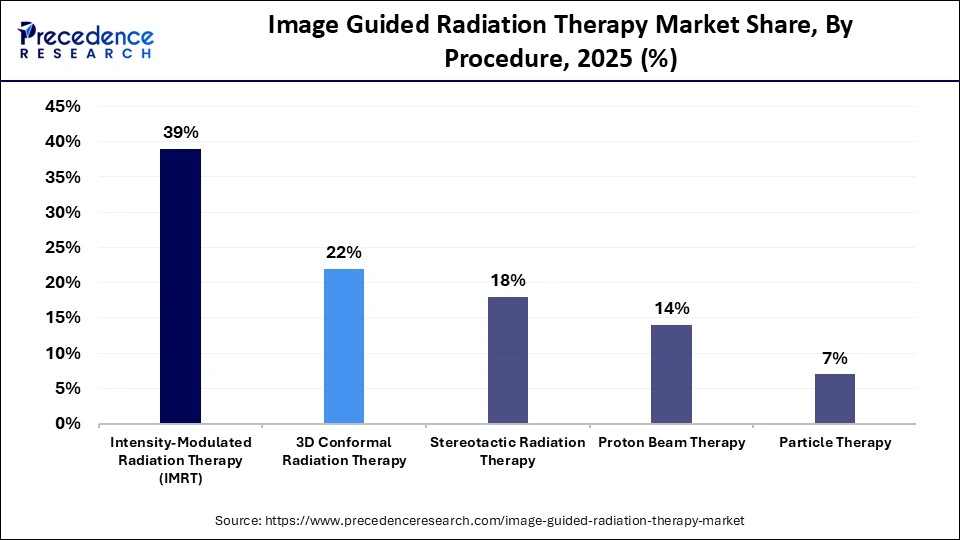
The stereotactic radiation therapy segment is expected to grow at a robust CAGR of 5.3% between 2026 and 2035. This is mainly due to the fact that this therapy delivers high doses of radiation with exceptional precision to small, well-defined tumors, often requiring fewer treatment sessions than conventional radiotherapy. It is particularly effective for brain, lungs, liver, and spinal tumors, where precision is critical to protect surrounding healthy tissues. Growth in this segment is supported by the continuous adoption of advanced radiotherapy equipment, increasing awareness of precision cancer treatments, and the rising incidence of complex tumors.
Technology Insights
Why Did the Cone-Beam CT Segment Lead the Image Guided Radiation Therapy Market?
The cone-beam CT segment led the global market with a major share of 36% in 2025 due to its ability to provide high-resolution, 3D imaging during radiation therapy. CBCT is widely integrated with linear accelerators, allowing clinicians to visualize tumors and surrounding anatomical structures directly in the treatment room. This real-time imaging improves patient positioning accuracy and ensures that radiation beams precisely target the tumor. Ongoing improvements in image quality, reduced scan times, and better integration with treatment planning systems have further increased CBCT adoption in IGRT procedures.
The MRI-guided radiotherapy segment is expected to expand at a CAGR of 5.4% over the forecast period, driven by MRI's superior soft tissue imaging compared to other modalities such as CT. This technology is particularly valuable for treating cancers in sensitive organs like the pancreas, liver, and prostate, as it enables real-time tracking of tumor movement during therapy. The integration of MRI with radiation delivery systems allows continuous imaging throughout treatment, enabling clinicians to adjust radiation doses in real time to account for anatomical changes. Additionally, rapid adoption of MRI-guided radiotherapy systems is supported by increased investment in modern cancer care facilities.
Image Guided Radiation Therapy Market Share, By Technology, 2025 (%)
| Technology | 2025 (%) |
| Cone-Beam CT (CBCT) | 36% |
| MRI-Guided Radiotherapy | 24% |
| Ultrasound-Guided Radiotherapy | 18% |
| Fluoroscopy-Based Radiotherapy | 14% |
| Others | 8% |
Application Insights
Why Did the Breast Cancer Segment Lead the Image Guided Radiation Therapy Market?
The breast cancer segment led the market with a share of 24% in 2025 due to the high incidence rate of breast cancer and the increased adoption of precision radiation therapy approaches. IGRT allows clinicians to see and target the tumor in real time, reducing radiation to normal tissues like the heart and lungs, which plays a very important role in reducing long-term side effects. Demand has also been encouraged by increasing awareness of early diagnosis, and investment in the increasing sophistication of oncology centers and radiotherapy facilities. Also, there has been an improvement in technology, such as cone-beam CT and MRI-guided imaging, which have improved the precision of treatments, the effectiveness of the workflow, and patient security.
The prostate cancer segment is expected to expand rapidly in the market with a CAGR of 5.5% in the coming years due to the increasing prevalence of prostate cancer, especially among the aging population. IGRT enables precise tumor localization and real-time adjustments during radiation therapy, which is particularly critical for prostate cancer due to organ motion caused by bladder and bowel activity. Growth in this segment is driven by the increased use of advanced radiotherapy techniques, including intensity-modulated radiation therapy (IMRT) integrated with IGRT, as well as heightened awareness of prostate cancer screening. Additionally, rising investments in technologically advanced cancer care centers and the global focus on precision oncology are further supporting IGRT adoption in prostate cancer treatment.
End-User Insights
What Made Hospitals the Leading Segment in the Image Guided Radiation Therapy Market?
The hospitals segment led the market by holding the largest share of 56% in 2025 due to the availability of advanced radiotherapy systems. Hospitals typically have the trained staff and specialized infrastructure required to install, operate, and maintain IGRT equipment. They also treat a large number of cancer patients, making them primary users of IGRT for precise treatment of complex tumors in organs such as the prostate, breast, and lung. Implementation of IGRT within hospital oncology departments enables comprehensive cancer management, integrating imaging, treatment planning, and delivery in a single, streamlined environment.
The independent radiotherapy centers segment is expected to grow at a CAGR of 5.7% over the forecast period. This is because these facilities specialize in radiotherapy services and often adopt advanced technologies faster than larger hospital systems. They offer flexible, cost-effective treatments with shorter waiting times, making them attractive to patients. The growth of this segment is further driven by increasing awareness of targeted cancer therapies and precision oncology, as well as rising private investments in standalone oncology centers and partnerships with equipment vendors, which facilitate the rapid deployment of sophisticated IGRT systems.
Image Guided Radiation Therapy Market Share, By End User, 2025 (%)
| End User | 2025 (%) |
| Hospitals | 56% |
| Independent Radiotherapy Centers | 31% |
| Research Institutes & Cancer Centers | 13% |
Region Insights
North America Image Guided Radiation Therapy Market Size and Growth 2026 to 2035
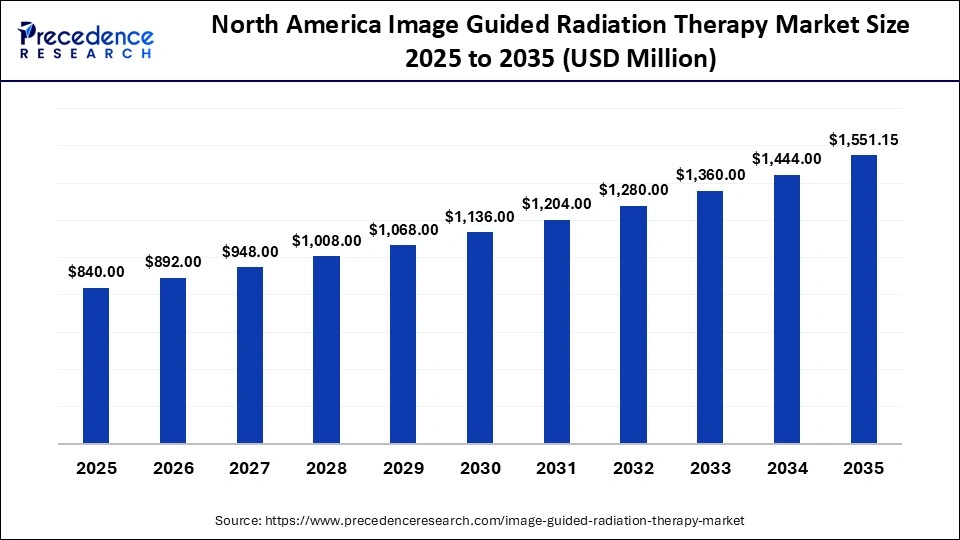
The North America image guided radiation therapy market size is exhibited at USD 840.00 million in 2025 and is projected to be worth around USD 1,551.15 million by 2035, growing at a CAGR of 6.4% from 2026 to 2035.
Why Did North America Lead the Global Image Guided Radiation Therapy Market?
North America dominated the global image guided radiation therapy market with a share of 40% in 2025. This is mainly due to the presence of well-established hospitals, cancer treatment centers, and research institutions. The region's market leadership is further supported by strong government backing, favorable reimbursement policies, and widespread clinical adoption of precision oncology. Ongoing technological advancements, research collaborations, and active participation of major medical equipment manufacturers in developing next-generation IGRT systems are driving growth. Additionally, the high prevalence of cancers such as prostate, breast, lung, and head & neck cancers increases the demand for accurate real-time imaging during radiation therapy in the region.
U.S. Image Guided Radiation Therapy Market Size and Growth 2026 to 2035
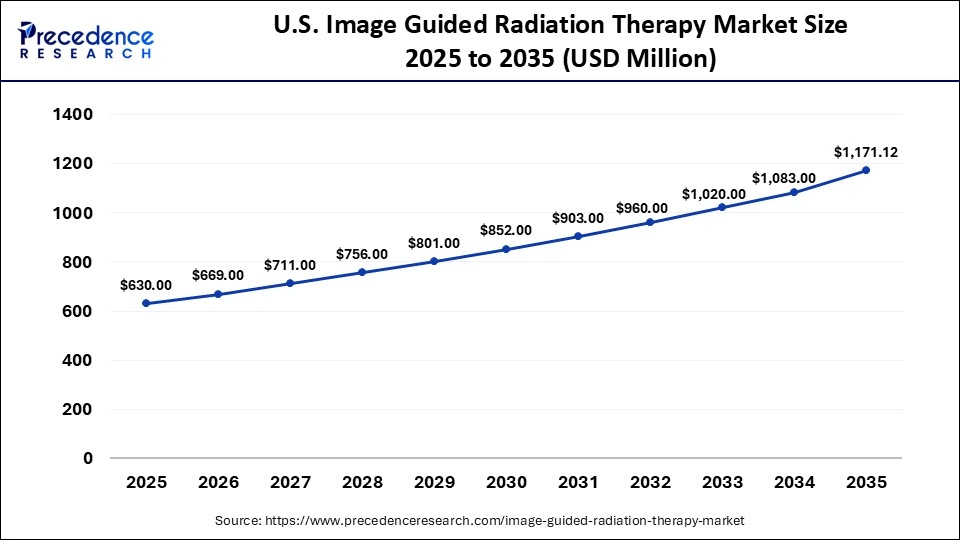
The U.S. image guided radiation therapy market size is evaluated at USD 630.00 million in 2025 and is projected to be worth around USD 1,171.12 million by 2035, growing at a CAGR of 6.33% from 2026 to 2035.
Why is Asia Pacific Experiencing the Fastest Growth in the Image Guided Radiation Therapy Market?
Asia Pacific is expected to grow at the fastest CAGR of 6.5% in the upcoming period, driven by the rising prevalence of cancer, increasing healthcare spending, and growing awareness of advanced treatment methods. Rapid economic growth in countries such as China, India, and Japan has led to significant investments in modern oncology equipment, enabling the adoption of advanced IGRT systems. Market growth is further supported by the expansion of hospitals and independent radiotherapy centers, government initiatives to improve access to cancer care, and increasing patient awareness of precision radiotherapy and demand for minimally invasive, targeted treatment approaches.
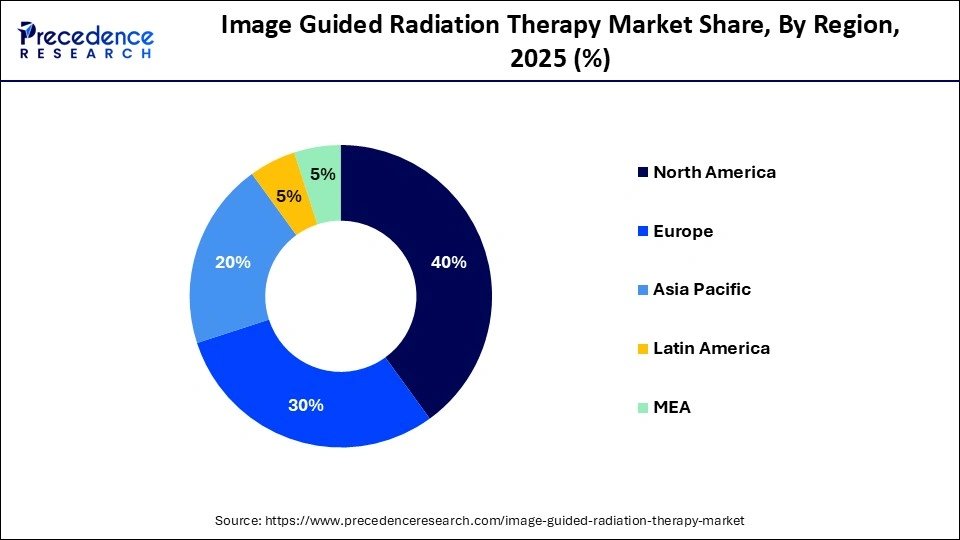
Image Guided Radiation Therapy Market Companies
- Varian Medical Systems
- Elekta AB
- Siemens Healthineers
- Accuray Inc.
- GE HealthCare
- Koninklijke Philips
- ViewRay Technologies
- Hitachi Medical Systems
- IBA Worldwide
- Vision RT
- Canon Medical Systems
- Brainlab AG
- Mevion Medical Systems
- RaySearch Laboratories
- Panacea Medical Technologies
Recent Developments
- In December 2025, GE HealthCare and Mayo Clinic introduced GEMINI-RT, a strategic project to customize radiation therapy by combining imaging, AI, and patient monitoring through the cancer care continuum. The partnership is centered on automation, predictive oncology, multi-modal therapies, and outpatient monitoring to improve clinical outcomes, decrease clinician burnout, and increase radiation oncology innovation.(Source: https://www.gehealthcare.com)
- In September 2025, Accuray Incorporated launched the Accuray Stellartm Solution to the U.S. market, which is based on adaptive radiotherapy with an extensive toolkit that allows clinical teams to use. The system will respond to the changing needs of the patients in their treatment process, allowing for more specific and individual radiotherapy.(Source: https://investors.accuray.com)
- In May 2024, Elekta announced its Evo CT-Linac, which has high-definition AI-enhanced imaging, both offline and online adaptive radiation therapy. This is a flexible system that enables clinicians to identify the most appropriate radiation therapy method to use on a particular patient and enhance the precision and outcome of the treatment.(Source: https://ir.elekta.com)
Segments Covered in the Report
By Product
- Systems & Equipment
- Software Solutions
- By Procedure
- Intensity-Modulated Radiation Therapy (IMRT)
- 3D Conformal Radiation Therapy
- Stereotactic Radiation Therapy
- Proton Beam Therapy
- Particle Therapy
By Technology
- Cone-Beam CT (CBCT)
- MRI-Guided Radiotherapy
- Ultrasound-Guided Radiotherapy
- Fluoroscopy-Based Radiotherapy
- Others
By Application
- Breast Cancer
- Prostate Cancer
- Lung Cancer
- Head & Neck Cancer
- Gastrointestinal Cancer
- Gynecological Cancer
By End User
- Hospitals
- Independent Radiotherapy Centers
- Research Institutes & Cancer Centers
By Region
- North America
- Latin America
- Europe
- Asia-pacific
- Middle and East Africa
For inquiries regarding discounts, bulk purchases, or customization requests, please contact us at sales@precedenceresearch.com
Frequently Asked Questions





Ask For Sample
No cookie-cutter, only authentic analysis – take the 1st step to become a Precedence Research client
 Get a Sample
.webp)



 sales@precedenceresearch.com
 Schedule a Meeting
