



India Immunotherapy Drugs Market Size, Share and Trends 2026 to 2035
India Immunotherapy Drugs Market (By Drug Type: Monoclonal Antibodies, Vaccines, Interleukins, Interferons Alpha & Beta, and Others; By Therapeutic Area: Cancer, Infectious Diseases, Autoimmune & Inflammatory Diseases, and Others) Industry Size, Share, Growth, Trends 2025-2035
 Get a Sample
 Table Of Content


The India immunotherapy drugs market size accounted for USD 11.8 billion in 2025 and is predicted to touch around USD 73.67 billion by 2035, growing at a CAGR of 20.10% from 2026 to 2035. The market in India is mainly driven by the increasing rates of cancer and autoimmune diseases, higher healthcare spending, supportive government policies, and patient awareness, along with the adoption of advanced biologic treatments.
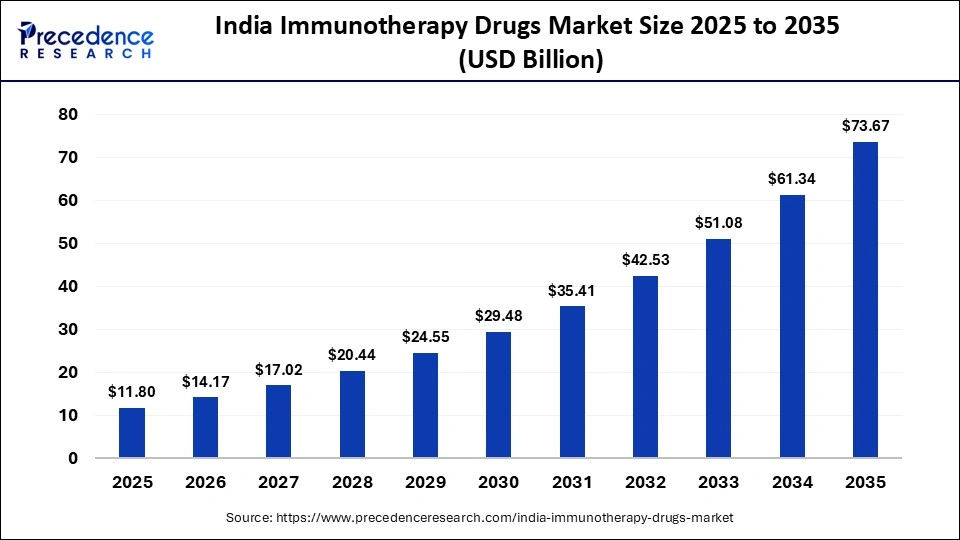
India Immunotherapy Drugs Market Statical Scope
| Reports Attributes | Statistics |
| Market Size in 2025 | USD 11.8 Billion |
| Market Size in 2026 | USD 14.17 Billion |
| Market Size by 2035 | USD 73.67 Billion |
| CAGR 2026 to 2035 | 20.10% |
| Base Year | 2025 |
| Forecast Period | 2026 to 2035 |
The market is essential as it tackles the growing burden of cancer and chronic diseases while introducing affordable biosimilar options that improve access in developing countries. It is expected to grow significantly as local manufacturing reduces treatment costs. India observes significant new cancer cases each year, leading to a pressing need for advanced treatments. Many patients are diagnosed late, making targeted immune-oncology therapies crucial for better survival rates.
Switching patients to immune checkpoint inhibitors and monoclonal antibodies reduces severe side effects and improves their quality of life. India's strong biopharmaceutical and generic manufacturing capabilities assist in the production of affordable biosimilar immunotherapies. This lower-cost domestic production makes expensive treatments more accessible for both local and global populations. Clinical use in major oncology centers in India provides important data to improve future treatment protocols.
India Immunotherapy Drugs Market, By Drug Type, 2025 (%)
| Segments | Shares (%) |
| Monoclonal Antibodies | 49.00% |
| Vaccines | 18.00% |
| Interleukins | 12.00% |
| Interferons Alpha & Beta | 10.00% |
| Others | 11.00% |
- Monoclonal Antibodies - The monoclonal antibodies (mAbs) segment, with a share of 49.00% in 2025, is the largest revenue-generating segment in the Indian immunotherapy market. This segment is important as it offers high target specificity for treating oncology and autoimmune diseases, and local biosimilar production makes these advanced treatments more affordable for patients in India.
- Vaccines - The vaccine segment, with a share of 18.00% in 2025, plays a crucial role in the Indian immunotherapy market as it is the fastest-growing drug category. This growth is driven by the increasing burden of cancer and chronic diseases, strong domestic manufacturing capabilities, and a strategic focus on preventive and personalized immuno-oncology care.
- Interleukins - The interleukins segment, with a share of 12.00% in 2025, is significant in the Indian immunotherapy market as it addresses the growing issues of oncology and autoimmune diseases. Interleukin drugs and inhibitors help regulate communication between immune cells, helping in the treatment of cancers such as renal cell carcinoma and chronic inflammatory diseases like rheumatoid arthritis and psoriasis.
India Immunotherapy Drugs Market, By Therapeutic Area, 2025 (%)
| Segments | Shares (%) |
| Cancer | 57.00% |
| Infectious Diseases | 19.00% |
| Autoimmune & Inflammatory Diseases | 16.00% |
| Others | 8.00% |
- Cancer - The cancer segment, with a share of 57.00% in 2025, is the dominant driver of the India Cancer Immunotherapy Market, driven by a rapidly increasing national cancer burden, clinical use of life-extending checkpoint inhibitors and monoclonal antibodies, and a shift towards precision oncology instead of harsh traditional chemotherapies.
- Infectious Diseases - The infectious diseases segment, with a share of 19.00% in 2025, is essential in the Indian immunotherapy drugs market as it tackles high endemic issues like tuberculosis, HIV, and viral hepatitis. Immune-boosting biologics and monoclonal antibodies provide crucial alternatives to combat rising antimicrobial resistance and enhance patient outcomes where traditional anti-infective drugs fall short.
- Autoimmune & Inflammatory Diseases - The segment for autoimmune and inflammatory diseases, with a share of 16.00% in 2025, plays a crucial role in India's immunotherapy and immunology drug market. This is largely due to the fast-growing number of chronic conditions such as rheumatoid arthritis, psoriasis, and inflammatory bowel disease. Additionally, there is a rise in patient awareness, better access to healthcare, and a growing acceptance of affordable biosimilars.
Competitive Landscape
The immunotherapy drug market in India is growing rapidly due to increasing cancer cases and local production of biosimilars. This market includes major global companies offering proprietary checkpoint inhibitors, as well as Indian firms providing affordable monoclonal antibodies and innovative cellular therapies.
- Bristol Myers Squibb India provides top immune checkpoint inhibitors such as Opdivo (nivolumab) and Yervoy (ipilimumab), and is also expanding its combination therapies in immuno-oncology.
- Merck & Co. (MSD India) holds a significant market share with its leading PD-1 inhibitor Keytruda (pembrolizumab), which is used for various solid tumors.
- F. Hoffmann-La Roche offers well-known monoclonal antibodies and immunotherapies like Tecentriq (atezolizumab), along with a robust diagnostic portfolio.
- AstraZeneca Pharma India features popular immuno-oncology drugs like Imfinzi (durvalumab) for lung and biliary tract cancers.
- Biocon Biologics is a local leader in affordable oncology biosimilars, such as trastuzumab and bevacizumab, which enhance targeted immunotherapy treatments.
- Dr. Reddy's Laboratories is working on introducing new biologic entities to India, including the PD-1 inhibitor Toripalimab.
- ImmunoACT, in partnership with Laurus Labs, has launched India's first indigenous CAR-T cell therapy (NexCAR1), which is approved for certain blood cancers, improving access to cellular immunotherapy in the country.
- Glenmark Pharmaceuticals has broadened its oncology presence by bringing globally recognized immunotherapies like Tevimbra (tislelizumab) to the Indian market.
Segments Covered in the Report
By Drug Type
- Monoclonal Antibodies
- Vaccines
- Interleukins
- Interferons Alpha & Beta
- Others
By Therapeutic Area
- Cancer
- Infectious Diseases
- Autoimmune & Inflammatory Diseases
- Others
For inquiries regarding discounts, bulk purchases, or customization requests, please contact us at sales@precedenceresearch.com
Frequently Asked Questions





Ask For Sample
No cookie-cutter, only authentic analysis – take the 1st step to become a Precedence Research client




 sales@precedenceresearch.com
 Schedule a Meeting



