



Infant Resuscitators Market Size, Companies, Share, Patient Volume, Treatment Adoption Rates, Pricing Analysis, Regulatory Landscape, Competitive Positioning, and Demand Forecast
Infant Resuscitators Market (By Product Type: Self-Inflating Bag Valve Mask, Flow-Inflating Bag, T-piece Resuscitator, Automated/Mechanical Resuscitator; By Modality: Reusable, Disposable; By Technology: Pressure-Limited, PEEP-Capable, Integrated Monitoring; By End User: Hospitals & NICUs, Ambulatory Surgical Centers, EMS / Pre-hospital Settings, Maternity Clinics & Birth Centers) - Global Industry Analysis, Size, Trends, Leading Companies, Regional Outlook, and Forecast 2026 to 2035
Source: https://www.precedenceresearch.com/infant-resuscitators-market
 Get a Sample
 Table Of Content


What is Infant Resuscitators Market Size in 2026?
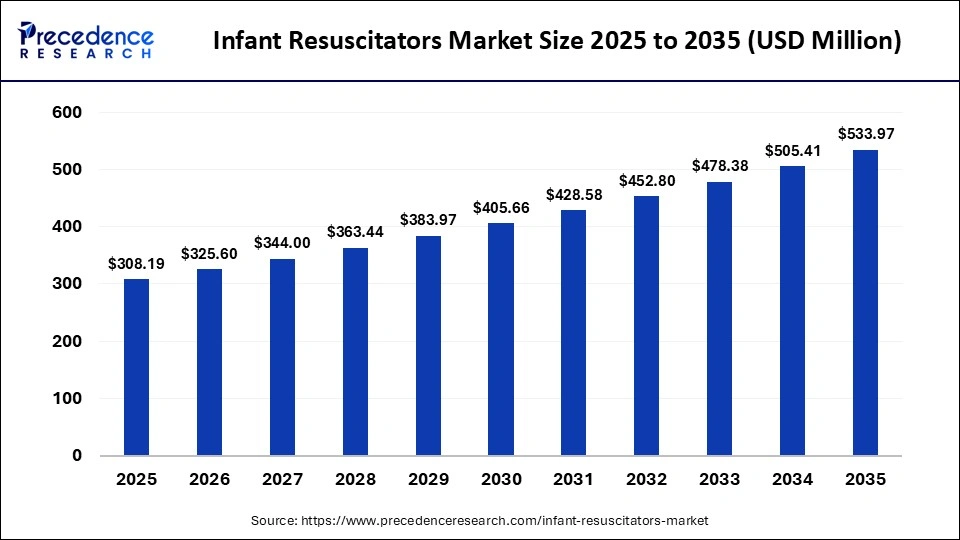
The global infant resuscitators market size was calculated at USD 308.19 million in 2025 and is predicted to increase from USD 325.60 million in 2026 to approximately USD 533.97 million by 2035, expanding at a CAGR of 5.65% from 2026 to 2035. The surging awareness about neonatal care among parents and numerous government policies aimed at delivering perinatal care services are driving the market.
Key Takeaways
- North America led the market with the largest share in 2025.
- Asia Pacific is expected to grow at the fastest CAGR during the forecast period.
- By product type, the self-inflating bag-valve masks segment held the largest share of the market in 2025.
- By product type, the automated / mechanical resuscitator segment is expected to expand at a significant CAGR during the forecast period.
- By modality, the disposable segment held the largest share of the market in 2025.
- By modality, the reusable segment is expected to grow with a robust CAGR between 2026 and 2035.
- By technology, the pressure-limited segment held the highest share of the market in 2025.
- By technology, the PEEP-capable segment is expected to grow with a considerable CAGR during the forecast period.
- By end user, the hospitals & NICUs segment dominated the market in 2025.
- By end user, the ambulatory surgical centers segment is expected to rise with a notable CAGR during the forecast period.
Market Overview
The infant resuscitators market deals with the production and distribution of specialized medical devices that are designed to provide emergency breathing support to newborns (neonates) who cannot breathe independently or have low heart rates after birth. These devices apply positive pressure, through a mask or endotracheal tube, to inflate immature lungs in infants. The demand for infant resuscitators has grown significantly due to the rising cases of asphyxia in infants, coupled with the surging focus of international organizations on lowering the neonatal mortality rate. This market is expected to experience immense growth with the rise of the medical devices industry around the world.
Infant Resuscitators Market Trends
- Partnerships: Several medical device companies are partnering with tech providers to develop smart resuscitators for delivering superior neonatal services in different parts of the globe.
- Surging Cases of Neonatal Deaths: The rise in the number of neonatal deaths in several countries, such as Pakistan, Afghanistan, Chad, Mali, Somalia, and South Sudan, has increased the demand for advanced resuscitators to treat infants.
- Government Initiatives: The governments of various countries are launching various infant care policies to reduce neonatal mortality.
- Joint Fundings: Investors from different regions are jointly investing huge amounts of capital to enhance newborn protection.
- Transition Toward Portable Devices: The focus on shifting towards portable infant resuscitators has increased due to their use in ambulances, remote clinics, and inter-hospital transport.
- Business Expansions: Market players are investing heavily in opening new manufacturing centers to produce a wide variety of resuscitators to enhance infant care.
What is the role of AI in the Infant Resuscitators Industry?
Artificial Intelligence plays a prominent role in the development of the infant resuscitators industry. The deployment of AI in infant resuscitation solutions enhances neonate survival rates by delivering real-time insights, data-driven monitoring, predictive analytics for early detection of diseases, and providing precise feedback on CPR techniques. Additionally, AI-powered simulators provide interactive, realistic, and personalized training for healthcare staff to upscale their resuscitation skills. AI also supports training tools and simulation systems that improve healthcare provider skills and readiness, while predictive analytics can help anticipate complications and tailor care strategies for individual infants.
- In April 2025, AngelEye Health launched AIVision. AIVision is an advanced platform that transforms the neonatal intensive care unit by integrating AI and computer vision.
Market Scope
| Report Coverage | Details |
| Market Size in 2025 | USD 308.19 Million |
| Market Size in 2026 | USD 325.60 Million |
| Market Size by 2035 | USD 533.97 Million |
| Market Growth Rate from 2026 to 2035 | CAGR of 5.65% |
| Dominating Region | North America |
| Fastest Growing Region | Asia Pacific |
| Base Year | 2025 |
| Forecast Period | 2026 to 2035 |
| Segments Covered | Product Type, Modality, Technology, End User, and region |
| Regions Covered | North America, Europe, Asia-Pacific, Latin America, and Middle East & Africa |
Segment Analysis
Product Type Insights
Why Did the Self-Inflating Bag-Valve Masks Segment Dominate the Infant Resuscitators Market?
The self-inflating bag-valve masks segment dominated the market with the largest share in 2025 due to their ease of use, reliability, and compatibility in various clinical settings. These devices are capable of re-expanding after compression, by eliminating the requirement of compressed gas sources in neonatal intensive care units. The capability of these devices in delivering positive pressure ventilation during resuscitation has made them highly popular among healthcare professionals. Moreover, superior durability and compatibility with oxygen reservoirs further increase their demand in the neonatal care sector.
The automated / mechanical resuscitator segment is expected to grow at a notable CAGR during the forecast period as these devices deliver programmable ventilation with precise control as compared to traditional resuscitators. These resuscitators allow real-time monitoring and support clinical decision-making in neonatal care units to lower infant mortality. Nowadays, the public hospitals have started integrating mechanical resuscitators into NICUs to improve treatment procedures during emergencies.
Modality Insights
What Made Disposable the Leading Segment in the Infant Resuscitators Market?
The disposable segment led the market with a major share in 2025, owing to the growing focus on enhancing infection control, improving patient safety, and abiding by regulatory compliance. Disposable infant resuscitators lower the risk of cross-contamination and protect newborns against hospital-acquired infections. In recent times, neonatal hospitals are widely adopting these resuscitation solutions to eliminate the requirement of sterilization and reduce turnaround time. Also, disposable offers numerous benefits, such as superior performance and high convenience in birth centers, thus adding to the segmental development.
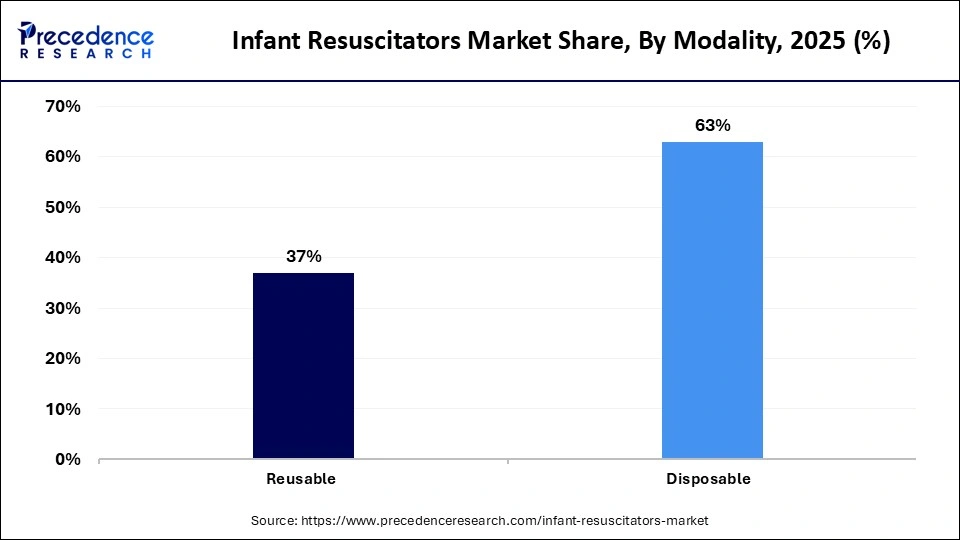
The reusable segment is expected to grow at a robust CAGR between 2026 and 2035 due to the increasing demand for sustainable and low-cost respiratory solutions in healthcare units. Reusable resuscitators deliver long-term value by reducing per-use cost in birth centers and hospitals due to their durability, ease of cleaning, and infection control capability. Additionally, the growing concerns related to medical waste have urged hospitals to adopt reusable devices.
Technology Insights
What Made Pressure-Limited the Dominant Segment in the Infant Resuscitators Market?
The pressure-limited segment dominated the infant resuscitators market while holding the largest share in 2025 due to its ability to deliver safe and controlled ventilation among infants. Pressure-limited devices are designed to provide air at a preset pressure to lower the risk of barotrauma in newborns. Their capability to deliver consistent positive pressure ventilation makes it suitable for adoption in NICUs, delivery rooms, and emergency care units. The healthcare professionals prefer these devices due to their safety features, enhanced reliability, and ease of operation.
The PEEP-capable segment is expected to expand at a significant CAGR during the forecast period, owing to its ability to offer enhanced respiratory support for neonatal lungs. PEEP technology helps in improving oxygenation by reducing the risk of lung injury in newborns. With the advancements in neonatal care, clinicians are adopting PEEP-based resuscitators to treat respiratory distress syndrome more effectively in infants.
End User Insights
Why Did the Hospitals & NICUs Segment Dominate the Infant Resuscitators Market?
The hospitals & NICUs segment dominated the infant resuscitators market with the largest share in 2025. This is due to the increased volume of neonatal deliveries and the availability of critical care services in hospital settings. The neonatal intensive care units are integrated with high-quality respiratory support systems and are equipped with trained healthcare professionals, which in turn tends to lead people to visit these settings during emergencies. Also, most of the pre-term deliveries and neonatal complications are managed in public hospitals, thereby increasing the demand for resuscitators.
The ambulatory surgical centers segment is expected to grow at the fastest CAGR during the forecast period, as these facilities provide cost-effective infant care with a focus on short-term stays. The cases of outpatient births have grown significantly in developing nations, which emphasizes the need for ASCs to adopt advanced resuscitators to enhance the treatment procedure of infants. This, in turn, is expected to boost the segmental growth in the upcoming years.
Regional Insights
North America Infant Resuscitators Market Size and Growth 2026 to 2035
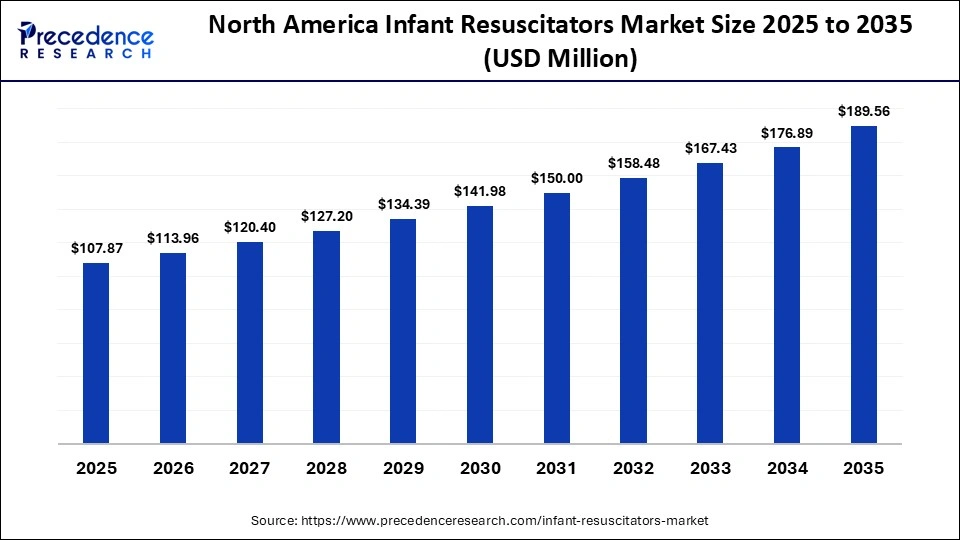
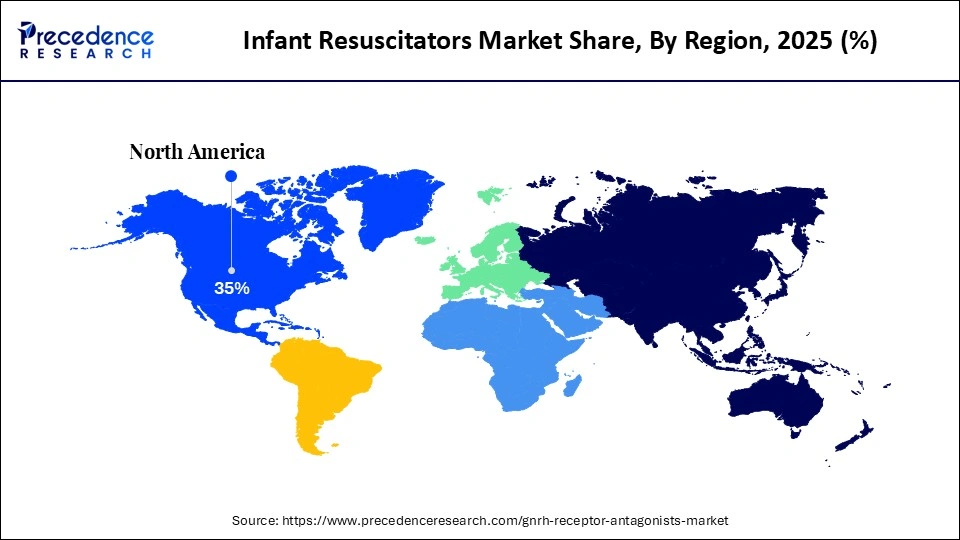
The North America infant resuscitators market size is estimated at USD 107.87 million in 2025 and is projected to reach approximately USD 189.56 million by 2035, with a 5.80% CAGR from 2026 to 2035.
Why Did North America Dominate the Infant Resuscitators Market?
North America dominated the infant resuscitators market by capturing a major share in 2025. The region's dominance in the market is attributed to the growing awareness regarding neonatal care, coupled with surging cases of preterm births. The growing adoption of automated resuscitators by private hospitals, along with continuous innovations performed by numerous market players, such as GE Healthcare Technologies and Allied Healthcare Products, has contributed to market expansion. Also, the increasing emphasis of resuscitator manufacturers on deploying premium technologies in NICUs has boosted the growth of the market in this region.
- In July 2025, Northwell's Phelps Hospital announced to deploy an automated child-specific resuscitation equipment. This equipment was designed to enhance the capabilities of neonatal care in the U.S.
U.S. Infant Resuscitators Market Size and Growth 2026 to 2035
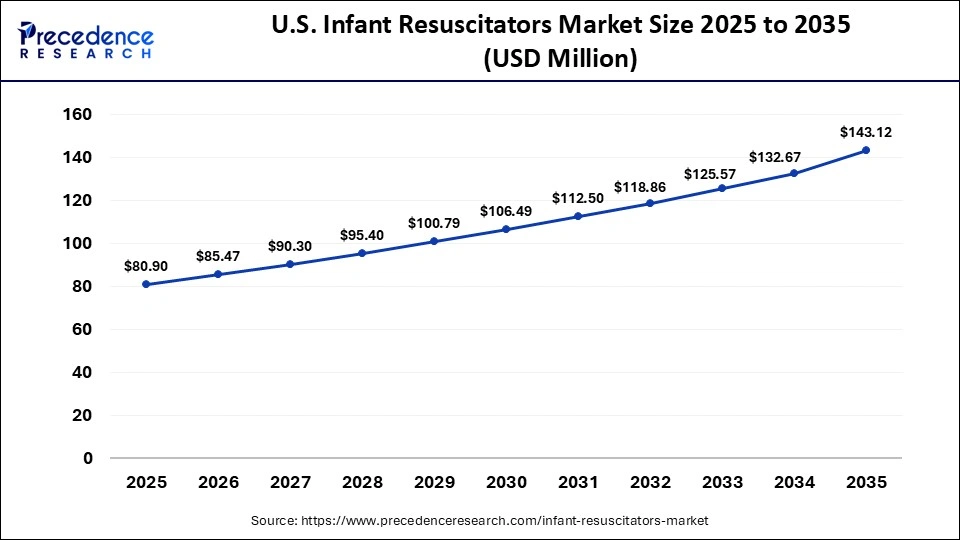
The U.S. infant resuscitators market size is calculated at USD 80.90 million in 2025 and is expected to reach nearly USD 143.12 million in 2035, accelerating at a strong CAGR of 5.87% between 2026 to 2035.
U.S. Market Trends
The U.S. leads the North American infant resuscitators market due to the growing use of single-use BVMs in neonatal care centers, along with the surging focus of the market players on expanding their businesses to sustain their position in this nation. Also, the surging cases of pneumonia in newborn patients encourage the hospitals to deploy advanced resuscitation units to enhance infant care.
Why is Asia Pacific Expanding with the Fastest CAGR in the Market?
Asia Pacific is expected to expand at the fastest CAGR during the forecast period, owing to the surging focus of healthcare professionals to adopt PEEP-capable resuscitators for delivering high-quality neonatal services. The rising preference of the people to visit ambulatory surgical centers in emergencies, coupled with high birth rates in several nations, such as China and India. The increase in the number of startups dealing in the development of infant resuscitators, as well as the growing emphasis of the municipal corporations on delivering neonatal training to ASHA workers in India, has played a significant role in driving the industrial growth. The infant resuscitators exporters of the Asia Pacific comprise Nihon Kohden Corporation, Blue Cross Silicon, and Nice Neotech Medical Systems.
According to Statbase. Org, the estimated birth rate in India during mid-2025 was estimated to be 15.76 per 1,000 people.
India Market Analysis
India is the major contributor to the infant resuscitators market within Asia Pacific due to the growing adoption of T-piece resuscitators by healthcare professionals, along with the surging cases of premature births. Also, the surging use of eco-friendly materials for manufacturing compact resuscitators, as well as the deployment of neonatal resuscitation kits in public hospitals, has played a crucial role in industrial development.
Value Chain Analysis
- Raw Materials Sourcing: Raw materials that are required in the manufacturing of infant resuscitators consist of silicone rubber, medical-grade plastics, elastomers, stainless steel, and latex-free materials.
Key Companies: Momentive Performance Materials, Shin-Etsu Chemical, And Elkem Silicones. - Quality Control: The quality control (QC) process for infant resuscitators involves a combination of pre-use equipment checks, regular maintenance, and the application of standardized, evidence-based resuscitation protocols (such as NRP) to ensure safety and efficacy.
Key Companies: NAMSA, SGS, and Eurofins. - Distribution Channel: The distribution channels for infant resuscitators primarily consist of direct tenders/direct sales, retail sales, and online sales.
Key Companies: Ambu A/S, Flexicare (Group) Limited, Nice Neotech Medical Systems, SHINMED, and Zeal Medical.
Top Companies Operating in the Infant Resuscitators Market
- Drägerwerk AG & Co. KGaA
- Fisher & Paykel Healthcare
- GE HealthCare Technologies Inc.
- Koninklijke Philips N.V.
- Ambu A/S
- Teleflex Incorporated
- Vyaire Medical Inc.
- Intersurgical Ltd
- ICU Medical
- Laerdal Medical AS
- Medline Industries LP
- Mercury Medical
- Nihon Kohden Corporation
- Atom Medical Corporation
- Besmed Health Business Corp.
- SunMed LLC
- Allied Healthcare Products Inc.
- Pennine Healthcare
Recent Developments
- In February 2026, Emory University Hospital Midtown opened a neonatal center in the U.S. This new center received a level III designation by the Georgia Department of Public Health (DPH). (Source: https://news.emory.edu)
- In November 2025, Satish Deopujari launched a Pressure Control Apparatus. This device enhances resuscitation capabilities in infants.
(Source: https://timesofindia.indiatimes.com) - In October 2024, Dräger India launched BabyRoo TN 300. BabyRoo TN 300 is an advanced thermoregulation device designed to support emergency resuscitation among new borne child. (Source: https://biopharmaapac.com)
Segments Covered in the Report
By Product Type
- Self-Inflating Bag Valve Mask
- Flow-Inflating Bag
- T-piece Resuscitator
- Automated/Mechanical Resuscitator
By Modality
- Reusable
- Disposable
By Technology
- Pressure-Limited
- PEEP-Capable
- Integrated Monitoring
By End User
- Hospitals & NICUs
- Ambulatory Surgical Centers
- EMS / Pre-hospital Settings
- Maternity Clinics & Birth Centers
By Region
- North America
- Europe
- Asia-Pacific
- Latin America
- Middle East & Africa
For inquiries regarding discounts, bulk purchases, or customization requests, please contact us at sales@precedenceresearch.com
Frequently Asked Questions
Tags





Ask For Sample
No cookie-cutter, only authentic analysis – take the 1st step to become a Precedence Research client
 Get a Sample
.webp)



 sales@precedenceresearch.com
 Schedule a Meeting
