






 Request Consultation
Debt collection software is revolutionizing debt recovery by leveraging AI, automation, and predictive analytics. It improves efficiency, reduces costs, and enhances customer experience while ensuring regulatory compliance.
The process of recovering debt has historically been labor-intensive and time-consuming. Numerous hours were spent by collection agents in manually tracking past due accounts, sending emails, and making phone calls. Even with their best efforts, recovery rates were frequently low, and operating expenses were high. But the emergence of artificial intelligence is changing the fact of debt collection by making it quicker, more intelligent, and more effective. AI is now more than just a tool; it is a strategic partner that helps businesses and financial institutions alike achieve better outcomes.
In this blog, we examine how AI is transforming debt recovery, the main advantages it offers, technologies that make this possible, and the prospects for automated debt collection.
Understanding the Traditional Debt Collection Landscape: Challenges and Practices
The traditional debt collection landscape has long relied on manual processes, phone calls, letters, and in-person visits to recover overdue payments. Debt collection agencies and businesses often manage accounts using spreadsheets or basic databases, which can lead to inefficiencies, errors, and delayed recoveries. This approach typically requires significant human effort, is time-consuming, and can strain customer relationships due to repeated contact attempts. Additionally, compliance with regulatory requirements, such as fair debt collection practices, is challenging without automated tracking and documentation. While traditional methods can work for smaller volumes of debt, they struggle to scale efficiently in today’s fast-paced, high-volume financial environment, highlighting the growing need for automated and technology-driven debt collection solutions.
Prior to using AI, it's critical to comprehend the shortcomings of conventional debt recovery techniques.
- Manual Processes: Agents had to rely on spreadsheets, CRM tools, and phone calls to track and recover debts.
- High Operational Costs: Labor-intensive processes meant higher staffing costs, especially for large portfolios.
- Limited Insights: Human agents often lack predictive insights into which accounts were more likely to pay.
- Compliance Challenges: Ensuring adherence to regulations like the Fair Debt Collection Practices Act (FDCPA) or GDPR is cumbersome and prone to errors.
- Customer Friction: Repeated manual calls or emails could irritate debtors, damaging customer relationships.
What is the Debt Collection Software Market Size in 2026?
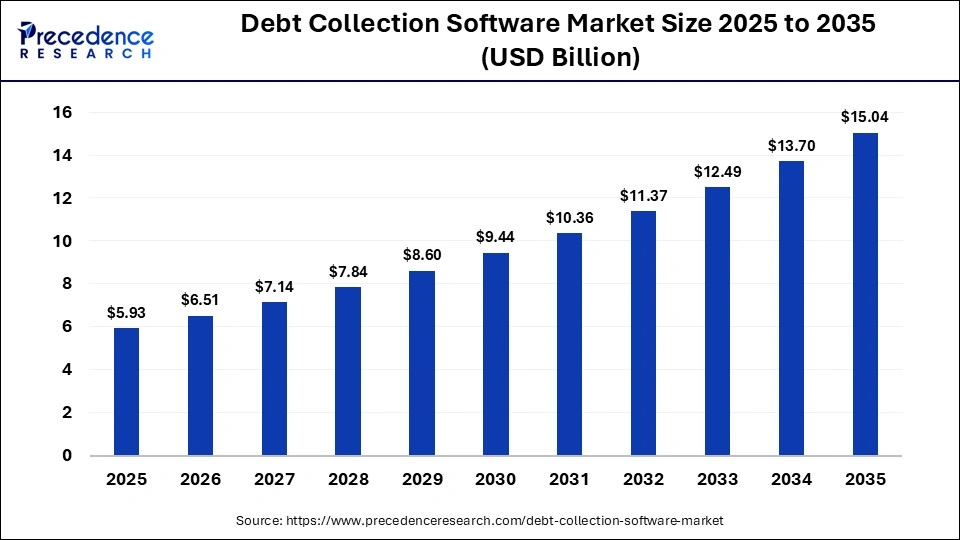
The global debt collection software market was valued at USD 5.93 billion in 2025 and is projected to grow from USD 6.51 billion in 2026 to approximately USD 15.04 billion by 2035, registering a CAGR of 9.76% during the forecast period from 2026 to 2035. This growth is driven by the increasing demand for automated, efficient, and compliant debt recovery solutions across financial institutions.
Get a Free Sample Report with Key Market Trends: https://www.precedenceresearch.com/sample/8203
How AI Is Transforming Debt Recovery
Artificial intelligence brings automation, predictive analytics, and intelligent decision-making to the debt collection process.
- Predictive Analytics for Prioritization: To determine which debtors are most likely to make payments, AI algorithms examine past repayment data, credit scores, and behavioral trends. This makes it possible for agencies to give high-probability accounts priority, maximizing resources, and raising recovery rates.
- Automated Communication: Outreach via voice calls to SMEs and emails can be automated by AI-powered systems. Context-aware personalized messages guarantee that debtors are treated with dignity, which lowers friction and increases collection effectiveness.
- Smart Payment Recommendations: Based on debtor history and financial capability, AI can recommend flexible payment plans. Agencies increase the likelihood of repayment and preserve good customer relations by providing customized solutions.
- Fraud Detection and Risk Assessment: Advanced AI models detect suspicious patterns and flag potential fraudulent accounts. This helps organizations minimize losses while focusing on legitimate recovery efforts.
- Regulatory Compliance Automation: AI can automatically track changes in debt collection regulations and enforce compliance protocols. This reduces the risk of fines, lawsuits, and reputational damage.
- Real-Time Reporting and Insights: AI dashboards provide real-time insights into the collection of performance, agent productivity, and outstanding accounts. Decision makers can quickly adjust strategies for maximum impact.
Key Benefits of AI in Debt Collection
| Benefit | Impact |
| Higher Recovery Rates | Predictive targeting increases successful debt recovery. |
| Reduced Operational Costs | Automation minimizes manual labor and administrative expenses. |
| Enhanced Customer Experience | Personalized communication fosters goodwill and cooperation. |
| Regulatory Compliance | AI ensures adherence to legal and financial regulations. |
| Data-Driven Decision Making | Analytics provide actionable insights to optimize collection strategies. |
| Fraud Prevention | Identifies suspicious accounts and reduces financial losses. |
The ability of AI to offer data-driven insights that assist businesses in refining their collection strategies over time is another crucial advantage in debt collection. AI systems allow organizations to make informed decisions about outreach strategies, payment plans, and resource allocation by monitoring payment trends, customer behavior, and response patterns. Higher recovery rates and more efficient operations are the result of this continuous learning approach, which guarantees that collection methods improve with experience.
Real-World Applications of AI and Case Studies
AI-driven debt collection is being successfully applied in a variety of industries; it is no longer just a theoretical idea. AI-powered platforms have been implemented by numerous utility companies and financial institutions to prioritize high-risk accounts and automate routine collection tasks. Large datasets are analyzed by these systems to find patterns that humans might overlook, such as the possibility that a debtor will reply to a specific communication channel or at a particular time of day. After deploying AI systems, some businesses have seen improvements in recovery rates up to 20-30% while also cutting operating expenses.
Additionally, by using virtual agents to handle initial communication, businesses have been able to expand operations without adding more employees, allowing 24-hour outreach. Additionally, sentiment analysis and a sympathetic and tailored approach help lower complaints and preserve good customer relations, demonstrating that automation need not come at the expense of human-centric services.
Challenges in AI Adoption
Adopting AI in debt collection, while highly beneficial, comes with its own set of challenges. AI integration with current debt collection procedures frequently necessitates large infrastructure software and training expenditures because AI systems depend on access to sensitive financial data. Organizations also need to address data security and privacy issues. Employees must adjust to working with AI tools, and businesses must make sure that AI algorithms adhere to changing regulatory requirements. Lastly, human oversight is still essential in complex situations requiring judgment, negotiation, or discretion, even though AI can effectively handle routine and predictable tasks. To optimize the advantages of AI while reducing potential hazards, it is imperative to address these issues.
The Future of Debt Recovery: AI, Analytics, and Omnichannel Strategies
Debt collection systems are evolving rapidly as artificial intelligence increasingly integrates with cloud-based platforms. Cloud deployment allows organizations to access AI-powered tools in real time, offering scalability, flexibility, and cost-effectiveness. This combination enables even small and medium-sized businesses to implement advanced debt recovery solutions without large upfront investments, democratizing intelligent debt collection across companies of all sizes and sectors.
Another major development is the rise of AI-driven omnichannel communication strategies. Modern debt collection platforms now integrate multiple channels, SMS, email, mobile application, and chatbots into a single, cohesive system. AI optimizes engagement by determining the most effective channel and timing for each debtor, moving organizations away from aggressive tactics toward more customer-centric strategies that enhance repayment rates while maintaining positive relationships.
AI is also transforming ethical debt collection practices. By leveraging sentiment analysis and behavioral data, AI can detect customer distress and adjust communication tone accordingly, protecting vulnerable clients and ensuring interactions remain courteous and compliant. With regulatory agencies increasingly emphasizing fair treatment, AI-driven compliance systems are becoming a critical differentiator in the industry.
Finally, the combination of AI and advanced analytics enables predictive and preventive debt management. Organizations can now identify early warning signs of potential defaults and take proactive measures, such as offering flexible repayment plans or financial guidance, before debts escalate. This shift from reactive recovery to proactive management is set to redefine the industry, making debt collection more customer-friendly, sustainable, and effective.
Manual vs. AI-Driven Debt Collection: What Businesses Need to Know
| Aspect | Manual Debt Collection | AI-Driven Debt Collection |
| Account Prioritization | Subjective, based on agent judgment | Data-driven, predictive prioritization |
| Outreach | Phone calls, letters, manual follow-ups | Automated emails, SMS, chatbots, and reminders |
| Time Efficiency | High manual effort, slow recovery | Faster, automated processes, 24/7 outreach |
| Error Rate | Prone to human error | Minimal, with system validation |
| Compliance | Dependent on human knowledge | Embedded regulatory compliance |
| Customer Experience | Can be aggressive or inconsistent | Personalized, empathetic, and timely |
Final Thoughts
The debt collection industry has experienced a paradigm shift with the transition from manual to automated processes. Artificial intelligence transforms how businesses recover debts by optimizing workflows, increasing accuracy, ensuring regulatory compliance, and enhancing customer satisfaction. While challenges remain, the benefits of integrating AI into debt collection are undeniable. Organizations that adopt these technologies not only improve recovery rates and operational efficiency but also position themselves for long-term success in a rapidly evolving financial environment. In the era of AI-powered debt recovery, intelligent automation and human oversight will coexist to maximize both compliance and customer experience.
Looking ahead, AI is expected to play an increasingly central role in debt management. Advanced machine learning models will enhance predictive analytics, enabling organizations to identify high-risk accounts with greater precision. Conversational AI and natural language processing will empower virtual agents to handle more complex debtor interactions, while integration with financial management platforms and mobile banking apps will ensure real-time updates and seamless communication. Additionally, AI will facilitate flexible repayment options, personalized financial guidance, and proactive interventions to prevent debts from escalating. As these innovations mature, the debt collection industry is poised to become more efficient, compliant, and customer-centric than ever before.
About the Authors

Aditi Shivarkar
Aditi, Vice President at Precedence Research, brings over 15 years of expertise at the intersection of technology, innovation, and strategic market intelligence. A visionary leader, she excels in transforming complex data into actionable insights that empower businesses to thrive in dynamic markets. Her leadership combines analytical precision with forward-thinking strategy, driving measurable growth, competitive advantage, and lasting impact across industries.



Aman Singh
Aman Singh with over 13 years of progressive expertise at the intersection of technology, innovation, and strategic market intelligence, Aman Singh stands as a leading authority in global research and consulting. Renowned for his ability to decode complex technological transformations, he provides forward-looking insights that drive strategic decision-making. At Precedence Research, Aman leads a global team of analysts, fostering a culture of research excellence, analytical precision, and visionary thinking.

Piyush Pawar
Piyush Pawar brings over a decade of experience as Senior Manager, Sales & Business Growth, acting as the essential liaison between clients and our research authors. He translates sophisticated insights into practical strategies, ensuring client objectives are met with precision. Piyush’s expertise in market dynamics, relationship management, and strategic execution enables organizations to leverage intelligence effectively, achieving operational excellence, innovation, and sustained growth.