






 Request Consultation
Introduction
The global pharmaceutical industry is considered one of the most valuable and most fragmented major industries in the world economy. According to Precedence Research, the pharmaceutical market has reached $1.77 trillion in 2025 and is anticipated to nearly double to $3.20 trillion by 2035, yet even the industry's single largest firm, Eli Lilly, controls less than 4% of that total.
This report combines Precedence Research's market-sizing and segmentation data with each major firm's own FY2024 financial disclosures to answer, in detail, which pharmaceutical firms actually hold the largest global market share, alongside how that share is distributed across regions, disease categories, and even drug types, and what recent M&A activity along with the GLP-1 obesity-drug boom are doing to reshape the industry's competitive leaderboard in real time.
Key Takeaways
- The pharmaceutical market worldwide was valued at $1.77 trillion in 2025 and is anticipated to reach $3.20 trillion by 2035, rising at a CAGR of 6.10%.
- The top 12 pharmaceutical firms by revenue together control nearly 39% of the estimated $1.7 trillion 2024 global pharmaceutical market, a highly concentrated but not monopolistic industry structure.
- Merck & Co.'s Keytruda is considered the world's best-selling drug in 2024 at $29.5 billion in sales, thus growing 18% and now accounting for roughly 46% of Merck's total revenue.
- Eli Lilly became the world's largest pharmaceutical firm by revenue in FY2024 with $65.2 billion, overtaking longtime leaders for the strength of its GLP-1 obesity or diabetes franchise.
- North America holds the largest regional share of the worldwide pharmaceutical market at 42% in 2025, while Asia Pacific is anticipated to be the fastest-growing region through 2035.
- The U.S. pharmaceutical market alone was valued at $520.38 billion in 2025 and is estimated to reach $963.52 billion by 2035, approximately 29% of the entire global pharmaceutical market on its own.
- Prescription medicines dominate the worldwide market with an 87% revenue share in 2025; meanwhile, conventional small-molecule drugs (55%) still edge out biologics and biosimilars (45%), though biologics are growing faster.
- GLP-1 drugs for diabetes and obesity, including Novo Nordisk's Ozempic or Wegovy and Eli Lilly's Mounjaro or Zepbound, have become one of the fastest-growing franchises in pharmaceutical history, thus collectively approaching $50-55 billion in annual sales by 2024-2025.
- Cancer is the single-largest disease category in worldwide pharmaceutical spending, generating an estimated 19% revenue share in 2025, ahead of cardiovascular disease and diabetes.
- Major 2024-2025 M&A activity, including AbbVie's $8.7B ImmunoGen acquisition and Novo Holdings' $16.5B Catalent acquisition, alongside J&J's $14.6B Intra-Cellular Therapies deal, shows the industry consolidating around oncology, obesity, and even manufacturing capacity.
Visual Intelligence: 15 Data Stories on Global Pharmaceutical Market Share
Global Pharmaceutical Market Set to Nearly Double by 2035
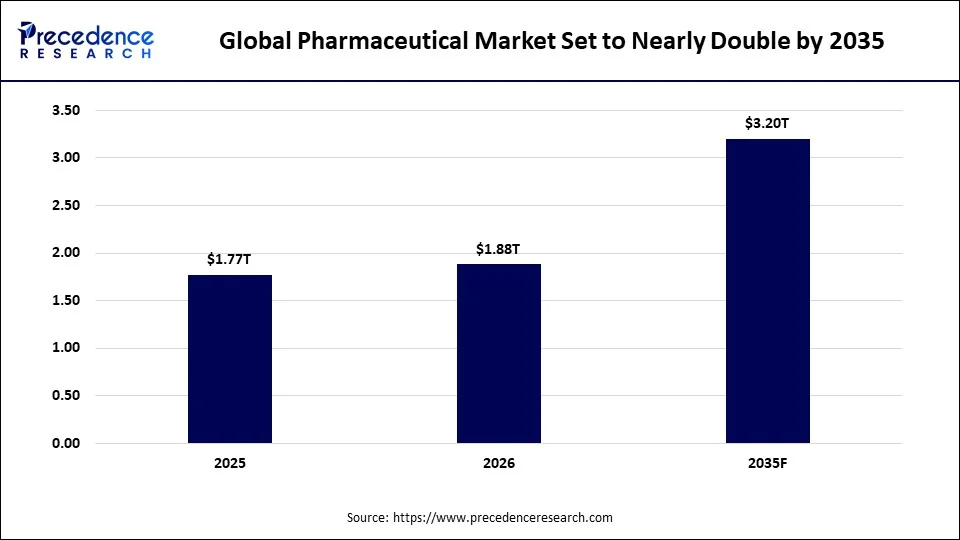
According to Precedence Research, the worldwide pharmaceutical market starts at a baseline of USD 1.77 trillion in 2025, and it expands to USD 3.20 trillion by 2035. Thus, this trajectory reflects a steady compound annual growth rate (CAGR) of 6.10% from 2026 through 2035, propelled by an aging demographic as well as greater adoption of biologics.
Key Insight: A 6.10% compound annual growth rate sustained over a decade is a significant trajectory for a trillion-dollar-plus industry; it states the market will add more absolute value in the upcoming ten years, which is $1.43 trillion than the entire pharmaceutical market globally was worth as recently as the early 2010s.
Source: Precedence Research - "Pharmaceutical Market Size, Share and Trends 2026 to 2035 (Report Code 6227)," Updated June 23, 2026.
The World's 14 Largest Pharmaceutical Companies by Revenue and Estimated Global Market Share
| Pharmaceutical Company | FY2024 Pharmaceutical Revenue | Estimated Global Market Share |
| Eli Lilly | 65.2 | 3.84% |
| Merck & Co. | 64.2 | 3.77% |
| Pfizer | 62.6 | 3.68% |
| AbbVie | 61.2 | 3.60% |
| Roche (Pharma Division) | 67.6 | 3.98% |
| AstraZeneca | 58.7 | 3.45% |
| J&J (Innovative Medicine) | 57.1 | 3.36% |
| Novartis | 54.5 | 3.21% |
| Bristol Myers Squibb | 48.3 | 2.84% |
| Sanofi | 47.9 | 2.82% |
| Novo Nordisk | 42.1 | 2.48% |
| GSK | 40.1 | 2.36% |
| Amgen | 33.4 | 1.97% |
| Gilead Sciences | 28.8 | 1.69% |
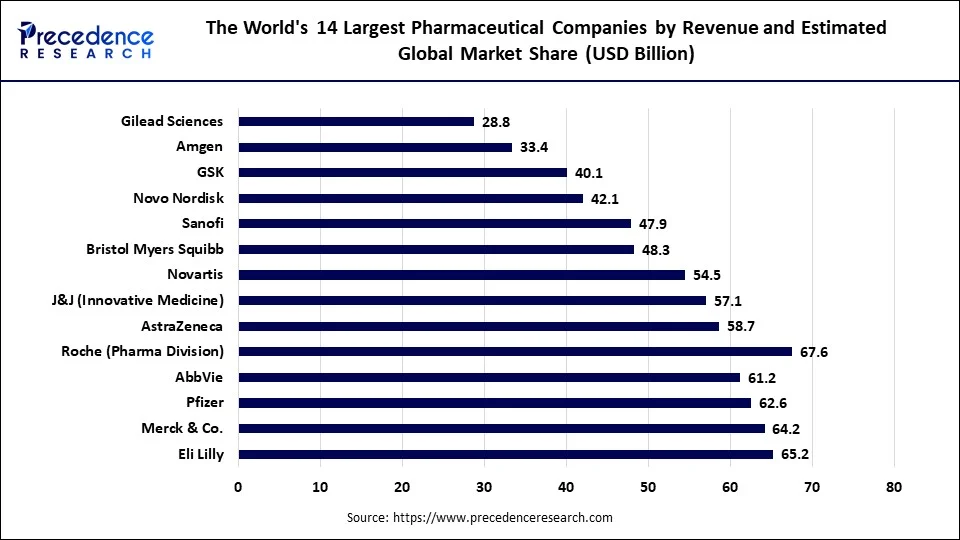
The top global pharmaceutical firms by FY2024 revenue include industry giants such as Pfizer, Roche, Merck & Co., Johnson & Johnson, and AbbVie. These market leaders pull in tens of billions of dollars yearly, securing significant individual slices of the overall $1.7 trillion global market. Lilly recorded $65.2 billion in total sales, good for 3.84% growth over the roughly $34 billion it pocketed in 2024.
Key Insight: No single firm holds more than 4% of the global market - even industry leader Eli Lilly's $65.2 billion represents just 3.83% of total worldwide spending, underscoring that "market share" in pharma is completely different from concentrated industries like search or social media, where a handful of companies can control a majority of the market.
Source: Multiple (see below) - "Company FY2024 earnings releases and annual reports; market share calculated against Precedence Research's global market baseline," 2024-2025.
The Top 12 Pharmaceutical Companies Control Roughly 39% of the Global Market
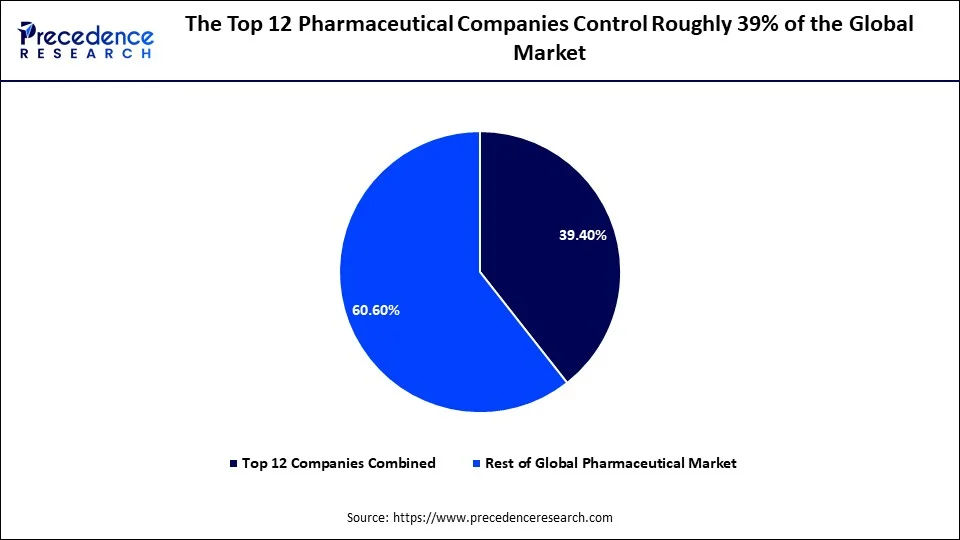
In the current high-stakes biopharma landscape, being a “top pharmaceutical firm” means much more than scale. It means excelling in global revenue, market valuation, innovation pipeline, and therapeutic leadership. The top 12 pharmaceutical firms highlight a moderately fragmented global market, where industry leaders Johnson & Johnson, Pfizer, and Roche remain global pharma leaders by combining high revenue with innovation in immunology, oncology, and even diagnostics.
Key Insight: Even combined, the industry's twelve largest major players leave 60% of the worldwide market to thousands of smaller firms, generic manufacturers, and regional players, a reminder that "Big Pharma" supremacy is real at the level of individual drug categories as well as therapeutic areas.
Source: Calculated from company disclosures - "FY2024 revenue figures against Precedence Research's ~$1.7 trillion 2024 global market estimate," 2024-2025.
North America Dominates the Global Pharmaceutical Market
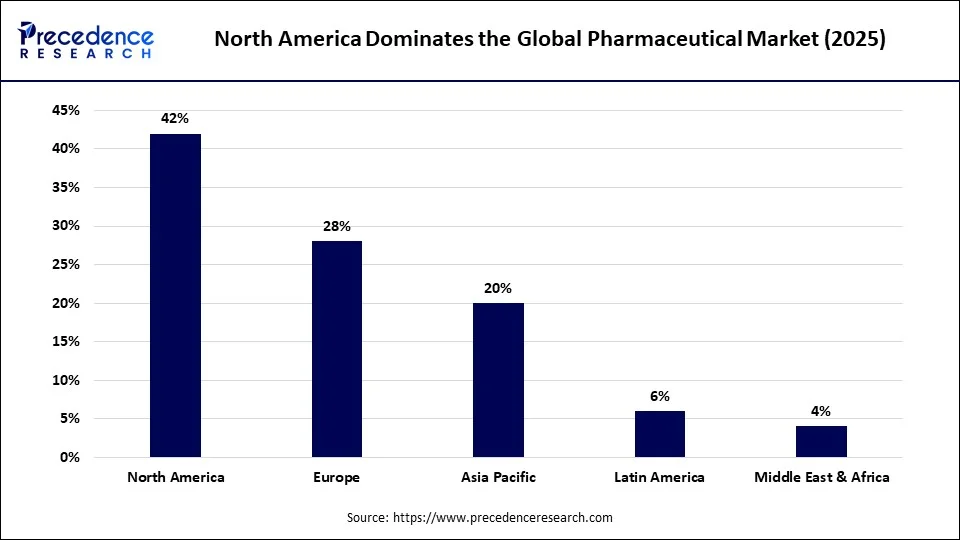
North America leads the global pharmaceutical market with nearly 42% revenue share in 2025, valued overall at roughly USD 1.77 trillion. Europe has 28%, and Asia Pacific has 20% revenue generation. It is driven by government support and investments in research and development, wider usage of biologics and biosimilars, and even increased healthcare spending, which further supports market expansion. Pharmaceutical firms are focusing on adopting cutting-edge technologies such as AI to boost the production of pharmaceuticals.
Key Insight: North America's 42% share is disproportionate to its share of the world population, thus reflecting both higher per-capita drug pricing along with the highest-value branded and specialty drug launches in the US market, while Asia Pacific's rapid growth trajectory suggests the regional balance will change measurably over the next decade.
Source: Precedence Research - "Pharmaceutical Market regional insights," 2025.
Prescription Medicines Dominate the Global Pharmaceutical Market
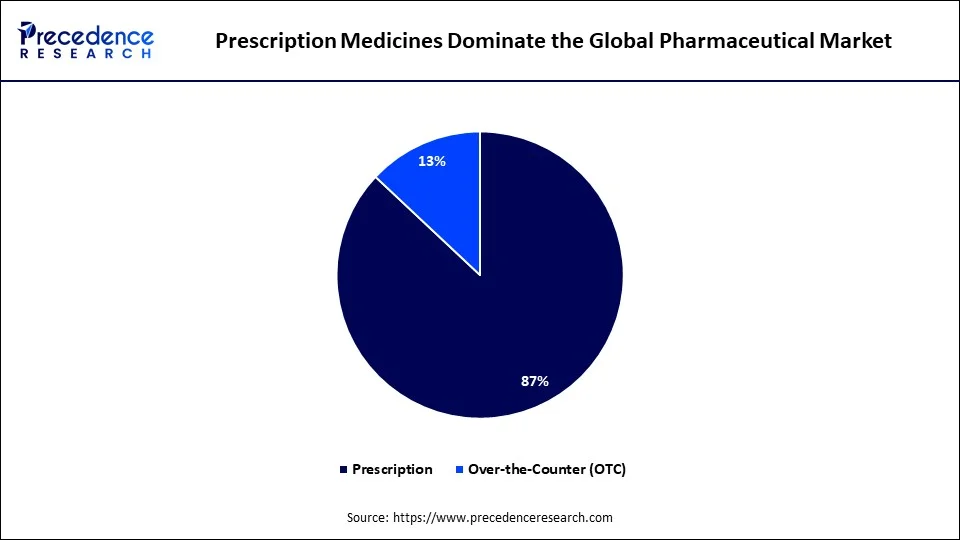
The global pharmaceutical market was valued at nearly USD 1.77 trillion in 2025 and is predicted to exceed USD 3.20 trillion by 2035, with a CAGR of 6.10% from 2026 to 2035, with prescription medicines commanding a dominant share of roughly 84% to 86% and over-the-counter (OTC) products making up the remaining 14% to 16%.
Prescription Medicines: It is estimated to account for an 87% share of the total market value, driven heavily by oncology, specialty therapies, and chronic disease treatments.
Over-the-Counter (OTC): It accounts for approximately 13% of global value, led by vitamins, analgesics, and cough or cold remedies.
Key Insight: The 87/13 split explains why pharmaceutical firms concentrate marketing, along with R&D investment, on physician relationships and payer negotiations rather than consumer advertising. The OTC segment is the fastest-growing segment, despite being a small fraction of where the industry's revenue actually sits.
Source: Precedence Research - "Pharmaceutical Market segment insights, by type," 2025.
Small Molecules Still Edge Out Biologics - But Not for Long
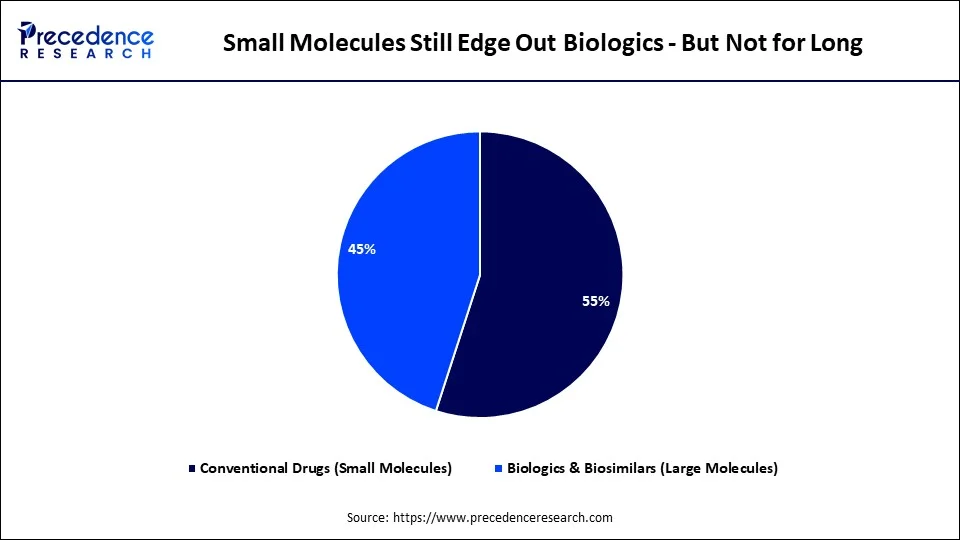
Conventional small-molecule drugs generally hold the dominant market share at roughly 55%, while biologics and biosimilars account for the remaining 45%, according to Precedence Research, which highlights faster growth rates for large-molecule biologics.
Small Molecules: They represent about 55% of the global market, which is favored for oral administration, low production costs, and generic availability.
Biologics & Biosimilars: They represent around 45% of the market, propelled by high need for targeted oncology and immunology treatments.
Key Insight: The near-even 55/45 split marks an inflection point the industry has now been approaching for two decades, as biologics and biosimilars are the faster-growing segment. This creates a balance that will likely tip toward large-molecule drugs within the next several forecast years, with major implications for manufacturing infrastructure investment.
Source: Precedence Research - "Pharmaceutical Market segment insights, by molecule type," 2025.
Cancer Is the Single Largest Disease Category in Global Pharma Spending
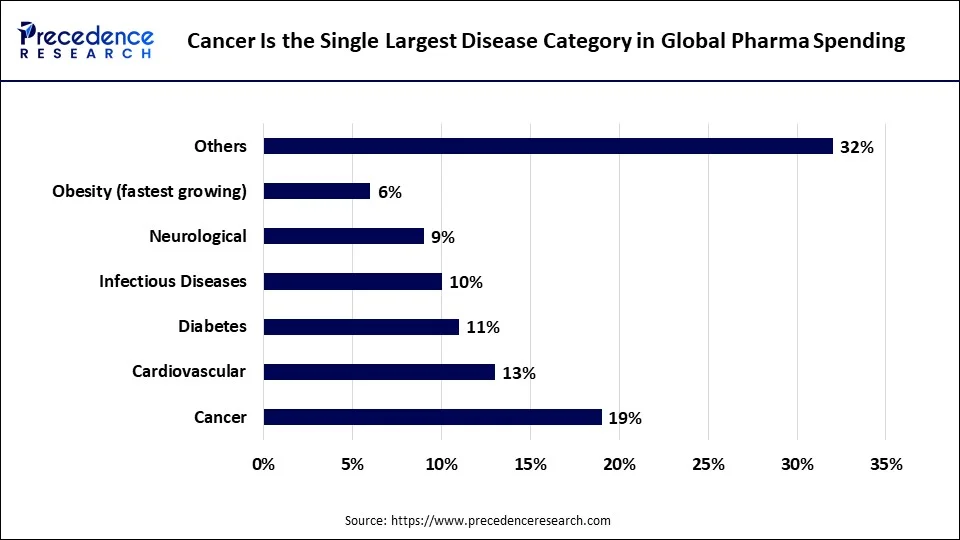
This chart breaks down the worldwide pharmaceutical market by major disease category:
Cancer: The single largest therapeutic segment, thus capturing nearly 19% of total global pharmaceutical revenues, driven by immunotherapies, expensive targeted therapies, and precision medicine.
Cardiovascular Diseases: It retains massive prescription volume because many primary-care heart medications are low-cost generics.
Diabetes: It is rapidly expanding due to the commercial explosion of GLP-1 receptor agonists for diabetes as well as weight management.
Key Insight: Cancer's 19% share is the largest of any single disease category, which reflects both the high price points of modern oncology drugs and the sheer volume of new cancer diagnoses globally.
Source: Precedence Research - "Pharmaceutical Market segment insights, by disease," 2025.
Oral Medications Remain the Preferred Route of Administration Worldwide
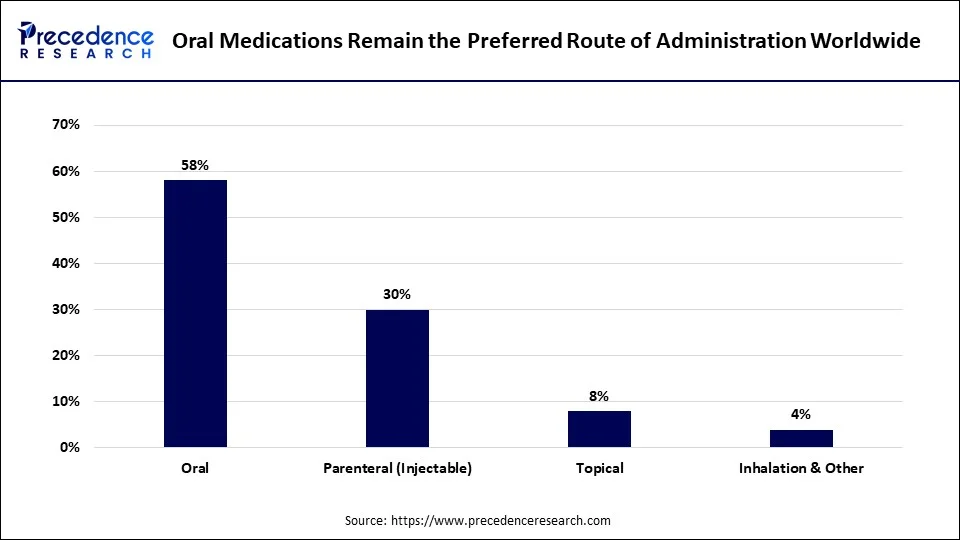
This chart shows the global pharmaceutical market split by route of administration.
Oral accounts for nearly 58% of the pharmaceutical market because of patient comfort, low production costs, and easy storage.
Parenteral (injectable) medications account for a large share, usually around 30% or more, of the pharmaceutical market because they bypass the digestive system, providing high effectiveness, fast results, and even a way to deliver complex drugs that pills cannot handle.
Key Insight: Oral formulations, which account for roughly 58% of the share, reflect patient preference and lower administration expenses, but the designation of parenteral (injectable) as the fastest-growing route directly tracks the GLP-1 boom; both Ozempic and Mounjaro are injectable therapies. Route-of-administration trends are now being reshaped by a single, extraordinarily successful drug class.
Source: Precedence Research - "Pharmaceutical Market segment insights, by route of administration," 2025.
The World's Best-Selling Drugs (2024 Sales)
| Drug | 2024 Sales | Company | Therapeutic Area / Description |
| KEYTRUDA | $29.5B | Merck & Co. | Oncology (immunotherapy); 46% of Merck's total sales |
| OZEMPIC / WEGOVY | ~$25.0B | Novo Nordisk | Diabetes / Obesity (GLP-1 receptor agonist) |
| MOUNJARO / ZEPBOUND | ~$16.5B | Eli Lilly | Diabetes / Obesity (GLP-1/GIP dual agonist) |
| ELIQUIS | $14.1B | Bristol Myers Squibb & Pfizer (co-marketed) | Anticoagulant |
Keytruda: It generated $29.5 billion in global net sales for Merck & Co, leading oncology and total pharmaceutical revenues globally.
Ozempic: It reached roughly $25 billion in direct sales for Novo Nordisk, spearheading the massive global rise of GLP-1 receptor agonists.
Eliquis: It partnered with blockbusters such as Bristol Myers Squibb, and Pfizer's Eliquis pulled in $14.1 billion.
Key Insight: Three of the four best-selling drug franchises- Keytruda, Ozempic or Wegovy, and Mounjaro or Zepbound are concentrated in just two therapeutic areas, such as oncology and metabolic or obesity disease, illustrating how narrow the industry's highest-value innovation has become, even as the overall market remains fragmented across thousands of products.
Source: Multiple (see below) - "Merck & Co., Novo Nordisk, Eli Lilly, and Bristol Myers Squibb/Pfizer FY2024 disclosures," 2024-2025.
Top 6 Pharmaceutical Companies: Side-by-Side Profile
| Company | HQ / Founded | FY2024 Revenue | Est. Market Share | Flagship Drug | Employees |
| Eli Lilly | Indianapolis, US / 1876 | $65.2B | 3.83% | Mounjaro / Zepbound (tirzepatide) | ~47,000 |
| Merck & Co. | Rahway, US / 1891 | $64.2B | 3.77% | Keytruda (pembrolizumab) | ~72,000 |
| Pfizer | New York, US / 1849 | $62.6B | 3.68% | Eliquis, Comirnaty, Vyndaqel | ~88,000 |
| AbbVie | North Chicago, US / 2013 (spinout of Abbott) | $61.2B | 3.60% | Skyrizi / Rinvoq (post-Humira) | ~55,000 |
| Roche | Basel, Switzerland / 1896 | CHF 61.5B (~$67.6B) | 3.98% | Ocrevus, Hemlibra, Vabysmo | ~103,000 |
| AstraZeneca | Cambridge, UK / 1999 (merger) | $58.7B | 3.45% | Tagrisso, Farxiga, Imfinzi | ~94,000 |
Pfizer is one of the world's largest biopharmaceutical firms, globally recognized for creating breakthrough medicines, vaccines, and historic public health contributions like the COVID-19 mRNA vaccine, Viagra, and Lipitor. It is headquartered in New York City, New York, USA. It generated FY2024 revenue of ~$ 64.2 billion. Its flagship drugs are Comirnaty, Eliquis, and Vyndaqel, and it has an employee count of ~88,000.
Merck & Co., Inc. is an American multinational pharmaceutical firm headquartered in Rahway, New Jersey. It was founded in 1891 and has FY2024 Revenue of ~$62.6 billion, with flagship drug Keytruda, and has an employee Count of nearly ~72,000.
AbbVie is a large American biopharmaceutical firm headquartered in North Chicago, Illinois. It generates FY2024 revenue of ~$61.2 billion and has Flagship Drugs: Skyrizi and Rinvoq, with an employee count of ~55,000.
Key Insight: The six firms span three countries the U.S., Switzerland, and the UK with dates separated by more than 150 years AbbVie versus Pfizer, illustrating that scale in this industry can be achieved either via more than a century of accumulated expansion or through a single strategic corporate restructuring.
Source: Multiple (see below) - "Company FY2024 earnings releases, annual reports, and SEC/regulatory filings," 2024-2025.
Recent M&A and Capacity Investment Wave Reshaping the Pharma Leaderboard
| Date / Period | Company | M&A / Investment Activity |
| Aug-24 | AbbVie | Completes $8.7B ImmunoGen (Elahere) acquisition |
| Nov-24 | Novo Holdings | Completes $16.5B Catalent acquisition |
| Dec-24 | Johnson & Johnson | Agrees to acquire Intra-Cellular Therapies for ~$14.6B |
| 2025 | AstraZeneca, Merck, and others | Pursue bolt-on oncology acquisitions |
| 2025 | Pharma industry | GLP-1 manufacturing capacity expansion becomes a top capital priority industry-wide |
The mid-2024 to 2025 pharmaceutical landscape changed from cautious bolt-on deals to a high-value M&A boom and even massive capacity onshoring, propelled by upcoming patent cliffs and surging need for metabolic and oncology drugs.
Novartis: It is committing $16.5 billion toward global and U.S. infrastructure, which includes a new North Carolina manufacturing hub.
Johnson & Johnson: $14.6 billion buyout strengthening neuroscience with Caplyta.
Key Insight: The Novo Holdings-Catalent deal is a different kind of transaction than the others. Rather than acquiring a drug pipeline, Novo Nordisk's parent firm bought manufacturing capacity outright, in direct response to GLP-1 demand outstripping the whole industry's injectable-drug production capability.
Source: Multiple (see below) - "Company press releases; ProClinical and Fierce Pharma industry reporting," 2024-2025.
The GLP-1 Obesity - Diabetes Drug Boom Is Reshaping Pharma's Revenue Leaderboard
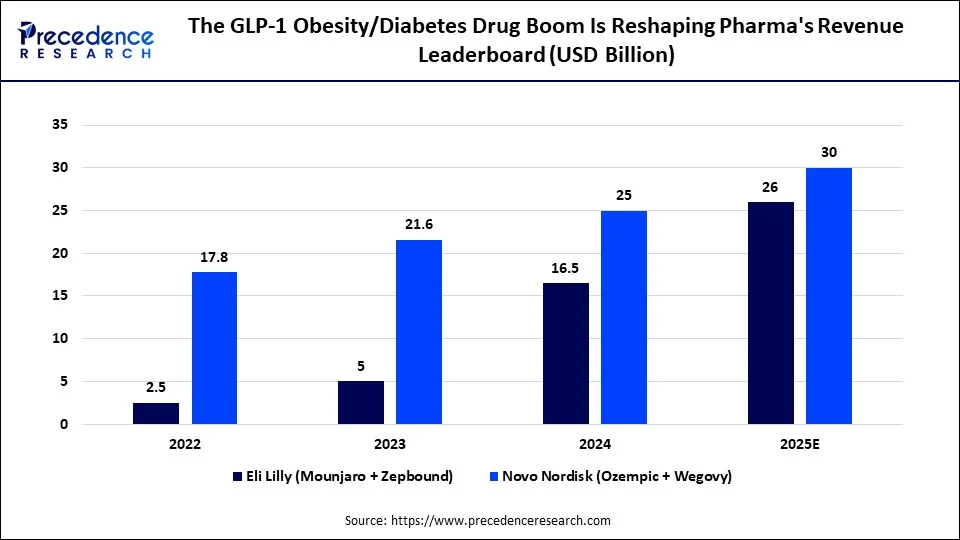
Between 2022 and 2025, Eli Lilly experienced an explosive revenue surge, achieving annual growth in 2025, largely driven by the rapid market penetration of Mounjaro and Zepbound. Thus, Novo Nordisk sustained steady, fast growth with Ozempic and Wegovy, though Lilly aggressively narrowed the gap via its dual-agonist tirzepatide portfolio.
Eli Lilly (Mounjaro & Zepbound): It is fueled by hyper-demand for tirzepatide, scaling quarterly sales past a billion and driving Lilly's total full-year 2025.
Novo Nordisk (Ozempic & Wegovy): It retained massive global prescription volumes, thus expanding overall sales into the hundreds of billions of Danish kroner despite rising competitive pressure.
Key Insight: Eli Lilly's GLP-1 franchise grew approximately tenfold in three years, an expansion rate almost unheard of at this revenue scale in the pharmaceutical industry's history. Thus, this single drug class is now large enough to have the total pharmaceutical revenue of many mid-sized firms profiled elsewhere in this report.
Source: Eli Lilly and Company; Novo Nordisk A/S - "Company earnings releases, 2022-2025 (2025 figures are illustrative estimates based on reported trajectories)," 2022-2025.
Mapping the Pharmaceutical Industry Value Chain
| Value Chain Stage | Activities / Description | Key Players |
|---|---|---|
| R&D / Discovery | Target ID, drug candidate screening, preclinical testing | Pfizer, Merck, J&J, Roche, Amgen, AstraZeneca |
| Clinical Trials | Phase I–III human trials, regulatory submission | Pfizer, Merck, J&J, Roche, Amgen, AstraZeneca |
| Manufacturing | API production, GMP formulation, quality control | Pfizer, Merck, J&J, Roche, Amgen, AstraZeneca |
| Distribution | Wholesalers, hospital & retail pharmacy networks | McKesson, Cardinal Health, AmerisourceBergen |
| Patient | Prescription & treatment delivery | Pharmacy Benefit Managers (PBMs) |
R&D discovery: It targets ID, drug candidate screening, and preclinical testing.
Clinical trials: They have three phases- Phase 1 trials: Small groups of healthy people test the drug for safety and safe dosage levels.
Phase 2 and 3 trials: Larger groups of patients test the drug for effectiveness and side effects compared to standard treatments.
Regulatory approval: Government agencies review all trial data before allowing market release.
Manufacturing: It deals with production, GMP formulation, and quality control.
Distribution: It includes wholesalers, hospitals, and retail pharmacies. Patient treatment: It covers Prescription and treatment delivery.
Key Insight: Unlike many other industries, pharmaceutical "market share" is generally earned or lost mainly at the R&D and clinical-trial stages, years or even decades before a product generates any revenue, meaning current's revenue rankings largely reflect strategic R&D and licensing decisions made in the 2010s.
Source: Precedence Research - "Pharmaceutical Market Value Chain Analysis," 2025.
Hospital Pharmacies Are the Leading Distribution Channel Globally
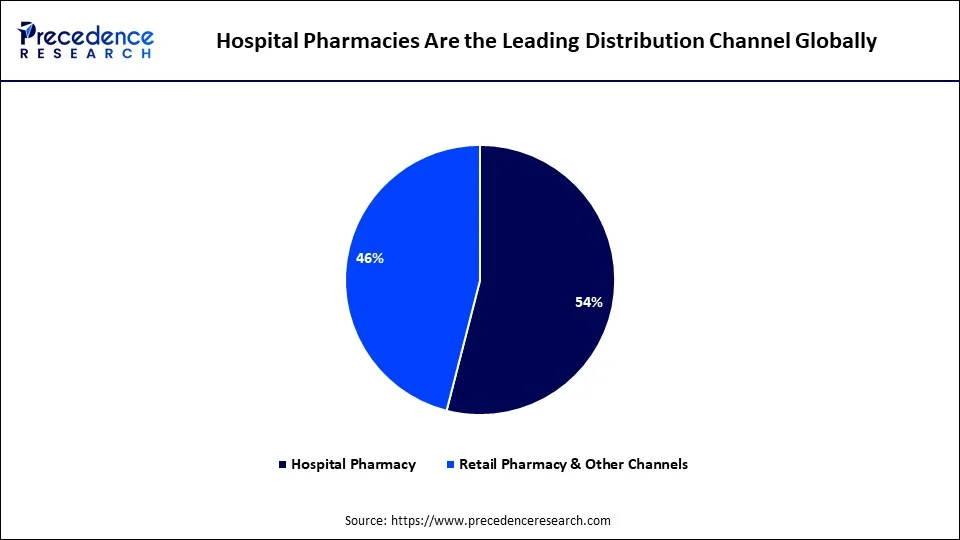
This chart shows the worldwide pharmaceutical market split by distribution channel: hospital pharmacy versus retail pharmacy and other channels.
Hospital pharmacy accounts for 54% and focuses on acute inpatient care, complex compounding, along with direct coordination with medical teams, while retail pharmacy accounts for 46% as it serves community outpatients, over-the-counter sales, and even routine preventive medicine.
Key Insight: Hospital pharmacies are in the leading position, reflecting the rising share of complex, physician-administered specialty and even injectable drugs, which include many oncology and GLP-1 therapies, that cannot be self-administered or picked up at a standard retail counter. It is a structural shift favoring firms with strong hospital-system relationships and even specialty distribution networks.
Source: Precedence Research - "Pharmaceutical Market segment insights, by distribution channel," 2025.
The U.S. Remains the World's Largest National Pharmaceutical Market
The U.S. pharmaceutical market size is expected to reach USD 520.38 billion in 2025 and is anticipated to increase from USD 552.72 billion in 2026 to nearly USD 963.52 billion by 2035, expanding at a CAGR of 6.35% from 2026 to 2035. The market shows substantial growth due to the rising need for personalized and regenerative therapies for chronic diseases. Further, the expansion is propelled by technological advancements and the integration of AI and machine learning, which will accelerate R&D and drug discovery in the upcoming years.
Key Insight: A single country generating nearly 29% of global pharmaceutical revenue is a remarkable concentration. It explains why nearly every major pharmaceutical firm treats US regulatory and reimbursement policy, including the Inflation Reduction Act's drug-pricing provisions, as an existential strategic issue rather than a routine market-specific consideration.
Source: Precedence Research - "U.S. Pharmaceutical Market" regional report, 2025-2035 forecast.
Quick-Reference Data Tables
The tables below present the same core figures from the Visual Intelligence section in plain, sortable Word-table format for quick reference and reuse.
Table 1: Top 14 Pharmaceutical Companies by FY2024 Revenue
| Rank | Company | HQ Country | FY2024 Revenue | Est. Global Market Share |
| 1 | Eli Lilly and Company | United States | $65.20B | 3.83% |
| 2 | Merck & Co., Inc. | United States | $64.17B | 3.77% |
| 3 | Pfizer Inc. | United States | $62.60B | 3.68% |
| 4 | AbbVie Inc. | United States | $61.20B | 3.60% |
| 5 | F. Hoffmann-La Roche Ltd | Switzerland | CHF 61.5B (~$67.6B) | 3.98% |
| 6 | AstraZeneca plc | United Kingdom | $58.70B | 3.45% |
| 7 | Johnson & Johnson (Innovative Medicine) | United States | $57.07B | 3.36% |
| 8 | Novartis AG | Switzerland | $54.50B | 3.21% |
| 9 | Bristol Myers Squibb Company | United States | $48.30B | 2.84% |
| 10 | Sanofi S.A. | France | $47.92B | 2.82% |
| 11 | Novo Nordisk A/S | Denmark | $42.11B | 2.48% |
| 12 | GSK plc | United Kingdom | $40.10B | 2.36% |
| 13 | Amgen Inc. | United States | ~$33.42B | 1.97% |
| 14 | Gilead Sciences, Inc. | United States | ~$28.75B | 1.69% |
Source: Company FY2024 earnings releases and SEC or regulatory filings; market share = company revenue ÷ ~$1.7 trillion estimated 2024 global market (derived from Precedence Research's reported $1.77T 2025 figure and 6.1% CAGR).
Table 2: Global Pharmaceutical Market - Key Segment Statistics (2025)
| Segment | Leading Category | Share | Fastest-Growing Category |
| By Type | Prescription | 87% | Over-the-Counter (OTC) |
| By Molecule Type | Conventional Drugs (Small Molecules) | 55% | Biologics & Biosimilars |
| By Product | Branded | 87% | Generics |
| By Disease | Cancer | 19% | Obesity |
| By Route of Administration | Oral | 58% | Parenteral |
| By Age Group | Adults | 64% | Geriatric |
| By Distribution Channel | Hospital Pharmacy | 54% | Retail Pharmacy |
| By Region | North America | 42% | Asia Pacific |
Source: Precedence Research, "Pharmaceutical Market Size, Share and Trends 2026 to 2035," Report Code 6227, updated June 23, 2026.
Recent Developments
Seven of the most consequential developments shaping the global pharmaceutical industry over the past 18 months, prioritized by recency and business impact:
Daiichi Sankyo - March 2025
| Date | March 2025 |
| Organization | Daiichi Sankyo |
| Development | Daiichi Sankyo started Datroway (datopotamab deruxtecan) in Japan for HR-positive and HER2-negative unresectable or recurrent breast cancer. |
| What Changed | It adds a new antibody-drug conjugate (ADC) to the oncology treatment landscape, thus targeting individuals who have progressed after prior chemotherapy. |
| Why It Matters | It reflects the continued change toward ADC technology as a growth area within oncology, and also a category increasingly competitive between Daiichi Sankyo and AstraZeneca and a few major oncology players. |
| Business Significance | It is a part of a broader wave of ADC approvals, thus reshaping the competitive dynamics within the largest single disease category in worldwide pharma spending. |
Source: Precedence Research, Pharmaceutical Market report, citing pharmabiz.com
Medexus Pharmaceuticals - February 2025
| Date | February 2025 |
| Organization | Medexus Pharmaceuticals |
| Development | Medexus disclosed commercial availability of GRAFAPEX (treosulfan) for Injection in the United States, after a month after FDA approval. |
| What Changed | It offers a new conditioning treatment alternative ahead of allogeneic hematopoietic stem cell transplantation. |
| Why It Matters | It illustrates how smaller and even mid-sized pharmaceutical companies continue to secure meaningful FDA approvals along with rapid commercial launches even as the largest firms dominate aggregate revenue rankings. |
| Business Significance | A one-month gap between FDA approval and commercial launch reflects an increasingly efficient path to market for specialty and even rare-disease treatments. |
Source: Precedence Research, Pharmaceutical Market report, citing medexus.com
AstraZeneca Pharma India - January 2025
| Date | January 2025 |
| Organization | AstraZeneca Pharma India |
| Development | AstraZeneca started Breztri Aerosphere in India, thus expanding COPD treatment options for Indian patients. |
| What Changed | It brings a triple-combination inhaled therapy to a vast emerging pharmaceutical market anticipated to be among the fastest-growing globally. |
| Why It Matters | It reflects how major pharmaceutical firms are prioritizing India launches as the country's pharmaceutical market grows and even as its regulatory environment matures. |
| Business Significance | India's pharmaceutical industry grew 7.8% in April 2025 and supplies nearly 20% of the world's generic medicines, according to Precedence Research. |
Source: Precedence Research, Pharmaceutical Market report, citing cnbctv18.com
Novo Holdings - November 2024
| Date | November 2024 |
| Organization | Novo Holdings |
| Development | Novo Holdings has completed a $16.5 billion acquisition of Catalent, a major contract drug producer. |
| What Changed | Novo Nordisk subsequently obtained three specific manufacturing sites from Novo Holdings as part of the transaction structure, thus, completed in December 2024. |
| Why It Matters | It represents one of the largest manufacturing-capacity acquisitions in pharmaceutical industry history, boosted entirely by the demand to scale GLP-1 drug production. |
| Business Significance | The transaction has now meaningfully impacted Novo Nordisk's 2024 free cash flow, which was reported at DKK -14.7 billion largely because of the $11.7 billion acquisition price for the three manufacturing sites. |
Source: Novo Nordisk A/S, Annual Report 2024 and SEC filing
AbbVie - August 2024
| Date | August 2024 |
| Organization | AbbVie |
| Development | AbbVie has completed its $8.7 billion acquisition of ImmunoGen, thus gaining the ovarian cancer drug Elahere. |
| What Changed | It expanded AbbVie's oncology pipeline as the firm continues managing its post-Humira transition toward Skyrizi and even Rinvoq as primary growth drivers. |
| Why It Matters | It signals AbbVie's strategic diversification beyond immunology into oncology, decreasing its historical dependence on a narrower therapeutic focus. |
| Business Significance | It comes as AbbVie navigates biosimilar competition to its former blockbuster Humira, which lost patent protection in 2023. |
Source: AbbVie Inc., company press release and 2024 earnings disclosures
Johnson & Johnson - December 2024
| Date | December 2024 |
| Organization | Johnson & Johnson |
| Development | J&J agreed to obtain Intra-Cellular Therapies for nearly $14.6 billion, gaining the antipsychotic or antidepressant drug Caplyta. |
| What Changed | It expands J&J's Innovative Medicine neuroscience portfolio and also complements existing psychiatric and even neurological treatments. |
| Why It Matters | It represents one of J&J's largest acquisitions in recent years, signaling continued M&A appetite even as the firm manages a diversified pharmaceutical-plus-MedTech business model. |
| Business Significance | J&J's full-year 2025 results specifically cited CAPLYTA as a growth driver for its Innovative Medicine segment following the deal's close. |
Source: Johnson & Johnson, company press release and Q4/full-year 2025 results
Industry-wide - 2024-2025
| Date | 2024-2025 |
| Organization | Industry-wide |
| Development | Six of the top 20 pharmaceutical firms by revenue posted double-digit revenue growth in 2024, driven by Eli Lilly (+32-45% depending on measure) and even Novo Nordisk (+26%). |
| What Changed | It marked a sharp reversal from 2023, when eight of the top 20 firms saw revenue declines; only one firm (Bayer) declined in 2024. |
| Why It Matters | It confirms that 2024 marked a genuine industry-wide growth inflection, not just outperformance by GLP-1 leaders; wider oncology and immunology portfolios also contributed to the rebound. |
| Business Significance | It sets up 2025-2026 as a period of continued strong growth expectations, with Precedence Research anticipating the global market to reach $1.88 trillion in 2026. |
Source: Fierce Pharma, "The Top 20 Pharma Companies by 2024 Revenue"
Key Companies & Organizations
Top-Tier Global Companies (FY2024 Revenue >$55B)
- Eli Lilly and Company has reached a historic milestone as the first pharmaceutical company to cross a $1 trillion market cap, driven by a 45% surge in 2025 revenue to $65.2 billion, fueled by blockbuster GLP-1 medications such as Mounjaro and Zepbound.
- Merck & Co., Inc. has $64.17B in market revenue. Its primary growth drivers remain its significant oncology immunotherapy Keytruda and its HPV vaccine Gardasil, along with recent late-stage pipeline growth in personalized mRNA cancer vaccines.
- Pfizer Inc. reported $62.6 billion in total revenue, driven by major non-COVID growth products such as Eliquis, the Vyndaqel family, and even the Comirnaty COVID-19 vaccine.
- AbbVie Inc. achieved nearly $61.2 billion in annual revenue, propelled by its post-Humira immunology Skyrizi and Rinvoq, which thus successfully offset ongoing biosimilar declines.
- AstraZeneca PLC registered total revenue of $58.7 billion for fiscal year 2025, driven by a broad portfolio that includes blockbusters such as Farxiga, Tagrisso, and Imfinzi.
Major Global Companies (FY2024 Revenue $40B-$55B)
- Novartis AG is a major global healthcare firm based in Switzerland that focuses on innovative medicines with nearly $54.5B in market capitalization.
- Bristol Myers Squibb Company reported annual revenues of $48.3 billion, with its expansion-driving growth portfolio contributing $22.6 billion.
- Sanofi S.A. has reported $47.92B in market revenue and is advancing targeted therapy for Dupixent, vaccines, and rare disease.
- Novo Nordisk A/S has reported $42.1B in market revenue.
- GSK plc has stated $40.1B in market revenue and deals with vaccines and specialty medicines.
Notable Mid-to-Large Companies
- Amgen Inc. reported full-year 2024 total revenues of approximately $33.4 billion. It is maintaining a strong commercial and clinical pipeline spanning innovative biologics and expanding biosimilar portfolios.
- Gilead Sciences, Inc. has $28.75B in revenue in 2024. It mainly deals with HIV and antiviral treatments.
- Takeda Pharmaceutical Company Limited deals with medications and treatments for oncology, rare disease, and neuroscience.
- Bayer AG is a pharmaceuticals and consumer health firm and is one of the few top-20 companies with a 2024 revenue decline.
Manufacturing, Distribution & Supply Chain Partners
- Catalent, Inc. is a major contract drug manufacturer, acquired by Novo Holdings in 2024.
- McKesson Corporation, Cardinal Health, Inc., and AmerisourceBergen Corporation are the leading pharmaceutical distributors.
- Teva Pharmaceutical Industries Ltd. and Cipla Inc. are the major generics manufacturers. Both play massive roles in supplying affordable generic medicines globally
Research & Data Sources
- Precedence Research - primary market-sizing and segment data source for this report
- Towards Healthcare - Precedence Research's sister research firm
Questions Answered in This Blog
- How large is the global pharmaceutical market, and how fast is it anticipated to grow through 2035?
- What share of the worldwide pharmaceutical market do the top 12 firms control combined?
- Which pharmaceutical firm has the largest global market share, and how did it get there?
- What is the split between prescription and over-the-counter medicines globally?
- Are small-molecule drugs or biologics the larger share of the worldwide market, and which is growing faster?
- Which region dominates the worldwide pharmaceutical market, and which region is growing fastest?
- Which disease category generates the most pharmaceutical revenue globally?
- How do the top six pharmaceutical firms compare on headquarters, revenue, and flagship drugs?
- What is the world's best-selling drug, along with how much does it generate in annual sales?
- How has the GLP-1 obesity as well as diabetes drug boom affected the industry's revenue leaderboard?
- What are the various stages of the pharmaceutical industry value chain?
- What major mergers and acquisitions have now reshaped the pharmaceutical industry in 2024-2025?
- How large is the US pharmaceutical market relative to the rest of the world?
- Which distribution channel, hospital or retail pharmacy, dominates global drug sales?
- How is pharmaceutical market share actually calculated, and why is no single company dominant?
What Additional Questions Can Our Full Research Report Answer?
This blog draws on public, government, and institutional data. A commissioned research report can go further, thus combining proprietary market modeling, primary interviews, and even competitive benchmarking to answer questions such as:
- Which pharmaceutical firms are best positioned to gain share in the obesity or GLP-1 category as new entrants as well as next-generation drugs reach the market?
- What are the realistic five-year market-share trajectory goals for Eli Lilly versus Novo Nordisk in the GLP-1 category, given the current pipeline along with manufacturing capacity data?
- How exposed is each major pharmaceutical firm's revenue to upcoming patent expirations between 2025 and 2030?
- What is the total addressable market for biosimilars as vast biologics lose patent protection, and which firms are best positioned to capture that share?
- How might the US Inflation Reduction Act's drug-pricing negotiation provisions affect the relative market share of firms with large Medicare-exposed product portfolios?
- Which mid-sized pharmaceutical companies like Amgen, Takeda, Gilead, and Bayer are most likely to become or pursue targets of further consolidation?
- What is the realistic capacity utilization and growth timeline for the GLP-1 injectable drug manufacturing industry-wide, given the Novo Holdings-Catalent transaction?
- How does market share concentration vary by individual therapeutic area, like immunology, oncology, and cardiovascular, compared to the industry-wide firm rankings in this report?
- What premium do pharmaceutical firms pay for M&A targets in oncology versus a few therapeutic areas, and how does that affect expected returns?
- How might China's rising domestic pharmaceutical industry and India's generics manufacturing base shift the regional balance of worldwide market share over the next decade?
- What is the user or payer concentration risk profile for major pharmaceutical firms given the influence of Pharmacy Benefit Managers (PBMs) on US market access?
- Which firms hold the strongest late-stage pipeline positions in the disease categories such as oncology, neurological, and obesity, identified as fastest-growing in this report?
- How do R&D spending levels as a share of revenue compare across the top 14 firms profiled? How does higher R&D intensity correlate with market-share gains?
- What geographic growth and local-manufacturing strategies are major firms pursuing in India and a few high-growth emerging pharmaceutical markets?
- How might increased AI-based drug discovery adoption affect time-to-market and, consequently, competitive market-share dynamics over the next decade?
- What is the realistic scenario range for further EU or US antitrust scrutiny of pharmaceutical M&A, given the pace of consolidation in 2024-2025?
- How does market share by revenue compare to market share by prescription volume or patient reach, and what does the gap reveal about pricing strategy differences across firms?
- Which firms face the greatest single-product revenue concentration risk, for example, similar to Merck's Keytruda dependency, and how are they diversifying their pipelines?
- What partnership, licensing, or co-marketing structures, like the Bristol Myers Squibb or Pfizer Eliquis arrangement, are becoming more common, and how do they affect how market share should be attributed?
- How might tariff policy or reshoring pressure on pharmaceutical manufacturing affect the cost structure, along with the competitive positioning of US-based versus European-based firms?
- What is the realistic timeline and probability of currently mid-sized firms such as Novo Nordisk and GSK closing the revenue gap with the current top-tier leaders?
- How do hospital-system purchasing consolidation trends affect negotiating leverage between pharmaceutical firms and their largest institutional customers?
- Which emerging biotech firms represent the most likely acquisition targets for major pharmaceutical firms that are seeking to add next-generation obesity or oncology assets?
- What is the realistic long-term margin impact of biosimilar competition on firms currently generating outsized returns from single blockbuster biologics?
- How does pharmaceutical market share concentration compare across North America, Europe, and Asia Pacific - are the same firms dominant in each region, or does regional leadership vary significantly?
References
All sources cited throughout this report, in order of first appearance:
| Source/Organization | Title | Date | URL | Supports |
| Precedence Research | Pharmaceutical Market Size, Share and Trends 2026 to 2035 (Report Code 6227) | Updated June 23, 2026 | https://www.precedenceresearch.com/pharmaceutical-market | Global market size, CAGR, regional shares, segment breakdowns (type, molecule, product, disease, route, age group, distribution channel), key players list, recent developments |
| Precedence Research (via GlobeNewswire) | Pharmaceutical Market Size Worth USD 3.03 Trillion by 2034 | October 7, 2025 | https://finance.yahoo.com/news/pharmaceutical-market-size-worth-usd-062700083.html | Global market growth trajectory and North America regional share confirmation |
| Precedence Research | U.S. Pharmaceutical Market | 2025-2035 forecast | https://www.precedenceresearch.com/us-pharmaceutical-market | US pharmaceutical market size and growth forecast |
| Drug Discovery and Development | Pharma 50: The Top Pharma Companies in the World for 2025 | June 10, 2025 | https://www.drugdiscoverytrends.com/pharma-50-the-50-largest-pharmaceutical-companies-in-the-world-for-2025/ | Merck, Pfizer, J&J FY2024 revenue and flagship drug figures |
| ChemAnalyst | Top 100 Pharma Companies Ranking, 2024 | 2025 | https://www.chemanalyst.com/ChemAnalyst/PharmaCompanies | Eli Lilly, Pfizer, Roche, AbbVie, AstraZeneca, Novartis FY2024 revenue figures |
| OneDayAdvisor | Top 20 Pharmaceutical Companies by Revenue & Market Cap in 2026 | 2026 | https://www.onedayadvisor.com/2026/01/top-10-pharmaceutical-companies-by.html | Cross-company FY2024/FY2025 revenue comparison and consolidated ranking |
| Johnson & Johnson | Reports Q4 2024 and Full-Year 2024 Results | January 2025 | https://www.jnj.com/media-center/press-releases/johnson-johnson-reports-q4-2024-and-full-year-2024-results | J&J total company and Innovative Medicine segment FY2024 revenue |
| Drug Discovery and Development | Johnson & Johnson (Pharma 50 profile) | 2025 | https://www.drugdiscoverytrends.com/2025-pharma50/johnson-johnson/ | J&J Innovative Medicine segment revenue details and R&D spending |
| Bristol Myers Squibb | Reports Fourth Quarter and Full-Year Financial Results for 2024 | February 6, 2025 | https://news.bms.com/news/details/2025/Bristol-Myers-Squibb-Reports-Fourth-Quarter-and-Full-Year-Financial-Results-for-2024/default.aspx | BMS FY2024 revenue and growth portfolio details |
| MacroTrends | Sanofi Revenue 2012-2026 | 2026 | https://www.macrotrends.net/stocks/charts/SNY/sanofi/revenue | Sanofi FY2024 annual revenue |
| MacroTrends | GSK plc (GSK) Revenue 2005-2026 | 2026 | https://www.macrotrends.net/stocks/charts/GSK/gsk/revenue | GSK FY2024 annual revenue |
| MacroTrends | Novo Nordisk Revenue 2012-2026 | 2026 | https://www.macrotrends.net/stocks/charts/NVO/novo-nordisk/revenue | Novo Nordisk FY2024 annual revenue (USD-converted) |
| Novo Nordisk A/S | Annual Report 2024 / Financial Report for the Period 1 January 2024 to 31 December 2024 | February 2025 | https://www.sec.gov/Archives/edgar/data/353278/000162828025003924/caq42024.htm | Novo Nordisk DKK revenue, Catalent acquisition impact on free cash flow |
| GSK plc | GSK Delivers Strong 2024 Performance | 2025 | https://www.gsk.com/en-gb/media/press-releases/gsk-delivers-strong-2024-performance-with-further-improvement-to-long-term-growth-outlook/ | GSK 2024 turnover and long-term sales outlook |
| Fierce Pharma | The Top 20 Pharma Companies by 2024 Revenue | 2025 | https://www.fiercepharma.com/special-reports/top-20-pharma-companies-2024-revenue | Industry-wide 2024 revenue growth trends across top 20 companies |
| Proclinical | Top 10 Pharmaceutical Companies Worldwide (2025) | 2025 | https://www.proclinical.com/blogs/2024-7/who-are-the-top-10-pharma-companies-in-the-world-2025 | M&A landscape context and GSK Consumer Healthcare demerger history |
| AbbVie Inc. | Company press release and 2024 earnings disclosures | August 2024 | https://www.abbvie.com | ImmunoGen acquisition details |
| Johnson & Johnson | Reports Q4 and Full-Year 2025 Results | January 2026 | https://www.jnj.com/media-center/press-releases/johnson-johnson-reports-q4-and-full-year-2025-results | Intra-Cellular Therapies acquisition and CAPLYTA growth driver confirmation |
About the Authors

Aditi Shivarkar
Aditi, Vice President at Precedence Research, brings over 15 years of expertise at the intersection of technology, innovation, and strategic market intelligence. A visionary leader, she excels in transforming complex data into actionable insights that empower businesses to thrive in dynamic markets. Her leadership combines analytical precision with forward-thinking strategy, driving measurable growth, competitive advantage, and lasting impact across industries.



Aman Singh
Aman Singh with over 13 years of progressive expertise at the intersection of technology, innovation, and strategic market intelligence, Aman Singh stands as a leading authority in global research and consulting. Renowned for his ability to decode complex technological transformations, he provides forward-looking insights that drive strategic decision-making. At Precedence Research, Aman leads a global team of analysts, fostering a culture of research excellence, analytical precision, and visionary thinking.

Piyush Pawar
Piyush Pawar brings over a decade of experience as Senior Manager, Sales & Business Growth, acting as the essential liaison between clients and our research authors. He translates sophisticated insights into practical strategies, ensuring client objectives are met with precision. Piyush’s expertise in market dynamics, relationship management, and strategic execution enables organizations to leverage intelligence effectively, achieving operational excellence, innovation, and sustained growth.