



Magnetic Beads Market Size, Key Companies, Company Production Capacity, Manufacturing Efficiency, Capacity Utilization, Raw Material Consumption, Cost Structure, Export Trends, Company Expansion Strategies, and Competitive Landscape
Magnetic Beads Market (By Type: Cells & Microbes, Nucleic Acid, Proteins, Others; By Application: Cell Separation & Expansion, Protein Sample Preparation & Protein Purification, IVD Assay Development, Nucleic Acid Isolation, Immunoprecipitation, Exosome Analysis, Antibody Purification, Others; By End-use: Healthcare Facilities, Individual Pathology Labs, Research Labs, Others) - Global Industry Analysis, Size, Trends, Leading Companies, Regional Outlook, and Forecast 2026 to 2035
Source: https://www.precedenceresearch.com/magnetic-beads-market
 Get a Sample
 Table Of Content


What is the Magnetic Beads Market Size?
The global magnetic beads market size is calculated at USD 18.78 billion in 2025 and is predicted to increase from USD 20.09 billion in 2026 to approximately USD 36.48 billion by 2035, expanding at a CAGR of 6.87% from 2026 to 2035. The magnetic beads market is driven by rising demand for molecular diagnostics and growing genomics and proteomics research.
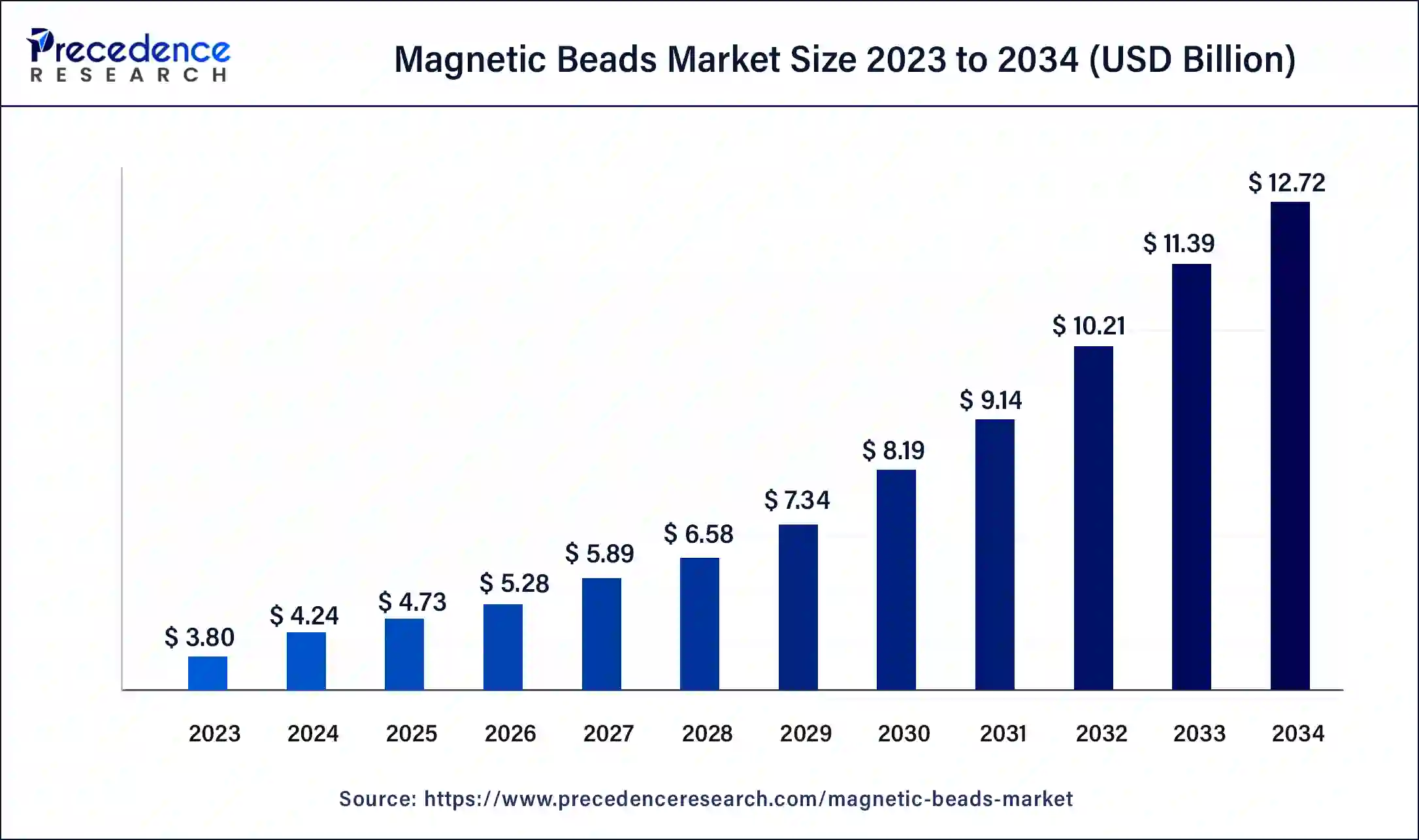
Magnetic Beads Market Key Takeaways
- In terms of revenue, the magnetic beads market is valued at $4.73 billion in 2025.
- It is projected to reach $12.72 billion by 2035.
- The magnetic beads market is expected to grow at a CAGR of 11.61% from 2026 to 2035.
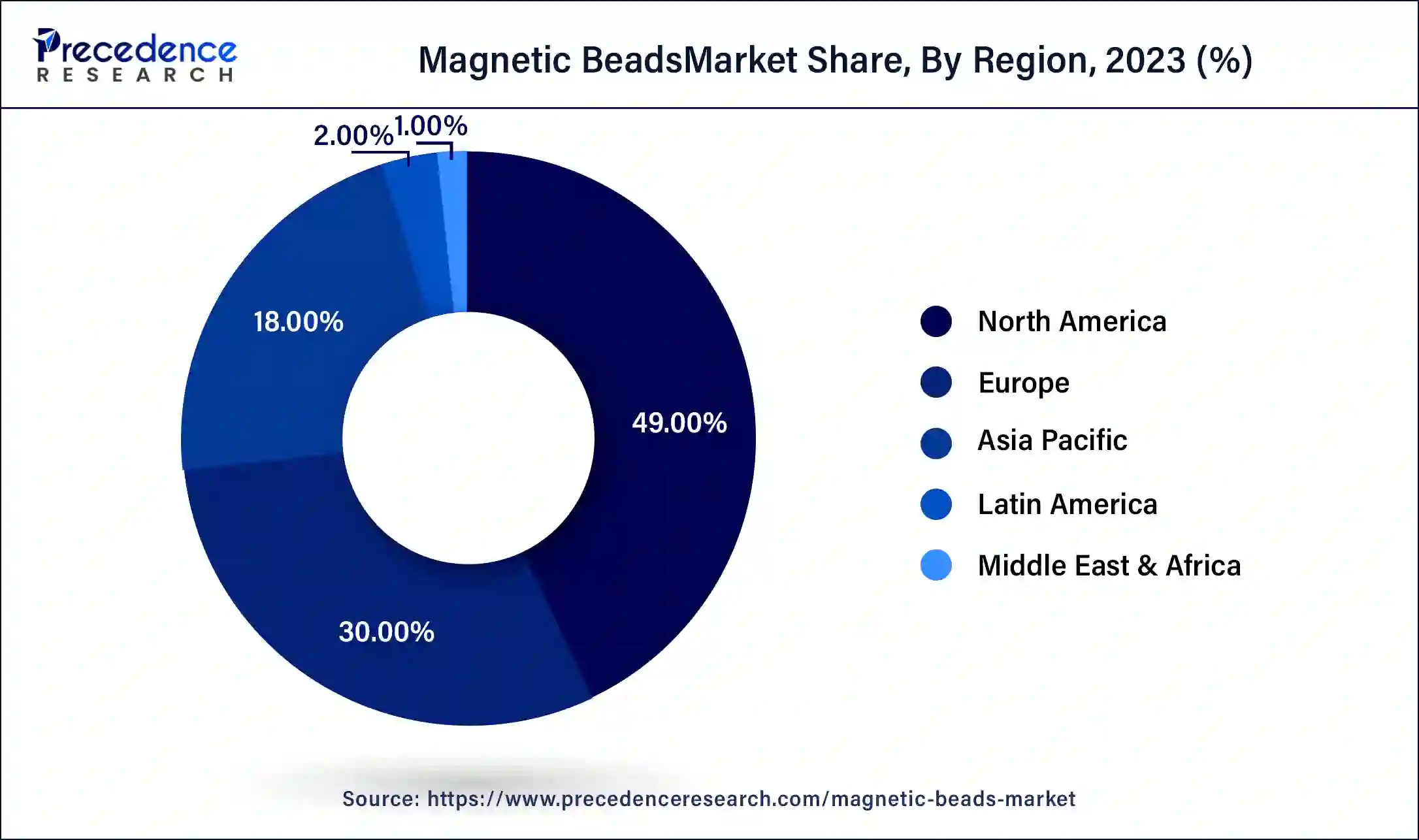
- North America generated the largest market share of 49% in 2025.
- Asia Pacific is estimated to be the fastest-growing during the forecast period of 2026 to 2035.
- By type, the cells & microbes segment dominated the market in 2025.
- By type, the nucleic acid segment is expected to grow at the fastest rate during the forecast period.
- By type, the protein segment is expected to grow significantly during the forecast period.
- By application, the immunoprecipitation segment is anticipated to be the fastest-growing during the forecast period.
- By end-use, the research labs segment dominated the magnetic beads market in 2025.
- By end-use, the healthcare facilities segment is expected to be the fastest-growing during the forecast period.
Market Overview
The magnetic beads market refers to buyers and sellers of iron oxide nanoparticles, such as magnetite nanoparticles (Fe3O4), with sizes of around 20nm to 30nm. These are highly used in the healthcare sector. Magnetic beads, also known as superparamagnetic particles, are one of the most versatile tools in molecular biology for effective and easy isolation of biomolecules. The magnetic beads have many benefits, including being well-suited and automation-friendly for preparing samples for next-generation sequencing (NGS) and PCR, straightforward and quick protocols, high yield, reproducible isolation of high molecular DNA, etc.
How is AI Changing the Magnetic Beads?
The use of artificial intelligence (AI) in magnetic beads technology offers many benefits, mainly in the fields of diagnostics and life sciences, which contribute to the magnetic beads market growth. The benefits of AI in magnetic beads include improved precision and efficiency; AI can help automate the processing and handling of magnetic beads, which increases consistency and reduces human errors. This is mainly useful in polymerase chain reaction (PCR) and next-generation sequencing (NGS) sample preparation. It also includes the benefits of optimized protocols, enhanced sensitivity and specificity, advanced data analysis, real-time monitoring, scalability and standardization, quality control, rapid processing, reduced hands-on time, and versatility and adaptability.
- In August 2024, INTEGRA Biosciences launched new accessories for high-volume magnetic bead protocols.
- In November 2023, a magnetic bead-based DNA clean-up for next-generation (NGS) and polymerase chain reaction (PCR) was offered by Zymo Research's DNA Clean & Concentrator (DCC) MagBead Kit.
Magnetic Beads Market Growth Factors
- The benefits of magnetic beads include being well-suited and automation-friendly for preparing samples for next-generation sequencing and PCR.
- It also includes straightforward and quick protocols, high yields, reproducible isolation of high molecular weight DNA, etc., contributing to the magnetic beads market.
- Magnetic beads are used in many immunodiagnostics and molecular applications, size selection, protein isolation, and purification.
- The applications of magnetic beads also include magnetic activated cell sorting, separation of specific cells or organelle or target types, nucleic acid isolation and purification, including mitochondrial DNA and plasmids, DNA, RNA, etc.
What are the Key Trends in the Magnetic Beads Market?
- Increasing demand in molecular diagnostics- Magnetic beads are more popular in nucleic acid isolation and purification processes with the rising demand for faster, high-throughput molecular diagnostics at both clinical and research settings.
- Expansion of personalized medicine- Growth in personalized medicine is increasing the demand for magnetic beads in targeted biomarker discovery and patient-specific assay development to increase treatment effectiveness and overall healthcare outcomes.
- Expansion of automated laboratory workflows- The automation of laboratory workflows is also increasing the uptake of magnetic bead-based systems through faster, hands-free processing of samples, improved reproducibility, and less risk of sample contamination.
- Greater use in point-of-care testing- Additionally, magnetic beads are increasingly being used within portable diagnostic units for point-of-care testing to facilitate open, decentralized, and rapid disease detection, especially in more remote or resource-limited locations.
Magnetic Beads Market Outlook
- Industry Growth Overview: The life science research, the growth of clinical diagnostics, and the growth in personalized medicine adoption are contributing to industry growth. Bead chemistry and surface functionalization. Ongoing innovation is enhancing performance and expanding applications.
- Global Expansion: North America and Europe are the regions that spearhead global expansion because of the high level of research funding and well-developed healthcare infrastructure, whereas the Asia-Pacific is rapidly emerging. The penetration of regional markets is due to the increasing investments in biotechnology and the development of diagnostic labs.
- Major Investors: Key investors are Thermo Fisher Scientific, Merck (MilliporeSigma) and Bio-Rad Laboratories, and Danaher. These companies are betting on product innovation, automation compatibility, and strategic acquisition.
- Startup Ecosystem: The startup ecosystem is made up of the firms that have specialized magnetic bead platforms and automation-ready solutions currently being developed. Examples include Chemicell, MagQu, and Cube Biotech, and they focused on the diagnostics and bioseparations niche markets.
Market Scope
| Report Coverage | Details |
| Market Size by 2035 | USD 36.48 Billion |
| Market Size in 2025 | USD 18.78 Billion |
| Market Size in 2026 | USD 20.09 Billion |
| Market Growth Rate from 2026 to 2035 | CAGR of 6.87% |
| Largest Market | North America |
| Base Year | 2025 |
| Forecast Period | 2026 to 2035 |
| Segments Covered | Type, Application, End-use, and Regions |
| Regions Covered | North America, Europe, Asia-Pacific, Latin America and Middle East & Africa |
Market Dynamics
Driver
Increasing demand for in-vitro diagnostic testing
The increasing demand for in vitro diagnostic testing contributes to the growth of the magnetic beads market. This method is performed in vitro by coating the beads with ligands specific to the target cell or molecule type. The use of an external magnetic field to isolate molecules or cells of interest directly by positive selection or indirectly by negative selection. The benefits of in-vitro diagnostics include improved patient care and management, preventing the spread of diseases, IVD acts as the first line of defense against the spread of diseases, and early detection of diseases.
Restraint
Downsides of magnetic beads
The downsides of magnetic beads include that they are not helpful for high-level research processing, that they have high costs linked with genetic research in developing countries, that they have stringent regulations, etc., which can impact the growth of the magnetic beads market. It may cause intestinal obstruction, decrease the enriched samples, damage more sensitive cell types and downstream functions, risk population integrity, decrease cell viability, may not withstand the forces of a strong magnetic field, etc.
Opportunity
Collaborations and partnerships
Forming strategic collaborations with research institutes and technology providers can promote advancement and product development. Collaborations may lead to the creation of innovative magnetic bead solutions that use new advancements in IoT, AI, and other technologies. Collaborations with key players in many industries may lead to the expansion of magnetic bead technology applications. The development of sustainable, advanced, and eco-friendly magnetic beads can help the magnetic beads market grow.
Segment Insights
Type Insights
Why is the Cells & Microbes Segment Dominated the Magnetic Beads Market?
The cells & microbes segment holds a major share of the magnetic beads market in 2025, due to its widespread use in cell isolation, microbial detection, and biological research. Magnetic beads enable rapid and accurate separation of target cells and microorganisms from complex samples, improving laboratory efficiency. These are highly used for the separation of RNA, DNA, and protein isolation, size selection, purification of genetic material, etc. The applications of magnetic beads for cells & microbes also include cell analysis, next-generation sequencing (NGS), and immunoassays.
The nucleic acid segment is expected to grow at a fastest CAGR during the studied period in the magnetic beads market, driven by rising demand for DNA and RNA extraction in molecular biology workflows. Magnetic bead based purification methods offer high yield, reproducibility, and compatibility with automated systems. The magnetic bead based nucleic acid isolation depends on the use of paramagnetic coatings that bind to nucleic acids. It also includes the benefits of producing high-quality DNA, having no hazardous or toxic materials disposal issues, having no fume hood required, using non-toxic materials, using a fast and easy method, etc.
Application Insights
What Made the Immunoprecipitation Segment Lead the Magnetic Beads Market?
The immunoprecipitation segment dominated the magnetic beads market in 2025. Immunoprecipitation is a major application for magnetic beads, particularly in protein interaction studies and biomarker discovery research. Magnetic bead-based immuno-precipitation provides faster processing, high specificity, and easier handling compared to traditional methods. Growing investments in life science research, drug discovery, and disease mechanism studies are driving demand. The ability to achieve accurate and reproducible results makes magnetic beads highly valuable for immunoprecipitation workflows.
The protein sample preparation & protein purification segment is expected to witness the fastest growth in the magnetic beads market with a CAGR over the forecast period. Magnetic beads simplify protein isolation processes while improving purity and reducing processing time. Their effectiveness in handling complex biological samples makes them suitable for proteomics studies and therapeutic protein development. Increasing pharmaceutical research, biologics production, and biomarker identification activities are supporting demand for magnetic beads.
End Use Insights
Why Did the Research Labs Segment Dominate the Magnetic Beads Market?
The research labs segment led the global magnetic beads market in 2025. Academic institutions, biotechnology companies, and pharmaceutical research centres rely on magnetic beads for cell separation, nucleic acid extraction, and protein analysis. Magnetic beads offer various benefits, including magnetically activated cell sorting (MACS), separation of specific cells, organelles, or target types, size selection, protein isolation, and purification, including DNA, RNA, plasmids, and mitochondrial DNA. There are opportunities to learn about state-of-the-art equipment in state-of-the-art laboratories, explore postgraduate pathways, make important connections, present at conferences, co-author, etc.
The healthcare facilities segment is expected to witness the fastest growth in the magnetic beads market, with a CAGR over the forecast period. The growth of the segment is driven by increasing adoption of magnetic bead technologies for diagnostic testing and clinical laboratory applications. These solutions play an important role in molecular diagnostics, infectious disease detection, and genetic testing by enabling efficient sample preparation and target isolation. Magnetic beads have many applications in healthcare and diagnostic techniques for separating macromolecules of nucleic acid, peptides, and proteins, purification of biomolecules, etc., contributing to the growth of the magnetic beads market.
Regional Insights
What is the U.S. Magnetic Beads Market Size?
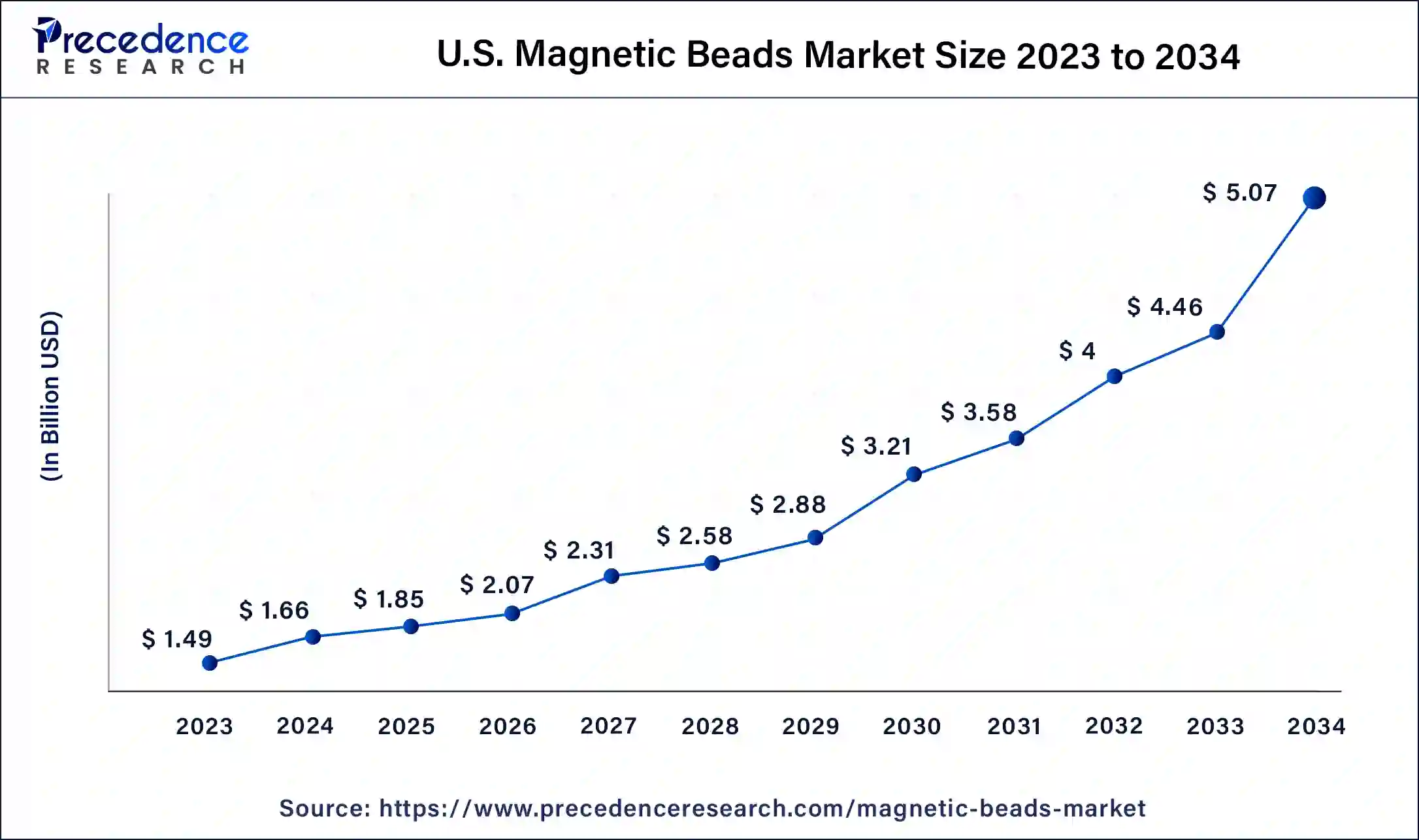
The U.S. magnetic beads market size was exhibited at USD 6.76 billion in 2025 and is projected to be worth around USD 12.94 billion by 2035, poised to grow at a CAGR of 6.71% from 2026 to 2035.
What Factors Made the North America Region the Dominant Region in the Market?
North America dominated the magnetic beads market in 2025, due to its advanced biotechnology ecosystem, strong research funding, and widespread adoption of molecular diagnostics. The region benefits from a high concentration of pharmaceutical companies, academic research centres, and clinical laboratories using magnetic bead based separation technologies. The increasing investment in nucleic acid-based and cell-based research activities is accelerating the regional growth of the market. Increasing demand for in vitro diagnostic tests, adoption rate, and high awareness of magnetic beads in research laboratories and hospitals enhance the market growth in the North American region.
U.S. Market Trends
The United States represents the largest share of the magnetic beads market in North America. The growth is driven by extensive biomedical research activities and a well-established healthcare infrastructure. Magnetic beads are widely used in nucleic acid extraction, immunoassays, and protein purification applications. Increasing demand for advanced molecular diagnostics and targeted drug delivery supported market expansion. The continuous investment and increases in genomic research and clinical laboratories are also significant contributors to the growth in this market.
Which Factors Influence the Fastest Growth of the Asia Pacific Market?
Asia Pacific is expected to grow at the fastest CAGR in the magnetic beads market during the forecast period. The growth is driven by expanding healthcare infrastructure, rising biotechnology investments, and increasing research activities. Countries across the region are strengthening capabilities in molecular diagnostics, genomics, and pharmaceutical manufacturing. The growth of the magnetic beads market is further driven by supportive government regulations and policies, and rising expenditure in medical companies. The rising need for advanced diagnostics technology adoption because of rising chronic diseases is driving the demand for magnetic beads in the region.
China Market Trends
China represents the largest share of the magnetic beads market in the Asia Pacific in 2025. The growth is driven by significant investments in biotechnology, genomics research, and healthcare modernization. The country's expanding pharmaceutical manufacturing sector and growing demand for advanced diagnostic solutions have accelerated magnetic bead adoption. Government support for life science innovation and precision medicine programs continues to strengthen market prospects. The growth in research and clinical uses of CAR-T cell therapy, manufacturing and increased use of high-throughput automated sample preparation in diagnostics are further driving market growth.
Which Factors Made Europe a Significantly Growing Region in the Market?
Europe is expected to grow at a considerable CAGR in the magnetic beads market in the coming period. The growth is supported by strong investments in healthcare research, biotechnology innovation, and molecular diagnostics. Countries across the region continue to expand capabilities in genomics, disease detection, and pharmaceutical development. The trend of precision medicine, early disease diagnosis, and individualized treatment in Europe is rapidly being embraced in clinical diagnostics and research laboratories. An extensive academic/industry partnership, a solid commitment to governmental research funding, and a mature healthcare infrastructure are contributing to a continuing market growth.
Germany Market Trends
Germany leads the European magnetic beads market in 2025, driven by its strong biotechnology, pharmaceutical, and medical research sectors. The country hosts numerous research institutes and diagnostic laboratories that rely on advanced separation and purification technologies. Rising investments in molecular diagnostics, cancer research, and genomic studies have increased demand for magnetic bead applications. The increasing focus on innovation and high quality services supports the market growth in the Germany.
Latin America Market Trends
Latin America held a considerable share of the magnetic beads market in 2025, supported by rising demand for molecular diagnostics, infectious disease testing, and clinical research. Investments in laboratory modernization and increasing awareness of advanced diagnostics technologies are encouraging adoption across healthcare institutions. The growth of diagnostic laboratories, increasing automation of testing procedures, and the process of enhancing access to sophisticated research technologies are reinforcing the development of the region.
Brazil Market Trends
Brazil accounts for the largest share of the Latin American magnetic beads market in 2025, due to its sizable healthcare sector and expanding biotechnology activities. The country has witnessed growing demand for molecular testing, genomic research, and pharmaceutical development. The public and private investments in healthcare infrastructure continue to strengthen laboratory capabilities. Increasing use of advanced diagnostic techniques and research tools has supported the adoption of magnetic bead technologies, particularly in clinical diagnostics, academic research, and biotechnology applications.
Middle East and Africa Market Trends
The Middle East & Africa held a notable share of the magnetic beads market in 2025, driven by expanding healthcare infrastructure and research capabilities. Growing investments in medical laboratories and biotechnology research are supporting demand. The increase of infectious diseases, genetic, and chronic diseases leads to the requirement of molecular diagnostics, in which magnetic beads are necessary to prepare the samples efficiently. The governments in the region are also spending on the modernization of laboratories, surveillance of the health of people, and biotechnology, which further contribute to the market growth.
Saudi Arabia Market Trends
Saudi Arabia represents the leading market within the Middle East and Africa magnetic beads market in 2025, supported by significant investments in healthcare transformation and biotechnology development. The rapid growth of healthcare systems and widespread amounts of advanced diagnostic equipment are further driving the growth of the market. The country's focus on strengthening diagnostic capabilities, biomedical research, and laboratory infrastructure has increased demand for magnetic bead technologies. Growing research activities and expanding healthcare facilities are expected to support sustained market growth in the upcoming years.
Value Chain Analysis-Magnetic Beads Market
- Chemical Synthesis and Processing: Covers the manipulation of core size, magnetism, and surface properties of synthetic cores and coatings to obtain intended products.
Key players: Thermo Fisher Scientific, Merck (MilliporeSigma), Chemicell, Micromod Partikeltechnologie, Ademtech - Quality Testing and Certification: Assures uniformity and magnetic sensitivity of the beads and adherence to the regulatory and performance criteria.
Key players: Intertek, SGS, TÜV Rheinland, Eurofins Scientific, Bureau Veritas - Packaging and Labelling: Includes sterile filling, labelling, and regulatory-compliant packaging of safe distribution to research and clinical laboratories.
Key players: Thermo Fisher Scientific, Merck (MilliporeSigma), Avantor, Greiner Bio-One, Corning
Competitive Landscape
The magnetic beads market is moderately consolidated, with the competition centred on product performance, consistency, application range, and technological innovation. Major participants such as Thermo Fisher Scientific, Merck KGaA, Danaher Corporation, Nio Rad Laboratories, and Promega Corporation focus on expanding their product portfolio for genomics, proteomics, cell separation, and molecular diagnostics applications. Strategic partnerships with research institutions and biotechnology firms are helping companies strengthen market presence and accelerate innovation.
For Future growth in the magnetic beads market, companies should focus on developing magnetic beads with higher specificity, improved recovery rates, and compatibility with automated platforms. Expanding presence in emerging markets and investing in next generation diagnostics technologies will create new opportunities.
Magnetic Beads Market Companies
- Cytiva
- New England Biolabs
- Takara Bio Inc.
- Qiagen
- Bangs Laboratories
- Merck KGaA
- Thermo Fischer Scientific, Inc.
- MagQu Co. Ltd
- Micromod Partikeltechnologie GmbH
- Eurofins Technologies
- Ferrotec (USA) Corporation
- Advanced Magnetics, Inc.
- Danaher Corporation
- NEB
- Roche
- Nuclera Nucleics
- Chain Biotech
- EnginZyme
- Pulmobiotics S.L.
- NanoSyrinx
- Hemotune AG
Recent Developments
- In March 2026, BIOCAPTIVA, a University of Edinburgh spin-out, secured £1.58 million in funding and released its initial product in the U.S. Its innovative magnetic bead technology addresses liquid biopsy challenges, enhancing cell-free DNA capture to improve cancer research and diagnostics.
(Source: https://www.scottish-enterprise-mediacentre.com ) - In February 2026, New England Biolabs released the Monarch Mag Cell-free DNA Extraction Kit, designed for consistent extraction of low-abundance cfDNA from challenging samples, using specialized chemistry and magnetic beads for downstream applications like biomarker discovery and diagnostics. (Source: https://www.prnewswire.com )
- In February 2025, Thermo Fisher Scientific acquired Solventum purification and filtration business to buy the company at USD 41 billion. The acquisition is aimed at supporting the bioproduction solutions offered by Thermo Fisher and strengthening the company in the market of downstream processing.
(Source: https://ir.thermofisher.com ) - In February 2025, Magnet Biomedicine signed a USD 1.25 billion discovery deal with Eli Lilly in the form of a molecular-glue discovery deal. The agreement is based on the magnetic-motivated degrader to accelerate the development of new treatment programs. (Source: https://www.prnewswire.com )
Segments Covered in the Report
By Type
- Cells & Microbes
- Nucleic Acid
- Proteins
- Others
By Application
- Cell Separation & Expansion
- Protein Sample Preparation & Protein Purification
- IVD Assay Development
- Nucleic Acid Isolation
- Immunoprecipitation
- Exosome Analysis
- Antibody Purification
- Others
By End-use
- Healthcare Facilities
- Individual Pathology Labs
- Research Labs
- Others
By Geography
- North America
- Asia Pacific
- Europe
- Latin America
- Middle East & Africa
For inquiries regarding discounts, bulk purchases, or customization requests, please contact us at sales@precedenceresearch.com
Frequently Asked Questions
Tags





Ask For Sample
No cookie-cutter, only authentic analysis – take the 1st step to become a Precedence Research client
 Get a Sample




 sales@precedenceresearch.com
 Schedule a Meeting
