



Medical Equipment Cooling Market Size, Companies, Share, Patient Volume, Treatment Adoption Rates, Pricing Analysis, Regulatory Landscape, Competitive Positioning, and Demand Forecast
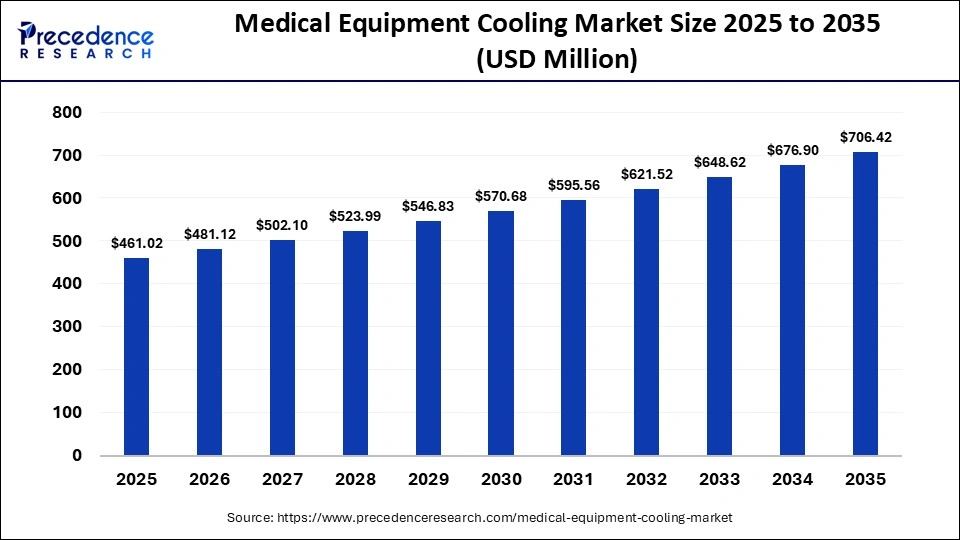
Rohan Patil, a Healthcare Industry Expert, highlights that the medical equipment cooling market has reached USD 481.12 million in 2026 and is on track to reach USD 706.42 million by 2035, advancing at a CAGR of 4.36%. Key medical equipment cooling market companies shaping the market include American Chillers, Atlas Copco, Boyd, while major growth segments span By Type, By Compressor, By Configuration, By Application, By End-Users, By Region.
Source: https://www.precedenceresearch.com/medical-equipment-cooling-market
 Get a Sample
 Table Of Content


What is the Medical Equipment Cooling Market Size in 2026?
The global medical equipment cooling market size was calculated at USD 461.02 million in 2025 and is predicted to increase from USD 481.12 million in 2026 to approximately USD 706.42 million by 2035, expanding at a CAGR of 4.36% from 2026 to 2035. The market is driven by the rising use of advanced medical devices and the need for precise temperature control.
Key Takeaways
- North America accounted for the largest share of 42% in 2025.
- The Asia Pacific is anticipated to witness the fastest growth during the forecasted years.
- By type, the liquid-based cooling segment held the largest market share in 2025.
- By type, the air-based cooling segment is anticipated to grow at a significant rate in the market over the forecast period.
- By compressor, the scroll compressors segment held a significant share in 2025.
- By compressor, the screw compressors segment is anticipated to expand at a significant rate in the market over the forecast period.
- By configuration, the packaged systems segment held a significant share in 2025.
- By configuration, the modular systems segment is anticipated to show considerable growth in the market over the forecast period.
- By application, the medical imaging systems segment held a significant share in 2025.
- By application, the medical lasers / therapeutic equipment segment is anticipated to show considerable growth in the market over the forecast period.
- By end user, the original equipment manufacturers segment held a significant share in 2025.
- By end user, the independent diagnostic & treatment centers and laboratories segment is anticipated to show considerable growth in the market over the forecast period.
Market Overview
Medical equipment cooling is a specialized branch of thermal management that is used to cool, heat, and ventilate the high-technology healthcare equipment, like MRI, CT scanners, and X-ray machines. Cooling solutions increase the precision of equipment, increase longevity, and reduce the amount of energy used, which is essential to ensure continuous medical services. The market has been experiencing significant growth due to the rise in the number of hospitals and diagnostic centers using high-end diagnostic and imaging equipment. Increasing investments in developing healthcare infrastructure, particularly in emerging economies, as well as the growing need to have predictable and continuous operation of essential medical equipment, also contribute to market growth. In addition, the emergence of novel cooling technology, which includes small-sized and energy-saving cooling systems, is also supporting market growth.
How is AI Influencing the Medical Equipment Cooling Market?
The integration of AI is significantly influencing the medical equipment cooling market, enabling the development of intelligent, data-driven cooling systems that are able to track the real-time temperature, humidity, and performance. AI-driven cooling systems assist in predictive maintenance by leveraging advanced algorithms and machine learning to anticipate potential failures before they occur, minimizing downtime for critical devices such as MRI and CT scanners. These systems also optimize energy usage by automatically adjusting cooling output based on equipment utilization patterns, helping healthcare facilities reduce operational costs while maintaining reliable performance. Overall, AI integration in cooling systems enhances efficiency, reliability, and cost-effectiveness, addressing the increasing complexity and energy demands of modern diagnostic equipment.
Medical Equipment Cooling Market Trends
- There is arising adoption of energy-efficient and greener cooling technologies, as healthcare centers seek to reduce operational costs while meeting environmental standards without compromising the performance of high-tech medical equipment.
- The adoption of smart monitoring and IoT-enabled cooling systems is rising, enabling real-time tracking of temperature and system performance, enhancing reliability, supporting predictive maintenance, and minimizing downtime of essential diagnostic and imaging devices.
- Space constraints in healthcare facilities and the rise of mobile diagnostic units are driving demand for compact and portable cooling solutions, ensuring thermal conditions are effectively managed without impacting equipment performance.
- Advanced liquid cooling and hybrid cooling techniques are becoming more widespread, offering improved heat dissipation for high-performance medical devices, longer system lifespan, and the ability to cope with the growing complexity of modern diagnostic equipment.
Market Scope
| Report Coverage | Details |
| Market Size in 2025 | USD 461.02 Million |
| Market Size in 2026 | USD 481.12 Million |
| Market Size by 2035 | USD 706.42 Million |
| Market Growth Rate from 2026 to 2035 | CAGR of 4.36% |
| Dominating Region | North America |
| Fastest Growing Region | Asia Pacific |
| Base Year | 2025 |
| Forecast Period | 2026 to 2035 |
| Segments Covered | Type, Compressor, Configuration, Application, End-Users, and Region |
| Regions Covered | North America, Europe, Asia-Pacific, Latin America, and Middle East & Africa |
Market Dynamics
Driver
Growing Demand for Temperature Control
MRI and CT scanners and X-ray machines are equipment that require continuous heat levels to obtain precise results and remove the possibility of system failures. The minor deviations of the temperature can affect the quality of the image, its calibration, and, in general, the work of the system. Additionally, rising thermal loads from high-performance electronics and the trend toward compact system designs have increased heat density, driving the development of advanced cooling solutions to ensure reliable performance and prevent overheating.
Restraint
Upfront Costs Associated with Purchasing and Installing
High initial investment and installation costs are a significant limiting factor in the medical equipment cooling market. Advanced cooling systems, particularly those used in large diagnostic machines, require specialized components, infrastructure modifications, and professional installation, which can be costly. These expenses can be prohibitive for small and mid-sized healthcare facilities, especially in developing regions. In addition to upfront costs, system integration, maintenance, and energy consumption contribute further to the financial burden, limiting adoption despite the operational and efficiency benefits of advanced cooling solutions.
Opportunity
Increasing Investment in New Medical Imaging and Diagnostic Equipment
Increasing investments in developing novel medical imaging and diagnostic equipment creates immense opportunities in the market. Governments and healthcare providers are developing new healthcare facilities and modernizing existing ones with the latest technology to improve diagnostic quality and patient outcomes. The adoption of high-performance diagnostic equipment generates greater heat, creating a growing need for reliable thermal management solutions to ensure consistent performance and longevity of medical devices.
Segment Insights
Type Insights
Why Did the Liquid-Based Cooling Segment Lead the Medical Equipment Cooling Market?
The liquid-based cooling segment led the market with the largest share in 2025 and is expected to sustain its position throughout the projected period. This is because of the ability of liquid-based cooling systems to effectively control temperature variations. The liquid-based cooling is an extremely useful method, which is used to remove an enormous heat load of high-tech diagnostic devices such as MRI and CT scanners, whose operation is sensitive to temperature controls. Liquid cooling systems also possess a better heat transfer rate than air-based solutions. Hence, they are very reliable in regard to operation and preventing overheating or system failure.
The air-based cooling segment is expected to grow at a significant rate in the upcoming period due to its affordability and ease of operation. Air-based cooling solutions are cheaper to install and maintain than liquid-based cooling systems. Therefore, they are widely used in small and mid-sized healthcare centers with limited funds. Cooling by air is especially appropriate to medicine machines with lower heat intensity and mobile diagnostic laboratories. Moreover, the need to expand decentralized healthcare and mobile medical services is enhancing the use of air-based cooling systems.
Compressor Insights
What Made Scroll Compressors the Leading Segment in the Medical Equipment Cooling Market?
The scroll compressors segment led the market with the largest revenue share in 2025 because they are very efficient, dependable, and do not make noise in a hospital setting. Scroll compressors are developed to offer a steady flow of cooling with little vibration and to assure stability and accuracy of delicate medical machines. Also, scroll compressors consume less energy and are less demanding in terms of maintenance, as opposed to other forms of compressors, and this lowers operation costs in the long run. Performance, durability, and reliability make scroll compressors the product of choice in large hospitals and diagnostic centers to enable the regular functioning of sophisticated medical equipment.
The screw compressors segment is expected to grow at a significant CAGR over the forecast period due to their ability to customize high cooling capacity and continuous and heavy-duty working. The choice of screw compressor is the most appropriate in large-sized healthcare facilities and special diagnostic centers, which require a powerful and flexible cooling system. Relative to scroll compressors, screw compressors can effectively manage larger heat requirements and be deployed to high-end imaging products and the deployment of complicated diagnostic devices. Their efficiency in terms of energy consumption and dependability, along with noise reduction, has improved with advances in technology, and this has become popular in the contemporary healthcare infrastructure.
Configuration Insights
Why Did Packaged Systems Contribute the Most Revenue in the Medical Equipment Cooling Market?
The packaged systems held the maximum share of the market in 2025. This is because packaged systems are particularly well-suited for hospitals and diagnostic facilities, where consistent performance is critical for cooling vital equipment such as MRI and CT scanners. Packaged systems are valued for their reliable temperature control, energy efficiency, and ease of operation, all of which are essential for maintaining the precision and longevity of sensitive medical equipment. The combination of performance, convenience, and reliability has made packaged systems the preferred choice for healthcare facilities worldwide.
The modular systems segment is expected to grow at a significant CAGR in the coming years, owing to their flexibility, scalability, and adaptability. Modular configurations allow healthcare facilities to add or expand the capacity of cooling as the demand grows without necessarily disrupting the existing operations, as opposed to the packaged system. Their implementation is also supported due to the development of energy-efficient and small modular designs that require low-cost operation and space. There is also the increasing incidence of decentralized healthcare services and mobile healthcare services, and this implies that modular cooling systems are easy to set up.
Application Insights
Why Did the Medical Imaging Systems Segment Lead the Medical Equipment Cooling Market?
The medical imaging systems segment led the market in 2025 due to the high heat output and stringent operational requirements of imaging equipment, such as MRI and CT scanners, which demand precise and reliable thermal management. Effective cooling ensures consistent performance, reduced overheating, and extended lifespan of these costly imaging systems. The cooling solutions are primarily liquid-based systems and scroll compressor coolers, designed to maintain optimal temperatures and support high-quality imaging. Additionally, the increased adoption of advanced imaging facilities in hospitals, diagnostic centers, and research institutions is further boosting demand for reliable and efficient cooling systems.
The medical lasers / therapeutic equipment segment is expected to grow at a significant CAGR over the forecast period, owing to the rising usage of laser-based therapies and minimally invasive treatments. Medical equipment like therapeutic systems, surgical lasers, and dermatology equipment produces heat, which has to be managed efficiently to sustain performance, safety, and accuracy of treatment. These medical devices require effective cooling solutions to prevent overheating, reduce equipment wear, and ensure safe operation during critical procedures, including emergency treatments. Additionally, factors such as growing awareness of laser-based treatments, increasing healthcare expenditure, and the rising number of diagnostic and therapeutic centers are further driving demand for reliable cooling systems in healthcare facilities.
End-User Insights
Why Did the Original Equipment Manufacturers Dominate the Medical Equipment Cooling Market?
The original equipment manufacturers (OEMs) segment dominated the market in 2025. OEMs integrate advanced cooling systems directly into medical devices such as MRI machines, CT scanners, and X-ray equipment, ensuring optimal thermal management from the manufacturing stage. Implementing high-efficiency cooling systems during production enables OEMs to deliver equipment with enhanced operational stability, reduced thermal stress, and extended service life. Additionally, OEMs benefit from economies of scale and superior technological capabilities, allowing them to provide customized, high-performance cooling solutions tailored to diverse clinical requirements.
The independent diagnostic & treatment centers and laboratories segment is expected to grow at a significant rate in the market. These facilities are increasingly adopting high-performance diagnostic and treatment equipment, including imaging systems and medical lasers, to provide specialized, efficient, and cost-effective healthcare services. Effective cooling solutions are essential in these settings to maintain equipment accuracy, prevent thermal damage, and ensure continuous operation, which is critical for patient safety and timely diagnoses. Many of these centers are shifting toward modular and air-based cooling systems, which are flexible, scalable, and lower in initial cost compared to fully integrated cooling solutions, making them well-suited to smaller or growing healthcare facilities.
Region Insights
North America Medical Equipment Cooling Market Size and Growth 2026 to 2035
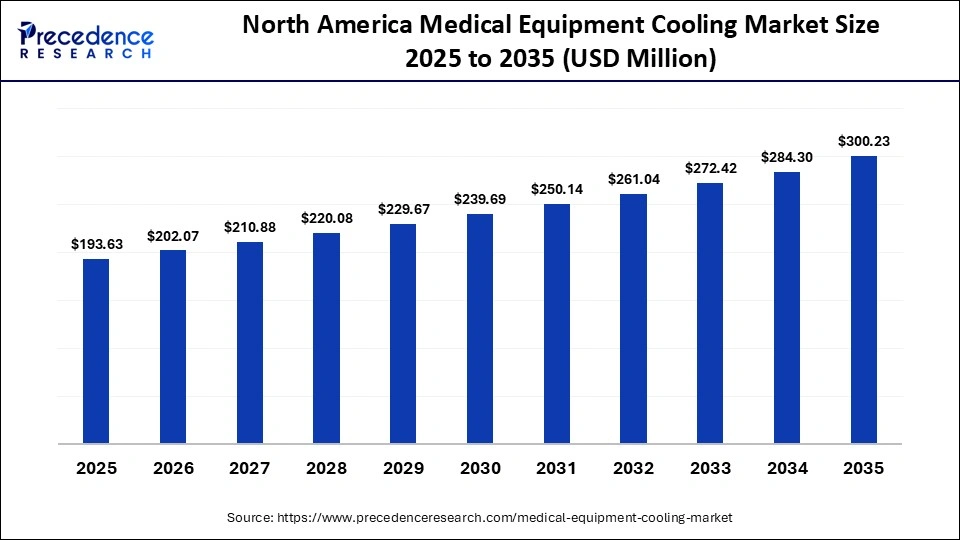
The North America medical equipment cooling market size is estimated at USD 193.63 million in 2025 and is projected to reach approximately USD 300.23 million by 2035, with a 4.48% CAGR from 2026 to 2035.
What Made North America the Leading Region in the Global Medical Equipment Cooling Market?
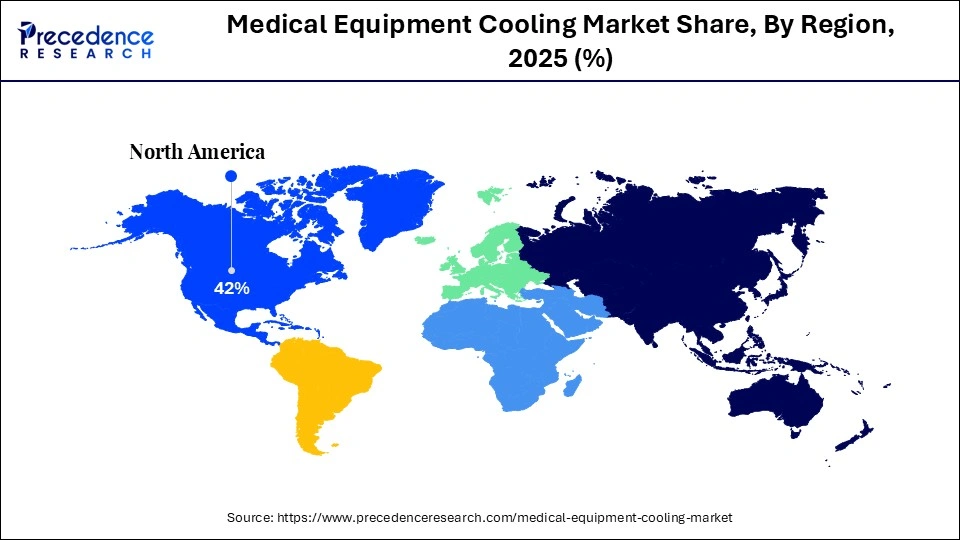
North America led the medical equipment cooling market with the largest share of 42% in 2025. The region's dominance is driven by advanced healthcare infrastructure and a large installed base of diagnostic imaging equipment, which requires regular upgrades and replacement of cooling solutions to maintain efficiency. Hospitals, diagnostic centers, and research facilities in North America prioritize high-performance, energy-efficient cooling systems to ensure precision, accuracy, and uninterrupted operation of critical medical equipment. The region's well-established regulatory frameworks, technological advancements, and significant healthcare expenditures further reinforce its leadership position in the market.
U.S. Medical Equipment Cooling Market Size and Growth 2026 to 2035
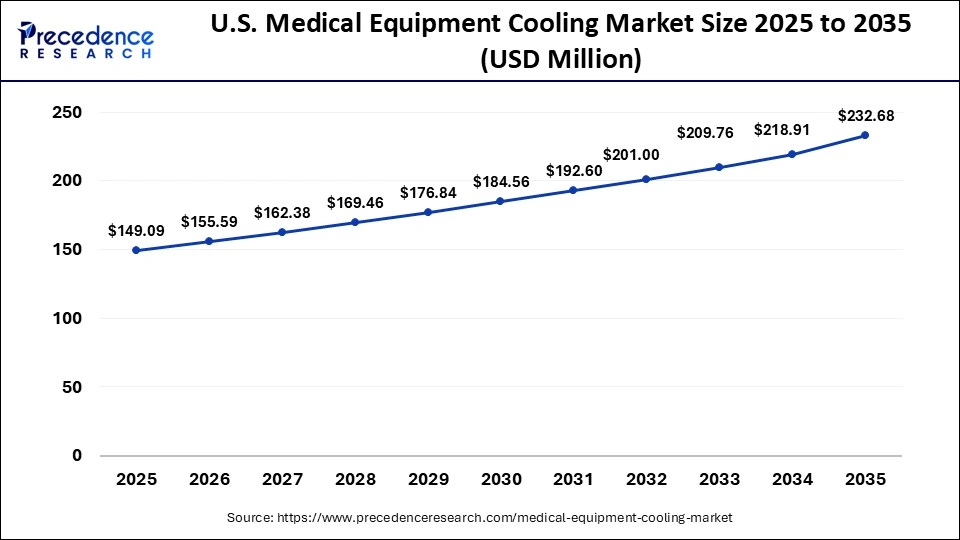
The U.S. medical equipment cooling market size is calculated at USD 149.09 million in 2025 and is expected to reach nearly USD 232.68 million in 2035, accelerating at a strong CAGR of 4.55% between 2026 and 2035.
U.S. Medical Equipment Cooling Market Analysis
The U.S. holds a substantial share of the market and is the major contributor to the market. The country has a well-developed healthcare IT infrastructure. Significant investment in research and development provides the backbone for rapid technological advancements. The country is home to leading market players such as Veeva Systems, MasterControl Inc., Oracle Corporation, ArisGlobal, Parexel International, Merative, Xybion Corporation, ClinOne (Clindex), EXTEDO GmbH, and others. These companies are recognized for providing secure, validated, and compliant document management tools. Additionally, the increasing integration of Artificial Intelligence (AI) and Machine Learning (ML) assists in automating workflows and enhancing document quality control, which is expected to fuel the market's growth in the country.
Why is Asia Pacific experiencing the Fastest Growth in the Medical Equipment Cooling Market?
Asia Pacific is expected to grow at the fastest CAGR during the forecast period, driven by rapid expansion of healthcare infrastructure and the modernization of healthcare systems in countries such as China, India, and Japan. The rising demand for advanced diagnostic imaging equipment, the expansion of pharmaceutical and biotechnology industries, and increased investments in hospitals and outpatient care centers also drive the market. Additionally, the growing middle-income population in the region is boosting purchasing power for quality healthcare services, leading to higher adoption of high-performance medical equipment, which in turn requires precise and reliable temperature management through advanced cooling systems.
Medical Equipment Cooling Market Companies
- American Chillers
- Atlas Copco
- Boyd
- Copeland
- Daikin Industries
- Drake Refrigeration
- Ecochillers
- EKS Thermal Systems
- ELGi Equipments Limited
- Filtrine
- General Air Products
- Glen Dimplex Group
- Haskris
- Ingersoll Rand
- KKT chillers
- Legacy Chillers
- Motivair Corporation
- Tark Thermal Solutions
- Thermal Care
Recent Developments
- In December 2024, MIRAI INTEX introduced the MIRAI X CRYO, a superior process cooling system with applications in high-demand sectors like pharmaceuticals, semiconductors, and vacuum coating. The system provides controlled accuracy in its temperature regulation, which increases the reliability and effectiveness of the system in delicate applications. (Source: https://pharma-industry-review.com)
- In September 2024, Atlas Copco launched the SmartAir Master controller, an all-in-one system to control compressed air systems and the cooling equipment in hospitals. This integration makes the systems more efficient and has the ability to provide predictive maintenance of various devices.
- In May 2024, Enhanced Innovations presented a battery-powered, portable cooling system that could be used to transport and store medical supplies, such as vaccines and diagnostic samples. The gadget will be powered by solar energy or car chargers, instead of the traditional power grids.(Source: https://economictimes.indiatimes.com)
Segments Covered in the Report
By Type
- Liquid-based Cooling
- Air-based Cooling
By Compressor
- Scroll Compressors
- Screw Compressors
- Centrifugal Compressors
- Reciprocating Compressors
By Configuration
- Packaged Systems
- Modular Systems
- Split Systems
By Application
- Medical Devices
- Medical Imaging Systems
- Magnetic Resonance Imaging Systems (MRI)
- Computed tomography scanners (CT)
- Positron Emission tomography systems (PET)
- Medical Lasers
- Linear Accelerators
- Medical Imaging Systems
- Analytical & Laboratory Equipment
By End-Users
- Original Equipment Manufacturers (OEMS)
- Hospitals, Laboratories, & Outpatient Clinics
- Independent Diagnostic & Treatment Centers and Laboratories
- Other End Users
By Region
- North America
- Latin America
- Europe
- Asia-pacific
- Middle and East Africa
For inquiries regarding discounts, bulk purchases, or customization requests, please contact us at sales@precedenceresearch.com
Frequently Asked Questions





Ask For Sample
No cookie-cutter, only authentic analysis – take the 1st step to become a Precedence Research client
 Get a Sample




 sales@precedenceresearch.com
 Schedule a Meeting
