



Medical Equipment Maintenance Market Size, Share and Trends 2026 to 2035
Medical Equipment Maintenance Market (By Equipment: Imaging Equipment, Electromedical Equipment, Endoscopic Devices, Surgical Instruments, Other; By Service: Preventive Maintenance, Corrective Maintenance, Operational Maintenance) - Global Industry Analysis, Size, Trends, Leading Companies, Regional Outlook, and Forecast 2026 to 2035
Source: https://www.precedenceresearch.com/medical-equipment-maintenance-market
 Get a Sample
 Table Of Content


What is the Medical Equipment Maintenance Market Size?
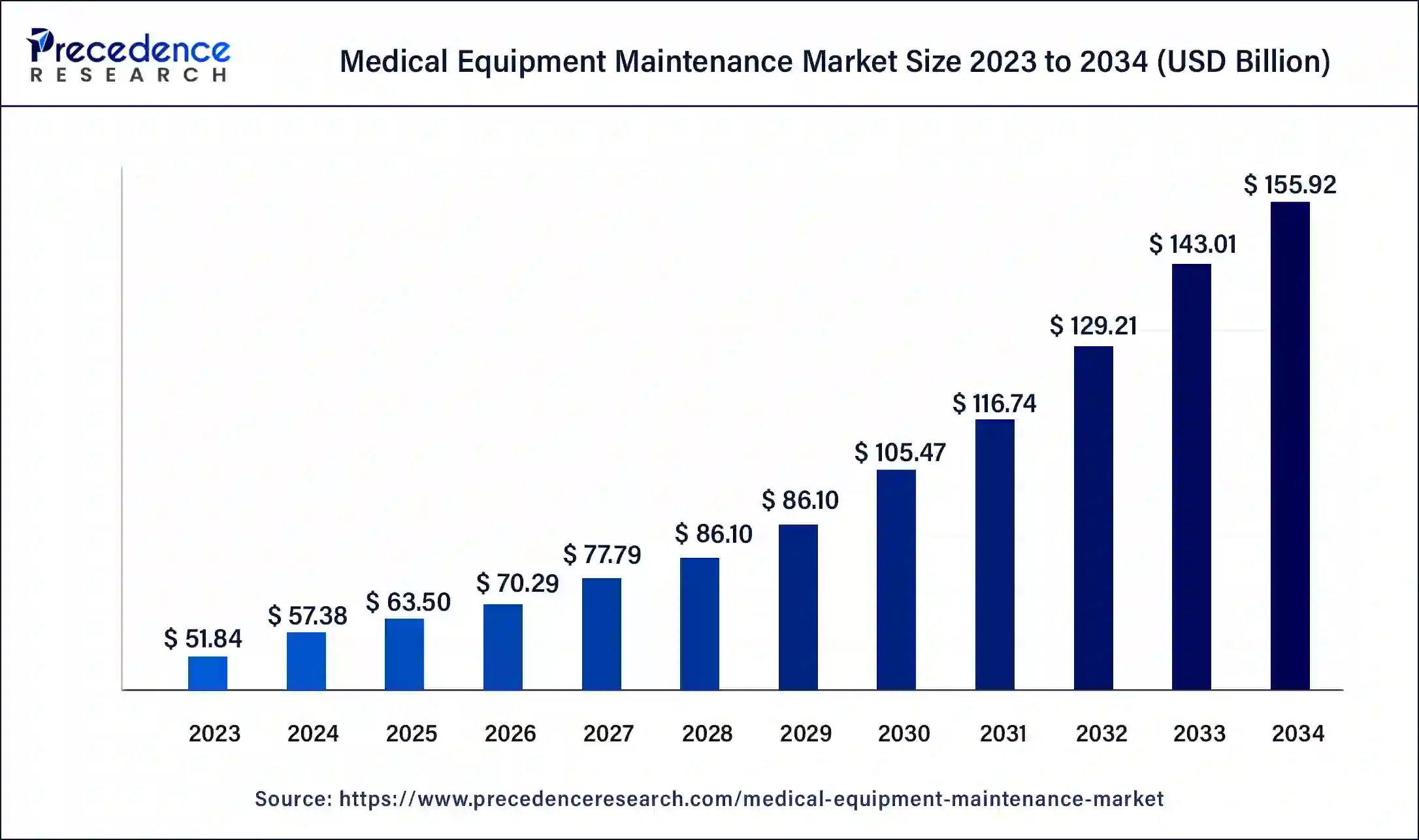
The global medical equipment maintenance market size is calculated at USD 63.50 billion in 2025 and is predicted to increase from USD 70.29 billion in 2026 to approximately USD 169.42 billion by 2035, expanding at a CAGR of 10.31% from 2026 to 2035. The World Health Organization (WHO) adopted a maintenance strategy that includes procedures for preventive and corrective maintenance and inspection of medical equipment.
Key Takeaways
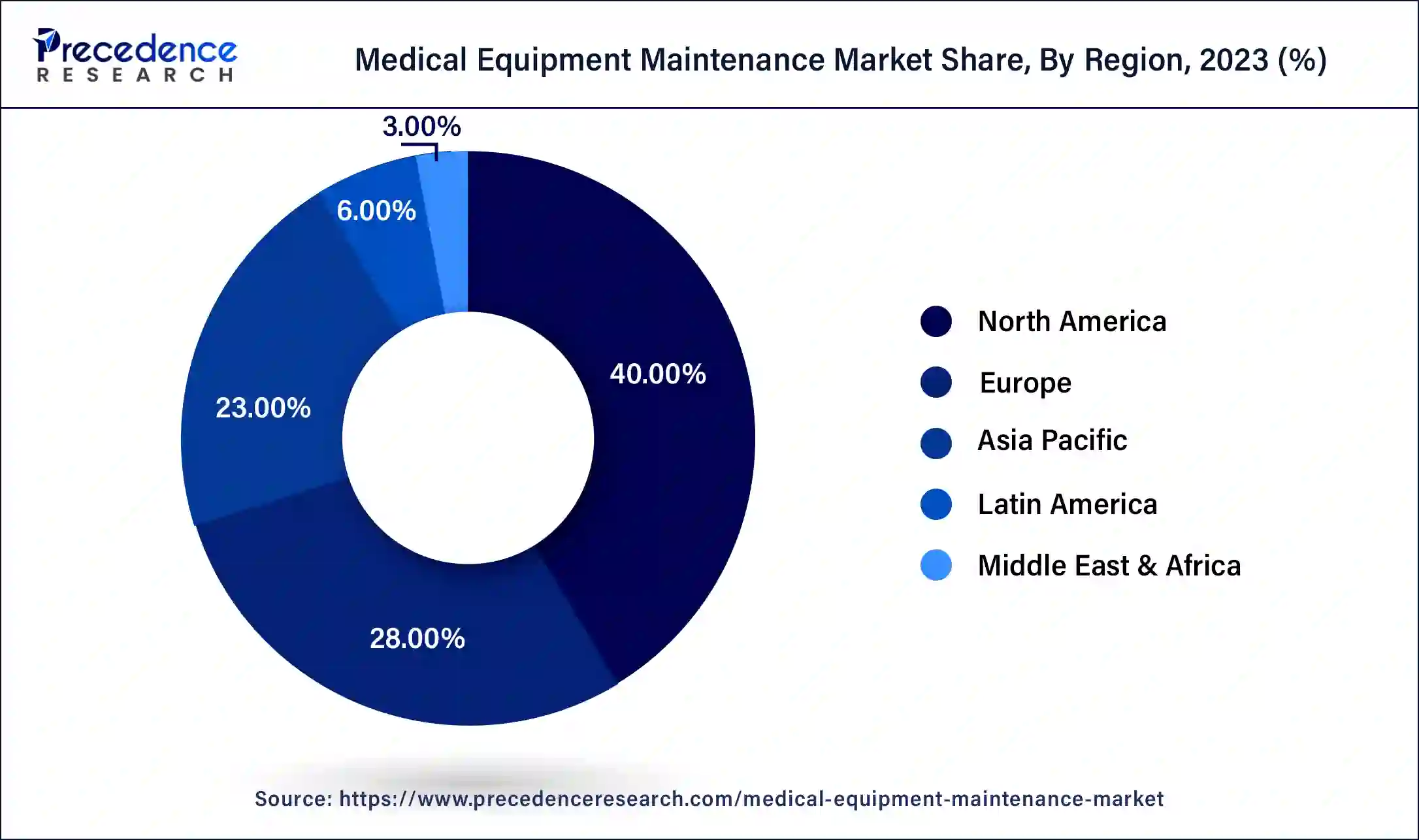
- North America led the global market with the highest market share of 40% in 2025.
- Asia-Pacific is expected to expand at the fastest CAGR during the forecast period.
- By Equipment, the imaging equipment segment has held the largest revenue share of 36% in 2025.
- By Equipment, the surgical instruments segment is anticipated to grow at a notable CAGR of 8.9% during the projected period.
- By Service, the disk diffusion segment had the biggest market share of 58% in 2025.
- By Service, the preventive maintenance segment is anticipated to grow at the fastest CAGR over the projected period.
Market Overview
The management of medical equipment maintenance encompasses the activities and processes that ensure the proper functioning and effectiveness of medical equipment throughout its lifecycle. It involves the planning, execution, and monitoring of maintenance activities. They are performed to ensure their reliable operation and prevent equipment breakdowns. This management includes tasks such as replacing equipment, scheduling routine activities, and performing repairs when necessary. The development and implementation of policies and procedures also drives the industrial expansion.
How is AI contributing to the Medical Equipment Maintenance Market?
AI is revolutionizing the upkeep of medical devices by applying predictive maintenance, downtime reduction, and breakdown prevention through real-time IoT data analytics. Early fault detection via machine learning algorithms boosts safety and prolongs asset life. It raises the level of efficiency by means of automation, support from virtual technicians, and data-driven decision-making in asset planning. Digital twins are used to mimic device behavior for advanced diagnostics, thus helping healthcare facilities to improve performance, reduce costs, and ensure the availability of equipment.
Medical Equipment Maintenance Market Growth Factors
Increasing purchase of renewed medical systems, rising prevalence of diseases leading to higher diagnostic rates, and rising demand for the refurbished medical equipment are the primary factors leading to growth of the medical equipment maintenance market. The rapidly growing medical equipment industries in the developed regions like US and Canada are significantly boosting the demand for the Medical equipment maintenance. The rising prevalence of diseases among the population has a significant role to play in the demand for the medical equipment maintenance. Moreover, the rising investments in the medical devices such as X-ray units, centrifuge, ventilator units, ultrasound, syringe pumps, electrocardiographs, and autoclave are available in the industry. The main objective of the equipment maintenance is to reduce the down time of medical devices in the facility, and this can leads to save cost and provide better services to the customer. Further, the rising adoption of automated technologies to enhance productivity and reduce cost is likely to augment the growth of the market. The key players in the industry are introducing new services in the market to serve the patients. This has led the growth of the market in the coming years.
Medical Equipment Maintenance Market Trends
- Health Technology Management: It aims to ensure patient safety and the appropriate use of medical devices. It will also ensure the quality of healthcare. This process includes the assessment of requirements, procurement, and supply. It also includes training for maintenance and safe use. Moreover, there is an inclusion of data-driven maintenance strategies, modern digital systems, and improved inventory frameworks.
- Revolutionary Advances for Seniors: These include smart walkers, rollators, lightweight and compact designs, customization, and comfort enhancements. Smart walkers and rollators aid seniors in their mobility. These devices integrate AI technology and sensors that alert users about obstacles, monitor stability, and connect to smartphones or emergency services for added safety. The latest models are equipped with features like novel designs and automatic braking systems that reduce strain on wrists and arms.
- Improved Senior Safety: It is driven by wearable fall detectors, floor and bed alarm systems, and environmental modifications with smart sensors. There is an increase in the use of wearable fall detection devices that combine accelerometers, GPS, and AI. They ensure accurate fall detection and notify emergency contacts in real time.
- Cost-Effective Strategies: They are acquired for durable medical equipment and to explore rental options versus purchase. Renting durable medical equipment has become more favorable and accessible for seniors who need temporary solutions. The utilization of community programs and grants, and buying refurbished and certified equipment, are the trending cost-effective strategies.
Market Outlook
- Industry Growth Overview: The drone logistics and transport market is on a growth trajectory and is expected to continue its expansion with the help of e-commerce, demand for last-mile delivery, and improvements in the technology used for autonomous navigation, AI-based flight control, and batteries.
- Sustainability Trends: Drones are coming out as an eco-friendlier logistics option, cutting down on carbon emissions, and every delivery made is going to be one less vehicle consuming fuel and causing road congestion, thus helping the world move towards a sustainable and clean-transport future.
- Global Expansion: North America is the current market leader due to its well-established regulatory frameworks and extensive technology adoption, while Asia-Pacific countries are building the necessary infrastructure very quickly, are boosting their investments, and increasing their operational scalability for quick future expansion.
- Major Investors & Key Backers: The drone logistics ecosystem is financed by several large corporations and venture capital firms, among them being Amazon, Alphabet (Wing), Zipline, UPS, FedEx, DHL, Intel Capital, and Sequoia Capital, and this is hastening the processes of commercialization and research and development (R&D).
- Startup Ecosystem Development: There is a growing global startup space that specializes in medical supply delivery, warehouse automation, long-range cargo drones, and hardware innovation, which in turn leads to an increase in competition and the speed of innovation.
Market Scope
| Report Highlights | Details |
| Market Size by 2035 | USD 169.42 Billion |
| Market Size in 2025 | USD 63.50 Billion |
| Market Size in 2026 | USD 70.29 Billion |
| Growth Rate from 2026 to 2035 | CAGR of 10.31% |
| Largest Market | North America |
| Base Year | 2025 |
| Forecast Period | 2025 to 2035 |
| Segments Covered | Equipment, Service, and Region |
| Regions Covered | North America, Europe, Asia-Pacific, Latin America, and Middle East & Africa |
Market Dynamics
Driver
What is an Essential Aspect of the Medical Equipment Maintenance Market?
Medical equipment maintenance management is considered a critical aspect of healthcare facility management. It ensures that all medical appliances used in patient care deliver correct functioning and safety. Scheduled maintenance of medical devices is required by manufacturers to detect and address potential issues.
Restraint
What are the Challenges in Healthcare Facility Maintenance?
The broken compliance standards lead to financial penalties, legal consequences, and temporary shutdowns of healthcare facilities. Healthcare organizations are required to track all regulatory updates. It is necessary to maintain compliance with the existing requirements through their maintenance procedures.
Opportunity
How does Heavy Reliance on Medical Equipment Impose Opportunities?
Modern hospitals are experiencing several opportunities to reduce costs, patient dissatisfaction, mortality, and risks during patient care, and to treat the patient on time. Good maintenance management is essential for implementing well-planned programs. Hospitals are enabled to reduce medical device failures and other issues with the operation of medical equipment.
Segments Insights
Equipment Insight
What was the revenue share of the imaging equipment segment in 2025?
Based on equipment, the imaging equipment segment accounted largest revenue share over 36% in 2025. This is attributable to the introduction of new technologies, presence of numerous devices such as Digital X-Ray, ultrasound, MRI, and others in hospitals, and rise in global diagnostic procedures. Moreover, the rising investments in the new innovation in the devices by the healthcare industry players is further boosting the growth of the medical equipment maintenance across the globe, and hence this segment is expected to be the fastest-growing segment during the forecast period. Moreover, the surgical instruments segment is projected to witness the highest CAGR of 8.9% over the forecast period.
The surgical instruments segment is expected to grow at the fastest CAGR in the market during the forecast period due to their proper care, which improves their function and longevity. Maintenance and care are achieved through cleaning, sterilization, and maintenance processes. These instruments must be handled for their intended purpose, delicately, and with care.
Service Insights
Which factor contributed to the growth of the corrective maintenance segment?
Based on service, the corrective maintenance segment accounted for 59% of revenue share in 2025 and is expected to remain dominant over the forecast period. The increased prevalence of chronic diseases among the population, growing research activities to develop innovative services, and growing demand for the usage of medical equipment the hospitals has fostered the growth of this segment in the past few years.
The preventive maintenance segment is estimated to grow at the fastest rate in the market during the predicted timeframe due to its importance for the regular inspection and servicing of medical equipment. It ensures the good working order and function without failure for medical appliances. It is designed to prevent failures and breakdowns of equipment and delay harmful situations for patient care.
Regional Insights
How is North America leading in the Medical Equipment Maintenance Market?
The reason for the increase is the high healthcare expenditure, robust infrastructure, and the uptake of new technology. Upgrading the efficiency of maintenance in healthcare facilities through data analytics, remote monitoring, and the expansion of third-party services and refurbishment-based solutions presents a wide opening for the market.
Based on region, North America accounted for 40% of revenue share in 2025 and is expected to remain dominant during the forecast period. The increased adoption of advanced equipment in the healthcare sector, rising investments in the preclinical tests of the latest medical equipment, the growing number of private hospitals and clinics, and rising expenditure of the medical equipment manufacturers to make innovative and efficient equipment are the prominent factors that boost the growth of the medical equipment market in North America.
United States Medical Equipment Maintenance Market Trends
The senior demographic and the extensive use of equipment are the factors behind the strong market presence, resulting in high OEM involvement, which is the reason for the ongoing maintenance that ensures compliance and safety, as healthcare providers rely on continuous equipment performance support.
U.S. Medical Equipment Maintenance Market Size and Growth 2026 to 2035
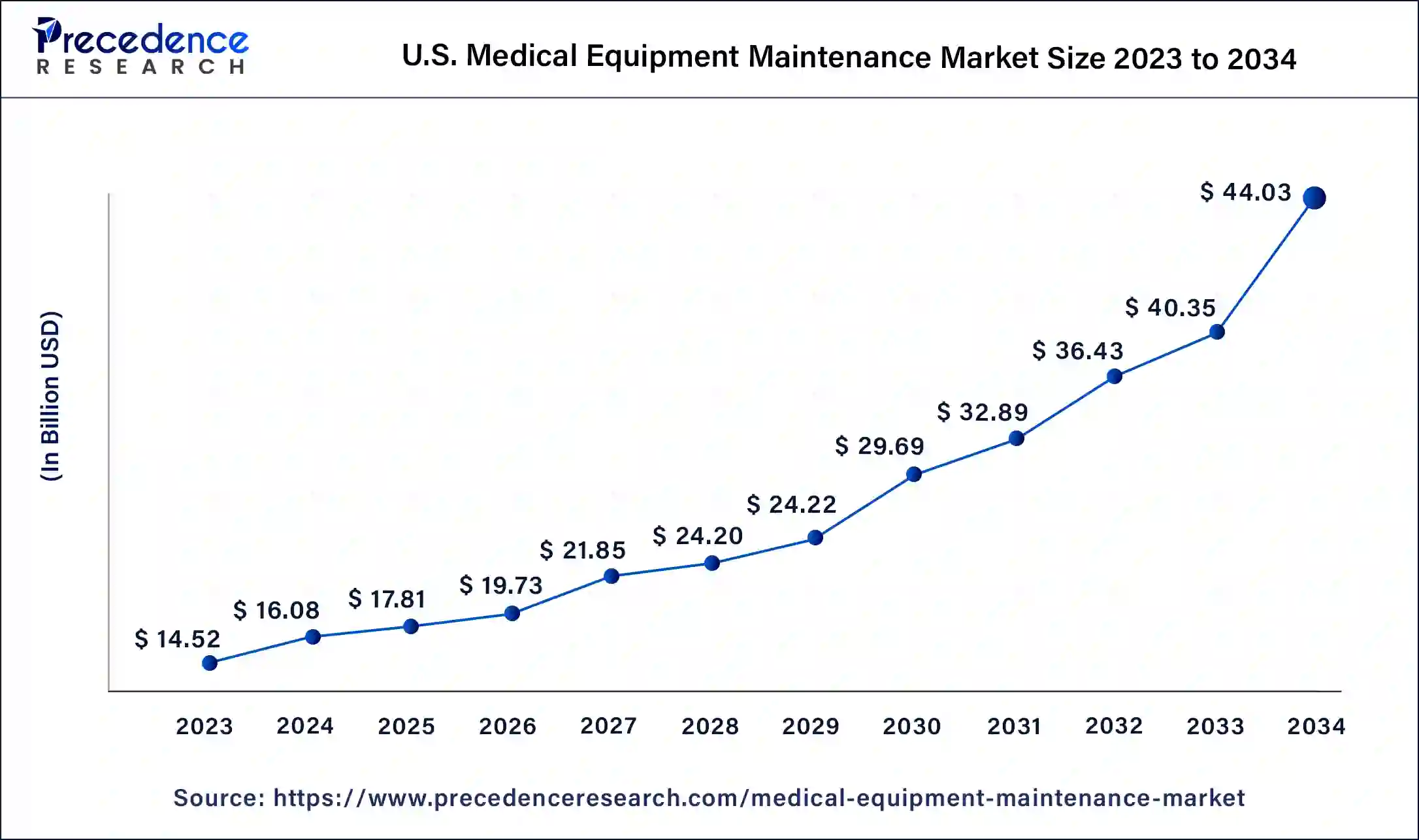
The U.S. medical equipment maintenance market is valued at USD 17.81 billion in 2025 and is expected to be worth USD 47.87 billion by 2034, growing at a CAGR of 10.39% from 2026 to 2035.
What are the driving factors of the Medical Equipment Maintenance Market in Europe?
The adoption of quality-focused maintenance practices in hospitals and diagnostic environments is being bolstered by the growing public OEM partnerships and the presence of cost-efficient third-party service providers, which, in turn, are supporting the demand in Europe, characterized by stringent regulations, a preventive maintenance strategy, and life cycle management.
Germany Medical Equipment Maintenance Market Trends
The maintenance services are supported by Germany's regulatory focus and established healthcare system. Hospitals that give priority to preventive lifecycle maintenance are the ones that tend to demand the most; thus, the steady tenders reflect the need for reliable service quality.
How is Asia-Pacific performing in the Medical Equipment Maintenance Market?
A fast-expanding area with an ever-growing healthcare infrastructure and a high prevalence of chronic diseases. One of the strongest opportunities is the area of hospital investments and the demand for low-cost service models, which in turn is facilitating the adoption of maintenance for new and refurbished medical equipment across the developing countries of the region.
India Medical Equipment Maintenance Market Trends
The healthcare systems' modernization and the medical tourism growth are driving a very strong demand. The expansion of healthcare facilities, together with the refurbished medical equipment, creates a big service provider's maintenance in the region.
Which Major Growth Factors Drive the Notable Growth of the Medical Equipment Maintenance Market in Latin America?
Latin America is expected to grow at a notable rate in the market during the predicted timeframe, driven by a growing patient pool suffering from cardiovascular ailments, diabetes, and cancer, and rising acquisition of high-end equipment. Latin American operations prioritize the transformation of healthcare delivery across major economies. It is achieved through vertically integrated solutions and the combination of diagnostics, manufacturing, specialty care, and digital platforms.
How can the Medical Equipment Maintenance Market Expand in Brazil?
Brazil is transitioning toward a private clinic boom, increased outsourcing and cost-management efforts, and complex medical technologies. Brazil represents strategic partnerships, flagship initiatives, a specialty hospital network, a diagnostics network, and a digital health backbone. It also represents a strategic regional hub for South American operations.
How does the Medical Equipment Maintenance Market Majorly Impact the Significant Growth of MEA?
MEA is expected to grow significantly in the market in the coming years, propelled by surging installation of high-tech diagnostic devices, a shift to advanced and predictive service models, and a surging volume of complex medical technology. Governments across the region are transitioning toward predictive maintenance, strict regulatory frameworks, and strategic local development. Public healthcare authorities in the Middle East are moving toward multi-year, unified maintenance service tenders.
What is the Major Footprint of Saudi Arabia in the Medical Equipment Maintenance Market?
Saudi Arabia is transforming due to the growth of home healthcare, rigid quality controls, escalating disease burden, and asset optimization. Saudi Arabia stands as the largest healthcare market in the Gulf Cooperation Council (GCC). It is also the dominant buyer of medical devices and supplies.
Key Companies & Market Share Insights
The market is moderately fragmented with the presence of several local companies. These market players are striving to gain higher market share by adopting strategies, such as investments, partnerships, and acquisitions & mergers. Companies are also spending on the development of improved products. Moreover, they are also focusing on maintaining competitive pricing.
In July 2018,Koninklijke Philips N.V., is a health technology company focused on improving people's health across the globe, signed two long-term delivery, upgrade, replacement, and maintenance partnership agreements with Kliniken der Stadt Köln. The various developmental strategies like acquisitions and mergers fosters market growth and offers lucrative growth opportunities to the market players.
The Asia Pacific is expected to be the fastest-growing market during the forecast period. The rising government expenditure on the development of healthcare infrastructure, rapid urbanization and increase healthcare spending, rising prevalence of diseases, and growing geriatric population drives the demand for the medical equipment maintenance market. The increasing number of patients in hospital owing to the huge population is driving the demand among the hospital sector and hence this region is expected to grow rapidly in the forthcoming years.
Supply Chain Analysis
R&D
- This process prioritizes IoT telemetry, software-driven predictive models, and digital twins to maximize machine uptime.
- Key Players: GE HealthCare, Siemens Healthineers, Koninklijke Philips N.V., Medtronic, Canon Medical Systems.
Distribution to Hospitals, Pharmacies
- In this process, demand generation, predictive ordering, sourcing and vendor allocation, and logistical distribution are some of the key stages.
- Key Players: McKesson Corporation, Cardinal Health, Medline Industries, Cencora, GE HealthCare, Siemens Healthineers, Koninklijke Philips N.V., Medtronic.
Patient Support and Services
- This process includes real-time telemetry and monitoring, risk-based triage and ticketing, smart dispatch and resource allocation, standardized service execution, and automated compliance.
- Key Players: Siemens Healthineers AG, GE HealthCare Technologies Inc., Medtronic plc, Koninklijke Philips N.V., Stryker Corporation, TRIMEDX Holdings LLC, Crothall Healthcare, Althea Group, Aramark Services, Inc.
Competitive Landscape
The medical equipment maintenance market is dominated by top original equipment manufacturers (OEMs) like GE HealthCare, Siemens Healthineers AG, Koninklijke Philips N.V., Canon Medical Systems Corporation, Fujifilm Holdings Corporation, Drägerwerk AG & Co. KGaA, Medtronic plc, B. Braun Melsungen AG, Aramark Services Inc., Althea Group Holdings Ltd., Agfa-Gevaert Group, Carestream Health, Inc. The core product offerings are AI-enabled remote diagnostics, predictive maintenance, GoldSeal & A1-Sure refurbished systems, comprehensive service contracts, cloud-based maintenance analytics, remote tech assistance, etc. The technical R&D trends are the predictive analytics explosion, late-stage maintenance software funding, remote asset tracking, AI-driven predictive maintenance, and edge computing to eliminate hospital downtime.
Top Companies in the Medical Equipment Maintenance Market and Their Offerings
- GE Healthcare: Remote maintenance tools, advanced fleet management, asset performance and lifecycle analytics, etc.
- Siemens Healthineers: Block imaging services and parts, smart remote services, multi-vendor service capabilities, a cloud-based business intelligence platform, etc.
- Koninklijke Philips N.V.: Image-guided therapy, software evolution services, remote service integration, managed equipment services, software-driven servicing models, etc.
- Drägerwerk AG & Co. KGaA: Ventilators, respiratory care, anaesthesia workstations, neonatal incubators, patient monitoring systems, workplace infrastructure, multi-brand logistics, cybersecurity logistics, etc.
- Medtronic: Preventive maintenance, corrective maintenance, surgical navigation and imaging systems, robotic-assisted surgery, electrosurgical and ablation hardware, etc.
Medical Equipment Maintenance Market Companies
- GE Healthcare
- Siemens Healthineers
- Koninklijke Philips N.V.
- Drägerwerk AG & Co. KGaA
- Medtronic
- B. Braun Melsungen AG
- Aramark
- BC Technical, Inc.
- Alliance Medical Group
- Althea Group
Recent Developments
- In March 2026, the U.S. FDA cleared Philips' AI solution that offers real-time guidance during complex minimally invasive heart valve repair. Philips DeviceGuide uses AI to track and visualize mitral valve repair appliances in real-time during minimally invasive procedures. (Source: https://www.usa.philips.com)
- In February 2026, GE Healthcare launched the readyfix fleet management solution to help boost reliable patient care and operational efficiency. This newly launched solution helps healthcare systems proactively maintain and improve MAC VU360 devices anywhere in the hospital. (Source: https://www.businesswire.com)
- In June 2025, the International Biomed Cross (IBC) was launched on 23 May at the MedTech Policy Mahotsav in New Delhi to support medical device maintenance and repair during disasters and health emergencies.
- In February 2025, Sodexo India launched a 6,700 sq ft Healthcare Technology Management facility in Kolkata's Sector V, featuring six specialized labs to maintain approximately 500,000 medical devices. They also partnered with government hospitals for biomedical equipment maintenance.
Segments Covered in the Report
By Equipment
- Imaging Equipment
- Electromedical Equipment
- Endoscopic Devices
- Surgical Instruments
- Other
By Service
- Preventive Maintenance
- Corrective Maintenance
- Operational Maintenance
By Region
- North America
- Europe
- Asia Pacific
- Rest of the World
For inquiries regarding discounts, bulk purchases, or customization requests, please contact us at sales@precedenceresearch.com
Frequently Asked Questions





Ask For Sample
No cookie-cutter, only authentic analysis – take the 1st step to become a Precedence Research client
 Get a Sample




 sales@precedenceresearch.com
 Schedule a Meeting
