



Mineral Fortification Market Size, Key Companies, Company Market Share, Production Volume, Consumption Trends, Pricing Analysis, Export & Import Dynamics, Competitive Positioning, and Demand Forecast
Mineral Fortification Market (By Mineral Type: Iron, Zinc, Iodine, Calcium, Other Minerals; By Application: Food, Beverage, Dietary Supplement, Animal Feed) - Global Industry Analysis, Size, Trends, Leading Companies, Regional Outlook, and Forecast 2026 to 2035
Source: https://www.precedenceresearch.com/mineral-fortification-market
 Get a Sample
 Table Of Content


What is the Mineral Fortification Market Size?
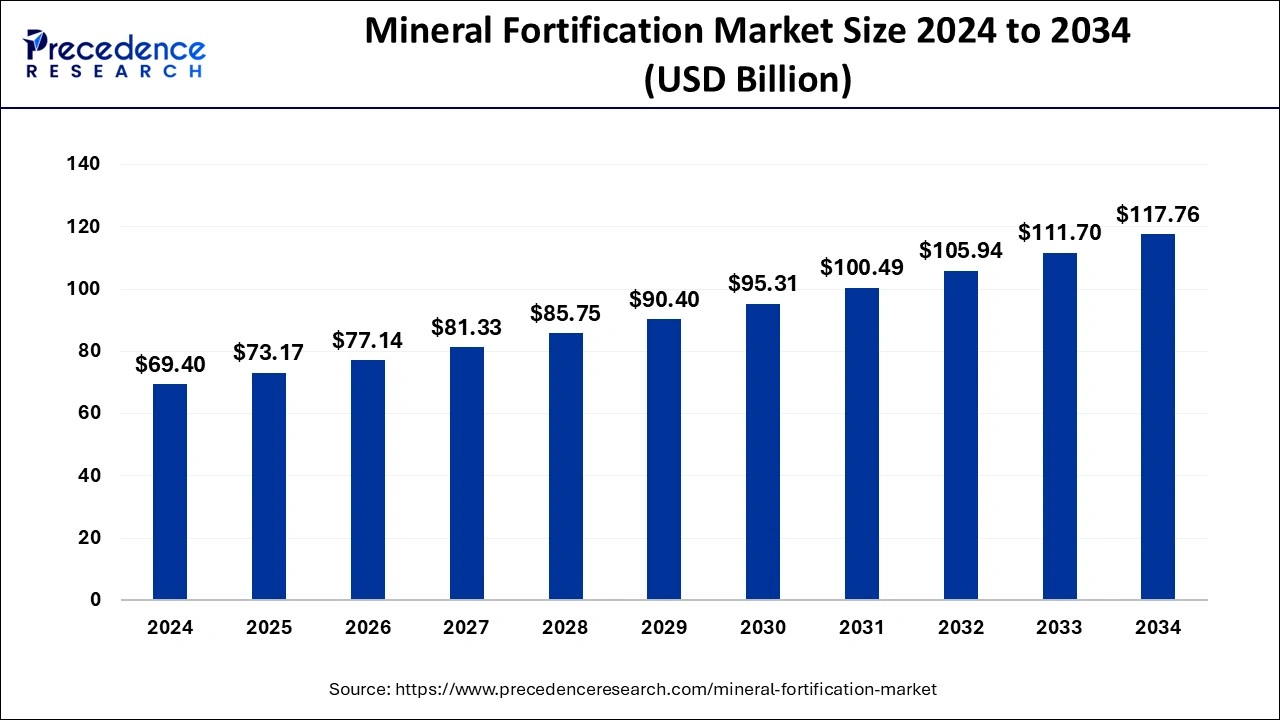
The global mineral fortification market size was accounted for USD 77.14 billion in 2026 and is expected to exceed around USD 123.62 billion by 2035, growing at a CAGR of 5.38% from 2026 to 2035. The mineral fortification market is driven by the growing consumer awareness about nutrition and health.
Mineral Fortification Market Key Takeaways
- In terms of revenue, the global mineral fortification market was valued at USD 73.17 billion in 2025.
- It is projected to reach USD 123.62 billion by 2035.
- The market is expected to grow at a CAGR of 5.38% from 2026 to 2035.
- North America dominated the mineral fortification market in 2025.
- Asia-Pacific is observed to be the fastest growing in market during the forecast period.
- By mineral type, the iron segment holds the largest market share in 2025.
- By mineral type, the zinc segment is anticipated to grow at the fastest CAGR during the forecast period.
- By mineral type, the calcium segment shows significant growth in the market during the forecast period.
- By application, the food segment captured the biggest market share in 2025.
- By application, the beverage segment will grow at the fastest CAGR during the forecast period.
Market Overview
Health concerns are bolstered by a surge in mineral-fortified products in the beverage, food, and supplement industries. For instance, osteoporosis and anemia, considered major health issues worldwide, can be mitigated through mineral fortification with essential ions such as calcium, iron, magnesium, and zinc. As populations age, it is difficult to address mineral deficiencies becomes crucial. These consumers need a source of these minerals in foods and drinks that can be easily accessible and regularly consumed.
The World Health Assembly will adopt a resolution to accelerate efforts to stop micronutrient deficiencies through safe and effective food fortification. The resolution urges Member States to decide on food fortification with micronutrients or supplementation and consider nourishing financing and monitoring mechanisms.
How is AI helping the mineral fortification industry?
Frequent swap in market prices has buffeted fertilizer firms, requiring new ore-processing strategies to boost long-term profitability. Major key players had already started building AI tools and agile operations capabilities in its processing. When COVID-19 struck, the company expanded these capabilities to weather the crisis. With the help of AI, it is convenient to understand correlations between market prices and profitability in different operating models. It compared the effects of maximizing production or yield with the economic life of the mine. It also looked at the effects of optimizing the grade of beneficiated ore and the impact of different ore characteristics on downstream costs.
Mineral Fortification Market Growth Factors
- The significance of minerals has only dawned on users, especially regarding hale and healthy living standards, so supplementing goods with minerals has become essential.
- With the help of new favorable governmental and non-governmental entity policies and rising health concerns, the market needs are further expected to increase.
- Deficiency disorders such as iodine, iron, zinc, and calcium malnutrition are still prevalent, posing a major concern in international health. Food fortress measures and regulations in the administrative organizations show that every effort is being made to break the hold of staple foods.
Market Scope
| Report Coverage | Details |
| Market Size by 2025 | USD 73.17 Billion |
| Market Size in 2026 | USD 77.14 Billion |
| Market Size in 2035 | USD 123.62 Billion |
| Market Growth Rate from 2026 to 2035 | CAGR of 5.38% |
| Leading Region | North America |
| Fastest Growing Region | Asia Pacific |
| Base Year | 2025 |
| Forecast Period | 2026 to 2035 |
| Segments Covered | Mineral Type, Application, and Regions |
| Regions Covered | North America, Europe, Asia-Pacific, Latin America, and Middle East & Africa |
Market Dynamics
Driver
Rising prevalence of diet-related health issues
Micronutrient malnutrition has various adverse effects on human health, not all of which are medically evident. Even moderate levels of deficiency can seriously harm human function. From a public health viewpoint, micronutrient malnutrition is a major deal not just because such huge populations are affected but also because it is a risk factor for many disorders and can contribute to high morbidity and even mortality rates.
Restraint
Consumer skepticism
Numerous micronutrients work as cofactors for different enzymes in the body of humans that control vital bodily processes, including metabolism. Agriculture offers most human nutrition, mainly for individuals in developing nations. Moreover, the diet of the populace, which is approached on grains such as rice, wheat, and maize, does not provide enough of several minerals to meet daily demands, including vitamin A, calcium, iron, zinc, manganese, copper, iodine, and selenium. These nutrient-poor agricultural products can contribute to poor health, illness, higher mortality, poor growth and physical development, reduced livelihoods, and declined national socioeconomic development. Furthermore, they are unable to enhance healthy lifestyles.
Opportunity
Innovation in product formulations
Biotechnological processes, which use living organism derivatives, such as enzymes, are being applied to create or modify food products to optimize their functionality. Extecost-effectively contributes to the actions of probiotics in supporting the balance of intestinal flora, and it was proposed that a healthy gut could perform better mineral absorption. Dairy products with probiotics have the most developed market up to now. For instance, they added iron to a probiotic dairy drink and deliberated the effect of mineral fortification on the growth and iron status of pre-schoolers with poor micronutrients.
Segment Insights
Mineral Type Insights
The iron segment held the largest share in the mineral fortification market in 2025. Iron is an essential mineral that maintains healthy blood. Its deficiency causes anemia. The WHO has published new hemoglobin cutoff points for defining and measuring anemia. The incidence of anemia was 61.4%. It is the most familiar nutritional deficiency globally, causing extreme fatigue and lightheadedness. It can affect all ages, including children, pregnant or menstruating women, and people receiving kidney dialysis.
Iron deficiency among young children can be stopped by educating families about child nutrition and ensuring adequate intake of age-appropriate iron-rich solid foods, such as iron-fortified cereals, and foods that enhance iron absorption, such as vitamin C-rich fruits, vegetables, and juices.
The zinc segment is observed to be the fastest growing in the mineral fortification market during the forecast period. Zinc is an important mineral that leads to various cellular functions, including immune system functioning, wound healing, cell division, protein and DNA synthesis, and enzyme activity. Studies show that zinc has antibacterial and anti-inflammatory properties that may help reduce acne. Zinc may also lower oil production on the skin and has a broad range of critical biological functions that stretch all life stages and basic functions, including reproduction, growth, neurological, metabolism, and immune functions.
Zinc deficiency is widespread among populations globally and, thus, underlies much of the global load of malnutrition. Therefore, zinc fortification strategies, i.e., fortification or biofortification of staple foods such as rice, maize, or wheat, will likely improve the zinc intakes of vulnerable populations across the world.
The calcium segment shows a significant growth in the mineral fortification market during the forecast period. Low dietary calcium is familiar in many populations, contributing to nutritional rickets in children and adults and increasing the risk of different health problems. Calcium is a concern as the recommended nutrient requirements are difficult to encounter without dairy products. Calcium supplementation in pregnant women has been seen to reduce the severity of complications of preeclampsia, which is a life?threatening condition for both mother and infant. Moreover, in the case of bone health, calcium has several vital functions, such as blood clotting, muscle contraction, cell adhesion, activation of enzymatic reactions, hormone and neurotransmitter release, and glycogen metabolism.
- Adequate calcium intake, mainly from foods and beverages, may reduce the risk of periodontal disease, hypertensive disorders, colorectal adenomas, kidney stones, insulin resistance, obesity, and coronary artery disease.
Application Insights
The food segment held the largest share in the mineral fortification market in 2025. Fortified foods have added nutrients that don't naturally occur in the food. These foods are meant to enhance nutrition and add health benefits. For instance, milk is generally fortified with vitamin D, and calcium may be added to fruit juices. Enriched food means that nutrients lost during processing are added back in. Many refined grains are enriched. Wheat flour, for instance, may have riboflavin, folic acid, and iron added back in after processing. This is intended to generate its original vitamin levels.
The beverage segment is observed to be the fastest growing in the mineral fortification market during the forecast period. Beverages are convenient and constructive delivery vehicles for many essential nutrients, those linked with specific bodily functions, and those that enhance well-being by enabling the body to function at its optimum best. The most common approach is to fortify beverages with ingredients categorized as antioxidants or an added nutrient, such as vitamin B complex.
The dietary supplement segment shows a significant growth in the mineral fortification market during the forecast period. Fortification, initially restricted to a few select foods, now includes a range of grain products, meal replacements, artificial sweeteners, snack foods, and bottled water. Further, the consumption of multivitamins, fortified foods, mineral supplements, and individual nutrient supplements is rising.
Regional Insights
North America dominated the mineral fortification market in 2025. There is a growing awareness and the presence of many food and beverage producers, causing a rise in the usage of fortified foods in North America. A significant public health objective is achieving and maintaining a desirable quantity of nutritional quality in the nation's food supply. Adding nutrients to specific foods is a constructive way of maintaining and enhancing the dietary quality of the food supply.
- For instance, adding calcium to soy beverages is a sensible addition because it offers a reasonable factor for people who do not drink milk, such as those who are lactose intolerant but do want to obtain calcium, an essential mineral.
U.S. Market Trends
The U.S. is concerned with better absorption of minerals through the use of advanced forms of nutrients as part of fortified foods. Products that help to support the immunity and the general condition of a person are in demand strongly. Regulations are to make sure that the level of fortification is safe. The trends driving the market include preventive healthcare trends and the growing consumer interest in functional and health-focused food products.
Asia-Pacific is observed to be the fastest growing in the mineral fortification market during the forecast period. In Asia-Pacific, mineral fortification is considered one of several strategies to lift the tremendous human and economic load of micronutrient deficiencies and malnutrition, with half of a state's population sometimes tolerating vitamin and mineral deficiencies, fortifying common processed foods as an intervention that can protect large populations using market channels. With mineral fortification strategies supported and maintained through government resources, public health systems, and market systems are freed to target the very poor, who will not be effectively reached and need different intervention strategies.
- In India, where the large-scale distribution of fortified rice has taken place in states such as Jharkhand and Maharashtra, with more than 2,64,000 beneficiaries in per state, no adverse health results related to iron overload have been reported. This further substantiates the committee's recommendation to omit the advisory.
India Market Trends
India is growing its fortification with robust government backing, particularly in staple foods such as rice, oil, and salt. Public programs are designed to minimize nutrient deficiencies in large groups of the population. Another technology that is being embraced by food companies to enhance the stability of nutrients. These activities are enhancing the availability and efficacy of fortified food items in the market.
What Are the Driving Factors of The Mineral Fortification Market in Europe?
Europe is expected to grow at a significant CAGR during the forecast period. Europe is growing because of the aging population and increasing needs for special nutrition. High-quality fortified products are guaranteed by strict safety regulations. The dairy sector is significant in mineral fortification, particularly in bone strength and immunity. Consumers are shifting towards clean-label products, which has resulted in a surge in demand for natural and safe fortified food products across the region.
UK Market Trends
The UK market is driven by the demand for fortified foods, which help in supporting healthy aging and immunity. Voluntary fortification in non-food items, such as plant-based milk and breakfast items, is becoming more of a trend. Beverages like fortified drinks and water have a high degree of innovation. The regulatory support is a safety assurance and facilitates the creation of functional food products.
What Are the Driving Factors of the Mineral Fortification Market in Latin America?
Latin America is expected to grow at a significant CAGR during the forecast period. Latin America aims at eliminating anemia and birth defects by fortifying staple foods such as wheat and maize flour with iron and folic acid. The government initiative has made a significant contribution to adoption. The collaboration between the public health and private companies is enhancing the availability of fortified foods, increasing awareness, and supporting the overall nutrition in the region.
Brazil Market Trends
Mandatory fortification of staple foods in Brazil is robust, especially for wheat and maize flour. The need to increase the level of fortification of dairy products and functional foods among various age groups is on the rise. There is also an interest in consumers in the natural sources of minerals. This market is enabled by stringent laws and growing awareness of health and nutrition.
Mineral Fortification Market Companies
- Koninklijke DSM NV
- The Archer Daniels Midland Company
- Merck & Co. Inc
- DuPont de Nemours Inc
- Abbott Laboratories
- DSM Nutritional Products
- Heinz
- Kellogg's
- Albion Minerals
- Wright Group
- Fortitech Inc
- General Mills
- The Proctor and Gamble Company
- Specialty Minerals Inc
- Pestell Nutrition Inc
- BASF SE
- Cargill Incorporated
Latest Announcements by Industry Leaders
- In April 2024, PLANTSTRONG enlarged into the plant-derived milk market, offering four shelf-stable varieties fortified with essential nutrients such as calcium and vitamin B12. The firm has addressed consumer concerns about additives and shortage of nutrients in many plant-based products by carefully formulating its milk.
Recent Developments
- In February 2026, Twirtles launched Superpuffs, India's first protein chips enriched with essential vitamins and minerals, at an event attended by industry stakeholders and retail partners, marking its entry into the functional snacking market. (Source: https://www.sangritoday.com )
- In September 2025, Tropicana Essentials launched a new line of affordable orange juice blends, offering nutrient fortification and familiar flavors, responding to consumer value demand. (Source: https://www.preparedfoods.com )
Segments covered in the report
By Mineral Type
- Iron
- Zinc
- Iodine
- Calcium
- Other Minerals
By Application
- Food
- Beverage
- Dietary Supplement
- Animal Feed
By Geography
- North America
- Asia Pacific
- Europe
- Latin America
- Middle East and Africa
For inquiries regarding discounts, bulk purchases, or customization requests, please contact us at sales@precedenceresearch.com
Frequently Asked Questions





Ask For Sample
No cookie-cutter, only authentic analysis – take the 1st step to become a Precedence Research client
 Get a Sample




 sales@precedenceresearch.com
 Schedule a Meeting
