



Neonatal Intensive Care Respiratory Devices Market Size, Companies, Share, Patient Volume, Treatment Adoption Rates, Pricing Analysis, Regulatory Landscape, Competitive Positioning, and Demand Forecast
Neonatal Intensive Care Respiratory Devices Market (By Product: Devices, Accessories, Consumables; By End-User: NICU Hospitals, Specialty Clinics, Nursing Homes) - Global Industry Analysis, Size, Trends, Leading Companies, Regional Outlook, and Forecast 2026 to 2035
Source: https://www.precedenceresearch.com/neonatal-intensive-care-respiratory-devices-market
 Get a Sample
 Table Of Content


What is the Neonatal Intensive Care Respiratory Devices Market Size in 2026?
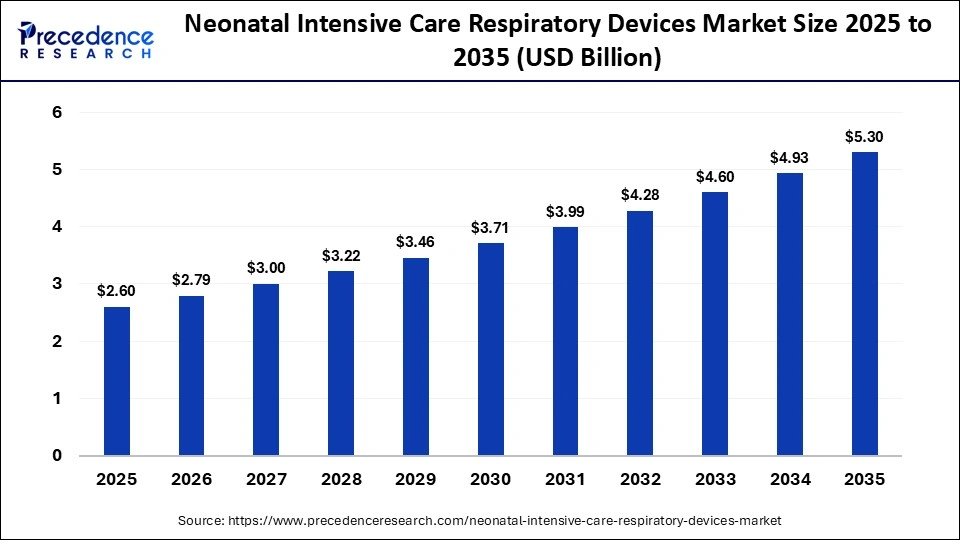
The global neonatal intensive care respiratory devices market size was calculated at USD 2.60 billion in 2025 and is predicted to increase from USD 2.79 billion in 2026 to approximately USD 5.30 billion by 2035, expanding at a CAGR of 7.38% from 2026 to 2035.This market is booming due to a surge in preterm birth rate, advanced technology, and a rise in demand for neonatal intensive care units (NICUs).
Key Takeaways
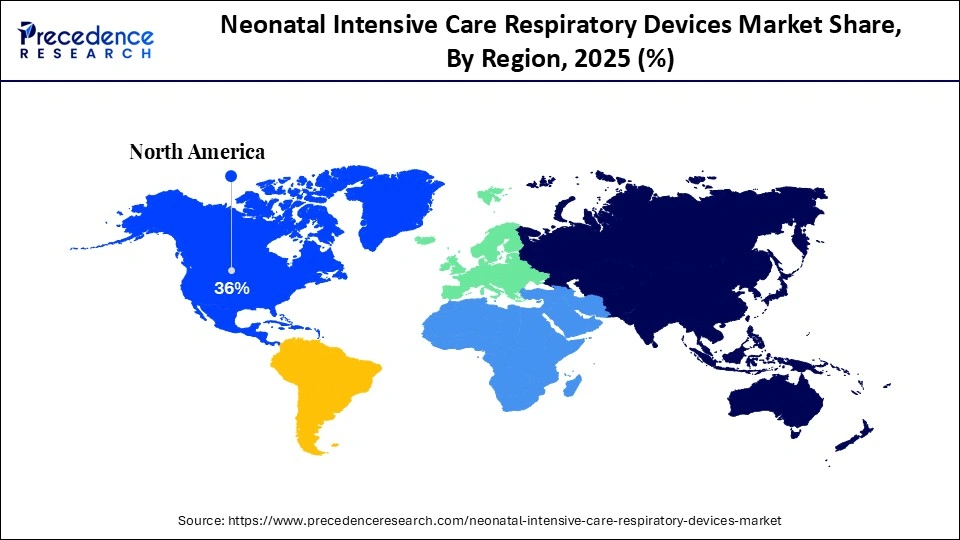
- North America dominated the neonatal intensive care respiratory devices market with largest share of 36% in 2025.
- Asia-Pacific is expected to expand with the highest CAGR during the forecast period.
- By product, the devices segment held the largest market share of 61% in 2025.
- By product, the accessories and consumables segment is expected to grow at the fastest CAGR between 2026 and 2035.
- By end-user, the NICU hospitals segment dominated the market in 2025.
- By end-user, the specialty clinics segment is expected to rise with the highest CAGR during the forecast period.
What is the Landscape of the Neonatal Intensive Care Respiratory Devices Market?
The neonatal intensive care respiratory devices industry focuses on managing respiratory distress in neonates and critically ill newborns, propelled by a rise in preterm births. The market growth is driven by a surge in respiratory distress syndrome cases, investments in neonatal care infrastructure, and the adoption of advanced technologies. This market is experiencing rapid growth because major healthcare and pharmaceutical companies focus on R&D for advanced, reliable, mobile, and effective respiratory care.
This market is pivoting towards user-friendly, minimally invasive ventilation methods that reduce risks to neonates. Enhanced focus on infant survival, paired with increased healthcare spending, has further boosted the market.
What is the Role of AI in the Neonatal Intensive Care Respiratory Devices Market?
AI is transforming the market by putting technology from being a reactive tool to a proactive smart system. It is done through predictive analytics that improves monitoring, automates ventilator settings, and enhances the diagnostic accuracy for neonates. This transition is mainly propelled by the need to minimize ventilator-induced lung injury and reduce chronic lung disease in premature infants. AI helps reduce false positive alarms in the NICU, allowing doctors to focus on more urgent cases. AI analyzes patient data to customize the treatment, improving treatment outcomes and minimizing long-term complications.
Despite all this potential, AI faces major obstacles, such as the high cost of AI devices limiting access. Furthermore, most AI tools are in the research stage of development. Advancements in AI-powered tools minimize workloads on overworked medical staff and improve the survival of neonates.
Neonatal Intensive Care Respiratory Devices Market Trends
- Rise of Non-Invasive Ventilation: Its expansion in the market is propelled by the need to minimize lung injuries in infants, the surge in preterm births, and superior clinical results compared to invasive methods.
- AI and Digital Integration: AI and digital tools are integrated into the device to enhance real-time monitoring and automate and customize the treatment care for neonates. This integration also enables earlier and more accurate detection of respiratory distress.
- Rising Preterm Births & RDS: Increase in neonatal respiratory distress syndrome due to premature births is growing the demand for sophisticated ventilators and oxygen delivery systems.
- Portability and Compact Designs: It is growing in this market due to the surge in incidence of preterm birth needing specialized care, the need for safe and easy in-hospital transport, and the shift towards home-based care, which increased the demand for compact and portable devices.
Market Scope
| Report Coverage | Details |
| Market Size in 2025 | USD 2.60 Billion |
| Market Size in 2026 | USD 2.79 Billion |
| Market Size by 2035 | USD 5.30 Billion |
| Market Growth Rate from 2026 to 2035 | CAGR of 7.38% |
| Dominating Region | North America |
| Fastest Growing Region | Asia Pacific |
| Base Year | 2025 |
| Forecast Period | 2026 to 2035 |
| Segments Covered | Product, End-User, and Region |
| Regions Covered | North America, Europe, Asia-Pacific, Latin America, and Middle East & Africa |
Segmental Insights
Product Insights
What Made the Devices Segment Lead the Neonatal Intensive Care Respiratory Devices Market?
The devices segment led the market in 2025, due to the crucial need for advanced, high-precision, technologically superior equipment and life-saving ventilation and oxygen therapy propelled by a surge in preterm births. Advanced equipment is essential for minimizing neonatal mortality and improving survival rates. A pivot towards accessible, non-invasive, user-friendly, and smart technology has further boosted this segment. A rise in demand for NICU equipment, digital transformation, and increased infrastructure expenditure contribute to the segment's growth.
The accessories and consumables segment is expected to witness the fastest growth in the market over the forecast period, due to an increase in the concentration of premature births needing specialized care, stringent infection control protocols requiring frequent single-use replacements of disposable items, and increased NICU admissions. This market is further driven by a rise in utilization of non-invasive respiratory support and a surge in demand for prolonged high-frequency respiratory support for infants suffering from respiratory distress. Technological advancements lead to innovations in user-friendly, personalized, and single-use accessories, augmenting the segment's growth.
End-User Insights
Which End-User Segment Dominated the Neonatal Intensive Care Respiratory Devices Market?
The NICU hospitals segment held a dominant revenue share of the market in 2025, as they are the main centralized hubs for treating high-risk, premature, and neonatal infants with serious medical conditions requiring advanced, specialized respiratory care. Their dominance is propelled by a surge in the premature birth rate, a rise in demand for advanced technology, and the need for consistent expert care.
The rise in high-risk pregnancy, aided by the combination of assisted reproductive technology and advanced maternal age, has raised the demand for advanced hospital infrastructure. Highly trained and skilled staff, often equipped with advanced technology, coupled with favorable reimbursement policies, have further boosted this segment.
The specialty clinics segment is expected to expand rapidly in the market in the coming years, due to a surge in preterm birth, a rise in the incidence of respiratory distress syndrome in neonates, and the need for advanced specialized neonatal care. This market is propelled by a surge in investment in high-acuity NICU infrastructure, advancement in non-invasive technology, and increased survival rates in infants. This expansion is further supported by heightened government focus on bettering newborn health outcomes, paired with increasing demand for specialized, dedicated, and high-standard neonatal care facilities.
Regional Analysis
North America Neonatal Intensive Care Respiratory Devices Market Size and Growth 2026 to 2035
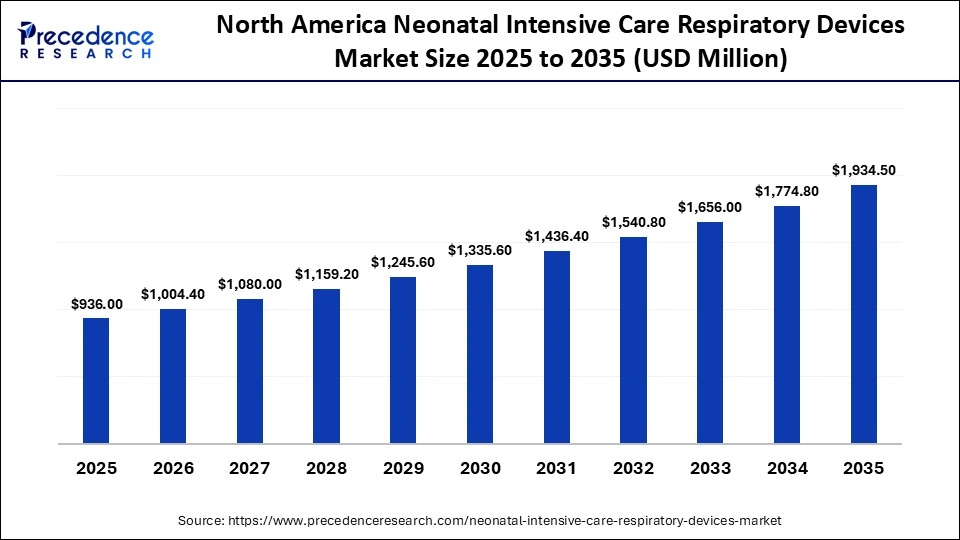
The North America neonatal intensive care respiratory devices market size is estimated at USD 936.00 million in 2025 and is projected to reach approximately USD 1,934.50 million by 2035, with a 7.53% CAGR from 2026 to 2035.
Why Did North America Dominate the Neonatal Intensive Care Respiratory Devices Market?
North America held a major revenue share of the market in 2025. It dominates this market due to a surge in the incidence of preterm birth, well-established healthcare infrastructure, an increase in healthcare expenditure, and rapid adoption of advanced technology. This region's dominance is further reinforced by favorable reimbursement policies, consistent product innovation, and robust NICU infrastructure. The presence of major companies in this region further accelerates the market growth. Massive investments from both the government and private sector in neonatal healthcare, coupled with heightened awareness of neonatal care, further boost the market.
U.S. Neonatal Intensive Care Respiratory Devices Market Size and Growth 2026 to 2035
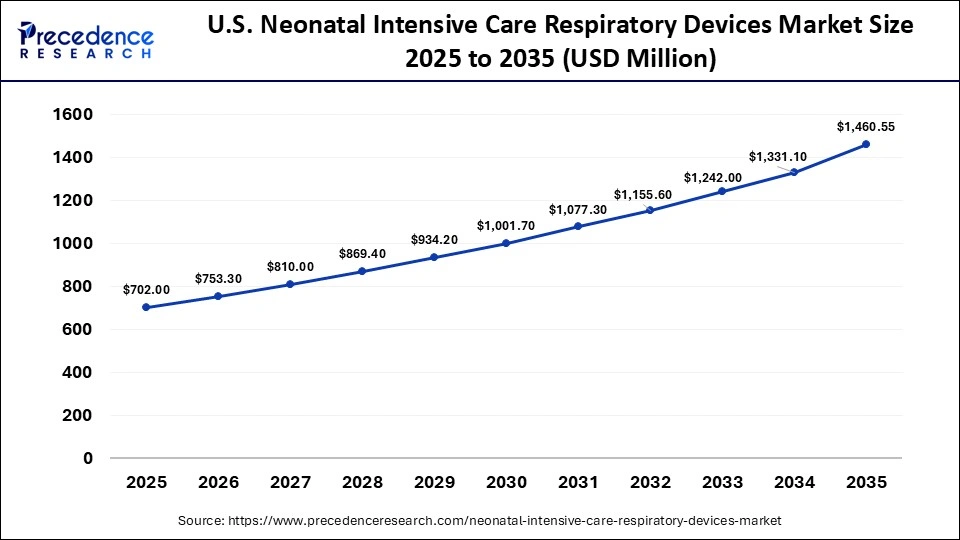
The U.S. neonatal intensive care respiratory devices market size is calculated at USD 702.00 million in 2025 and is expected to reach nearly USD 1,460.55 million in 2035, accelerating at a strong CAGR of 7.60% between 2026 and 2035.
U.S. Market Trends
The U.S. dominates this market in the North American region due to its high healthcare expenditure, well-established NICU infrastructure, and rapid adoption of AI-driven technologies favored by reimbursed policies. This market is driven by a rise in premature birth rate, notable R&D investments, the presence of major medical device manufacturing companies, and an increased focus on improving the infant survival rate. Improved focus on early intervention for neonatal respiratory disorder.
The U.S. is a center for major medical device companies, leading to massive product launches, FDA approvals, and technological advancements. Increasing rates of high-risk pregnancy, along with the use of assisted reproductive technologies, contribute to higher demand for specialized neonatal care, which further boosts the market.
Why is Asia-Pacific Growing in the Neonatal Intensive Care Respiratory Devices Market?
Asia-Pacific is expected to be the fastest-growing region in the foreseeable period, due to a rise in preterm births, rapidly expanding healthcare infrastructure, and a surge in investments in NICU facilities. This market is driven by an increase in demand for sophisticated respiratory devices, government policies to improve neonatal survival rates, heightened public awareness, and rapid adoption of technologies. A surge in healthcare expenditure by both the private and public sectors has led to the growth of specialized NICU units.
The increased incidence of respiratory issues in neonates has increased the need for advanced treatment. Growing awareness of neonatal care and accessibility to advanced devices has further boosted this market.
China Market Trends
China leads the market in the Asia-Pacific region, due to an increase in the concentration of preterm birth rates, an expanding hospital network, the rapid expansion of NICU infrastructure, and notable government funding in maternal and child health. The market-leading position is solidified by a massive aware demographic and an increase in the adoption of locally manufactured, advanced devices. A rise in the prevalence of respiratory disease among neonates increases the need for intensive respiratory care, fueling the market.
Will Europe Grow in the Neonatal Intensive Care Respiratory Devices Market?
Europe is expected to grow at a notable CAGR in the foreseeable future, due to a surge in premature birth rate, a mature healthcare ecosystem, robust R&D, and AI-powered technology to enhance infant survival. Key drivers of this market are robust regulatory standards, massive investment in NICU infrastructure, and the trend of home-based care. The preference towards non-invasive respiratory devices that minimize infection and complications is fueling the market demand. Significant R&D investments paired with the modernization of NICU facilities are bolstering the market. The presence of MedTech companies and specialized neonatal care centers drives innovation and market expansion.
Germany Market Trends
Germany held the largest share in Europe due to advanced healthcare infrastructure, a high preterm rate, the presence of major companies, and continuous investment in advanced technologies. This market is driven by an increase in demand for specialized care, robust manufacturing expertise, and a focus on combining advanced, smart, and non-invasive solutions.
Massive investments in neonatal care standards, combined with a focus on improving neonates' survival, drives the adoption of advanced technology. Germany is leading the way in integrating AI and sophisticated technologies into neonatal care. Robust, stable, and favorable reimbursement models further boost the market in this region.
Neonatal Intensive Care Respiratory Devices Market Value Chain Analysis
- R&D
It hinges on developing advanced, non-invasive, and cost-efficient solutions to treat respiratory disorders in infants.
Key Players: Drägerwerk AG & Co. KGaA, Fisher & Paykel Healthcare, and GE HealthCare
- Clinical Trials and Regulatory Approvals
It focuses on optimizing constant innovation with stringent adherence to regulatory standards.
Key Players: Fisher & Paykel Healthcare, Drägerwerk AG & Co. KGaA, and GE HealthCare
- Formulation and Final Dosage Preparation
It revolves around developing specialized, sterile, and age-appropriate formulations.
Key Players: Fisher & Paykel Healthcare, Drägerwerk AG & Co. KGaA, and Medtronic
- Patient Support and Services
It refers to providing technical and financial assistance to patients, enabling end-to-end services.
Neonatal Intensive Care Respiratory Devices Market Companies
- Koninklijke Philips N.V.
- GE HealthCare
- Drägerwerk AG & Co. KGaA
- Medtronic plc
- Fisher & Paykel Healthcare Limited
- Hamilton Medical AG
- Getinge AB
- Vyaire Medical
- Masimo Corporation
- Nihon Kohden Corporation
- Atom Medical Corporation
- Becton, Dickinson and Company (BD)
- Inspiration Healthcare Group plc
- Smiths Medical (Smiths Group plc)
- ResMed Inc.
Recent Developments
- In January 2025, Gleneagles Hospitals in Mumbai launched advanced NICU and obstetrics services for maternal and newborn care. These facilities aim to offer enhanced healthcare for neonates and expectant mothers, combining technology and patient-focused care (Source: https://www.expresshealthcare.in)
- In April 2025, AngelEye Health launched AIVision, a platform that integrates AI and computer vision into the NICU and pediatric unit setting. The launch aims to deliver proactive, data-driven insights that empower clinical teams and improve care delivery, transforming the pediatric inpatient unit into an intelligent, connected environment. (Source: https://finance.yahoo.com)
- In June 2025, Getinge announced that it expanded its Servo-c ventilator offerings with a neonatal option to support all patient categories. The extension means the company offers a universal respiratory care solution for all. It now ranges from fragile, premature newborns to fully grown adults. (Source: https://www.massdevice.com)
Segments Covered in the Report
By Product
- Devices
- Accessories
- Consumables
By End-User
- NICU Hospitals
- Specialty Clinics
- Nursing Homes
By Region
- North America
- Europe
- Asia-Pacific
- Latin America
- Middle East & Africa
For inquiries regarding discounts, bulk purchases, or customization requests, please contact us at sales@precedenceresearch.com
Frequently Asked Questions





Ask For Sample
No cookie-cutter, only authentic analysis – take the 1st step to become a Precedence Research client
 Get a Sample




 sales@precedenceresearch.com
 Schedule a Meeting
