



Scottish Startup Aurora Avionics Enters Europe’s PHOENIX Reusable Space Mission
Published: 02 Apr 2026
Author: Gautam mahajan



Scottish startup Aurora Avionics joined Europe’s PHOENIX reusable spacecraft programme. As a part of this program, Edinburgh-based startup Aurora Avionics will provide onboard data acquisition systems for the PHOENIX 2.1 mission, developed by European re-entry logistics company ATMOS Space Cargo. The hardware will collect critical engineering data during the spacecraft’s journey to orbit and back later this year.
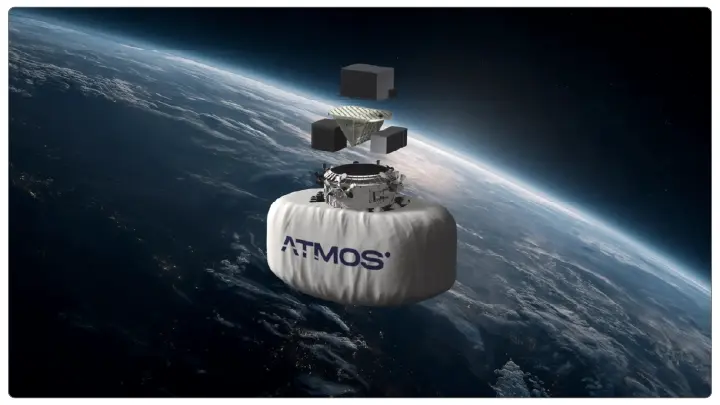
Founded in 2023, Aurora is leveraging the mission to enter the growing market for reusable spacecraft and orbital logistics in Low Earth Orbit (LEO). For Europe, the program also supports efforts to build independent payload return capabilities as the International Space Station (ISS) nears retirement.
According to Precedence Research, the Spacecraft Avionics Market was valued at USD 4.48 billion in 2025 and is projected to grow from USD 4.84 billion in 2026 to approximately USD 9.76 billion by 2035, expanding at a CAGR of 8.10% from 2026 to 2035. The market is driven by the rising number of satellite launches, expanding commercial space ventures, and increased demand for intelligent, lightweight, and durable onboard systems.
Reusable Logistics and Critical Flight Telemetry
PHOENIX is a reusable orbital transfer and return vehicle that autonomously delivers payloads to orbit and brings cargo safely back to Earth, supporting microgravity manufacturing, scientific research, and orbital logistics without relying on the ISS. In the 2026 PHOENIX 2.1 mission, Aurora’s hardware will monitor temperature, pressure, and structural strain to validate the spacecraft’s design.
“These sensors deliver critical flight telemetry,” said Aurora Avionics CEO Oren Smith-Carpenter. “Ground analysis of this data guides future upgrades to onboard systems and structures.”
Data-Driven Reuse and Europe’s Payload Independence
For reusable spacecraft, flight data is as valuable as the mission itself. Aurora’s data acquisition units remain active from launch through vacuum exposure and the intense heating, vibration, and structural stress of re-entry, requiring highly reliable, radiation-tolerant electronics. “Our earlier work focused largely on avionics for launch vehicles,” Smith-Carpenter said. “PHOENIX missions keep hardware in space for weeks, so components must be qualified differently and upgraded without redesigning the entire architecture.” The PHOENIX program highlights Europe’s drive to build its own payload-return capability as the ISS nears retirement. Oren Smith-Carpenter argues Europe can no longer rely on external actors, while venture-backed ATMOS Space Cargo develops reusable cargo vehicles closely watched across the European space ecosystem.
Aurora’s Orbital Pivot
For Aurora Avionics, the PHOENIX partnership marks a shift in its business trajectory. Founded to tackle the cost and complexity of bespoke avionics, Aurora offers modular, stackable units that let European space companies focus on core technologies, standardize control systems, and cut development time and expense. Initially serving launch vehicle providers, Aurora is now moving into satellites and in-orbit logistics with ATMOS Space Cargo. Oren Smith-Carpenter says modular avionics standardize spacecraft electronics, helping adapt to changing missions and positioning Aurora for Europe’s emerging orbital logistics industry.
A recent report by Precedence Research highlights that the Spacecraft Avionics Market is benefiting from the rising adoption of next-gen technologies.