



JetCool Introduces Liquid-Cooled Dell PowerEdge XE7745 Server for High-Density AI Deployments
Published: 06 Jul 2026
Author: Gautam mahajan



The Dell PowerEdge XE7745 server was launched by JetCool, a Flex company. They offer a liquid-cooled version, increasing enterprise choices for high-density AI infrastructure. The platform is now in operation with cutting-edge direct-to-chip liquid cooling, with deployment, maintenance, and a single warranty offering. The offering aims to enhance the ease of adopting liquid-cooled computing, augmenting the data center liquid cooling manifolds market. This concurrently lowers the complexity of managing different types of high-power and AI workloads.
This announcement is indicative of the industry's heightened drive to help solve a thermal challenge. These are posed by next-generation processors and compute-intensive GPUs in the industry. The comprehensive solution includes JetCool's liquid-cooled processors and a proprietary liquid-cooling infrastructure. Allowing customers to implement a full liquid-cooled system without having to involve several technology vendors.
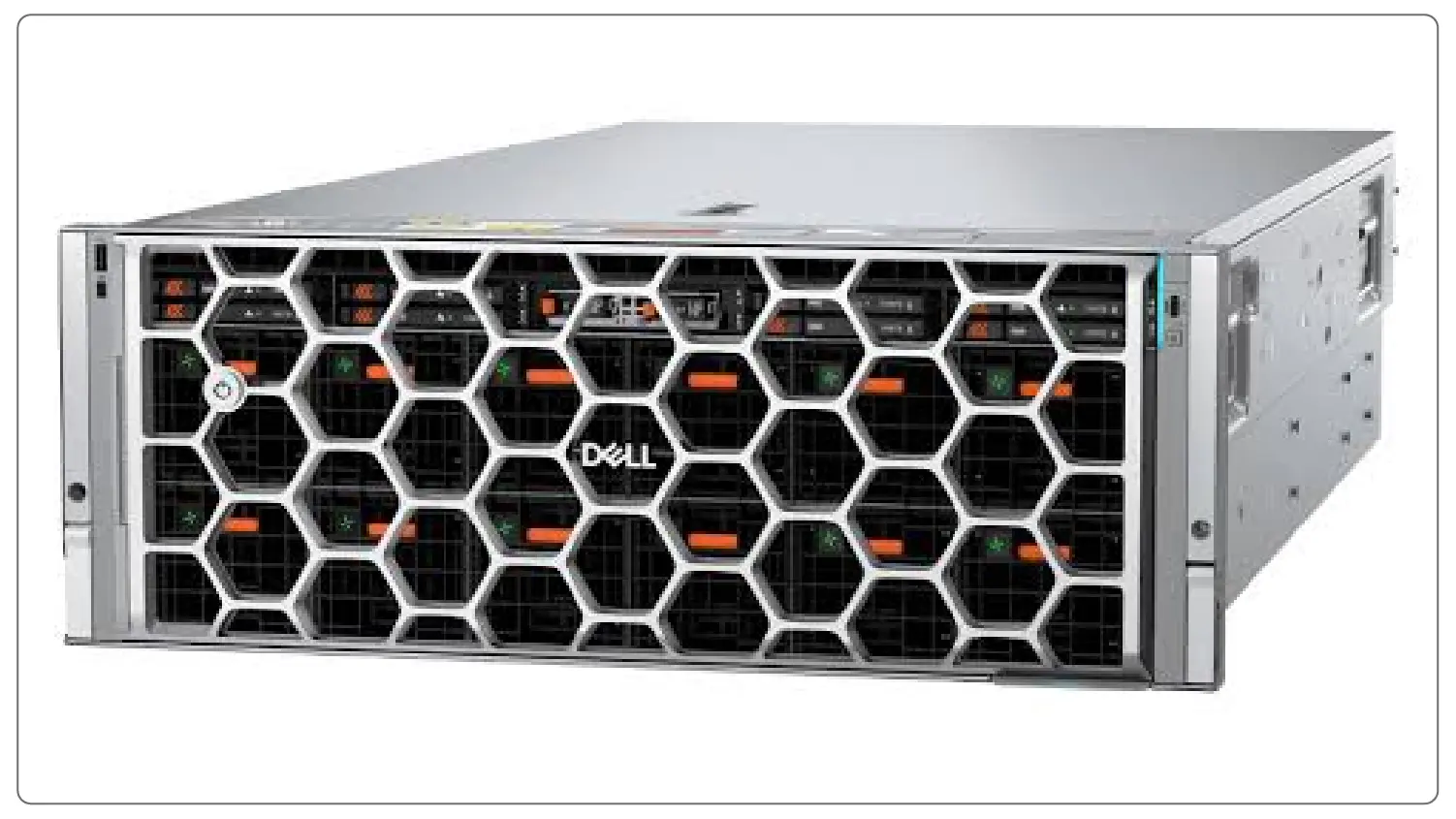
Integrated Liquid Cooling Enhances AI Infrastructure Performance
The liquid-cooled Dell PowerEdge XE7745 is based on a server system that is already known for and trusted to power enterprise compute workloads. It has been designed for artificial intelligence, high-performance computing, and simulation workloads. These data processing workloads with GPUs that demands long-time computing performance. It is compatible with up to 25th-generation EPYC processors from Intel and up to 8 NVIDIA RTX PRO 6000 Blackwell GPUs. Further, they still offer a high amount of computational power in a small server chassis.
Since these heavy thermal load requirements are a challenge. JetCool has embedded its Fire Blade direct-to-chip supercooling liquid plate into the server structure. Instead of depending exclusively on normal air, the cooling system takes heat directly out of graphics processors, where heat is being generated. This allows for continuous operation to be conducted during a lengthy computing load without changing component temperatures.
Temperatures aren't the only thing improved. According to JetCool, the processors can be cooled by about seven percent more than in a normal air-cooled design. The temperatures of the graphics processors can drop by almost 11 percent. They enable the effective operation of graphics processors over long periods of intensive calculation. The liquid-cooled platform also provides an additional benefit in the form of energy efficiency.
According to Precedence Research, the global data center Liquid Cooling Manifolds market size was estimated at USD 1.05 billion in 2025 and is predicted to increase from USD 1.38 billion in 2026 to approximately USD 15.99 billion by 2035, expanding at a CAGR of 31.30% from 2026 to 2035. The market is driven by rising adoption of direct liquid cooling technologies and the increasing demand for energy-efficient thermal management solutions that support high-density computing infrastructure.
Complete Infrastructure Package Simplifies Enterprise Deployment
JetCool has thoughtfully engineered the platform so as to make deployment even easier, across the enterprise's existing data center environments. The liquid-cooled system employs low-flow operation. This shows that organizations can upgrade their legacy servers without major changes to their facility water infrastructure. The compatibility makes installation easier and enables customers to upgrade their computing resources with existing cooling loops.
The company offers full rack-level infrastructure or server platform. Customers are provided with physical racks, coolant distribution units, manifolds, mounting hardware, and fluid distribution equipment. Furthermore, when providing a fully built and factory-tested solution, the installation uncertainty is reduced, and deployment timelines are shortened in enterprise facilities.
Growing AI Compute Demands Advanced Cooling Adoption
The launch of the liquid-cooled Dell PowerEdge XE7745 is part of the trend in the entirety of the AI infrastructure industry. Demand for high-density computing continues to grow at a rapid rate. Due to the emergence of large language models, generative AI platforms, scientific computing applications, and more sophisticated analytics applications.
The thermal output from modern processors and graphics accelerators is much higher than that of previous-generation computing. They are facilitating the demand for increasingly sophisticated cooling technologies in the coming years.