



KAIST Introduces Self-Wearing Robotic Clothing to Improve Independent Dressing
Published: 03 Aug 2026
Author: Gautam mahajan



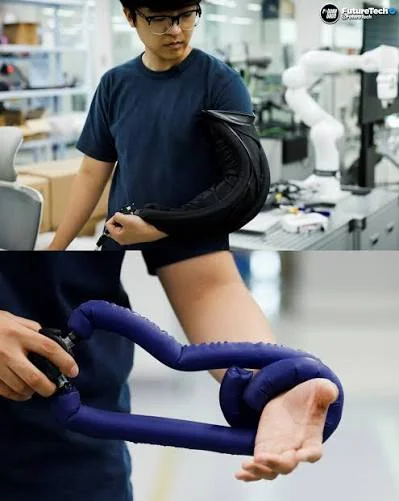
In July 2026, the Korea Advanced Institute of Science and Technology (KAIST) unveiled an innovative self-wearing robotic clothing system designed to make dressing easier for individuals who experience mobility challenges. By integrating lightweight soft robotic components into regular clothes, the technique enables clothing to help wearers wear it with less physical strain. The system, which was created utilizing flexible air-powered actuators, removes the need for large wearable robotic devices by carefully guiding the wearers' arms into sleeves through controlled movements. The goal of this innovation is to increase independence for professionals who frequently wear specialized protective clothes, elderly persons with impairments, and rehabilitation patients.
Compared to traditional assistance robots, the newly created technology aims to create a more comfortable and natural dressing experience. The garment uses soft inflatable mechanisms that are lightweight and flexible when not in use as opposed to stiff mechanical structures. These inbuilt actuators assist users in positioning the garments appropriately while preserving comfort and range of motion by inflating in a precisely regulated sequence once actuated. The research team stressed that the system was intended to operate similarly to regular clothing, offering robotic help solely during the dressing procedure without compromising wearability on a daily basis.
Beyond personal healthcare, a number of sectors could profit from KAIST’s innovation; the device can help patients recovering from surgery, neurological conditions, or age-related mobility impairments in hospitals, rehabilitation centers, and senior care facilities. Patients may be able to carry out everyday tasks more independently, while caregivers may have work to do because dressing requires less physical effort. By motivating patients to engage more actively in regular self-care chores, the technology may help enhance rehabilitation outcomes.
Additionally, the robotic apparel has prospective uses in industrial settings where workers are required to wear protective gear on a regular basis. Workers in the manufacturing of semiconductors, pharmaceuticals, healthcare, firefighting, and hazardous materials frequently spend a significant amount of time donning specialized protective gear. Self-wearing apparel technology can streamline this procedure, cutting down on preparation time while enhancing worker comfort and productivity. Intelligent wearable devices like these could become more helpful in a variety of industries as long as workplace safety and productivity remain top priorities.
The system's capacity to provide robotic help without sacrificing user comfort is one of its main benefits. The apparel maintains the flexibility and appearance of traditional clothes because the soft actuators stay inactive during regular use. Users can move freely throughout the day because the robotic feature only activates when dressing assistance is needed. One of the main drawbacks of conventional wearable robotic systems, which are sometimes bulky, costly, and inappropriate for continuous daily use, is addressed by this design.
The research's creativity in wearable robots has won its praise on a global scale. At the IEEE International Conference on Robots and Automation 2026, the invention won the Best Paper Award, demonstrating its potential to revolutionize wearable robots and assistive healthcare. Growing interest in soft robotic technologies that blend intelligent automation with useful, user-friendly designs is reflected in the recognition that innovations like KAIST's self-wearing robotic garments are anticipated to play a bigger part in promoting independent living and improving quality of life as the world's population ages and the need for assistive technologies increases.
Impact on the ICT Industry
According to Precedence Research, the ICT sector is expanding quickly due to rising investments in wearable technology, robotic smart sensors, and artificial intelligence. The launch of KAIST's self-wearing robotic apparel is an example of how robots, intelligent software, and cutting-edge materials are increasingly coming together to provide useful solutions that increase automation and accessibility. These developments are anticipated to hasten the uptake of smart wearables in applications related to healthcare, industrial safety, and rehabilitation, opening up new business prospects for ICT firms providing active technologies powered by AI
The development also emphasizes how crucial intelligent human machine interaction is becoming to the ICT environment. The demand for high-performance processors, embedded communication modules, edge computing, and real-time data analytics is expected to increase as research institutes and tech businesses continue to incorporate AI, IoT, cloud computing, and robots into wearable solutions. These advancements are anticipated to boost innovation in the worldwide ICT sector and promote cooperation between robotics firms, digital technology developers, and healthcare providers.
Impact on the Wearable Technology Market
According to Precedence Research, manufacturers of its wearable technology are increasingly concentrating on smart gadgets that offer proactive support instead of just tracking fitness and health. Soft robotics and smart textiles can improve comfort and mobility while increasing user independence, as demonstrated by KAIST's self-wearing robotic apparel. It is projected that the commercialization of related technologies will stimulate investment in next-generation smart clothing and connected healthcare solutions as well as spur innovation in wearable AI technology.
The development of multifunctional wearables that integrate robotics, artificial intelligence, and flexible electronic components is anticipated to accelerate due to the growing consumer demand for tailored healthcare and assistive solutions. Businesses are spending more money on smart textiles and wearable technology that may provide adaptive support for health monitoring and real-time assistance. These developments are expected to broaden the use of wearable technology beyond fitness to include medical aid, industrial safety, rehabilitation, and senior care, opening up new growth prospects for the worldwide wearable technology market.
Impact on the Artificial Intelligence Market
The global artificial intelligence (AI) market size was USD 757.58 billion in 2025, calculated at USD 900.00 billion in 2026, and is expected to reach around USD 4,216.29 billion by 2035, expanding at a CAGR of 18.73% from 2026 to 2035.
According to Precedence Research, the development of intelligent assistive solutions is being propelled by the growing use of artificial intelligence in wearable technology, robotics, and healthcare. AI can be combined with soft robotics and intelligent control systems to increase user autonomy and automate routine chores, as demonstrated by KAIST's self-wearing robotic apparel. These developments: We anticipate that these developments will boost the use of AI-driven wearable technology to increase the use of wearable technology driven by AI in healthcare, rehabilitation, and senior care.
Organizations are investing in AI algorithms that can enable adaptive mobility, real-time decision-making, and personalized user support due to the increasing demand for intelligent assistive solutions. Similar robotic wearables are expected to increase accessibility, improve medical care, and open up new growth prospects for the global artificial intelligence market as AI develops.
Impact on Robotics Market
The global Internet of Things (IoT) market size was USD 76.97 billion in 2025, estimated at USD 91.42 billion in 2026, and is anticipated to reach around USD 422.38 billion by 2035, expanding at a CAGR of 18.56% from 2025 to 2035.
According to Precedence Research, innovation in the Internet of Things (IoT) market is rapid. Precedence Research reports that the rapid growth of smart technologies and connected devices is driving innovation in the Internet of Things (IoT) market. by the quick growth of smart technologies and linked devices. For assisted living and healthcare monitoring, intelligent wearables with sensors and communication capabilities are becoming more and more crucial. To provide a more effective and customized user experience, wearable technology, IoT, and intelligent automation are increasingly coming together, as demonstrated by KAIST robotic apparel.
Wearable assistive technology is expected to have advanced connectivity options for remote monitoring and tracking performance as connected healthcare systems expand. These developments of intelligent linked devices and increased IoT usage in industrial safety, healthcare, and rehabilitation applications.