



Libya Moves Toward Building Domestic Liver Transplantation Capabilities
Published: 11 Aug 2026
Author: Deepa Pandey



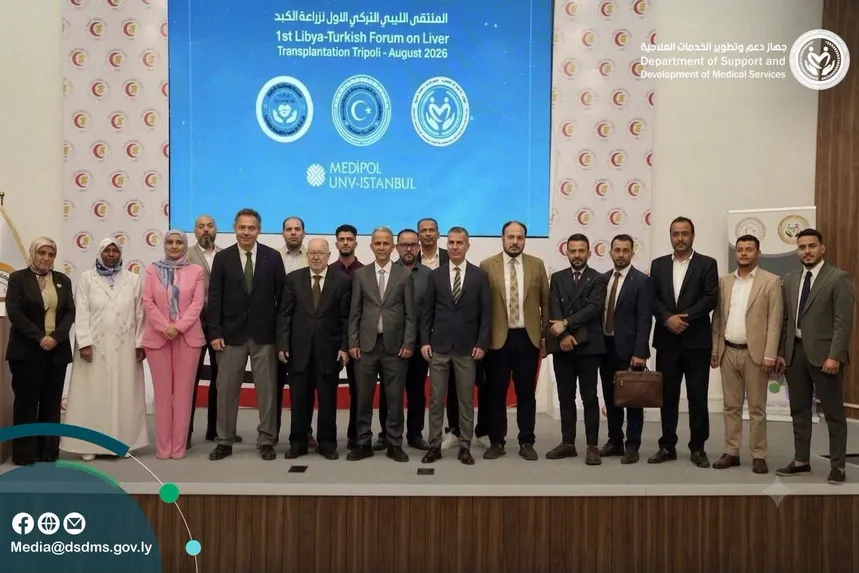
On 9 August 2026, Libya launched cutting-edge liver transplant techniques in the nation and created a long-term national program. Libya initiated a new liver transplant project in collaboration with Turkish medical experts. The concept was presented at the Libyan Turkish Liver Transplant Forum in Tripoli, where Turkish experts and Libyan medical officials talked about the expansion of regional transplant services. The project is being supported by a medical delegation from Medipol Hospital, where Turkish specialists collaborate with Libyan physicians to help with transplant procedures and share their clinical expertise. The initiative is being created in accordance with prime ministerial decision No. 213 of 2026, which includes steps to improve the identification of genetic illness in children and localize liver and stem cell transplants. The initiative involves the National Authority of Organ Tissue and Cell Transplantation and the Department of Support and Development of Medical Services.
Instead of relying on foreign treatment for complicated transplant cases, the program is intended to concentrate on strengthening Libya's internal medical capabilities. As part of the program, Turkish experts will offer technical advice and assistance while gaining training and hands-on experience in liver transplantation. The goal of the knowledge transfer strategy is to assist regional medical teams in progressively gaining the proficiency required to perform transplant operations on their own. Establishing these capabilities could lay out the groundwork for a long-term national transplantation service and increase patients with severe liver disorders' access to cutting-edge treatment.
Impact on the Healthcare Industry
Liver transplantation necessitates integrated skills across surgery, hepatology, anesthesia, intensive care, laboratory medicine, and postoperative surveillance. The establishment of a program might greatly increase Libya's advanced healthcare capabilities. By establishing these services locally, people with severe liver disease may be able to receive complicated therapy domestically rather than having to travel abroad for care. Additionally, it might motivate hospitals and healthcare authorities to modernize intensive care units. Surgery centers, diagnostic labs, and infrastructure supporting transplants by fusing the expertise of seasoned, transplant-specialized healthcare systems
For the long-term growth of Libya's healthcare workforce, training is especially crucial. Highly skilled teams that can manage patients prior to surgery, during transplantation, and throughout long-term recovery are necessary for liver transplantation. The initiative can help develop practical competence in a variety of medical specialties by enabling Libyan doctors to collaborate directly with Turkish specialists. The number of transplant surgeons' hepatology specialists, critical care workers, laboratory specialists, and transplant coordinators in the nation may eventually rise as a result. Additionally, the development may increase demand for specialized medical equipment technologies for organ preservation and medications needed for transplant recipients.
The project might help localize complete healthcare services even more. Patients may someday be able to receive therapy and follow-up care in Libya if they presently need to fly overseas for specialized transplantation because patients can stay connected to the same healthcare system for evaluation, surgery, and post-transplant monitoring. Local treatment may facilitate continuity of care. Instead of depending just on short-term medical missions, the initiative emphasis on developing a sustainable program also implies an attempt to build long-term institutional capacity.
Impact on the Liver Transplantation Market
The global transplant diagnostics market size accounted for USD 4.90 billion in 2025 and is predicted to increase from USD 5.22 billion in 2026 to approximately USD 9.24 billion by 2035, expanding at a CAGR of 6.55% from 2026 to 2035.
According to Precedence Research, the increasing number of organ transplant surgeries and the growing demand for precise testing both before and after transplantation are driving the transplant diagnostics market. As liver-related illnesses and the need for transplants rise, the liver market is anticipated to grow healthily over the projected period. The market is strongly related to Libya's recent initiatives, a liver transplant program, since the establishment of domestic transplant services will necessitate diagnostic testing for patient evaluations, donor-recipient assessment, and postoperative monitoring. Libya may be able to enhance the clinical and diagnostic skills needed to support its developing transplant infrastructure through the collaboration with Turkish experts.
Demand for specialized lab equipment, testing reagents, and transplant monitoring technology may rise as the nation's capacity for liver transplantation expands. Libya may create more integrated transplant care systems and enhance its capacity to manage patients during the transplantation procedure by bolstering diagnostic services in addition to surgical facilities.
Impact on the PCR-Based Transplant Diagnostics Market
The global PCR-based transplant diagnostics market size was calculated at USD 658.19 million in 2025 and is predicted to increase from USD 703.8 million in 2026 to approximately USD 1,286.31 million by 2035, expanding at a CAGR of 6.93% from 2026 to 2035.
According to Precedence Research, PCR-based diagnostics are being utilized more often for compatibility evaluation of infection identification, graft-related complication monitoring, and post-transplant patient care. This market is growing due to the rise in transplant procedures and the demand for quick and accurate molecular testing. Since patients undergoing transplantation require comprehensive testing prior to treatment and ongoing monitoring following. Libya's intention to build a local liver transplant program may result in new demand for modern molecular diagnostics. The exchange of knowledge required to create these auxiliary diagnostic capacities may also be facilitated by the cooperation with Turkish medical experts.
Due to the growth of transplant services, it may stimulate investment in PCR platforms, molecular testing apparatus, and specialized laboratory skills in Libya. The nation's entire transplant infrastructure would be strengthened, and more efficient patient monitoring before and after procedures would be supported by the development of these diagnostic capabilities in conjunction with liver transplantation.
About Medipol Hospital
Through a group of Turkish medical experts, Medipol Hospital, which is a component of Turkey's Medipol healthcare network, is taking part in Libya's liver transplant program. The partnership is intended to assist Libya in building the infrastructure and skill required to carry out liver transplant operations domestically. It is anticipated that Turkish experts will collaborate with Libya's medical professionals, offer helpful advice, and help train local medical teams.
The agreement also emphasizes how crucial international alliances are to increase access to highly skilled medical care. Working with seasoned healthcare organizations helps speed up staff training, knowledge exchange, and the adoption of proven clinical practices in nations that are developing complicated procedures. The Turkish alliance aims to bolster Libya's sophisticated healthcare skills and facilitate the country's shift to locally supplied liver transplants.
In the end the project might help Libya develop a transplantation environment that is sustainable. The nation may be in a better position to handle complicated liver disease cases domestically and lessen reliance on foreign treatment as local experts gain experience and support infrastructure advances. Additionally, the program may provide groundwork for future advancements in advanced medical services and more specialized transplants.