



Makita Expands 40VMax XGT Platform with New L-Class Industrial Vacuum Cleaner
Published: 17 Apr 2026
Author: Laxminarayan



Makita launched a new L-Class vacuum and dust extractor that is likely to be utilized during site clean-up and safe low-hazard dust jobs. The cordless is packaged as an alternative to an on-site dust extraction product with site vacuum functions, automatic mode, and battery powered versatility in a small form to win over professional customers. It offers a peak sealed suction of 15 kilopascals and a maximum volume of the airflow up to 2.0 cubic metres per minute, with further enhanced performance over the previous 18 V platforms without enlargement.
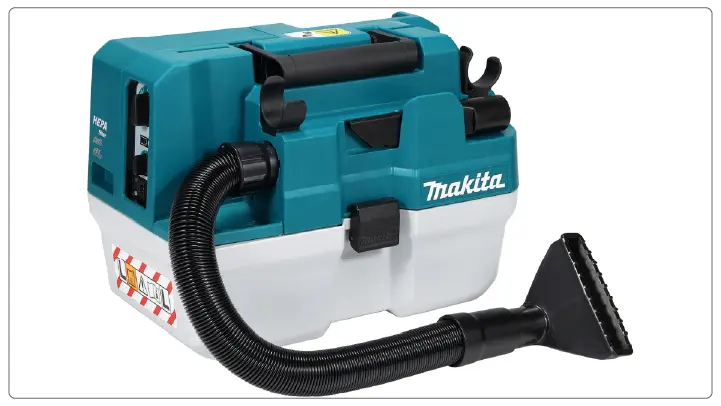
Designed for Site Use and Dust Control
As an L-Class dust extractor, it can be used in the works, which generate lower hazard dust, e.g., cutting softwood and gypsum plasterboard or sanding. It advertises the Auto-Start Wireless System of Makita, which is linked to Bluetooth; this will assist in connecting the compatible tools.
The motor has a brushless design, fitted with a motor aiming at enhancing energy efficiency and increasing the maximum run time of the unit as opposed to a traditional brushed motor. The run time is 22-120 minutes with a 5.0 Ah battery, and can be 8.0 Ah with high power settings, and can accept higher-capacity batteries of 8.0 Ah to run longer.
According to Precedence Research, the Industrial Vacuum Cleaner Market size was calculated at USD 2.80 billion in 2025 and is predicted to increase from USD 3.00 billion in 2026 to approximately USD 5.56 billion by 2035, expanding at a CAGR of 7.10% from 2026 to 2035, driven by growing demand for effective, convenient, and acceptable dust management solutions.
Industry Impact and Outlook
The company incorporates higher power delivery, wireless connection, and filtration in its smooth-running device, thus satisfying the increased demand of the current world, where effective, flexible, and compliant dust management systems are all needed in construction and industrial environments. The driving force of this evolution articulates a broader change in the industry, as a move towards the adoption of battery-operated tools, which entails a higher level of portability and dependence on hard-wired systems.