



NVIDIA Introduces Vera Rubin Platform to Power the Next Generation of AI Computing
Published: 17 Jul 2026
Author: Gautam mahajan



In March 2026, NVIDIA unveiled it. To meet the increasing needs of sophisticated AI models and intelligent autonomous systems, NVIDIA launched the Vera Rubin Platform, a next-generation artificial intelligence computing platform. The platform is intended to give businesses, cloud academic institutions, and AI developers an integrated computing architecture that can speed up all phases of AI development from reasoning and real-time inference to model training and fine-tuning. NVIDIA seeks to provide a single infrastructure that provides increased computational performance, greater scalability, and enhanced efficiency for enterprise AI workloads as businesses rapidly implement large and more complex AI models. The release is another important step in NVIDIA's plan to provide the computer infrastructure needed for artificial intelligence in the future.
The Vera Rubin Platform is an AI infrastructure solution that integrates several recently discovered technologies. The platform incorporates sophisticated processors, graphics processing units (GPUs), networking technologies, data processing units, and high-speed interconnects that cooperate smoothly rather than depending on several separate hardware components. Organizations can implement AI infrastructure more effectively thanks to this unified design, which also lowers system complexity and enhances resource usage in large-scale computer settings.
Supporting the development of agentic AI, a new generation of artificial intelligence that can autonomously plan, reason, make decisions, and finish challenging tasks with little human oversight, is one of the platforms' main goals. Because these AI systems continuously process vast amounts of data while carrying out numerous reasoning stages before producing solutions, they require far more computer resources than classic AI models. To satisfy these increasing computational demands, NVIDIA created the Vera Rubin Platform, which offers enhanced memory performance, increased processing capacity, and quicker communication between computer components.
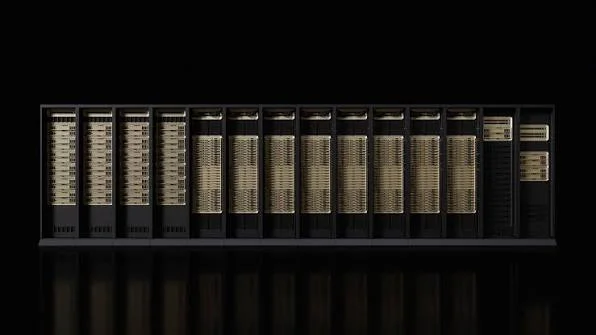
Every phase of the AI development lifecycle is supported by the platform. Engineering the infrastructure may be used by organizations to execute difficult reasoning workloads, train foundation models using large datasets, optimize pre-existing AI models using post-training methodologies, and implement real-time AI applications for enterprise use. Because of this flexibility, companies can save operating costs and increase overall efficiency by using a single infrastructure platform for numerous AI workloads rather than maintaining separate computing environments for different stages of development.
The Vera Rubin Platform's capacity to power massive AI factories is another significant aspect. Large volumes of significant aspects. Large volumes of scientific and business data are continuously processed into usable intelligence by these specialized computing systems. AI factories allow businesses to support thousands of users and applications at once while creating ever more powerful AI models. As the need for intelligent automation and AI-powered services grows, NVIDIA thinks that these AI-driven computing environments will become an essential component of future digital businesses.
The platform uses cutting-edge networking technologies that greatly speed up communication between processors, GPS storage systems, and AI applications to enhance system performance. Faster networking enables businesses to effectively deploy AI infrastructure over thousands of interconnected processing nodes while reducing latency during model training and inference. Businesses developing massive language models, multimodal AI systems, digital twins, robotics applications, and scientific simulations that necessitate constant data sharing across remote computing environments may find these enhancements very beneficial.
Additionally, the Vera Rubin Platform focuses on enhancing real-time AI inference, allowing enterprises to implement AI systems that handle increasingly complicated workloads and provide faster replies. Low latency inference is becoming more necessary as companies deploy AI-powered assistants, enterprise search, cybersecurity, customer service automation, and intelligent decision-making systems. Even in large-scale AI deployments, NVIDIA's integrated computing architecture is built to provide reliable performance and excellent efficiency.
Healthcare, financial services, manufacturing, telecommunication, automotive, life sciences, energy, and scientific research are just a few of the industries in which the platforms find extensive use. Using cutting-edge AI technology, businesses may use the platform to improve engineering simulations, expedite product development, automate corporate processes, bolster cybersecurity, optimize supply chains, and improve consumer experience. Businesses can also increase AI capabilities as operational needs change thanks to its salable architecture.
NVIDIA continues to solidify its position as a top supplier of AI computing infrastructure with the launch of the Vera Rubin Platform. Demand for integrated platforms that can handle training, reasoning, and inference within a single architecture is anticipated to increase as businesses move from experimental AI initiatives to production-scale implementation. The Vera Rubin Platform is anticipated to play a significant role in assisting the upcoming generation of artificial intelligence innovation across sectors by offering improved performance, increased scalability, and enterprise-ready features.
Impact on the Information and Communication Technology (ICT) Market
According to precedence research, the ICT industry is rapidly implementing cutting-edge AI infrastructure to enable cloud computing, enterprise automation, and next-generation digital applications. The Vere Rubin Platform from NVIDIA is a response to the growing need for high-performance AI systems that can handle increasingly complicated workloads with increased scalability and efficiency. The platform is anticipated to assist technology providers in creating more potent AI infrastructure that facilitates quicker innovation and better digital transformation by fusing cutting-edge CPUs, GPUs, networking technologies, and intelligent computing into a single architecture.
Scalable computing infrastructure is becoming increasingly necessary as businesses continue to include generative AI, intelligent software agents, and data-intensive applications in their operations. Organizations may expedite the deployment of AI while enhancing system performance, lowering operational complexity and maximizing resource usage using the Vera Rubin Platform. These developments are expected to stimulate additional investments in cloud infrastructure, enterprise computing solutions, and AI-ready data centers supporting the long-term expansion of the global ICT market.
Impact on the Artificial Intelligence Infrastructure Market
The global artificial intelligence (AI) infrastructure market size accounted for USD 72.02 billion in 2025 and is predicted to increase from USD 91.21 billion in 2026 to approximately USD 518.26 billion by 2035, expanding at a CAGR of 21.82% from 2026 to 2035.
According to Precedence Research, the artificial intelligence infrastructure market is witnessing rapid expansion as companies make investments in cutting-edge computer systems that can handle ever more complex AI models. With a single computing environment, NVIDIA's Vera Rubin Platform offers a highly integrated infrastructure that speeds up AI model training, post-training optimization, reasoning, and real-time inference. Organizations may improve compute efficiency and scalability while lowering deployment complexity with this integrated approach.
Additionally, the platform facilitates the creation of AI factories that can generate useful business intelligence from massive amounts of company data. The demand for enterprise AI infrastructure is anticipated to increase significantly as businesses continue to grow AI applications across healthcare, financial services, manufacturing, telecommunications, automotive, and scientific research. These advancements are expected to spur increased global expenditure in AI networking technology, high-performance computing, and intelligent data center infrastructure.
Impact on the Artificial Intelligence Hardware Market
The global artificial intelligence in hardware market size was estimated at USD 34.05 billion in 2025 and is predicted to increase from USD 41.69 billion in 2025 to approximately USD 257.63 billion by 2035, expanding at a CAGR of 22.43% from 2025 to 2035.
According to Precedence Research, the artificial intelligence hardware market is expanding rapidly because there is a growing need for specialized processors that can handle sophisticated AI applications. Next-generation computing technologies that integrate CPUs, GPUs, networking components, and intelligent data processing into a single AI architecture are introduced by NVIDIA’s Vera Rubin Platform. It is anticipated that this integrated hardware ecosystem will enhance AI computing performance and allow enterprises to effectively handle massive training and inference workloads.
Innovation in the semiconductor sector is expected to increase with the advent of sophisticated AI hardware platforms that can support huge language models and agentic AI. The demand for high-performance AI hardware is anticipated to develop significantly as businesses continue to invest in AI-powered automation robots, autonomous systems, digital twins, and scientific computing. The long-term expansion of the global artificial intelligence hardware industry is probably going to be strengthened by strategic investments in cutting-edge AI chips and computer platforms.
About NVIDIA
NVIDIA Corporation is a multinational technology firm that focuses on high-performance computing solutions, networking, artificial intelligence, graphics processing units, accelerated computing, cloud computing, enterprise AI gaming, healthcare, automotive, robotics, manufacturing, scientific research, and data center applications. All make extensive use of the company's capabilities to meet the increasing computing demand of generative AI intelligent agents and large-scale AI factories. NVIDIA keeps investing in next-generation AI infrastructure. The company wants to give businesses scalable, secure, and high-performance computing solutions that speed up AI adoption and digital transformation across industries with breakthroughs like the Vera Rubin Platform.