



VinSpace Partners With SpaceX to Launch First Satellites in 2027 Advancing Vietnam's Commercial Space Ambitions
Published: 13 Aug 2026
Author: Laxminarayan



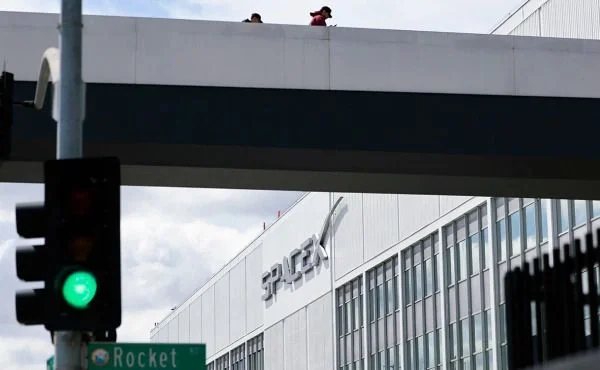
On 11 August 2026, VinSpace, a Vietnamese aerospace startup, said that it has partnered with SpaceX to launch its first satellites into orbit in 2027. The mission will make use of SpaceX's Transporter rideshare program, which enables participating firms to split launch costs by placing satellites from many clients on the same launch vehicle. As VinSpace transitions from satellite development to real orbital operations and commercial space applications, the partnership is a significant step.
The mission's satellites will be designed, developed, and operated by VinSpace, a division of the Vietnamese corporation Vingroup. By using orbital deployment, the company hopes to validate its satellite technology and obtain operating expertise that will help with future business endeavors. The amount of the VinSpace contract with SpaceX, as well as the quantity and specifications of the satellites that will be launched, have not been made public.
Access to launch infrastructure is still one of the most crucial prerequisites for businesses looking to enter the satellite market, which makes the alliance noteworthy. VinSpace will send its spacecraft into orbit using SpaceX's well-established launch infrastructure rather than creating its own launch vehicle. This allows the Vietnamese enterprise to rely on a seasoned foreign launch provider while focusing on satellite development mission operations and downstream applications.
Reliable access to space is crucial to transforming satellite technology into practical missions, according to VinSpace CEO Thru Vu. The company's goal is to create a more comprehensive aerospace enterprise that encompasses several phases of the value chain such as orbital operations, satellite design and production, launch coordination, and space-based data services.
The move coincides with Vietnam's efforts to improve its standing in the local space sector. Vietnam has launched telecom satellites in the past, including operations in 2008 and 2012. To assist satellite development and the broader use of space-generated data, the nation also established a space science and technology center in Hanoi's Hoa Lac High-Tech Park in March 2026. By 2030 Vietnam hopes to be a mid-level space power in Southeast Asia.
Impact on the Aerospace and Defense Industry
By enhancing capabilities in satellite technology, space operations, communications, and space-based data, the VinSpace-SpaceX alliance may help Vietnam's aerospace and defense ecosystem grow. Precedence research claims that rising investments in satellite systems, launch technologies, communications, Earth observation, and other space-based applications are bolstering the expanding space technology sector. This larger trend toward more private sector involvement in space technology is reflected in VinSpace's scheduled satellite launch in 2027.
Investment in satellite manufacturing, aerospace electronics, ground stations, mission control systems, communications infrastructure, and satellite data analytics may be stimulated by the agreement. VinSpace may contribute to the advancement of technical know-how and supplier support inside Vietnam's aerospace ecosystem as it builds its own satellite capabilities.
The satellite infrastructure may enable applications including secure communications and surveillance navigation. Earth observation and situational awareness of the development may be relevant to defense. However, there is no proof that the 2027 mission is expressly a defense effort, and the satellites planned under the existing arrangement have mostly been regarded as commercial and technology testing platforms.
Impact on Space Technology Market
The global space technology market size is estimated at USD 512.08 billion in 2025 and is predicted to increase from USD 551.20 billion in 2026 to approximately USD 1,081.74 billion by 2035, expanding at a CAGR of 7.77% from 2026 to 2035.
By illustrating how private businesses in developing nations are progressively joining the space technology industry. VinSpaces partnership with SpaceX may help this market. This business is expanding its capabilities in orbital operations to launch management of satellite production and space-based data services.
Demand for technology like satellite parts, avionics, communication systems, ground infrastructure, mission control software, and space data processing may rise because of the alliance. It also shows how businesses building small satellites can have easier access to space with the help of commercial launch services.
The development of space technology may provide doors for dual-use equipment in the aerospace and defense sectors. The governments' needs for communications monitoring, navigation, and East observation may be supported by technologies created for commercial satellite operations. The need for these technologies may rise as Asia Pacific nations develop their space capabilities.
Demand for technology like satellite parts, avionics, communication systems, ground infrastructure, mission control software, and space data processing may rise due to the alliance. It also shows how businesses building small satellites can have easier access to space with the help of commercial launch services.
The development of space technology may provide doors for dual use of equipment in the aerospace and defense sectors. The governments' need for communications monitoring, navigation, and Earth observation may be supported by technologies created for commercial satellite operations. The need for these technologies may rise as Asia Pacific nations develop their space capabilities.
Impact on Satellite Market
The global satellite market size was estimated at USD 362.28 billion in 2025 and is predicted to increase from USD 391.99 billion in 2026 to approximately USD 780.24 billion by 2035, expanding at a CAGR of 7.97% from 2026 to 2035.
The growth of the satellite business, especially the growing use of tiny satellites, is strongly related to the VinSpace missions. By allowing several clients to share launch capacity. SpaceX's Transporter rideshare model makes it easier for up-and-coming satellite firms to reach orbit.
Vietnam's domestic capabilities in spacecraft development, testing, satellite operations, ground infrastructure, and space-based data services may be strengthened by VinSpace's proposed satellite deployment. Additionally, successful deployment might give businesses operational knowledge for the next satellite missions.
The strategic value of the satellite sector may rise due to its increasing significance in government and defense applications. Communications, earth observation, navigation, monitoring, and security-related tasks can all be supported by satellite systems. Building indigenous satellite knowledge could give Vietnam a stronger platform for future government and civilian space uses even if VinSpace's current mission is positioned as a commercial technological venture.
About VinSpace
VinSpace is a Vietnamese aerospace firm connected to Vingroup that was founded in November 2025. The company's primary goal is to expand its capabilities in satellite operations, manufacturing, launch management, design, and space-based data services.
VinSpace intends to use a SpaceX Transporter rideshare flight to launch its first satellites in 2027. The satellites are anticipated to help the company's upcoming commercial endeavors and offer a chance to test its technologies in orbit.
Instead of focusing solely on satellite production, the company's overarching goal is to become a full-service aerospace capability. Its operations may potentially encompass several phases of the space value chain, such as communications satellite-derived data services, orbital operations, and spacecraft development.
For VinSpace and Vietnam's developing commercial space sector, the SpaceX deal thus marks a significant turning point. From the standpoint of aerospace and defense, the development might boost local technical capabilities, promote investment in auxiliary technologies, and aid in the expansion of Vietnam's space ecosystem.