



Peritoneal Dialysis Market Size, Companies, Share, Patient Volume, Treatment Adoption Rates, Pricing Analysis, Regulatory Landscape, Competitive Positioning, and Demand Forecast
Payal Rabde is a healthcare research analyst specialized in medical devices and renal care. She studied CAPD and APD adoption, home vs in-center treatment, product demand, and reimbursement policies impacting home dialysis. Her research helps device manufacturers, dialysis facilities, and healthcare payers with competitive benchmarking and strategic efforts. Based on her findings, about 4.6 million people receive kidney replacement therapy annually.
Source: https://www.precedenceresearch.com/peritoneal-dialysis-market
 Get a Sample
 Table Of Content


Peritoneal Dialysis Market Size and Forecast 2026 to 2035
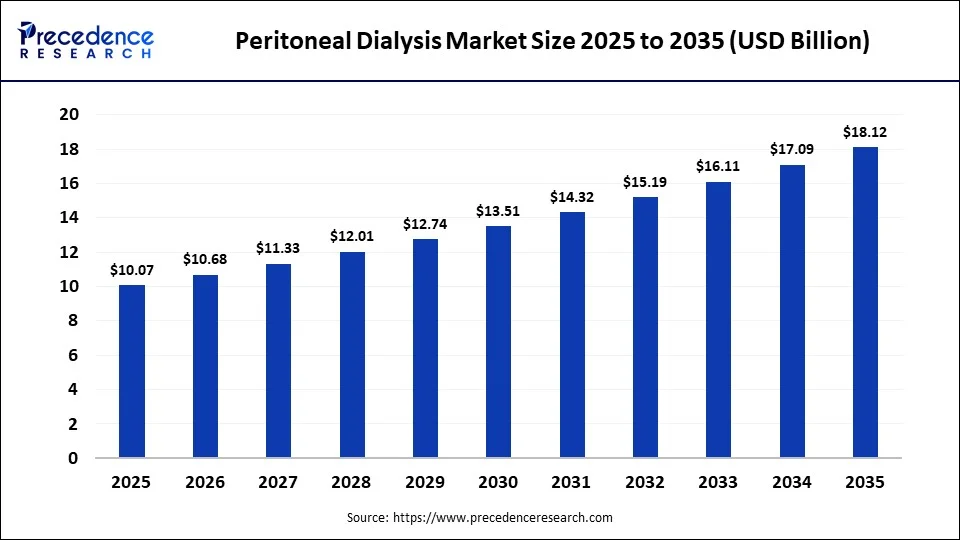
Payal Rabde has over 5 years of experience in healthcare analysis of medical devices and renal care and notes that peritoneal dialysis is taking a new direction. With a more technology-driven approach, more patients are choosing to treat at home, evolving preferences for APD vs. CAPD, and a growing demand for connected dialysis options. The global peritoneal dialysis market size was valued at USD 10.68 billion in 2026 and is estimated to grow to USD 18.12 billion by 2035, growing at a CAGR of 6.05% during the forecast period. Payal Rabde identifies the transition from continuous to automated peritoneal dialysis, increasing home dialysis uptake in the wake of reimbursement reform. Further, a growing population of chronic kidney disease (CKD) patients in Asia-Pacific is the strongest contributor to that growth.
Key Takeaways
- By product, the peritoneal dialysis solutions segment led the market with a 46% share in 2025.
- By dialysis type, the continuous ambulatory peritoneal dialysis (CAPD) segment captured a major revenue share of 59% in 2025.
- By treatment settings, the home-based peritoneal dialysis segment captured the largest commercial vehicle braking system market share of 63% in 2025.
- By indication, the end-stage renal disease (ESRD) segment captured the largest market share of 71% in 2025.
- By age group, the adult segment captured the largest market share of 62% in 2025.
Market Overview
Market Value Projected to Reach USD 18.12 Billion by 2035
Adoption of home-based dialysis continues to grow worldwide, and the market is expected to grow approximately 1.8 times from the current value. Around USD 18.12 billion by 2035 with a compound annual growth rate (CAGR) of 6.05% across the forecast decade. That's a 6.05% gain, which is actually quite a bit more measured than the increase in newer medical technology categories. The weakness is not in that moderation. I believe clinically established therapy, where growth comes from patient population expansion and a shift in modality mix, from CAPD toward APD, rather than from adoption of an entirely new technology.
Key Insight: This 6.05% CAGR falls within the range of newer medtech categories, which is appropriate for a market experiencing population growth and modality shift but not seeing a new technology break new ground.
Source: Precedence Research Database
Peritoneal Dialysis Market Companies 2025-2026
| Company | Headquarters | Core Business | Relevant Public Information | Source |
| Vantive Health LLC (formerly Baxter Kidney Care) | Deerfield, Illinois, U.S. | Peritoneal dialysis machines (HomeChoice cyclers), PD solutions, hemodialysis, and organ support therapies | On the 31st of January, 2025, Carlyle acquired Vantive, in association with Atmas Health, from Baxter for USD 3.80 billion. In 2023, the business achieved standalone revenue of USD 4.5 billion from its kidney care activities and has over 23,000 employees around the world. Baxter's Kidney Care business president Chris Toth took that role when the company was separated, replacing him as Vantive's new CEO. | Baxter Form 10-K (FY2025); Carlyle press release (Aug 2024). |
| Fresenius Medical Care AG & Co. KGaA | Bad Homburg, Germany | Dialysis products and services, including peritoneal dialysis (stay·safe, sleep·safe cycler systems) and hemodialysis | Fresenius Medical Care North America is the owner of one of the world's largest networks of dialysis clinics. The company also boosted its home dialysis bed count by adding over 100 transitional care units in 2020 to help patients transition to home dialysis. At the time, over 14% of all treatments performed in the U.S. were home therapies, and home hemodialysis treatments exhibited outstanding increases. | Fresenius Medical Care North America, "ETC Model to Increase Home Dialysis" (company insights page). |
| Medtronic plc | Galway, Ireland / Minneapolis, U.S. | Renal care technology, including a partnership-based push into home dialysis systems | Vantive Medical Care and Fresenius Medical Care are always ranked as the two biggest developers & suppliers of PD technologies. They have a wide range of products from dialysis systems to consumables, treatment solutions to patient supporting infrastructure, and technologies to help with home kidney care. | "Peritoneal Dialysis Market" report, via Barchart. |
| JMS Co., Ltd. | Hiroshima, Japan | Peritoneal dialysis solutions, catheters, and medical devices for the Asia-Pacific market | The regional suppliers are also expected to reap the benefits of the greater acceptance of PD in Asia-Pacific. This region is expected to be the fastest-growing one among the markets supplied for the forecast, as the dialysis infrastructure is already in place, prevalence of CKD is growing, and the acceptance of HRTs is higher. The Japanese and other more advanced dialysis markets in Asia also are key to suppliers of Asian PD technology and consumables. | Industry trade coverage; company public disclosures. |
Recent Developments in Peritoneal Dialysis Market
| Date | Development | Source |
| Jan 2023 | Baxter began to scrutinize its Kidney Care business as a first step in the process of making the operations a separate company. The separation as planned eventually became the basis for the business to be run under the Vantive name. | Baxter International Form ARS (FY2024, SEC filing). |
| Aug 12, 2024 | Baxter then entered into a definitive Equity Purchase Agreement with Carlyle and Atmas Health under which it will sell its Kidney Care business for approximately USD 3.80 billion. The business was rebranded Vantive after the deal and remained a kidney care firm. | Baxter/Carlyle joint press release (Aug 2024); Forbes (Aug 2024). |
| 2024 | The global burden of disease projections were updated, thus highlighting the emerging global burden of chronic kidney disease. The predicted rise in death rates from CKD was over 30% from 2022, and CKD itself was predicted to become the third biggest cause of death in Western Europe by 2050. | Nephrology Dialysis Transplantation, Oxford Academic (Feb 2026). |
| Jan 31, 2025 | Baxter received the pre-tax cash proceeds of the Baxter–Carlyle transaction of approximately USD 3.71 billion, which was completed on January 31, 2025. The after-tax proceeds will mainly be used to pay off legacy debt, bolstering its financial position after the divestment, said Baxter. | Baxter International Form 10-K (FY2025, SEC filing). |
| Jan 2026 | A study by Kidney360 of U.S. CMS Dialysis Facility Compare data from 2010 through 2021 revealed that the utilization of PD has been associated with an increase in the average number of PD patients per program at individual dialysis facilities. There were no significant differences in technique failure or peritonitis rates between larger programs, indicating possible operational advantages of scale in PD programs. |
PMC/Kidney360, "Growth in the Size of Peritoneal Dialysis Facilities" (Jan 2026). |
Regional Analysis
Asia-Pacific Set to Overtake Europe as the Second-Largest Regional Market
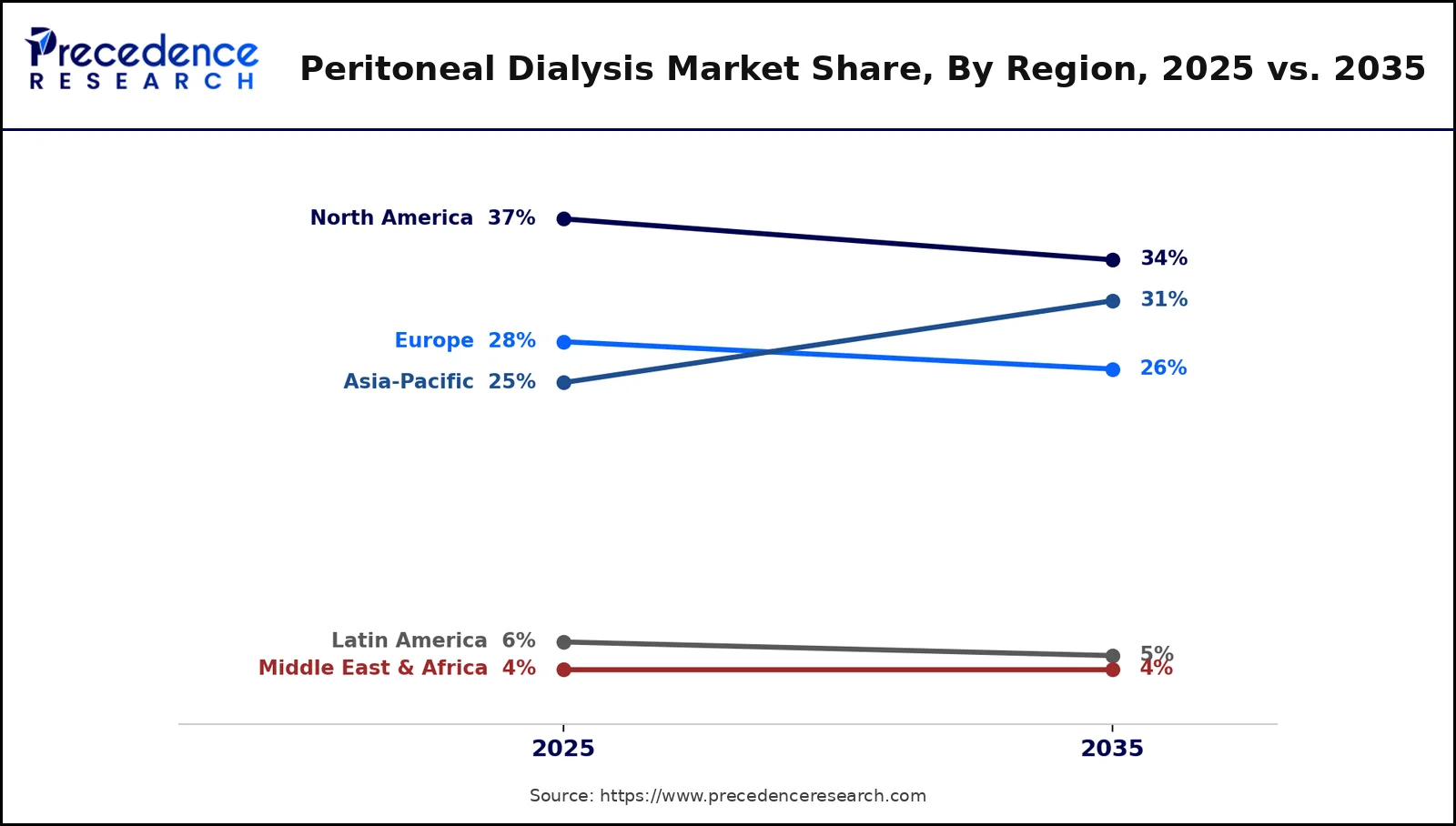
The distribution of the region is likely to change significantly over the next decade. North America will hold the dominant position and Asia-Pacific will gain spectacularly. Established reimbursement and home-dialysis infrastructure, along with high APD adoption, will drive North America to account for 37% in 2025 and 34% of market share by 2035.
The CKD burden is higher in the Asia-Pacific region, and its home-dialysis penetration rate is expected to increase its market share from 25% to 31%, whereas it is declining in Europe from 28% to 26% due to increasing access to healthcare services and a growing CKD burden. Latin America and the Middle East & Africa have shrunk in share, from 6% to 5% and 4% to 4%, respectively.
Key Insight: The Asia-Pacific region will see a 6-point increase, allowing it to surpass Europe in 2035 at 26%, compared to 20% for Europe. Its position as a mature market is reflected in the loss of 3% in North America, which is still the biggest region.
Source: Precedence Research Database
North America: 37.0% Share in 2025, Declining to 34.0% by 2035
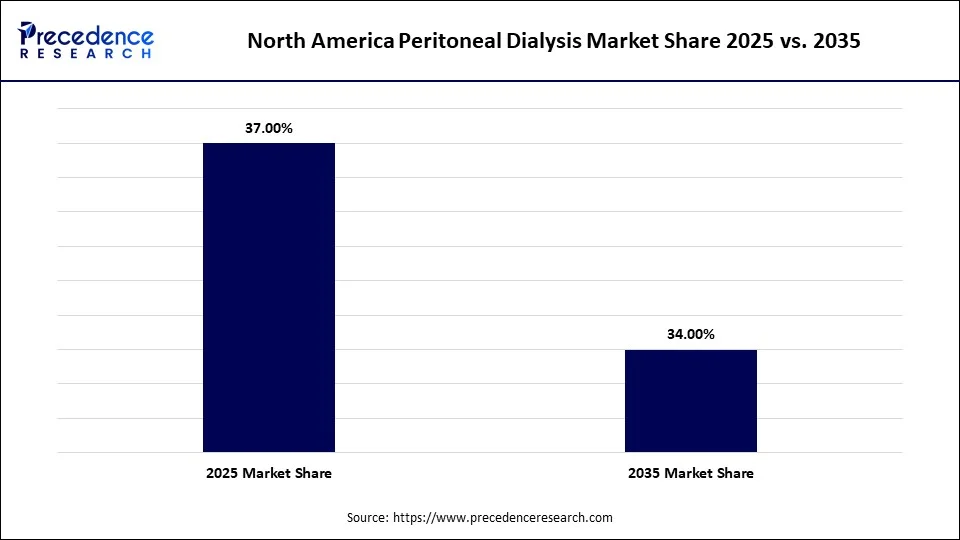
In 2025, North America accounted for 37% of the region's share, driven by robust reimbursement policies and highly-resourced home dialysis programs. This makes the region an easily accessible area for starting peritoneal dialysis. The share drops to 34% by 2035 as the region's growth rate of 5.4% is lower than the market's 6.05% average for the global market. The region already has a high proportion of existing dialysis infrastructure, so additional growth will have to come via incremental slow uptake.
Key Insight: North America's growth rate is in line with its global share loss, at 5.4%, which is lower than the 6.05% average forecast for global growth, a mature-market pattern rather than a sign of weakening demand.
Source: Precedence Research Database
Europe: 28.0% Share in 2025, Declining to 26.0% by 2035
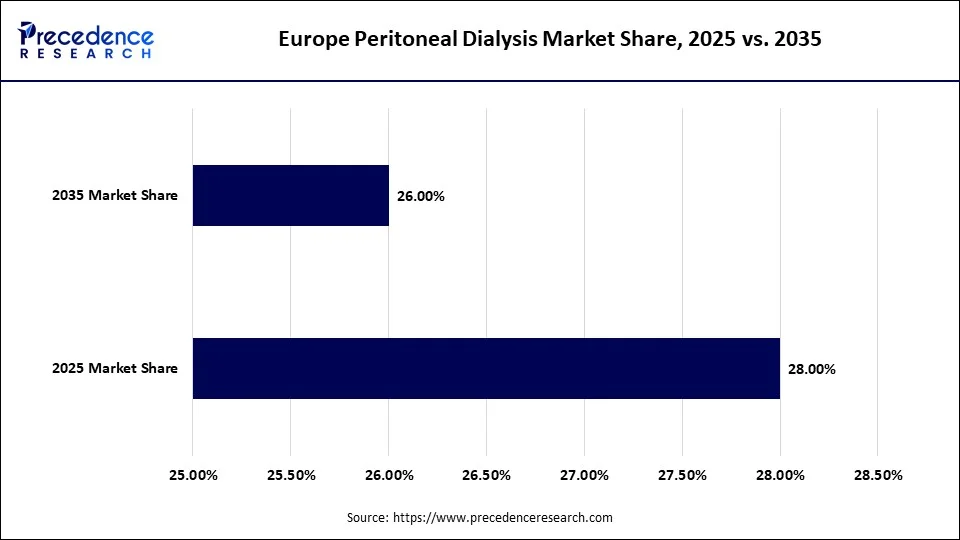
The regional share for Europe in 2025 was at 28.0%, with dialysis patients gradually shifting to home modalities in several European national health systems. They have initiated a dedicated campaign to manage hospital capacity by encouraging dialysis patients to be treated at home. That market share declines to 26.0% in 2035 when the region continues its growth at 5.5% CAGR, the lowest rate of any of the three largest regions. This is an indicator of the extent of the transition to home-dialysis in Europe.
Key Insight: Europe loses its world dominance by 2035 due to the region's CAGR of 5.5%, which remains below the global average of 6.05% but just ahead of the growth rate of North America.
Source: Precedence Research Database
Asia-Pacific: 25.0% Share in 2025, Growing to 31.0% by 2035
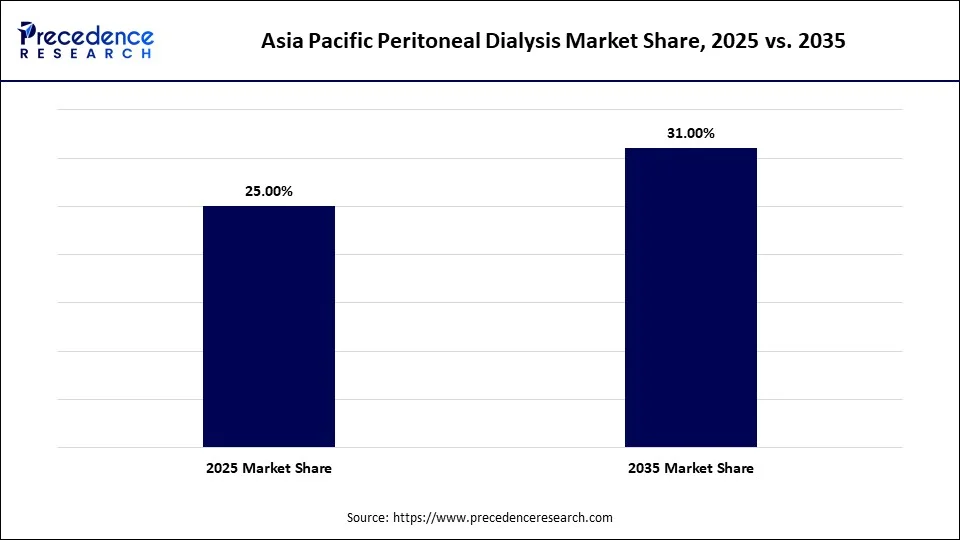
In 2025, Asia-Pacific accounted for 25.0% of market share, and the region is seeing the highest growth rate due to increasing prevalence of chronic kidney disease and improving access to healthcare. By 2035, its share will rise to 31.0% on an annual growth rate of 8.3%, which is well above the world average. That disparity will represent a region where clinically complex populations with no realistic access to dialysis have become more insured and now have access to a clinical platform.
Key Insight: Asia-Pacific is gaining global share through 2035 with a 7.2% share, compared to the market's 6.05% growth globally, and the difference is simply a measure of the treatment capacity available to be deployed in Asia-Pacific.
Source: Precedence Research Database
Latin America: 6.0% Share in 2025, Declining to 5.0% by 2035
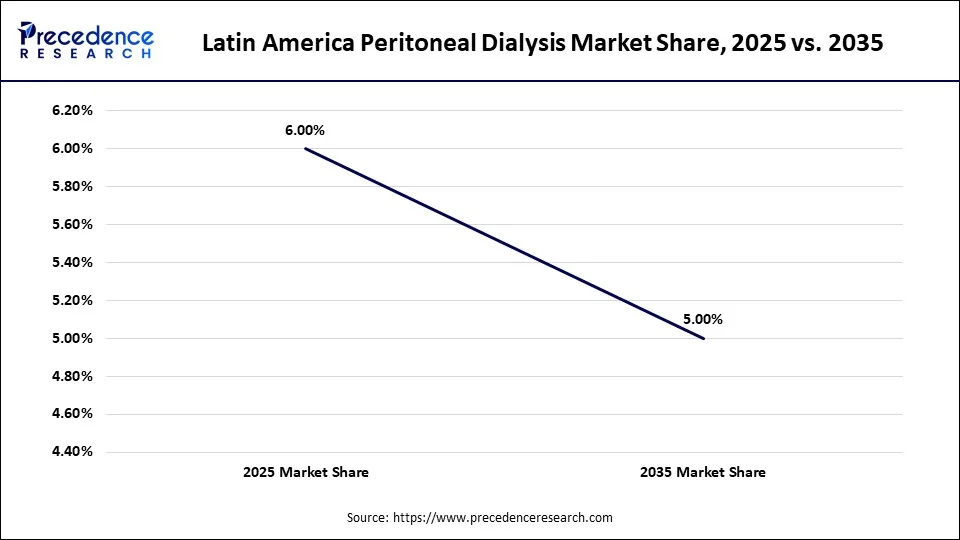
By 2025, Latin America accounted for 6.0% of the global share, and the peritoneal dialysis market is poised for further growth due to the strengthening of the healthcare infrastructure in the region. Public healthcare systems in some countries are facing financial constraints. The region's market share slows to 5.0% by 2035 as it expands at 5.6% CAGR, roughly matching the rate of investment in the healthcare market.
Key Insight: Latin America cedes global share through 2035, consistent with its 5.6% regional growth rate sitting just below the market's 6.05% global average, even as absolute renal care investment in the region keeps rising.
Source: Precedence Research Database
Middle East & Africa: 4.0% Share in 2025, Steady to 4.0% by 2035
| Region | 2025 Share (%) | 2035 Share (%) |
| Middle East & Africa | 4.00% | 4.00% |
In 2025, the Middle East and Africa region accounted for 4.0% of the world's market share. Dialysis access has improved in the region, though it was still historically low, with increasing investment in the healthcare sector across the region. The future market share is expected to sit at 4.0% through 2035, as the region expands at 6.1% CAGR. I interpret this figure as about marginally higher than the market's global average, which is a surprising fact, considering how small the region's base is.
Key Insight: The Middle East and Africa region is growing at a steady pace of 6.1% regionally, about the same as the market, which grows at 6.05% globally, the only region growing at a rate that is essentially the same as the market.
Source: Precedence Research Database
The Peritoneal Dialysis Industry's Largest-Ever Transaction Closed in January 2025
| Metric | Value |
| Carlyle's acquisition of Baxter's Kidney Care business (Vantive), completed Jan. 31, 2025 | USD 3.80 Billion |
| Vantive's standalone 2023 revenue (peritoneal dialysis, hemodialysis, organ support) | USD 4.5 Billion |
Aman believes his deal came from a firsthand look at how it changed the competitive landscape in this market, and it's certainly the biggest deal yet in the industry. On January 31, 2025, Carlyle announced its acquisition of Atmas Health's Kidney Care business. This has been renamed Vantive, for USD 3.80 billion. Baxter's pre-tax cash proceeds are roughly USD 3.71 billion, or roughly USD 3.3 to 3.4 billion net of tax. Vantive (the former Kidney Care segment) had revenue of USD 4.5 billion for 2023, including over 23,000 employees worldwide in the peritoneal dialysis and hemodialysis and organ support therapies segments, but not just the peritoneal dialysis segment.
Key Insight: Vantive's USD 4.5 billion in total revenue from its full kidney care portfolio for 2023 equates to almost half the total size of the 2025 PD global market in this market. This further demonstrates how much the PD supply market is dominated by a handful of large, well-funded manufacturers and not by a large number of small players.
Source: Baxter International Form 10-K (FY2025, SEC filing); Baxter/Carlyle joint press release (Aug 2024); Forbes (Aug 2024).
Kidney Disease Affects an Estimated 850 Million People Worldwide
| Indicator | Value |
| Global Population with Kidney Disease | 850 Million |
| Annual Deaths Attributed to CKD | 1.5 Million/Year |
| People Receiving Kidney Replacement Therapy | 4.6 Million |
Despite the continued decline in the number of patients receiving PD, the epidemiological base of PD will persist, as it is estimated that 850 million people in the world suffer from kidney disease. This is more than 10% of the world's population. However, only about 4.6 million people receive kidney replacement therapy, and around 1.5 million people die of CKD every year, representing a huge access gap to therapy.
This space will offer a profound opportunity across Asia-Pacific, as healthcare accessibility expands. The burden of CKD continues to grow, and the prevalence of home-based dialysis is increasing, to help fuel continued market growth. Asia-Pacific is expected to grow at 8.3% CAGR, and the opportunity is not only in dialysis demand, but also in access to kidney replacement therapy in the region.
Key Insight: There is significant opportunity to adopt PD given the low prevalence of kidney disease, and even lower access to treatment. Asia-Pacific is expected to emerge as a significant driver for the market growth at 8.3% CAGR.
Source: Global Burden of Disease (GBD) 2024 update, as reported in Nephrology Dialysis Transplantation (Oxford Academic, Feb 2026); Nature Reviews Nephrology consensus statement (2024).
U.S. Home Dialysis Use Has Grown More Than 70% Since 2012 Medicare Reform
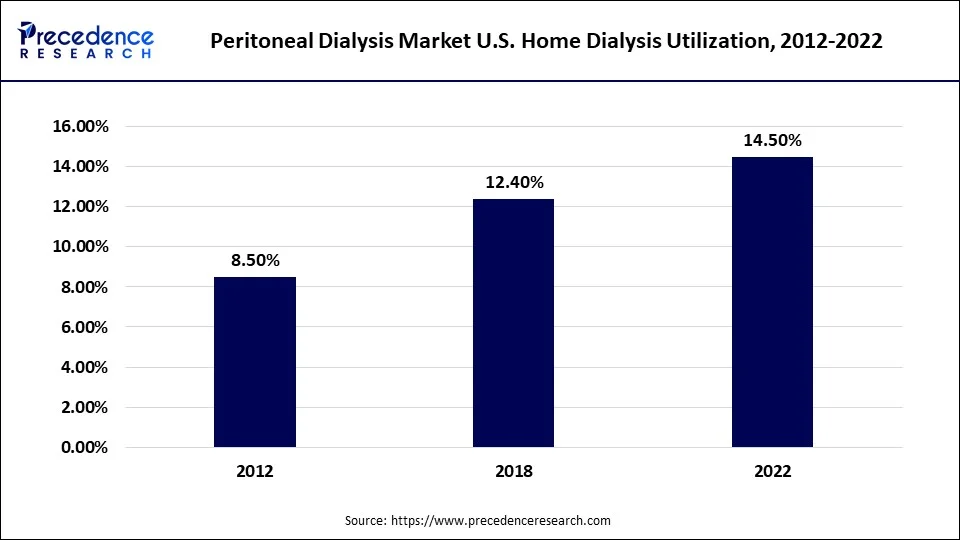
The U.S. policy decision on Medicare Expanded Prospective Payment System (EPPPS) from 2011 provides a real-life example of the effects of reimbursement incentives on dialysis modality mix over a decade. By 2022, 12.4% of new dialysis patients started on home dialysis, and approximately 10.6% of all dialysis patients were on peritoneal dialysis by 2018.
That's a true, sustained gain, but I think the more interesting figure is just how far the US is from where health policy makers wanted it to go. The Department of Health and Human Services has an ambitious goal of 80% of patients receiving home dialysis or a transplant by 2025. This is still not achieved, and even the more modest 25% target set by peer countries like Canada, Australia, and New Zealand isn't met.
Key Insight: Although U.S. use of home dialysis has increased by over 70% since the 2012 reform, it is still far below the federal goal of 80% and the less lofty goal of 25% among peer countries. Suggesting significant additional reimbursement-driven growth in the future that this market's 5.4% increase in North America may only partially reflect.
Source: Kidney360/PMC, "Growth in the Size of Peritoneal Dialysis Facilities" (Jan 2026); National Kidney Foundation CY2026 ESRD PPS comments (Aug 2025); USRDS 2020 Annual Report.
U.S. Home-Dialysis Policy Has Produced Real but Modest Measured Results
| Metric | Result |
| Additional patients trained for home dialysis in ETC regions | +360/year |
| Additional home dialysis patients receiving a transplant | +102/year |
| Impact on overall home dialysis utilization rates vs. non-ETC regions | No significant impact |
| Net increase in total Medicare payments under the model | +$99 million |
Aditi examined the government's own assessment of its flagship home-dialysis incentive program. A stringently measured policy outcome is much more beneficial than a promotional one. The three-year evaluation of the CMS ESRD Treatment Choices Model, through December 2023, identified 360 more patients per year trained to do home dialysis in the regions.
Participating in the model and 102 more patients per year who underwent a transplant with home dialysis training. Of particular interest, the evaluation revealed no significant change in overall home dialysis utilization rates among regions that participated in the program when compared with regions. That did not occur when the model was applied to the total Medicare payments, despite the net additional payment of USD 99 million due to dialysis.
Key Insight: The ETC Model has not yet been proven to have measurable effects on home-dialysis rates and potential policy efforts. Further driving PD adoption may be as much dependent on investment in technology and patient education by manufacturers as on further policy action by the U.S. government.
Source: Precedence Research Database
Segment Categories
PD Solutions Lead Product Share as PD Cyclers Post the Fastest Growth
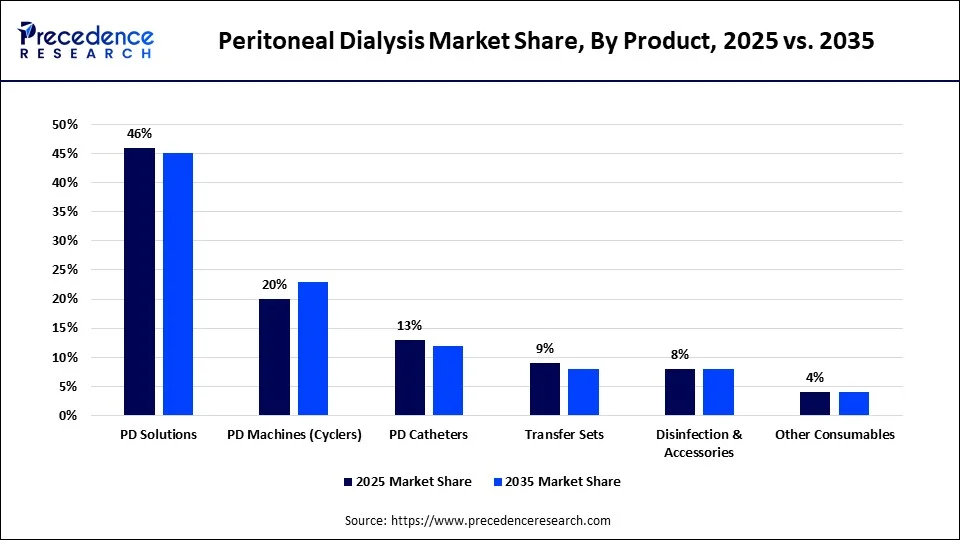
Peritoneal dialysis solutions held the largest product share in this category in 2025 at 46.0%, and that leadership comes down to simple repeat-purchase economics. Unlike the purchase of durable equipment, which represents a single transaction, every treatment cycle uses new dialysis fluid, and solutions generate recurring revenue. By 2035, that proportion drops marginally to 45% but continues to rise by 5.8% CAGR.
Higher adoption of automated home dialysis systems pulls more patients onto treatment based on peritoneal dialysis machines (cyclers). This makes this the largest product category at 23.0% with a 7.5% CAGR, the fastest in comparison to all other product categories. These machines are used by more CAPD patients than would otherwise have required them.
Key Insight: 2025 sees the largest share for PD solutions (46.0%) simply as a result of recurring consumption, while PD cyclers have the highest CAGR (7.5%) because automated therapy requires devices that manual CAPD never did.
Source: Precedence Research Database
CAPD Leads Today, but APD Grows Nearly 60% Faster
| Dialysis Type | 2025 Share (%) | 2035 Share (%) |
| CAPD | 59% | 50% |
| APD | 41% | 50% |
Continuous ambulatory peritoneal dialysis held the largest share of the dialysis type category in 2025 at 59.0% of market share. It is actually based on a real practical benefit. Unlike other machines, there is no machine required for CAPD; only manual exchanges that are gravity-driven and are done several times each day. Making it far more accessible in lower-income communities and rural areas, where reliable electricity or cycler maintenance is not always ensured.
The segment market share is reduced to 50.0% by 2035, but is still increasing at 4.8% CAGR. I believe, but automated PD is rapidly filling that void, rising from 41.0% to 50.0% share at a CAGR of 7.6%. As more working-age and higher-income patients join the treated population, the trade-off for their freeing up of daytime hours is becoming more appealing.
Key Insight: As soon as patients can be expected to shift from manual day-to-day independence to automated convenience at night, CAPD leads in terms of accessibility at 59.0% of the market in 2025, with APD growing nearly sixty% faster at 7.6% CAGR and projected to be equal to CAPD by 2035.
Source: Precedence Research Database
Home-Based PD Dominates and Extends its Lead Through 2035
Aditi interpreted that home-based peritoneal dialysis already commanded nearly two-thirds of the treatment setting category in 2025 at a 63% share. This reflects the strong position of this therapy's whole clinical case based on the absence of a hospital or clinic. The share is even larger at 69.0% in 2035 as it increases fastest of the three settings at 7.2% CAGR. Patients are increasingly choosing home healthcare due to convenience and patient adoption.
Key Insight: The home-based peritoneal dialysis modality, which accounts for 63.0% of the market in 2025, also has the highest growth rate, at 7.2% CAGR through 2035, as hospitals and dialysis centers shift routine maintenance care to the home.
Source: Precedence Research Database
ESRD Anchors Indication Demand and Extends Its Lead
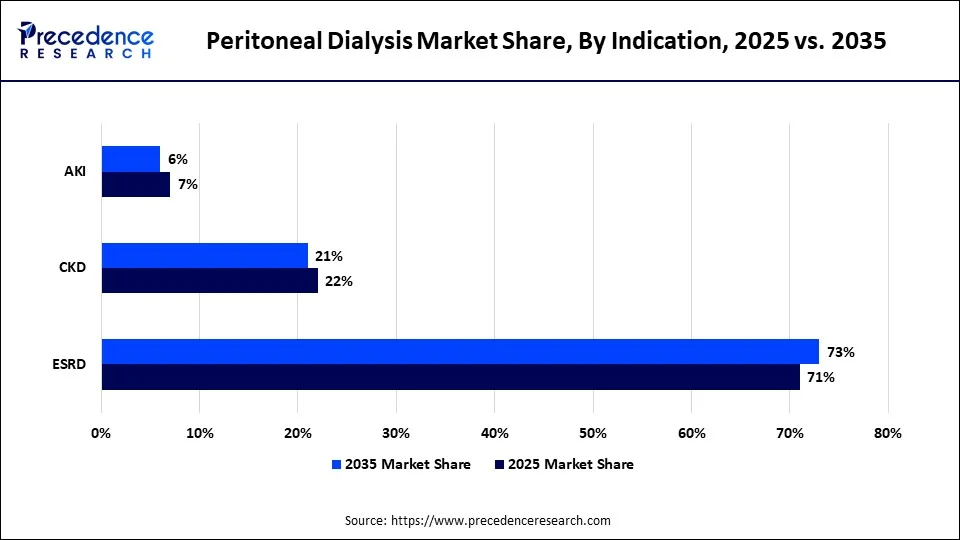
In 2025, the end-stage renal disease (ESRD) segment was the largest, accounting for 71.0% of the market due to a high demand for long-term kidney replacement treatment when patients reach kidney failure. At this stage, PD is especially important because it can be performed in the home setting. This is more flexible than center-based care and is a continuous treatment.
The surge in home dialysis, patient self-management, and treatments that fit into patients' lives are also complementary to the segment. The overall demand for PD machines, cyclers, dialysate solutions, and PD-related consumables should continue to be good given the continued growth in the ESRD population requiring continued dialysis.
Key Insight: ESRD accounted for 71.0% of the market in 2025, and is expected to increase at 6.4% CAGR from 2025 to 2035. This dominance is due to the recurring nature and longevity of the dialysis demand of patients in need of continuous kidney replacement therapy.
Source: Precedence Research Database
Adults Lead Age Group Share as the Geriatric Population Grows Fastest
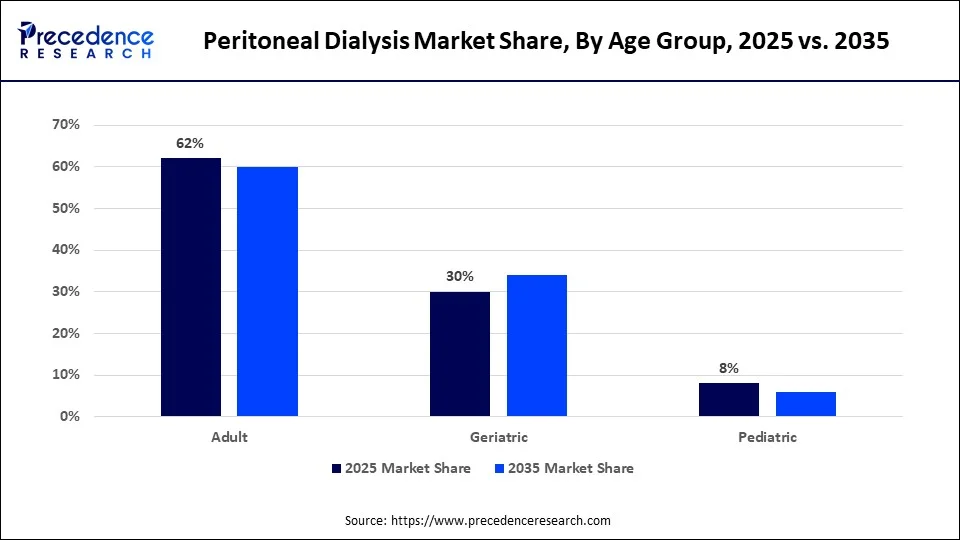
The age group category was dominated by the adult group, which was 62.0% of the total market share in 2025, as this category is the largest among the dialysis patients as a whole. This share diminishes slightly to 60.0% by 2035, but continues to increase at 5.8% CAGR. In this category, geriatric patients increased from a 30.0% to a 34.0% share at a growth rate of 7.1% CAGR, the highest of the three age groups, due to the aging of the world population. This is driving up the number of kidney patients and, significantly, the number of geriatric patients who are able to receive assisted PD programs to have their exchanges performed by a caregiver.
Key Insight: Adults have the largest share in 2025, 62.0% based just on population weight, but the geriatric population is increasing at the fastest rate, 7.1% CAGR, closely linked to the spread of assisted PD programs for older patients.
Source: Precedence Research Database
Home Care Leads End-User Share and Grows Fastest
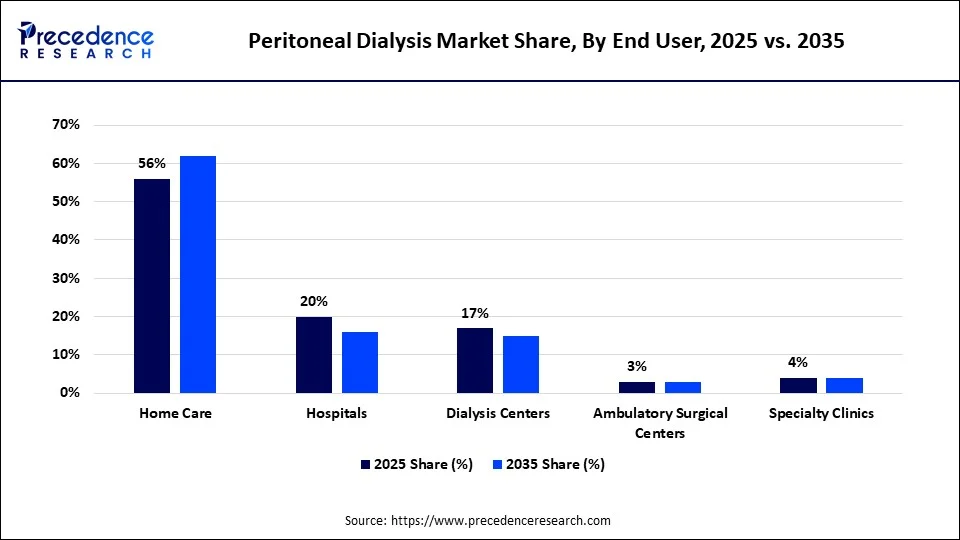
In 2025, home care accounted for the highest end-user market share of 56.0%. They are expected to maintain their dominance as flexible, patient-centric dialysis increasingly moves out of the walls of traditional dialysis facilities. The segment is expected to grow at the highest rate of 7.3% CAGR during the forecast period, as home therapies are gaining acceptance. Patients are being better educated, remotely monitored, and healthcare policies are favoring home dialysis. The transition also has the advantage of providing in-home treatment and avoiding multiple trips to dialysis centers.
Key Insight: Home care is expected to grow by 6% by 2035, further cementing its status as the segment in the market with the highest percentage of end-users. It saw a 7.3% CAGR growth, which mirrors the overall move towards home-centric and flexible kidney care.
Source: Precedence Research Database
Direct Sales Lead Distribution as Online Pharmacies Grow Fastest by Far
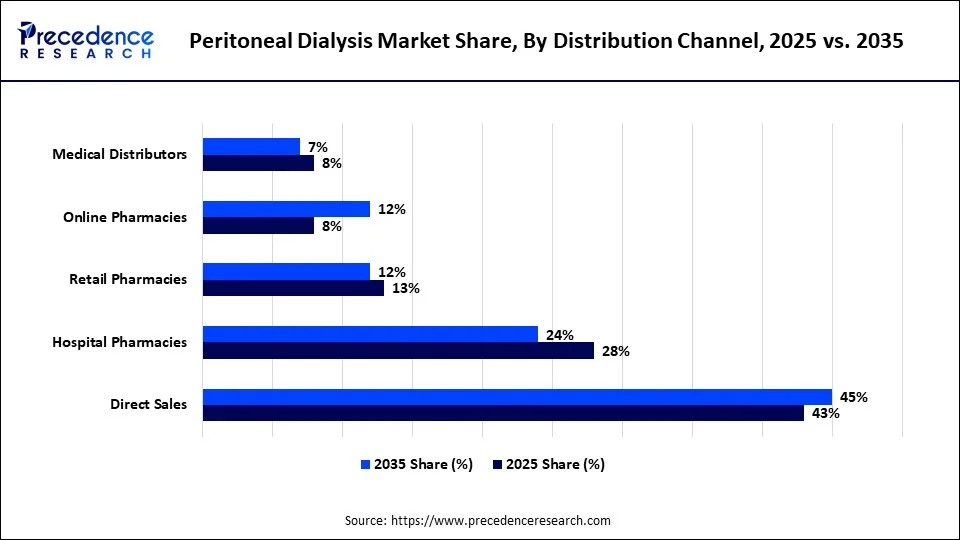
Direct sales led the distribution channel category in 2025 at a 43.0% share. Manufacturers are sending more products directly to hospitals and home care providers, a distribution channel that makes sense with the large and predictable volume of institutional dialysis fluid orders. This segment market share increases to 45.0% by 2035 at 6.8% CAGR.
Online pharmacies by far grow fastest in this entire market, with a 9.3% CAGR. Further taking a clear lead, as digital healthcare platforms and home delivery services. This enables patients to reorder dialysis fluid whenever it is needed, without needing to visit a clinic, a convenience that is extremely important for a patient population that is already having to do multiple daily exchanges at home.
Key Insight: Direct sales will be largest in 2025, at 43.0% owing to institutional ordering, while online pharmacies are the fastest by far, at 9.3% CAGR through 2035, as home-bound PD patients continue to reorder supplies just as they do with the rest of their care, at home.
Source: Precedence Research Database
Expert Insights
Transitioning the peritoneal dialysis market from traditional renal replacement therapy to a patient-centric, technologically-driven home care approach. I believe there are very attractive opportunities at the intersection of reliable dialysis systems and automated PxD platforms, connected with remote monitoring and with the really easy use of consumables. I think this drag of chronic kidney disease (CKD), this trend toward treating patients at home, and this reimbursement that is improving will play a role in competitiveness over the next decade. As healthcare providers focus on flexibility of treatment and enhancing patient engagement, I also anticipate continued growth in demand for automated systems, connected devices, and patient-support solutions. Companies that have the capacity to build an easily expandable product and generate clinical experience. They have established distribution channels in place and should be well equipped to fill the increasing market demand for convenient and effective PD options.
Our Experts
Payal Rabde led the primary market research, developed the methodology, and analyzed segmentation, regional trends, competition, and forecasts, forming the report's analytical foundation.
Aman was responsible for collecting and validating regulatory filings, company financial data, commodity pricing, and other independently sourced quantitative datasets, strengthening the evidence base behind the market estimations.
Aditi reviewed the complete research document, performed quality checks, validated findings, refined content, corrected inconsistencies, and finalized the report, ensuring accuracy and clarity.
Complete Market Segmentation
By Product
- Peritoneal Dialysis Machines (Cyclers)
- Peritoneal Dialysis Solutions
- Peritoneal Dialysis Catheters
- Transfer Sets
- Disinfection & Accessories
- Other Consumables
By Dialysis Type
- Continuous Ambulatory Peritoneal Dialysis (CAPD)
- Automated Peritoneal Dialysis (APD)
By Treatment Setting
- Home-based Peritoneal Dialysis
- Hospital-based Peritoneal Dialysis
- Dialysis Centers
By Indication
- Acute Kidney Injury (AKI)
- Chronic Kidney Disease (CKD)
- End-Stage Renal Disease (ESRD)
By Age Group
- Pediatric
- Adult
- Geriatric
By End User
- Home Care
- Hospitals
- Dialysis Centers
- Ambulatory Surgical Centers
- Specialty Clinics
By Distribution Channel
- Direct Sales
- Hospital Pharmacies
- Retail Pharmacies
- Online Pharmacies
- Medical Distributors
By Region
- North America - U.S., Canada, Mexico
- Europe - Germany, U.K., France, Italy, Spain, Netherlands, Rest of Europe
- Asia-Pacific - China, Japan, India, South Korea, Australia, Rest of Asia-Pacific
- Latin America - Brazil, Argentina, Rest of Latin America
- Middle East & Africa - GCC, South Africa, Rest of Middle East & Africa
References
- Precedence Research Database market model - Peritoneal Dialysis Market: market value, forecast CAGR, and seven segmentation tables (Product, Dialysis Type, Treatment
- Setting, Indication, Age Group, End User, Distribution Channel) plus regional segmentation, 2025–2035.
- Baxter International Inc. - Form 10-K, FY2025 (SEC filing, sec.gov); Form ARS, FY2024 (SEC filing).
- Baxter International / Carlyle - Joint press release, "Baxter Announces Definitive Agreement to Divest Its Vantive Kidney Care Segment to Carlyle for $3.8 Billion" (Aug 2024).
- Forbes - "Baxter To Sell Its Kidney Care Unit To Carlyle For $3.8 Billion" (Aug 2024).
- Nephrology Dialysis Transplantation, Oxford Academic - "Updated global burden of chronic kidney disease: one death every 20 seconds" (Feb 2026).
- Nature Reviews Nephrology - "Chronic kidney disease and the global public health agenda: an international consensus" (2024).
- Kidney International Reports - "CKD Beyond the Clinic: A Holistic Projection of its Global Burden" (Jun 2025).
- PMC/Kidney360 - "Growth in the Size of Peritoneal Dialysis Facilities: A Path Toward Higher Quality or a Missed Opportunity?" (Jan 2026).
- National Kidney Foundation - Comments on CY2026 ESRD Prospective Payment System (Aug 2025).
- CMS - "ETC 3rd Eval AAG Rpt" (cms.gov, 2025); Home Dialysis Central, "ESRD Treatment Choices (ETC) Model: Year Two Update" (Aug 2024).
- Fresenius Medical Care North America - "New Model Aims to Increase Home Dialysis and Kidney Transplants" (company insights page).
For inquiries regarding discounts, bulk purchases, or customization requests, please contact us at sales@precedenceresearch.com
Frequently Asked Questions
Tags





Ask For Sample
No cookie-cutter, only authentic analysis – take the 1st step to become a Precedence Research client
 Get a Sample
.webp)



 sales@precedenceresearch.com
 Schedule a Meeting
