



Hemodialysis and Peritoneal Dialysis Market Size, Companies, Share, Patient Volume, Treatment Adoption Rates, Pricing Analysis, Regulatory Landscape, Competitive Positioning, and Demand Forecast
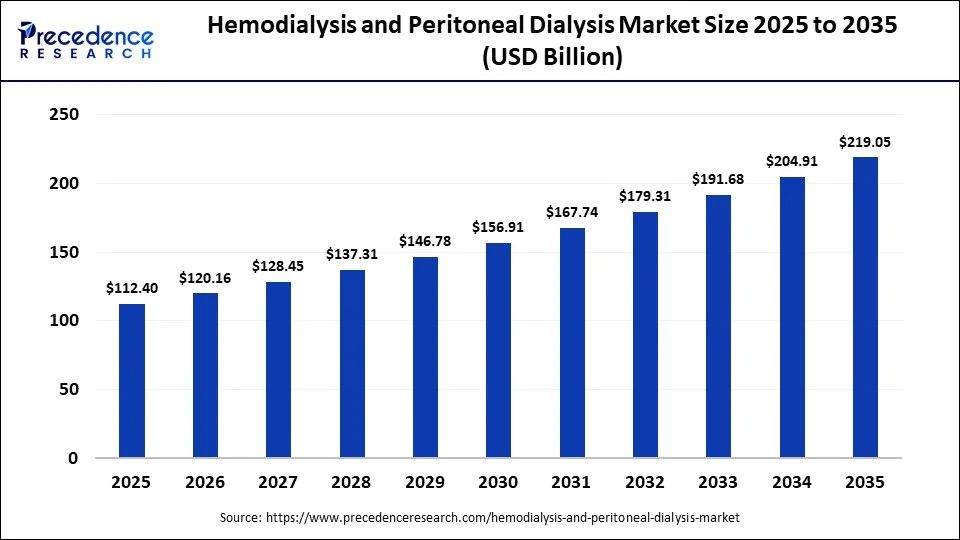
Rohan Patil, a Healthcare Industry Expert, highlights that the hemodialysis and peritoneal dialysis market has reached USD 120.16 billion in 2026 and is on track to reach USD 219.05 billion by 2035, advancing at a CAGR of 6.90%. Key hemodialysis and peritoneal dialysis market companies shaping the market include Asahi Kasei Corporation, Baxter International, Fresenius Medical Care, while major growth segments span dialysis type, product, modality, end user, age group, indication, treatment setting, payer, region.
Source: https://www.precedenceresearch.com/hemodialysis-and-peritoneal-dialysis-market
 Get a Sample
 Table Of Content


Hemodialysis and Peritoneal Dialysis Market Size and Forecast 2026 to 2035
The global hemodialysis and peritoneal dialysis market size accounted for USD 112.40 billion in 2025 and is predicted to increase from USD 120.16 billion in 2026 to approximately USD 219.05 billion by 2035, expanding at a CAGR of 6.90% from 2026 to 2035. The market is driven by the increasing global prevalence of chronic kidney disease (CKD) and end-stage renal disease (ESRD). This is directly fueled by an aging demographic and even rising rates of lifestyle-related conditions such as diabetes and hypertension.
Key Takeaways
- North America accounted for the highest revenue share of 37% in the hemodialysis and peritoneal dialysis market in 2025.
- Asia-Pacific held a 26% share of the market in 2025 and is expected to grow at the fastest CAGR of 8.4% during the projection period.
- By dialysis type, the hemodialysis segment held a dominant position in the market with a 79% share in 2025.
- By dialysis type, the peritoneal dialysis segment held a 21% share of the market in 2025 and is expected to grow at the fastest CAGR of 8.9% during the projection period.
- By product, the dialyzers segment dominated the market with a 27% share in 2025.
- By product, the dialysis concentrates and solutions segment held 18% share of the market in 2025 and is expected to grow at the fastest CAGR of 7.6% during the projection period.
- By end user, the dialysis centers segment led the hemodialysis and peritoneal dialysis market with a 49% share in 2025.
- By end user, the home care settings segment held a 13% share of the market in 2025 and is expected to grow at the fastest CAGR of 9.8% during the projection period.
- By indication, the end-stage renal disease (ESRD) segment dominated the market with a 56% share in 2025.
- By indication, the acute kidney injury (AKI) segment held a 10% share of the market in 2025 and is expected to grow at the fastest CAGR of 8.4% during the projection period.
Market Overview
The hemodialysis and peritoneal dialysis industry refers to the global healthcare sector that manufactures, supplies, and delivers renal replacement therapies for patients with chronic kidney disease (CKD) or end-stage renal disease (ESRD). It is mainly driven by the rising global prevalence of chronic kidney disease (CKD) or end-stage renal disease (ESRD), which stems from increasing rates of diabetes, hypertension, and even a rapidly aging population.
Hemodialysis and Peritoneal Dialysis Market Trends
- Patients and payers are increasingly favoring home care settings over traditional in-center dialysis to enhance quality of life and reduce costs. Home hemodialysis (HHD) and automated peritoneal dialysis (APD) are experiencing the highest growth rates.
- Startups and established industry leaders alike are investing in miniaturized, wearable, and portable dialysis systems to drastically improve patient mobility.
- Telemedicine and connected cyclers are changing peritoneal dialysis, allowing healthcare providers to remotely monitor patient vitals, ensuring therapy compliance, and adjusting treatments without the demand for hospital visits.
- Developing countries are witnessing expanded healthcare infrastructure and better reimbursement policies, making APAC one of the fastest-growing regions for renal care and peritoneal dialysis.
Market Report Coverage and Key Metrics
| Report Coverage | Details |
| Market Size in 2025 | USD 112.40 Billion |
| Market Size in 2026 | USD 120.16 Billion |
| Market Size by 2035 | USD 219.05 Billion |
| Market Growth Rate from 2026 to 2035 | CAGR of 6.90% |
| Dominating Region | North America |
| Fastest Growing Region | Asia Paicfic |
| Base Year | 2025 |
| Forecast Period | 2026 to 2035 |
| Segments Covered | Product Type, Source, Application, End Use Industry, Distribution Channel, and Region |
| Regions Covered | North America, Europe, Asia-Pacific, Latin America, and Middle East & Africa |
Market Dynamics
Drivers
Surging ESRD & CKD Prevalence
The surging prevalence of chronic kidney disease (CKD) and end-stage renal disease (ESRD) is the primary driver for the market. These conditions mandate life-sustaining renal replacement therapy as kidney function fails, directly creating a continuous, escalating demand for dialysis machines, fluids, and even clinical services. Modern advancements in healthcare have extended the lifespans of patients with ESRD, increasing the duration over which individuals demand lifetime dialysis therapies, thereby compounding the overall market size.
Restraint
Shortage of Skilled Medical Professionals
The shortage of skilled medical professionals, such as nephrologists, specialized dialysis nurses, and trained technicians, restrains the hemodialysis and peritoneal dialysis market because the operational capacity of dialysis facilities is capped by staffing availability rather than by the hardware itself. The demanding nature of renal care, combined with long hours and high patient loads, leads to high annual turnover rates among specialized nephrology nurses and technicians. Clinics are forced to spend immense resources on replacing qualified staff rather than expanding care.
Opportunity
Portable & Wearable Devices
Portable and wearable devices represent a major opportunity in the market because they shift treatment from rigid, time-consuming clinical centers to continuous, patient-friendly home care. This innovation drastically improves patient quality of life, increases mobility, and lowers overall healthcare costs. Patients are freed from the strict schedules of center-based dialysis. Wearable devices enable individuals to maintain employment, travel freely, and even engage in normal daily routines while undergoing treatment.
Market Segmentation Analysis
Dialysis Type Insights
Why Did the Hemodialysis Segment Lead the Hemodialysis and Peritoneal Dialysis Market?
The hemodialysis segment held a dominant market share of 79% in 2025, driven by in-center dialysis, which remains the primary treatment for ESRD patients worldwide. Expanding dialysis infrastructure supports patient access, and favorable reimbursement maintains high utilization. Peritoneal dialysis cannot be utilized by patients who have severe abdominal scarring, certain hernias, or obesity, making HD the only viable alternative for these individuals.
The peritoneal dialysis segment held a 21% share of the market in 2025 and is expected to grow at the fastest CAGR of 8.9% during the projection period. This is mainly due to the continued increase in home-based treatment demand globally, and government initiatives encourage PD-first strategies. Improved cycler technology improves patient convenience. Patients can perform treatments independently at home rather than traveling to a licensed clinic multiple times a week. This offers greater lifestyle flexibility, enabling patients to maintain a normal work schedule and travel. Innovations like portable and cloud-connected Automated Peritoneal Dialysis (APD) cyclers have made the at-home process easier to handle and monitor remotely by clinicians.
Product Insights
How the Dialyzers Segment Dominated the Hemodialysis and Peritoneal Dialysis Market?
The dialyzers segment held the largest market share of 27% in 2025, driven by the fact that every hemodialysis treatment requires disposable dialyzers, rising ESRD prevalence drives recurring purchases, and high-flux adoption increases value. Hemodialysis demands that patients use a new dialyzer 3 to 5 times a week, ensuring a continuous need for disposable filters. Ongoing adoption of advanced, high-flux dialyzers that provide better clearance of middle-molecular-weight toxins has driven consistent product replacements and upgrades.
The dialysis concentrates and solutions segment held an 18% share of the market in 2025 and is expected to grow at the fastest CAGR of 7.6% during the projection period. This is mainly due to home dialysis expansion drives solution consumption, higher treatment frequency boosts recurring sales, and customized solutions improve clinical outcomes, as patients require dialysis multiple times a week. Maintaining fluid balance and extracting toxins demands consistent, continuous usage of dialysates and bicarbonate concentrates. Manufacturers are increasingly prioritizing dry concentrate powders and pre-filled cartridges. These advancements decrease logistical burdens and storage footprints, making it easier to supply remote and in-home patients.
The dialysis machines segment held a 24% share of the market in 2025 and is expected to grow at a CAGR of 6.8% during the projection period. This is due to healthcare providers upgrading equipment with digital monitoring, increasing dialysis centers' support installations, and home dialysis machines. The severe gap between the number of patients waiting for kidney transplants and the actual availability of donor organs means more patients depend solely on dialysis machines as their primary long-term treatment.
End User Insights
Which End User Segment Led the Hemodialysis and Peritoneal Dialysis Market?
The dialysis centers segment led the market with a share of 49% in 2025, driven by dedicated dialysis clinics continuing to expand globally, increasing ESRD prevalence supporting patient volume, and private investments strengthening infrastructure. Dialysis centers have comprehensive, established setups that manage complex machine operations, emergency responses, and regular equipment maintenance. Many individuals are not candidates for home-based peritoneal dialysis because of issues like abdominal scarring, obesity, or a lack of patient training.
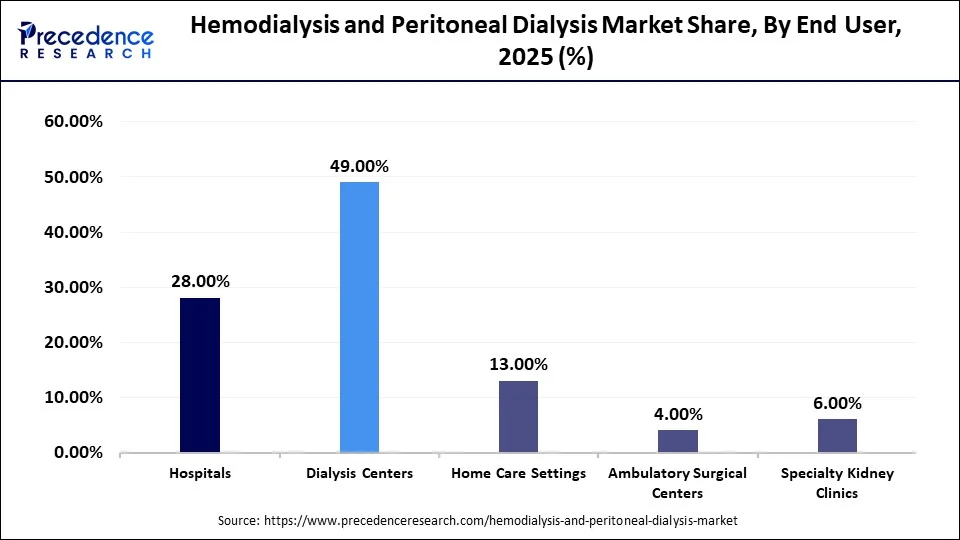
The home care settings segment held a 13% share of the market in 2025 and is expected to grow at the fastest CAGR of 9.8% during the projection period. This is mainly due to remote patient monitoring improving treatment safety, government reimbursement supporting home dialysis, and patient convenience increasing adoption. Home care removes the burden of strict, thrice-weekly visits to in-center facilities. Patients gain greater flexibility, autonomy, and an improved overall quality of life. Government bodies and public health agencies actively encourage home-based renal replacement therapies by offering advantageous reimbursement policies.
The hospitals segment held a 28% share of the market in 2025 and is expected to grow at a CAGR of 5.8% during the projection period. This is due to hospitals continuing to treat complex kidney disease cases, emergency dialysis demand remaining stable, and integrated care enhancing patient management. Hospitals and licensed dialysis centers offer highly trained healthcare professionals to administer treatments and handle sudden complications. Many individuals prefer in-center hemodialysis so that doctors and nurses manage the treatment process rather than managing complex daily equipment and procedures at home.
Indication Insights
Which Indication Segment Dominated the Hemodialysis and Peritoneal Dialysis Market?
The end-stage renal disease (ESRD) segment contributed the biggest market share with a 56% share in 2025, driven by ESRD patients requiring lifelong dialysis, rising incidence directly increasing treatment volume, and improved survival extending therapy duration. The soaring global prevalence of lifestyle-related diseases, mainly diabetes and hypertension, directly accelerates the progression of chronic kidney disease (CKD) into ESRD.
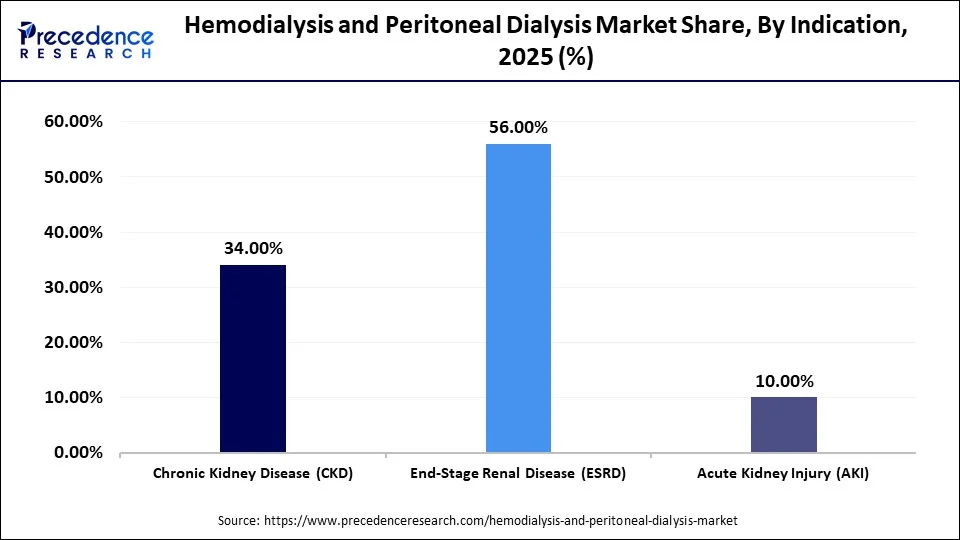
The acute kidney injury (AKI) segment held a 10% share of the market in 2025 and is expected to grow at the fastest CAGR of 8.4% during the projection period. This is mainly due to ICU admissions and sepsis cases increasing AKI incidence, CRRT utilization continues to expand, and critical care investments improve access. The surge in hospitalized patients experiencing septic shock, trauma, or post-surgery complications contributes to sudden kidney failure, demanding urgent dialysis to manage fluid overload and filter toxins. An aging global population is more susceptible to sudden renal failure triggered by underlying cardiovascular issues or metabolic diseases.
The chronic kidney disease (CKD) segment held a 34% share of the market in 2025 and is expected to grow at a CAGR of 6.2% during the projection period. This is due to rising diabetes prevalence, increasing CKD burden, early diagnosis expanding treatment planning, and increased healthcare awareness enhancing screening. Diabetes and hypertension are the two leading causes of kidney failure. As lifestyle-related diseases have escalated globally, they have caused a parallel spike in CKD progression, demanding dialysis.
Market Regional Analysis: North America, Europe, Asia-Pacific
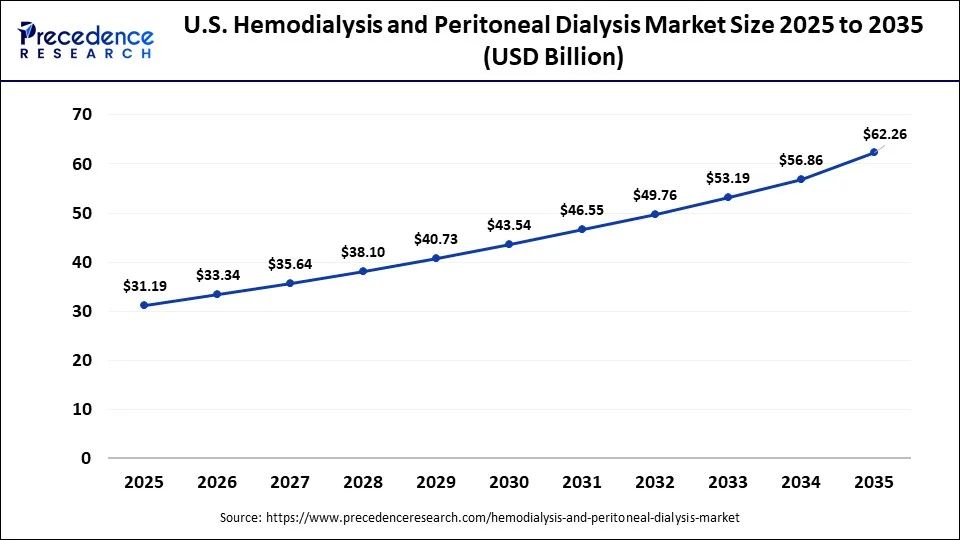
U.S. Hemodialysis and Peritoneal Dialysis Market Size and Growth 2026 to 2035
The U.S. hemodialysis and peritoneal dialysis market size was evaluated at USD 31.19 billion in 2025 and is projected to reach around USD 62.26 billion by 2035, growing at a CAGR of 7.16% from 2026 to 2035.
Which Factors Drive the Hemodialysis and Peritoneal Dialysis Market in North America?
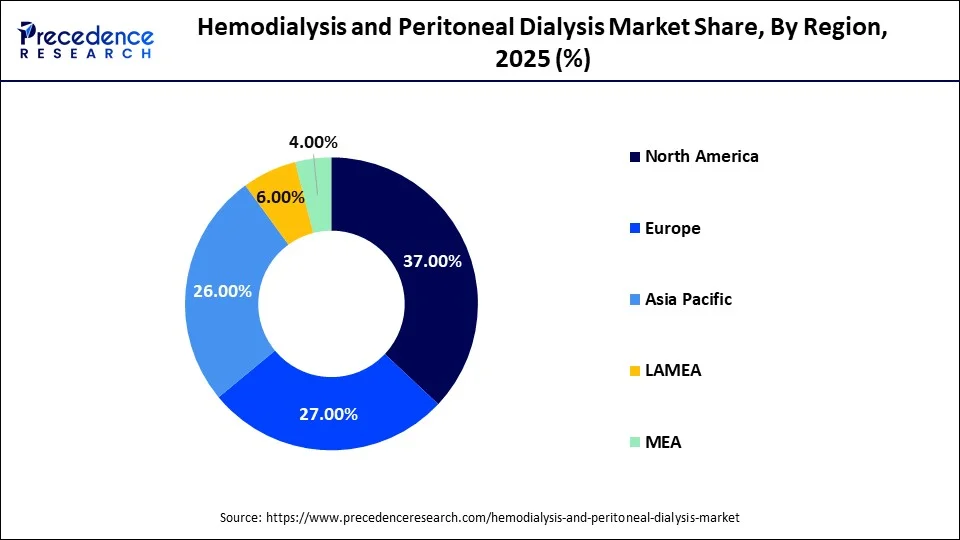
North America held a major market share of 37% in 2025. This is due to the high ESRD prevalence, favorable reimbursement, and advanced dialysis infrastructure, which manage market leadership. Strong adoption of home dialysis supports steady growth. Technological advancements have contributed to compact, portable, and wearable dialysis machines. This shift enables patients to receive treatment comfortably at home, greatly boosting the acceptance of peritoneal dialysis (PD).
U.S. Market Analysis
The U.S. market is driven by an aging population, rising rates of diabetes and hypertension, and even an ongoing shortage of organ donors. In addition, favorable government reimbursement frameworks along with technological innovations have drastically improved patient access to home-based therapies.
Europe: The Second-Largest Market
Europe held the second-largest share at 27% in 2025 and is expected to grow at a notable CAGR of 6.1% during the projection period, driven mainly by universal healthcare systems ensuring broad dialysis access, increasing acceptance of hemodiafiltration and home therapies supporting market growth. There is a strong, growing preference for home-based peritoneal dialysis over in-center hemodialysis. This change is supported by its cost-effectiveness, increased patient convenience, and even better quality of life.
UK Market Analysis
The UK market is driven by an aging population, rising rates of diabetes and hypertension, along with a corresponding surge in chronic kidney disease (CKD). In addition, the push toward home-based dialysis treatments, along with the integration of remote monitoring technologies, has accelerated market expansion.
Asia-Pacific: The Fastest-Growing Region
Asia-Pacific held a 26% share of the market in 2025 and is expected to grow at the fastest CAGR of 8.4% during the projection period, driven by rapid growth in CKD prevalence, expanding healthcare infrastructure, and increasing government investment, which drives strong dialysis need across China, India, and Southeast Asia. Advancements in portable, user-friendly equipment along with supportive peritoneal dialysis (PD) systems have allowed more patients to perform treatments safely at home, enhancing their quality of life while reducing hospital dependency.
China Market Analysis
The rapid growth of the Chinese market is mainly driven by a massive surge in CKD, favorable government reimbursement policies, and a severe shortage of kidney donors.
What Drives the Hemodialysis and Peritoneal Dialysis Market in Latin America?
Latin America held a 6% share of the market in 2025 and is expected to grow at a significant CAGR of 6.5% during the projection period, driven by improving healthcare access and expanding dialysis networks, increasing treatment availability, and public health initiatives. Peritoneal dialysis (PD) is seeing increased uptake due to its convenience, cost-effectiveness, and even the shift toward home-based therapies, which reduces the burden on clinical facilities.
Brazil Market Analysis
The Brazilian market is propelled by an aging population, the increasing incidence of chronic kidney diseases (CKD) driven by diabetes and hypertension, and even aggressive expansions by multinational healthcare conglomerates into the private RRT (Renal Replacement Therapy) sector.
How is the Opportunistic Rise of the Middle East and Africa in the Hemodialysis and Peritoneal Dialysis Market?
The Middle East and Africa held a 4% share of the market in 2025 and are expected to grow at a notable CAGR of 7.1% during the projection period, driven by rising diabetes prevalence, improving nephrology services, and healthcare investments expanding dialysis capacity across the region. Delayed diagnoses and a lack of knowledge regarding early-stage kidney disease usually result in rapid disease progression, leading to a much higher volume of patients demanding emergency or ongoing dialysis.
Saudi Arabia Market Analysis
The Saudi Arabian market is driven by increasing lifestyle-related diseases, along with substantial government healthcare investments under Vision 2030, and the need for patient-centric home care options.
Market Competitive Landscape: Leading Companies and Strategies
The hemodialysis and peritoneal dialysis market is highly competitive, led by established medical technology firms focusing on innovation, product expansion, and strategic partnerships. Major players invest in advanced dialysis machines, automated peritoneal dialysis systems, biocompatible dialyzers, and digital patient monitoring to improve treatment outcomes and patient convenience.
Firms are also expanding manufacturing capacities and strengthening distribution networks to address the increasing burden of chronic kidney disease and end-stage renal disease. The market is witnessing increased impact on home-based dialysis solutions, AI-enabled monitoring, and value-based care. Emerging regional producers intensify competition by offering cost-effective products, mainly in developing healthcare markets.
Hemodialysis and Peritoneal Dialysis Market Companies
- Asahi Kasei Corporation
- Baxter International
- Fresenius Medical Care
- Nipro Corporation
- Nikkiso Co. Ltd.
- Becton, Dickinson, and Company
- B. Braun
- Toray Industries Ltd.
- Diaverum
Recent Developments Hemodialysis and Peritoneal Dialysis Market (2025-2026)
- In May 2026, Fresenius Medical Care (FME) presented new research highlighting ongoing innovation at the European Renal Association (ERA) Congress 2026. The firm highlights advancements including new hemodiafiltration research, which reaffirm its leadership in evidence-based and personalized dialysis care, real-world evidence to strengthen patient-centered results across dialysis modalities, and the application of AI to improve patient outcomes. (Source: https://www.prnewswire.com)
- In December 2025, Nephrodite, Inc., a medical device firm developing an implantable, continuous renal replacement system, declared that the U.S. Food and Drug Administration (FDA) has granted Breakthrough Device Designation to the company's Holly™ implantable, continuous dialysis system. The designation recognizes Holly as a novel and transformative therapy addressing end-stage kidney disease (ESKD), which affects more than 850,000 people in the U.S., costing more than $50 billion annually.(Source: https://www.businesswire.com)
Segments Covered in the Report
By Dialysis Type
- Hemodialysis
- In-center Hemodialysis
- Home Hemodialysis
- Conventional Home HD
- Short Daily Home HD
- Nocturnal Home HD
- Peritoneal Dialysis
- Continuous Ambulatory Peritoneal Dialysis (CAPD)
- Automated Peritoneal Dialysis (APD)
By Product
- Dialysis Machines
- Hemodialysis Machines
- Peritoneal Dialysis Cyclers
- Dialyzers
- High-Flux Dialyzers
- Low-Flux Dialyzers
- Dialysis Catheters
- Bloodline Systems
- Dialysis Concentrates & Solutions
- Consumables & Accessories
By Modality
- Conventional Hemodialysis
- High-Flux Hemodialysis
- Hemodiafiltration (HDF)
- Continuous Renal Replacement Therapy (CRRT)
- Continuous Ambulatory Peritoneal Dialysis
- Automated Peritoneal Dialysis
By End User
- Hospitals
- Dialysis Centers
- Home Care Settings
- Ambulatory Surgical Centers
- Specialty Kidney Clinics
By Age Group
- Pediatric
- Adult
- Geriatric
By Indication
- Chronic Kidney Disease (CKD)
- End-Stage Renal Disease (ESRD)
- Acute Kidney Injury (AKI)
By Treatment Setting
- In-center Treatment
- Home-based Treatment
By Payer
- Public Healthcare
- Private Insurance
- Out-of-Pocket
By Region
- North America
- Latin America
- Europe
- Asia-pacific
- Middle and East Africa
For inquiries regarding discounts, bulk purchases, or customization requests, please contact us at sales@precedenceresearch.com
Frequently Asked Questions





Ask For Sample
No cookie-cutter, only authentic analysis – take the 1st step to become a Precedence Research client
 Get a Sample




 sales@precedenceresearch.com
 Schedule a Meeting
