



Hand Sanitizer Market Size, Key Companies, Company Product Portfolio, Hospital Procurement Trends, Manufacturing Capacity, Sales Performance, Regulatory Approvals, Company Market Share, and Forecast
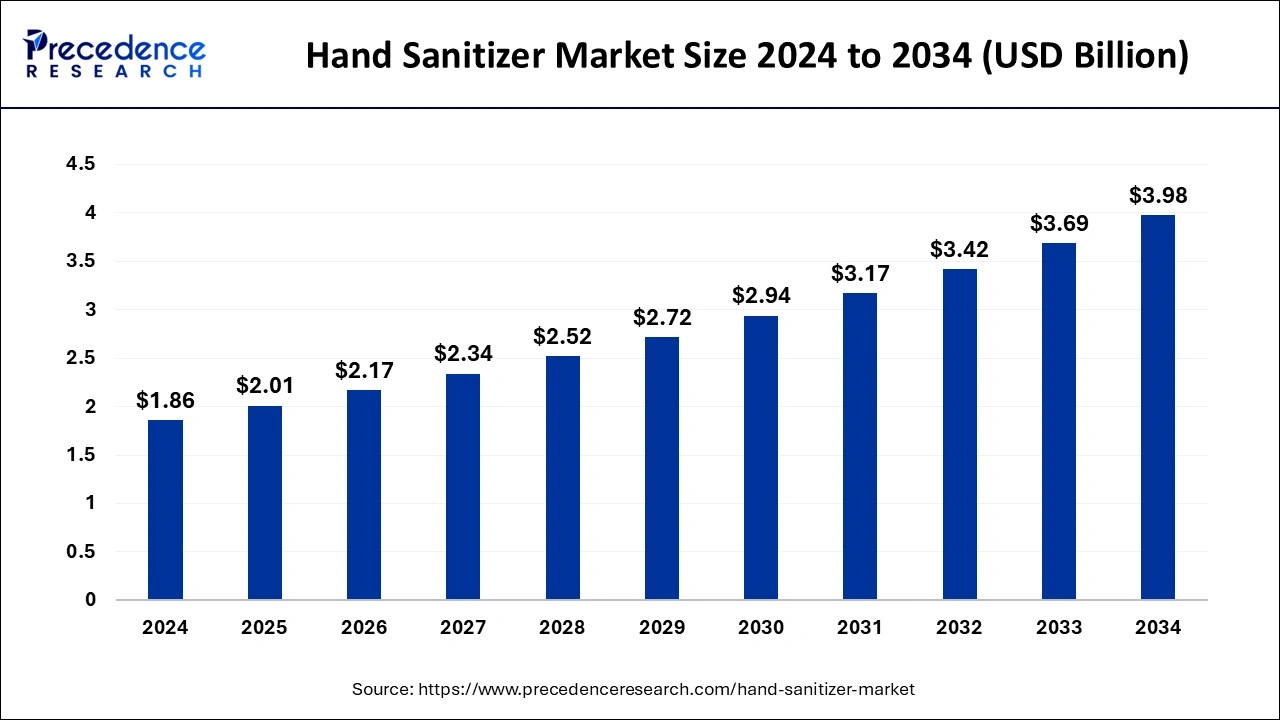
The global hand sanitizer market was valued at USD 7.61 billion in 2026 and is projected to reach USD 9.47 billion by 2035, growing at a CAGR of 2.46% from 2026 to 2035. The market is driven by increasing awareness of hand hygiene, rising demand for infection prevention products, and continued adoption of sanitizers across healthcare, commercial, and household settings. Product innovations such as alcohol-free formulations, skin-friendly ingredients, sustainable packaging, and AI-enabled smart dispensing systems are further supporting market growth. Additionally, expanding retail and e-commerce distribution channels, along with government initiatives promoting public hygiene, are expected to sustain long-term demand for hand sanitizers worldwide.
Source: https://www.precedenceresearch.com/hand-sanitizer-market
 Get a Sample
 Table Of Content


What is Hand Sanitizer Market Size?
The global hand sanitizer market size is estimated at USD 7.43 billion in 2025 and is predicted to increase from USD 7.61 billion in 2026 to approximately USD 9.47 billion by 2035, expanding at a CAGR of 2.46% from 2026 to 2035
Market Highlights
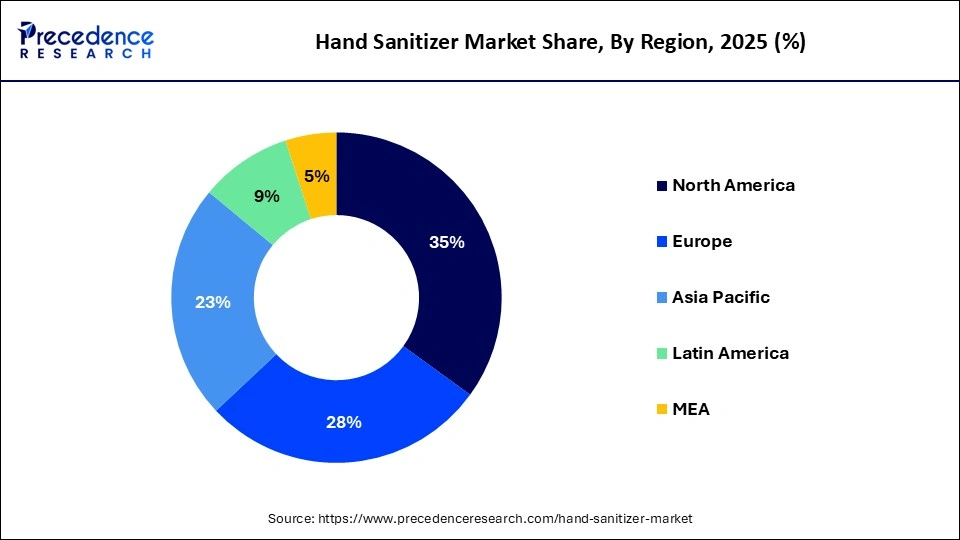
- North America dominated the global market with the largest market share of 35% in 2025.
- By Product, the hand sanitizing segment contributed the largest market share of 50% in 2025.
- By Distribution Channel, the supermarket and hypermarket channels segment captured the biggest market share of 40% in 2025.
Impacts of Artificial Intelligence on Sanitizer Industry
Artificial Intelligence (AI) is a technological innovation that is finding different applications across various industries. The hand sanitizers manufacturers are widely integrating AI technology by utilizing it through smart packaging, automation and Internet of Things (IoT). AI can help in processes at different levels be it operations, packaging, sensor or marketing. The AI technology was used after the COVID 19 pandemic to try to create a contactless sanitizer using automation powered by AI. This time period led to many development and research activities of technological advancements utilizing AI were greenlit. This has helped the integration of AI into the and sanitizer industry much easier. There are ongoing developments like using IoT for customer engagement and customized packaging for consumers. AI is expected to further help the growth of hand sanitizer market.
Hand Sanitizer Market Growth Factors
- There has been an increasing awareness of hand hygiene to limit the incidence of nosocomial infections. Thus, hand hygiene has emerged as the most important aspect of personal care. The growing importance of hand hygiene is boosting the growth of the hand sanitizer market. Furthermore, the government endorses the practice of hand care products to upsurge responsiveness and evade health issues. For example, the FDA and the WHO have undertaken initiatives to make consumers aware of hand hygiene and the hazards related to not upholding hygiene.
- Alcohol-based hand sanitizers effectively reduce the number of microorganisms on the hands under specific conditions. They typically contain concentrations of alcohol ranging from 60% to 95%, which is crucial for their efficacy. When applied correctly, these sanitizers can quickly eliminate many bacteria and some viruses. However, it is essential to note that they do not eradicate all types of germs. For instance, certain pathogens, including some non-enveloped viruses and spores, may not be affected by alcohol-based sanitizers. Therefore, while hand sanitizers are a convenient alternative for hand hygiene, they should not replace traditional handwashing with soap and water, especially when hands are visibly dirty or when dealing with certain types of infections.
- Many people continue using hand sanitizer after the COVID-19 pandemic as a habit, while for some people, it is about maintaining good health. This awareness amongst the people contributes to market expansion. Moreover, key players are developing many variants of hand sanitizer to suit different consumer requirements and skin types.
Hand Sanitizer Market Trends
- Current Product Designs: The gel formulations have been developed due to their convenience of application and familiarity to organizations that are beginning to implement sprays, foams, portable mini-bottles, and wipes.
Transportation and restaurant centers serve and choose sprays for fast-drying convenience, while the gyms can install the foaming dispensers, which actually feel lighter on the skin. - Environment-friendly Demand: Sustainability is another main demand. Users are seeking biodegradable packaging, smooth formulations, and natural ingredients with moisturizers such as vitamin E or aloe. This shows a huge selection for ethical and green products and serves any brand with an extra border.
- Regulations and Compliance: The FDA and CDC have suggested that hand sanitizers have at least 60% ethanol and 70% isopropanol to operate smoothly. There are also strong bans on methanol and demand for transparent packaging and labelling.
- IoT Inventory Management: Several luxury public touchless systems now include smart technology to track the sanitizer application levels and alert staff when a refill is due.
Market Outlook
- Industry growth overview: The complete industry demand for hand sanitizers is because marketers are concentrating on health-conscious formulations, which involve research and development to lower the reliance on toxic chemicals and have revealed ideal alternatives to alcohol by adding natural ingredients and moisturizers to completely prevent skin dryness and avoid pungent smells.
- Global expansion: In recent years, there has been rising interest in natural and herbal products because of their biocompatibility, safety, and lower side effects. The herbal formulations use plant-based ingredients that have anti-inflammatory, antimicrobial, and moisturizing factors. Such formulations not only ensure effective microbial management but also assist in managing skin health.
- Sustainability trends: Compostable and recyclable packaging are examples of eco-friendly alternatives. The recyclable materials, such as glass, plastic, and paper, can be transformed into new products. Compostable materials that deliver the application are the ideal option as they break down completely and provide nutrients to the soil.
- Startup Ecosystem: The Green Pyramid Biotech (GPB), which is a company that works on Food, Agriculture, and Biotechnology, is located in Pune, Maharashtra, and is being sponsored by the Department of Science & Technology (DST), for the production of alcohol-free and natural sanitizer for surfaces and hands with long -term antiviral and antibacterial effect.
Market Scope
| Report Coverage | Details |
| Market Size in 2025 | USD 7.43 Billion |
| Market Size in 2026 | USD 7.61 Billion |
| Market Size by 2035 | USD 9.47 Billion |
| Market Growth Rate from 2026 to 2035 | CAGR of 2.46% |
| Largest Market | North America |
| Base Year | 2025 |
| Forecast Period | 2026 to 2035 |
| Segments Covered | Product, Distribution Channel, and Region |
| Regions Covered | North America, Europe, Asia-Pacific, Latin America and Middle East & Africa |
Hand Sanitizer Market Segment Insights
Product Insights
Among different product segment of hand sanitizer market, gel based hand sanitizer emerged as prominent segment with around 50% share of the total market in 2024. Gel sanitizers are typically watery and thin in formulation and thus deliver the handiness of getting spread simply and enter into the skin to destroy most of the bacteria. Stress-free product obtainability and broader access to this kind of hand sanitizer are some of the reasons fueling their demand in global marketplace. Further, this product segment offers reduced microbial populations in many ways. Furthermore, the inclusion of different flavors upsetting the scent is also supporting growth of this type of product in the hand sanitizer market.
Distribution Channel Insights
Based on distribution channel the market is segmented into drug store, online, hypermarket & supermarket, and specialty store.
In 2025, out of different distribution channel, supermarket and hypermarket channels occupied prominent share around 40% of the global market. Escalating number of supermarkets and hypermarkets throughout different regions has observed a rush in the distribution of hand sanitizers in the market. Also, this channel offers the consumers with benefit of scanning the product before purchasing that aids them select the right product. Furthermore, this channel also gives swift access to the product than online channels where customers need to wait for the delivery of the product.
Hand Sanitizer Market Regional Insights
What is the Size of the U.S. Hand Sanitizer Market?
The U.S. hand sanitizer market size is calculated at USD 1.82 billion in 2025 and is expected to reach nearly USD 2.37 billion in 2035, accelerating at a strong CAGR of 2.68% between 2026 to 2035
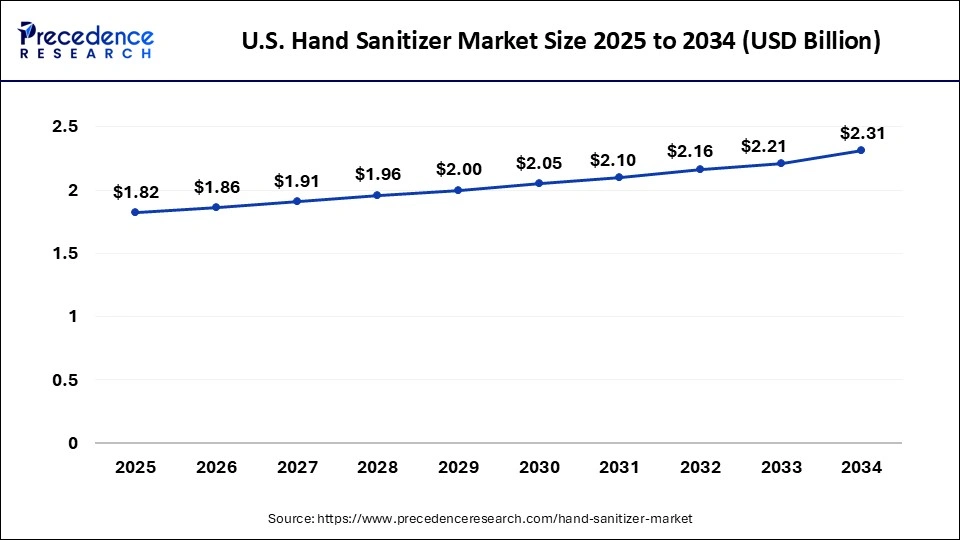
The U.S. leads the hand sanitizer market with more inclination of consumers to pay for hygiene and personal care products.
- U.S. : The region boasts a diverse array of prominent brands and manufacturers, thriving on a steady demand fueled by the ever-evolving healthcare and retail sectors. This dynamic environment fosters innovation and growth, making it a vital hub for industry leaders and a cornerstone for consumer needs.
Due to existence of great consumer awareness for hand hygiene, North America and Europe emerged as major contributors in the demand of hand sanitizer in 2024. Regulatory establishments such as WHO and FDA have commenced awareness movements to up keep the utilization of hand sanitizers in North America. Further, augmented government initiatives to upsurge production and improve the supply chain of hand sanitizers in the countries of these regions is anticipated to lift the growth of hand sanitizer in these regions during years to come. For illustration, trade associations like British Retail Consortium proclaimed that the disturbance to the supply chain of hand sanitizers has been restricted, and the obtainability of these products will remain good.
North America, with its larger number of market participants and uppermost penetration of diverse forms of hand sanitizers including foam based products, gel based products, spray, and wipes is generating great revenue in the market.
- Canada: Government initiatives promoting public hygiene have spurred a significant increase in the adoption of sanitary practices and products. Campaigns aimed at raising awareness about the importance of cleanliness in public spaces have resonated with communities. As a result, handwashing stations have become commonplace in busy areas, and the use of hand sanitizers is now a habitual practice for many individuals. Educational programs in schools and public forums emphasize the importance of hygiene, helping to cultivate a culture where cleanliness is prioritized. These efforts have not only enhanced personal well-being but have also contributed to a healthier environment overall, encouraging a collective responsibility towards public health.
Aggregate internet saturation in numerous countries like Mexico, India, China, and Brazil has established the online sales channels market since last few years. Furthermore, online retailers such as Walmart, Amazon, Alibaba and other similar service providers are concentrating on the uninterrupted obtainability of personal care products throughout the world. Online retail channels are extensively preferred in developed nations such as Germany, the U.S. and U.K., for buying consumer goods and exclusive personal care products.
- Prominent pharmaceutical and personal care brands in countries such as India and South Korea showcase an extensive array of formulations tailored to meet the unique needs of their consumers. Among these offerings, herbal and alcohol-free sanitizers appeal to a wide range of preferences, addressing the growing demand for gentler, more natural alternatives. These products often feature soothing ingredients like aloe vera and essential oils, which not only cleanse but also nourish the skin.
- Brands are increasingly prioritizing sustainability in their packaging choices, opting for recyclable materials and eco-friendly designs to cater to environmentally conscious consumers. This commitment to sustainability not only enhances brand reputation but also aligns with the values of modern shoppers who seek responsible purchasing options.
- To effectively attract and engage mass markets, companies are exploring various distribution channels, including e-commerce platforms and partnerships with local retailers. This multi-channel approach ensures that their products remain accessible to a wider audience.
Government Support for Hand Sanitizer Market
- Government policies are important for the development of herbal sanitizer production. In India, the AYUSH ministry serves insightful assistance to entrepreneurs in terms of the Ayurvedic sector, which delivers rules, help, and approvals. Grants and subsidies for medium and small companies help in the process of setting up the production facilities. (Source: https://www.niir.org)
- The European Chemicals Agency, created by an official ambassador from the EU Member States, had decided on the future of ethanol -based biocidal items last November 2025. Additionally, the World Health Organization (WHO) has called the ethanol-dependent hand sanitizer the gold standard for hand hygiene in the healthcare sector. (Source: https://www.detergentseurope.eu)
Partnerships in the Hand Sanitizer Market
- Purell hand sanitizers are being formulated with ethyl alcohol, which is a crucial ingredient for antimicrobial impact, killing 99.99% of the most prevalent germs that can cause illness. GOJO, a brand behind Purell, has partnered with hospital systems with infection control teams to assist with hand hygiene compliance initiatives and lower HAIs (healthcare-linked infections).
(Source: https://mfimedical.com)
Hand Sanitizer Market Companies
- Unilever
- Vi-Jon
- Chattem, Inc.
- Reckitt Benckiser Group plc
- Procter and Gamble
- The Himalaya Drug Company
- GOJO Industries, Inc.
- Best Sanitizers, Inc.
- Kutol
- Henkel AG and Company
Recent Developments
- In July 2026, Bath & Body Works disclosed Fruit Fusion, which is a new personal care collection led by actress and singer Hilary Duff. Fruit Fusion has revealed PocketSpray hand sanitizer, which is a completely new design for the brand, along with Perfume Mist for Body and Hair, Lip Oil, and more.
(Source: https://ww.fashionnetwork.com.) - In July 2025, Noshinku, which is a brand that develops personal care essentials for current users, launched the latest product line in its product portfolio named Nourishing Travel Hand Sanitizing Wipes. They are crafted for on-the-go application without adjusting the contents.
(Source: https://www.globenewswire.com) - In July 2025, Crocs merged with a hand sanitizer manufacturer named Touchland, which dropped two hand sanitizer scents, beach coco and berry bliss, that have attention-grabbing Crocs-style cases and are available for USD 10-USD 20 on July 15.
(Source: https://www.nj.com) - In March 2024, SafeTouch has launched an innovative contactless sanitizer dispenser designed for public spaces such as airports, malls, and hospitals. The dispenser uses motion-sensor technology to automatically release a dose of sanitizer, reducing the spread of germs from surface contact. It also features a touchless payment system for convenience in commercial spaces.
Latest Announcements
- In November 2024, GOJO Industries President and CEO, Carey Jaros and Corporate Sales Director Moshe Lewis and National Sales VP, Ashley Fubini received top honors from ISSA for industry leadership. Joras expressed her gratitude by saying that it is her honor to accept this award but it wouldn't have been possible with her Team GOJO.
Hand Sanitizer Market Segments Covered in the Report
By Product Type
- Foam
- Gel
- Liquid
By Distribution Channel
- Drug Store
- Online
- Hypermarket & Supermarket
- Specialty Store
By Region
- North America
- Latin America
- Europe
- Asia-pacific
- Middle and East Africa
For inquiries regarding discounts, bulk purchases, or customization requests, please contact us at sales@precedenceresearch.com
Frequently Asked Questions
Tags





Ask For Sample
No cookie-cutter, only authentic analysis – take the 1st step to become a Precedence Research client
 Get a Sample
.webp)



 sales@precedenceresearch.com
 Schedule a Meeting
