



Pingueculum Drugs Market Size, Companies, Share, Patient Volume, Treatment Adoption Rates, Pricing Analysis, Regulatory Landscape, Competitive Positioning, and Demand Forecast
Pingueculum Drugs Market (By Drug Class: Anti-inflammatory Agents, Topical corticosteroids, Combination Therapies, Other Supportive Agents; By Formulation: Eye Drops, Ointments & Gels, Sprays / Solutions & Others; By Prescription Type: Over-the-Counter (OTC), Prescription Drugs; By Indication / Symptom Target: Redness & Irritation Relief, Dryness / Tear Film Support, Inflammation Control, Allergic Symptom Management; By End-User: Ophthalmology / Eye Care Clinics, Retail Pharmacy Purchases (OTC),a Online Pharmacies / E-commerce) - Global Industry Analysis, Size, Trends, Leading Companies, Regional Outlook, and Forecast 2026 to 2035
Source: https://www.precedenceresearch.com/pingueculum-drugs-market
 Get a Sample
 Table Of Content


What is the Pingueculum Drugs Market Size?
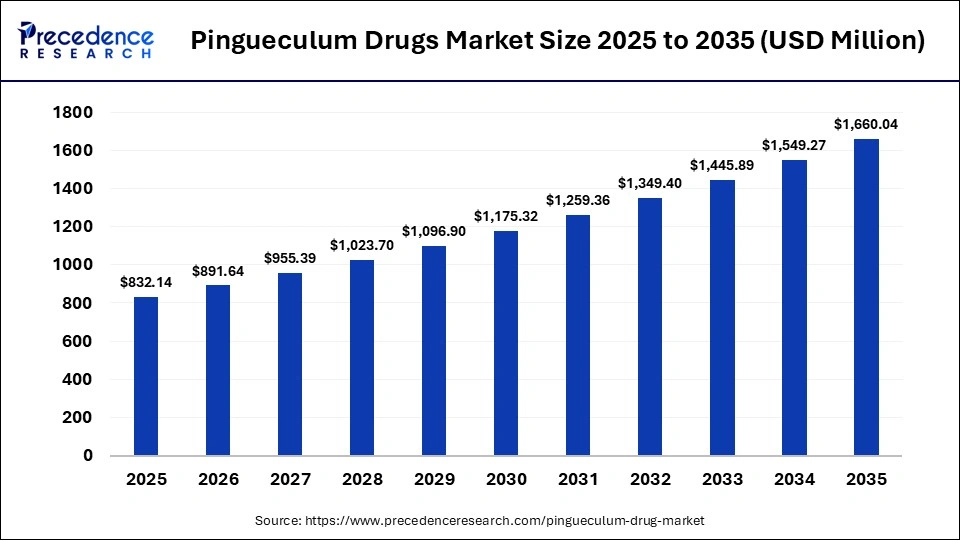
The global pingueculum drugs market size was calculated at USD 832.14 million in 2025 and is predicted to increase from USD 891.64 million in 2026 to approximately USD 1,660.04 million by 2035, expanding at a CAGR of 7.15% from 2026 to 2035.The market is witnessing substantial growth due to increasing demand for non-invasive lubricating and anti-inflammatory eye treatments, driven by rising screen-related ocular surface disorders, and advancements in ocular drug delivery systems.
Market Highlights
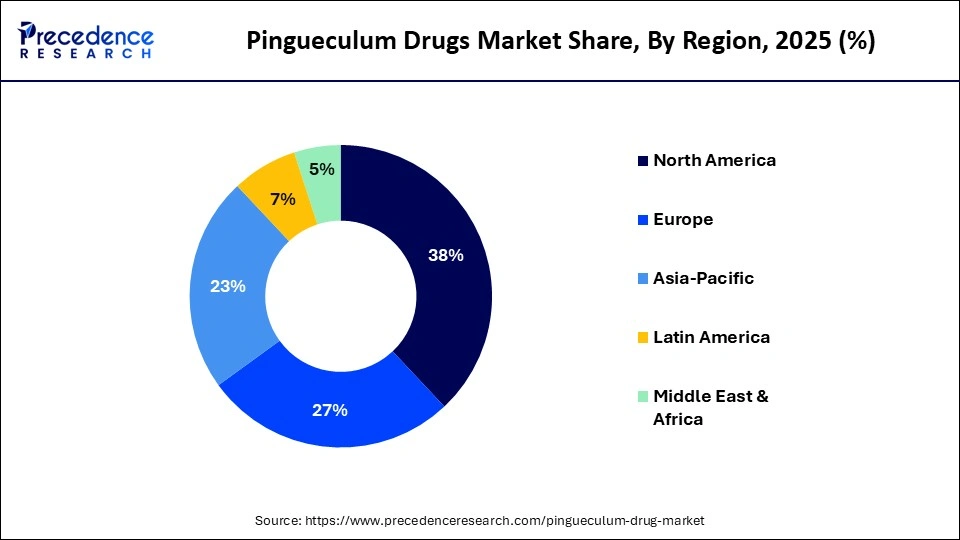
- North America dominated the market with a major market share of around 38% in 2025.
- Asia Pacific is expected to grow at the fastest CAGR between 2026 and 2035.
- By drug class, the anti-inflammatory agents segment contributed the largest market share of around 34% in 2025.
- By drug class, the lubricants & artificial tears segment is expected to grow at a strong CAGR between 2026 and 2035.
- By formulation, the eye drops segment held the highest market share of around 72% in 2025.
- By formulation, the sprays/solutions & others segment is expected to expand at a significant CAGR from 2026 to 2035.
- By prescription type, the over-the-counter (OTC) segment captured the highest market share of about 53% in 2025.
- By prescription type, the prescription drugs segment is poised to grow at a healthy CAGR between 2026 and 2035.
- By indication/symptom target, the redness and irritation relief segment generated the biggest market share of about 42% in 2025.
- By indication/symptom target, the dryness / tear film support segment is expected to expand at the fastest CAGR between 2026 and 2035.
- By end-user, the ophthalmology/eye care clinics segment accounted for the largest market share of around 46% in 2025.
- By end-user, the online pharmacies/e-commerce segment is expected to grow at a solid CAGR between 2026 and 2035.
Market Overview
The global pingueculum drugs market encompasses pharmaceutical agents and therapeutic formulations used for the treatment, management, or symptomatic relief of pingueculum, a benign ocular surface condition characterized by yellowish conjunctival growth associated with chronic irritation, UV exposure, and inflammation. The market comprises anti-inflammatory drugs, lubricants/artificial tears, antihistamines, mast cell stabilizers, and combination therapies, all applied topically to reduce redness, irritation, dryness, and associated discomfort. Growth is driven by rising prevalence of ocular surface disorders, increasing screen time and environmental exposure, and greater uptake of eye care interventions.
How is AI Transforming the Pingueculum Drugs Market?
Artificial Intelligence (AI) is transforming the pingueculum drugs market by accelerating drug discovery and enabling more precise, image-based diagnosis. AI algorithms analyze large chemical databases to identify potential compounds that inhibit the growth of conjunctival lesions, reducing reliance on traditional trial-and-error methods. AI is used to model the interaction between drugs and vascular growth factors responsible for the lesion, helping to develop targeted, non-steroidal treatments. AI analyzes individual patient characteristics and historical data to suggest personalized treatment strategies.
Major Trends in the Pingueculum Drugs Market
- Development of Targeted Therapies for Vascularized Pingueculum: There is a significant push toward developing novel, targeted pharmacological treatments, as there are currently limited FDA-approved treatments specifically for pingueculum.
- Increasing Demand Driven by Aging Population and UV Exposure: The prevalence of pingueculum increases with age, with nearly all individuals showing signs of it by their 80s. As the global geriatric population grows, the demand for treatment increases.
- Adoption of Artificial Tears & Lubricants for Symptom Relief: Artificial tears and topical lubricants are in high demand. They are used to treat the dryness and foreign body sensation associated with the growth.
- Growth of OTC Products and Online Distribution: With increasing access to healthcare information, patients are relying more on OTC lubricating eye drops and ointments for mild, non-inflamed conditions.
Market Scope
| Report Coverage | Details |
| Market Size in 2025 | USD 832.14 Million |
| Market Size in 2026 | USD 891.64 Million |
| Market Size by 2035 | USD 1,660.04 Million |
| Market Growth Rate from 2026 to 2035 | CAGR of 7.15% |
| Dominating Region | North America |
| Fastest Growing Region | Asia Pacific |
| Base Year | 2025 |
| Forecast Period | 2026 to 2035 |
| Segments Covered | Drug Class, Formulation, Prescription Type , Indication / Symptom Target , End-User, and Region |
| Regions Covered | North America, Europe, Asia-Pacific, Latin America, and Middle East & Africa |
Segment Insights
Drug Class Insights
How did the Anti-Inflammatory Agents Segment Dominate the Pingueculum Drugs Market?
The anti-inflammatory agents segment dominated the market while holding a dominant share of approximately 34% in 2025. This is primarily due to the strong demand for managing inflammation, pain, and redness associated with various conditions. Anti-inflammatory eye drops are the standard prescription treatment for these acute symptoms. Prescription-based anti-inflammatory and fast-healing medications are used to manage moderate-to-severe symptoms. The increasing levels of environmental pollutants, UV exposure, and a growing geriatric population contribute to a higher incidence of eye inflammation, which drives the demand for effective, fast-acting anti-inflammatory therapies.
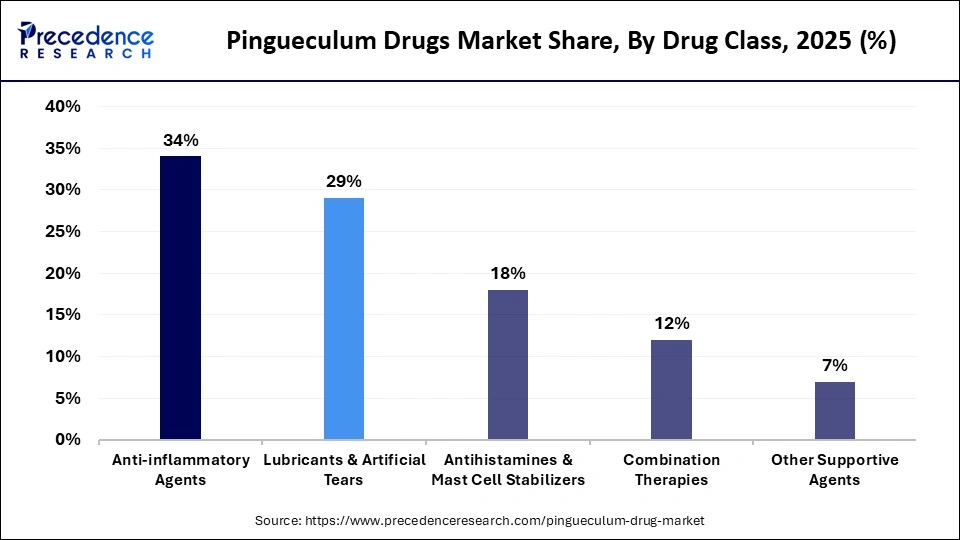
The lubricants & artificial tears segment is expected to experience the fastest growth. This growth is largely attributed to their role as the primary, first-line, and non-invasive symptomatic treatment for eye conditions. Pingueculum can cause discomfort, dryness, and inflammation, and lubricating eye drops are the standard non-invasive method for providing immediate, temporary relief from burning and irritation. Increased exposure to UV light, wind, and dust, along with a rising geriatric population, is leading to a higher prevalence of these symptoms, driving the demand for ongoing eye lubrication.
Formulation Insights
What Made Eye Drops the Leading Segment in the Pingueculum Drugs Market?
The eye drops segment led the market with the highest share of 72% in 2025. This dominance is due to their ease of use, high availability for symptom relief, and the expansion of product portfolios. These non-invasive formulations relieve symptoms like dryness, irritation, and inflammation associated with pingueculum. The widespread availability of both OTC artificial tears and anti-inflammatory, steroid-based drops significantly contributes to segmental dominance.
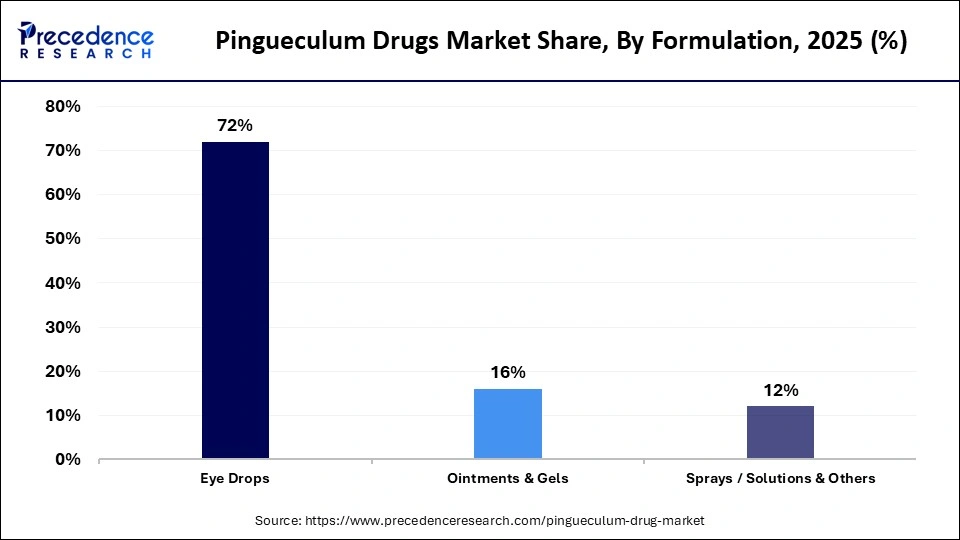
The sprays/solutions & other segment is expected to grow at the fastest CAGR in the foreseeable future. This is mainly due to their high efficacy in providing symptomatic relief, ease of use for chronic conditions, and the widespread availability of OTC options. As an eye condition often treated at home, the accessibility of OTC solutions drives high sales volumes, with this segment growing steadily to meet consumer demand for immediate, self-administered relief. The formulation of solutions, including both drops and sprays, is considered the most non-invasive and preferred method for treating surface-level ocular disorders.
Prescription Type Insights
Why Did the Over-the-Counter (OTC) Segment Dominate the Pingueculum Drugs Market?
The over-the-counter (OTC) segment dominated the market with approximately 53% share in 2025. This dominance is primarily due to the strong consumer preference for accessible, self-administered treatments for mild symptoms, such as lubricants and artificial tears for irritation. OTC products serve as the primary first-line approach for managing dryness, irritation, and redness associated with pingueculum, allowing consumers to purchase them without a doctor's visit. The availability of both branded and generic OTC eye drops provides a more affordable alternative to prescription medications, resulting in widespread adoption.
The prescription drugs segment is expected to experience the fastest growth. This growth is driven by the need for high-efficacy, specialized treatments for severe ocular inflammation and an increasing geriatric population. Prescription drugs offer superior efficacy and safety profiles for managing, treating, and preventing the progression of serious, chronic eye conditions related to pingueculum, making them the preferred choice by clinicians. Increased investment by pharmaceutical companies in developing improved, targeted formulations, including sustained-release options, is enhancing the availability of prescription products.
Indication/Symptom Target Insights
What Made Redness & Irritation Relief the Dominant Segment in the Market?
The redness & irritation relief segment dominated the market with around 42% share in 2025. This segment's dominance is largely attributed to the effectiveness of artificial tears, lubricants, and anti-inflammatory eye drops in treating these conditions. Pingueculum is a non-malignant, chronic issue often caused by environmental factors, resulting in dryness, redness, and irritation. Treatment focuses on alleviating daily symptoms rather than surgical intervention. Artificial tears and lubricants are the frontline OTC treatments and command high sales volumes, providing immediate relief from the irritation.
The dryness / tear film support segment is expected to experience the fastest growth during the forecast period. This growth is primarily attributed to the direct link between elevated, protruding pingueculum lesions and the disruption of the tear film. Increased awareness of environmental factors, such as high UV exposure, dry climates, wind, and pollution, is accelerating the incidence of dryness, which in turn drives the demand for prophylactic and therapeutic dry eye care. The shift toward using lubricating eye drops to prevent further irritation made this segment a high-growth area.
End-User Insights
How Did the Ophthalmology/Eye Care Clinics Segment Dominate the Pingueculum Drugs Market?
The ophthalmology/eye care clinics segment dominated the market by capturing about 46% market share in 2025. This dominance is mainly due to the increased requirement for professional diagnosis, specialized treatment, and the increasing prevalence of ocular conditions among the aging population. Specialized clinics offer comprehensive eye examinations that are necessary to distinguish, necessitating expert consultation. More severe cases require specialized, prescription-based steroid eye drops or NSAIDs, prescribed by ophthalmologists, along with increasing access to advanced care, establishing them as the dominant end-user segment.
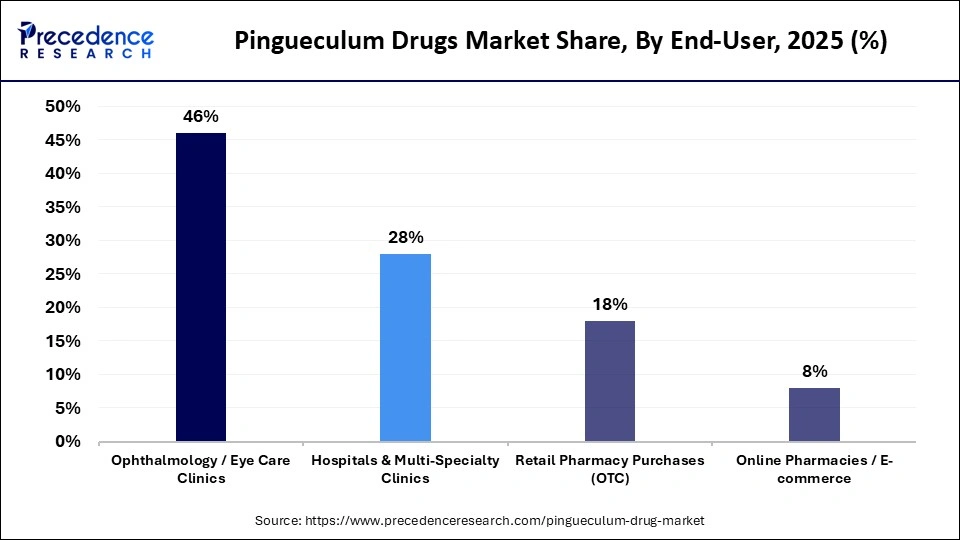
The online pharmacies/e-commerce segment is expected to register the fastest CAGR during the forecast period. This is mainly driven by the growing adoption of digital platforms for purchasing OTC and prescribed eye drops, and high consumer demand for convenience. Online platforms offer a broader range of products, allowing customers to easily compare prices for different brands of artificial tears and anti-inflammatory eye drops. The integration of telemedicine with e-pharmacies enables patients to consult doctors virtually for eye irritation and instantly order recommended eye treatments through online channels.
Regional Insights
How Big is the North America Pingueculum Drugs Market Size?
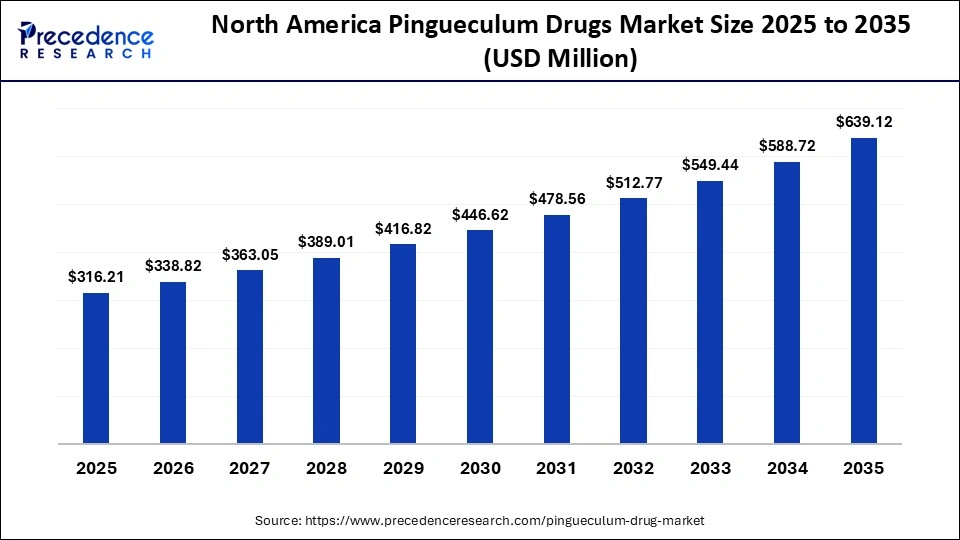
The North America pingueculum drugs market size is estimated at USD 316.21 billion in 2025 and is projected to reach approximately USD 639.12 billion by 2035, with a 7.29% CAGR from 2026 to 2035.
What Made North America the Dominant Region in the Pingueculum Drugs Market?
North America dominated the pingueculum drugs market with about 38% share in 2025. This dominance mainly stems from high disease prevalence, high healthcare spending, advanced healthcare infrastructure, and rapid adoption of new, branded therapies. Significant spending on ocular care, including the high cost of advanced treatments, strengthens the market's economy. The presence of the FDA encourages the development and approval of new, targeted therapies, with a strong focus on non-surgical treatments for vascularized pingueculum. The highly developed healthcare system with significant investment in ocular research and development allows for the faster introduction of new, less invasive treatments.
What is the Size of the U.S. Pingueculum Drugs Market?
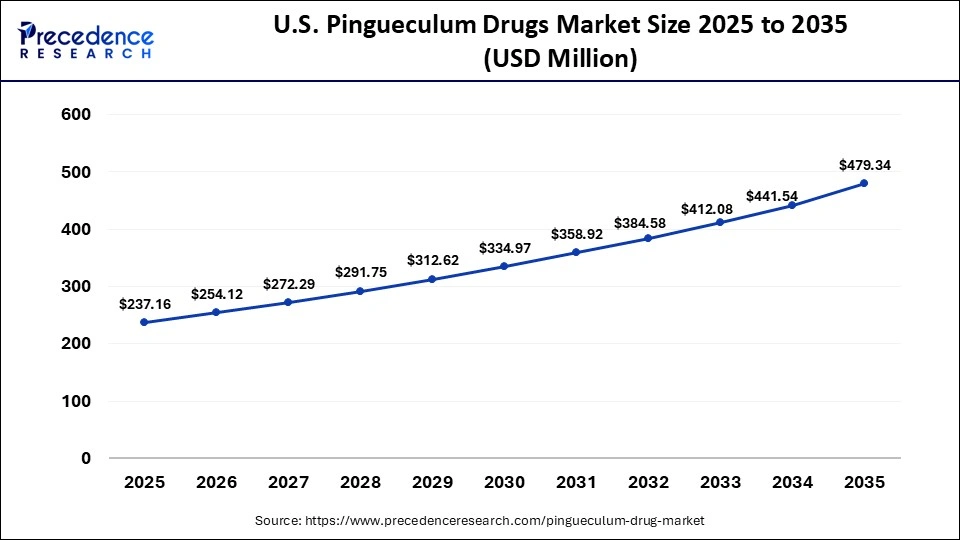
The U.S. pingueculum drugs market size is calculated at USD 237.16 billion in 2025 and is expected to reach nearly USD 479.34 billion in 2035, accelerating at a strong CAGR of 7.29% between 2026 and 2035.
U.S. Pingueculum Drugs Market Trends
The U.S. plays a dominant role within the region, mainly due to high awareness of eye health, a large geriatric population, and significant UV exposure in some regions, causing higher prevalence. The U.S. FDA sets the benchmark for drug approvals, with studies on vascularized pingueculum focusing on reducing conjunctival hyperemia and improving patient comfort. Major ophthalmology companies present in the U.S. market include Alcon, AbbVie, and Bausch & Lomb, which also contribute to market growth.
Why is Asia Pacific Considered the Fastest-Growing Region in the Pingueculum Drugs Market?
Asia Pacific is expected to grow at the fastest CAGR during the forecast period. This growth is mainly driven by high disease prevalence, environmental factors, and improving healthcare infrastructure. The region has a high incidence of a pingueculum due to prolonged UV radiation exposure, significant pollution levels, and windy conditions in several areas, which are considered primary risk factors for conjunctival growths. The rising geriatric population is driving up cases of age-related eye disorders, including degenerations like pingueculum. Countries like China and India are experiencing significant healthcare modernization, with government-led initiatives aiming to reduce eye disease burdens.
India Pingueculum Drugs Market Trends
India is a major contributor to the market within Asia Pacific, mainly due to being the largest supplier of generic medicines globally. International firms are increasingly partnering with Indian companies, such as Cipla, for manufacturing and commercializing new ophthalmic treatments, leveraging India's lower production costs. The Indian ophthalmic drug industry is expanding rapidly, contributing to the market. Moreover, this market growth is supported by increased healthcare spending, rising prevalence of ocular conditions, and improved access to pharmacies.
What is Causing the Rise of Latin America in the Pingueculum Drug Market?
Latin America is expected to grow at a considerable CAGR in the upcoming period, due to improvements in healthcare systems and greater consumer awareness regarding the numerous visual impairments associated with exposure to the sun and living in dry climates. Government and medical professionals are increasingly focusing on improving eye healthcare by improving the availability of ophthalmic products and through public health initiatives.
Brazil Market Trends
The Brazilian market is driven by an increased number of eye-related consultations and an overall increase in public health initiatives designed to promote greater access to ophthalmic treatment options. The demand for lubricating and anti-inflammatory products will continue to be strong as the population increases, along with an increase in the number of people using screens and longer periods of time using screens. Traditional pharmaceutical distributors are expanding their therapeutic line of ophthalmic products to satisfy both the urban and aging populations.
Will the Middle East and Africa Grow in the Pingueculum Drugs Market?
The Middle East and Africa region is expected to grow at a notable CAGR in the foreseeable future, due to increased exposure from excessive sunlight, desert dust, and dry weather conditions, causing increased incidence of eye irritation disorders, and the modernization of the healthcare sector. Additionally, demand for artificial tears, anti-inflammatories, and protective eye care products is steadily increasing in the region. The combination of Improved Access to pharmacies and specialty clinics and increased awareness about eye protection are other factors contributing to market growth in the Middle East and Africa.
Saudi Arabia Market Trends
Saudi Arabia is currently the leading nation in terms of expanding healthcare investment and specialized ophthalmic services within the Middle East & Africa region; therefore is increasing access to high-end Eye Care Drugs through both hospitals and retail pharmacies. Due to continuous exposure to dry weather conditions and dust storms, demand for lubricating and soothing ophthalmic products is exceptionally high, while government healthcare reforms are facilitating greater patient access to treatment for eye disorders.
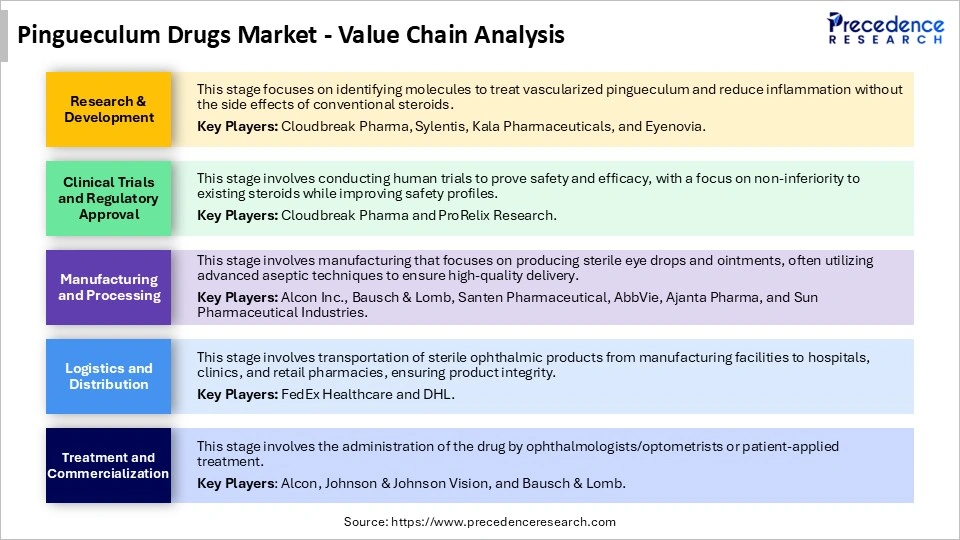
Pingueculum Drugs Market Value Chain Analysis
Who are the Major Players in the Global Pingueculum Drugs Market?
The major players in the pingueculum drugs market include Cloudbreak Pharma, Inc., Alcon Inc., AbbVie Inc., Bausch & Lomb Incorporated, Santen Pharmaceutical Co., Ltd,. Johnson & Johnson Vision Care, Inc., Amneal Pharmaceuticals LLC, Prestige Consumer Healthcare, Inc., OASIS Medical, Théa Laboratories, Sylentis, Bayer AG, Zydus Group, Eyeris Visioncare Pvt. Ltd., Similasan Corporation
Recent Developments
- In January 2026, Cloudbreak Pharma Inc. announced a successful End-of-Phase 2 meeting with the FDA for CBT-004, aimed at treating pingueculum. Dr. Francis Mah from Scripps Clinic highlighted that the current standard treatment, corticosteroids, only addresses symptoms and has safety concerns. In a previous Phase 2 study, CBT-004 not only alleviated bothersome symptoms but also showed potential to modify the disease's progression, with future incorporation into clinical practice.
(Source: https://firstwordpharma.com) - In 2025, ProRelix Research was approached by a Middle Eastern biotech firm to manage a critical Phase I/II trial for an innovative eye drop formulation targeting both pingueculum and pterygium, which often lack sufficient treatment options, leaving surgery as the only alternative. This eye drop could transform treatment possibilities. The sponsor needed a CRO skilled in navigating regulatory complexities and managing limited patient pools, and ProRelix Research was well-prepared for this.
(Source: https://prorelixresearch.com)
Segments Covered in the Report
By Drug Class
- Anti-inflammatory Agents
- Topical corticosteroids
- NSAID eye drops
- Lubricants & Artificial Tears
- Preservative-free formulations
- Gel/ointment forms
- Antihistamines & Mast Cell Stabilizers
- Combination Therapies
- Other Supportive Agents
By Formulation
- Eye Drops
- Ointments & Gels
- Sprays / Solutions & Others
By Prescription Type
- Over-the-Counter (OTC)
- Prescription Drugs
By Indication / Symptom Target
- Redness & Irritation Relief
- Dryness / Tear Film Support
- Inflammation Control
- Allergic Symptom Management
By End-User
- Ophthalmology / Eye Care Clinics
- Hospitals & Multi-Specialty Clinics
- Retail Pharmacy Purchases (OTC)
- Online Pharmacies / E-commerce
By Region
- North America
- Europe
- Asia-Pacific
- Latin America
- Middle East & Africa
For inquiries regarding discounts, bulk purchases, or customization requests, please contact us at sales@precedenceresearch.com
Frequently Asked Questions
Tags





Ask For Sample
No cookie-cutter, only authentic analysis – take the 1st step to become a Precedence Research client
 Get a Sample




 sales@precedenceresearch.com
 Schedule a Meeting
