



Plasma Derived Therapy Market Size, Key Companies, Company Market Share, Patient Volume, Treatment Adoption Rates, Pricing Analysis, Regulatory Landscape, Competitive Positioning, and Demand Forecast
Plasma Derived Therapy Market (By Product: Immunoglobulin, Coagulation factors, Albumin, Others; By Application: Hemophilia, Primary immunodeficiency disease, Idiopathic thrombocytopenic purpura, Others) - Global Industry Analysis, Size, Trends, Leading Companies, Regional Outlook, and Forecast 2026 to 2035
Source: https://www.precedenceresearch.com/plasma-derived-therapy-market
 Get a Sample
 Table Of Content


What is the Plasma Derived Therapy Market Size?
The global plasma derived therapy market size is calculated at USD 23.39 billion in 2025 and is predicted to increase from USD 25.01 billion in 2026 to approximately USD 45.29 billion by 2035, expanding at a CAGR of 6.83% from 2026 to 2035.
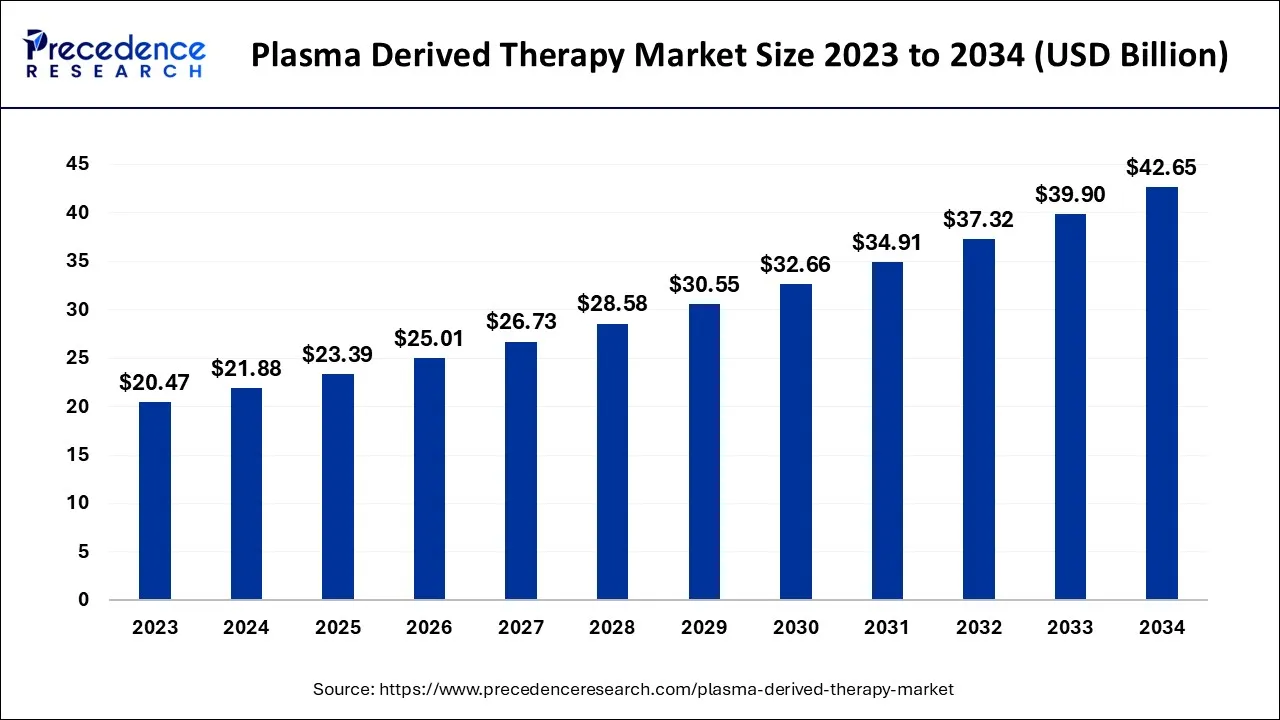
Plasma Derived Therapy Market Key Takeaways
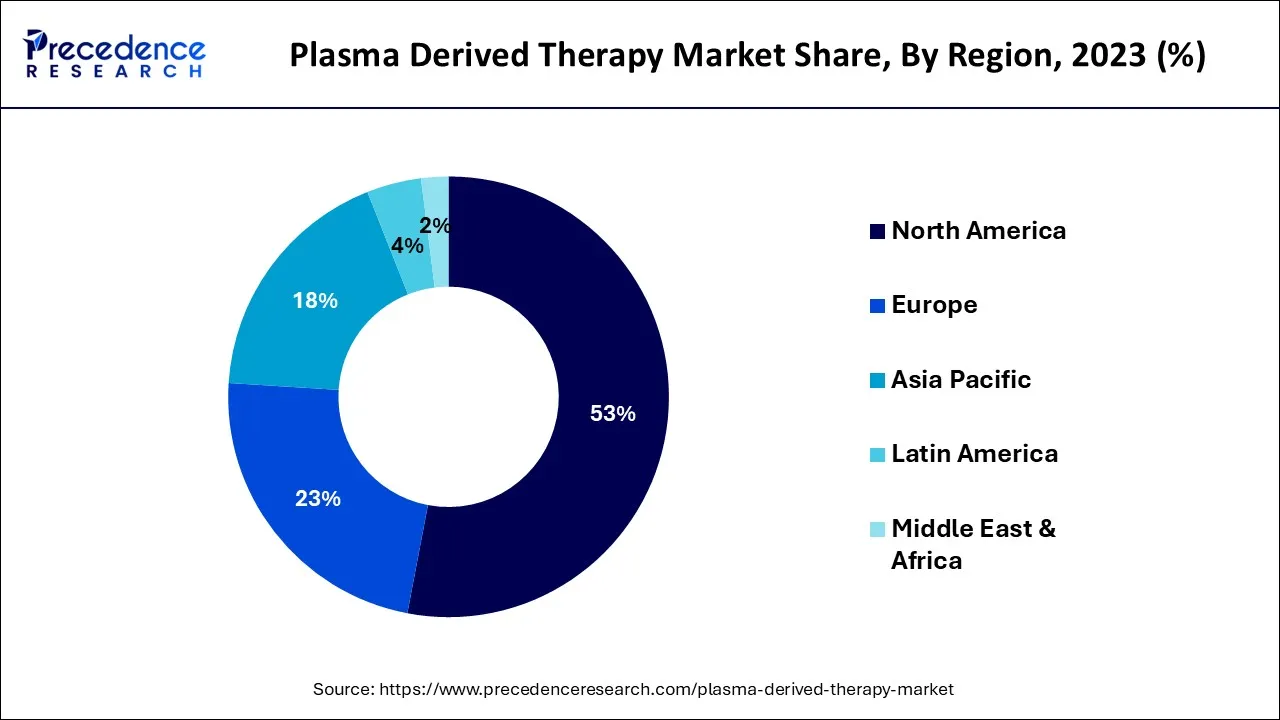
- North America has held the highest revenue share of around 53% in 2025.
- Asia Pacific plasma-derived therapy market is growing at a CAGR of 7.8% during the forecast period.
- By product, the immunoglobulin segment is growing at a CAGR of 7.3% between 2026 to 2035.
- The albumin segment is anticipated to grow at a CAGR of 7.7% during the forecast period.
Strategic Overview of the Global Plasma Derived Therapy Industry
The huge number of people suffering with rare diseases has helped this market to attain great heights in a very short period of time. Diseases such as primary immunodeficiency disease, von Willebrand disease and idiopathic thrombocytopenic purpura are among the few major disorders That have contributed significantly to the growth of the plasma derived therapy system. Effective plasma derived treatments are demanded all over the world with a view to treat the rare diseases which do not find a solution in the modern medicine practice.
The solutions found too many diseases with the help of this treatment procedure has provided a great opportunity to the plasma derived therapy market and is expected to grow in a similar fashion during the coming years. The outbreak of the coronavirus pandemic had a major impact on the growth of this market due to the huge demand of plasma derived therapies all over the world which was successful to show a significant result in treating the complications that were created in the body of the individual pertaining to the infection.
Artificial Intelligence: The Next Growth Catalyst in Plasma Derived Therapy
Artificial Intelligence is significantly impacting the plasma-derived therapy market by enhancing efficiency, safety, and innovation across the entire value chain. It is used in donor screening to improve donor retention and plasma quality, and in plasma fractionation facilities for automation, reducing human error, and ensuring sterile, high-efficiency processing.
Furthermore, AI and machine learning algorithms are accelerating the drug discovery process, enabling the analysis of complex biological data to predict molecular interactions and identify potential new drug candidates faster and more accurately than traditional methods. Digital twin technology is also employed to optimize plasma logistics and inventory management, minimizing product loss due to expiration.
Plasma Derived Therapy Market Growth Factors
The increasing prevalence of chronic diseases and uncommon diseases among the people has emerged as a major growth factor which has helped the market to attain a significant position. Many initiatives have been taken by the government and the private organizations to provide advanced healthcare facilities which will benefit the society to a great extent. Multiple initiatives taken up by the government by providing reimbursement facilities through the insurance companies has helped people to opt for these advanced treatment procedures with a view to obtain maximum results.
Many products have been introduced by the key market players as a result of the rapid research and development programs carried out, which has attracted the potential consumers all over the world. The outbreak of the pandemic had helped the market to record a considerable growth over the period of time as the demand for plasma derived therapies was seen to be at a peak. Increasing number of blood donation drives carried out all over the world has helped to boost the market to a considerable level.
Market Outlook
- Market Growth Overview: The plasma derived therapy market is expected to grow significantly between 2026 and 2035, driven by increasing prevalence of diseases, improving plasma processing techniques and increasing protein yields, and growing awareness and diagnosis rates.
- Sustainability Trends: Sustainability trends involve ethical sourcing and donor safety, supply chain resilience and self-sufficiency, and manufacturing efficiency and waste reduction.
- Major Investors: Major investors in the market include Grifols and the Grifols family, Permira, Healthgen Biotechnology Investors, and M&A Focus.
- Startup Economy: The startup economy is focused on recombinant alternatives, niche therapeutic applications and delivery, and technology upgrades and efficiency.
Market Scope
| Report Coverage | Details |
| Market Size in 2025 | USD 23.39 Billion |
| Market Size in 2026 | USD 25.01 Billion |
| Market Size by 2035 | USD 45.29 Billion |
| Growth Rate from 2026 to 2035 | CAGR of 6.83% |
| Largest Market | North America |
| Base Year | 2025 |
| Forecast Period | 2026 to 2035 |
| Segments Covered | Product, Application, and Regions |
| Regions Covered | North America, Europe, Asia-Pacific, Latin America , and Middle East & Africa |
Market Dynamics
Key Market Drivers
- Increasing cases of uncommon diseases - The number of people suffering with uncommon diseases has increased to a great extent which demands the use of special therapeutic treatments such as plasma derived therapy. The outbreak of the pandemic was an example of an uncommon disease in the world which was attempted to treat with the help of plasma derived therapy.
- Increasing demand for advanced technologies for treating genetic disorders - With the rapid advancements that are seen in the healthcare sector, the need for advanced technologies for treating genetic disorders has increased so great extent. The increasing prevalence of genetic disorders among the people has created a threat for the future generations as the condition can become worse when such individuals will produce their offspring. Hence the need for advanced technologies in the therapeutic field becomes important for the health care sector.
- Increase in plasma collection units all over the world - The number of plasma collection units has increased all over the world as the various therapeutic procedures that are carried out with this blood component has increased. The rapidly increasing demand for plasma therapeutic procedures has boosted the size of the market to a great extent. Increasing awareness among the people regarding the available therapeutic options has also led to greater acceptance of these techniques.
- Growing adoption of immunoglobulin all over the world - Increasing awareness among the people regarding the advanced procedures carried out in the healthcare sector has boosted the demand for immunoglobulin therapy. As a result, society has adopted the use of immunoglobulin all over the world for treating a number of diseases that are increasing among the people.
Key Market Challenges
- Strict rules and regulations imposed by the government - The stringent regulations and rules that have been imposed by the government regarding the manufacturing and production of drugs and medicines has challenged the growth of the market to a great extent. A proper study regarding the potential side effects among the people needs to be within the permissible range said by the government, which appears as a major challenge for the manufacturers and the research department. with the increasing awareness among the people regarding the side effects of various drugs and medicines, the plasma derived therapy needs to prove its efficacy by keeping the number of side effects to a minimum number.
- The high cost of the therapeutic procedures - The use of advanced treatment options increases the total cost of treatment and hence imposes an additional pressure on the common people. Rapid fluctuations in the schemes and facilities provided by the government for supporting the people economically has hampered the growth of the market to a great extent.
- Fluctuations in reimbursement policies - Function variations in the reimbursement policies provided by the insurance companies have also made people uncertain regarding the treatment options that they can select for curing themselves. Lack of disposable income available with the people has imposed a major challenge on the growth of the market.
Key Market Opportunities
- Availability of advanced treatment options in the healthcare sector - With the increasing advancement made in the healthcare sector the available treatment options have increased tremendously. This has helped the people to select a suitable treatment option which matches with their disposable income. various facilities which are provided by the government and the private sector has also help the health care sector to attain a greater rate of success even regarding the rare diseases. Rapid advancements which are made in the field of equipment and devices which are used in the healthcare sector has also improved the success rate achieved with the rare diseases.
- Financial assistance provided by reimbursement policies- Financial support is provided to the people upto a certain extent with the help of reimbursement facilities which makes it possible for them to opt for these services. Even if the entire treatment doesn't get covered, a part of it it's taken care off by the reimbursement policies. The huge number of patients what suffering with rare diseases has been taken care off to a great extent by the insurance companies.
Segment Insights
Product Insights
The segment of immunoglobulin plasma has emerged as the fastest growing market as compared to its competitors. The increasing demand of this plasma derived component has attracted the potential consumers considerably. The huge number of chronic diseases that are treated with the help of this immunoglobulin plasma derived component has been a major factor which has helped the market to achieve a considerable position in the global economy and is expected to grow in a similar fashion during the future as well. The other products which are included under this category are albumin derived therapies and coagulation factor which are also showing a considerable growth over the period of time with increasing research and development performed by the key market players.
Application Insights
The segment of hemophilia has emerged as the fastest growing application as it is a very rare disorder related to bleeding that hampers the normal process of blood clotting. The tremendous growth seen by the market is attributed to the increasing number of cases suffering with hemophilia all over the world especially in the underdeveloped and developed countries.
Or data which was published by world federation of hemophilia around 2020 stated that there are approximately 209, 614 people who are suffering with this disease residing in around 120 countries all over the world. Among these diseases the most prevalent type of hemophilia is hemophilia A. the huge number of patients that exist in the society suffering with this severe disease has a significant impact on the growth of the plasma derived therapy market as it is proved to be and effective treatment procedure which how is the capacity to achieve good results over the period of time.
Regional Insights
U.S. Plasma Derived Therapy Market Size and Growth 2026 to 2035
The U.S. plasma derived therapy market size is accounted at USD 9.28 billion in 2026 and is projected to be worth around USD 17.15 billion by 2035, poised to grow at a CAGR of 7.05% from 2026 to 2035.
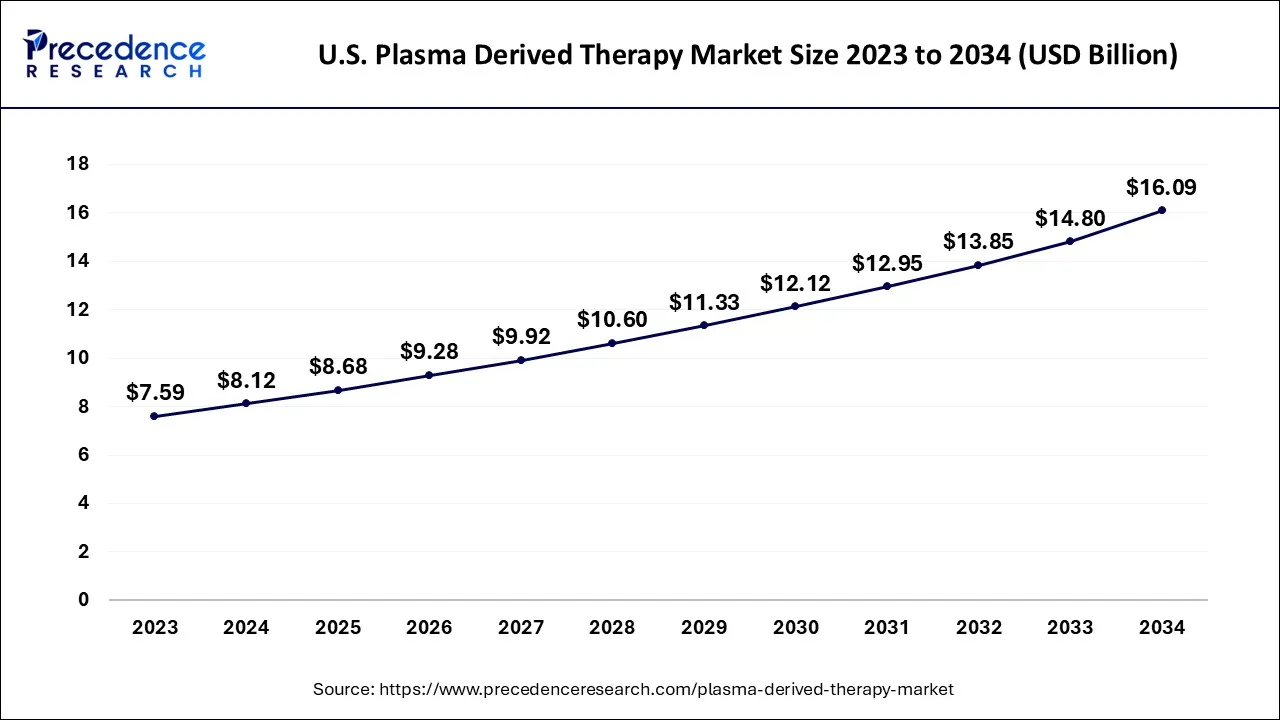
Why North America region is emerging in the plasma derived therapy market?
- The North America has emerged as the largest market for plasma derived therapy. The recent initiatives which are taken by the government and the private bodies with a view to encourage the therapeutic system has helped the market to achieve new heights. The increasing number of plasma collection units in this sector has emerged as a major factor which has boosted the size of the market to a great extent.
- Key market players are conducting collection drives in various parts of the world to boost the size of the market to a great extent. Increasing awareness among the people regarding the benefits of plasma derived therapies has helped the market to record a considerable revenue over the period of time.
- Many favorable initiatives have been undertaken by the government and the key market players to encourage donation of blood which will help to obtain a huge amount of plasma which can be utilized for various therapeutic purposes in the world.
- The huge number of people suffering with rare diseases has helped the market to show a tremendous growth over the period of time as this can be treated with the help of plasma derived therapies. Many leading market players are operating in the region of North America which has made this geographical sector a popular one.
U.S. Plasma Derived Therapy Market Trends
U.S.'s high demand for immunoglobulins and established healthcare infrastructure. A persistent supply-demand gap for plasma is a primary challenge, with the industry working to expand collection capacity and improve efficiency through technological advancements. There is a strong trend toward patient-friendly, home-based care options like SCIG, and the emergence of recombinant alternatives is addressing reliance on human plasma sources.
China Plasma Derived Therapy Market Trends
China's market is driven by high demand for albumin and a persistent reliance on imports due to supply shortages, despite government pushes for self-sufficiency. Domestic players are rising, aided by technology upgrades and groundbreaking innovations like recombinant human albumin from genetically modified rice, which is expected to receive national approval.
Germany Plasma Derived Therapy Market Trends
Germany's high demand for immunoglobulins and a strong push toward patient-friendly, home-based SCIG treatments. A robust domestic manufacturing base, including facilities from major players like CSL Behring and Biotest, operates under the stringent German Transfusion Act and EU guidelines. Government efforts prioritize plasma self-sufficiency to mitigate supply chain vulnerabilities, while the industry continuously invests in R&D to improve processing efficiency and product safety.
Value Chain Analysis of the Plasma Derived Therapy Market
Plasma Collection and Sourcing: This initial and critical stage involves recruiting and screening eligible plasma donors, collecting plasma via plasmapheresis, and initial testing for infectious diseases.
- Key Players: CSL Plasma (a division of CSL Behring), BioLife Plasma Services (part of Takeda), and Grifols.
Testing, Pooling, and Logistics: Once collected, plasma units undergo rigorous testing for pathogens, are quarantined, and then consolidated into large "pools" that contain plasma from thousands of donors to ensure a broad spectrum of antibodies.
- Key Players: CSL Behring, Takeda, and Octapharma.
Fractionation and Purification: This stage involves the physical and chemical separation of specific therapeutic proteins (e.g., albumin, immunoglobulins, clotting factors) from the pooled plasma using a process called Cohn fractionation, followed by extensive purification and viral inactivation steps.
- Key Players: CSL Behring, Takeda, Grifols, and Biotest AG.
Formulation, Packaging, and Distribution: The purified protein concentrates are then formulated into a stable drug product or subcutaneous immunoglobulin (SCIG)), packaged into vials or pre-filled syringes, and distributed to hospitals, clinics, or directly to patients.
Sales, Marketing, and Patient Support: The final stage involves commercializing the therapies, educating healthcare providers about their use, and providing ongoing support to patients, which often includes managing reimbursement and insurance claims.
- Key Players: CSL Behring, Takeda, Grifols, and Octapharma.
Top Companies in the Plasma Derived Therapy Market & Their Offerings
- CSL Behring: CSL Behring is a global leader in plasma-derived therapies, focusing on developing and manufacturing products to treat rare and serious diseases. They operate a vast network of CSL Plasma collection centers and are a major supplier of immunoglobulins and albumin worldwide.
- Takeda Pharmaceutical Company Limited: Takeda has a significant presence in the market via its global plasma franchise, which it expanded through the acquisition of Shire.
- BPL (Bio Products Laboratory): BPL is a manufacturer of plasma-derived products, including albumin, immunoglobulins, and clotting factors. They contribute by providing a stable supply of therapies to the UK's National Health Service (NHS) and other international markets.
- ADMA Biologics: ADMA Biologics specializes in the development and sale of specialty plasma-derived biologics for the treatment of immunodeficiency disorders. They manage their own collection centers and manufacturing facilities to ensure a stable supply of their products.
- Biotest AG: Biotest, now a part of Grifols, is a German company that contributes to the market through its focus on developing innovative plasma protein products. They specialize in immunology and critical care medicine and have strong R&D capabilities.
- Octapharma: Octapharma is a Swiss-based family-owned company that is a major independent global player in the market, focusing on products for hematology, immunotherapy, and critical care. They operate multiple state-of-the-art fractionation facilities and a global network of collection centers.
- Grifols: Grifols is a Spanish multinational pharmaceutical and chemical manufacturing company that is one of the top three global players in the market. They are vertically integrated, from plasma collection to product distribution, and focus heavily on R&D for new therapeutic applications.
- Kamada Pharmaceuticals: Kamada is an Israeli biopharmaceutical company that develops, manufactures, and markets plasma-derived protein therapeutics. They contribute niche products and have a strategic partnership with Takeda for the distribution of some of their specialty hyperimmune immunoglobulins.
- SK Plasma: SK Plasma is a leading South Korean plasma protein product manufacturer that aims for self-sufficiency in the domestic market. They contribute to the Asia-Pacific supply chain and are expanding their international presence.
- SA: SA does not appear to be a specific company name in the plasma-derived therapy market. Please verify the company name.
- Kedrion: Kedrion is an Italian company that collects and fractionates plasma, focusing on the domestic Italian market and global expansion. They contribute to regional supply stability and operate within a robust regulatory framework.
- Pfizer: While a pharmaceutical giant, Pfizer is not a primary manufacturer or major investor in the plasma-derived therapy market specifically. Their contributions are in other biopharmaceuticals and medications, not in the direct processing of human plasma.
Recent Developments
- In July 2020 - a leading producer of plasma derived medicines, Grifols signed an agreement with the company of GC pharma with a view to take over the plasma fractionation facility based in Montreal along with the other plasma collection centers that are based in the US and two facilities of purification. The company was able to expand its limits and boost the market revenue with the help of this strategic movement. The leading position of the company was maintained with this deal.
Segments covered in the report
By Product
- Immunoglobulin
- Coagulation factors
- Albumin
- Others
By Application
- Hemophilia
- Primary immunodeficiency disease
- Idiopathic thrombocytopenic purpura
- Others
By Geography
- North America
- Europe
- Asia-Pacific
- Latin America
- Middle East & Africa (MEA)
For inquiries regarding discounts, bulk purchases, or customization requests, please contact us at sales@precedenceresearch.com
Frequently Asked Questions





Ask For Sample
No cookie-cutter, only authentic analysis – take the 1st step to become a Precedence Research client
 Get a Sample
.webp)



 sales@precedenceresearch.com
 Schedule a Meeting
