



Pneumatic Waste Management System Market Size, Key Companies, Company Market Share, Sales Volume, Consumer Demand, Pricing Trends, Distribution Performance, Competitive Positioning, and Growth Forecast
Pneumatic Waste Management System Market (By System Type: Vacuum System, Pressure System, Combined System; By Waste Type: Organic Waste, Plastic Waste, Metal Waste, Paper Waste; By End-user: Residential, Commercial, Industrial) - Global Industry Analysis, Size, Trends, Leading Companies, Regional Outlook, and Forecast 2026 to 2035
Source: https://www.precedenceresearch.com/pneumatic-waste-management-system-market
 Get a Sample
 Table Of Content


What is the Pneumatic Waste Management System Market Size?
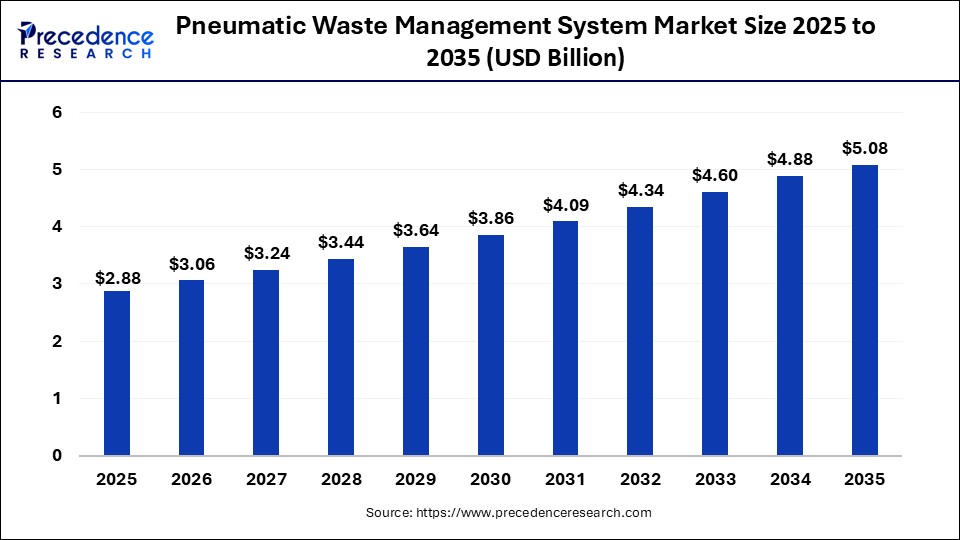
The global pneumatic waste management system market size is valued at USD 2.88 billion in 2025 and is predicted to increase from USD 3.06 billion in 2026 to approximately USD 5.08 billion by 2035, expanding at a CAGR of 5.84% from 2026 to 2035. The rising government regulations on waste management, increasing awareness regarding sustainable waste management practices, rising urbanization, and technological advancements in pneumatic waste management systems are anticipated to drive the growth of the pneumatic waste management system market throughout the forecast period.
Pneumatic Waste Management System Market Key Takeaways
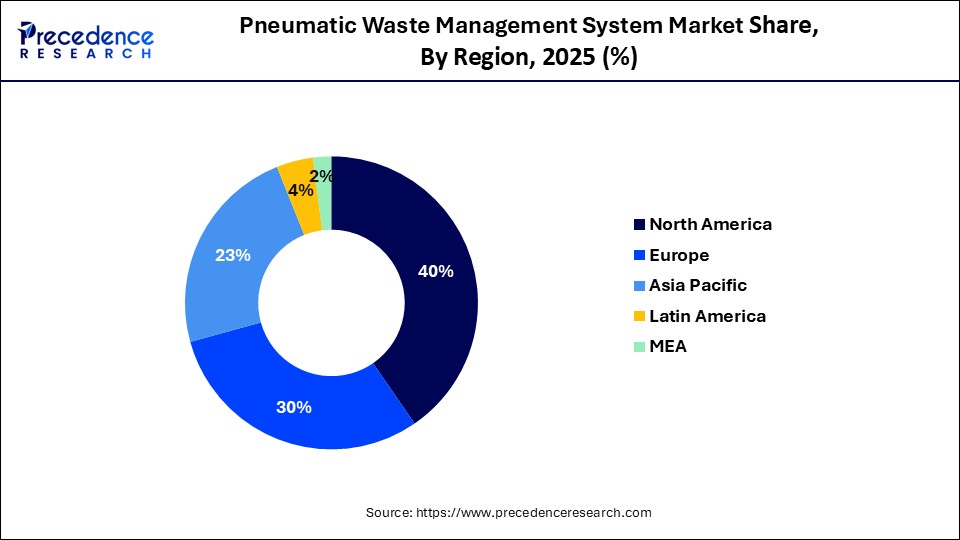
- North America dominated the market with the largest market share of 40% in 2025.
- Europe is likely to witness rapid growth during the forecast period.
- By system type, the vacuum system segment accounted for the dominant market share in 2025.
- By system type, the pressure system segment is expected to witness significant growth during the projection period.
- By waste type, the organic waste segment dominated the pneumatic waste management system market in 2025.
- By waste type, the plastic waste segment is expected to witness notable growth in the coming years.
- By end-user, the residential segment held the largest share of the market in 2025.
- By end-user, the commercial segment is expected to grow at a significant rate during the forecast period.
How does Artificial Intelligence (AI) Impact the Pneumatic Waste Management System?
In the era of technological innovation, artificial intelligence (AI) emerges as a transformative force and holds great potential to impact the pneumatic waste management system market. From tackling food wastage to managing general waste streams, AI integration is significantly revolutionizing the way to handle waste collection, sorting, disposal process, and recycling waste, leading to more cleaner, efficient, and sustainable urban environments. Using advanced AI technologies such as machine learning, robotics, and computer vision for waste collection and sorting enhances waste management. AI analyzes massive amounts of data, automates repetitive tasks, and improves waste systems efficiency. Therefore, AI integration improves sustainable waste management practices to address the growing global waste challenge to achieve environmental sustainability.
Is Urban Efficiency Quietly Being Redefined?
A pneumatic waste management system refers to a system in which waste is widely transported at high speeds through a robust network of underground pipes to a collection station using air pressure. Transporting waste material through pipes eliminates the need for manual waste handling or traditional waste collection trucks, which leads to reducing traffic congestion and lowering carbon emissions in the environment. This method of waste management provides a cleaner, more hygienic, and more efficient way of disposing of waste in dense urban areas.
Pneumatic Waste Management System Market Growth Factors
- Governments around the world are implementing stringent regulations to promote sustainable and efficient waste management practices, significantly fueling the growth of the pneumatic waste management system market. These regulations align with sustainable development goals and progress toward a cleaner and more efficient waste management system.
- The rising adoption of smart waste collection technologies and increasing investments in waste management infrastructure, particularly in developed and developing countries, are anticipated to boost the growth of the market in the coming years.
- The growing demand for smart city solutions creates significant growth opportunities in the global market.
- The increasing public awareness of innovative and efficient waste management solutions promoting cleanliness and sanitation drives market growth.
- The rising demand for space in dense urban areas, coupled with the logistical challenges associated with waste transport, is expected to boost the demand for pneumatic waste management systems.
Market outlook
- Industry Outlook: The pneumatic waste management system market is poised for rapid growth from 2026 to 2035, driven by drivers like the smart city project is creating a natural demand for automated waste systems, as they align with digital governance and seamless public service. The second driver is stricter emission limits and waste-compression regulations, are pushing municipalities to explore cleaner, fully enclosed systems that eliminate waste trucks and open waste transfer points.
- Major Investment Trends: The EcoFlow Urban systems is the major investor in the market, this focuses on integrating AI-based control units within pneumatic pipelines, enhancing efficiency and monitoring. The Greencore infrastructure group invest
Market Scope
| Report Coverage | Details |
| Market Size by 2035 | USD 5.08 Billion |
| Market Size in 2025 | USD 2.88 Billion |
| Market Size in 2026 | USD 3.06 Billion |
| Market Growth Rate from 2026 to 2035 | CAGR of 5.84% |
| Dominated Region | North America |
| Fastest Growing Market | Europe |
| Base Year | 2025 |
| Forecast Period | 2026 to 2035 |
| Segments Covered | System Type, Waste Type, End user, and Regions |
| Regions Covered | North America, Europe, Asia-Pacific, Latin America and the Middle East & Africa |
Market Dynamics
Drivers
Rapid Urbanization and Increasing Population
The rapid urbanization and increasing population are driving the growth of the pneumatic waste management system market. Waste management is a foremost concern for various cities, with rapid urbanization and increasing populations generating large amounts of waste daily. For instance, urban areas with 377 million people generate about 62 million tons of solid waste annually. Only 43 million tons are collected, and the rest either end up in landfills or untreated. Urban areas are increasingly becoming more densely populated, which leads to higher waste generation rates. With the surge in population and rapid urbanization, concerns regarding waste management increase, boosting the demand for pneumatic waste management systems as sustainable waste management practices that facilitate the quick and effective waste disposal process.
According to the report published by the International Trade Administration in April 2023, the Indian Central Pollution Control Board (CPCB) forecast that annual waste generation in India will increase to 165 MT by 2030.
Restraint
High Initial Investment
Installing pneumatic waste management systems requires substantial investment, which often acts as a barrier for some potential customers and results in limited adoption, especially in middle and low-income countries. In addition, high maintenance and operational costs restrict the expansion of the global pneumatic waste management system market. This waste management system requires regular maintenance and well-developed infrastructure, which can add to the operational costs.
Opportunities
Supportive Government Regulations and Initiatives
Supportive government regulations and initiatives are projected to create lucrative opportunities in the pneumatic waste management system market during the forecast period. Due to the rising environmental concern, several government initiatives, such as India's Swachh Bharat Mission, are promoting sustainable waste management practices like pneumatic waste management systems. This system uses a network of underground pipes to transport waste through suction technology, which assists in boosting environmental sustainability, enhancing recycling rates, and minimizing the public health risks associated with waste accumulation in urban smart cities. Moreover, rising environmental regulations fuel the growth of the market.
Segmental Insoghts
System Type Insights
The vacuum system segment accounted for the dominant market share in 2025. This is mainly due to the increase in the adoption of advanced vacuum-based technologies, particularly in developed countries, to transport waste through a network of underground pipes. The vacuum system is mostly preferred in densely populated urban areas due to its space-saving and reduced odor and emissions.
The pressure system segment is expected to witness significant growth during the forecast period. These systems use compressed air for waste conveyance. They are ideal for environments requiring waste removal at a high speed, enabling efficient waste management.
Waste Type Insights
The organic waste segment dominated the pneumatic waste management system market in 2025. This is mainly due to the increased concerns about the disposal of organic waste, such as food and animal manure. Governments of various countries have implemented regulations for proper sorting of various organic waste to make disposal easier, boosting the demand for pneumatic waste management systems.
The plastic waste segment is projected to grow at a notable rate in the coming years. The segment's growth is attributed to the increasing concerns about plastic pollution. Governments worldwide are implementing stringent regulations to reduce plastic waste. Moreover, the rising consumption of plastic worldwide leads to an increased volume of plastic waste, requiring efficient waste management solutions. Strict regulations on plastic waste disposal further propel the growth of the segment.
End-user Insights
The residential segment held the largest share of the pneumatic waste management system market in 2025. This is mainly due to a strong emphasis on waste management. Innovative and sustainable waste management strategies are becoming increasingly popular in residential areas. Pneumatic waste management solutions can transform urban living by reducing manual labor and promoting better hygiene. Several governments are investing significantly in building smart cities. A pneumatic waste management system provides an alternative to conventional waste collection methods in urban residential areas where there is a need to reduce traffic congestion, improve public health, and lower environmental footprint. With supportive government policies and regulations to promote sustainability, the demand for pneumatic waste management systems has increased in the residential sector.
The commercial segment is likely to grow at a significant rate during the projection period. The rising demand for reliable and sustainable waste management systems in commercial settings, such as hotels, resorts, hospitals, office buildings, and shopping malls, is expected to boost segmental growth. With the rapid expansion of commercial buildings, the volume of waste is increasing, boosting the demand for pneumatic waste management systems.
Regional Insights
North America dominated the pneumatic waste management system market with the largest share in 2025. This is mainly due to stringent regulations regarding the proper disposal of waste. Government initiatives promoting sustainable waste management practices, high demand for smart city solutions, the surge in municipal solid waste generation, and a focus on reducing the environmental footprint and health hazards further bolstered the regional market growth. The U.S. is a major contributor to the market. There is a high adoption of pneumatic waste management systems, particularly in highly dense urban areas. Rapid urbanization in the country resulted in a substantial increase in the volume of waste generation, leading to a high demand for sustainable waste management practices.
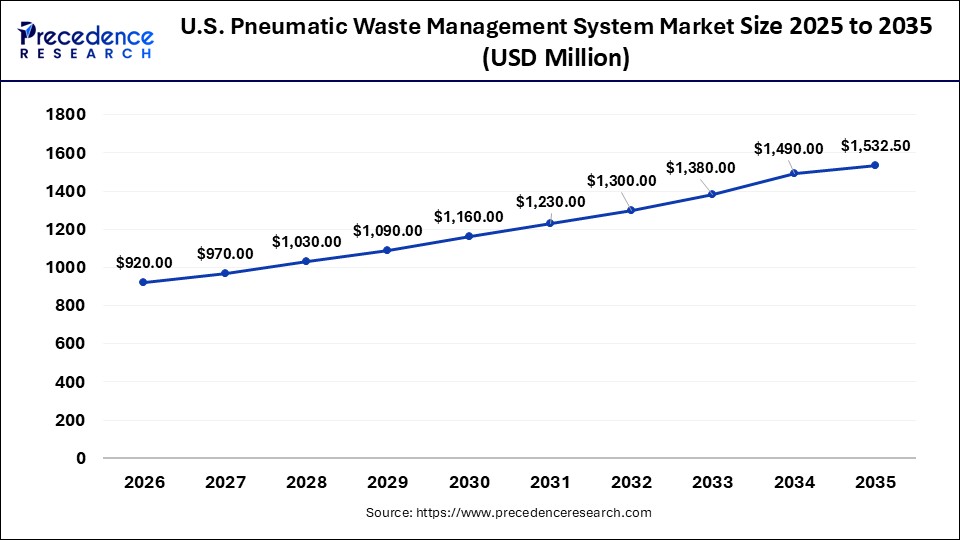
U.S. Pneumatic Waste Management System Market Size and Growth 2026 to 2035
The U.S. pneumatic waste management system market size is exhibited at USD 970 million in 2026 and is projected to be worth around USD 1532.50 million by 2035, growing at a CAGR of 5.95% from 2026 to 2035.
Europe is projected to witness rapid growth in the coming years. In European countries, pneumatic waste management systems are widely adopted to transport waste through underground pipes. Due to the stringent waste management policies set by the EU under the Circular Economy Action Plan, there is a high demand for efficient waste management solutions. Several countries, such as the Netherlands, Spain, Germany, and Sweden, have implemented pneumatic waste management systems to cope with escalating waste volumes across urban areas, offering a cleaner and more efficient waste management system. Moreover, the increasing focus on environmental conservation and waste recycling and reduction are expected to boost regional market growth.
- According to the article published in October 2023, The Bergen waste system is one of the largest and most advanced underground waste management facilities globally, connecting more than 30,000 households on completion, making Bergen one of the world's most sustainable and smart cities.
Why is Europe Setting the Global Standard for Clean Urban Engineering?
Europe remains one of the most mature markets due to its early adoption of sustainable waste practices and rigorous environmental regulations. The region's emphasis on reducing carbon emissions and eliminating manual waste collection is driving the uptake of pneumatic systems in new developments. Urban planners are integrating these systems as part of circular-economy frameworks designed to minimise waste handling inefficiencies. Europe's commitment to innovation and clean infrastructure cements its position as an industry trendsetter.
Asia Pacific is expected to witness notable growth in the foreseeable future. Rapid urbanization in countries like China, Japan, South Korea, Singapore, and India is a major factor boosting waste volume, leading to increased demand for pneumatic waste management systems. With rapid industrialization, the volume of industrial waste is also increasing. Government's push toward cleanliness and sanitation and the growing awareness of sustainable waste management practices further support market growth. In addition, rising concerns about waste disposal contribute to the Asia Pacific pneumatic waste management system market growth.
Countries like South Korea, Singapore, and Japan are learning the deployment of fully automated waste pipelines that connect buildings to central collection terminals. Their success lies in strong regulatory support, meticulous engineering standards, and public acceptance of automated urban services. These countries model how pneumatic systems can coexist with dense urban landscapes. Their continued investments are positioning them as benchmarks for the rest of Asia Pacific.
- According to a report by The Energy and Resources Institute (TERI), India generates over 62 million tons (MT) of waste in a year. Only 43 MT of total waste generated gets collected, with 12 MT being treated before disposal and the remaining 31 MT simply discarded in wasteyards.
Spain Pneumatic Waste Management System Market Trends
Spain is pioneering large-scale pneumatic networks embedded into urban master plans. Their municipalities treat automated waste systems are essential public infrastructure rather than optional upgrades. This progressive stance is motivating consistent investments in pipeline networks, collection terminals, and monitoring technologies. Europe's case studies continue to inspire other regions in designing sustainable and citizen-friendly cities.
Can Cutting-Edge Technology Unlock New Frontiers in Waste Management Systems?
According to our seasoned specialists, as smart city initiatives gain momentum, the integration of pneumatic waste management systems with other smart technologies, such as IoT-enabled waste bins, is becoming a key trend. These systems provide real-time data to monitor waste collection, reduce overflow risks, and optimize collection schedules, ensuring more sustainable and efficient urban waste management.
Continued advancements in technology, including smart sensors, automated waste sorting, and real-time monitoring systems, are driving the evolution of PWMS. These innovations not only improve operational efficiency but also enhance the system's ability to handle various types of waste (e.g., organic, recyclable, and non-recyclable) in an automated and optimized manner.
Pneumatic Waste Management System Market Companies
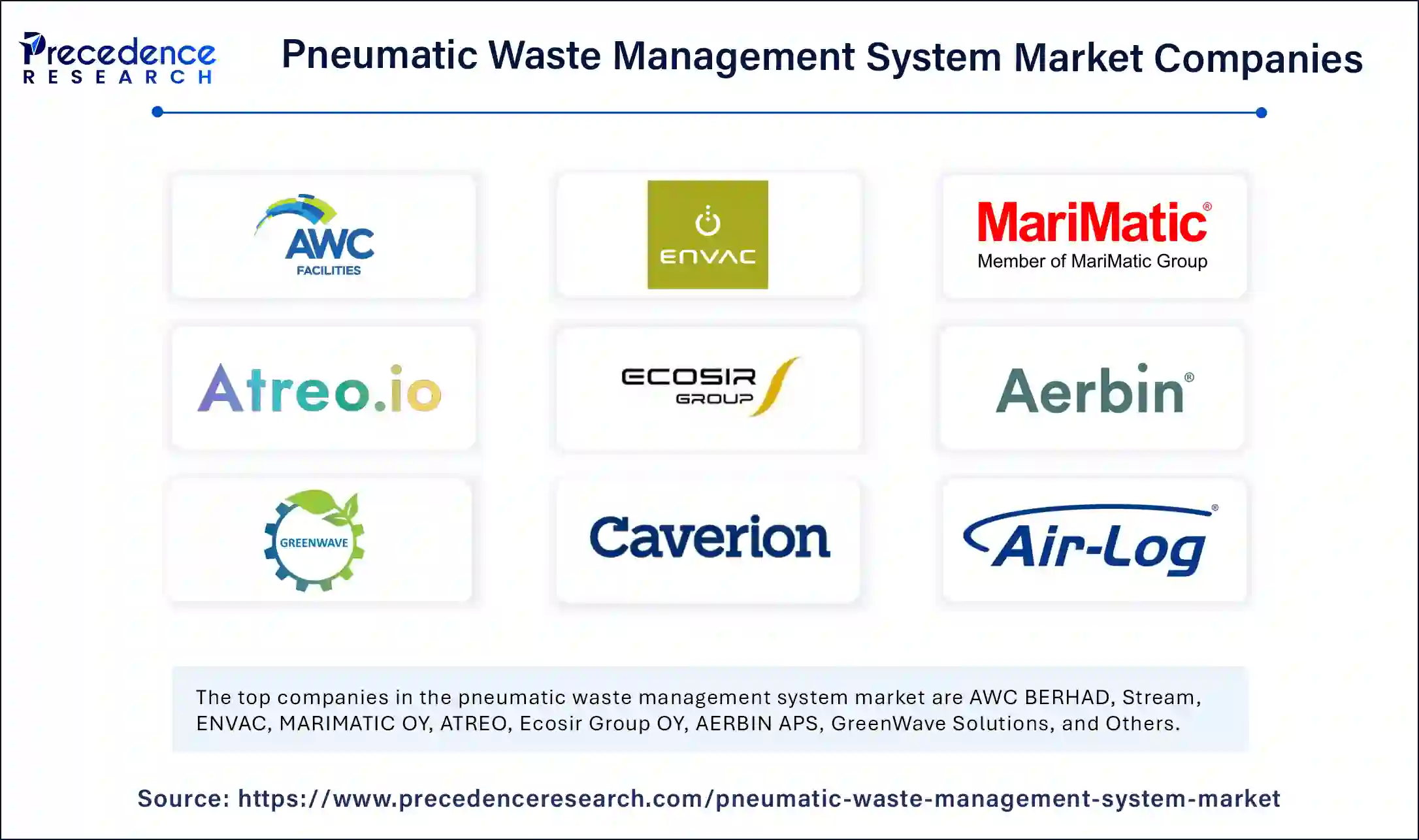
- AWC BERHAD
- Stream
- ENVAC
- MARIMATIC OY
- ATREO
- Ecosir Group OY
- AERBIN APS
- Peakway Environmental Sci & Tech Co. Ltd
- GreenWave Solutions
- CAVERION Corporation
- Air-Log International GmbH
- LOGIWASTE AB
Recent Developments
- In January 2025, Envac has received a contract to deliver an automated pneumatic waste collection system outside of Rotterdam together with its project partners, the construction firm Dura Vermeer Infra Regionale Projecten and Civiele Aannemerscombinatie Schieveste. The system is to be installed for the municipality of Schiedam, Netherlands, in the "SchieDistrict," an area being developed as a mixed-use urban hub. The contract also includes a 25-year service agreement ensuring long-term operation and efficiency.
- In January 2024, Place Vendôme, a mixed-use mall development located in Lusail, Qatar, announced a plan to implement a pneumatic waste collection system (PWCS). PWCS eliminates the need for manual waste transportation at the mall. The PWCS uses a network of underground pipes to transport waste directly from the retail outlets and hotels to a central waste collection point and is designed to be environmentally friendly, reducing carbon emissions by up to 90% by eliminating the need for heavy vehicles and plastic waste associated with traditional garbage bags.
Segments Covered in the Report
By System Type
- Vacuum System
- Pressure System
- Combined System
By Waste Type
- Organic Waste
- Plastic Waste
- Metal Waste
- Paper Waste
By End-user
- Residential
- Commercial
- Industrial
By Region
- North America
- Europe
- Asia Pacific
- Latin America
For inquiries regarding discounts, bulk purchases, or customization requests, please contact us at sales@precedenceresearch.com
Frequently Asked Questions





Ask For Sample
No cookie-cutter, only authentic analysis – take the 1st step to become a Precedence Research client
 Get a Sample




 sales@precedenceresearch.com
 Schedule a Meeting
