



Polyethylene Terephthalate Market Size, Key Companies, Application Analysis, Packaging Demand, Regional Market Trends, Recycling and Sustainability Trends, Competitive Landscape, and Growth Forecast
Vidyesh Swar, a Chemical and Materials Industry Expert, estimates the polyethylene terephthalate market at USD 34.58 billion in 2026, with the market projected to reach USD 51.03 billion by 2035 at a CAGR of 4.43%. Major polyethylene terephthalate market companies such as RTP Company, BASF SE, DuPont, are competing across key material and application segments, including by packaging application, by application.
Source: https://www.precedenceresearch.com/polyethylene-terephthalate-market
 Get a Sample
 Table Of Content


What is the Polyethylene Terephthalate Market Size?
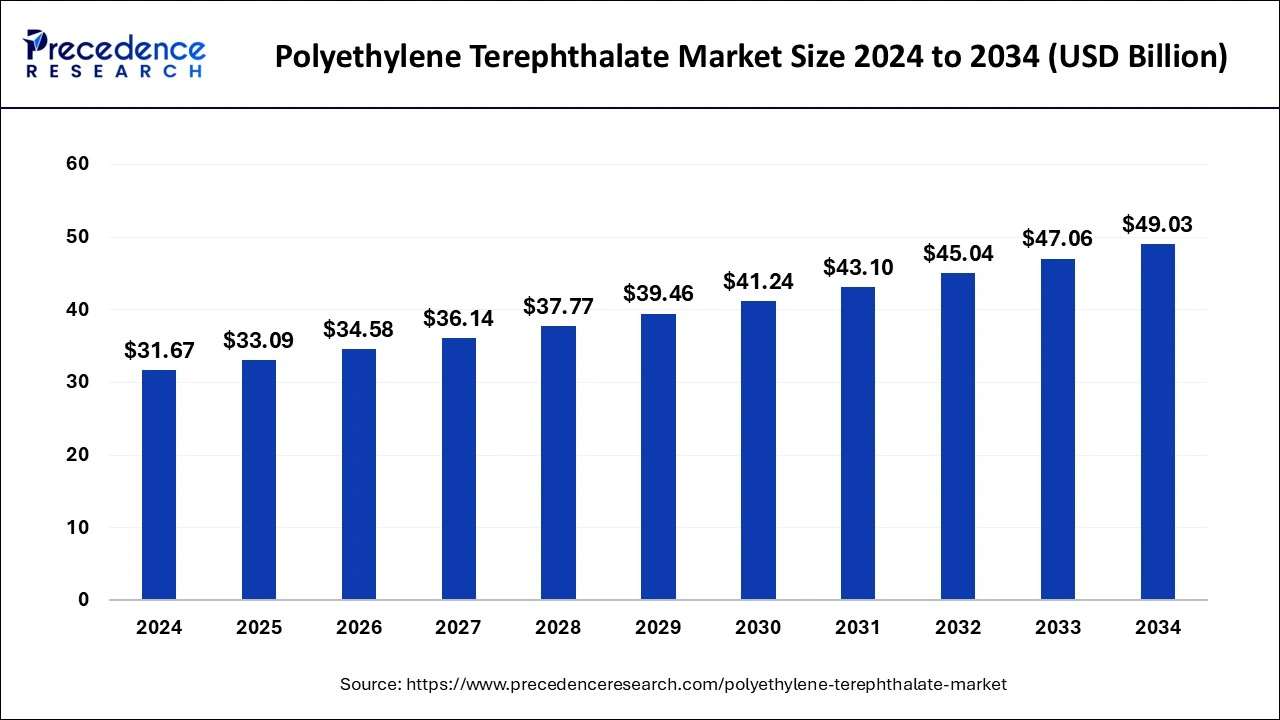
The global polyethylene terephthalate market size is calculated at USD 33.09 billion in 2025 and is predicted to increase from USD 34.58 billion in 2026 to approximately USD 51.03 billion by 2035, expanding at a CAGR of 4.43% from 2026 to 2035. Polyethylene terephthalate (PET) market growth is driven by rising demand for sustainable packaging, recyclable materials, beverages, food, textiles, and lightweight consumer products.
Market Highlights
- Asia Pacific led the global market with the highest market share of 40.14% in 2025.
- By packaging application, the bottled water segment held a significant market share in 2025.
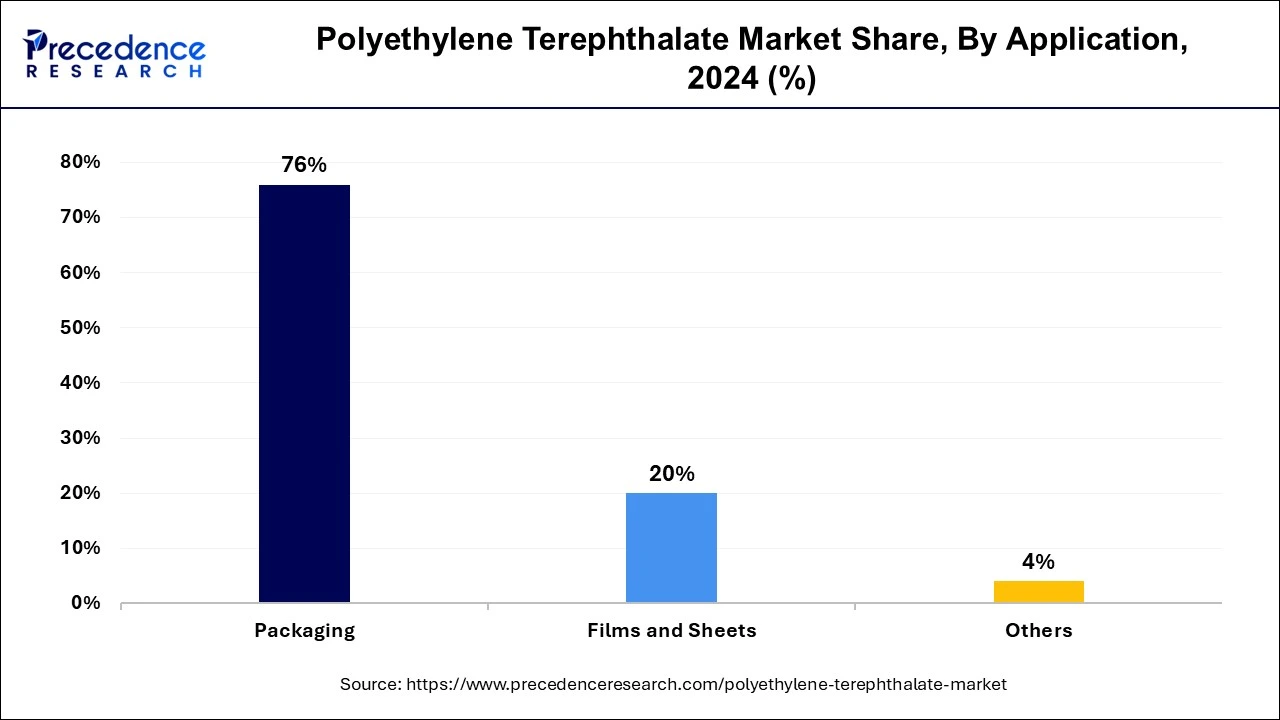
- By application, the packaging segment captured the biggest revenue share of 76% in 2025.
Market Size and Forecast
- Market Size in 2025: USD 33.09 Billion
- Market Size in 2026: USD 34.58 Billion
- Forecasted Market Size by 2035: USD 51.03 Billion
- CAGR (2026-2035): 4.43%
- Largest Market in 2025: Asia Pacific
Market Overview
Polyethylene terephthalate, also known as PET or PETE is a non-toxic, lightweight, and flexible polymer that is effectively recyclable and reusable. Without losing its chemical qualities, it can be treated three to four times. Due to these qualities, polyethylene terephthalate is a great material for use in a wide range of sectors, including textiles, food and beverage, automotive, electronics, and more. PET material is made of polymerized units of the ethylene terephthalate monomer, and it gains strength when combined with other substances like carbon nanotubes or glass fiber.
PET polymers are now the packaging industry's preferred material. Due to its hygienic qualities, durability, low weight, ability to maintain product freshness, and lack of fragility, it is frequently used for food and beverage packaging. Water and carbonated soft drink containers are the ones that use it the most frequently. It is easy to recognise the containers (bottles or jars) due to the triangle resin identifying code found on PET containers.
Polyethylene Terephthalate Market Growth Factors
Polyethylene terephthalate due to its distinct physical properties, such as being shatterproof and non-reactive to food and water is frequently used in flexible packaging applications. It is anticipated that the market will grow as a consequence of rising technological developments and advances in packaging applications, particularly through weight reduction. The market for Polyethylene Terephthalate (PET) is expanding as a result of rising usage of textiles and fabrics, increased PET recycling and collection rates globally, and rising consumer demand for environmentally friendly and recyclable goods. Market expansion is projected to be hampered by stringent environmental regulations that restrict the use of PET and increased demand for environmentally friendly substitutes like High-Density Polyethylene (HDPE). New opportunities for PET are anticipated as the need for lightweight packaging solutions for electronics and food increases.
Furthermore, it is anticipated that competition would grow over the forecast period. Players are therefore concentrating on creating distinctive technologies in order to strengthen their market position. Companies are developing high-quality and economical PET manufacturing technologies to get a competitive edge in the market.
Future Market Trends
- Demand for Recycled PET: Demand for recycled PET is expected to grow due to companies aiming for circular packaging while adhering to regulations and striving for lower ecological footprints. Unique recycling processes and technologies will enable the plastic to meet ever-demanding requirements while extending its applications.
- Lightweight Packaging: Packaging manufacturers are likely to produce lighter plastic containers and bottles that use less material without sacrificing their strength and safety. Lightweight PET packaging will contribute to cutting down costs connected with shipping, consumption of raw materials as well as impacting the environment.
- Bio-Based PET: The number of companies producing bio-based PET is likely to increase significantly as they seek for renewable substitutes for petroleum-based feedstock. Companies operating in this field are expected to invest in bio-based materials.
- Advanced Recycling: Chemical recycling will gradually win recognition as a solution complementing the traditional mechanical recycling with the aim of processing hard-to-recycle waste into high-quality ingredients. An increase in waste recycling capabilities is expected to take place soon.
Pricing and Commercial Model Analysis - Polyethylene Terephthalate Market
Pricing within the Polyethylene Terephthalate (PET) Market simply attributes various prices, based on the forces of demand and supply, and is not a product of negotiation. However, prices are affected by the costs of feedstock, including purified terephthalic acid (PTA) and monoethylene glycol (MEG), in addition to crude oil prices, manufacturing capacity, existing inventories, fuel costs, imports, and demand from the downstream sectors. Contracts usually feature fixed quantities, with price renegotiation or adjustment done when prices fluctuated or changed. Volume buyers, such as large-to-medium-sized firms, can get discounts based on quantities bought and other rebates as well as payment incentives. Pricing issues associated with recycled PET include limited availability as feedstock and their quality, processing and cost implications, and governmental regulations governing the processing of the PET.
Market Scope
| Report Coverage | Details |
| Market Size in 2025 | USD 33.09 Billion |
| Market Size in 2026 | USD 34.58 Billion |
| Market Size by 2035 | USD 51.03 Billion |
| Growth Rate from 2026 to 2035 | CAGR of 4.43% |
| Largest Market | Asia Pacific |
| Base Year | 2025 |
| Forecast Period | 2026 to 2035 |
| Segments Covered | Packaging Application, Application, and Region |
| Regions Covered | North America, Europe, Asia-Pacific, Latin America, and Middle East & Africa |
Market Dynamics
Driver
Increase in the use of polyethylene terephthalate in food and beverage packaging
The global polyethylene terephthalate market expanded as a result of the growing demand for polyethylene terephthalate in food and beverage packaging, such as the packaging for carbonated soft drinks. Due to its versatility in shape and size, polyethylene terephthalate is suitable to glass and metal containers for the growing demand for bottled beverages.
Restraint
Environmental concerns
PET is not biodegradable so it may take a very long time for it to decompose in the environment. This prompts concerns regarding PET packaging effects on the environment, particularly in terms of trash management and recycling.
Opportunity
Polyethylene terephthalate (PET) is widely used in the textile industry
In the textile business, polyethylene terephthalate (PET) is frequently used to create synthetic fibers like polyester. The expansion of the textile sector offers the PET market various opportunities. The growing world population is one of the major factors boosting the textile industry. The need for textiles is increasing along with the global population. Due to its excellent strength, longevity, shrinkage resistance, and durability, PET is the perfect material for the production of synthetic fibres. PET is a popular material for apparel and household textiles because of these qualities.
The growing demand for sustainable textiles is another factor fueling the expansion of the textile sector. Customers are looking for sustainable solutions as they become more aware of the negative effects that textile production has on the environment. The environmental impact of textile production can be reduced by recycling PET and using it to create new textiles. Additionally, PET-based textiles have advantages including simple maintenance, quick drying, and stain and odour resistance. PET fabrics are suitable for sportswear and outdoor clothes because of these characteristics.
Innovation in the PET market is also a result of the expansion of the textile sector. New technologies are being developed by producers to make PET fibres that are stronger, lighter, and more environmentally friendly. For instance, some producers are creating textiles with bio-based PET, which is derived from renewable resources. The need for recycled PET is also being fueled by the growing usage of PET in the textile industry. The creation of fresh PET fibres from recycled PET can lessen the requirement for virgin PET and the environmental impact of PET production.
PET is being used in new applications outside of the traditional textile sector, such as technological textiles, which include things like airbags, seat belts, and geotextiles. The increased demand for technical textiles is growing due to their high performance and durability.
Segments Insights
Packaging Application Insights
Based on packaging application, bottled water, carbonated soft drinks, juices, alcoholic beverages, thermoforming trays, food packaging, non-food packaging, and others make up the segments of the polyethylene terephthalate market. Due to its qualities of strength and low weight, PET is frequently employed in packaging applications. The substance has a wide range of applications in the packaging of carbonated drinks and bottled water. As PET-based packaging is more easily recyclable than other materials, the juices packaging category is anticipated to develop at the highest rate among all application segments.
The advantages of polyethylene terephthalate, such as its light weight, enhanced flexibility, high strength, and 100% recyclable nature, make it a popular material for use in the packaging industry. Due to its availability in both homopolymer and copolymer forms, a polyethylene terephthalate is a desirable option for beverage packaging applications. Many businesses have begun to make efforts to produce goods utilizing eco-friendly packaging materials. For instance, the World without Waste effort of Coca-Cola aims to collect and recycle the equivalent of every bottle or can that the company sells worldwide.
Application Insights
Based on application, PET's market has been divided into three categories: packaging, films & sheets, and others. With a majority market share, the packaging application overtook other segments in 2025. Over the forecast period, it is anticipated that the expanding packaging sector, which is fueled by high levels of consumption in emerging economies, will increase demand for plastics like polyethylene and PET. The demand for PET in this market is being influenced by the regulatory bodies' varied rules for the safe use of packaging materials in food contact applications.
Meanwhile, it is anticipated that the rising need for food containers in developing nations like China and India will greatly increase the demand for PET in films and sheets applications. These containers provide visual appeal as well as thermal insulation for the goods kept inside. Additionally, microwave-safe containers are facilitating the expansion of the films & sheets market. To cut down on preparation time, consumers all around the world prefer to use food containers that can be heated in a microwave.
Regional Insights
What is the Asia Pacific Polyethylene Terephthalate Market Size?
The Asia Pacific polyethylene terephthalate market size was evaluated at USD 13.57 billion in 2025 and is projected to be worth around USD 21.25 billion by 2035, growing at a CAGR of 4.59% from 2026 to 2035.
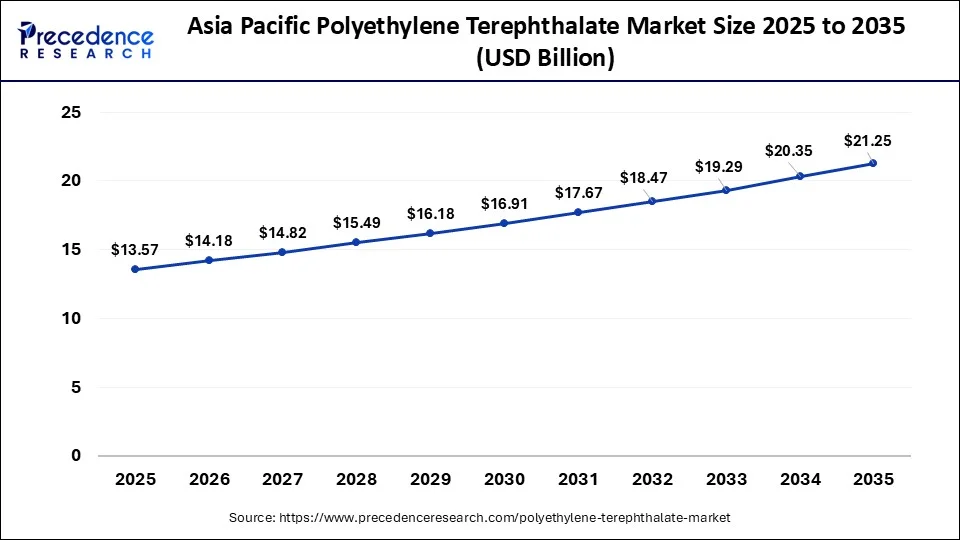
The Asia Pacific dominated the Polyethylene Terephthalate market in 2025, accounting for a maximum market share. Increasing consumption of packaged food coupled with the growing demand for automobile films in countries such as China, India, Indonesia, and Malaysia is expected to drive the demand for polyethylene terephthalate in the Asia Pacific. This is due to a number of environmental laws passed by international organisations like the Environmental Protection Agency (EPA), International Union for Conservation of Nature (IUCN), and Intergovernmental Panel on Climate Change (IPCC), which are likely to affect the demand for polyethylene terephthalate in the area.
Considering an expanding GDP per capita and a better domestic consumer goods production landscape, China and India, the region's two fastest growing countries, offer various growth potential for the consumer goods market. Population expansion, booming economies, and rising spending power in Latin American and Asian countries are projected to increase consumer goods sales, which will have an effect on the PET industry.
Additionally, factors including the products' price sensitivity and the presence of several companies in the PET market are anticipated to increase competition in the area. It is anticipated that emerging economies like China, India, and Indonesia will soon see rapid economic expansion. In the future years, it is anticipated that significant expenditures in the building and construction industries for the development of infrastructure in Europe and the Asia-Pacific region will increase demand for films and sheets.
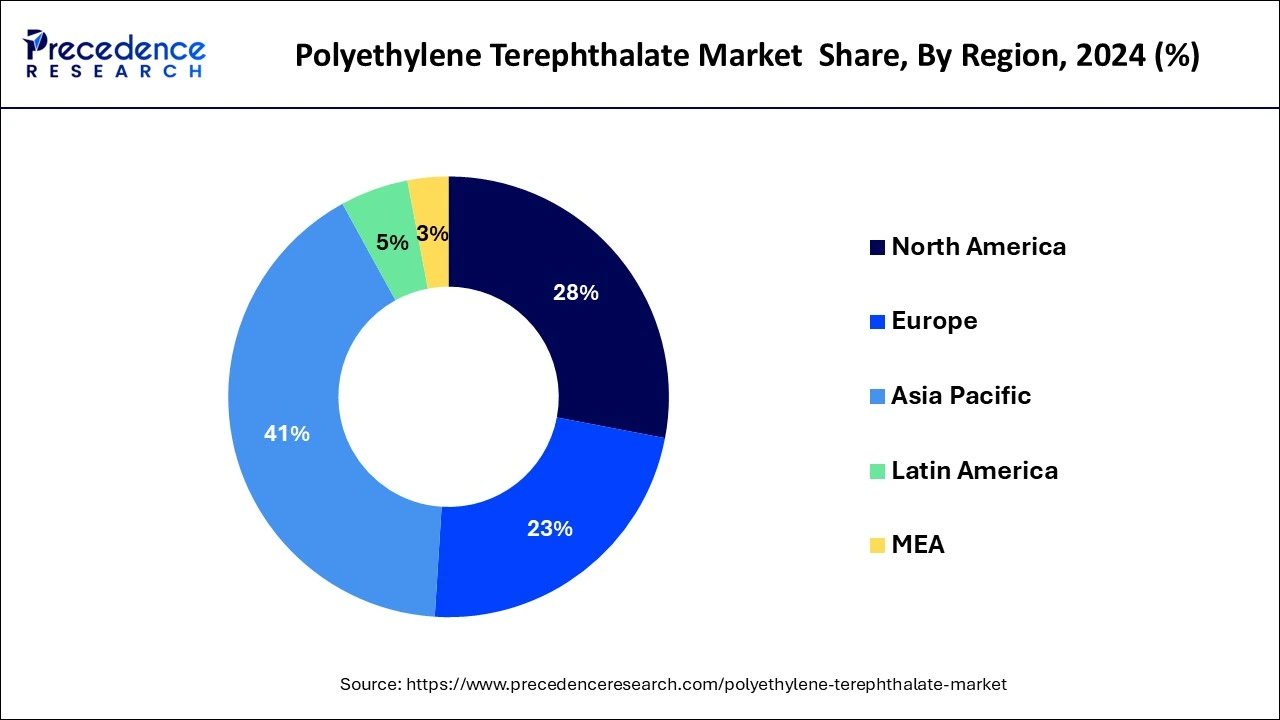
In comparison to Asia Pacific, North America and Europe are more developed markets. The manufacturers have been obliged to transfer their manufacturing landscape towards developing economies in Asia Pacific, such as China and India, due to strict laws in both of the aforementioned regions. These nations provide skilled labour and land at comparatively reduced prices. Because of the high demand from numerous end-use sectors such as the automotive, construction, electronics, packaging, and other ones, the U.S. presents a relatively mature but expanding market for PET. Consumer spending and confidence have significantly increased as a result of the economic recovery.
China Polyethylene Terephthalate Market Trends
China is the top country in Asia Pacific thanks to its massive PET production capacity, extensive presence in the packaging and textile sector, and strong domestic consumption. Rising recycling investments, manufacturing, and demand for environmentally friendly packaging products are enhancing its position in the PET market.
Additionally, the U.S. government and a number of federal agencies are investing more money in regional development, infrastructure, and programmes to support it. These characteristics are probably going to cause the construction and infrastructure markets to increase quickly, which will be good for the PET industry because PET materials are lightweight, highly effective, and bind quickly.
U.S Polyethylene Terephthalate Market Trends
The United States takes the lead in North America thanks to its big beverage and food-packaging sector, well-established PET processing system, and increasing demand for recycled PET material. Investments in collection, recycling, and sustainable packaging are motivating manufacturers to enhance their circular PET production capabilities.
Europe: Sustainability of Packaging Made from PET: The PET marketplace in Europe is marked by stringent recycling regulations and guidelines, as well as numerous circular economy initiatives, resulting in a much more sophisticated network of collection systems for recyclable materials than in any other region. Of the primary European countries that have been growing their PET demand at the fastest rates of growth, Poland has emerged as the fastest-growing, due to the increasing demand for packaging for food products and ongoing investments in developing recycling systems.
Germany Polyethylene Terephthalate Market Trends
Germany is one of the leading countries in Europe, with an advanced packaging and automotive industry, recycling infrastructure, and focus on using eco-friendly materials. The demand for PET products continues to grow in the packaging and beverage industry, as well as in different industries and for consumer purposes.
Latin America: Growth in Demand for PET: The growth of metropolitan centers throughout Latin America, coupled with the increase in bottled beverages consumed in these urban centers, has driven the regional growth of PET packaging. Moreover, these markets have been making significant investments in developing low-cost production and regional recycling capacity. Brazil is the fastest-growing country in the region, primarily due to its rapid growth in the development of the beverage industry and ongoing investments in recycled PET initiatives.
Brazil Polyethylene Terephthalate Market Trends
Brazil has established itself as an important player in Latin America due to its growing beverage industry, significant consumption levels, and growing plastics industry. Increased consumption of bottled drinks, food packaging products, and numerous industrial uses of PET, together with increased focus on recycling, are creating opportunities for both virgin and recycled PET grades.
Middle East & Africa (MEA): Expanding PET Production: PET demand in the MEA region has reached an all-time high due to increasing integration of petrochemical operations, increased demand for bottled water, and the development of manufacturing and related infrastructure in both the packaging and textile industries. The fastest growing country in the MEA region has been Saudi Arabia, driven largely by investment in petrochemical facilities and development of export-oriented PET production capacity.
Value Chain Analysis of the Polyethylene Terephthalate Market
- Sourcing and Integration of Raw Materials and Feedstocks: Due to volatility in crude oil prices and feedstock availability, manufacturers look to secure their production from upstream supply by integrating themselves further up the supply chain (backward integration) and establishing long-term contracts with suppliers.
Key Players: Reliance Industries, Inc., Indorama Ventures, Ltd., and Sinopec Limited. - Manufacturing of Resins and Polymerization: The goal of this area of manufacturing is to optimize polymerization by maximizing efficiency and minimizing the amount of energy required to produce resins, and to control the molecular weight of PET resins to improve their quality for use in packaging, textiles, and industrial applications.
Key Players: Alpek, Ltd., Far Eastern New Century Corporation, and Eastman Chemical Company. - Processing and Distribution of End-Use Products: The use of PET resins to produce end-use products, such as bottles, films, fibers, and sheets, employs the injection moulding and extrusion methods.
Key Players: Amcor, Berry Global, and Plastipak.
Competitive Landscape
The Polyethylene Terephthalate (PET) market is semi-consolidated, as many big integrated manufacturers operate alongside local producers. Since the risk of entering this industry remains moderate, competition is viewed as harsh in terms of cost-efficiency and sustainability. Some players such as Indorama Ventures, Alpek, Eastman Chemical, SABIC, and Far Eastern New Century are strongly positioned in the market due to their diversified product range, production facilities, and capabilities in recycling areas. As far as the regional companies are concerned, they have the advantage of producing goods for specific applications. Firms are turning to implementing recycling technology, increasing their production capacities, and collaborating with other manufacturers to make their position stronger in the circular economy. Seriously high startup costs, unpredictable prices of raw materials, ecological regulations, and required innovations make market entry difficult for new firms.
Company Profiles
RTP Company
- HQ: Winona, Minnesota, U.S.
- Founded: 1982
- Ownership: Private
- Company Overview: RTP Company is a proprietary global compounder that deals with custom-designed thermoplastics. The company engineers unique materials from over 60 engineering resin systems, embedding additives and reinforcing technology to create specifics like structural strength, conductivity, flame retardancy, resistance to wear, high-temperature endurance, and soft-touch characteristics. The firm has over 20 manufacturing sites located in North America, Europe, and Asia, which facilitates supporting its customers involved in the assembly line, consumer goods, automotive industry, electronics, medical, and industrial applications.
Key Strengths
- Custom Compounding: RTP is known for making application-centric thermoplastics as compared to using standardized types of the same material.
- International Manufacturing Base: More than 20 manufacturing units lead to regional production and reaching out to customers for support.
Key Vulnerabilities
- Specialized Focus: The specific character of engineered materials used results in less dependency on bulk production of PET resin.
- Limited Scale: The model of being privately owned limits the scale compared to the common global manufacturers.
BASF SE
- HQ: Ludwigshafen, Germany
- Founded: 1865
- Ownership: Public - Frankfurt Stock Exchange
- Company Overview: BASF SE is one of the largest diversified chemical companies in the world that has extensive capabilities in chemicals, materials, and other downstream. In the case of plastics, BASF produces engineering materials and polyamides, namely Ultramid PA6, PA66, and PA6/66 grades useful in packaging, films, textiles, and engineering. The extensive global manufacturing chain and strong application-development capabilities give BASF a competitive advantage in the market of advanced polymer materials as well as widen its role beyond direct PET resin production.
Key Strengths
- Integrated Chemical Base: Verbund concept that works within BASF introduces a lot of integration among raw materials, intermediates, and finished products.
- Material Innovation: Strong records in R&D developments and perfect skills in application development help develop unique grades of polymer products as well as sustainable materials.
Key Vulnerabilities
- Diversified Portfolio: Plastics are a very small part of BASF's chemical portfolio that limits its specialization in terms of PET production.
- PET Exposure: The polymer portfolio of BASF consists for the most part of polyamides and engineering plastics rather than usual PET resin production.
DuPont
- HQ: Wilmington, Delaware, U.S.
- Founded: 1802
- Ownership: Public
- Company Overview: DuPont is a diversified company that specializes in a variety of specialties with a rich past in polymers, advanced materials, and performance technologies already present. Its product offerings are traditionally made up of engineering polymers and advanced materials that apply to automotive, electronics, industrial, health care, and consumer applications. The company's competitive advantage focuses on material science and engineering rather than large scale commodity PET strategy.
Key Strengths
- Materials Expertise: The great expertise in the area of specialty polymer and performance materials enables valuable applications.
- Application Development: A great capacity for technical collaboration allows transforming polymer processing.
Key Vulnerabilities
- Limited Corporate PET Focus: DuPont does not focus mainly on production of the large volume of PET resin.
- Pressure from Competitors: There is pressure coming from the specialty market which faces competition from large chemical companies and specialized suppliers.
DSM / Envalior
- HQ: Geleen, Netherlands / Global operations
- Founded: 1902 - DSM heritage
- Current Ownership: Private
- Company Profile: DSM Engineering Materials is now included in Envalior, which was formed in 2023, as a result of a merger between DSM Engineering Materials and LANXESS High Performance Materials. Thus, for any recent market study/analysis, the company should be referred to as Envalior rather than DSM Engineering Materials. Envalior has a wide range of engineering materials, including PET under the brand Arnite along with PA6, PA66, PA46, PBT, PPS, PPA, TPC, and thermoplastic composites.
Key Strengths
- Expertise in Engineering Materials: An established background in high-performance plastics and developing application-specific materials.
- Focus on Sustainability: The emphasis on sustainable materials helps increase demand for low-impact polymer materials.
Key Vulnerabilities
- Post-Merger Integration: The process of creating organizational structures and portfolio integration as a result of the merger with LANXESS High Performance Materials in 2023.
- Level of Competition: Competes with numerous custom polymer manufacturers and specialized suppliers of polymers all over the world.
Polyethylene Terephthalate Market Companies
- RTP Company
- BASF SE
- Dupont
- DSM
- M&G Chemical Group
- Lanxess Corporation
- Lyondell Basell Industries N.V.
- Indorama Ventures
- Toray Industries
- Eastman Chemical Company
Recent Developments
- In August 2026: The United Kingdom initiated a safeguard investigation into imports of certain polyethylene terephthalate (PET), assessing whether increased imports are causing or threatening serious injury to domestic producers. The investigation is being conducted by the Trade Remedies Authority. (Source: https://www.wto.org)
- In January 2026: Türkiye notified the WTO of a safeguard investigation into polyethylene terephthalate (PET) resin imports, initiated on December 31, 2025. Authorities will assess import-related injury risks, while interested companies and exporters can submit evidence through official questionnaires. (Source: https://www.wto.org)
Segments Covered in the Report
By Packaging Application
- Bottled Water
- Carbonated Soft Beverages
- Juices
- Alcoholic Beverages
- Thermoforming Trays
- Food Packaging
- Non-Food Packaging
- Others
By Application
- Packaging
- Films & Sheets
- Others
By Region
- North America
- Europe
- Asia-Pacific
- Latin America
- Middle East and Africa
For inquiries regarding discounts, bulk purchases, or customization requests, please contact us at sales@precedenceresearch.com
Frequently Asked Questions





Ask For Sample
No cookie-cutter, only authentic analysis – take the 1st step to become a Precedence Research client
 Get a Sample




 sales@precedenceresearch.com
 Schedule a Meeting
