



Recycled Plastic Market Trends, Key Companies, Company Production Capacity, Plant Utilization, Production Volume, Pricing Dynamics, Supply Chain Performance, Sales Analysis, and Industry Growth
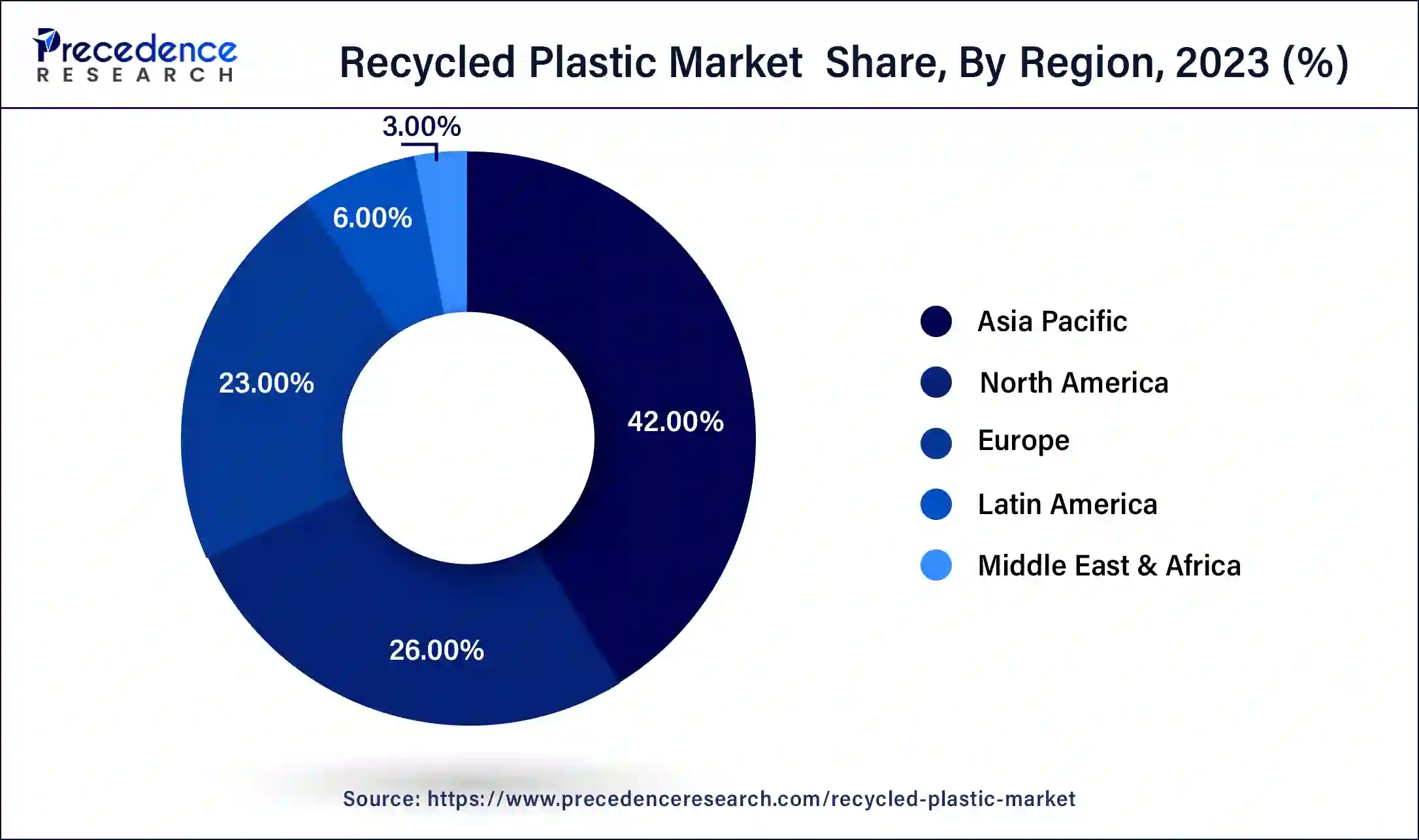
The global recycled plastic market is projected to grow from USD 63.83 billion in 2026 to USD 136.14 billion by 2035, registering a CAGR of 8.78%. Growth is driven by stringent environmental regulations, rising consumer demand for sustainable products, increasing adoption of circular economy practices, expanding recycling infrastructure, and AI-powered sorting, quality control, and waste management technologies that improve recycling efficiency. Asia Pacific dominated the market in 2025 with a 45% share, supported by strong manufacturing activity, government recycling initiatives, and high demand from packaging and automotive industries, while North America is expected to witness the fastest growth due to corporate sustainability commitments, advanced recycling technologies, and increasing regulatory focus on recycled content.
Source: https://www.precedenceresearch.com/recycled-plastic-market
 Get a Sample
 Table Of Content


What is the Recycled Plastic Market Size?
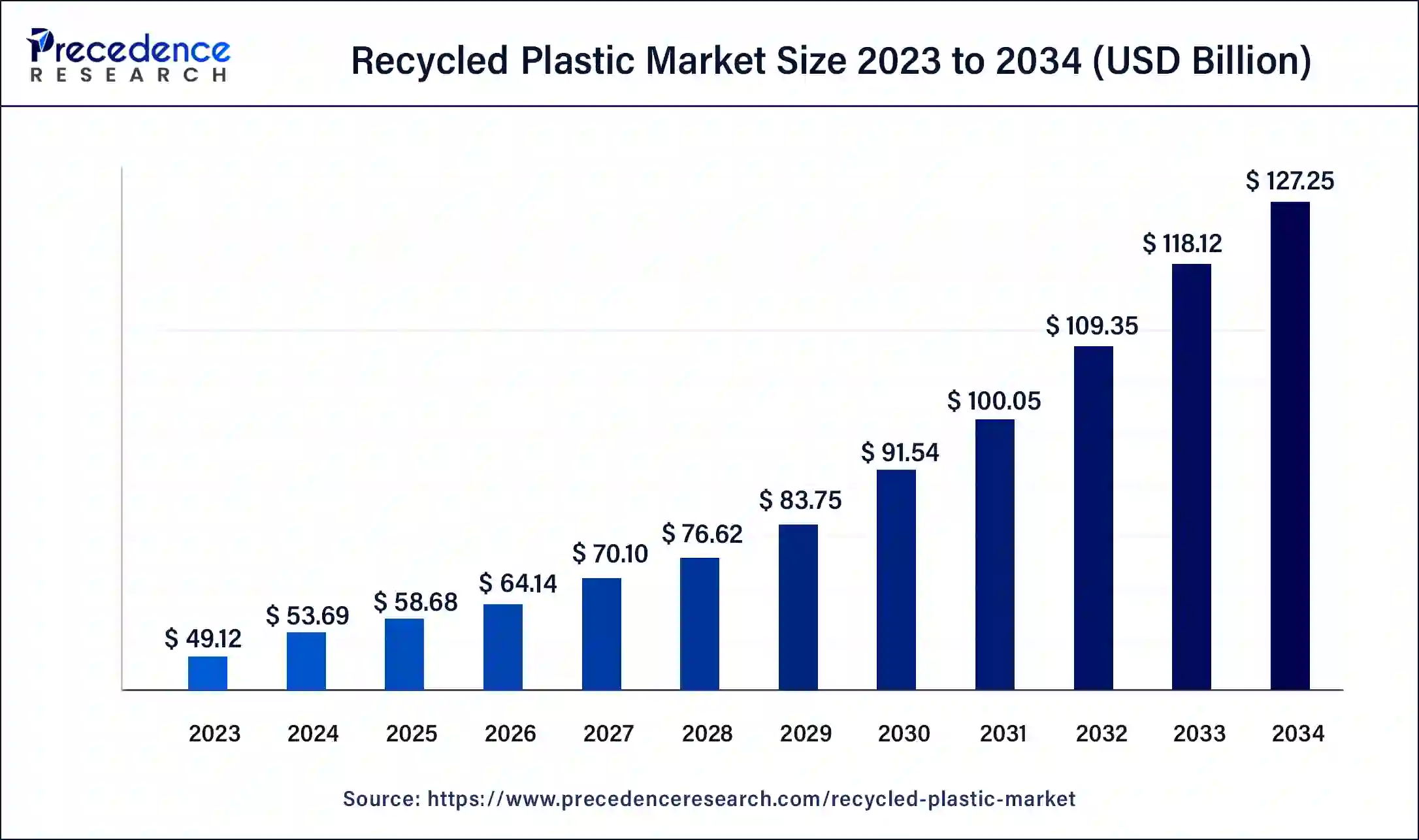
The global recycled plastic market size was valued at USD 58.68 billion in 2025 and is predicted to increase from USD 63.83 billion in 2026 to approximately USD 136.14 billion by 2035, expanding at a CAGR of 8.78% from 2026 to 2035. The market growth is driven mainly by increasing environmental policies, growing consumer demand for sustainable products, and the adoption of circular economy concepts in different sectors. Also, increasing investments in recycling facilities and increased demand for environmentally friendly packaging are driving the growth of the recycled plastic sector.
Key Takeaways
- Asia Pacific has held the highest revenue share 45% in 2025.
- By Source, the plastic bottle segment generated the largest market share of 72% in 2025.
- By Type, the polymer foam segment is anticipated to grow at a notable CAGR of 8.1% during the projected period.
- By Product, the polyethylene segment has held the maximum market share of 28.4% in 2025.
- By Product, the polypropylene segment is anticipated to grow at the fastest CAGR over the projected period.
- By Application, the packaging segment held the biggest revenue share of 39.3% in 2025.
- By Application, the building & construction segment is anticipated to expand at a remarkable CAGR over the predicted period.
Market Overview
Recycled plastic is described as a material derived from either post-consumer or post-industrial waste, which is then reprocessed into raw materials that can be reused. Instead of waste falling in landfills or adding to pollution in the environment, this waste undergoes a systematic process of collection, sorting, cleaning, and transformation into new products. Recycled plastic is no longer just a waste product; it is part of today's global circular economy. Conspicuous attention on the environmental challenges associated with plastic pollution, depletion of natural resources, and greenhouse gas generation has encouraged manufacturers in various industries, from packaging and automotive parts to construction materials, textiles, and consumer products, to integrate recycled polymers into products.
Moreover, regulatory pressure to push for a greater percentage of recycled content in the final product, together with sustainability pledges from leading brands, has driven the demand for these forms of material. Advances in mechanical and chemical recycling are having a positive effect on the quality of materials, as well as the number of recyclable plastics that can be used.
Why is the Use of AI Increasing in the Recycled Plastic Industry?
The adoption of artificial intelligence (AI) is increasing in the recycled plastic industry because it significantly improves sorting accuracy, material quality, and operational efficiency. AI-powered vision systems and machine learning algorithms can identify and separate different plastic types with greater precision than conventional sorting methods, reducing contamination and increasing recovery rates. This enables recycling facilities to produce higher-quality recycled plastics that meet the performance requirements of various end-use industries.
Beyond sorting, AI is helping recyclers optimize waste collection routes, forecast waste volumes, and improve inventory and resource management. AI-driven predictive maintenance systems monitor equipment performance in real time, reducing downtime and improving plant productivity. Additionally, manufacturers use AI-based analytics to assess the quality and consistency of recycled resins, ensuring compliance with industry standards and customer specifications. As recycling operations become increasingly data-driven, AI is playing a crucial role in enhancing resource recovery, lowering operating costs, and supporting the transition toward a more efficient circular economy.
Recycled Plastic Market Growth Factors
- Rising environmental awareness among consumers, businesses, and governments is increasing demand for sustainable and recycled plastic products.
- Stringent government regulations and policies aimed at reducing plastic waste and promoting circular economy practices are driving market growth.
- Corporate sustainability commitments and ESG goals are encouraging companies to incorporate recycled plastics into their products and packaging.
- Growing demand for sustainable packaging in the food & beverage, consumer goods, and e-commerce sectors is boosting the use of recycled plastics.
- Increasing investments in recycling infrastructure and waste management systems are improving collection, sorting, and processing capabilities.
- Advancements in recycling technologies, including chemical and advanced mechanical recycling, are enhancing the quality and applications of recycled plastics.
- Rising adoption in the automotive industry for lightweight and sustainable components is creating new growth opportunities.
- Expanding use in the construction sector for pipes, insulation materials, decking, and other building products is supporting market expansion.
- Growing consumer preference for eco-friendly products is encouraging manufacturers to use recycled plastic materials.
- Increasing plastic waste generation globally is creating a larger feedstock supply for recycling operations.
How are Government Initiatives Supporting the Recycled Plastic Market?
Governments are increasingly turning their attention to enhancing plastic recycling and circular economy practices. The Plastic Waste Management Rules and the Extended Producer Responsibility (EPR) system in India have imposed strict obligations upon producers, importers, and brand owners to ensure that such plastic waste can be gathered and recycled. This is the kind of movement that has created a steady flow of demand for recycled plastics. Additionally, the nationwide ban on certain types of single-use plastic products has helped to move towards more sustainable, recycled alternatives to conventional materials.
The National Recycling Strategy of the Environmental Protection Agency (EPA) in the U.S. outlines a 50% national recycling rate by 2030. That approach encompasses efforts aimed at reducing plastic pollution and building recycling infrastructure. Likewise, in the EU, there are new standards around the introduction of recycled content in industries with core products like packaging and the automotive sector, to provide impetus for the continued growth of the recycled plastics market.
Market Outlook
- Industry Growth Overview: The recycled plastic market is growing, driven by growing public challenges over plastic pollution is increasing consumer preference for eco-friendly packaging and products. Innovations in recycling technologies involve modern sorting systems and chemical recycling. Major industries such as automotive, packaging, and building and construction are massive consumers of recycled plastics.
- Global Expansion: The recycled plastic market is experiencing global expansion, as rising government regulations, increasing environmental awareness, and demand from industries such as packaging and automotive. Asia Pacific, significantly driven by strong demand from sectors like packaging, automotive, and construction, coupled with government initiatives.
- Major investors: Major investors in the recycled plastic industry include large asset managers such as Vanguard and BlackRock, major chemical and waste management companies such as Indorama Ventures, Dow, LyondellBasell, and Veolia, and specialized impact investors and investment funds.
Market Report Coverage and Key Metrics
| Report Coverage | Details |
| Market Size by 2035 | USD 136.14 Billion |
| Market Size in 2026 | USD 63.83 Billion |
| Market Size in 2025 | USD 58.68 Billion |
| Market Growth Rate from 2026 to 2035 | CAGR of 8.78% |
| Largest Market | Asia Pacific |
| Asia Pacific | 2025 |
| Forecast Period | 2026 to 2035 |
| Segments Covered | Source, Product, Application, Region |
| Regions Covered | North America, Europe, Asia-Pacific, Latin America, and Middle East & Africa |
Market Dynamics
Drivers
Stringent Regulations
Governments in leading economies are also strengthening legislation on plastic waste management while setting minimum recycled-content requirements for products, including packaging and consumer products. Such measures force producers to include recycled plastics in their portfolio, generating consistent demand and encouraging investment in processes to collect, sort, and process plastic.
Rising Awareness of Plastic Pollution
Consumption trends suggest an increasing public awareness of issues involving marine littering, excessive landfill buildup, and the greenhouse gas emissions associated with plastic production. With more consumers having a preference to buy products made from recycled materials, manufacturers are now being urged to redesign their packaging so that these recycled plastics will increasingly appear where people want them in the different categories that they should use.
Restraints
Inconsistent Quality and Feedstock Availability
The recycled plastic quality is dependent on the means by which they were gathered and processed. Some problems can affect product performance, such as contamination, differing material flows, or poor waste separation. In some industries, such as those with strict standards, manufacturers may hesitate to follow standardized specifications that can compromise quality performance.
Underdeveloped Recycling Infrastructure
One of the major challenges facing the recycled plastic market is the lack of adequate recycling infrastructure, particularly in developing and emerging economies. Many regions have insufficient collection, sorting, processing, and waste management facilities, limiting the efficient recovery and recycling of plastic waste. As a result, large volumes of recyclable materials are either discarded in landfills or improperly managed, reducing the availability of feedstock for recycling operations.
Opportunity
Emergence of Advanced Recycling Technologies
New technologies, such as chemical recycling, offer new ways of treating tough plastics that frequently end up in landfills. These innovations may enhance material recovery rates, increase output of better quality, expand the range of applications appropriate for recycled plastics, thus producing major growth prospects for enterprises operating in the plastics technology sector.
Market Segmentation Analysis
By Source
Why Did the Plastic Bottles Segment Led the Market in 2025?
The plastic bottles segment held a major revenue share in the recycled plastic market in 2025, as plastic bottles are among the most commonly collected and processed waste streams worldwide. PET bottles were common in beverages, personal care, and household packaging, allowing for a steady flow of recyclable products. Well-established collection systems and growing bottle-to-bottle recycling initiatives further strengthened the segment's position, making it the primary source of recycled plastics across multiple end-use industries.
The polymer foam segment is expected to grow at the fastest CAGR in the market between 2026 and 2035, due to rising efforts to recover and recycle packaging foams used in electronics, appliances, and food service applications. Improvements in foam densification processes and processing technologies also make recycling profitable. This may be reflected in the more sustainable polymer foam that will be used now and in the future in construction, insulation, and protective packaging in general, as businesses are looking for low-carbon, low-weight choices with limited environmental impact.
By Product
The Polyethylene Segment Dominated the Market in 2025
The polyethylene segment accounted for a considerable revenue share in the market in 2025, due to its extensive use in the food & beverages and consumer goods industries for the packaging of products. Polyethylene is commonly used as a packaging material for milk, garbage bins, laundry detergents, and many other products, thereby boosting segment growth. Moreover, polyethylene is one of the most commercially important recycled polymers as it is being demanded by industries like packaging, agriculture, and consumer goods.
The polypropylene segment is expected to grow at the fastest CAGR in the market over the coming years, as advancements in recycling technologies enhance both the quality and usability of reclaimed materials. Polypropylene is widely used for packaging, labelling, automotive components, medical devices, and various other products. Therefore, this segment is expected to grow at a rapid pace during the forecast period. Furthermore, heightened regulatory emphasis on circular material utilization, along with improvements in sorting systems, is expected to boost market adoption of recycled polypropylene moving forward.
By Application
What Made Packaging the Leading Segment in the Market?
The packaging segment led the recycled plastic market with a major revenue share in 2025, as most components are made of recycled plastics as part of products in the form of bottles, containers, films, and flexible packaging. In order to meet sustainable objectives and meet the regulations of their consumers, brands and packaging manufacturers are progressively incorporating reused materials into their packaging goods. The volume of orders through e-commerce platforms has increased dramatically, resulting in the extensive use of recycled plastic for the packaging of products, thereby fostering the growth of this segment.
The building & construction segment is expected to grow at the fastest rate over the forecast period, as recycled plastics become more widely used in building applications such as pipes, insulation materials, decking systems, roofing components, and composite structures. The increasing consideration of resource efficiency and sustainable construction practices that encourage the recycling of recycled material is evident here, too. Demand for construction products with recycled plastics is expected to proliferate, with both governments and developers focusing on environmentally sustainable infrastructure initiatives.
Market Regional Analysis: North America, Europe, Asia-Pacific
Asia Pacific Recycled Plastic Market Size and Forecast 2026 to 2035
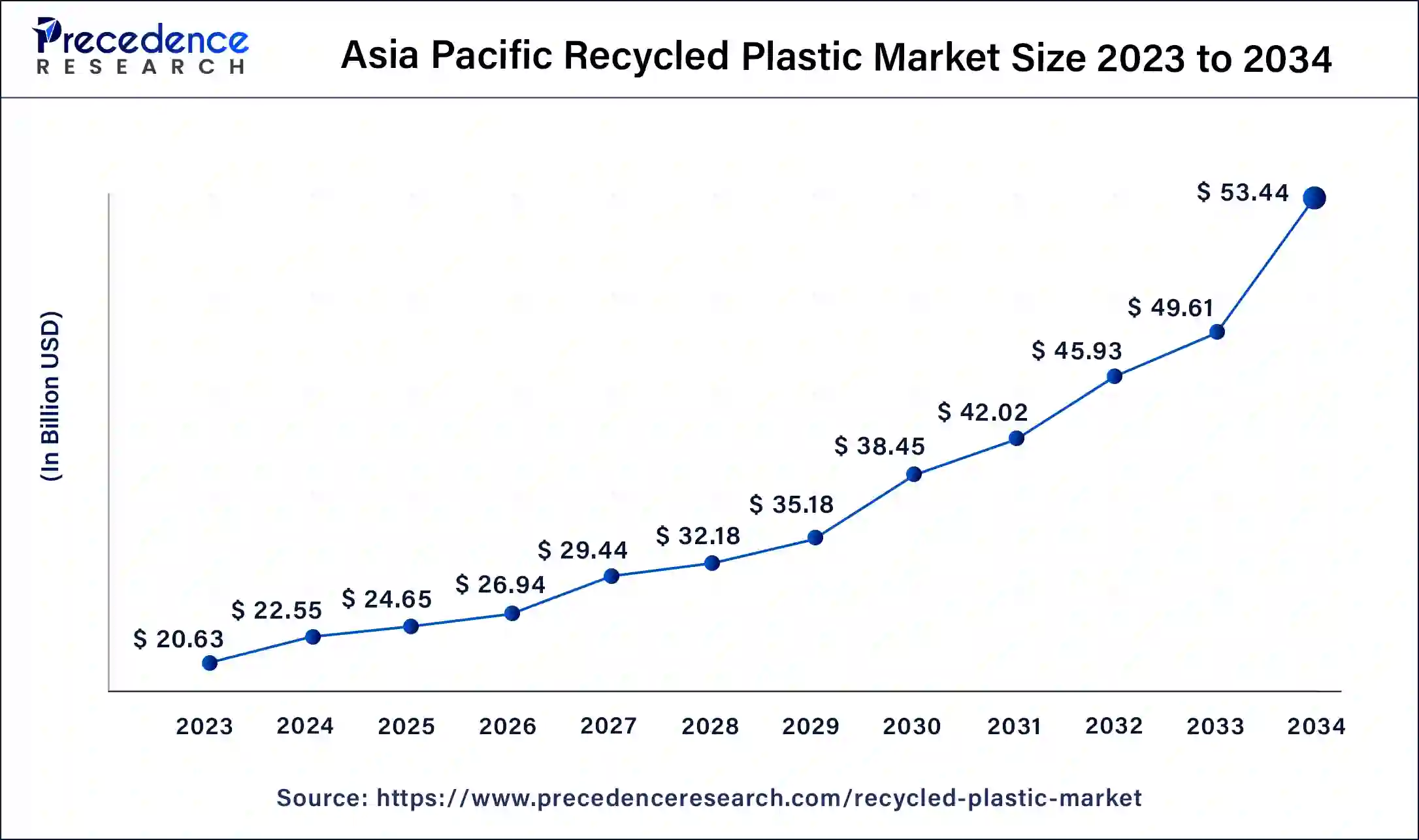
The Asia Pacific recycled plastic market size was calculated at USD 24.65 billion in 2025 and is expected to be worth around USD 57.17 billion by 2035, growing at a CAGR of 8.78% from 2026 to 2035.
Why is Asia-Pacific Dominating in the Recycled Plastic Market?
Asia-Pacific dominated the global market with the largest market share in 2025, due to strong manufacturing, urban growth, and increasing investments in waste collection and recycling systems. China, India, Japan, and South Korea were responsible for much of the recyclable plastic waste, and they were also the countries with high demand for recycled materials in the packaging industry, automobile industry, textiles, and consumer goods industry. Also, government initiatives that promote circular economy principles, in addition to stricter plastic waste management policies, solidified the leadership of the region.
India Market Trends
India has seen significant growth in the recycled plastic market. The growth is driven by rising government initiatives for a shift towards the use of eco-friendly solutions and sustainability, with rising environmental concerns driving the growth of the market in the region. Rising consumer awareness of sustainable practices and initiatives for recycling plastics generated from various sectors, and the application of recycled plastics in various sectors, such as construction, coating, packaging, and electronics, drives the growth of the market in the country.
China Market Trends
China remains the largest recycled plastic market in Asia-Pacific, owing to its massive manufacturing base and its strong emphasis on promoting circular economy practices in the market. In automotive, packaging, and consumer goods manufacturing, recycled materials are being integrated throughout multiple industries. Further, there is an investment continuing in advanced recycling technologies. At the same time, companies, in pursuit of their sustainability objectives, are incorporating recyclable packaging solutions and offering products with higher levels of recycled content.
Why is North America Experiencing the Fastest Growth in the Recycled Plastic Market?
North America is expected to grow at the fastest CAGR during the forecast period, due to increasing corporate sustainability commitments and rising regulatory pressure to incorporate recycled content into products and packaging. Leading customer brands and manufacturers are investing heavily in the development and commercialization of new recycling technologies to guarantee the reliability and availability of high-quality recycled feedstock. The increase in recycled plastics is projected to create opportunities throughout industries like packaging, construction, automobiles, and consumer items. Moreover, devising state-level policies and improving collection systems are likely to prompt the move towards a more circular economy for plastics in this region.
U.S. Market Trends
In the U.S., the recycled plastic market has gained traction with a new set of regulations that impose higher labeling requirements and recyclability standards to combat misleading recycling claims and improve the quality of discarded materials. Investment in these new recycling technology methods in the U.S., from chemical processes to AI sorting technologies, is aimed at improving recycling production at multiple levels, efficiency, and process quality.
How is Europe Growing in the Recycled Plastic Market?
The European recycled plastic market is expected to witness significant growth due to the implementation of the European Union's Packaging and Packaging Waste Regulation (PPWR), which entered into force in 2025 and aims to make packaging recyclable while increasing the use of recycled plastic content across industries. Another key trend has been rising investments in advanced and chemical recycling technologies to improve the recovery of difficult-to-recycle plastic streams.
UK Market Trends
The UK recycled plastic market has been shaped by policy-driven demand for recycled content. Plastic packaging waste generated in the UK adds up to more than two million metric tons yearly. The UK has implemented major policies to solve the plastic pollution challenges and encourage a circular economy, like the carrier bag charge and bans on certain single-use plastics. The UK and devolved governments have introduced various pieces of legislation to ban some single-use plastic products, which drives the growth of the market.
What are the Key Trends in the Recycled Plastic Market in Latin America?
Latin America is expected to witness significant market growth all throughout the forecast period, by rapid industrialization and increasing environmental concerns. Government initiatives aimed at reducing plastic waste and promoting recycling are gaining traction in the region, acting as key growth drivers, alongside rising consumer awareness about sustainability. Countries such as Brazil and Mexico are leading players.
Brazil Market Trends
The region's diverse market dynamics, coupled with a growing emphasis on circular economy practices, are expected to propel further growth in the recycled plastic market. The competitive landscape is evolving at a steady pace, with local players and multinational corporations looking to expand their operations.
How is the Middle East and Africa Region Growing in the Recycled Plastic Market?
The Middle East and Africa region is witnessing significant market growth, driven by rising environmental awareness and government initiatives. The region's growth is further being supported by regulatory frameworks that are aimed at reducing plastic waste and promoting recycling practices, although challenges remain in infrastructure and technology adoption. Countries such as Saudi Arabia, South Africa and the UAE are leading players.
South Africa Market Trends
Efforts to enhance recycling capabilities and public-private partnerships are gaining traction in the country, thus leading to steady market growth and development. As the region continues to focus on sustainability, the demand for recycled plastics is expected to grow even more, presenting significant opportunities for investments and innovation.
Government Initiatives and Investments
- ‘Restrictions' as Advantage – The restriction of single-use plastic is a developmental advantage for the market leaders and the packaging champions as well to shape innovations adhering to the green ecosystem. This continues the recycling culture, churning the legacy of the materials into an eco-friendly advanced blend. The technologies are thus acknowledged by the regulatory bodies worldwide.
- Finance backing – The financial backing for the grants and national institutes bolsters the research and development game. This focuses on the segregation systems and modern polymer technologies. The waste management and recycling facilities by the ‘Plastic Parks Scheme' are core efforts, reshaping the future of the market. The pathway for green innovations comes from the powerful support of the regional governments and the suitable infrastructure works magic for the eco-friendly developers. Whereas the centres of excellence are valuable contributors to the market mission and vision.
- Joint Funding – The joint funding, joining hands with the development banks, introduces the potential of modern chemical recycling and automated segregation systems. Moreover, the vast municipal waste collection space is an asset for these investments. The perk of recycling convenience is a delicacy to the end-to-end modern phase concentrating on green development.
Strategic Growth Opportunities
High Growth Commercial Opportunities
The effective role of the co-materials and brand commitments paves the way for market commercial growth. The first stage of the expansion strategies is sharp commercialization. The packaging champions are a proven example of the innovations portfolio. Regarding the lengthening of the innovation legacy, the raw materials industries earn massive gains in both revenue and business. This business is a motivation for the industries to present and deliver the quality blend to the champions.
Emerging Technology Opportunities
The commendable technological intervention is a key to success for the market. The automation and chemical recycling technologies are an excellence to be noted in the history of the green ecosystem. The outstanding efforts of the trio tech leaders and the commercial and industrial sectors meet the end of the recycling demands, challenging the hazardous chemicals and materials. The regional government pressures are an advantage for the tech enthusiast to see a future in this kind of market.
Geographic Expansion Opportunities
The regional expansion is varied by the several programs and the methods performed by the companies. The mandates set a standard of green economy in favour of the market and the regional ecosystem development. Smart infrastructure is a modern strategy of the tech, materials, chemicals and sustainable enthusiasts with high impact.
Recycled Plastic Market - Value Chain Analysis
- R&D: R&D processes include advanced sorting and separation machinery, chemical recycling, mechanical recycling advancements, and the development of high-value recycled products.
Key Players: Veolia Environnement S.A. and Waste Management, Inc. - Distribution Network Management: Recycled plastic organization, distribution network management (DNM) is a significant part of the entire reverse and forward supply chain, concentrating on the effective movement of materials from waste generation points to recycling services.
Key Players: SUEZ and Republic Services, Inc. - Waste Management and Recycling: Waste management and recycling in the recycled plastic industry comprise collection, sorting by type, cleaning, and shredding, trailed by mechanical processes such as melting and pelletizing or developed chemical processes like depolymerization, pyrolysis, and gasification, to create novel plastic products.
Key Players: Biffa Group Limited and MBA Polymers Inc.
Competitive Landscape
The Global Recycled Plastic Market is currently characterized by a dynamic competitive landscape, driven by increasing environmental awareness and regulatory pressures aimed at reducing plastic waste. Key players are actively engaging in innovative practices and strategic partnerships to enhance their market positioning. Companies such as BASF, Dow and Veolia Environnement S.A. are at the forefront, focusing on sustainability and technological advancements. 
The competitive landscape is also seen to be shifting from traditional price-based competition to a focus on innovation, technology, and supply chain reliability, suggesting that future differentiation will depend on these critical factors. In terms of business tactics, companies are increasingly localizing manufacturing to reduce transportation emissions and optimize supply chains. The market appears to be moderately fragmented, with several players competing for the highest market share.
Key Companies & Market Share Insights
The market is moderately fragmented with the presence of several local companies. These market players are striving to gain higher market share by adopting strategies, such as investments, partnerships, and acquisitions & mergers. Companies are also spending on the development of improved products. Moreover, they are also focusing on maintaining competitive pricing.
The various developmental strategies like new product launches with latest and innovative features fosters market growth and offers lucrative growth opportunities to the market players.
Top Vendors in the Recycled Plastic Market & Their Offerings
|
Company |
Headquarters |
Key Strengths |
Latest Info (2025) |
|
REMONDIS SE & Co. KG |
Lunen, Germany |
Extensive service portfolio across the entire supply chain |
REMONDIS gathers and recycles over 30 million tonnes of recyclables every year. From plastics to organic materials. |
|
Shell International B.V. |
Netherlands |
significant investments in R&D and low-carbon solutions |
Increase the amount of recycled plastic in Shell-branded packaging to 30% by 2030 |
|
Waste Connections |
Spring, Texas |
large landfill network, consistent financial performance |
Waste Connections' greenfield recycling facilities in Commerce City, Colorado, feature AI-powered sorting technology. |
|
CLEAN HARBORS, INC. |
Massachusetts, United States |
Robust service |
Clean Harbors recycled 1.9 million metric tons of materials in 2024 |
|
Covestro AG |
Leverkusen, Germany |
Sustainability and the circular economy |
In July 2025, Covestro India signed an MOU with CSIR-NCL to develop sustainable polyurethane upcycling solutions. |
Recent Developments
- In May 2026, Uflex Limited (India) inaugurated a recycling plant in Noida for the recycling of 39,600 metric tons of PET bottles, various plastic containers, and other plastics. The company's recycling operation is improved, and the availability of recycled plastic material for packaging applications is growing, with an increasing demand for recycling of plastic materials and use of sustainable practices, thanks to this approach, thus improving the company's recycling operations.
(Source: Uflex Limited Commissions 39,600 MTA Recycling Unit for PET Bottles at Noida) - In June 2025, NMMC, on World Environment Day 2025, launched the Plastic and E-waste Recyclothon at NMMC headquarters in collaboration with the project Mumbai, which aims to create a plastic-free city by eliminating plastic pollution, aligning with the rising environmental concerns and pollution in the city.
- In May 2025, PPG announced the launch of PPG EnviroLuxe Plus powder coatings, which are made of industrial plastic waste up to 18%. This launch focuses on rising environmental concerns and helps in eliminating industrial plastic waste. The coating material produced is used to enhance the durability and aesthetic appeal of the product, aligning with sustainability while minimizing the carbon footprint by providing long-lasting protection and enhancing performance.
- In May 2025, Toyoda Gosei Co., Ltd. launched and developed a new technology to recycle high-quality plastic from plastic automotive parts. This recycling of waste plastic aligns with the rising environmental concerns. To achieve this, they have collaborated with Isono Co., Ltd to procure quality raw material for recycling. This technology accelerates horizontal recycling for reuse in the same parts and contributes to CO2 reduction.
Segments Covered in the Report
By Source
- Plastic Bottles
- Plastic Films
- Polymer Foam
- Others
By Product
- Polyethylene
- Polyethylene Terephthalate
- Polypropylene
- Polyvinyl Chloride
- Polystyrene
- Others
By Application
- Packaging
- Building & Construction
- Textiles
- Electronics
- Automotive
- Others
By Region
- North America
- Latin America
- Europe
- Asia-pacific
- Middle and East Africa
For inquiries regarding discounts, bulk purchases, or customization requests, please contact us at sales@precedenceresearch.com
Frequently Asked Questions





Ask For Sample
No cookie-cutter, only authentic analysis – take the 1st step to become a Precedence Research client
 Get a Sample




 sales@precedenceresearch.com
 Schedule a Meeting
