



Solar Tracker Market Revenue, Leading Companies, Company Project Pipeline, Renewable Energy Adoption, Infrastructure Investment, Operational Efficiency, Company Market Share, Competitive Positioning, and Growth Trends
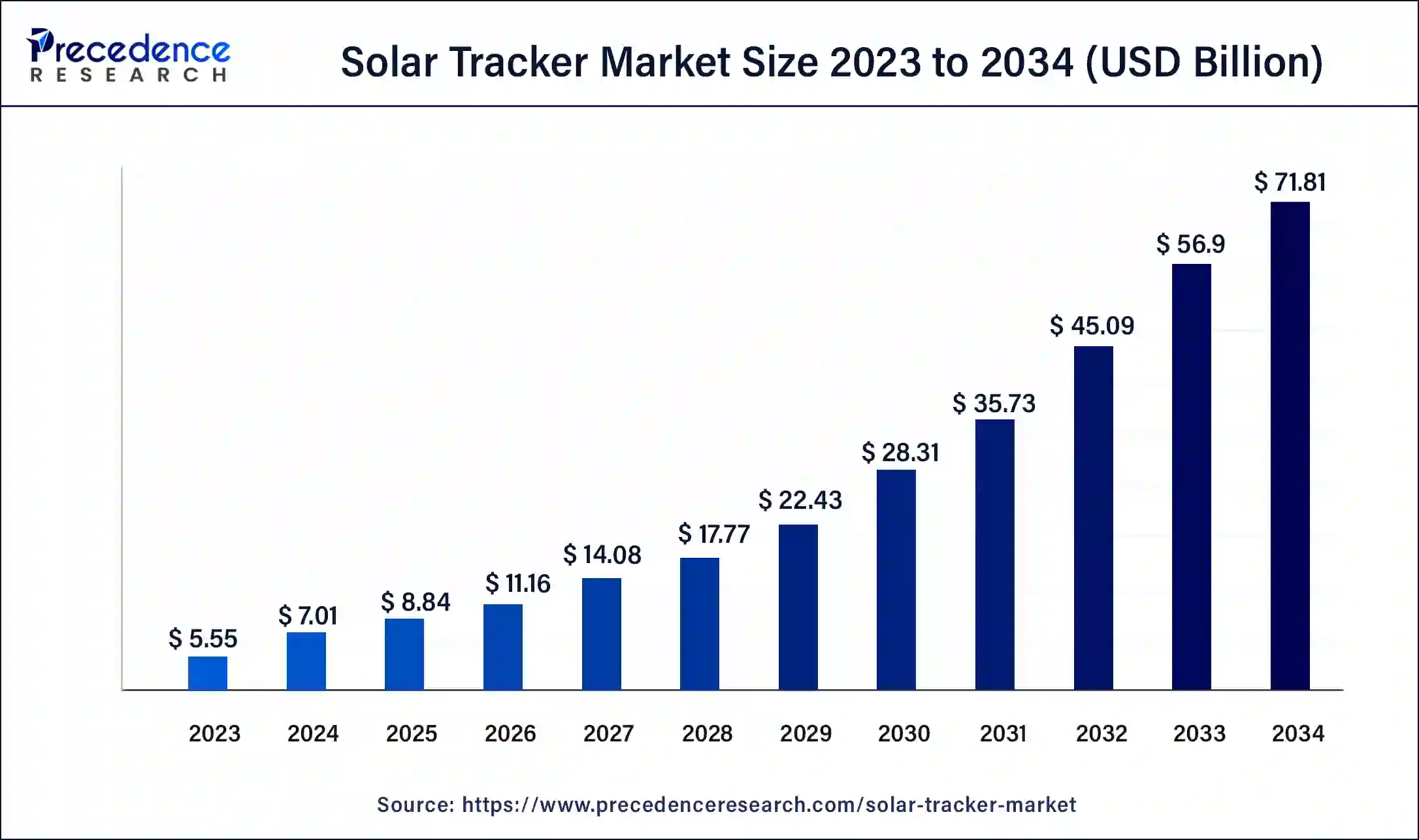
The global Solar Tracker Market was valued at USD 8.84 billion in 2025 and is projected to grow from USD 11.16 billion in 2026 to USD 84.65 billion by 2035, registering a CAGR of 25.35% from 2026 to 2035. Growth is driven by rising solar PV installations, renewable energy investments, government incentives, and increasing demand for higher energy efficiency. North America accounted for a 30% share in 2025, while single-axis trackers dominated the product segment with a 90% share. AI, IoT, automation, and smart tracking technologies are further supporting industry expansion.
Source: https://www.precedenceresearch.com/solar-tracker-market
 Get a Sample
 Table Of Content


What Is Driving the Growth of the Solar Tracker Market?
The global solar tracker market size was calculated at USD 8.84 billion in 2025 and is predicted to increase from USD 11.16 billion in 2026 to approximately USD 84.65 billion by 2035, expanding at a CAGR of 25.35% from 2026 to 2035. Growth will be influenced by growing solar PV installations, increased need for enhanced energy efficiency, renewable energy policies, and technological advancements in dual-axis and intelligent tracking systems.
Market Highlights
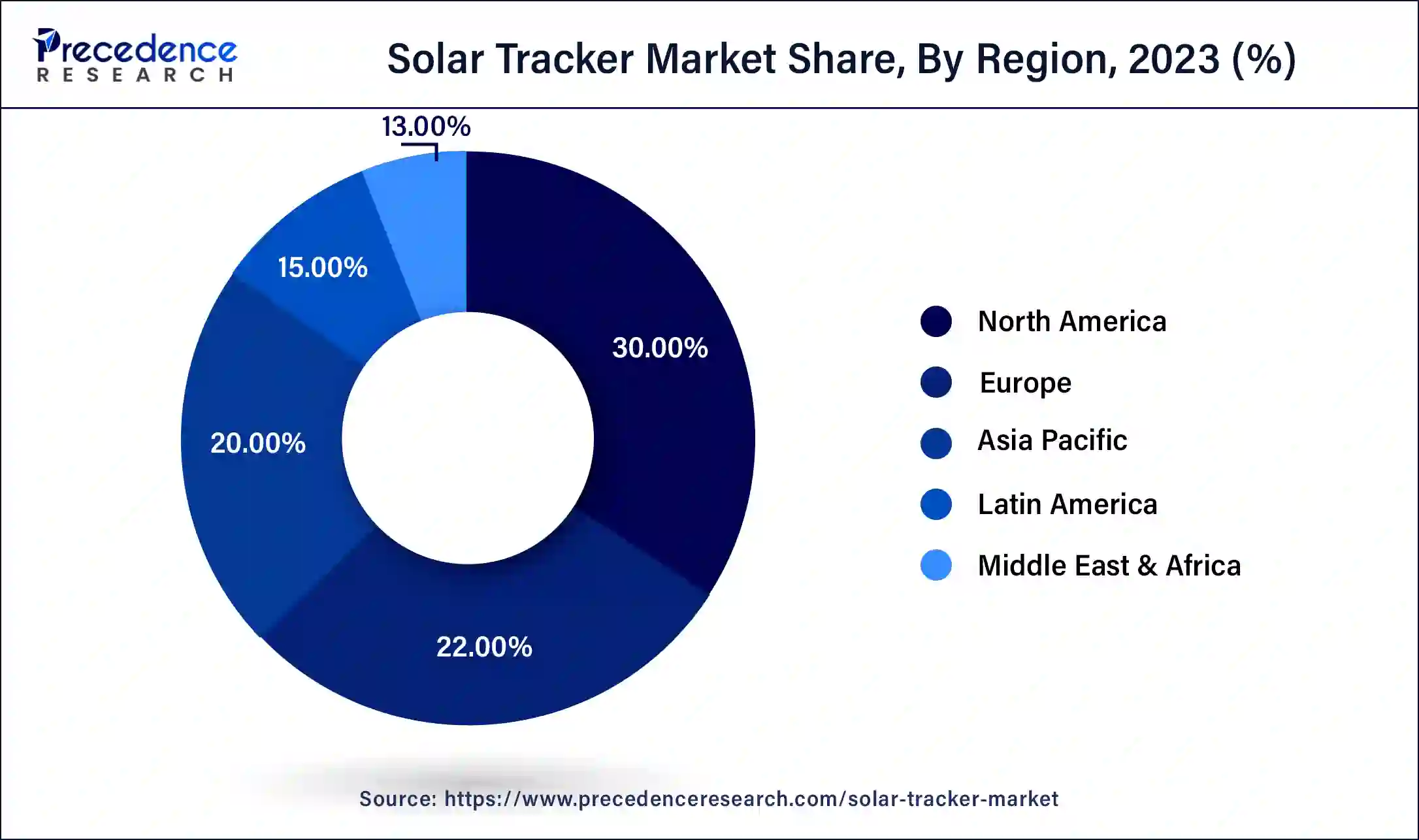
- North America led the global market with the highest market share of 30% in 2025.
- By product, the single axis segment has held the largest market share of 90% in 2025.
- By technology, the solar photovoltaic (PV) segment captured the biggest revenue share in 2025.
- By application, the utility segment registered the maximum market share in 2025.
Market Overview
The solar tracker market is witnessing rapid growth because of the rising global demand for renewable energy and the increasing installation of solar PV panels. The use of solar trackers helps in increasing energy generation capacity by optimizing the position of the solar panels according to the sun's movements, which helps in generating higher energy as compared to the fixed tilt solar panel systems. There are technological innovations taking place in this field, like AI-based tracking systems and Internet of Things (IoT). Government incentives and a reduction in solar technology costs are other driving factors.
How Is Smart AI Integration Reshaping Solar Tracker Performance?
Artificial Intelligence is changing the face of the Solar Tracker market through improved precision in tracking, power production, and prediction. Artificial Intelligence algorithms are used to determine weather conditions, solar irradiation, and system performance to adjust the positioning of panels to optimize energy production and minimize losses. Through machine learning, companies like Nextracker, Array Technologies, and Soltec can detect problems with their solar plants and predict their performance.
Evolving Efficiency and Automation Drive the Trend in Solar Tracker Market
The solar tracker market is witnessing a shift toward advanced automation and AI-driven systems to optimize solar panel positioning. Dual-axis trackers are gaining traction for their improved energy yield over single-axis variants. Integration with IoT and predictive analytics is enabling real-time monitoring and fault detection, enhancing reliability. Additionally, there's a growing preference for decentralized systems in off-grid applications. These trends reflect an industry push toward maximizing efficiency, reducing operational costs, and supporting the expansion of utility-scale solar installations.
- In March 2025, Goldi Solar launches an AI-powered solar manufacturing line. Goldi Solar has opened a PV module manufacturing line, powered by automated optical inspection (AOI) and artificial intelligence. AI-powered automation enhances consistency and precision while minimizing errors and material waste.
Solar Tracker Market Growth Factors
A solar tracker surges the solar panel system's productivity capacity by synchronizing the solar panels with the path of the sun. The growing initiatives and efforts by market players are driving the growth of global solar tracker market. For instance, PV Hardware Solutions S.L.U., a major participant in the solar tracker market, was chosen as the supplier for the single axis solar tracker for more than 30PV plants with a total capacity of more than 3GW in April 2019.
In addition, the growth of global solar tracker market is being driven by the growing emphasis on clean and green energy. The growing awareness about environmental pollution is also boosting the growth of global solar tracker market. One of the primary factors driving the growth of solar tracker market is a huge increase in the number of solar panel installations around the world. Moreover, the solar tracker market is growing due to the introduction of favorable government regulations that promote various solar energy projects.
Due to the increased industrial demand for sophisticated technology for tracking reasons, companies are concentrating on developing advanced technology-based products. For growing their geographical reach and product portfolio, manufacturing organizations use a variety of organic and inorganic expansion tactics. The key market players' strategic approach revolves around securing large buy orders, as this helps them to realize to economic growth. The tracker research and development are a key differentiator for industry players.
A solar tracker's other key goal is to save energy and increase operational efficiency. This is due to the fact that solar trackers are distinct energy consuming organizations that are attached to solar panels in order to improve their performance. Furthermore, solar trackers must provide operational reliability across a variety of operating conditions, as any impact on tracker application performance can have a significant impact on the overall performance of solar panels or power systems.
Future Outlook and Strategic Recommendation
Long-Term Industry Outlook
The long-term industry outlook mainly prioritizes sustained double-digit growth due to its high demand across utility installations as tracking shifts from an elective add-on to standard plant infrastructure. Furthermore, trackers combine seamlessly with battery energy storage systems (BESS) and bifacial panels to smooth out power output and eliminate grid curtailment to achieve bifacial and storage synergy.
Emerging Business Models
These business models mainly focus on Tracker-as-a-Service by transforming capital expenditures into predictable operational outlays through long-term performance-backed contracts. Agrivoltaic and terrain-adaptive models are deploying specialized independent row architectures tailored for dual land use and uneven topography. AI-driven software integration is monetizing ML to accelerate diffuse light capture and reduce cleaning cycles.
Strategic Recommendations for Stakeholders
These recommendations mainly prioritize that manufacturers should focus heavily on regional supply-chain reshoring and domestic-content compliance to capture policy incentives. Whereas, policymakers should streamline land acquisition frameworks and draft standards for intelligent grid-connected renewable components. Project developers should emphasize smart, weather-resilient tracking systems to safeguard assets against extreme weather events.
Market Outlook
- Market Growth Overview: The solar tracker market is expected to grow significantly between 2026 to 2035, driven by the integration of technology, declining costs and enhanced ROI, and grid stability and hybrid systems.
- Sustainability Trends: Sustainability trends involve design for efficiency and material reduction, bifacial optimization and land use efficiency, and software & AI for environmental optimization.
- Major Investors: Major investors in the market include Nextracker Inc., Array Technologies, Inc., Arctech Solar, Adani Green Energy Ltd., Tata Power Company Ltd., and Trina Solar Limited.
- Startup Economy: The startup economy is focused on novel-designed & engineering solutions, integrated solutions with storage, and drone-based monitoring and inspection.
Future Outlook and Strategic Recommendation
- Long-Term Industry Outlook: The long-term industry outlook mainly prioritizes sustained double-digit growth due to its high demand across utility installations as tracking shifts from an elective add-on to standard plant infrastructure. Furthermore, trackers combine seamlessly with battery energy storage systems (BESS) and bifacial panels to smooth out power output and eliminate grid curtailment to achieve bifacial and storage synergy.
- Emerging Business Models: These business models mainly focus on Tracker-as-a-Service by transforming capital expenditures into predictable operational outlays through long-term performance-backed contracts. Agrivoltaic and terrain-adaptive models are deploying specialized independent row architectures tailored for dual land use and uneven topography. AI-driven software integration is monetizing ML to accelerate diffuse light capture and reduce cleaning cycles.
- Strategic Recommendations for Stakeholders: These recommendations mainly prioritize that manufacturers should focus heavily on regional supply-chain reshoring and domestic-content compliance to capture policy incentives. Whereas, policymakers should streamline land acquisition frameworks and draft standards for intelligent grid-connected renewable components. Project developers should emphasize smart, weather-resilient tracking systems to safeguard assets against extreme weather events.
Market Report Coverage and Key Metrics
| Report Coverage | Details |
| Market Size in 2025 | USD 8.84 Billion |
| Market Size in 2026 | USD 11.16 Billion |
| Market Size by 2035 | USD 84.65 Billion |
| Growth Rate from 2026 to 2035 | CAGR of 25.35% |
| Largest Market | North America |
| Fastest Growing Market | Europe |
| Base Year | 2025 |
| Forecast Period | 2026 to 2035 |
| Segments Covered | Product, Technology, Type, Application, and Region |
| Regions Covered | North America,Asia Pacific, Europe, Latin America, Middle East and Africa |
Market Dynamics of the Solar Tracker Market
Drivers
Rising Renewable Energy Investments
The solar tracker market is driven by the rising demand for renewable energy and the rapid expansion of utility-scale solar installations. Governments worldwide are supporting solar adoption through incentives, subsidies, and clean energy targets, which is accelerating deployment. The increasing need to maximize solar efficiency and energy output is boosting tracker usage. In addition, technological advancements such as AI-based optimization, IoT-enabled monitoring, and smart tracking systems are improving performance and operational efficiency.
Restraints
High Installation Costs and Operational Challenges
High initial installation and maintenance costs remain a major restraint for the solar tracker market. The complexity of installation and the requirement for large land areas also limit adoption in certain regions. Moreover, exposure to harsh weather conditions can lead to mechanical wear and operational inefficiencies. In cost-sensitive markets, fixed-tilt systems are often preferred, which further slows tracker adoption despite efficiency benefits.
Opportunities
Emerging Clean Energy Projects
The market is witnessing strong opportunities due to growing investments in renewable energy infrastructure, especially in emerging economies. Integration of energy storage systems with solar trackers is creating new growth avenues. Advancements in lightweight materials, automation, and predictive maintenance technologies are further enhancing system efficiency. Expansion of off-grid solar projects and rural electrification programs is also expected to significantly boost future demand for solar tracking solutions.
Market Segmentation Analysis
Product Insights
Why Did the Single Axis Tracker Segment Dominate the Solar Tracker Market?
The single axis tracker segment dominated the market in 2025 due to its cost-effectiveness, simple installation, and ability to improve solar energy generation compared to fixed-tilt systems. It is widely used in utility-scale solar projects as it offers an optimal balance between performance, operational efficiency, and installation costs.
The dual axis tracker segment is expected to witness the fastest growth during the forecast period. Its ability to track the sun both horizontally and vertically maximizes energy output throughout the day. Rising adoption in high-efficiency solar installations and growing demand for improved power generation are expected to support segment growth.
Technology Insights
How the Solar Photovoltaic (PV) Segment Dominated the Solar Tracker Market?
The solar photovoltaic (PV) segment dominated the market in 2025 due to the rapid expansion of utility-scale and commercial solar power projects worldwide. Declining solar panel costs, supportive government policies, and increasing investments in renewable energy infrastructure significantly contributed to the widespread adoption of PV tracker systems.
The concentrated photovoltaic (CPV) segment is expected to witness the fastest growth over the forecast period. Rising interest in high-efficiency solar technologies, continuous improvements in optical systems, and increasing deployment in regions with high direct sunlight are expected to support the expansion of this segment.
Type Insights
Why Did the Active Solar Tracker Segment Dominate the Solar Tracker Market?
The active solar tracker segment held the dominant market position in 2025 owing to its automatic tracking capability, higher energy production, and compatibility with modern monitoring systems. Increasing investments in utility-scale solar projects and smart solar technologies have further strengthened the adoption of active trackers.
The passive solar tracker segment is expected to grow at the fastest pace during the forecast period. Its lower operating costs, simple mechanical design, and reduced maintenance requirements make it an attractive option for small and medium-sized solar installations, particularly in cost-sensitive markets.
Application Insights
Which Application Segment Led the Solar Tracker Market?
The utility segment accounted for the largest market share in 2025 due to the increasing number of large-scale solar farms worldwide. Governments and private developers are investing heavily in renewable energy projects, where solar trackers help maximize electricity generation and improve overall project profitability.
The commercial and industrial segment is expected to grow at the fastest CAGR during the forecast period. Rising electricity costs, increasing sustainability initiatives, and growing investments in on-site solar power systems are encouraging businesses to adopt solar trackers to improve energy efficiency and reduce long-term operating expenses.
Market Regional Analysis: North America, Europe, Asia-Pacific
How Is Renewable Energy Demand Shaping the Solar Tracker Market in North America?
North America held a major market share in 2025 due to high renewable energy adoption, large solar farm installations, and continuous technological innovation. The region benefits from favorable government policies, rising private sector investments, and grid modernization efforts. The presence of key market players and increasing demand for clean electricity are further strengthening growth across utility and commercial solar applications, supporting long-term market development. Smart grid integration is also improving system efficiency. Utility-scale project pipeline remains strong.
U.S. Solar Tracker Market Size and Growth 2026 to 2035
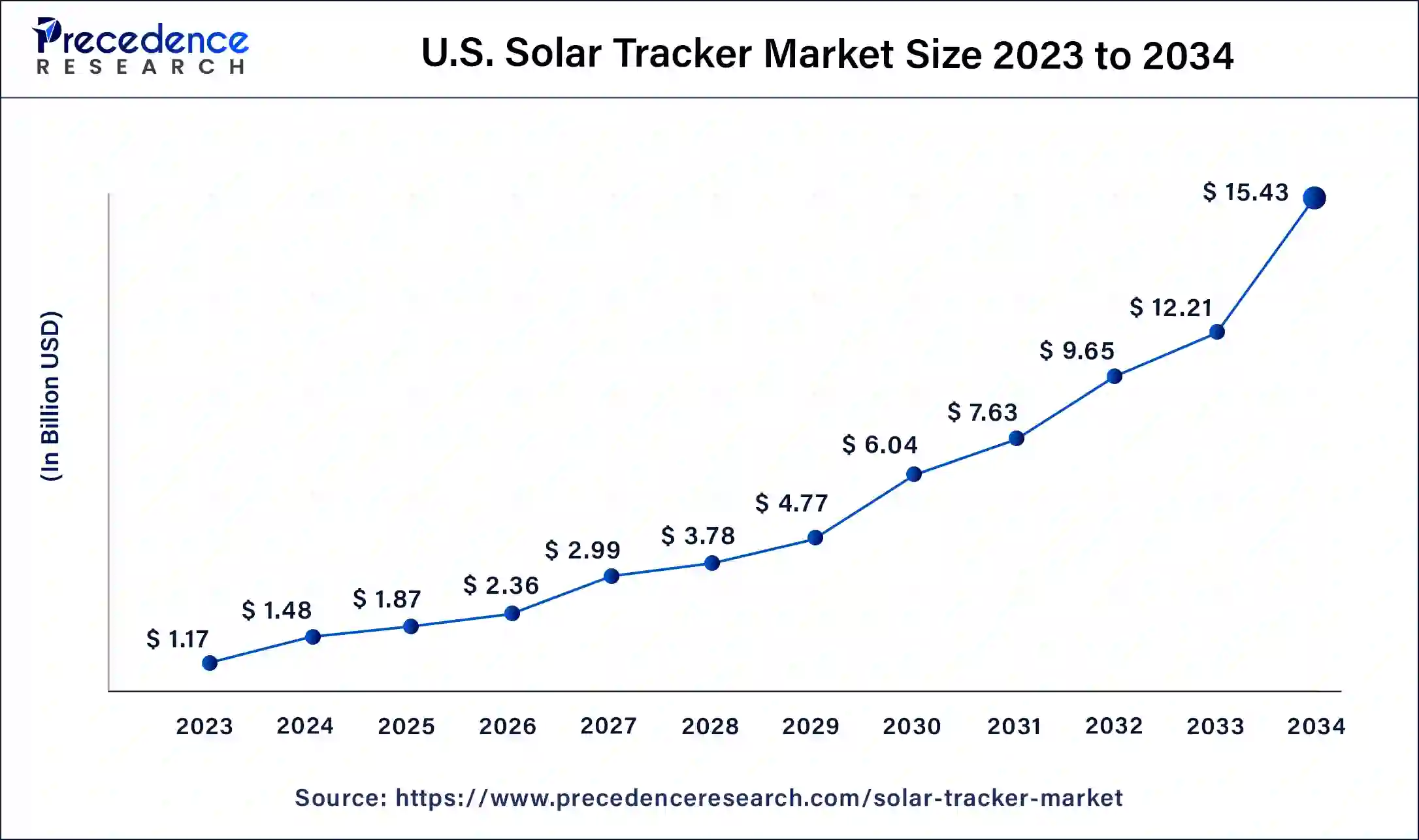
The U.S. solar tracker market size is estimated at USD 1.87 billion in 2025 and is predicted to be worth around USD 18.21 billion by 2035, at a CAGR of 25.56% from 2026 to 2035.
U.S. Market Trends
The U.S. leads the North American market due to strong deployment of utility-scale solar projects and supportive federal incentives such as tax credits. Increasing investments in renewable energy infrastructure and growing adoption of advanced single-axis trackers are improving efficiency and driving steady market expansion. Government-backed clean energy targets further strengthen long-term growth. Battery-integrated trackers are gaining traction. Storage-linked solar projects are expanding.
How is Asia-Pacific Growing in the Solar Tracker Market?
Asia-Pacific is expected to experience the fastest growth during the predicted timeframe, due to rising energy demand, urbanization, and strong government renewable energy targets. Countries like China, India, and Japan are investing heavily in solar infrastructure. Expanding utility-scale projects, declining solar technology costs, and increasing foreign investments are accelerating adoption of solar tracking systems, supporting long-term regional growth and improving energy access across developing economies. Rural electrification projects support installations. Foreign investments are increasing across the region.
China Market Trends
China leads the Asia-Pacific market due to large-scale solar farm installations and strong manufacturing capabilities. Government policies promoting renewable energy expansion and rapid industrialization are increasing demand. The country's focus on utility-scale photovoltaic projects is accelerating adoption of advanced solar tracking technologies. The domestic supply chain remains highly competitive. Hybrid solar-storage projects are expanding.
How Is Europe Advancing in the Solar Tracker Market?
Europe is expected to grow at a notable CAGR in the foreseeable future, due to strict decarbonization goals and strong policy support for renewable energy. Countries like Germany, France, and the UK are expanding solar capacity to reduce fossil fuel dependence. Growing investments in solar farms, technological advancements in tracking systems, and increasing cross-border energy initiatives are supporting regional expansion and strengthening long-term market stability. Cross-border renewable projects are improving energy flow. Private sector investments are rising steadily.
Germany Market Trends
Germany dominates the European market with strong renewable energy targets and advanced solar infrastructure development. The country is expanding solar PV installations supported by government subsidies and energy transition initiatives. Increasing adoption of efficient tracking technologies is enhancing solar power generation across utility-scale and commercial projects. Decentralized rooftop solar adoption is also increasing. Energy security concerns support tracker deployment.
What are the Key Trends of the Solar Tracker Market in Latin America?
Latin America is considered to be a significantly growing area, due to high solar irradiation potential and increasing renewable energy adoption. Countries like Brazil, Mexico, and Chile are expanding solar infrastructure to meet rising electricity demand. Supportive government initiatives, foreign investments, and falling solar technology costs are driving market expansion, while increasing energy security needs are encouraging large-scale solar tracker deployment across the region. Energy diversification strategies are accelerating growth. Off-grid solar installations are expanding.
Brazil Market Trends
Brazil leads the Latin American market due to abundant solar resources and rising investments in renewable energy projects. The country is expanding utility-scale solar farms supported by favorable government policies. Increasing demand for clean electricity and private sector participation is boosting tracker adoption. Distributed solar generation is also rising. Net metering policies support adoption.
Will the Middle East and Africa Grow in the Solar Tracker Market?
The Middle East and Africa region is expected to grow at a considerable CAGR in the upcoming period, due to rising investments in renewable energy and efforts to reduce dependence on fossil fuels. Countries like Saudi Arabia, the UAE, and South Africa are expanding solar capacity through large-scale projects. Abundant solar resources, supportive government policies, and international collaborations are accelerating the adoption of solar tracking systems, supporting long-term energy diversification and sustainability goals. International partnerships are supporting expansion. Rural electrification initiatives are growing.
Saudi Arabia Market Trends
The Saudi Arabian market is growing due to large-scale renewable energy projects under Vision 2030. The country is investing heavily in utility-scale solar farms to diversify energy sources. High solar irradiation and government support are driving increased adoption of advanced solar tracking systems. Large gigawatt-scale solar projects are under development. Energy diversification reduces oil dependency.
What are the Government Initiatives for the Solar Tracker Market?
- As part of the effort to encourage the widespread application of solar energy, the Government of India has introduced the concept of the National Solar Mission (NSM). This program is designed to facilitate the construction of utility-scale solar power stations all over the country. In addition, it encourages the employment of sophisticated solar trackers to make the generation process more efficient.
- In an attempt to boost the manufacturing industry of solar energy in the country, along with facilitating large-scale solar energy stations based on tracking technology, the Indian government came up with the idea of PLI. The program is geared towards increasing the domestic production of highly-efficient solar modules and other solar parts and equipment.
- The United States Department of Energy started the SunShot Initiative as a way to reduce the cost of solar energy and enhance utility-scale solar installations utilizing solar trackers. The initiative was targeted at lowering the cost of generating solar electricity throughout the nation. It also sought to boost the research and development efforts on the photovoltaic and solar tracker technologies.
- The Government of India initiated the Ultra Mega Solar Parks and the Green Energy Corridor projects. These projects were implemented to upgrade the transmission network for renewable energy and to facilitate the development of large solar power projects using solar tracker technology.
Value Chain Analysis
- Resource Extraction: Procurement of raw materials like steel, aluminium, and electronic components essential for solar tracker manufacturing.
Key players: ArcelorMittal, Rio Tinto, Alcoa - Power Generation: Solar trackers optimize panel orientation, enhancing solar power output efficiency in utility-scale and commercial installations.
Key players: Nextracker, Array Technologies, First Solar - Distribution Network Management: Efficient transmission and distribution of generated electricity through grid infrastructure to end-users.
Key players: Siemens Energy, Schneider Electric, ABB - Energy Storage Systems: Integration of battery storage systems ensures energy availability during low solar generation periods.
Key players: Tesla, LG Energy Solution, BYD - Grid Maintenance and Monitoring: Continuous monitoring and maintenance of grid systems to ensure a stable and uninterrupted power supply.
Key players: General Electric, Hitachi Energy, Eaton - Regulatory Compliance and Energy Trading: Adherence to energy policies and participation in electricity trading markets ensure revenue optimization.
Key players: Engie, EDF, Shell Energy
Market Competitive Landscape: Leading Companies and Strategies
The solar tracker market is moderately consolidated, with a mix of global leaders and regional players competing for share. High capital requirements, strong technological expertise, and long-term project contracts create moderate entry barriers. While leading firms dominate large utility-scale projects, smaller players compete in niche or regional markets, making overall competition intense but structured. Established companies benefit from strong supply chains and long-standing EPC partnerships, which further strengthen their market position.
Key players include Nextracker, Array Technologies, Soltec, GameChange Solar, and Arctech Solar, which lead through advanced product portfolios and global project presence. These companies focus on AI-enabled tracking systems, high-efficiency single-axis designs, and strategic partnerships with solar developers. Recent developments include capacity expansions, acquisitions, and R&D investments in smart tracking technologies. Innovation in automation, IoT integration, and predictive maintenance is reshaping competition. Over time, technological advancement and cost optimization are expected to further consolidate market leadership.
Top Companies in the Solar Tracker Market & Their Offerings
- Nextracker: As a leading global provider of intelligent solar tracker systems, Nextracker contributes significantly through its innovative technology and integrated software solutions for utility-scale projects.
- Array Technologies: A major global tracker manufacturer, Array Technologies contributes through its robust, reliable single-axis tracker systems designed for simplified installation and minimal maintenance.
- Soltec: Soltec contributes to the market through the design, manufacturing, and installation of its own range of single-axis solar trackers, focusing on innovation and cost-effectiveness. Their fully integrated business model allows them to manage the entire project lifecycle, from engineering to commissioning and maintenance services.
- Convert Italia: This company contributes as an experienced player in the European and international solar markets, designing and providing proprietary solar trackers and PV systems. They focus on delivering reliable and certified solutions, including large-scale projects, and offer a wide range of services from engineering to O&M.
- Arctech Solar: Arctech is a leading global manufacturer and solution provider of solar tracking and racking systems, contributing through its vast manufacturing scale and commitment to R&D.
- Soltec: Provides single-axis solar trackers with advanced control systems, optimizing energy yield and reducing operational costs for large-scale solar projects.
- Convert Italia: Designs innovative solar tracking systems with high adaptability, enhancing plant efficiency and supporting utility-scale and commercial solar installations globally.
- Arctech Solar: Offers advanced solar tracking and racking solutions, focusing on durability, smart control technologies, and large-scale project optimization.
- SunPower: Delivers high-efficiency solar solutions, including integrated tracking systems, maximising energy output through premium photovoltaic technology and intelligent design.
- Sun Action Trackers: Develops dual-axis solar trackers, improving energy generation by precisely following the sun's movement for enhanced efficiency in solar installations.
- STi Norland: Provides robust solar tracking systems and fixed structures, designed for harsh environments and large utility-scale solar power plants.
- Scorpius Trackers: Specializes in cost-effective solar tracking solutions, enhancing power generation efficiency with innovative designs and scalable technology.
- Exosun: Offers advanced solar tracking systems with smart monitoring, improving performance and reliability for utility-scale photovoltaic projects worldwide.
Recent Developments in the Solar Tracker Market (2025-2026)
- In April 2026, Solar tracker company Arctech Solar introduced its SkyLine II all-terrain intelligent tracking system to address challenges in deploying solar projects on slopes and uneven landscapes, as tightening land availability pushed developers toward complex terrains unsuitable for conventional tracking systems.
(Source: https://www.saurenergy.com ) - In November 2025, Nextpower (formerly Nextracker) launched its NX Anchor solar tracker foundation system in India, designed to improve structural stability and integrate with NX Horizon trackers, enabling faster installation, reduced costs, and enhanced reliability across diverse soil conditions.
(Source: https://www.pv-magazine-india.com ) - In January 2025, Grenergy raised USD 324 million for phase 4 of the ‘world's largest' solar-plus-storage project in Chile. The financing will be used towards the deployment of 269MW solar PV generation capacity and 1.1GWh of battery energy storage systems (BESS), at Gabriela, the fourth phase of Grenergy's Oasis de Atacama project in northern Chile.
- In March 2025, PV Hardware (PVH) announced the launch of DeepTrack™ by PVH, an ecosystem designed to optimize photovoltaic plant performance using advanced technology and cutting-edge intelligence. DeepTrack™ by PVH provides comprehensive control over solar installations, anticipating weather conditions and dynamically adjusting to environmental changes.
Segments Covered in the Report
By Product
- Single Axis
- Horizontal
- Vertical
- Polar Aligned
- Titled
- Dual Axis
- Tip-Tilt
- Azimuth-Altitude
By Technology
- Solar Photovoltaic (PV)
- Concentrated Solar Power (CSP)
- Concentrated Photovoltaic (CPV)
By Type
- Active Solar Tracker
- Passive Solar Tracker
By Application
- Utility
- Residential
- Commercial & Industrial
By Region
- North America
- Latin America
- Europe
- Asia-pacific
- Middle and East Africa
For inquiries regarding discounts, bulk purchases, or customization requests, please contact us at sales@precedenceresearch.com
Frequently Asked Questions
Tags





Ask For Sample
No cookie-cutter, only authentic analysis – take the 1st step to become a Precedence Research client
 Get a Sample




 sales@precedenceresearch.com
 Schedule a Meeting
