



Surgical Robotics Market Size, Key Companies, Company Product Portfolio, Hospital Procurement Trends, Manufacturing Capacity, Sales Performance, Regulatory Approvals, Company Market Share, and Forecast
Surgical Robotics Market (By Component: Systems, Accessories, Services; By Surgery Type: Gynecology Surgery, Urology Surgery, Neurosurgery, Orthopedic Surgery, General Surgery, Other Surgeries; By End User: Hospitals, Ambulatory surgical centers) - Global Industry Analysis, Size, Trends, Leading Companies, Regional Outlook, and Forecast 2026 to 2035
Source: https://www.precedenceresearch.com/surgical-robotics-market
 Get a Sample
 Table Of Content


What is the Surgical Robotics Market Size?
The global surgical robotics market size is calculated at USD 12.49 billion in 2025 and is predicted to increase from USD 14.45 billion in 2026 to approximately USD 50.29 billion by 2035, expanding at a CAGR of 14.95% from 2026 to 2035. The market is expected to grow due to growing demand for minimally invasive procedures and higher demand for precision tools. The growing aging population suffering from chronic diseases is also one of the major market drivers.
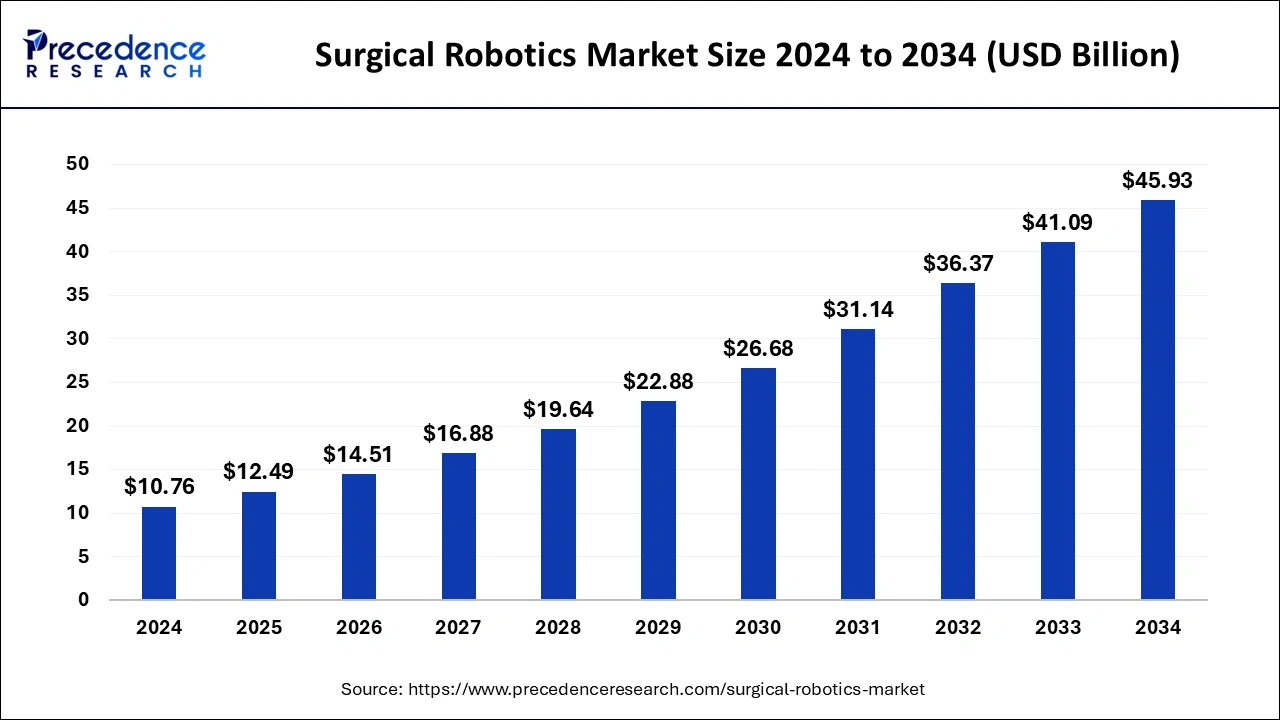
Surgical Robotics Market Key Takeaways
- North America dominated the global market with the largest market share of 51% in 2025.
- Asia pacific is projected to expand at the notable CAGR during the forecast period.
- By component, the accessory segment contributed the highest market share in 2025.
- By end user, the hospital segment captured the biggest market share in 2025.
Market Overview
Surgical robots refer to medical devices that are widely used across procedures such as urology, gynecology, orthopedics, cardiology, and general surgery. The market is driven by the increasing adoption of minimally invasive surgical procedures and advancements in robotic-assisted technologies. Surgical robots enhance precision, control, and flexibility during complex operations, reducing surgeon fatigue, minimizing patient trauma, and improving recovery times. Hospitals and ambulatory surgical centers are increasingly integrating robotic systems into operating rooms.
The surgical robotics market is expected to grow due to factors such as higher demand for minimally invasive procedures, growing chronic diseases among the aged population, and the use of advanced technology for surgical procedures. Minimally invasive methods require smaller incisions and are also accompanied by benefits such as faster recovery and lower complications. Surgical robots mainly function with the help of advanced technology such as AI, ML, and IoT for enhanced precision. Shortage of experienced and educated physicians in the healthcare industry is also one of the major factors propelling the growth of the market.
Surgical Robotics Market Growth Factors
- With the growing demand for minimally invasive surgeries, the adoption of surgical robots among surgeons is increasing since these robots facilitate minimally invasive surgeries.
- Rising technological advancements further contribute to market expansion.
- Growing focus on enhancing patient outcomes propels the adoption of surgical robots during surgical procedures.
- The rising number of knee and hip replacement surgeries fuels the growth of the market.
- The surgical robotic market is expected to grow at a rapid pace due to the increasing geriatric population. Older people are more prone to chronic diseases such as CVDs, which require surgical intervention.
- The increasing incidences of accidents and injuries positively impact the market. Critical injuries often require surgical intervention, thereby boosting the adoption of surgical robots.
Surgical Robotics Market Major Trends
- Growing Use of Single-Port and Minimally Invasive Robotic Systems: There has been a rise in the number of companies developing single-port 3D robotic systems for performing surgeries through one incision rather than multiple. These types of surgeries have become more common due to their less invasive nature, greater precision, and quicker recovery times.
- Development of Robotic Systems with Artificial Intelligence (AI): With the introduction of advanced technologies such as AI, traditional robotics technology has been taken to a new level. The new technology allows for real-time decision-making, predictive analysis, and motion control of robotic systems. All of these features are improving the accuracy of surgical procedures performed using robotic systems.
- Growth of Operations Performed Remotely via Robotics: Advances in teleoperated systems and human-like robots have enabled surgeons to provide remote assistance to patients in areas where there is limited access to surgical specialists.
- Integration of Robotics with Imaging and Sensors: Integration of advanced imaging, haptic feedback, and real-time instrument segmentation technologies into robotic systems is helping to create better overall user experiences and patient outcomes.
- Creation of Low-Cost Domestic Robotic Systems: The introduction of low-cost robotic systems for surgical applications in developing countries is making it possible for hospitals in those areas to use robotic systems for surgery and ensure the availability of surgical specialists.
Why Are AI Algorithms Integrated into Surgical Robots?
Integrating AI algorithms in robotic systems enhances accuracy and precision. AI-driven robotic systems automate tasks such as tissue dissection and suturing to reduce surgeon workload and enhance consistency. In addition, AI-driven systems incorporate functionalities such as motion control, image recognition, and haptic feedback, which optimize instrument movements for surgeons and allow an analysis of surgical field images in real-time.
AI also helps robotic systems adapt to various tasks, thereby increasing performance. The advantages of AI adoption include improved safety, reduced surgeon fatigue, and enhanced precision. Furthermore, AI integration holds promise for advancing surgical care, with significant advantages such as increased access to specialized expertise and improved patient outcomes.
Government Initiatives Taken in the Surgical Robotics Market
- Investment and Policy Support for Healthcare Technology: The government of India and the government of the UK promote the adoption of robotic surgery by both providing financial investment and by implementing policies such as Ayushman Bharat to encourage greater accessibility and affordability for those who require robotic surgery.
- Robotics and Artificial Intelligence Strategy Programs: India has created a national strategy for how to integrate robotics and artificial intelligence into healthcare. This strategy aims to develop an environment for innovation and increase the integration of technology within the overall healthcare system in India.
- Training Initiatives for Surgeons: India is implementing new initiatives to support the training of surgeons and develop specialized robotic surgery centers that will be incorporated into existing healthcare legislation and skill development initiatives.
- International Healthcare Programs: The World Health Organization and other global organizations are working to establish minimum standards for the provision of surgical services, which indirectly provide the infrastructure necessary to support the implementation of surgical robotics.
Market Scope
| Report Coverage | Details |
| Market Size in 2025 | USD 12.49 Billion |
| Market Size in 2026 | USD 14.45 Billion |
| Market Size by 2035 | USD 50.29 Billion |
| Growth Rate from 2026 to 2035 | CAGR of 14.95% |
| Largest Market | North America |
| Base Year | 2025 |
| Forecast Period | 2026 to 2035 |
| Segments Covered | Component, Surgery Type, End User, and Region |
| Regions Covered | North America, Europe, Asia-Pacific, Latin America and Middle East & Africa |
Market Dynamics
Drivers
Growing Preference for Minimally Invasive Surgery
The growing preference for minimally invasive surgical procedures is a key factor boosting the adoption of surgical robotics. Robotic-assisted surgeries are particularly noteworthy as they provide enhanced precision, flexibility, and control in comparison to traditional open surgery methods. These advantages lead to reduced patient recovery times, less postoperative pain, and smaller incisions, improving overall patient outcomes. Continuous advancements in robotics and imaging technologies are playing a crucial role in expanding the capabilities of surgical robots, enabling more complex and delicate procedures to be performed with greater accuracy. As these technologies evolve, they promise to transform surgical practices across various medical specialties.
Restraint
High Investment
The high initial investment required for acquiring surgical robots can pose a significant challenge to their adoption. The costs associated with purchasing these advanced systems and ongoing maintenance and training expenses can be substantial, particularly for smaller hospitals and clinics that often operate with limited budgets. Furthermore, operating these sophisticated robotic systems necessitates specialized training and expertise, which is not readily available in all healthcare facilities. The lack of a sufficient number of skilled surgeons proficient in the use of robotic technology further limits the widespread acceptance and integration of these innovative surgical solutions into medical practice.
Opportunity
Technological Advancements
There are substantial opportunities for growth within the field of surgical robotics. The development of new applications tailored for various medical specialties, such as neurology, orthopedics, and gynecology, presents promising avenues for expansion and innovation. Additionally, advancements in technology have the potential to enhance the functional capabilities of surgical robots significantly. These advancements could facilitate tasks such as real-time image analysis and personalized treatment planning, making surgeries safer and more effective while allowing for tailored approaches that meet the unique needs of individual patients.
Segments Insights
Surgery Type Insights
Why Did the Orthopedic Surgery Segment Led the Market in 2025?
The orthopedic surgery segment led the surgical robotics market with the largest share in 2025. The segment's dominance is attributed to the rising prevalence of musculoskeletal disorders such as osteoarthritis and the increasing demand for joint replacement procedures, particularly knee and hip surgeries. Surgical robotic systems are widely adopted in orthopedics because they improve implant positioning accuracy, enhance alignment, and reduce damage to surrounding soft tissues, leading to better surgical outcomes. Additionally, the growing preference for minimally invasive orthopedic procedures, including partial knee replacements, has further strengthened segment growth.
The neurosurgery segment is expected to grow at the fastest rate in the foreseen period. The segment's growth is mainly driven by the rising need for precision in complex brain and spine procedures. Surgical robots are becoming essential in neurosurgery as they enhance accuracy, stability, and control in highly sensitive operations where even minor errors can have serious consequences. The integration of advanced technologies such as AI, IoT, and real-time imaging is further improving surgical planning, navigation, and intraoperative decision-making.
Component Insights
What Made Accessories the Dominant Segment in the Surgical Robotics Market?
The accessories segment dominated the surgical robotics market in 2025 due to the continuous and recurring demand for essential components such as wristed instruments, staplers, catheters, end-effectors, cameras, and robotic arms. These components require frequent replacement, repair, and maintenance, which creates a steady revenue stream for manufacturers. The increasing adoption of robotic-assisted surgeries, driven by the rising preference for minimally invasive procedures, further boosts the consumption of these accessories.
The services segment is expected to be the fastest-growing segment during the forecast period due to rising demand for maintenance, repair, training, and technical support for complex robotic systems. As hospitals and surgical centers adopt advanced robotic platforms, there is a growing need for skilled professionals, remote monitoring, and system optimization services. Additionally, the shift toward subscription-based and service-contract revenue models, including software updates and lifecycle support, is accelerating the growth of this segment.
End User Insights
The Hospitals Segment Led the Market in 2025
The hospitals segment dominated the surgical robotics market in 2025 due to high patient inflow, greater procedure volumes, and strong adoption of advanced robotic systems for complex and multi-specialty surgeries. Hospitals are better equipped with advanced infrastructure and skilled surgical teams, enabling them to perform high-precision procedures such as orthopedic, cardiovascular, and neurosurgeries using robotic assistance. Additionally, increasing demand for minimally invasive surgeries, shorter hospital stays, and improved surgical outcomes further strengthened hospital adoption of robotic systems.
The ambulatory surgical centers segment is expected to grow at the fastest rate during the forecast period due to rising preference for cost-effective, outpatient-based surgical procedures. ASCs offer advantages such as lower treatment costs, faster patient recovery, and reduced pressure on hospital infrastructure, making them an attractive alternative for suitable procedures like joint replacements and gynecological surgeries.
Regional Insights
U.S. Surgical Robotics Market Size and Growth 2026 to 2035
The U.S. surgical robotics market size was exhibited at USD 4.46 billion in 2025 and is projected to be worth around USD 18.75 billion by 2035, growing at a CAGR of 15.44% from 2026 to 2035.
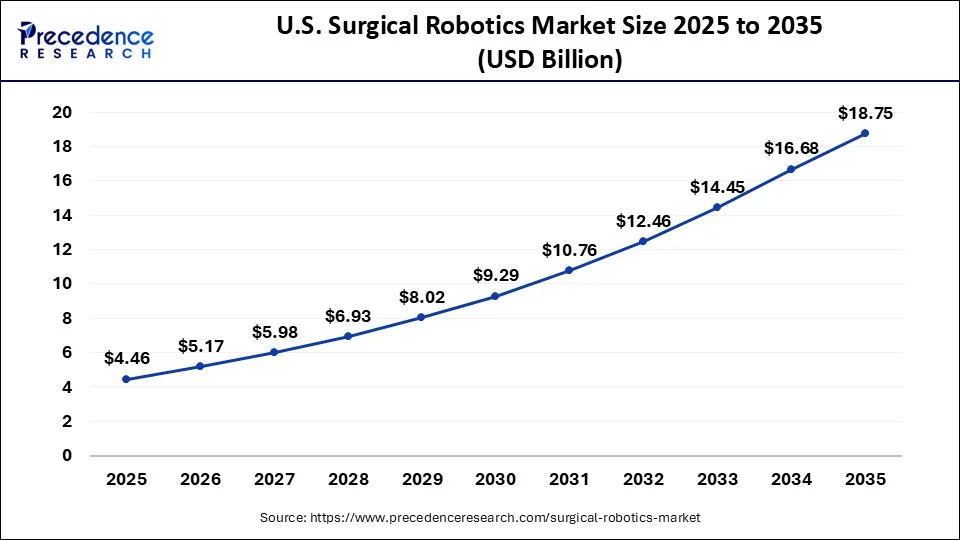
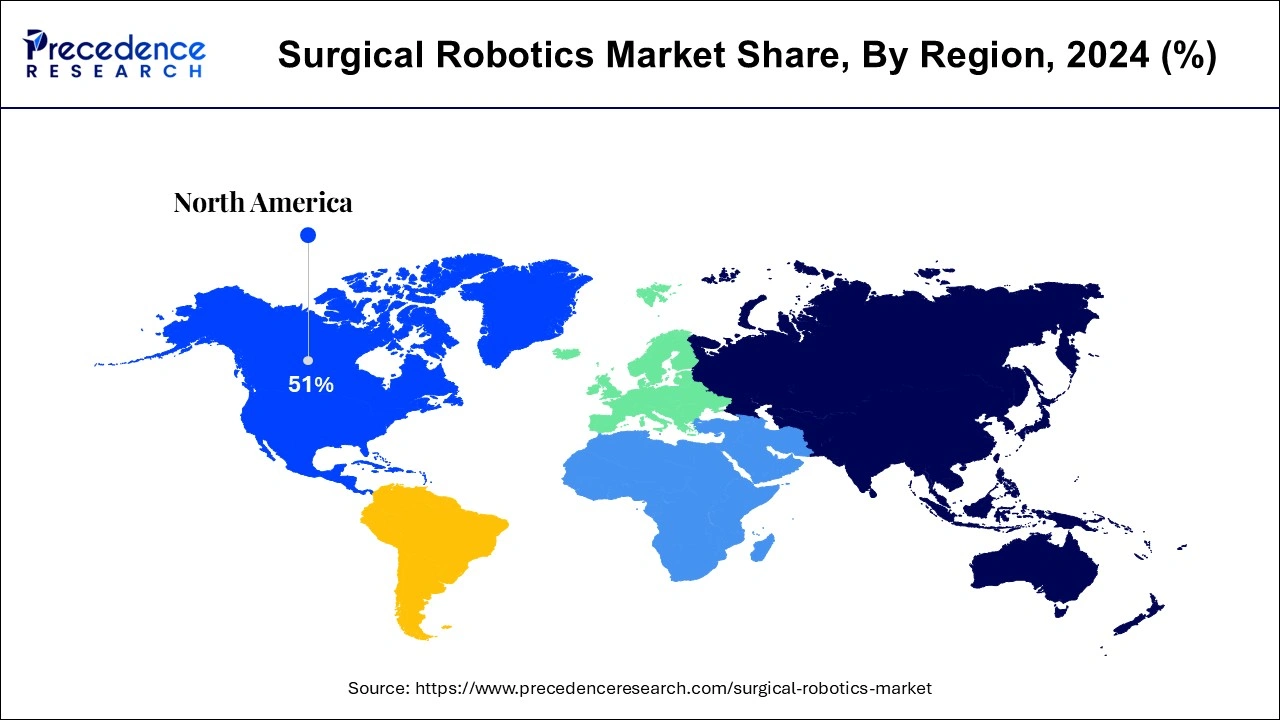
The North American market had the largest revenue share of about 51% in 2025. The adoption of automated surgical instruments in the health care industry and the increasing health care facilities in the United States will drive the market in this region. The less number of healthcare professionals and surgeons in the US depending upon the patient population will also drive the regional market for surgical robots. Chronic illnesses like diabetes, cancer and the cardiovascular diseases have led to an acceleration growth of the market.
U.S. Market Trends
The U.S. is the major contributor to the North American surgical robotics market due to its advanced healthcare infrastructure, high adoption of cutting-edge medical technologies, and significant presence of leading surgical robotics companies. Additionally, increasing demand for minimally invasive surgeries, growing investment in R&D, and supportive regulatory frameworks further drive the adoption of robotic surgery systems in the country.
What Drives the Market in Asia Pacific?
Growing population and increasing adoption of advanced automated surgical devices in the Asia Pacific region will help in the growth of the market. The adoption of advanced medical technology and avalability of modern health care infrastructure has led to a growth in the Asia Pacific region. Investors are investing in automated instruments and this is expected to help in the growth of the market. Growing awareness of robotics in surgery and the higher acceptance rate of the surgical robots in this region, the market is expected to grow.
China Market Trends
China is the major contributor to the Asia Pacific surgical robotics market due to rapid advancements in healthcare infrastructure, rising investments in medical technology, and increasing adoption of minimally invasive surgical procedures. The presence of domestic manufacturers, growing healthcare expenditure, and supportive government initiatives to promote innovative medical solutions further drive the growth of surgical robotics in the country.
India Market Trends
The surgical robotics market in India is growing due to the rapid expansion of healthcare infrastructure, rising prevalence of chronic diseases, and increasing demand for minimally invasive surgical procedures. Hospitals in major cities are increasingly adopting robotic systems to improve surgical precision, reduce complications, and shorten patient recovery times. Growing awareness among patients and surgeons about the benefits of robotic-assisted surgery is also supporting adoption across specialties such as urology, gynecology, and orthopedics.
What Makes Europe a Notably Growing Region in the Surgical Robotics Market?
Europe is expected to grow at a notable rate throughout the forecast period. This growth is attributed to the presence of a well-developed healthcare infrastructure and favorable reimbursement policies. The region is actively conducting extensive research in surgical robotics, fostering innovation and technological advancements. Germany and France are key players, supported by high-quality healthcare infrastructure and favorable reimbursement policies. Additionally, the market growth is driven by government initiatives promoting locally developed robots and ongoing improvements in robotic systems and medical technologies.
Germany Market Trends
In Germany, there is a notable transition in hospitals towards the use of robot-assisted minimally invasive techniques, especially within urology, gynecology, and orthopedics. Surgeons are under pressure to reduce recovery time, shorten inpatient stays, and improve procedural precision, all areas where robotic systems are gaining clinical acceptance rather than remaining experimental tools. Domestic innovation is becoming more prominent as companies develop imaging software, robotic arms, navigation technologies, and AI-integrated surgical workflows instead of solely depending on imported solutions.
How is the Opportunistic Rise of Latin America in the Market?
Latin America is expected to experience lucrative growth in the surgical robotics market due to improving healthcare infrastructure, rising investments in advanced medical technologies, and increasing demand for minimally invasive procedures. The expansion of healthcare facilities and growing awareness of the benefits of robotic-assisted surgeries further drive market growth. Supportive government policies and collaborations with international medical technology providers enhance adoption, while the rising prevalence of chronic diseases, osteoporosis, and easy access to advanced robotic systems continue to boost the region's market potential.
Brazil Market Trends
Brazil's surgical robotics market is evolving from a niche technology segment into a broader modernization movement within private healthcare networks. Orthopedic robotics is also beginning to accelerate at a noticeable pace. Orthopedic applications are emerging as one of the most commercially attractive segments as hospitals invest in robotic-assisted knee and hip procedures. The trend is closely tied to Brazil's aging population and rising incidence of degenerative joint conditions, which are steadily increasing demand for precision-guided surgeries.
What Drives the Market in the Middle East & Africa?
The surgical robotics market in the Middle East & Africa (MEA) is set to witness steady growth in the coming years. This growth is driven by advancements in robotic technologies, high demand for minimally invasive surgeries, and the increasing prevalence of chronic diseases. The region is also seeing growing investments in healthcare infrastructure and technological innovations, which are expected to push the market forward even more. The growing prevalence of chronic diseases such as cancer, cardiovascular diseases, diabetes, and obesity, coupled with the global aging population in the region, has led to increased demand as well. As the need for complex surgeries continues to rise, surgical robots are now seen as essential tools.
Saudi Arabia Market Trends
Saudi Arabia's surgical robotics market is being shaped by the increasing adoption of complex robotic procedures. Hospitals in this region are now performing advanced robotic cardiac, pediatric, and neurosurgical interventions with growing procedural confidence. Artificial intelligence is becoming tightly woven into the next phase of Saudi Arabia's surgical robotics ecosystem. New investments are focusing on AI-enabled imaging, robotic navigation, real-time analytics, and connected operating rooms rather than standalone robotic hardware.
Value Chain Analysis
- Input Sourcing
Surgical robots require precision robotic arms, motors, sensors, cameras, and advanced imaging components. Software inputs also include aspects like control algorithms, user interfaces, and safety systems.
Key Players: Harmonic Drive, Siemens, Zeiss - Manufacturing Process
Here, manufacturers assemble complete systems including surgeon consoles, robotic arms, vision systems, and instruments.
Key Players: Stryker, Zimmer Biomet, Medtronic
Competitive Landscape
The surgical robotics market remains semi-consolidated, where a handful of global companies control a significant share of installations, yet emerging specialists continue carving out space through niche technologies and regional expansion strategies. Established players such as Intuitive Surgical, Medtronic plc, and Stryker Corporation have long maintained a firm grip on a host of product lines, wide-ranging surgeon training regimens, and hospital partnerships. In contrast, newer players enter with pricing, based on AI-driven platforms and developing specialized robotic systems. Competition in this field becomes more driven by mergers and acquisitions and technology partnerships. Studies on imaging integration improvements, haptic feedback optimization, navigation precision tuning, and data-driven surgical practices are all heavily researched and developed in parallel.
In response, an increasing number of investments in computing in cloud-connected operating rooms and in precise robotic workflows have been registered. However, high upfront startup costs and tough regulatory hurdles, intractable patent settings, and slow uptake time for surgeons are still major deterrents to newcomers. In the coming years, competing pressures will rise as healthcare institutions seek multi-dimensional robotic systems that not only improve clinical outcomes but also economic return as well.
Surgical Robotics Market Companies
- Medrobotics
- Renishaw plc.
- TransEnterix Surgical, Inc.
- Intuitive Surgical
- Medtronic plc.
- THINK Surgical Inc.
- Zimmer Biomet Holdings Inc.
- Smith & Nephew Plc. (Blue Belt Technologies, Inc.)
- Auris Surgical Robotics, Inc. (Hansen Medical Inc.)
- Intuitive Surgical, Inc.
- KUKA AG
- Stryker Corporation (MAKO Surgical Corp.)
- Mazor Robotics
Industry Leader Announcement
- In January 2025, Prashanth Hospitals launched the Institute of Robotic Surgery and a surgical robotic system for minimally invasive surgeries. Prashanth Krishna, Managing Director of Prashanth Hospitals, said that the system gives patients the benefit of less incision, less pain, less blood loss, and faster recovery.
Recent Developments
- In January 2025, Prashanth Hospitals launched the Institute of Robotic Surgery and a surgical robotic system for minimally invasive surgeries. Robotic surgery gives patients the advantage of early recovery, less pain, less blood loss, and reduced incisions, and added that the hospital launched an indigenously developed robot. (Source: https://www.thehindu.com)
- In March 2025, IPGMER launched its first robotic surgery to boost the healthcare department. The hospital planned to use the technology to undergo general surgery, urology, and gynecology. Robotics can be used in multi-disciplinary surgical procedures. This is a great innovation in the field of medical technology.
(Source: https://timesofindia.indiatimes.com) - In December 2024, A made-in-India surgical robot was installed in Pune's Noble Hospitals and Research Centre. The SSI Mantra surgical robot, which recently received approval from the Central Drugs Standard Control Organisation (CDSCO), India's regulatory body, is a 3-robotic system for performing intricate surgeries. (Source: https://www.indiatoday.in)
- In June 2024, an India-based medical device company Meril introduced its advanced surgical robotic technology, MISSO. This technology assists surgeons during knee replacement procedures.
- In April 2023, Apollo Cancer Centres launched the fourth generation Da Vinci Xi Robotic Systems at the Robotic Colorectal Cancer Symposium organised by the Association of Colon and Rectal Surgeons of India (ACRSI). These systems are set to revolutionize various complex surgeries, such as colorectal surgeries, oncology, urology, gynaecology, cardiology, kidney transplants, and liver transplantation.
Segments Covered in the Report
By Component
- Systems
- Accessories
- Services
By Surgery Type
- Gynecology Surgery
- Urology Surgery
- Neurosurgery
- Orthopedic Surgery
- Knee
- Hip
- Spine
- Others
- General Surgery
- Other Surgeries
By End User
- Hospitals
- Ambulatory surgical centers
By Geography
- North America
- Europe
- Asia-Pacific
- Latin America
- Middle East & Africa (MEA)
For inquiries regarding discounts, bulk purchases, or customization requests, please contact us at sales@precedenceresearch.com
Frequently Asked Questions
Tags





Ask For Sample
No cookie-cutter, only authentic analysis – take the 1st step to become a Precedence Research client
 Get a Sample
.webp)



 sales@precedenceresearch.com
 Schedule a Meeting
