



Systemic Mastocytosis Treatment Market Size, Companies, Share, Patient Volume, Treatment Adoption Rates, Pricing Analysis, Regulatory Landscape, Competitive Positioning, and Demand Forecast
Systemic Mastocytosis Treatment Market (By Disease Subtype: Indolent systemic mastocytosis, Smoldering systemic mastocytosis, Aggressive systemic mastocytosis, Systemic mastocytosis with associated hematologic neoplasm, Mast cell leukemia; By Drug Class: KIT inhibitors, Multikinase inhibitors, Antihistamines, Mast cell stabilizers, Corticosteroids, Immunomodulators, Others; By Treatment Approach: Targeted therapy, Symptomatic management therapy, Cytoreductive therapy, Combination therapy; By Route of Administration: Oral, Injectable, Intravenous) - Global Industry Analysis, Size, Trends, Leading Companies, Regional Outlook, and Forecast 2026 to 2035
Source: https://www.precedenceresearch.com/systemic-mastocytosis-treatment-market
 Get a Sample
 Table Of Content


What is the Systemic Mastocytosis Treatment Market Size in 2026?
The global systemic mastocytosis treatment market size was calculated at USD 562.18 million in 2025 and is predicted to increase from USD 562.18 million in 2026 to approximately USD 1,326.01 million by 2035, expanding at a CAGR of 8.96% from 2026 to 2035. The market is driven by rising prevalence, increased awareness, and the development of targeted therapies for effective disease management.
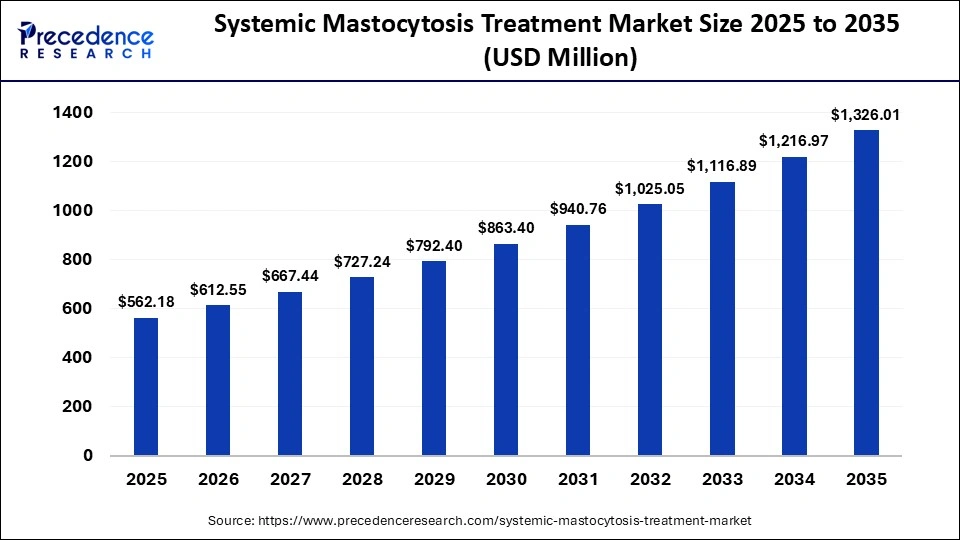
Key Takeaways
- North America led the market in 2025 with a share of 41.70%.
- Asia Pacific is expected to grow with the highest CAGR during the forecast period.
- By disease subtype, the indolent systemic mastocytosis segment held the largest market share of 46.80% in 2025.
- By disease subtype, the mast cell leukemia segment is expected to expand with the highest CAGR of 12.70% during the forecast period.
- By drug class, the KIT inhibitors segment dominated the market in 2025, accounting for a share of 39.60%.
- By drug class, the immunomodulators segment is expected to grow with a significant CAGR of 8.10% during the forecast period.
- By treatment approach, the targeted therapy segment held the highest market share of 43.70% in 2025.
- By treatment approach, the combination therapy segment is expected to grow with a notable CAGR of 9.60% during the forecast period.
- By route of administration, the oral segment held the largest share of 63.80% in 2025.
- By route of administration, the injectable segment is expected to expand with a considerable CAGR of 6.20% between 2026 and 2035.
Market Overview
The systemic mastocytosis treatment market comprises therapeutic drugs and supportive medications used to manage a rare hematologic disorder characterized by abnormal accumulation of mast cells in bone marrow and other organs. This market includes targeted KIT inhibitors, multikinase inhibitors, symptomatic management drugs, and cytoreductive therapies administered across hospital and specialty clinical settings. The revenue is generated through branded drugs, biologics, and supportive treatment regimens used for indolent and aggressive disease forms. This market is expected to grow significantly with the growth of the pharma sector across the world.
How is AI Influencing the Systemic Mastocytosis Treatment Markt?
Artificial intelligence plays a transformative role in driving the growth of the systemic mastocytosis treatment market. AI is used to analyze EHR data for early intervention to improve diagnosis and screening methodologies. AI helps to optimize symptom tracking and assist personalized treatment. Nowadays, researchers have started using AI to detect dermatological images along with assessing unstructured clinical notes to detect symptoms, including flushing, itching, and hypotension. AI further accelerates drug discovery by optimizing clinical trials and improving manufacturing efficiency.
- In November 2025, Terray launched EMMI. EMMI is an AI-based drug discovery platform designed to accelerate small-molecule drug discovery.
Systemic Mastocytosis Treatment Market Trends
- Research and Development Activities: Therapeutic manufacturers are engaged in advancing research and development of high-quality medications for treating systemic mastocytosis.
- Product Launches: Pharma companies are launching a wide array of therapeutics for patients suffering from hematologic disorders.
- Collaborations: Numerous market players are collaborating with drug manufacturers to develop KIT inhibitors for treating rare diseases.
- Opening Production Centers: The biopharma brands are investing rapidly in establishing new manufacturing units to increase the manufacturing of advanced therapies.
- Government Investments: The governments of several countries, including China, the U.S., Israel, and India, are investing rapidly to strengthen the pharmaceutical industry.
- Surging Cases of Mast Cell Leukemia: The increasing cases of mast cell leukemia in different regions have increased the demand for symptomatic management therapy.
Market Scope
| Report Coverage | Details |
| Market Size in 2025 | USD 562.18 Million |
| Market Size in 2026 | USD 612.55 Million |
| Market Size by 2035 | USD 1,326.01 Million |
| Market Growth Rate from 2026 to 2035 | CAGR of 8.96% |
| Dominating Region | North America |
| Fastest Growing Region | Asia Pacific |
| Base Year | 2025 |
| Forecast Period | 2026 to 2035 |
| Segments Covered | Disease Subtype, Drug Class, Treatment Approach, Route of Administration, and region |
| Regions Covered | North America, Europe, Asia-Pacific, Latin America, and Middle East & Africa |
Segment Insights
Disease Subtype Insights
Why Did the Indolent Systemic Mastocytosis Segment Dominate the Market?
The indolent systemic mastocytosis dominated the systemic mastocytosis treatment market in 2025, holding a major share of 46.80%. The dominance of the segment is attributed to the rising prevalence of this form of systemic mastocytosis in several countries, including China, the U.S., and Argentina. The patients suffering from this type of disease often have long-term symptoms, such as gastrointestinal issues, allergic reactions, flushing, skin lesions, and abnormal cell accumulation. With the surging prevalence of indolent systemic mastocytosis, the demand for corticosteroids and antihistamines has grown significantly.
The mast cell leukemia segment is expected to grow with the highest CAGR of 12.70% during the forecast period, owing to the surging focus of the pharmaceutical companies on developing advanced therapeutics for the treatment of mast cell leukemia. The growing cases of mast cell leukemia have increased the emphasis of researchers to develop tyrosine kinase inhibitors. Tyrosine kinase inhibitors are capable of targeting specific genetic mutations, which makes them highly effective for treating mast cell leukemia.
Drug Class Insights
What Made KIT Inhibitors the Leading Segment in the Systemic Mastocytosis Treatment Market?
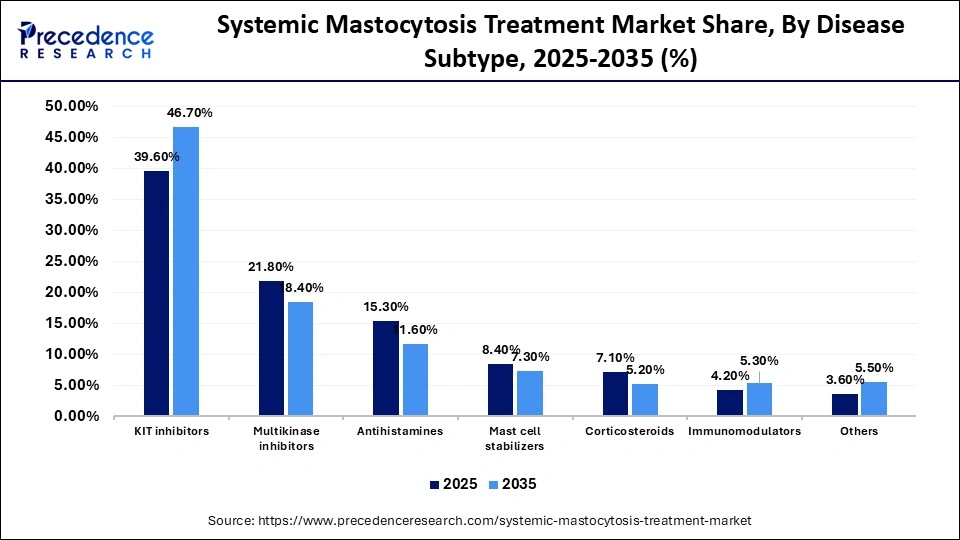
The KIT inhibitors segment led the market with a share of 39.60% in 2025, owing to their targeted mechanism of action to address the underlying molecular cause of the rare diseases. KIT inhibitors can block the activity of the mutated KIT receptor to reduce abnormal mast cell production and lower disease symptoms. These types of drugs are highly capable of treating a wide range of mastocytosis, such as aggressive systemic mastocytosis and mast cell leukemia.
The immunomodulators segment is expected to grow with a significant CAGR of 8.10% during the forecast period, due to the surging research and development activities related to immune-related therapies that help in regulating abnormal mast cell activities. Immunomodulators can modify immune system activity, control mast cell-mediated responses, and reduce inflammation. These therapies are also capable of improving symptom management and enhancing overall quality of patient care. The biopharmaceutical companies are investing rapidly in immunotherapy research for developing immunomodulator drugs for treating rare hematologic disorders.
Treatment Approach Insights
What Made Targeted Therapy the Leading Segment in the Market?
The targeted therapy segment led the systemic mastocytosis treatment market while holding a major share of 43.70% in 2025. This is mainly due to its ability to detect the responsible molecular mechanisms that are causing disease progression. Targeted therapies are designed to inhibit the growth of abnormal pathways that are triggered by mutations, which in turn alleviate disease symptoms. These therapies deliver precise and effective disease management to patients suffering from systemic mastocytosis.
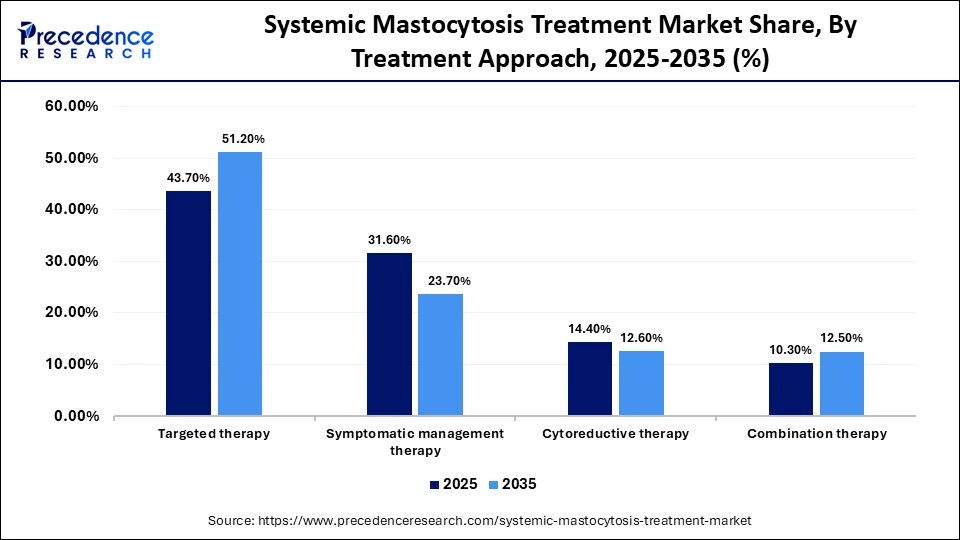
The combination therapy segment is expected to grow with a notable CAGR of 9.60% during the forecast period, due to the growing demand for comprehensive treatment methodologies to address multiple diseases simultaneously. The healthcare professionals are largely adopting combination therapies to improve disease management and enhance symptom control. Additionally, the integration of advanced AI platforms in the biopharma research centers for developing combination therapies is widely adopted in China and the U.S.
Route of Administration Insights
Why Did the Oral Segment Dominate the Systemic Mastocytosis Treatment Market?
The oral segment dominated the market in 2025 with a share of 63.80%. This dominance is attributed to the surging use of oral medications for long-term symptom management and delivering superior convenience to patients. Mastocytosis treatment requires oral drugs to control abdominal pain and allergic reactions. The commonly used oral therapies for treating mastocytosis include antihistamines, leukotriene inhibitors, corticosteroids, and targeted therapies. These medicines are widely adopted by patients as they allow them to control diseases without frequent hospital visits.
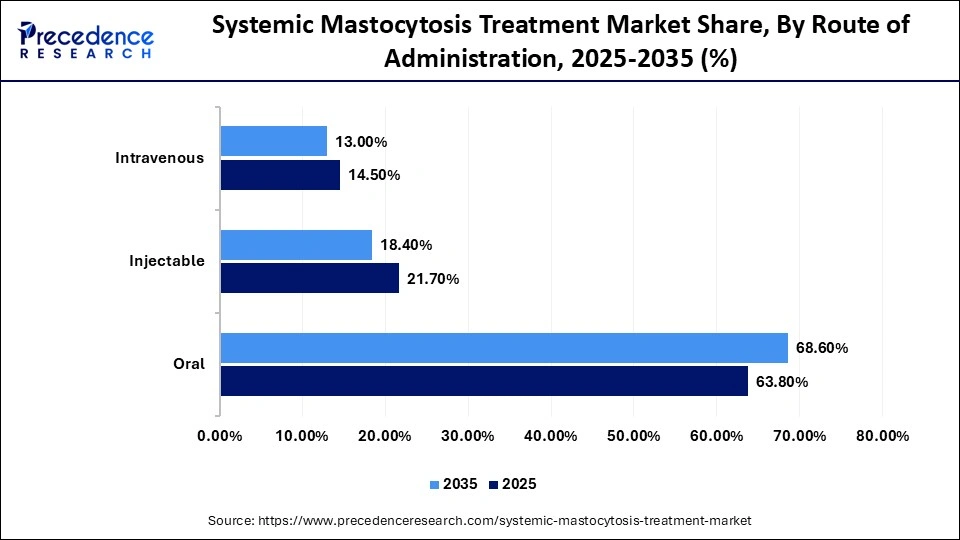
The injectable segment is expected to grow with a considerable CAGR of 6.20% between 2026 and 2035. This is owing to the surging adoption of targeted treatments and advanced biologic therapeutics for treating hematologic disorders. Injectable formulations are widely adopted for the treatment of mastocytosis as it enables faster drug absorption and enhanced bioavailability when compared to oral medications. The injectables are mostly adopted in specialty care centers and hospitals for controlling smoldering systemic mastocytosis and aggressive systemic mastocytosis.
Regional Insights
North America Systemic Mastocytosis Treatment Market Size and Growth 2026 to 2035
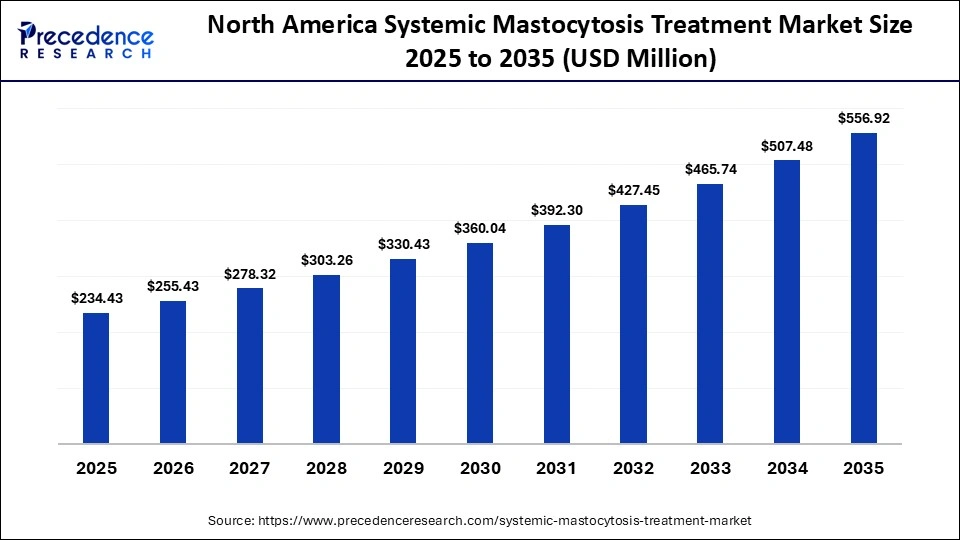
The North America systemic mastocytosis treatment market size is estimated at USD 234.43 billion in 2025 and is projected to reach approximately USD 556.92 billion by 2035, with a 9.04% CAGR from 2026 to 2035.
Why Did North America Dominate the Systemic Mastocytosis Treatment Market?
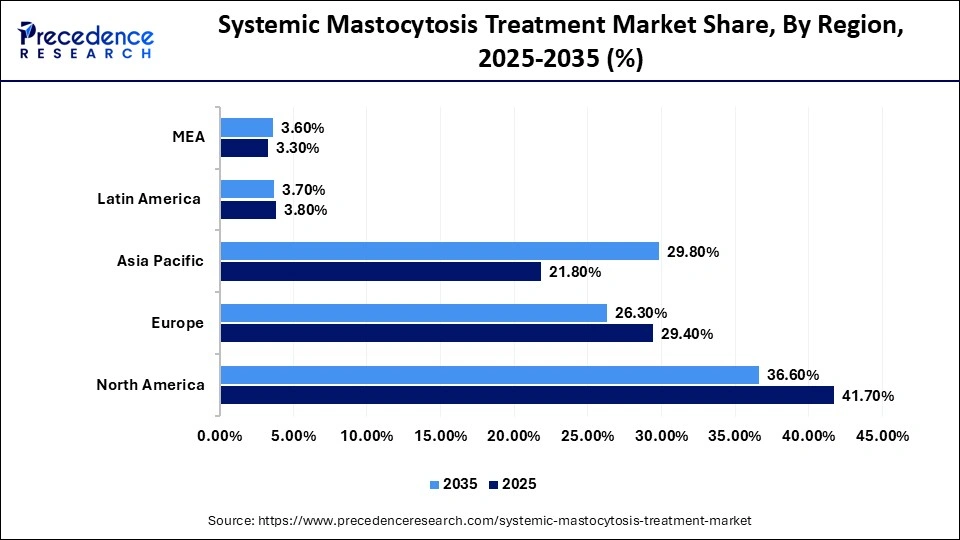
North America dominated the systemic mastocytosis treatment market in 2025, capturing a major share of 41.70%. This is primarily due to the rapid adoption of targeted therapies for treating a wide range of rare diseases, along with the presence of well-established healthcare infrastructure. Companies, such as Novartis and Cogent Biosciences, are constantly involved in conducting clinical trials to check the efficacy of mastocytosis treatment, and the surging investment by healthcare brands in opening new research and development centers has led the industry to grow in a positive manner. The corporate companies are providing comprehensive insurance policies to the employees to adopt high-quality medications, thus contributing to the overall market development.
- In February 2026, Novartis announced an investment of around US$ 23 million. This investment is made to open a biomedical research center in San Diego, U.S., to accelerate drug discovery.
U.S. Systemic Mastocytosis Treatment Market Size and Growth 2026 to 2035
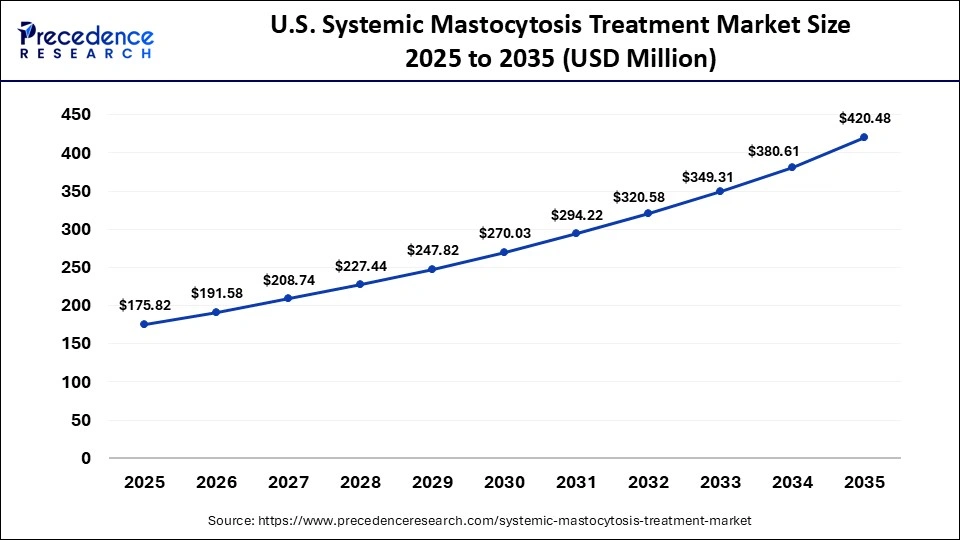
The U.S. systemic mastocytosis treatment market size is calculated at USD 175.82 billion in 2025 and is expected to reach nearly USD 420.48 billion in 2035, accelerating at a strong CAGR of 9.11% between 2026 and 2035.
U.S. Systemic Mastocytosis Treatment Market Analysis
The U.S. is the major contributor to the systemic mastocytosis treatment industry in North America. This is owing to the surging investment by the pharma companies on advancing research and development of corticosteroids to treat a wide range of rare diseases. Moreover, the rapid adoption of targeted therapies by healthcare professionals in the treatment of mastocytosis, as well as numerous government initiatives aimed at developing the healthcare infrastructure, has contributed to industrial development.
Why is Asia Pacific Expanding with the Highest CAGR in the Market?
Asia Pacific is expected to expand with the highest CAGR during the forecast period, owing to the rising prevalence of indolent systemic mastocytosis in numerous countries, such as China, Hong Kong, Japan, and Thailand, along with the surge in the number of public hospitals in this region. The increasing focus of the biopharma companies on manufacturing high-quality KIT inhibitors for treating aggressive systemic mastocytosis, as well as private-public collaborations for transforming the pharmaceutical sector, is contributing to the industry in a positive way. The major systemic mastocytosis therapy exporters in the region include Takeda Pharmaceutical Company, CStone Pharmaceuticals, Dr. Reddy's Laboratories Ltd, and Lupin Ltd.
- In January 2026, Chandan Healthcare secured a notable 10-year public-private partnership project in Punjab at Rs 260 million. This partnership is aimed at redefining the landscape of the pharma industry across India.
China Systemic Mastocytosis Treatment Market Analysis
China is the leading contributor to the Asia Pacific systemic mastocytosis treatment industry, due to the increasing adoption of combination therapies for treating leukemia, coupled with technological advancements in the biopharmaceutical industry. Additionally, the availability of advanced medications in online pharmacies, as well as the rise in the number of specialty clinics, has driven the market expansion.
Systemic Mastocytosis Treatment Market Companies
- Blueprint Medicines
- Novartis AG
- Cogent Biosciences
- Deciphera Pharmaceuticals
- AstraZeneca
- Bristol Myers Squibb
- Takeda Pharmaceutical Company
- Merck & Co.
- Roche
- Bayer AG
- AbbVie Inc.
- Pfizer Inc.
- Eli Lilly and Company
- Teva Pharmaceutical Industries
- Sanofi
Recent Developments
- In February 2026, Deciphera Pharmaceuticals made an announcement stating that the U.S. Food and Drug Administration (FDA) had approved Tirabrutinib. Tirabrutinib is a second-generation Bruton tyrosine kinase inhibitor used for treating relapsed or refractory primary central nervous system lymphoma. (Source: https://www.deciphera.com)
- In January 2026, Cogent Biosciences announced that the U.S. Food and Drug Administration (FDA) approved breakthrough therapy designation (BTD) for bezuclastinib. Bezuclastinib is a combination therapy designed for the treatment of gastrointestinal stromal tumors (GIST).(Source: https://www.manilatimes.net)
- In December 2025, Ayvakit (avapritinib) demonstrated long-term efficacy and safety in treating systemic mastocytosis (SM), according to new data from Blueprint Medicines. The results showed sustained symptom relief and quality-of-life improvements in indolent SM after over three years, and extended survival in advanced SM after more than four years, along with bone health benefits and a consistent safety profile. Presented at the ASH 2025 Annual Meeting, the findings reinforce Ayvakit as a global standard of care for SM, with durable clinical benefits across disease forms.(Source: https://www.ddw-online.com)
- In June 2025, Sanofi acquired Blueprint Medicines. This acquisition aims to develop a wide range of medications for treating indolent systemic mastocytosis.(Source: https://www.sanofi.com)
Segments Covered in the Report
By Disease Subtype
- Indolent systemic mastocytosis
- Smoldering systemic mastocytosis
- Aggressive systemic mastocytosis
- Systemic mastocytosis with associated hematologic neoplasm
- Mast cell leukemia
By Drug Class
- KIT inhibitors
- Multikinase inhibitors
- Antihistamines
- Mast cell stabilizers
- Corticosteroids
- Immunomodulators
- Others
By Treatment Approach
- Targeted therapy
- Symptomatic management therapy
- Cytoreductive therapy
- Combination therapy
By Route of Administration
- Oral
- Injectable
- Intravenous
By Region
- North America
- Latin America
- Europe
- Asia-pacific
- Middle and East Africa
For inquiries regarding discounts, bulk purchases, or customization requests, please contact us at sales@precedenceresearch.com
Frequently Asked Questions





Ask For Sample
No cookie-cutter, only authentic analysis – take the 1st step to become a Precedence Research client
 Get a Sample




 sales@precedenceresearch.com
 Schedule a Meeting
