



Thrombus Aspiration Catheter Market Size, Companies, Share, Patient Volume, Treatment Adoption Rates, Pricing Analysis, Regulatory Landscape, Competitive Positioning, and Demand Forecast
Thrombus Aspiration Catheter Market (By Product Type: Manual Aspiration Catheters, Mechanical Aspiration Catheters, Powered Aspiration Catheters; By Application: Acute Coronary Syndrome (ACS), Pulmonary Embolism (PE), Deep Vein Thrombosis (DVT), Ischemic Stroke, Others; By End-Use: Hospitals, Cardiovascular Centers, Ambulatory Surgical Centers (ASCs), Others) - Global Industry Analysis, Size, Trends, Leading Companies, Regional Outlook, and Forecast 2026 to 2035
Source: https://www.precedenceresearch.com/thrombus-aspiration-catheter-market
 Get a Sample
 Table Of Content


What is the Thrombus Aspiration Catheter Market Size in 2026?
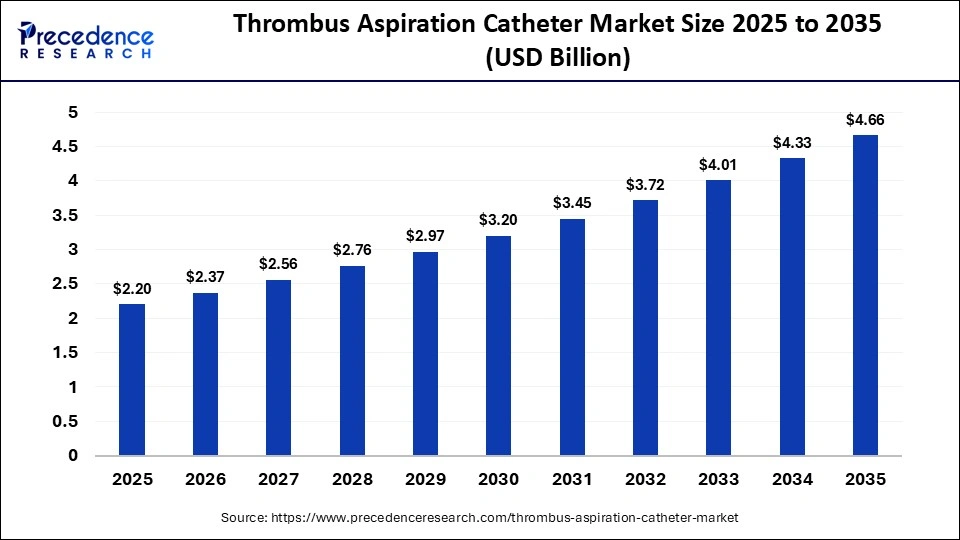
The global thrombus aspiration catheter market size was calculated at USD 2.20 billion in 2025 and is predicted to increase from USD 2.37 billion in 2026 to approximately USD 4.66 billion by 2035, expanding at a CAGR of 7.80% from 2026 to 2035. The market growth is attributed to the rising incidence of stroke worldwide, expanding adoption of thrombectomy, and continuous advancements in aspiration catheter technologies.
Key Takeaways
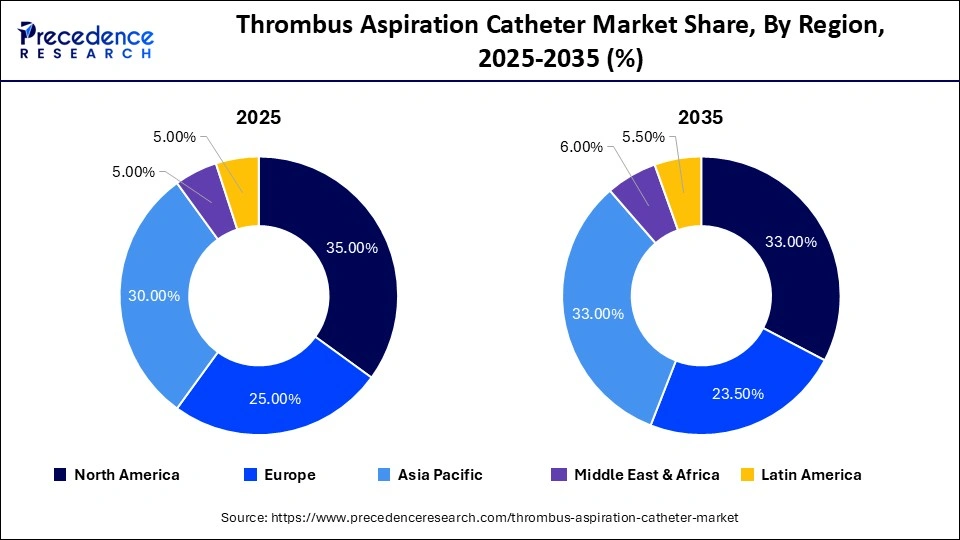
- North America dominated the market with the largest market share of 35% in 2025.
- Asia Pacific held the second-largest market share of 30% in 2025 and is expected to grow at the fastest rate between 2026 and 2035.
- By product type, the manual aspiration catheters segment contributed the highest market share of 40% in 2025.
- By product type, the mechanical aspiration catheters segment held a 35% share of the market in 2025 and is expected to grow at a significant CAGR of 8.2% between 2026 and 2035.
- By application, the acute coronary syndrome (ACS) segment held a major market share of 45% in 2025.
- By application, the pulmonary embolism (PE) segment held a 25% market share in 2025 and is expected to grow at a robust CAGR during the forecast period.
- By end use, the hospitals segment contributed the highest market share of 55% in 2025.
- By end use, the cardiovascular centers segment accounted for 25% share of the market in 2025 and is expected to grow at a strong CAGR of 7% over the projected period.
Market Overview
Rising global stroke burden is a key factor accelerating the demand for thrombus aspiration catheters worldwide. According to the World Stroke Organization, approximately 12 million new stroke cases are reported every year, most of which have to be addressed immediately. Thrombus catheters are minimally invasive instruments that eliminate blood clots by applying controlled suction to restore vessel patency in the shortest amount of time.
These catheters are extensively utilized in mechanical thrombectomy, which has become routine practice in the treatment of large vessel occlusions. The American Heart Association and European Stroke Organization have provided clinical guidelines that strongly recommend endovascular therapy to qualified stroke patients. Furthermore, the combination of rising stroke incidence, infrastructure expansion, and advancing catheter technologies continues to drive strong growth in this market.
Impact of Artificial Intelligence on the Thrombus Aspiration Catheter Market
AI is significantly transforming the thrombus aspiration catheter market, as AI-based imaging systems analyze CT and MRI scans at high-speed to identify large vessel occlusions. AI makes it possible to identify patients who need aspiration-based clot removal faster. Hospitals are combining AI with digital stroke networks to expedite patient flows to thrombectomy-capable hospitals, accelerating total volumes. Furthermore, according to the World Stroke Organization, prompt action is extremely important, and AI can significantly reduce the delays throughout the care pathway.
Major Market Trends
- Shift Toward First-Pass Aspiration Techniques: The thrombectomy approach is changing, with increased clinical use of aspiration-first approaches across stroke centers worldwide. This trend directly leads to the high demand for high-performance aspiration catheters that provide improved suction and trackability capabilities.
- Expansion of Mobile Stroke Units and Pre-Hospital Intervention Models: The mobile stroke units with the latest imaging and telemedicine are proliferating in developed healthcare systems. The model of early intervention is driving up the volume of procedures and hastening the need for aspiration catheter technologies in the world.
- Expansion of Ambulatory Surgical Centers: Growing preference for outpatient vascular procedures is driving higher adoption of aspiration-based thrombectomy technologies.
- Improved Reimbursement Frameworks: Expanding insurance coverage and favorable reimbursement policies are fueling hospital investments in advanced thrombectomy devices.
Market Scope
| Report Coverage | Details |
| Market Size in 2025 | USD 2.20 Billion |
| Market Size in 2026 | USD 2.37 Billion |
| Market Size by 2035 | USD 4.66 Billion |
| Market Growth Rate from 2026 to 2035 | CAGR of 7.80% |
| Dominating Region | North America |
| Fastest Growing Region | Asia-Pacific |
| Base Year | 2025 |
| Forecast Period | 2026 to 2035 |
| Segments Covered | Product Type, Application, End-Use, and Region |
| Regions Covered | North America, Europe, Asia-Pacific, Latin America, and Middle East & Africa |
Market Dynamics
Drivers
Expansion of Ambulatory Surgical Centers
The rapid expansion of ambulatory surgical centers is expected to accelerate the adoption of aspiration-based thrombectomy procedures globally in the coming years. The trend of outpatient care models increases the need for small, convenient, and efficient catheter systems. Medical practitioners are still investing in interventional procedures in these facilities to cope with increased cases of stroke and thrombosis.
Restraint
High Procedural Costs and Capital Investment Requirements
High procedural costs and capital investment requirements are expected to hinder the thrombus aspiration catheter market growth. Developing countries have a financial limit that limits the acquisition of high-quality aspiration catheter technologies in hospitals. This economic barrier continues to restrict widespread utilization despite strong clinical benefits.
Opportunity
Integration of Advanced Imaging Technologies
Growing integration of advanced imaging technologies is improving procedural precision and increasing device utilization rates, thereby creating immense opportunities for the thrombus aspiration catheter market. Real-time imaging supports more accurate navigation during thrombectomy procedures, improving both procedural efficiency and clinical outcomes. This technological advancement is driving broader adoption of thrombus aspiration catheters across interventional centers worldwide.
Segment Insights
Product Type Insights
Thrombus Aspiration Catheter Market Share, By Product Type, 2025-2035 (%)
| Product Type | 2025 | 2035 | CAGR (%) |
| Manual Aspiration Catheters | 40.00% | 35.00% | 6.00% |
| Mechanical Aspiration Catheters | 35.00% | 38.00% | 8.20% |
| Powered Aspiration Catheters | 25.00% | 27.00% | 9.50% |
The Manual Aspiration Catheters Segment Held a 40% Market Share in 2025
The manual aspiration catheters segment dominated the thrombus aspiration catheter market with a share of 40% in 2025. This is mainly due to these catheters' ease of use and minimal dependency on complex equipment integration. Manual systems are preferred by clinicians in regular and moderately complicated cases where the cost and familiarity with the procedure are essential. This segment dominance is further reinforced by their widespread use in a wide range of clinical settings for their greater control and precision.
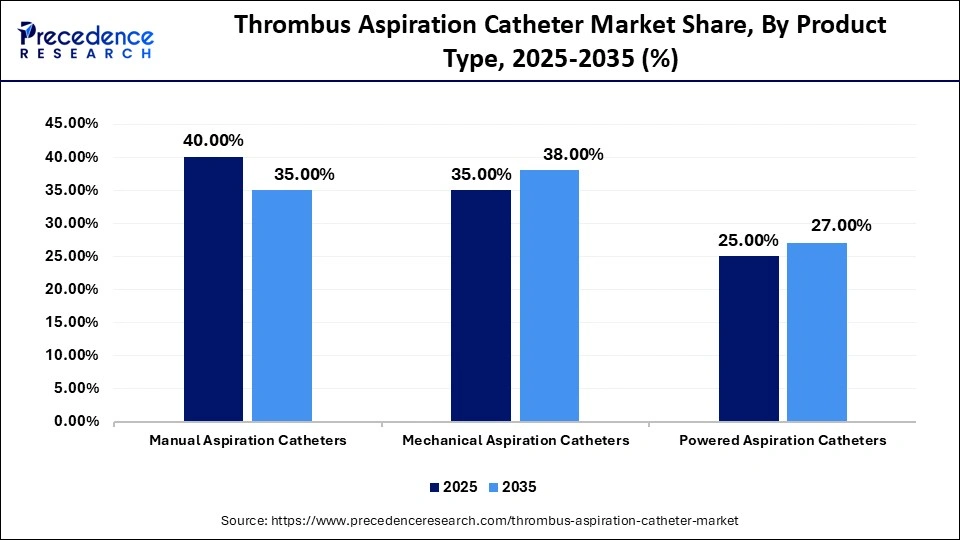
The mechanical aspiration catheters segment was the second-largest shareholder, holding a 35% market share in 2025, and is expected to grow at a significant CAGR of 82% in the coming years, driven by increasing demand for efficient catheters. The interventional specialists are moving toward mechanical systems, as they provide them with better control in clot retrieval. Furthermore, these catheters are in high demand in clinical settings because of their ability to remove clots and fewer multiple passages. These catheters offer higher procedural efficiency, reduced operation time, and improved outcomes in complex or large-vessel thrombectomy cases.
The powered aspiration catheters segment held a 25% of the market in 2025 and is expected to grow at the fastest CAGR of 9.5% during the projection period due to rising demand for advanced technologies that improve first-pass success rates and reduce complications. These systems reduce manual effort, improve procedural precision, and minimize operation time, making them particularly suitable for complex or high-volume thrombectomy procedures.
Application Insights
Thrombus Aspiration Catheter Market Share, By Application, 2025-2035 (%)
| Application | 2025 | 2035 | CAGR (%) |
| Acute Coronary Syndrome (ACS) | 45.00% | 47.50% | 8.00% |
| Pulmonary Embolism (PE) | 25.00% | 24.50% | 7.20% |
| Deep Vein Thrombosis (DVT) | 15.00% | 16.50% | 7.50% |
| Ischemic Stroke | 10.00% | 9.50% | 6.00% |
| Others | 5.00% | 4.50% | 5.00% |
The Acute Coronary Syndrome (ACS) Segment Held a Market 45% Share in 2025
The acute coronary syndrome (ACS) segment dominated the thrombus aspiration catheter market while holding the largest share of 45% in 2025. This is because of the growing prevalence of heart disease and the increasing number of cardiac surgeries, which boosted the demand for thrombus aspiration catheters in ACS procedures. New clinical practice guidelines published by the American College of Cardiology and American Heart Association are aimed at maximizing ACS management. Cardiac care centers in hospitals record a greater number of procedures of ACS interventions, reinforcing the segment's leadership and boosting the demand for thrombus aspiration catheters in ACS.
The pulmonary embolism (PE) segment held the second-largest market share of 25% in 2025 and is expected to grow at a 7.2% CAGR in the coming years. This growth is driven by improved clinical awareness and the advancement of interventional treatments. PE is a life-threatening condition affecting the pulmonary vessels, where rapid clot removal improves hemodynamic stability and prevents right heart strain. Increasing clinical confidence in streamlined procedural workflows is further expanding the use of thrombus aspiration catheters in the management of PE.
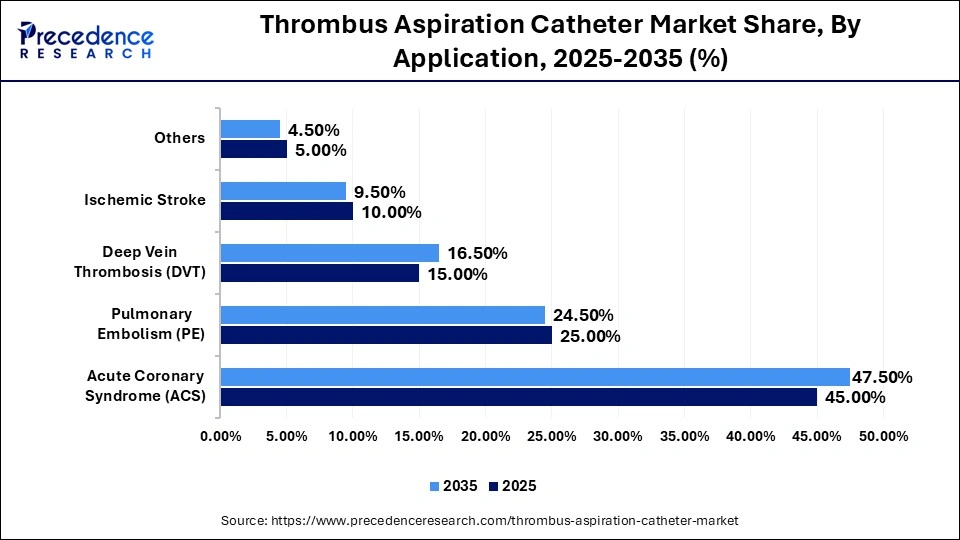
The deep vein thrombosis (DVT) segment held a 15% share of the market in 2025 and is expected to grow at a CAGR of 7.5% throughout the forecast period due to the increasing prevalence of venous thromboembolism and the need for effective, minimally invasive clot removal to prevent complications such as pulmonary embolism. Catheter-based thrombectomy offers faster recanalization, reduces procedure time, and improves patient outcomes compared to traditional anticoagulation therapy alone. Additionally, growing clinical confidence in interventional procedures and the adoption of advanced imaging and navigation technologies are driving the use of aspiration catheters for DVT management.
The ischemic stroke segment held a 10% share of the market in 2025 and is expected to grow at a 6% CAGR over the studied period, owing to the increasing incidence of ischemic stroke. There is a rising need for quick intervention to prevent permanent damage, which drives the use of thrombus aspiration catheters in stroke treatment.
End Use Insights
The Hospitals Segment Dominated the Market With a 55% Share in 2025
The hospitals segment dominated the thrombus aspiration catheter market while holding the largest share of 55% in 2025, as they are the primary site of high acuity cardiac and neurovascular operations. Hospitals often have a high volume of procedures, making them the largest end user of thrombus aspiration catheters.
The cardiovascular centers segment held the second-largest market share of 25% in 2025 and is expected to grow at a CAGR of 7% in the upcoming period. This is mainly due to the rising number of patients with coronary artery disease and secondary thrombotic complications visiting clinics. Cardiovascular centers invest in special catheter technologies and training programs to maximize the success of the procedure. As specialized cardiovascular centers expand, the need for advanced catheters increases to address complex vascular conditions.
Thrombus Aspiration Catheter Market Share, By End-Use, 2025-2035 (%)
| End-Use | 2025 | 2035 | CAGR (%) |
| Hospitals | 55.00% | 52.50% | 6.50% |
| Cardiovascular Centers | 25.00% | 26.50% | 7.00% |
| Ambulatory Surgical Centers | 10.00% | 11.50% | 8.00% |
| Others | 10.00% | 9.00% | 5.00% |
The ambulatory surgical centers segment held a 10% share of the market in 2025 and is expected to expand at the fastest CAGR of 8% over the forecast period. This is due to their cost-effectiveness and improved care protocols. According to the 2025 SCAI report, ASCs treated an average of 15% more socially vulnerable patients receiving percutaneous coronary intervention with the same levels of safety as hospital outpatient departments. Furthermore, the ambulatory surgery centers are becoming very popular in carrying out certain cardiac and lower-risk interventional surgeries.
Regional Insights
North America Thrombus Aspiration Catheter Market Size and Growth 2026 to 2035
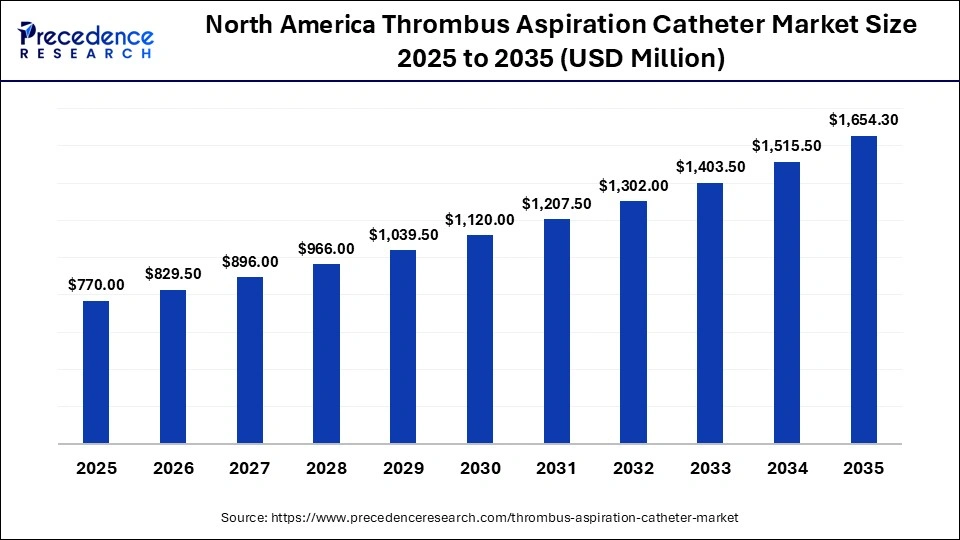
The North America thrombus aspiration catheter market size is estimated at USD 770.00 million in 2025 and is projected to reach approximately USD 1,654.30 million by 2035, with a 7.95% CAGR from 2026 to 2035.
What Made North America the Leading Region in the Market in 2025?
North America led the thrombus aspiration catheter market, capturing the largest revenue share of 35% in 2025, driven by high procedure volumes in stroke and coronary care centers. Academic medical centers have contributed to device optimization and the generation of clinical evidence, further supporting the adoption of thrombus aspiration catheter technology. Additionally, strong reimbursement frameworks and active participation in research and clinical trials have reinforced the region's leadership in the market.
U.S. Thrombus Aspiration Catheter Market Size and Growth 2026 to 2035
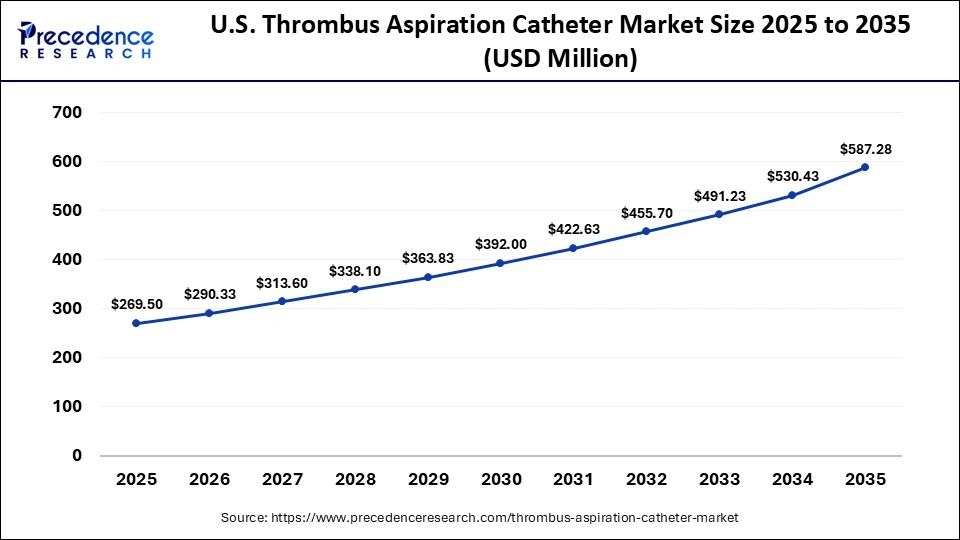
The U.S. thrombus aspiration catheter market size is calculated at USD 269.50 million in 2025 and is expected to reach nearly USD 587.28 million in 2035, accelerating at a strong CAGR of 8.10% between 2026 and 2035.
U.S. Market Analysis
The U.S. leads the market within North America due to the high cardiovascular disease rates and well-developed healthcare infrastructure. According to the CDC, nearly 795,000 Americans experience a stroke each year, with the majority being ischemic. This high incidence creates substantial demand for catheter-based thrombus removal procedures, further supporting the growth of the thrombus aspiration catheter market in the country.
Asia Pacific: The Fastest-Growing Region
Asia Pacific is expected to grow at the fastest CAGR of 8% in the market during the forecast period. This growth is driven by increasing healthcare needs, rising prevalence of cardiovascular and cerebrovascular conditions, and supportive national policy measures promoting advanced interventional procedures. In 2024, China performed over 81,865 mechanical thrombectomies, reflecting a rapid rise in these procedures, including the growing use of aspiration-assisted interventions.
China Market Analysis
China is a key contributor to the thrombus aspiration catheter market in Asia Pacific, driven by the rapid expansion of advanced medical infrastructure and a high prevalence of thrombotic diseases. The country's aging population and rising rates of cardiovascular conditions have further stimulated investments in aspiration catheter technologies, supporting broader adoption across hospitals and interventional centers.
How is the Opportunistic Rise of Europe in the Thrombus Aspiration Catheter Market?
Europe held a market share of about 25% in 2025 and is expected to grow at a robust CAGR of 6% in the coming years, driven by increasing investments in cardiovascular and stroke care infrastructure, which have enhanced procedural pathways. Demographic trends, such as an aging population with a higher burden of cardiovascular and cerebrovascular diseases, along with healthcare systems emphasizing multidisciplinary teams for rapid management of high-risk thrombotic emergencies, are further supporting market expansion.
Germany Market Analysis
In Germany, the market is driven by the expansion of stroke and interventional networks, which improve access to advanced thrombus management. National investments in coordinated stroke care, including the adoption of catheter-based clot removal strategies, are supporting market growth. Additionally, ongoing professional development and the enforcement of clinical guidelines by organizations such as the European Society of Cardiology (ESC) and the European Stroke Organisation (ESO) are further enhancing the adoption of thrombus aspiration catheter technologies.
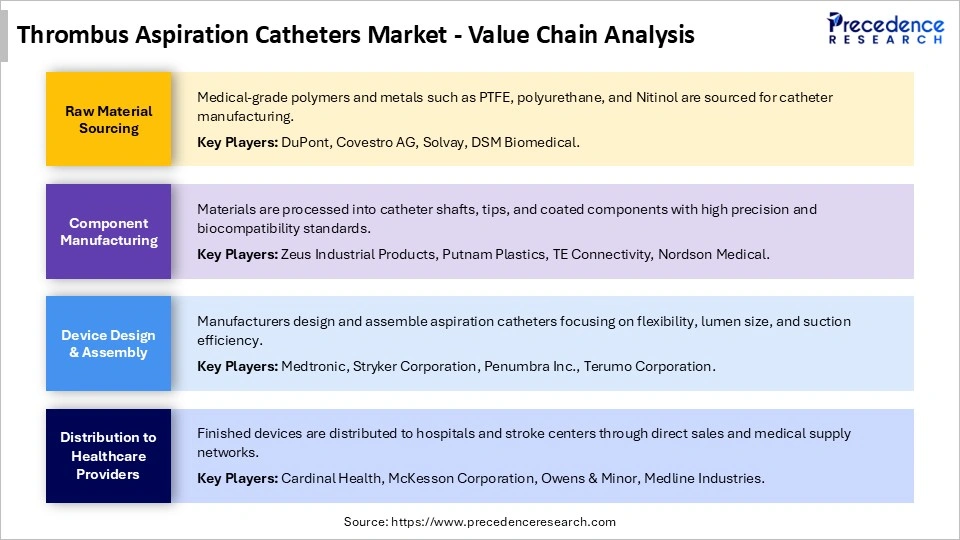
Thrombus Aspiration Catheters Market Value Chain Analysis
Thrombus Aspiration Catheter Market Companies
- Abbott Laboratories
- AngioDynamics
- B. Braun Melsungen AG
- Boston Scientific
- Cook Medical
- Cordis Corporation
- EndoMed Systems GmbH
- Lepu Medical Technology Co., Ltd.
- Medtronic
- Neovasc Inc.
- Penumbra, Inc.
- Stryker Corporation
- Terumo Corporation
- Vascular Solutions, Inc.
- W.L. Gore & Associates, Inc.
Recent Developments
- In January 2025, Imperative Care launched its Zoom 4S Catheter, marking a major step forward in ischemic stroke therapy. The device is engineered for ease of use and designed to navigate a wide range of patient anatomies, empowering physicians with precision and control. The Zoom 4S Catheter extends the benefits of the ADAPT 2.0 technique to a broader patient population, advancing the company's vision of standardized stroke care. Integrated into the Zoom Stroke System, the new catheter simplifies thrombectomy procedures by reducing device exchanges, helping clinicians achieve faster and more efficient clot removal.(Source: https://www.businesswire.com)
- In March 2026, Johnson & Johnson launched its CEREGLIDE 42 and CEREGLIDE 57 aspiration catheters, alongside the INNERGLIDE 7 delivery aid, strengthening its aspiration-first stroke portfolio. These additions are designed to reach and remove distal clots consistently, supporting physicians in complex ischemic stroke cases. The new devices complete the CEREGLIDE family and streamline procedural decision-making, helping clinicians optimize performance across a wide spectrum of stroke interventions.(Source: https://www.todaysmedicaldevelopments.com)
- In January 2026, Penumbra introduced the Lightning Flash 3.0 Computer Assisted Vacuum Thrombectomy (CAVT™) system, offering significant upgrades to its venous thromboembolism platform. The system is engineered for rapid pulmonary and venous thrombus removal, featuring advanced clot detection algorithms with heightened sensitivity. Lightning Flash 3.0 incorporates enlarged tubing and an automated backflush feature to manage large thrombus volumes efficiently while minimizing friction. The technology aims to accelerate procedural efficiency and improve clinical outcomes in high-risk VTE patients.(Source: https://www.hmpgloballearningnetwork.com)
Segments Covered in the Report
By Product Type
- Manual Aspiration Catheters
- Mechanical Aspiration Catheters
- Powered Aspiration Catheters
By Application
- Acute Coronary Syndrome (ACS)
- Pulmonary Embolism (PE)
- Deep Vein Thrombosis (DVT)
- Ischemic Stroke
- Others
By End-Use
- Hospitals
- Cardiovascular Centers
- Ambulatory Surgical Centers (ASCs)
- Others
By Region
- North America
- Latin America
- Europe
- Asia-pacific
- Middle and East Africa
For inquiries regarding discounts, bulk purchases, or customization requests, please contact us at sales@precedenceresearch.com
Frequently Asked Questions





Ask For Sample
No cookie-cutter, only authentic analysis – take the 1st step to become a Precedence Research client
 Get a Sample
.webp)



 sales@precedenceresearch.com
 Schedule a Meeting
