



U.S. and Canada Behavioral Health Market Size, Key Companies, Company Production Capacity, Healthcare Infrastructure Growth, Product Utilization, Regulatory Compliance, Company Expansion Strategies, Company Investment Strategies, and Market Outlook
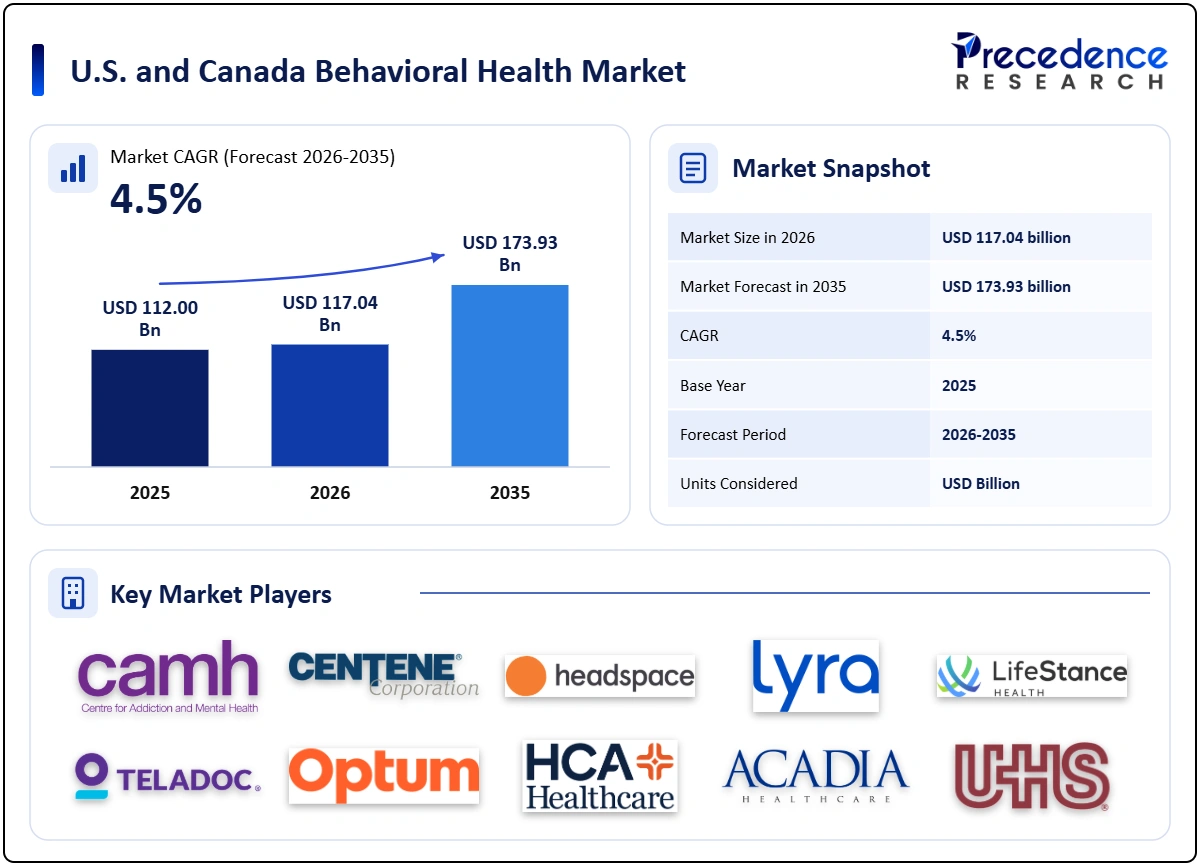
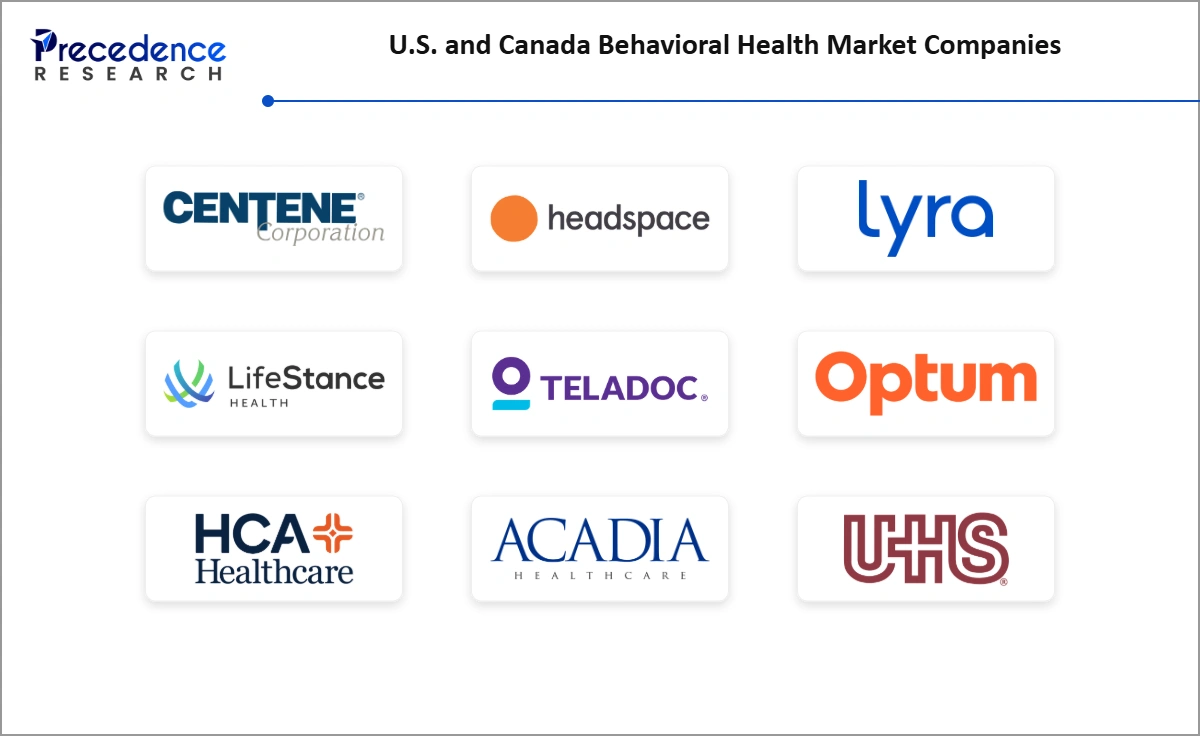
Payal Rabde, a Healthcare Industry Expert, highlights that the U.S. and Canada behavioral health market has reached USD 117.04 billion in 2026 and is on track to reach USD 173.93 billion by 2035, advancing at a CAGR of 4.5%. Key U.S. and Canada behavioral health market companies shaping the market include Universal Health Services, Acadia Healthcare, HCA Healthcare Medical while major growth segments span service, disorder, Payer.
Source: https://www.precedenceresearch.com/us-and-canada-behavioral-health-market
 Get a Sample
 Table Of Content


Key Takeaways
Market Size & Growth Outlook
- Market size in 2025: USD 112.00 billion
- Estimated market size in 2026: USD 117.04 billion
- Projected market size by 2035: USD 173.93 billion
- CAGR (2026-2035): 4.5%
Regional Market Spotlight
- The United States led the U.S. and Canada behavioral health market in 2025, capturing 90% of regional revenue.
- In 2025, Canada accounted for 10% of the market and is projected to be the fastest-growing country, with a CAGR of 5.93% from 2026 to 2035.
Segmental Spotlight
- In 2025, Outpatient services held 41% of the overall behavioral health market.
- Depression and anxiety accounted for the largest share of the disorder segment, holding 37% of the market in 2025.
- Public (Medicaid, Medicare, Provincial) payers accounted for the largest share of the payer segment, representing 52% of the market in 2025.
U.S. and Canada Behavioral Health Market Size, 2025-2035 (USD Billion)
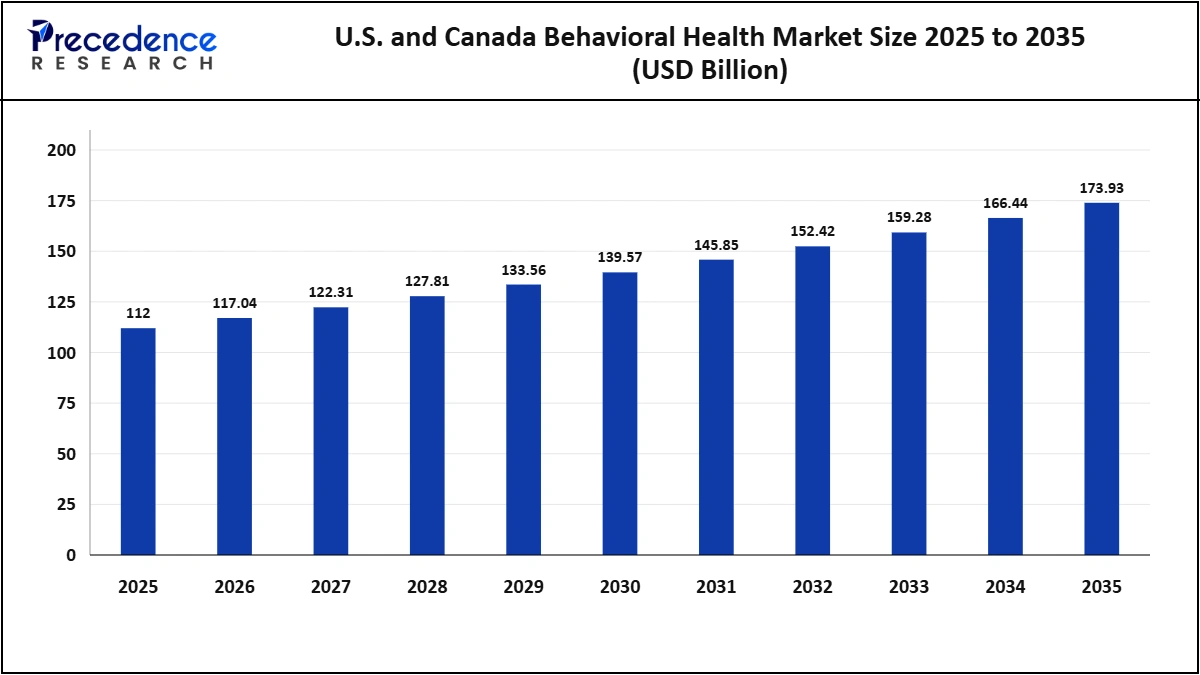
Note: 2025 is the base year; 2026-2035 values are forecasts.
Sources: Expert interviews, secondary sources, Precedence Research database, and Precedence Research analysts.
The U.S. and Canada behavioral health market is projected to expand from USD 112.00 billion in 2025 to USD 173.93 billion by 2035, registering a CAGR of 4.5% from 2026 to 2035. This growth is driven by the prevalence of mental health conditions, rising substance use disorder treatment requirements, and expanding access to behavioral healthcare services. By 2030, the market is forecast to reach USD 139.57 billion, supported by demand for outpatient therapy, psychiatric services, inpatient treatment, and virtual behavioral health platforms. Furthermore, mental health parity enforcement, government funding for crisis intervention, and expanding employer-sponsored behavioral health programmes are improving access to treatment.
Analyst View: Our market forecast is based on an assessment of public and private behavioral health spending, service utilization, and provider revenues across the United States and Canada. We cross-check these estimates against healthcare expenditure data, public budgets, company information, expert interviews, and industry statistics to provide a comprehensive market outlook.
U.S. and Canada Behavioral Health Market Trends
- Hybrid in-person and virtual care: Behavioral health providers combine in-person consultations, outpatient treatment, and virtual care platforms to improve accessibility, treatment continuity, and patient engagement.
- 988 crisis services: Expansion of 988 crisis response services, mobile crisis teams, and community-based intervention programmes strengthens access to emergency mental health support and reduces reliance on hospital-based crisis care.
- Measurement-based care: Behavioral health providers adopt standardized assessment tools and digital monitoring systems to track patient progress, evaluate treatment effectiveness, and improve clinical outcomes.
- Youth mental health: Rising awareness of depression, anxiety, and other behavioral health conditions among children and adolescents increases demand for school-based counselling, specialized psychiatric services, and youth-focused treatment programmes.
- Medication-assisted treatment: Growing access to medications such as buprenorphine and methadone supports substance use disorder treatment, particularly opioid addiction care, through specialized clinics and integrated healthcare services.
U.S. and Canada Behavioral Health Market Dynamics
The U.S. and Canada behavioral health market is experiencing sustained demand for mental health and addiction treatment services, driven by increased diagnoses, public awareness, and better healthcare coverage. However, a shortage of qualified professionals constrains treatment capacity. In response, healthcare providers are enhancing outpatient and virtual care options, while insurers and government agencies are urged to improve behavioral health coverage and fund crisis interventions. These trends are transforming service delivery models and paving the way for integrated behavioral healthcare providers.
Drivers
Rising prevalence
The rising prevalence of depression, anxiety, and substance use disorders has increased demand for behavioral healthcare services. Greater awareness, improved screening, and growing acceptance of mental health treatment support market expansion during the forecast period.
Parity enforcement
Mental health parity regulations have improved insurance coverage and access to behavioral healthcare. Increased reimbursement oversight and public healthcare initiatives encourage greater utilization of therapy, psychiatric consultations, and addiction treatment.
Virtual care
Growing adoption of telehealth and digital behavioral health platforms has improved access to treatment. Virtual consultations and hybrid care models address geographical barriers and expand access to services in underserved communities.
Public funding
Government funding through Medicaid, Medicare, provincial healthcare programmes, and opioid settlement initiatives has supported behavioral healthcare infrastructure. Continued public investment strengthens addiction treatment facilities and community mental health services.
Market Drivers - Impact & CAGR Contribution (2026-2035)
| Driver | Impact | ≈ CAGR Contribution | Time Horizon | Key Regions |
| Rising prevalence | High | +1.76 pp | Short to long term | Both countries, strongest in U.S. |
| Parity enforcement | Medium | +1.48 pp | Medium to long term | Both countries, fastest uptake in Canada |
| Virtual care | Medium | +1.26 pp | Short to medium term | Both countries |
| Public funding | Low | +0.99 pp | Long term | U.S. and Canada |
Note: Contributions are indicative estimates of each factor's effect on annual growth.
Sources: Expert interviews, secondary sources, Precedence Research database and Precedence Research analysts.
Rising mental health conditions, mental health parity enforcement, and virtual care adoption are driving the U.S. and Canada behavioral health market. Increasing treatment requirements are strengthening demand for outpatient therapy and psychiatric services, while insurance coverage improvements and digital healthcare platforms are expanding access to behavioral health treatment. Government funding for addiction treatment and crisis intervention is supporting market development.
Restraints
Workforce shortages
The shortage of qualified behavioral health professionals across the United States and Canada limits treatment capacity. Rising patient demand, longer waiting periods, and workforce gaps in rural and underserved communities restrict service expansion and increase operational pressures.
Reimbursement pressure
Low reimbursement rates and differences across public and private insurance programmes affect provider profitability. Insufficient Medicaid payments, administrative requirements, delayed reimbursements, and coverage restrictions increase financial pressure, particularly for smaller outpatient providers and community-based organizations.
Regulatory scrutiny
Stricter regulatory oversight increases compliance requirements for behavioral health providers. Investigations into billing practices, patient safety, and treatment quality raise operating costs, create reputational risks, and potentially delay service expansion and infrastructure investments.
Market Restraints - Impact & Negative CAGR Contribution (2026-2035)
| Restraint | Impact | ≈ Negative CAGR Contribution | Time Horizon | Key Regions |
| Workforce shortages | High | -0.45 pp | Short to medium term | Both countries |
| Reimbursement pressure | High | -0.33 pp | Medium term | Smaller and price-sensitive markets |
| Regulatory scrutiny | Medium | -0.22 pp | Short term | U.S. and other mature markets |
Note: Contributions are indicative estimates of each factor's effect on annual growth.
Sources: Expert interviews, secondary sources, Precedence Research database and Precedence Research analysts.
Workforce shortages constrain the United States and Canadian behavioral health market, followed by reimbursement pressure and regulatory scrutiny. Limited availability of qualified professionals restricts treatment capacity, while low reimbursement rates and increasing compliance requirements affect provider profitability and operational expansion.
Opportunities
Integrated care
Integrating behavioral health with primary care creates opportunities to expand treatment offerings. Coordinated services, including mental health screening, psychiatric consultations, and medication management, can improve early diagnosis, treatment continuity, and patient outcomes.
Digital therapeutics
The rise in adoption of digital therapeutics and virtual mental health services is creating opportunities to enhance healthcare accessibility and treatment capacity. Online therapy platforms, mental health applications, and remote monitoring solutions can improve continuity of care while addressing demand for convenient and flexible treatment options.
Canadian public therapy
Increased public sector funding for mental healthcare across Canada is opening new growth avenues for behavioral health providers. Greater investment in youth mental health initiatives, addiction recovery, community-based counselling, and crisis support services is driving demand for specialized treatment programmes and facilities.
U.S. and Canada Behavioral Health Market Segmentation: 2025 Share and Size
U.S. and Canada Behavioral Health Market by Service, 2025-2035 Share (%)
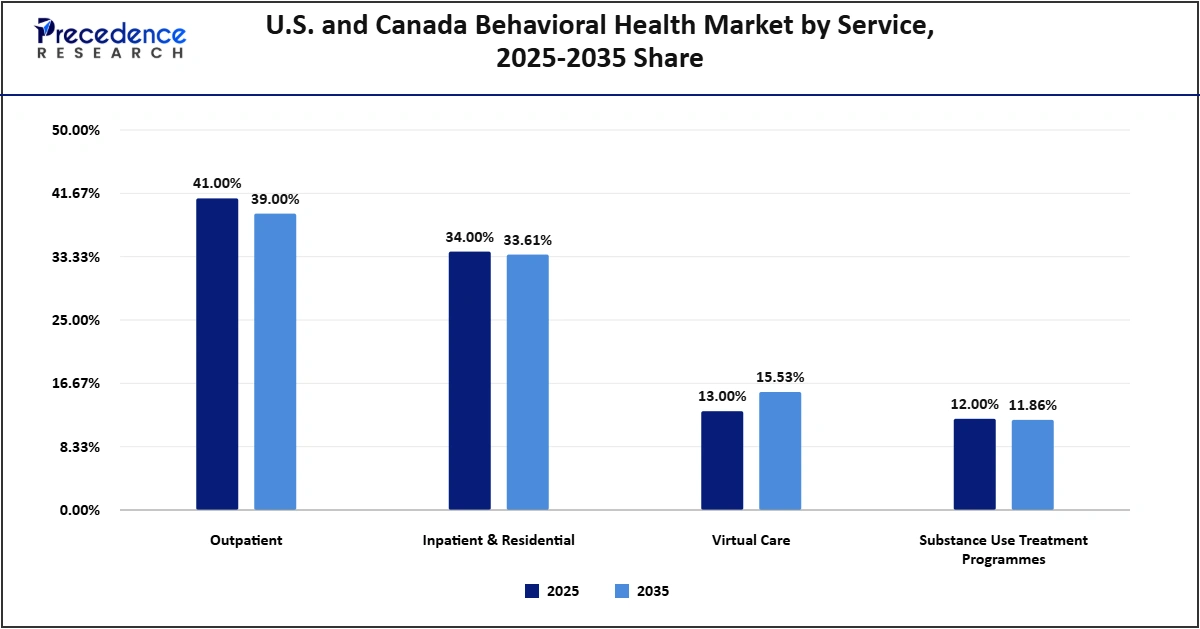
Note: 2025 is the base year; 2035 shares and CAGRs are forecasts.
Sources: Expert interviews, secondary sources, Precedence Research database, and Precedence Research analysts.
Outpatient care dominated the U.S. and Canada behavioral health market, accounting for 41% of revenue in 2025, supported by widespread demand for therapy, psychiatric consultations, and intensive outpatient programmes. Inpatient and residential services represented the second-largest segment, followed by Virtual Care and Substance Use Treatment Programmes. Virtual Care is projected to record the fastest growth during the forecast period, driven by increasing telehealth adoption and the integration of digital platforms into behavioral health services.
Outpatient care accounted for 41% of the market in 2025 and is projected to register a CAGR of 3.98% through 2035. The segment includes outpatient therapy, psychiatric consultations, medication management, and intensive outpatient programmes (IOPs). Growing demand for accessible mental health services and ongoing treatment for depression, anxiety, and other behavioral health conditions supports segment growth.
Inpatient and Residential services represented 34% of the market in 2025. The segment is expected to grow at a CAGR of 4.38% from 2026 to 2035. The segment includes inpatient psychiatric hospitals, hospital-based psychiatric units, and residential treatment facilities. Major operators such as Universal Health Services, Acadia Healthcare, and HCA Healthcare support segment development through their extensive behavioral health facility networks.
In 2025, Virtual Care captured 13% of the market and is anticipated to emerge as the fastest-growing service segment, registering a CAGR of 6.38% through 2035. The segment includes virtual therapy, telepsychiatry, remote consultations, and digital behavioral health services. Platforms such as Talkspace, BetterHelp, and Headspace are expanding access to mental health professionals through digital delivery models. Adoption of telehealth among rural and underserved populations is expected to accelerate segment growth.
Substance Use Treatment Programmes accounted for 12% of the market in 2025 and are projected to register a CAGR of 4.38% during the forecast period. The segment includes opioid treatment programmes, medication-assisted treatment, addiction counselling, and other substance use disorder services. Demand for addiction recovery services and wider access to medications such as buprenorphine and methadone are expected to support steady segment expansion.
U.S. and Canada Behavioral Health Market by Disorder, 2025 Share (%)
| Segments | 2025 Share | 2035 Share | CAGR 2026-2035 |
| Depression & Anxiety | 37.00% | 35.08% | 3.94% |
| Substance Use Disorders | 24.00% | 26.50% | 5.54% |
| Serious Mental Illness | 22.00% | 21.67% | 4.34% |
| Others | 17.00% | 16.75% | 4.34% |
Note: 2025 is the base year; 2035 shares and CAGRs are forecasts.
Sources: Expert interviews, secondary sources, Precedence Research database, and Precedence Research analysts.
By disorder, Depression and Anxiety accounted for the largest market share, capturing 37% of revenue in 2025, driven by high disease prevalence and strong demand for therapy and psychiatric care. Substance Use Disorders ranked second and are expected to grow fastest through 2035, supported by ongoing opioid and stimulant challenges and expanding access to medication-assisted treatment.
Depression and Anxiety accounted for the largest disorder share, at 37% in 2025. The segment is projected to grow at a CAGR of 3.94% through 2035. It includes treatment for major depressive disorder, generalized anxiety disorder, panic disorders, and related conditions. Awareness of mental health conditions, broader screening initiatives, and access to psychotherapy and medication management support segment demand.
Substance Use Disorders represented 24% of the market in 2025 and are forecast to witness a CAGR of 5.54% between 2026 and 2035. The segment includes treatment for opioid, alcohol, stimulant, and other substance-related disorders. Continued opioid and stimulant crises, alongside expanding medication-assisted treatment programmes and addiction recovery services, are expected to strengthen demand throughout the forecast period.
In 2025, Serious Mental Illness captured 22% of the market and is projected to register a CAGR of 4.34% through 2035. The segment includes schizophrenia, bipolar disorder, and other severe psychiatric conditions requiring ongoing treatment and clinical monitoring. Demand for psychiatric hospitalization, medication management, community-based services, and long-term behavioral health support is expected to sustain segment growth.
Other disorders accounted for the remaining 17% of the market in 2025 and are expected to grow at a CAGR of 4.34% during the forecast period. This segment includes post-traumatic stress disorder (PTSD), eating disorders, autism-related behavioral health services, and other mental health conditions. Recognition of diverse behavioral health needs and demand for specialized treatment programmes are expected to support steady market expansion.
U.S. and Canada Behavioral Health Market by Payer, 2025-2035 Share (%)
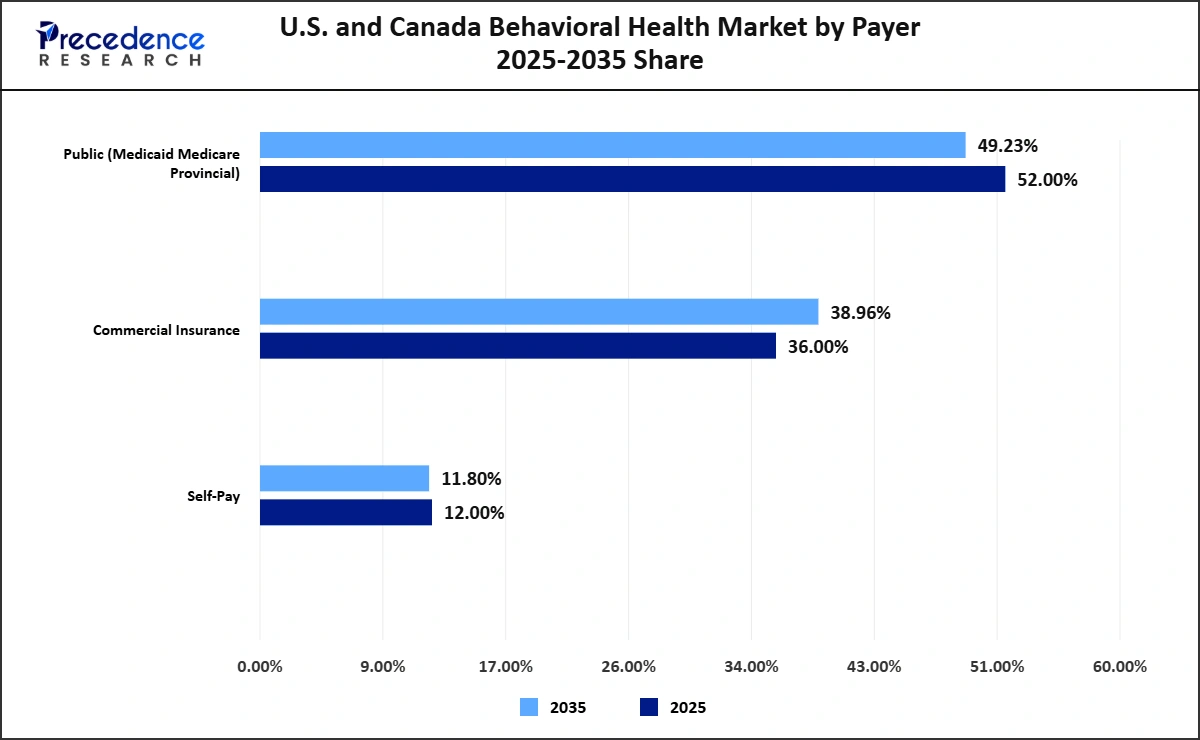
Note: 2025 is the base year; 2035 shares and CAGRs are forecasts.
Sources: Expert interviews, secondary sources, Precedence Research database and Precedence Research analysts.
In 2025, Public Payers dominated the U.S. and Canada behavioral health market, with 52% of revenue, supported by Medicaid, Medicare, and provincial healthcare funding. Commercial Insurance represented the second-largest segment, followed by Self-Pay. Commercial Insurance is projected to expand quickly due to mental health parity enforcement and greater insurance coverage, which will improve access to behavioral health services.
Based on the payer segment, Public Payers held 52% of the market in 2025 and are projected to grow at a CAGR of 3.93% through 2035. This segment includes Medicaid, Medicare, and provincial healthcare programmes that finance behavioral health services. Medicaid remains a major source of behavioral health funding in the United States, while provincial healthcare systems support access to publicly funded mental health services in Canada.
In 2025, Commercial Insurance accounted for 36% of the market. The segment is expected to register the fastest CAGR of 5.33% from 2026 to 2035. These payers include employer-sponsored health plans and private insurance coverage for behavioral health services. Mental health parity enforcement, employer investment in employee well-being, and broader coverage for therapy and psychiatric consultations are expected to strengthen commercial payer participation throughout the forecast period.
Self-Pay accounted for the remaining 12% of the market in 2025 and is projected to register a CAGR of 4.33% during the forecast period. This segment includes patients who pay directly for therapy, psychiatric consultations, and other behavioral health services without relying on insurance reimbursement. Demand for flexible appointment scheduling, specialized providers, and services outside traditional insurance networks is expected to support steady segment growth.
Analyst View: Our analysis indicates that Virtual Care, Substance Use Disorders, and Commercial Insurance are projected to experience the fastest market share growth. In contrast, Outpatient Care, Depression and Anxiety, and Public Payers are expected to maintain leading market positions, driven by sustained treatment demand and established reimbursement structures.
Country Analysis
U.S. and Canada Behavioral Health Market by Country, 2025 Share (%)
| Country | 2025 Share | 2035 Share | CAGR 2026-2035 |
| U.S. | 90.00% | 88.55% | 4.33% |
| Canada | 10.00% | 11.45% | 5.93% |
Note: 2025 is the base year; 2035 shares and CAGRs are forecasts.
Sources: Expert interviews, secondary sources, Precedence Research database, and Precedence Research analysts.
The U.S. and Canada behavioral health market was dominated by the United States in 2025, with a market share of 90%, supported by higher healthcare expenditure, an extensive provider network, and well-established insurance systems. Canada held the remaining 10% and is projected to register faster growth, driven by increased public investment in mental health services and expanding virtual care adoption.
Country Insights
The United States dominated the regional market, accounting for 90% of revenue in 2025. The country is projected to register a CAGR of 4.33% through 2035. Medicaid expansion, enforcement of mental health parity requirements, the 988 Suicide and Crisis Lifeline, and participation from private behavioral health operators support market development. Established provider networks and continued investment in inpatient, outpatient, and virtual services are expected to sustain the country's market leadership.
Canada accounted for 10% of the U.S. and Canada behavioral health market in 2025 and is projected to record the fastest CAGR of 5.93% from 2026 to 2035. Provincial governments are expanding access to publicly funded therapy, community mental health programmes, and virtual behavioral health services. Attention to mental health accessibility and investments in digital care delivery are expected to strengthen Canada's contribution to the regional market.
Analyst View: According to our analysis, the United States will continue to lead the U.S. and Canada behavioral health market throughout the forecast period, driven by its well-established provider network, comprehensive insurance coverage, and higher healthcare expenditure. Meanwhile, Canada is anticipated to experience faster growth, supported by rising provincial investments in publicly funded therapy and virtual mental health services.
Competitive Landscape
Top 10 Companies in the U.S. and Canada Behavioral Health Market, 2025
| Rank | Company Name | 2025 Share (%) | Key Products / Business | Headquarters |
| 1 | Universal Health Services | 5.00% | inpatient behavioral hospitals and Talkspace | United States |
| 2 | Acadia Healthcare | 3.00% | behavioral hospitals and CTCs | United States |
| 3 | HCA Healthcare | 2.00% | psychiatric units | United States |
| 4 | Optum Behavioral Health | 2.00% | behavioral benefits and care | United States |
| 5 | Teladoc (BetterHelp) | 1.00% | BetterHelp virtual therapy | United States |
| 6 | LifeStance Health | 1.00% | outpatient mental health | United States |
| 7 | Lyra Health | 1.00% | employer mental health benefits | United States |
| 8 | Headspace | 1.00% | virtual therapy and coaching | United States |
| 9 | Centene (Magellan) | 1.00% | behavioral health management | United States |
| 10 | CAMH | 1.00% | Canadian mental health hospital | Canada |
Note: Company shares are 2025 estimates.
Sources: Company press releases, expert interviews, secondary sources, Precedence Research database and Precedence Research analysts.
Universal Health Services led the U.S. and Canada behavioral health market in 2025 with an estimated revenue share of 5%, followed by Acadia Healthcare at 3% and HCA Healthcare at 2%. These companies benefit from established behavioral healthcare networks, inpatient psychiatric facilities, residential treatment capabilities, and outpatient mental health services.
Universal Health Services competes through inpatient behavioral hospitals and Talkspace, while Acadia Healthcare focuses on behavioral hospitals and comprehensive treatment centers (CTCs). HCA Healthcare maintains its market position through psychiatric units. Optum Behavioral Health, Teladoc (BetterHelp), LifeStance Health, Lyra Health, Headspace, Centene (Magellan), and CAMH participate through behavioral health benefits and care management, virtual therapy, outpatient mental health services, employer mental health programs, virtual therapy and coaching, behavioral health management, and specialized mental health hospital services.
In 2025, the top 10 listed companies represented approximately 18% of total market revenue, while the remaining estimated 82% was attributable to other providers, including community mental health centres, private practices and nonprofit organizations. The market remains highly fragmented, with competition driven by clinician availability, payer partnerships, treatment capacity, digital platforms, service accessibility, and patient outcomes.
Company Snapshots
Universal Health Services: Universal Health Services held the largest estimated share of the U.S. and Canada behavioral health market, accounting for approximately 5% in 2025. Headquartered in the United States, the company specializes in inpatient behavioral hospitals and virtual behavioral health services through Talkspace, establishing itself as a Leader in the Precedence Research Companies Quadrant through its extensive facility network and diversified service portfolio.
Acadia Healthcare: Accounting for an estimated market share of 3% in 2025, United States-based Acadia Healthcare competes through its behavioral hospitals and comprehensive treatment centers (CTCs). Its established behavioral healthcare infrastructure and specialized treatment capabilities position it as a Leader in the Precedence Research Companies Quadrant.
HCA Healthcare: In 2025, HCA Healthcare accounted for approximately 2% of the U.S. and Canada behavioral health market. Headquartered in the United States, the company participates through psychiatric units and hospital-based behavioral health services, placing it in the Leader category of the Precedence Research Companies Quadrant.
Optum Behavioral Health: In the U.S. and Canada behavioral health market, Optum Behavioral Health held an estimated 2% share in 2025. Part of UnitedHealth Group and headquartered in the United States, the company focuses on behavioral health benefits and care management, maintaining a position in the Leader category of the Precedence Research Companies Quadrant.
Teladoc (BetterHelp): With a focus on virtual therapy, Teladoc (BetterHelp) accounted for about 1% of the market in 2025. Headquartered in the United States, the company's digital behavioral health platform and virtual counseling services position it as a Leader in the Precedence Research Companies Quadrant.
LifeStance Health: LifeStance Health held an estimated 1% share of the behavioral health market in the United States and Canada in 2025. Based in the United States, the company specializes in outpatient mental health services, including therapy and psychiatry, and is classified as a Leader in the Precedence Research Companies Quadrant.
Lyra Health: The United States-based Lyra Health accounted for approximately 1% of the market in 2025. The company focuses on employer-sponsored mental health benefits and behavioral healthcare services, positioning itself as an Innovator in the Precedence Research Companies Quadrant through its digital care delivery model.
Headspace: Headspace held an estimated 1% share of the U.S. and Canada behavioral health market in 2025. Headquartered in the United States, the company offers virtual therapy and coaching services, establishing itself as an Innovator in the Precedence Research Companies Quadrant.
Centene (Magellan): In 2025, Centene (Magellan) accounted for around 1% of the market. Headquartered in the United States, the company participates through behavioral health management and integrated care services, placing it in the Innovator category of the Precedence Research Companies Quadrant.
CAMH: CAMH held an estimated 1% share of the U.S. and Canada behavioral health market in 2025. Headquartered in Canada, the organization focuses on specialized mental health hospital services and is classified as an Innovator in the Precedence Research Companies Quadrant.
Companies Ecosystem
The U.S. and Canada behavioral health market ecosystem comprises clinicians, behavioral healthcare providers, digital health platforms, insurance payers, and regulatory authorities. Each participant contributes to clinical assessment, treatment delivery, virtual care, reimbursement, or regulatory oversight before behavioral health services reach patients. Additionally, digital health platforms connect patients with licensed clinicians and expand access to virtual therapy, clinical trials, psychiatric consultations, and behavioral health support.
U.S. and Canada Behavioral Health Market Ecosystem
| Ecosystem Stage | Role in the Market | Key Companies |
| Clinicians | Provide care | Psychiatrists, psychologists, therapists |
| Providers | Run facilities and practices | UHS, Acadia, LifeStance |
| Digital Platforms | Deliver virtual care | Talkspace, BetterHelp, Headspace |
| Payers | Fund care | Medicaid, insurers, provinces |
| Regulators | Set rules | CMS, SAMHSA, provincial ministries |
Sources: Company press releases, expert interviews, secondary sources, Precedence Research database and Precedence Research analysts.
Clinicians: Psychiatrists, psychologists, therapists, and other mental health professionals provide assessment and treatment, but workforce shortages limit capacity amid rising demand in the United States and Canada.
Providers: Behavioral health providers offer facility-based and virtual care to improve patient access and continuity.
Digital Platforms: Digital mental health platforms provide virtual therapy, psychiatric consultations, and online programs, improving behavioral healthcare access for underserved and remote communities.
Payers: Public and private insurers fund behavioral healthcare through government programs and employer coverage, while parity laws shape reimbursement, coverage, and patient access.
Regulators: Regulators govern behavioral health licensing, telehealth, insurance coverage, and parity requirements, shaping compliance, reimbursement, and patient access.
The U.S. and Canada behavioral health market value chain begins with clinical workforce and healthcare infrastructure and continues through treatment delivery, digital care platforms, insurance reimbursement, and patient services. Regulatory requirements, workforce availability, and payer coverage influence service capacity and market development. Companies that integrate multiple stages or establish long-term relationships with healthcare providers, payers, and patients can strengthen their competitive positions.
Precedence Research Companies Quadrant
The Precedence Research Companies Quadrant positions key participants in the U.S. and Canada behavioral health market by market strength, reflecting revenue scale, market share, and geographic reach, and by innovation and growth strategy, reflecting service portfolio breadth, digital capabilities, R&D intensity, and partnerships. Positions reflect each company's estimated 2025 share of the U.S. and Canada behavioral health market and our assessment of its service innovation, portfolio breadth, and partnerships.
Sources: Company press releases, expert interviews, secondary sources, Precedence Research database and Precedence Research analysts.
Leaders: Universal Health Services, Acadia Healthcare, HCA Healthcare, Optum Behavioral Health, Teladoc (BetterHelp), and LifeStance Health combine high market share with broad portfolios and strong innovation.
Innovators: Lyra Health, Headspace, Centene (Magellan), and CAMH bring newer technologies and specialised products.
Recent Developments
- March 2026: Universal Health Services agreed to acquire Talkspace, a virtual behavioral health provider, for approximately USD 835 million, with the deal closing in August 2026 to enhance outpatient and virtual care.
U.S. and Canada Behavioral Health Market Segments
By Service
- Outpatient
- Inpatient & Residential
- Virtual Care
- Substance Use Treatment Programmes
By Disorder
- Depression & Anxiety
- Substance Use Disorders
- Serious Mental Illness
- Others
By Payer
- Public (Medicaid, Medicare, Provincial)
- Commercial Insurance
- Self-Pay
By Country
- U.S.
- Canada
Research Methodology: The U.S. and Canada behavioral health market was evaluated using a bottom-up assessment of patient demand, service volumes, average treatment costs, provider revenues, and payer spending across major service, disorder, payer, and country categories. The market comprises inpatient psychiatric hospitals and units, residential treatment, partial hospitalization programs, intensive outpatient programs, outpatient therapy and psychiatry, substance use treatment programs, and virtual behavioral health services. These services address depression and anxiety, substance use disorders, serious mental illness, autism-related conditions, and youth mental health needs across the United States and Canada. The 2025 base-year estimate was developed by analyzing demand volumes and average service prices across service categories, disorders, and payer types in both countries. It was validated against market-specific revenues of leading behavioral health providers, public and private healthcare spending, insurance reimbursement data, public industry information, and relevant company disclosures. Company market shares were determined using estimated revenues attributable to behavioral health activities. Key assumptions were cross-checked against company disclosures, regulatory and industry information, expert interviews, and third-party estimates. Estimates that could not be reconciled were excluded from the final assessment. All segment, country, and company estimates were reconciled to the same 2025 base year. The 2026-2035 forecast incorporates expected changes in mental health prevalence, substance use treatment demand, clinician availability, virtual care adoption, mental health parity enforcement, public healthcare funding, and commercial insurance coverage.
Analyst View: In our assessment, the U.S. and Canada behavioral health market is poised for sustained growth, driven by increasing mental health prevalence, rising substance use treatment demand, and accelerating virtual care adoption. We expect that Outpatient services will retain market dominance, supported by continued demand for therapy and medication management, while Virtual Care is projected to register the fastest growth, driven by digitalization and enhanced clinician accessibility. Depression and Anxiety will remain the leading disorder segment, whereas substance use disorders are anticipated to witness stronger growth momentum. Public payers will maintain the largest payer share, while Commercial Insurance is expected to expand at a faster rate. The United States will retain regional dominance, while Canada is projected to record a higher CAGR than the United States.
Sources and References
- Fierce Healthcare. "Universal Health Services to acquire Talkspace in $835M deal to build out virtual behavioral health". March 2026. News. (Source: fiercehealthcare.com)
- Becker's Hospital Review. "The biggest acquisitions for-profit systems are making in 2026 aren't hospitals". 2026. News. (Source: beckershospitalreview.com)
For inquiries regarding discounts, bulk purchases, or customization requests, please contact us at sales@precedenceresearch.com
Frequently Asked Questions





Ask For Sample
No cookie-cutter, only authentic analysis – take the 1st step to become a Precedence Research client
 Get a Sample




 sales@precedenceresearch.com
 Schedule a Meeting
