



U.S. Minimally Invasive Surgery Market Revenue, Leading Companies, Company Technology / Innovation, Diagnostic Testing Volume, Adoption Rates, Pricing Metrics, Supply Chain Performance, Competitive Positioning, and Industry Trends
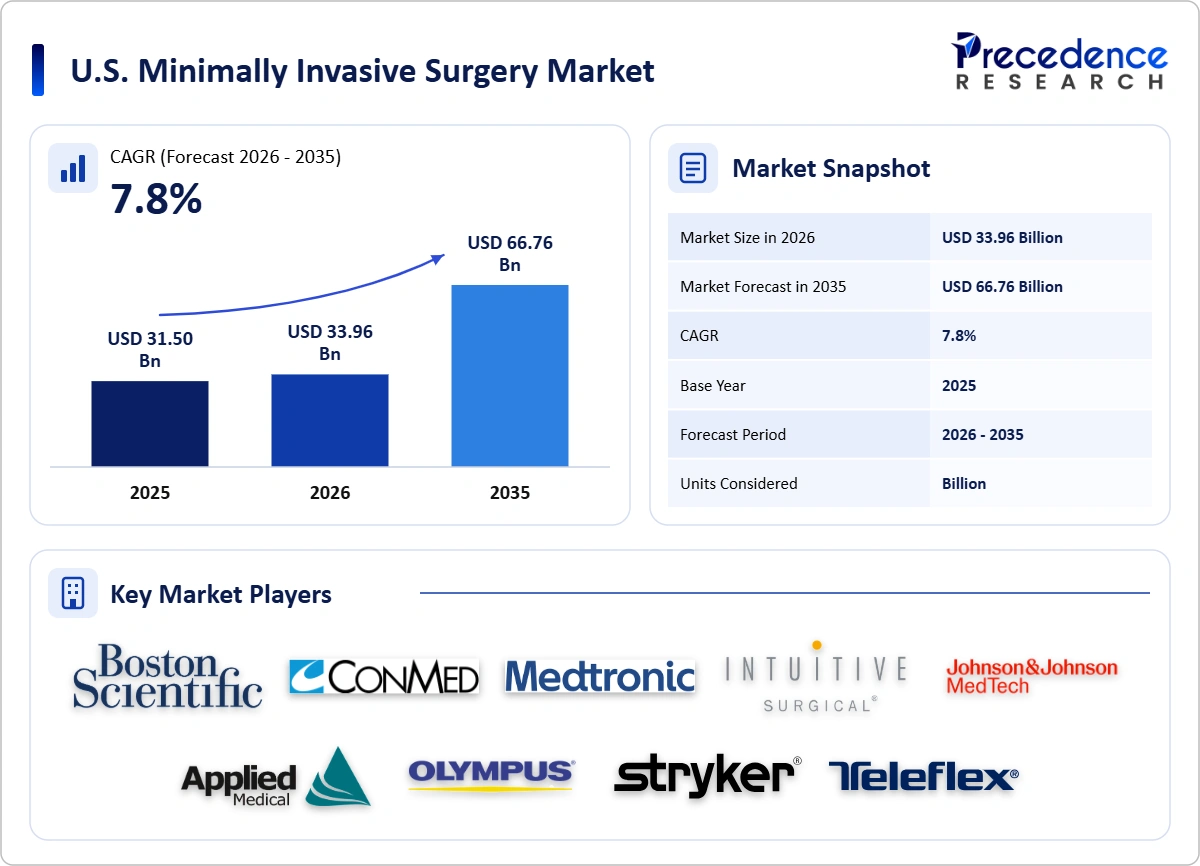
Payal Rabde, a Healthcare Industry Expert, highlights that the U.S. minimally invasive surgery market has reached USD 33.96 billion in 2026 and is on track to reach USD 66.76 billion by 2035, advancing at a CAGR of 7.8%. Key U.S. minimally invasive surgery market companies shaping the market include Intuitive Surgical, Medtronic, Johnson & Johnson MedTech (Ethicon) while major growth segments span Product, application, end user and region.
Source: https://www.precedenceresearch.com/us-minimally-invasive-surgery-market
 Get a Sample
 Table Of Content
Key Takeaways
Market Size & Growth Outlook
- Market size in 2025: USD 31.50 billion
- Estimated market size in 2026: USD 33.96 billion
- Projected market size by 2035: USD 66.76 billion
- CAGR (2026-2035): 7.8%
Regional Market Spotlight
- The South region captured 38% of the U.S. market in 2025 and is projected to be the fastest-growing region, with a CAGR of 8.53% from 2026 to 2035.
- In 2025, the West region represented 22% of the U.S. market.
- The Midwest region accounted for 21% of the market in 2025.
Segmental Spotlight
- Handheld and laparoscopic instruments accounted for the largest product segment share, representing 30% of the market in 2025.
- General surgery dominated the application segment with a 34% share in 2025.
- Hospitals led the end-user segment, accounting for 72% of the market in 2025.
U.S. Minimally Invasive Surgery Market Size, 2025-2035 (USD Billion)
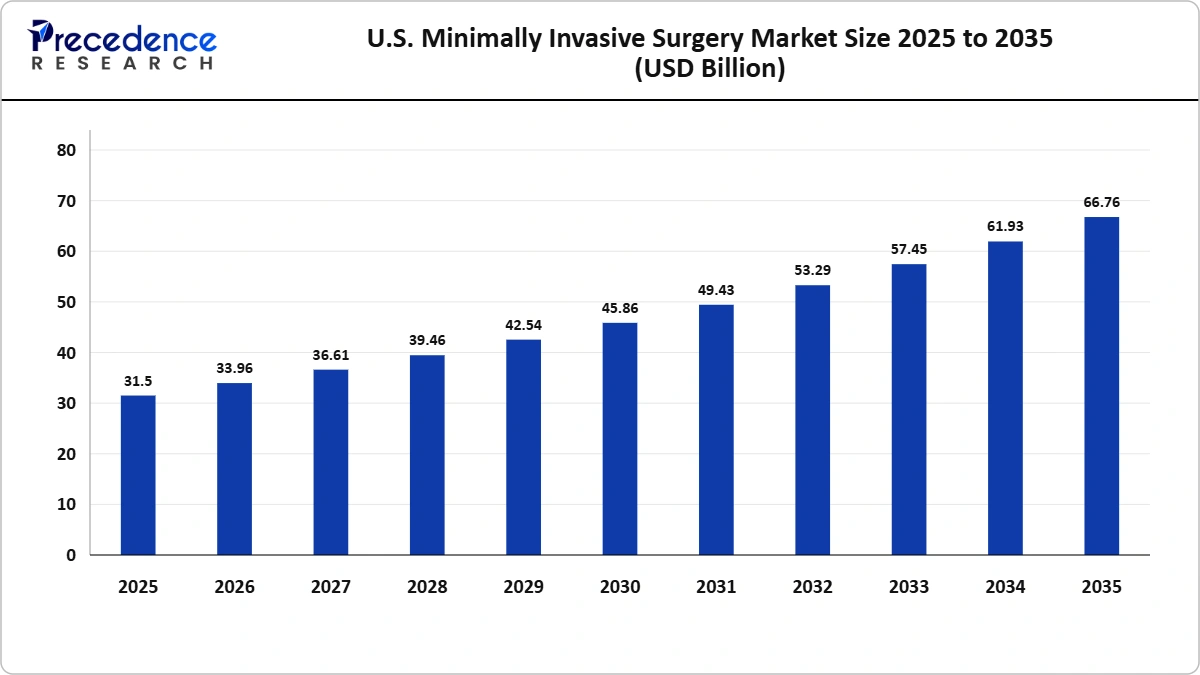
Note: 2025 is the base year; 2026-2035 values are forecasts.
Sources: Expert interviews, secondary sources, Precedence Research database, and Precedence Research analysts.
The U.S. minimally invasive surgery market is projected to grow from USD 31.50 billion in 2025 to USD 66.76 billion by 2035, registering a CAGR of 7.8% from 2026 to 2035. This growth is fueled by the use of minimally invasive techniques in abdominal and pelvic surgeries, alongside the broader implementation of robotic surgical systems in more hospitals and specialties. Contributing factors include the rising number of ASCs, an ageing population, and heightened demand for bariatric and thoracic surgeries. The market is projected to reach USD 45.86 billion by 2030, supported by robotic adoption and recurring demand for surgical instruments. Minimally invasive surgery overlaps with orthopedic devices and digital health platforms for surgical data.
Analyst View: Our market forecast is based on an assessment of U.S. procedure volumes across laparoscopic, robotic, and endoscopic surgery, alongside average device expenditure per procedure. These estimates are cross-checked against surgical revenues reported by leading medical device manufacturers. Robotic system placements and recurring instrument revenues are modeled separately to account for their faster growth compared with the broader market.
U.S. Minimally Invasive Surgery Market Trends
- Multi-port and single-port robots in community hospitals: Robotic surgical platforms are expanding beyond academic medical centers, with community hospitals investing in these systems to retain surgeons, attract patients, and strengthen their surgical capabilities.
- Outpatient migration: A shift towards ASCs is observed with an increase in hernia, gallbladder, and gynecological procedures. In response, manufacturers are creating compact surgical towers and more affordable robotic platforms tailored for outpatient use.
- Advanced energy on robotic arms: Vessel sealers and staplers are being adapted for robotic surgical systems, increasing device expenditure per robotic procedure.
- Fluorescence-guided surgery: Indocyanine green imaging improves the assessment of blood flow and lymph node positioning in surgery, facilitating the use of fluorescence-guided surgical technologies within advanced visualization systems.
- Data and AI in the operating room: Video capture technologies and AI-based analytics review surgical techniques and benchmark surgeon performance, supporting the integration of digital technologies into operating room workflows.
Minimally Invasive Surgery Market Dynamics
The U.S. minimally invasive surgery market is evolving through the adoption of robotic-assisted procedures, the migration of surgical cases toward lower-cost outpatient settings, and rising surgical demand associated with an ageing and growing obese population. Competition among robotic platform manufacturers is expanding hospital purchasing options and supporting broader adoption. However, high capital expenditure, staffing shortages, and pricing pressure from group purchasing organizations continue to influence purchasing decisions and market expansion.
Drivers
Rapid robotic adoption
Robotic-assisted surgery is diversifying from traditional prostatectomy to include hernia repair, colorectal surgery, and bariatric procedures. The installed robotic systems create ongoing demand for instruments, accessories, and service contracts. Companies such as Medtronic and Johnson & Johnson are enhancing platform availability, facilitating adoption in more healthcare facilities. Therefore, adoption of robotic surgery represents the largest contributor to market growth.
Better recovery and lower complications
Minimally invasive procedures support faster patient recovery and shorter hospital stays compared with conventional open surgery. Hospitals and payers favor these approaches because of their potential to reduce hospital stays and readmissions. These clinical and operational benefits continue to support the transition from open to minimally invasive surgical techniques.
Ageing and obesity
An ageing population and high obesity rates are increasing the demand for various surgical procedures, including cancer-related surgeries, hernia repairs, joint surgeries, and bariatric procedures. These demographic and health trends are contributing to a rise in surgical volumes, many of which are conducted using laparoscopic or robotic techniques.
Shift to ambulatory surgical centres
CMS is broadening the procedures eligible for reimbursement in ASCs, driven by lower facility costs and patient preference for outpatient care. This shift is increasing the demand for compact surgical equipment and robotic systems suitable for ASC settings.
Market Drivers - Impact & CAGR Contribution (2026-2035)
| Driver | Impact | ≈ CAGR Contribution | Time Horizon | Key Regions |
| Rapid robotic adoption | High | +3.05 pp | Short to long term | U.S.-wide, strongest in South |
| Better recovery and lower complications | Medium | +2.57 pp | Medium to long term | U.S.-wide, fastest uptake in South |
| Ageing and obesity | Medium | +2.19 pp | Short to medium term | U.S.-wide |
| Shift to ambulatory surgical centres | Low | +1.71 pp | Long term | South |
Note: Contributions are indicative estimates of each factor's effect on annual growth.
Sources: Expert interviews, secondary sources, Precedence Research database, and Precedence Research analysts.
Robotic surgery adoption, enhanced clinical outcomes, and demographic shifts are key factors driving the U.S. minimally invasive surgery market. Additionally, the acceptance of Ambulatory Surgical Centers is boosting demand, particularly in the South, where the growth of surgical facilities is fostering market development.
Restraints
High capital and per-case cost
Robotic surgical systems require substantial initial investment, with individual platforms potentially costing several million dollars. In addition, specialized instruments and accessories increase expenditure for every procedure. These costs can make adoption challenging for smaller hospitals and healthcare facilities that lack sufficient surgical volumes to justify the investment.
Pricing pressure from purchasing groups
GPOs and integrated healthcare systems negotiate pricing for surgical instruments and consumables, impacting manufacturers' budgets and profitability in mature product categories.
Surgeon and staff shortages
Training healthcare professionals to use new minimally invasive surgical platforms is resource-intensive. Staffing shortages can hinder operating room capacity and the effective use of these systems.
Market Restraints - Impact & Negative CAGR Contribution (2026-2035)
| Restraint | Impact | ≈ Negative CAGR Contribution | Time Horizon | Key Regions |
| High capital and per-case cost | High | -0.77 pp | Short to medium term | U.S.-wide |
| Pricing pressure from purchasing groups | High | -0.57 pp | Medium term | Smaller and price-sensitive markets |
| Surgeon and staff shortages | Medium | -0.38 pp | Short term | South and other mature markets |
Note: Contributions are indicative estimates of each factor's effect on annual growth.
Sources: Expert interviews, secondary sources, Precedence Research database and Precedence Research analysts.
High capital expenditure significantly restrains market growth, especially for smaller hospitals that lack sufficient procedure volumes to fully utilize robotic systems. Additional constraints include pricing pressure from purchasing groups and shortages of trained surgical personnel. Conversely, lower-cost robotic platforms and instrument reprocessing are mitigating some adoption barriers.
Opportunities
Robotics for ASCs
The development of smaller and more affordable robotic surgical systems designed for outpatient facilities presents an opportunity to expand minimally invasive surgery adoption across additional ASC locations.
Reprocessed and lower-cost instruments
Reprocessed instruments and value-tier surgical devices offer cost-conscious hospitals opportunities to expand minimally invasive surgery programs while managing equipment and per-procedure expenditure.
Digital surgery services
Video analytics, remote proctoring, and subscription-based surgical training services create opportunities for recurring software revenue alongside conventional surgical equipment and instrument sales.
U.S. Minimally Invasive Surgery Market Segmentation: 2025 Share and Size
U.S. Minimally Invasive Surgery Market by Product, 2025-2035 Share (%)
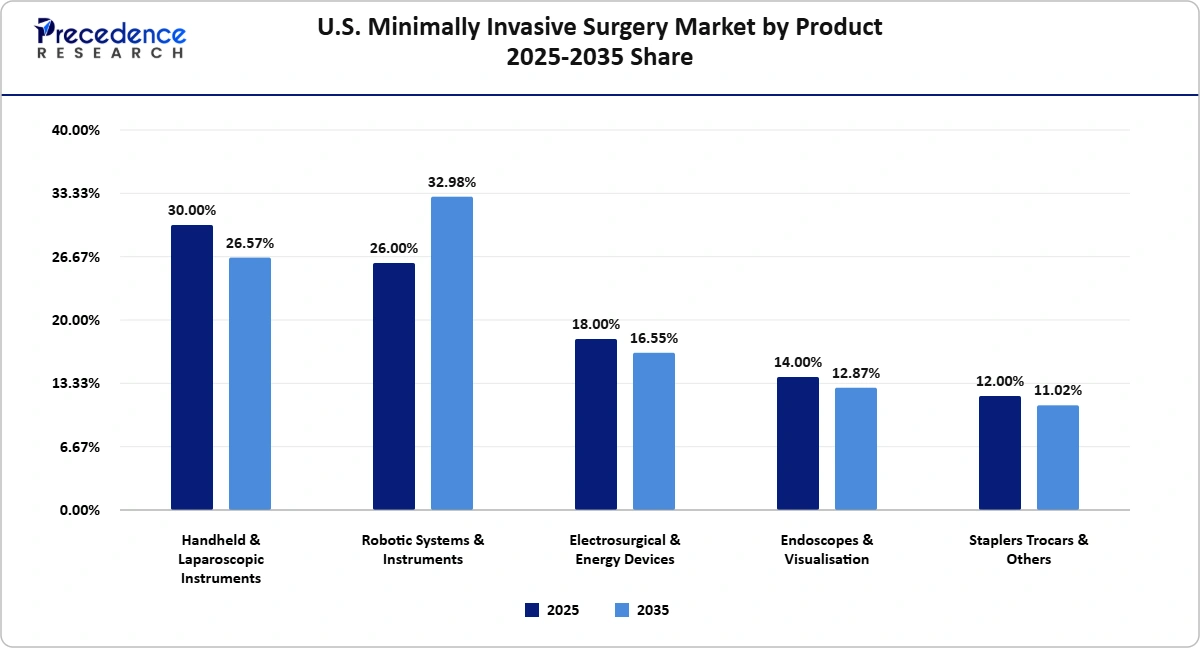
Note: 2025 is the base year; 2035 shares and CAGRs are forecasts.
Sources: Expert interviews, secondary sources, Precedence Research database, and Precedence Research analysts.
Handheld and Laparoscopic Instruments dominated the U.S. minimally invasive surgery market in 2025, accounting for 30% of total revenue. The segment's growth is driven by the consistent use of disposable instruments, staplers, and energy devices in surgeries. Robotic Systems and Instruments are the fastest-growing category due to hospitals enhancing their robotic surgical capabilities and increasing procedure volumes on these platforms.
Handheld and Laparoscopic Instruments accounted for 30% of the market in 2025 and are projected to register a CAGR of 6.50% through 2035. These products include graspers, scissors, retractors, and trocars used in routine laparoscopic procedures. Their demand is supported by consistent surgical volumes, while product pricing is influenced by group purchasing contracts.
Robotic Systems and Instruments represented 26% of the market in 2025. These products are projected to grow at the fastest CAGR of 10.40% during the forecast period. Hospitals are increasing their robotic systems, with new platforms like Medtronic's Hugo enhancing market competition. Robotic-assisted procedures generate recurring demand for platform-compatible instruments and accessories, with consumption varying by procedure type and instrument utilization.
Electrosurgical and Energy Devices held 18% of the market in 2025 and are anticipated to grow at a CAGR of 6.90% through 2035. These products include electrosurgical vessel-sealing systems, ultrasonic dissection instruments, and other energy-based devices used for tissue dissection, coagulation, and vessel sealing. Demand is rising with the growth of complex laparoscopic and robotic procedures.
Endoscopes and Visualization captured 14% of the market in 2025 and are expected to register a CAGR of 6.90% through 2035. High-definition and 4K imaging towers, along with fluorescence visualization technologies, are supporting demand. Replacement of older visualization systems and use of indocyanine green imaging contribute to segment development.
Staplers, Trocars, and Others accounted for 12% of the market in 2025. The category includes powered staplers, specialized access ports, and other surgical accessories, which are projected to grow at a CAGR of 6.90% through 2035. Demand is supported by recurring product consumption across bariatric, colorectal, and other minimally invasive procedures.
U.S. Minimally Invasive Surgery Market by Application, 2025 Share (%)
| Segments | 2025 Share | 2035 Share | CAGR 2026-2035 |
| General Surgery | 34.00% | 32.25% | 7.23% |
| Gynecology | 18.00% | 17.72% | 7.63% |
| Urology | 16.00% | 15.74% | 7.63% |
| Bariatric & Thoracic | 14.00% | 16.57% | 9.63% |
| Orthopedic, Cardiovascular & Others | 18.00% | 17.72% | 7.63% |
Note: 2025 is the base year; 2035 shares and CAGRs are forecasts.
Sources: Expert interviews, secondary sources, Precedence Research database, and Precedence Research analysts.
In 2025, General Surgery captured 34% of the U.S. minimally invasive surgery market, driven by laparoscopic and robotic procedures such as gallbladder removal and hernia repair. The Bariatric and Thoracic segment is expected to grow fastest through 2035, due to rising demand for obesity-related surgeries and increased lung cancer screening.
General Surgery accounted for 34% of the market in 2025 and is projected to grow at a CAGR of 7.23% through 2035. Common procedures include hernia repair, cholecystectomy, and colorectal resections. The adoption of laparoscopic and robotic approaches across these procedures supports consistent demand for surgical instruments and related equipment.
Gynecology represented a market share of 18% in 2025 and is expected to register a CAGR of 7.63% during the forecast period. Procedures such as hysterectomy and endometriosis surgery have adopted minimally invasive techniques. Demand is supported by the use of robotic platforms for complex benign and oncological procedures.
Urology held a market share of 16% in 2025 and is projected to grow at a CAGR of 7.63% from 2026 to 2035. Prostatectomy remains a major robotic-assisted procedure, while kidney surgery contributes additional demand for specialized minimally invasive instruments and systems. High device expenditure per procedure supports the segment's market presence.
Bariatric and Thoracic represented 14% of the market in 2025. The Bariatric and Thoracic segment is projected to register the fastest CAGR of 9.63% through 2035. Sleeve gastrectomy, revision procedures for previous weight-loss surgeries, and lobectomies from lung cancer screenings are driving segment growth, with rising demand for obesity care and increased screening program adoption promoting minimally invasive techniques.
Orthopedic, Cardiovascular, and Others accounted for 18% of the market in 2025 and are expected to grow at a CAGR of 7.63% during the forecast period. Applications include arthroscopy, minimally invasive valve procedures, and other specialized surgical interventions that require dedicated instruments and equipment.
U.S. Minimally Invasive Surgery Market by End User, 2025-2035 Share (%)
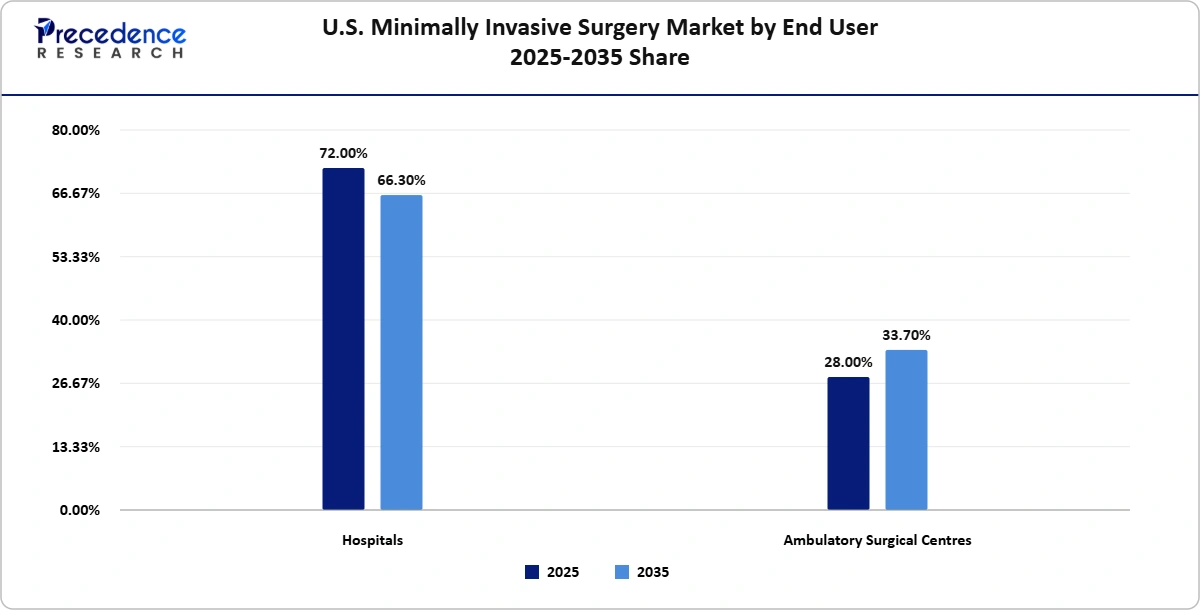
Note: 2025 is the base year; 2035 shares and CAGRs are forecasts.
Sources: Expert interviews, secondary sources, Precedence Research database, and Precedence Research analysts.
Hospitals dominated the U.S. minimally invasive surgery market in 2025, accounting for 72% of total revenue. Their lead reflects the concentration of complex and inpatient surgical procedures, along with their substantial investments in robotic systems and visualization equipment. Ambulatory Surgical Centers are expected to register faster growth as routine procedures increasingly shift toward outpatient settings.
Hospitals accounted for 72% of the market in 2025 and are projected to grow at a CAGR of 6.92% through 2035. Hospitals remain the primary purchasers of robotic surgical platforms, visualization towers, and advanced instruments. Their procurement decisions are often made at the healthcare system level and may include bundled service contracts.
Ambulatory Surgical Centers represented 28% of the market in 2025. The segment is projected to register a CAGR of 9.82% during the forecast period. These facilities perform hernia, gallbladder, gynecological, and joint procedures that can be completed on an outpatient basis. The migration of routine procedures from hospitals, supported by payer policies and compact equipment, is strengthening demand across ASCs.
Analyst View: Our analysis indicates that the market is gradually shifting toward robotic instruments and ASC-based procedures, while handheld laparoscopic instruments continue to maintain the largest product share. Bariatric and thoracic surgery is expected to remain the fastest-growing application category, supported by increasing demand for obesity-related procedures and screening-driven surgical interventions.
Regional Analysis of the U.S. Minimally Invasive Surgery Market
U.S. Minimally Invasive Surgery Market by Region, 2025 Share (%)
| Region | 2025 Share | 2035 Share | CAGR 2026-2035 |
| South | 38.00% | 40.65% | 8.53% |
| West | 22.00% | 21.06% | 7.33% |
| Midwest | 21.00% | 20.10% | 7.33% |
| Northeast | 19.00% | 18.18% | 7.33% |
Note: 2025 is the base year; 2035 shares and CAGRs are forecasts.
Sources: Expert interviews, secondary sources, Precedence Research database, and Precedence Research analysts.
In 2025, the South dominated the U.S. minimally invasive surgery market, accounting for 38% of total revenue. This lead is supported by population growth and the expansion of hospitals and surgical centers across Texas, Florida, Georgia, and the Carolinas. The South is also projected to register the fastest regional growth, with a CAGR of 8.53% from 2026 to 2035.
Regional Insights
The South region accounted for 38% of the U.S. minimally invasive surgery market in 2025, making it the largest regional market. Population growth across Texas, Florida, Georgia, and the Carolinas is encouraging the development of new hospitals and surgical centers. The region is projected to grow at a CAGR of 8.53% through 2035, the fastest among the four U.S. regions.
In 2025, the West region represented 22% of the market. The region, particularly California and Washington, benefits from large integrated healthcare systems and expanding ASC infrastructure. Through 2035, the region is expected to register a CAGR of 7.33%. Healthcare organizations, including Kaiser Permanente, are standardizing minimally invasive surgical pathways across multiple hospital facilities, supporting regional demand.
The Midwest region captured 21% of the market in 2025 and is projected to grow with a CAGR of 7.33% from 2026 to 2035. Regional demand is supported by established healthcare systems, including Mayo Clinic, Cleveland Clinic, and Advocate Health. Replacement of existing laparoscopic visualization equipment and expansion of robotic surgical programs in mid-sized hospitals contribute to market development.
The Northeast region held 19% of the U.S. minimally invasive surgery market in 2025 and is anticipated to register a CAGR of 7.33% through 2035. The region benefits from a concentration of academic medical centers in Boston, New York, and Philadelphia, which support surgeon training and early adoption of advanced surgical platforms. Its market share reflects relatively high per-capita surgical activity.
Analyst View: Our analysis indicates that regional market development is influenced by population growth and healthcare system structures. The South is expected to increase its market share as new hospitals and ASCs expand across the region. Meanwhile, the Northeast maintains a strong position in surgical activity per patient, supported by its established academic and medical institutions.
Competitive Landscape
Top 10 Companies in the U.S. Minimally Invasive Surgery Market, 2025
| Rank | Company Name | 2025 Share (%) | Key Products / Business | Headquarters |
| 1 | Intuitive Surgical | 22.00% | da Vinci systems and instruments | United States |
| 2 | Medtronic | 14.00% | Hugo RAS, LigaSure and staplers | Ireland |
| 3 | Johnson & Johnson MedTech (Ethicon) | 14.00% | Staplers, Harmonic and OTTAVA | United States |
| 4 | Stryker | 6.00% | Visualisation and arthroscopy | United States |
| 5 | Olympus | 5.00% | Endoscopes and energy devices | Japan |
| 6 | KARL STORZ | 5.00% | Endoscopes and visualisation | Germany |
| 7 | Boston Scientific | 4.00% | Endoscopy and urology devices | United States |
| 8 | Teleflex | 3.00% | Weck instruments and access devices | United States |
| 9 | CONMED | 2.00% | AirSeal and energy devices | United States |
| 10 | Applied Medical | 2.00% | Trocars and laparoscopic devices | United States |
Note: Company shares are 2025 estimates.
Sources: Company press releases, expert interviews, secondary sources, Precedence Research database and Precedence Research analysts.
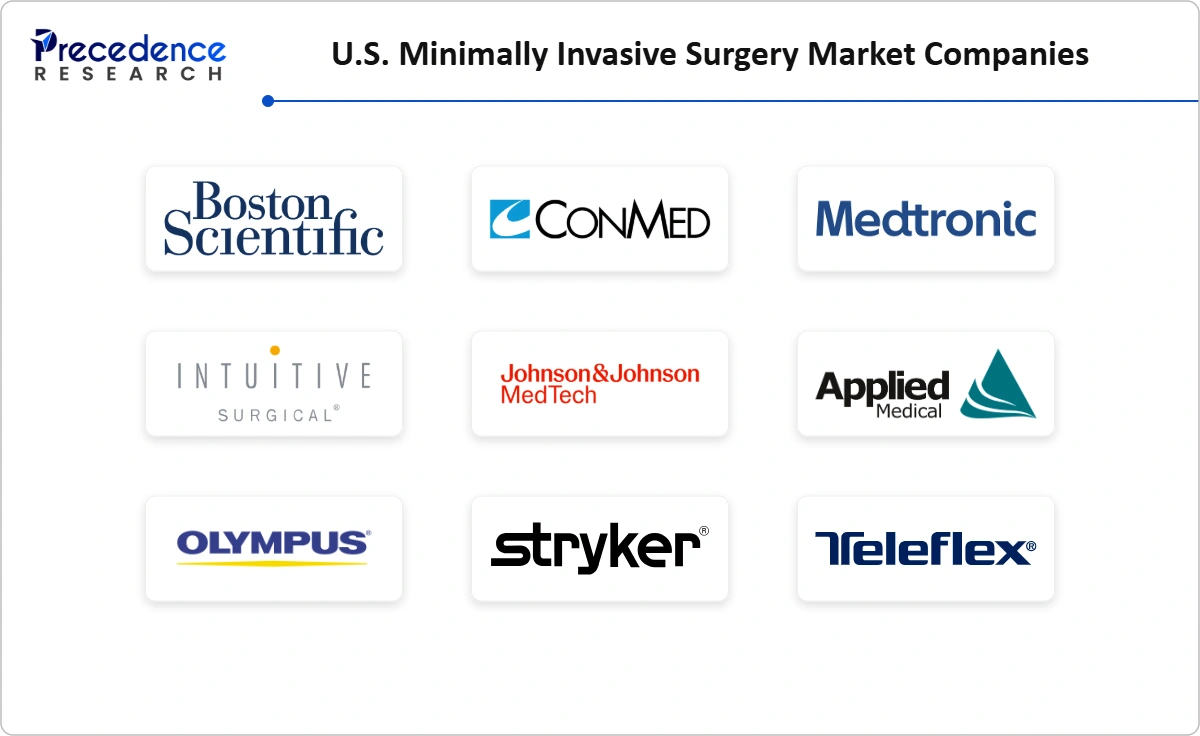
Intuitive Surgical led the U.S. minimally invasive surgery market in 2025, accounting for an estimated 22% revenue share, followed by Medtronic and Johnson & Johnson MedTech (Ethicon), each with an estimated 14% share. Intuitive Surgical maintains its position through its da Vinci robotic systems and instruments, while Medtronic competes through Hugo RAS, LigaSure, and staplers. Johnson & Johnson MedTech (Ethicon) offers staplers, Harmonic, and OTTAVA.
Other major participants include Stryker, Olympus, KARL STORZ, Boston Scientific, Teleflex, CONMED, and Applied Medical. These companies compete across visualization and arthroscopy, endoscopes and energy devices, endoscopy and urology equipment, surgical instruments, access devices, and laparoscopic accessories.
In 2025, the top 10 companies accounted for an estimated 77% of U.S. market revenue, while the remaining market is served by other established manufacturers and specialized suppliers, including companies with smaller product portfolios or limited separately disclosed U.S. revenues. The market is concentrated among major device manufacturers, with competition driven by robotic platform installed bases, instrument costs per procedure, energy device performance, surgeon training, and group purchasing agreements.
Company Snapshots
Intuitive Surgical: Intuitive Surgical maintained a leading position in the U.S. minimally invasive surgery market in 2025, capturing an estimated 22% share. Its competitive strength is driven by its da Vinci robotic surgical systems and associated instruments. Based in the United States, the company is recognized as a Leader in the Precedence Research Companies Quadrant.
Medtronic: Accounting for approximately 14% of the market in 2025, Medtronic strengthened its presence through its Hugo RAS platform, LigaSure products, and surgical stapling solutions. The Ireland-based company is classified as a Leader in the Precedence Research Companies Quadrant.
Johnson & Johnson MedTech (Ethicon): With a market presence of an estimated 14% in 2025, Johnson & Johnson MedTech (Ethicon) remained a competitor in the minimally invasive surgery landscape in the U.S. Its portfolio spans advanced stapling technologies, energy-based surgical devices, and robotic surgery through OTTAVA. The company is categorized as a Leader in the Precedence Research Companies Quadrant.
Stryker: Stryker accounted for an estimated 6% of the minimally invasive surgery market in the U.S. in 2025. Its market participation is supported by its visualization technologies and arthroscopy solutions. Headquartered in the United States, Stryker is identified as a Leader in the Precedence Research Companies Quadrant.
Olympus: In 2025, Olympus, based in Japan, accounted for an estimated 5% of the market. The company focuses on endoscopes and energy devices and is positioned as a Leader in the Precedence Research Companies Quadrant.
KARL STORZ: KARL STORZ held around 5% market share in 2025, driven by its established endoscopy and visualization solutions. The Germany-based company is positioned in the Leader category of the Precedence Research Companies Quadrant.
Boston Scientific: With an estimated 4% share of the market in 2025, Boston Scientific maintained its presence through specialized endoscopy and urology technologies. The company is based in the United States and occupies the Innovator category in the Precedence Research Companies Quadrant.
Teleflex: Teleflex accounted for around 3% of the U.S. minimally invasive surgery market in 2025. Its product portfolio, particularly Weck instruments and access technologies, supports its participation in the sector. The company is headquartered in the United States and is classified as an Innovator in the Precedence Research Companies Quadrant.
CONMED: Operating from the United States, CONMED offers AirSeal and energy devices. That portfolio gave it about 2% of the market in 2025, and the company is classified as an Innovator in the Precedence Research Companies Quadrant.
Applied Medical: Applied Medical held an estimated 2% market share in 2025, with its portfolio focused on trocars and laparoscopic devices. Headquartered in the United States, the company is positioned as an Innovator in the Precedence Research Companies Quadrant.
Company Ecosystem
The U.S. minimally invasive surgery ecosystem connects component suppliers, medical device manufacturers, distributors and GPOs, hospitals and ASCs, and regulatory authorities and payers. Each participant contributes to the development, manufacturing, distribution, purchasing, or adoption of surgical devices and technologies.
U.S. Minimally Invasive Surgery Market Ecosystem
| Ecosystem Stage | Role in the Market | Key Companies |
| Component Suppliers | Supply optics, motors, and polymers | Component makers |
| Device Makers | Make instruments and robots | Intuitive, Medtronic, J&J MedTech |
| Distributors & GPOs | Negotiate and supply | Vizient, Premier, distributors |
| Hospitals & ASCs | Perform procedures | Health systems, ASC chains |
| Regulators & Payers | Clear devices and set payment | FDA, CMS |
Sources: Company press releases, expert interviews, secondary sources, Precedence Research database and Precedence Research analysts.
Component Suppliers: Component suppliers are critical for precision optics, camera sensors, servo motors, and medical-grade polymers in surgical visualization and robotic systems. Recent supply constraints in chips and sensors reveal the reliance of surgical equipment manufacturing on upstream component availability.
Device Makers: Medical device manufacturers generate substantial market value by developing robotic systems, visualization towers, and surgical instruments, capitalizing on recurring revenues from installed surgical platforms and associated service agreements.
Distributors & GPOs: Distributors and group purchasing organizations influence hospital product procurement by negotiating purchasing agreements and pricing for surgical consumables, thereby applying pressure on manufacturers within established product categories.
Hospitals & ASCs: Minimally invasive surgical devices are used by hospitals and ambulatory surgical centers. Healthcare systems select robotic platforms and visualization technologies, whereas ASC chains prioritize compact equipment and reduced per-procedure costs.
Regulators & Payers: Regulatory authorities such as the FDA set clearance requirements for surgical devices, while CMS reimbursement policies impact which procedures can be moved from hospitals to outpatient surgical facilities.
The U.S. minimally invasive surgery value chain begins with component suppliers and continues through device manufacturers, distribution partners, and healthcare providers. Manufacturers that integrate multiple stages of the ecosystem or maintain long-term relationships with healthcare facilities can strengthen their market positions and capture recurring revenue opportunities.
Precedence Research Companies Quadrant
The Precedence Research Companies quadrant evaluates companies using market presence, product portfolio breadth, geographic reach, technology differentiation, R&D activity, partnerships, and commercial strategy. Market share is considered one input into market strength rather than the sole basis for positioning in the U.S. minimally invasive surgery market, as well as our assessment of its product innovation, portfolio breadth, and partnerships.
Sources: Company press releases, expert interviews, secondary sources, Precedence Research database, and Precedence Research analysts.
Leaders: Intuitive Surgical, Medtronic, Johnson & Johnson MedTech (Ethicon), Stryker, Olympus, and KARL STORZ combine substantial market presence with broad product portfolios and strong innovation capabilities.
Innovators: Boston Scientific, Teleflex, CONMED, and Applied Medical compete through specialized product portfolios, surgical technologies, and focused innovation strategies.
Recent Developments
- September 2026: The FDA cleared Medtronic's LigaSure RAS Maryland jaw instrument for its Hugo robotic-assisted surgery system, allowing surgeons to seal and cut vessels, tissue, and lymphatics up to 7 mm.
U.S. Minimally Invasive Surgery Market Segments
By Product
- Handheld & Laparoscopic Instruments
- Robotic Systems & Instruments
- Electrosurgical & Energy Devices
- Endoscopes & Visualisation
- Staplers, Trocars & Others
By Application
- General Surgery
- Gynecology
- Urology
- Bariatric & Thoracic
- Orthopedic, Cardiovascular & Others
By End User
- Hospitals
- Ambulatory Surgical Centres
By Region
- South (Texas, Florida, Georgia, North Carolina, Rest of South)
- West (California, Arizona, Colorado, Washington, Rest of West)
- Midwest (Illinois, Ohio, Michigan, Indiana, Rest of Midwest)
- Northeast (New York, Pennsylvania, New Jersey, Massachusetts, Rest of Northeast)
Research Methodology: The U.S. minimally invasive surgery market was estimated using a product-level bottom-up model covering qualifying laparoscopic instruments, robotic surgical systems and instruments, surgical endoscopes and visualization equipment, electrosurgical and energy-based devices, stapling systems, access devices, and related accessories. The analysis assessed procedure volumes, installed surgical equipment, device utilization, average selling prices, instrument consumption, and replacement demand across the defined surgical specialties and care settings. Capital equipment revenue, including robotic systems and visualization platforms, was modeled separately from recurring revenue generated by instruments, accessories, and consumables. Leasing arrangements, service contracts, and bundled purchases were assessed separately to avoid double counting. Segment and regional revenues were allocated using qualifying product sales and final customer procurement location, with procedure volumes and facility capacity used as supporting indicators. Company market shares were estimated using revenue attributable to qualifying U.S. minimally invasive surgery products rather than total corporate or surgical-division revenue. Where companies did not disclose product-level U.S. sales, estimates were developed using product portfolios, geographic revenue indicators, installed-base information, and other relevant market evidence. The 2026-2035 forecast was constructed from segment-level growth assumptions and reconciled to the overall market forecast.
Analyst View: In our assessment, the U.S. minimally invasive surgery market is positioned for sustained growth as healthcare providers adopt robotic-assisted procedures and shift routine surgical cases toward ambulatory surgical centers. We expect Handheld and Laparoscopic Instruments to maintain their leading position in the product segment, while Robotic Systems and Instruments will gain market share at a faster rate. General Surgery will continue to represent the largest application segment, whereas Bariatric and Thoracic procedures are expected to experience the fastest growth. Hospitals will remain the primary end users, although ASCs are projected to expand at a faster pace. The South is expected to maintain its regional leadership and record the fastest growth through 2035. However, high capital expenditure, instrument pricing pressure, and shortages of trained surgical personnel may constrain adoption. Manufacturers focusing on robotic platform innovation, cost-efficient instruments, advanced energy technologies, and digital surgical services are expected to strengthen their competitive positions.
Sources and References
- Medtronic Newsroom. "Medtronic announces FDA clearance for LigaSure RAS Maryland instrument on the Hugo RAS system". September 2026. Press release. (Source: news.medtronic.com)
For inquiries regarding discounts, bulk purchases, or customization requests, please contact us at sales@precedenceresearch.com
Frequently Asked Questions





Ask For Sample
No cookie-cutter, only authentic analysis – take the 1st step to become a Precedence Research client
 Get a Sample




 sales@precedenceresearch.com
 Schedule a Meeting
