



Vaginal Anti-Infectives Market Size, Share and Trends 2026 to 2035
Vaginal Anti-Infectives Market (By Drug Class: Antibacterials, hormone-based therapeutics, Antifungals, Others; By Product Type: Prescription (Rx), Over-the-Counter; By Route of Administration: Topical, Oral; By Distribution Channel: Retail Pharmacies, Hospital Pharmacies, Online/E-Pharmacies) - Global Industry Analysis, Size, Trends, Leading Companies, Regional Outlook, and Forecast 2026 to 2035
Source: https://www.precedenceresearch.com/vaginal-anti-infectives-market
 Get a Sample
 Table Of Content


What is the Vaginal Anti-Infectives Market Size?
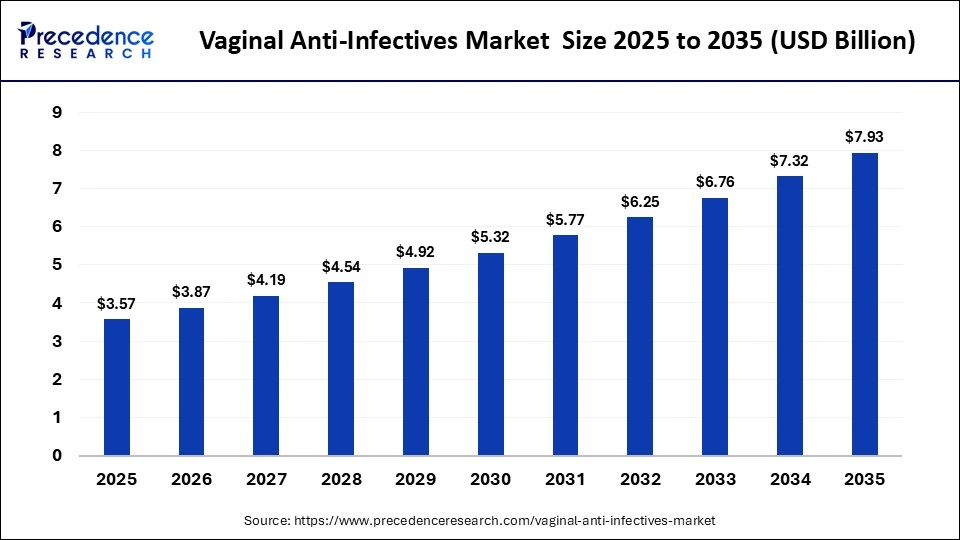
The global vaginal anti-infectives market size was calculated at USD 3.57 billion in 2025 and is predicted to increase from USD 3.87 billion in 2026 to approximately USD 7.93 billion by 2035, expanding at a CAGR of 8.30% from 2026 to 2035. The increasing prevalence of bacterial and fungal infections among women is driving the demand for vaginal anti-infectives, as healthcare providers seek effective treatment options to address these health concerns.
Market Highlights
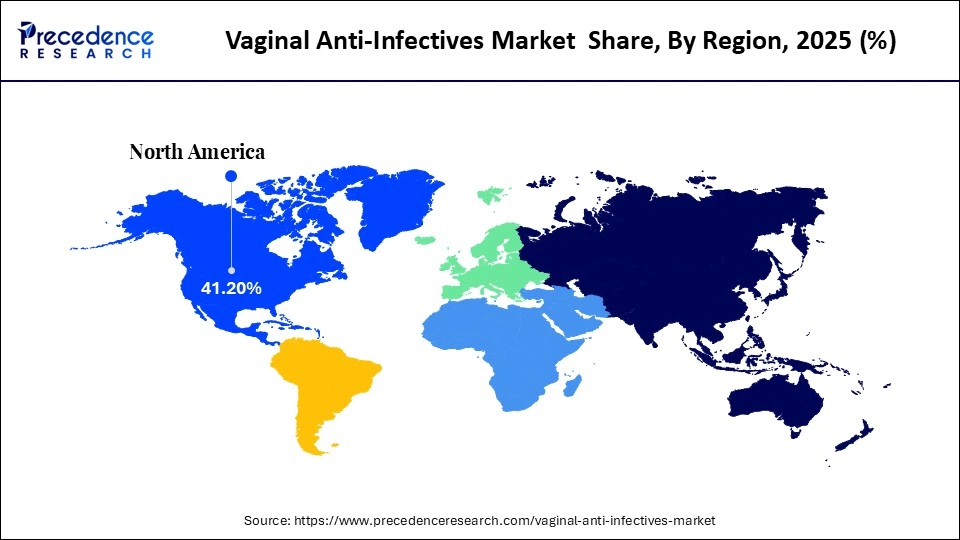
- North America dominated the global vaginal anti-infectives market with a share of approximately 41.2% in 2025.
- Asia-Pacific is expected to grow at the fastest CAGR of approximately 8.6% in the market during the forecast period.
- By drug class, the antibacterials segment dominated the market by holding a share of approximately 38.7% in 2025.
- By drug class, the hormone-based therapeutics segment is expected to grow at the fastest CAGR in the market between 2026 and 2035.
- By product type, the prescription segment accounted for a considerable revenue share of approximately 53.5% in the market in 2025.
- By product type, the over-the-counter (OTC) segment is expected to grow with the highest CAGR in the vaginal anti-infectives market during the studied years.
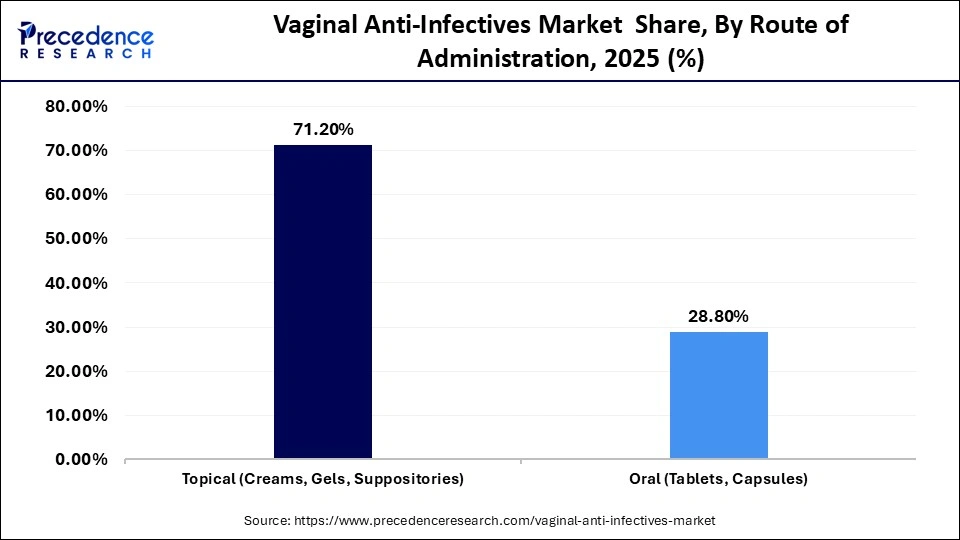
- By route of administration, the topical segment registered its dominance over the global market with a share of approximately 71.2% in 2025, and is expected to expand rapidly in the market in the coming years.
- By distribution channel, the retail pharmacies segment held a major revenue share of approximately 50.5% in the market in 2025.
- By distribution channel, the hospital pharmacies segment is expected to show the fastest growth over the forecast period.
Vaginal Anti-Infectives Market: Protecting Female Reproductive Health
The market comprises pharmaceutical agents and non-pharmaceutical formulations, including antifungal, antibacterial, and probiotics designed to treat infections such as bacterial vaginosis, vulvovaginal candidiasis, and trichomoniasis. In 2026, the market is characterized by a "microbiome-centric" approach, shifting toward treatments that preserve beneficial flora while targeting pathogens.
The market is experiencing robust growth, driven by the global prevalence of bacterial vaginosis, yeast infection, and sexually transmitted infections among women of all ages. The growing awareness of the issue of reproductive health, the availability of gynaecological services, and the growing popularity of local treatments contribute to the stable growth of the market. The reasons why vaginal formulations are preferred include the delivery of drugs being selective, decreased systemic adverse effects, and improved patient compliance.
Key Technological Advancements in the Vaginal Anti-Infectives Market
- Artificial intelligence (AI)-driven drug discovery platforms are accelerating the identification of new antifungal and antibacterial compounds with enhanced efficacy. The optimization of vaginal formulations is being refined through machine learning algorithms, which analyse pharmaceutical properties such as absorption rates, release kinetics, and interactions with the microbiome.
- Additionally, advanced digital health tools and AI-led diagnostic systems are enabling more accurate identification of infection types, facilitating personalized treatment strategies. Furthermore, the implementation of intelligent analytics in clinical trials is improving patient stratification, thereby streamlining the drug development process and reducing timelines for bringing new therapies to market.
Vaginal Anti-Infectives Market Trends
- Combination Therapies: The increasing popularity of localized and combination therapies aims at enhancing treatment outcomes. Combination therapies are designed to treat complex or mixed vaginal infections that are caused by multiple pathogens or to improve the cure rates of persistent, resistant conditions.
- Increasing Use of Probiotics: Patients are becoming aware of nutraceuticals or natural supplements and microbiome-friendly formulations to establish and maintain a healthy vaginal balance. Some common bacterial strains that improve vaginal health include Lactobacillus acidophilus, Lactobacillus rhamnosus, and Lactobacillus reuteri.
- Availability of OTC Medications: Some vaginal anti-infectives are available as OTC medications, enhancing the accessibility and affordability of such drugs. These OTC medications include antifungal creams and suppositories to relieve itching and discharge.
- Increasing Attention to Recurrent Infection Control: Several measures are undertaken to prevent the recurrence of vaginal infections. Healthcare providers prescribe long-term maintenance therapy to prevent chronic recurrence.
Market Scope
| Report Coverage | Details |
| Market Size in 2025 | USD 3.57 Billion |
| Market Size in 2026 | USD 3.87 Billion |
| Market Size by 2035 | USD 7.93 Billion |
| Market Growth Rate from 2026 to 2035 | CAGR of 8.30% |
| Dominating Region | North America |
| Fastest Growing Region | Asia Pacific |
| Base Year | 2025 |
| Forecast Period | 2026 to 2035 |
| Segments Covered | Drug Class, Product Type, Route of Administration, Distribution Channel, and Region |
| Regions Covered | North America, Europe, Asia-Pacific, Latin America, and Middle East & Africa |
Segmental Insights
Drug Class Insights
Why Did the Antibacterials Segment Dominate the Vaginal Anti-Infectives Market?
The antibacterials segment held a major revenue share of approximately 38.7% in the market in 2025, due to the high prevalence of bacterial vaginosis and mixed vaginal infections worldwide. These therapies are widely prescribed because of their proven efficacy, rapid symptom relief, and established clinical guidelines. Antibacterials are comparatively cost-effective and are easily available across all platforms. Strong physician preference and repeated use in recurrent infections continue to support market leadership. Ongoing formulation improvements are also enhancing local drug delivery and patient adherence.
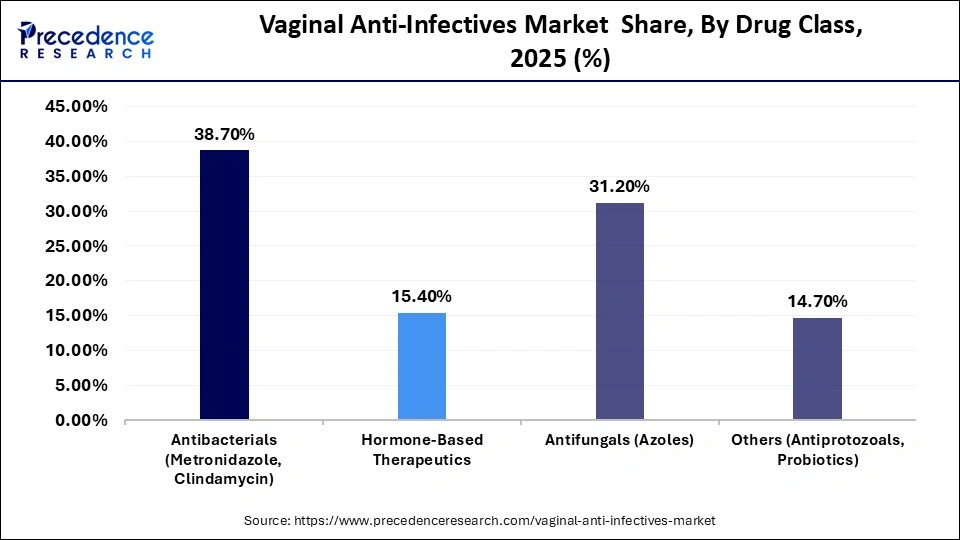
The hormone-based therapeutics segment is expected to show the fastest growth over the forecast period, driven by the increasing recognition of hormonal imbalance–related vaginal infections and atrophic vaginitis. Rising use among postmenopausal women and those undergoing hormonal therapies is accelerating demand. These products help restore vaginal epithelium health, reduce infection recurrence, and improve overall comfort. Growing awareness and expanding clinical indications are fueling rapid adoption.
Product Type Insights
How the Prescription Segment Dominated the Vaginal Anti-Infectives Market?
The prescription segment dominated the market by holding a share of approximately 53.5% in 2025, due to vaginal infections requiring physician diagnosis and targeted treatment. Regulatory oversight and clinical validation reinforce physician and patient confidence in prescribed therapies. Complex or recurrent infections further strengthen reliance on prescription medications. Continued innovation in combination and long-acting formulations supports sustained dominance.
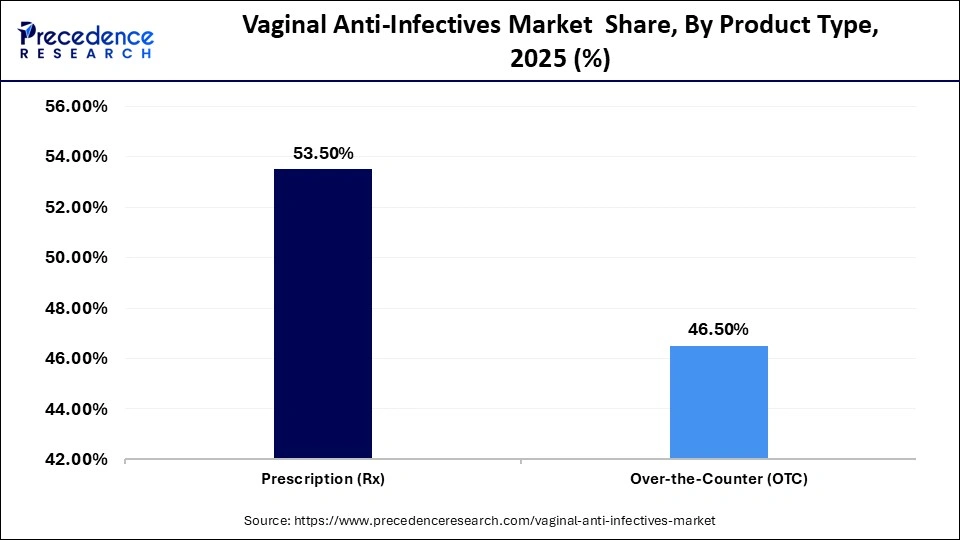
The over-the-counter segment is expected to gain the highest share of the market between 2026 and 2035, due to increasing consumer awareness and demand for convenient self-care options. OTC antifungal and pH-balancing products are widely used for mild and recurring symptoms. Expanded retail availability and discreet purchasing options are driving adoption. Regulatory approvals for more OTC switches are further accelerating growth.
Route of Administration Insights
What Made Topical the Dominant Segment in the Vaginal Anti-Infectives Market?
The topical segment accounted for the highest revenue share of approximately 71.2% in the market in 2025 and is expected to sustain its position during the forecast period, due to its localized action, reduced systemic exposure, and high patient compliance. Creams, gels, and suppositories are preferred for their rapid symptom relief and ease of use. These formulations minimize side effects while delivering high local drug concentrations. Strong clinical acceptance supports continued dominance.
Distribution Channel Insights
Which Distribution Channel Segment Led the Vaginal Anti-Infectives Market?
The retail pharmacies segment led the global market with a share of approximately 50.5% in 2025, due to their wide accessibility and strong presence in both urban and rural areas. They play a key role in dispensing prescription therapies and OTC products alike. Trusted pharmacist guidance enhances patient confidence and adherence. Expansion of chain pharmacies continues to strengthen this channel.
The hospital pharmacies segment is expected to grow with the highest CAGR in the market during the studied years, driven by rising inpatient treatments and specialized gynaecological care. Increasing hospitalization for complicated or recurrent infections is boosting demand. Hospitals also serve as key points for initiating advanced or combination therapies. The integration with electronic prescribing systems further supports the segment's growth.
Regional Insights
Why North America Dominated the Vaginal Anti-Infectives Market?
North America held the largest revenue share of approximately 41.2% in the market in 2025, due to high awareness of women's reproductive health, strong access to gynaecological care, and early adoption of advanced therapies. The region benefits from well-established healthcare infrastructure, widespread screening, and strong physician prescribing practices. High prevalence of recurrent vaginal infections and favorable reimbursement policies further support sustained demand. Continuous product innovation and regulatory clarity reinforce North America's market leadership.
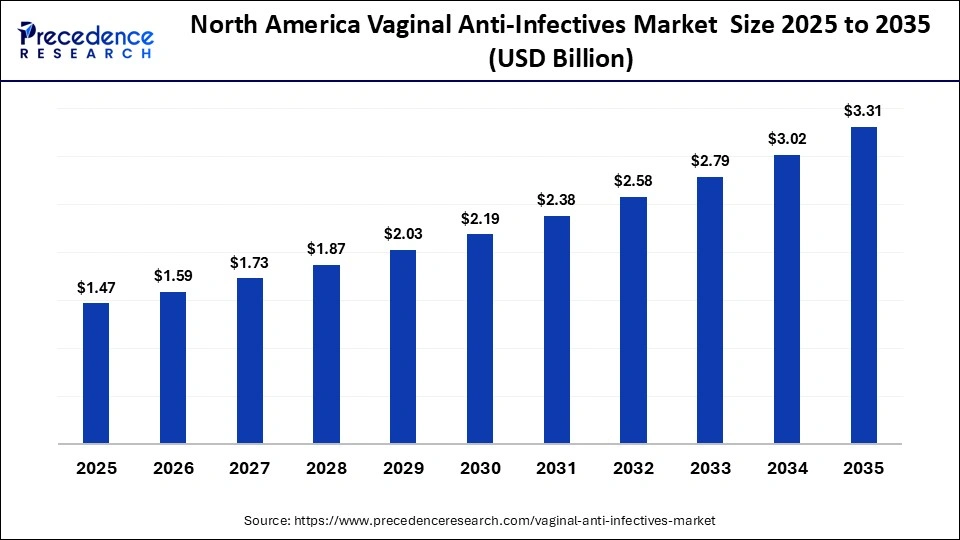
How Big is the North America Vaginal Anti-Infectives Market Size?
The North America vaginal anti-infectives market size was estimated at USD 1.47 billion in 2025 and is projected to reach approximately USD 3.31 billion by 2035, with a 8.46% CAGR from 2026 to 2035.
U.S. Country-level Analysis
At the country level, the U.S. accounts for the largest regional share, driven by high diagnostic rates, strong OTC penetration, and the presence of major pharmaceutical players. Robust clinical guidelines and patient education programs encourage early treatment adoption. Canada contributes steadily through universal healthcare coverage and a strong focus on preventive women's health services. Together, these factors ensure consistent growth across the region.
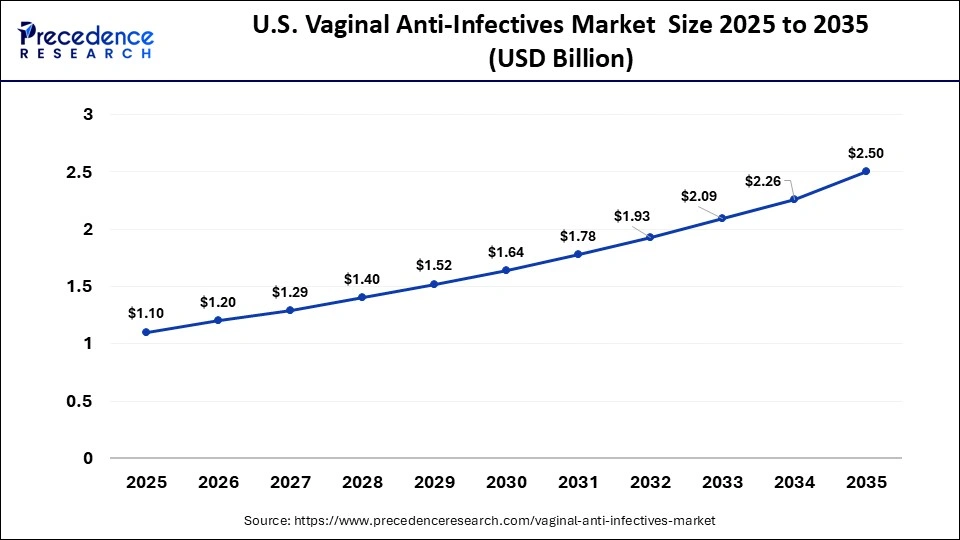
What is the Size of the U.S. Vaginal Anti-Infectives Market?
The U.S. vaginal anti-infectives market size was calculated at USD 1.10 billion in 2025 and is expected to reach nearly USD 2.50 billion in 2035, accelerating at a strong CAGR of 8.56% between 2026 and 2035.
How is Asia-Pacific Growing in the Vaginal Anti-Infectives Market?
Asia-Pacific is expected to witness the fastest growth with a CAGR of approximately 8.6% during the predicted timeframe, supported by rising awareness of vaginal health, expanding access to healthcare, and increasing urbanization. Growth is further fueled by improving diagnostic capabilities and greater acceptance of gynecological treatments. Large female populations and an increasing incidence of vaginal infections create a strong demand base. Government initiatives focused on women's health and maternal care are also accelerating market expansion.
China Vaginal Anti-Infectives Market Analysis
At the country level, China leads growth due to improving healthcare infrastructure and rising use of prescription and OTC therapies. India is witnessing rapid expansion, driven by growing awareness, increased gynecology consultations, and affordable generic formulations. Japan contributes through strong clinical standards and the adoption of hormone-based therapies among aging populations. Collectively, these countries are shaping the Asia-Pacific into the fastest-growing regional market.
Will Europe Grow in the Vaginal Anti-Infectives Market?
Europe stands out as a notable region in the market, driven by a growing awareness of women's health issues and advancements in treatment options. The increasing prevalence of infections, coupled with a supportive regulatory environment, facilitates innovation in this sector. Additionally, the region's strong healthcare infrastructure provides comprehensive support for research and development, enabling companies to bring effective products to market. This landscape positions Europe to significantly influence global trends and practices in vaginal health management.
Germany Vaginal Anti-Infectives Market Analysis
When analyzing key countries, Germany emerges as a frontrunner, attributed to its robust pharmaceutical industry and high healthcare spending. France exhibits a growing demand for women's health products, encouraged by increasing health initiatives and public awareness campaigns. The United Kingdom is seeing a shift towards over-the-counter solutions for common vaginal infections, making treatment more accessible to women. Lastly, Italy demonstrates a rising interest in localized therapies, contributing to a dynamic market poised for growth in the coming years.
Why Latin America is Growing in the Vaginal Anti-Infectives Market?
Latin America is expected to grow significantly in the coming years. The growing functional infections and the rising women's health awareness increase the adoption of vaginal anti-infectives. The popularity of microbiome-supportive therapies helps with expansion. The burgeoning conditions, like bacterial vaginosis, and the increased utilization of vaginal creams, drive the market growth.
Brazil Vaginal Anti-Infectives Market Trends
Brazil is rapidly growing in the Latin American market due to the growing incidence of vulvovaginal candidiasis. Increased knowledge about intimate wellness and the focus on treating mild infections increases the adoption of vaginal anti-infectives. The growing gynecological infections and the rise in the use of specialized vaginal products support the market growth.
How is the Middle East and Africa Growing in the Vaginal Anti-Infectives Market?
The Middle East and Africa region is expected to grow substantially during the forecast period. The high incidence of vaginal infections and the prevalence of HIV increase demand for vaginal anti-infectives. The increased rate of yeast infections and the presence of government-based initiatives increase vaginal anti-infectives adoption. The rise in bacterial vaginosis and the expansion of antifungal topicals drive the market growth.
Saudi Arabia Vaginal Anti-Infectives Market Trends
Saudi Arabia is a key player in the MEA market. The high rate of vulvovaginal candidiasis and the rising feminine health awareness increase demand for vaginal anti-infectives. The expansion of the feminine hygiene industry and the growing vaginal infections increase the use of vaginal anti-infectives. The utilization of eco-friendly products supports the market growth.
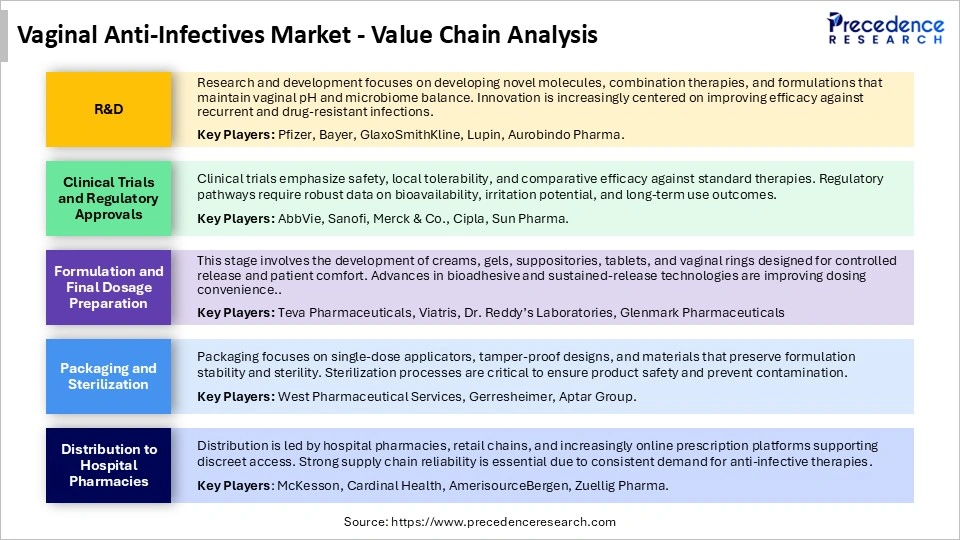
Supply Chain Analysis - Vaginal Anti-Infectives Market
- R&D: R&D initiatives in the market focus on discovering new anti-infective types for both antifungal and antibacterial treatment, means of treatment delivery, and improved treatment efficacy.
Key Players: Pfizer, Bayer AG, GlaxoSmithKline, Novartis, Sanofi - Clinical Trials and Regulatory Approvals: To evaluate an anti-infective product for tolerability, safety, and effectiveness before the product can be made commercial and sold in the vaginal marketplace, clinical trials are used.
Key Players: Pfizer, Merck & Co., AstraZeneca, Johnson & Johnson, AbbVie - Patient Support and Services: Healthcare counselling services, provision and delivery of education and patient counselling on medicines, and provision of e-health services are enabling patients to get assisted and supported to enhance medicine awareness and acceptance.
Key Players: Bayer AG, Pfizer, GlaxoSmithKline, Sanofi, Cipla
Vaginal Anti-Infectives Market Value Chain Analysis
Quick Picks: Lesser-Known Facts About the Vaginal Anti-Infectives Industry
- Some vaginal anti-infectives are designed to work with the vaginal microbiome, not against it, preserving beneficial Lactobacillus strains while eliminating pathogens.
- Early vaginal treatments in the 1950s were often compounded in hospital pharmacies, long before standardized commercial formulations became common.
- Vaginal drug delivery can achieve higher local drug concentrations than oral therapy, even with significantly lower doses.
- Certain modern formulations use bioadhesive polymers that allow the drug to stay in place for extended periods, improving overnight efficacy.
- Hormone-based vaginal therapies were originally developed for menopause symptoms but later showed infection-reducing benefits, expanding their market role.
- Regulatory agencies require vaginal products to undergo irritation and mucosal safety testing that is more stringent than for many oral drugs.
- In many regions, recurrent vaginal infections drive repeat purchases, making patient adherence a key commercial factor.
- Cultural stigma around vaginal health historically slowed market growth, making education and discreet packaging a quiet but powerful industry driver.
Top Companies in the Vaginal Anti-Infectives Market
- Pfizer Inc.: The biopharmaceutical company offers vaginal health products like CLEOCIN Vaginal Ovules, ESTRING, CLEOCIN Vaginal Cream 2%, PREMARIN Vaginal Cream, and DIFLUCAN.
- Bayer AG: The German-based company manufactures bacterial vaginosis treatment and antifungal treatment products under the brand names Canesten and CanesBalance.
- Teva Pharmaceutical Industries Ltd.: The Israel-based company manufactures vaginal anti-infectives like Metronidazole, Nystatin Ointment, USP, and many others.
- Lupin Limited: The Mumbai-based company manufactures products like Vaginal Atrophy Treatments, SOLOSEC 2g Oral Granules, and Generic Anti-Infectives for women's health.
- Sanofi S.A.: The France-based company manufactures anti-infective products and antibiotic-based therapies for women's vaginal health.
Recent Developments
- In August 2025, MIT researchers designed novel antibiotics to combat two hard-to-treat infections, including drug-resistant Neisseria gonorrhoeae and multidrug-resistant Staphylococcus aureus, using AI. Generative AI enabled researchers to generate and evaluate theoretical compounds that were never seen before to identify and design compounds with activity against other bacterial species. (Source: https://news.mit.edu)
- In May 2024, Seed, a microbiome science company, announced the launch of a new vaginal suppository to help women maintain a more stable vaginal microbiome. The new suppository can treat urinary tract infections, bacterial vaginosis, and yeast infections, among other urogenital conditions.(Source: https://www.forbes.com)
Segments Covered in the Report
By Drug Class
- Antibacterials
- Hormone-based therapeutics:
- Antifungals
- Others
By Product Type
- Prescription (Rx)
- Over-the-Counter
By Route of Administration
- Topical
- Oral
By Distribution Channel
- Retail Pharmacies
- Hospital Pharmacies
- Online/E-Pharmacies
By Region
- North America
- Europe
- Asia-Pacific
- Latin America
- Middle East & Africa
For inquiries regarding discounts, bulk purchases, or customization requests, please contact us at sales@precedenceresearch.com
Frequently Asked Questions





Ask For Sample
No cookie-cutter, only authentic analysis – take the 1st step to become a Precedence Research client
 Get a Sample
.webp)



 sales@precedenceresearch.com
 Schedule a Meeting
