



Virtual ICU Market Size, Key Companies, Company Market Share, Patient Volume, Treatment Adoption Rates, Pricing Analysis, Regulatory Landscape, Competitive Positioning, and Demand Forecast
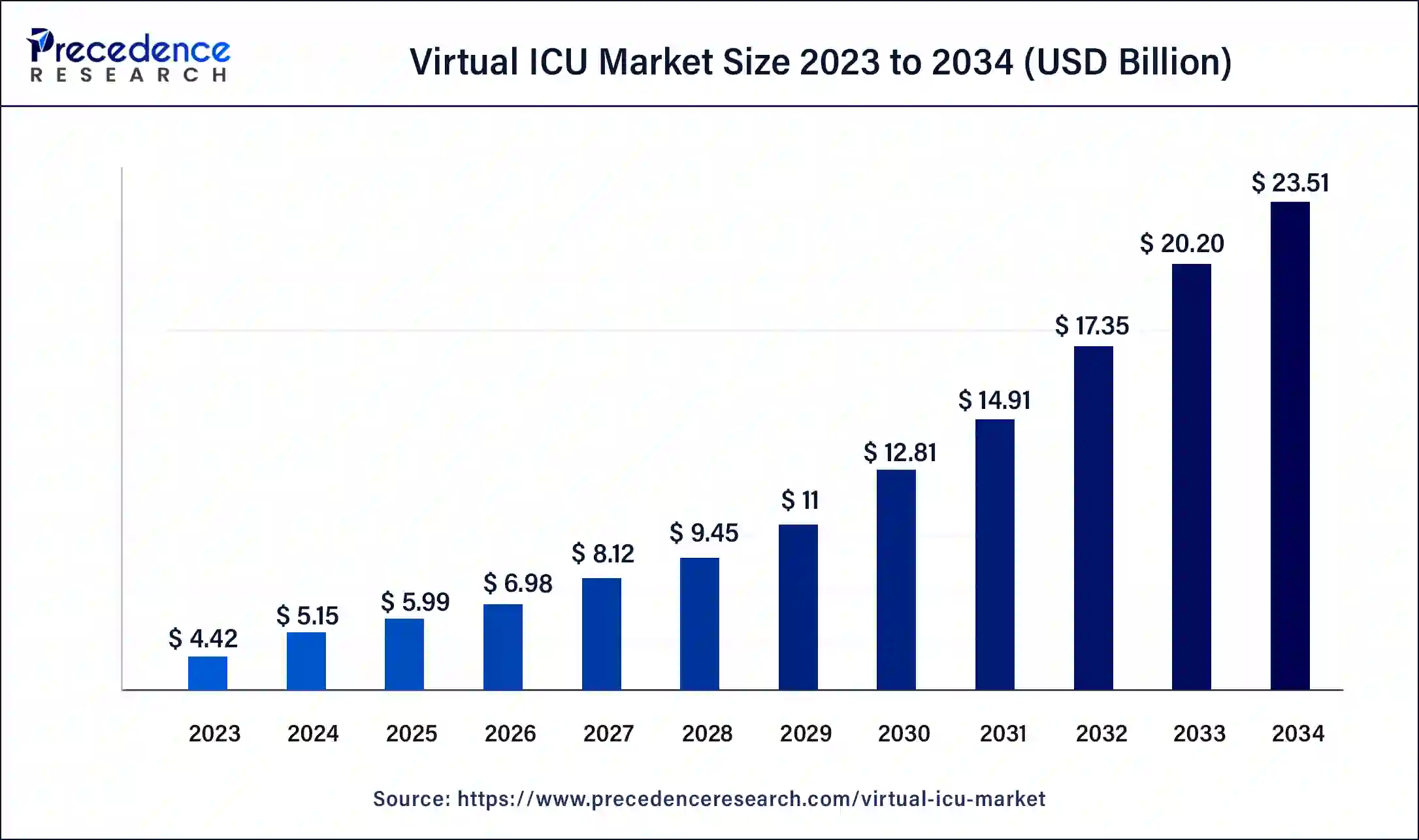
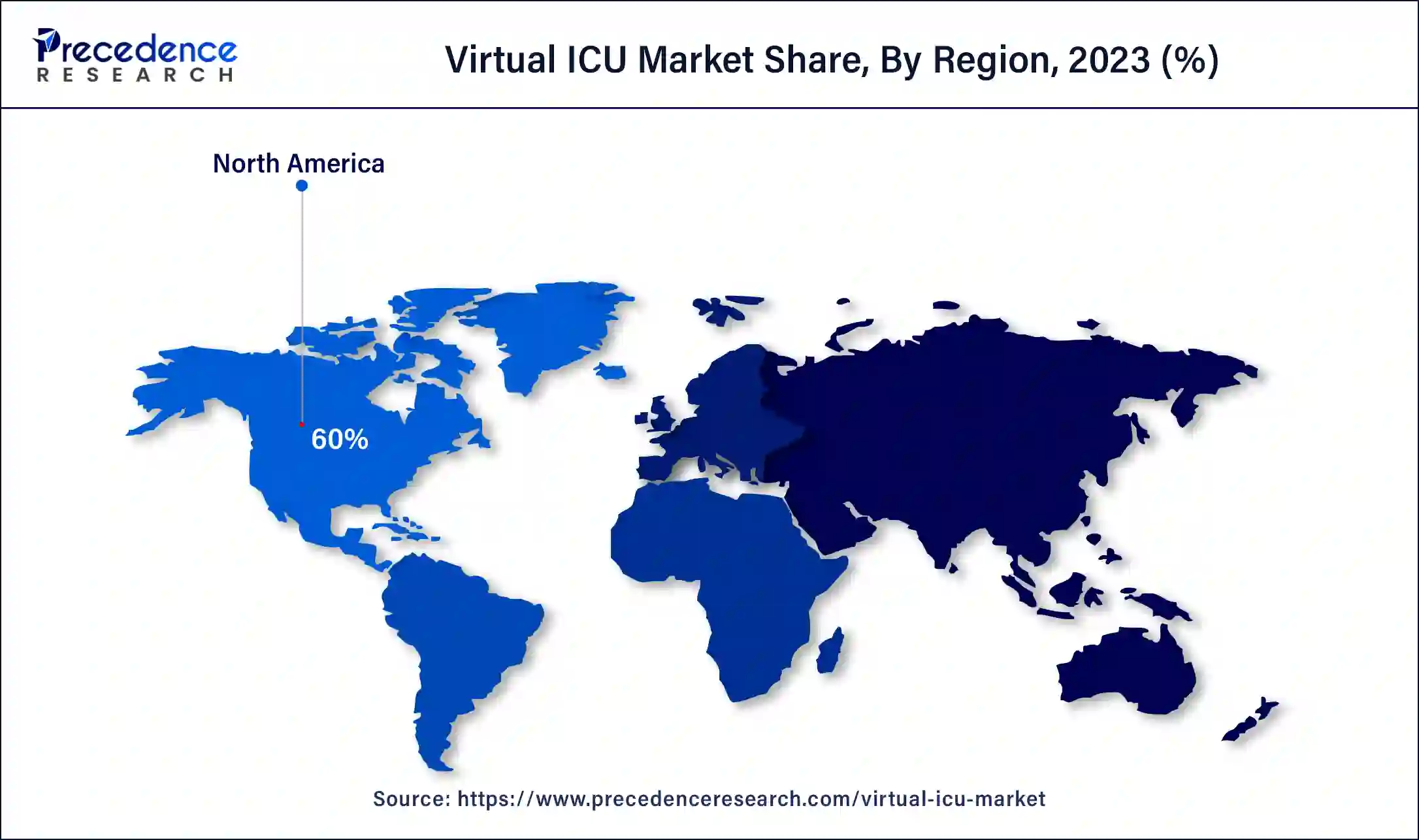
The global virtual ICU market is projected to grow from USD 91.54 billion in 2026 to USD 127.78 billion by 2035, registering a CAGR of 16.04%. Growth is driven by the rising adoption of telemedicine, increasing demand for remote critical care, expanding AI-powered patient monitoring, growing shortage of intensivists, and advancements in digital health infrastructure, 5G connectivity, and real-time analytics. North America dominated the market in 2025 with a 60% share, supported by advanced healthcare infrastructure and widespread adoption of virtual care technologies, while Asia Pacific is expected to witness the fastest growth due to improving healthcare infrastructure, rapid digitalization, supportive government initiatives, and increasing demand for remote ICU monitoring solutions.
Source: https://www.precedenceresearch.com/virtual-icu-market
 Get a Sample
 Table Of Content


What is the Virtual ICU Market Size?
The global virtual ICU market size accounted for USD 88.19 billion in 2025 and is predicted to increase from USD 91.54 billion in 2026 to approximately USD 127.78 billion by 2035, at a CAGR of 16.04% from 2026 to 2035. The North America virtual ICU market size reached USD 2.65 billion in 2025. Virtualization has taken a toll on the medical industry with the 5G boon and monitoring advancements. The cost-saving strategy in healthcare is valued due to the modern syllabus. The diversifying patterns are deploying expertise in virtualization.
Virtual ICU Market Key Takeaways
- North America led the global market with the highest market share of 60% in 2025.
- By type, the open with consultants segment has held the largest market share of 40% in 2025.
- By component, the hardware segment captured the biggest revenue share of 85% in 2025.
Market Overview
The virtual ICU is a remarkable technology involving the integration of power to enable nurses and professionals to read the expert view of crucial patient care. Precision patient care is a pressure on the medical community. This pressure has many tech solutions involving this virtual advantage. The expertise indication and the display teams command together give a definition to this market growth. The integration of accurate devices and systems into virtual plans consists of digital sensors, cameras, microphones and quality screening to ensure transparency in patient care. The virtual staff introduces smart video call beside the professionals and nurses for attentive treatment. The real-time advantage to the staff saves lives and time to make an accurate move. The huge hospital and various rooms create an expected distance for a professional to reach and a patient to survive. To reduce this distance, the various monitoring solutions work as a boon to the patients' lives. The technological companion accelerates the market dominance in the healthcare industry.
How is AI contributing to the Virtual ICU Market?
AI is a major support to the Virtual ICU market as it implements remote monitoring, thereby allowing patient assessments to continue and to assist in decision-making based on algorithm alerts. It also helps the intensivists by giving them predictive insights and boosting care coordination. Moreover, it cuts down the involvement of the staff in the less important tasks. The hospitals get warned early through AI-based analytics about the patient's health getting worse, and then they can apply timely care interventions.
Virtual ICU Market Growth Factors
The virtual ICU is gaining rapid traction since 2020 owing to the outbreak of the COVID-19 pandemic. The virtual ICU is a part of the telemedicine industry that gained rapid traction and increased adoption rate among the consumers since the COVID-19 outbreak. The tele-ICU or the virtual ICU market is expected to grow rapidly during the forecast period owing to its rising adoption across the globe. The virtual ICU deals with the critical care of the patient in a healthcare unit. Major advantage of the virtual ICU is that it connects the critical care team, who is at a distant location to the intensive care unit team in the hospital through video communication and analytics or monitoring system. The hardware of the virtual ICU collects the patients' data and communicates it to the physician or the intensivist at a distant location. The lack of adequate number of intensivist is a major driving force of the global virtual ICU market.
The rising number of hospitals across the globe coupled with the growing number of intensive care units across the hospitals is significantly expected to boost the adoption of the virtual ICU during the forecast period. Further, the rising investments by the hospitals to increase operational efficiency by adopting advanced technologies and communication system is a major driver of the virtual ICU market. Further, the rising prevalence of chronic diseases and rising number of road accidents is expected to boost the adoption of the virtual ICU in the hospitals. According to the World Health Organization, around 1.3 million people die each year due to road accidents. Further, rising burden of diseases coupled with growing geriatric population are the factors that boosts the demand for the virtual ICU. The rapid penetration of the digital or virtual technologies across healthcare sector is facilitating the growth of the virtual ICU market, globally.
Market Outlook
- Industry Growth Overview: The expansion of critical care telehealth has been supported by the infrastructure evolution of General Electric and Philips, thus enabling the growth.
- Sustainability Trends: Digitalized workflows supported by Philips and General Electric efforts in sustainability highlight reduced transfers and optimized staffing.
- Global Expansion: The demand for remote care is resulting in the global service expansion with the participation of specialized venture capital firms and General Electric.
- Major Investors: The progress of strategic collaborations is characterized by the advancement of AI-enabled virtual care; Philips, General Electric, and venture firms invested in it.
- Startup Ecosystem: Startups are coming up with new monitoring intelligence, backed by General Electric, Philips, and health-focused venture capital funds.
Market Scope
| Report Highlights | Details |
| Market Size By 2035 | USD 127.78 Billion |
| Market Size in 2025 | USD 88.19 Billion |
| Market Size in 2026 | USD 91.54 Billion |
| Growth Rate from 2026 to 2035 | CAGR of 16.04% |
| Largest Market | North America |
| Fastest Growing Market | Asia Pacific |
| Base Year | 2025 |
| Forecast Period | 2026 to 2035 |
| Segments Covered | Type, Component, and regions |
| Regions Covered | North America, Asia Pacific, Europe, Latin America, Middle East and Africa |
Segment Insights
Type Insights
Based on type, the open with consultants segment dominated for more than 40% of the market share in 2023 and is estimated to sustain its dominance during the forecast period. This can be attributed to the extensive use of the virtual ICU open with consultants in hospitals owing to its high efficiency. The rising government investments in the development of better healthcare infrastructure are expected to boost the adoption of the virtual ICU and fuel the growth of this segment.
On the other hand, the intensivist segment is estimated to be the most opportunistic segment during the forecast period. The major issue persists with the ICU is the lack of adequate number of intensivist in the healthcare sector. The virtual ICU effectively communicates and connects the intensivist at a distant location to the ICU members to guide regarding the clinical decisions that may help to save the patients' lives. The number of intensivist is expected rise in the upcoming years, which will further fuel the growth of the market.
Component Insights
Based on component, the hardware segment accounted for more than 85% of the market share in 2023 and is estimated to sustain its dominance during the forecast period. The hardware consists of wide variety of devices and are extensively used in the hospitals. Various hardware are used consists of mobile frame, communication lines, computer systems, therapeutic devices, video feed, and various others. The extensive usage along with the high prices of the hardware has resulted in huge revenue generated by this segment.
On the other hand, the software segment is anticipated to be the fastest-growing segment during the forecast period. The rapid development and updates in the software system to enhance the efficiency and effectiveness of the virtual ICU hardware is exponentially boosting the segment growth. Moreover, it plays an important role in remotely monitoring the patient's condition, thereby saving his life. This factor is boosting the growth of this segment.
Regional Insights
Why Does North America Dominate the Global Virtual ICU Market?
North America accounted for around 60% of the market share. The increasing prevalence of chronic diseases and growing geriatric population in the major economy like US is significantly driving the demand for the virtual ICU in the region. Moreover, the increased demand for the advanced healthcare related devices and software in the region coupled with the developed healthcare infrastructure that facilitates the rapid adoption of advanced technologies is exponentially contributing towards the growth of the North America virtual ICU market.
What is the U.S. Virtual ICU Market Size?
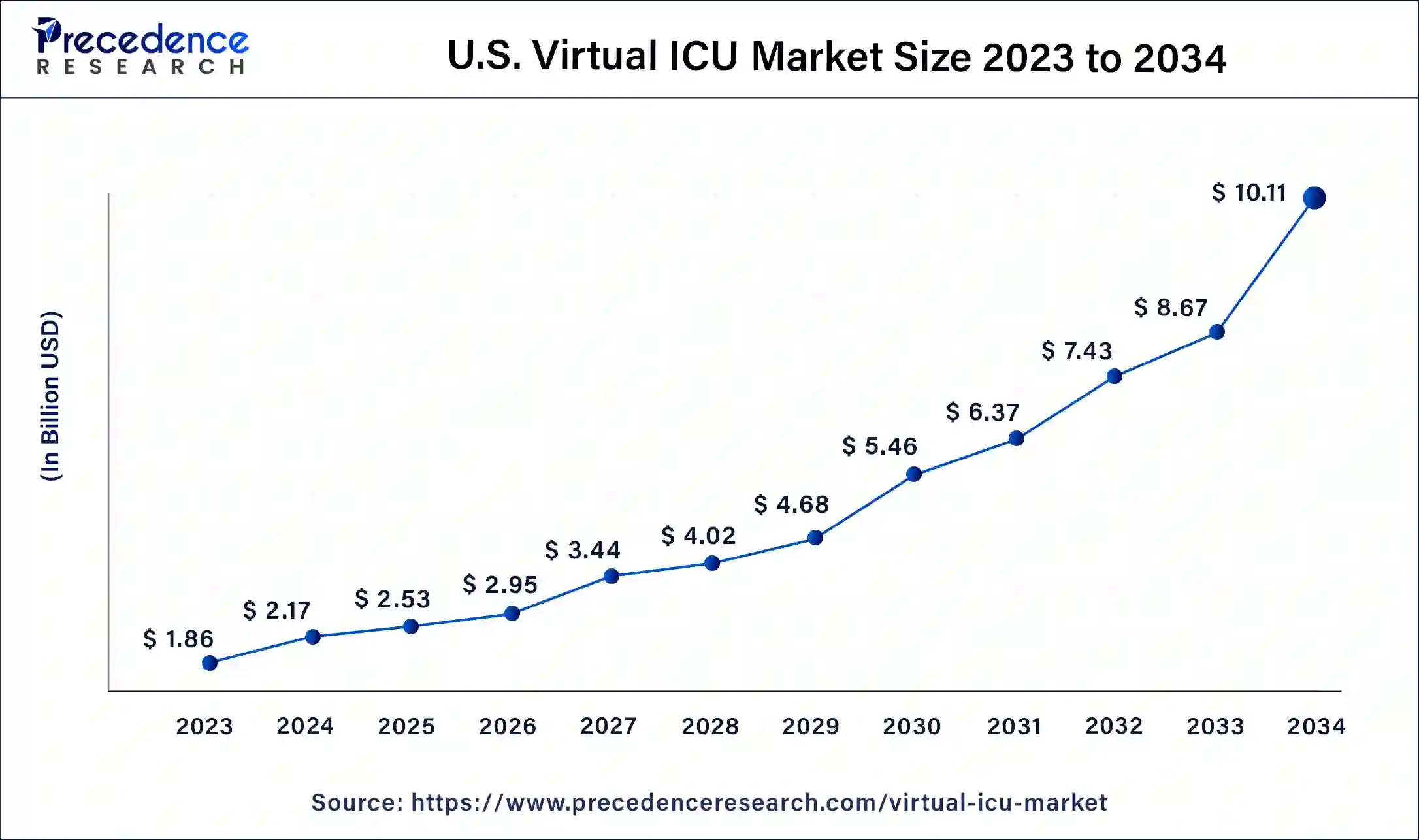
The U.S. virtual ICU market size was estimated at USD 5.99 billion in 2025 and is predicted to be worth around USD 26.51 billion by 2035, at a CAGR of 16.04% from 2026 to 2035.
Why Is Asia Pacific the Fastest-Growing Virtual ICU Market?
Asia Pacific is estimated to be the most opportunistic market during the forecast period. The rising awareness regarding the virtual ICU systems along with the rapidly growing healthcare infrastructure in the region is propelling the growth of the market. Further, rapidly growing IT infrastructure and digital communications across the developing nations like China, India, and South Korea is significantly expected to drive the demand for the virtual ICU in the region, in the upcoming future. Furthermore, the increasing number of patients along with the government policies regarding the adoption of electronic medical devices is expected to boost the market growth.
What are the driving factors of the Virtual ICU Market in Europe?
Adoption is accelerating with supportive digital health policies and rising chronic disease management needs. Public health systems integrate virtual ICUs to optimize resources, while regulatory support and focus on interoperability drive expansion across hospitals transitioning toward connected critical care delivery models.
United Kingdom Virtual ICU Market Trends
Opportunity grows with varying critical care capacity and intensivist shortages. The NHS supports virtual ward integration, promoting remote patient monitoring and improved care navigation. Digital infrastructure focus strengthens nationwide adoption, enhancing.
Latin America's Strength in the Market
Latin America market is considered to be a significantly growing area, due to its strength and acceptance of trust and deployment of virtual care. The smart infrastructure and regional government goals to leverage medical developmental progress are hand-in-hand efforts that might soon mark a milestone record in favor of the regional market. The countryside general clinical trials and public-private hospital engagements are a trending support for the precision care smart alternatives. Brazil's kind intention to meet the virtual needs of the remote areas is a awareness and market footprint growth. This not only leads towards the expansion but the standardized care for all individuals. The commendable Tele-ICU programs allow the government to focus on the specialization advantages for crucial patient care. The workshop and academic initiatives bring the regional market into the limelight of the medical industry.
MEA's Commitment in the Market
MEA market is expected to grow at a notable CAGR in the foreseeable future. The commitment to successful development meets the needs of the crucial advanced treatments. The quality of treatments is highly valued alongside the quality of patient care. Following this promising statement, the regional market is initiating the expertise and modern technologies to serve the specializations. The acceptance of digitization is a call for connectivity and analytical solutions to shed light on the healthcare ICU needs. The ICU spectrum holds a primary responsibility for timely medications and scheduled follow-up or treatments. This has moved regional tech and medical leaders to start with virtual services.
UAE's smart use of AI in monitoring advances is promoting the worth of Dubai Health and technology momentum. The alliances are meeting regulatory requirements, with a mission for modernized healthcare staff and infrastructure.
Value Chain Analysis
- R&D: Research and develop new software, AI algorithms, and protocols to improve outcomes.
Key Players: fizer, Merck & Co., Johnson & Johnson (J&J) - Clinical Trials and Regulatory Approvals: Validate effectiveness, safety, and secure required remote care certifications.
Key Players: IQVIA, Parexel, and Syneos Health - Formulation and Final Dosage Preparation: Inapplicable stage for service-based Virtual ICU models.
Key Players: Sun Pharmaceutical Industries, Cipla, and Dr. Reddy's Laboratories - Packaging and Serialization: Inapplicable stage as Virtual ICU involves no physical medical product.
Key players: Amcor plc, Gerresheimer AG, and Schott AG - Distribution to Hospitals, Pharmacies: Implement and integrate virtual care services across clinical networks.
Key players: McKesson, Cardinal Health, and AmerisourceBergen
Virtual ICU Market Companies
- Advanced ICU Care: Care The company promotes and provides its services nonstop remote monitoring and specialist guidance, improving ICU safety, supporting the workflow, and being efficient in-patient clinical management.
- INOVA: The firm provides real-time telemedicine monitoring with treatment support that collaborates, bringing critical care specialists into the patient data streams without interruption.
- Banner Health: The service features the remote oversight of audiovisual systems with secure connections twenty-four hours a day and supports bedside clinicians through improved responsiveness.
Other Major Key players
- Philips
- iMDsoft
- InTouch health
- UPMC Italy
- INTELEICU
- Tele-ICU
- VISICU
Key Companies Share Insights
The market is moderately fragmented with the presence of several local companies. These market players are striving to gain higher market share by adopting strategies, such as investments, partnerships, and acquisitions & mergers. Companies are also spending on the development of improved products. Moreover, they are also focusing on maintaining competitive pricing.
In January 2018, Advanced ICU Care and Florida Hospital New Smyrna entered into a partnership provide virtual ICU services to the critically ill patients who need intensive care.
In April 2017, Philips introduced virtual health software named eCareManager4.1 at the American Telemedicine Association trade show, to strengthen its foothold in the market.
The various developmental strategies like partnerships and new product launches with latest and innovative features fosters market growth and offers lucrative growth opportunities to the market players.
Recent Developments
- In December 2025, Tallaght University Hospital launched a Virtual ICU Tour to aid critical illness survivors and their families in understanding their intensive care experience, supported by the Adelaide Health Foundation and reflecting TUH's commitment to patient-centred care. (Source: https://www.echo.ie)
- In October 2025, Dubai Health's pilot project introduces a Virtual ICU at Al Jalila Children's Hospital, utilizing AI for real-time patient monitoring, early distress detection, and immediate nurse alerts through advanced cameras and data analytics. (Source: https://www.digitalhealthnews.com)
Segments Covered in the Report
By Type
- Intensivist
- Co-managed
- Open
- Open with Consultants
By Component
- Software
- Hardware
- Communication Lines
- Physiological Monitors
- Computer Systems
- Therapeutic Devices
- Display Panels
- Others
By Geography
- North America
- Europe
- Asia Pacific
- Rest of the World
For inquiries regarding discounts, bulk purchases, or customization requests, please contact us at sales@precedenceresearch.com
Frequently Asked Questions
Tags





Ask For Sample
No cookie-cutter, only authentic analysis – take the 1st step to become a Precedence Research client
 Get a Sample
.webp)



 sales@precedenceresearch.com
 Schedule a Meeting
