



Workplace Transformation Market Size, Key Companies, Company Market Share, User Adoption, Technology Deployment, Revenue Growth, Competitive Positioning, and Demand Forecast
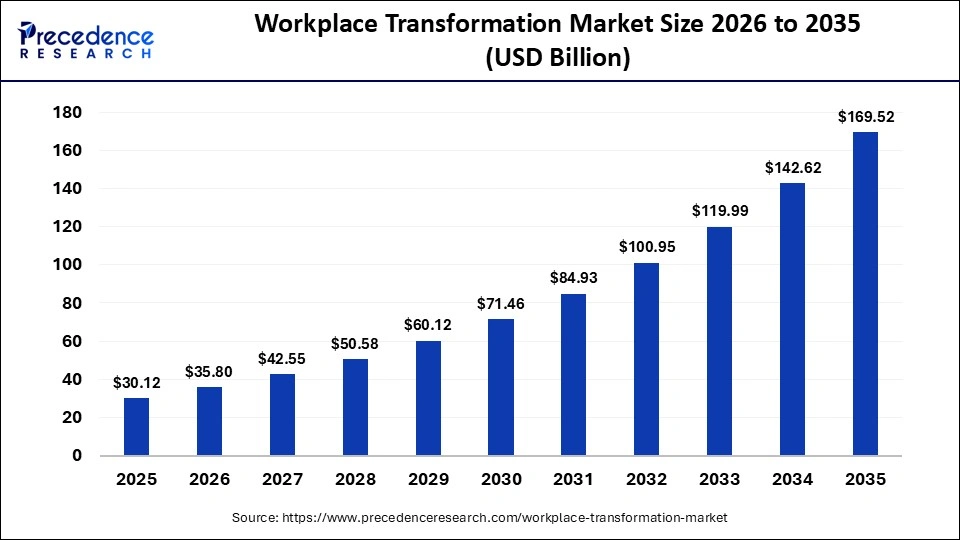
ICT industry specialist Shivani Zoting estimates the workplace transformation market at USD 35.80 billion in 2026, with continued technology adoption expected to take the market to USD 169.52 billion by 2035 at a CAGR of 18.86%. Leading workplace transformation market providers such as Microsoft, Google, Hewlett Packard Enterprise are expanding their capabilities across segments including product type, application, technology, end-user, service type, region.
Source: https://www.precedenceresearch.com/workplace-transformation-market
 Get a Sample
 Table Of Content


What is the Workplace Transformation Market Size?
The global workplace transformation market size is calculated at USD 30.12 billion in 2025 and is predicted to increase from USD 35.80 billion in 2026 to approximately USD 169.52 billion by 2035, expanding at a CAGR of 18.86% from 2026 to 2035. The market is rapidly expanding as organizations adopt digital, flexible, and collaborative solutions to enhance productivity, employee experience, and operational efficiency.
Market Highlights
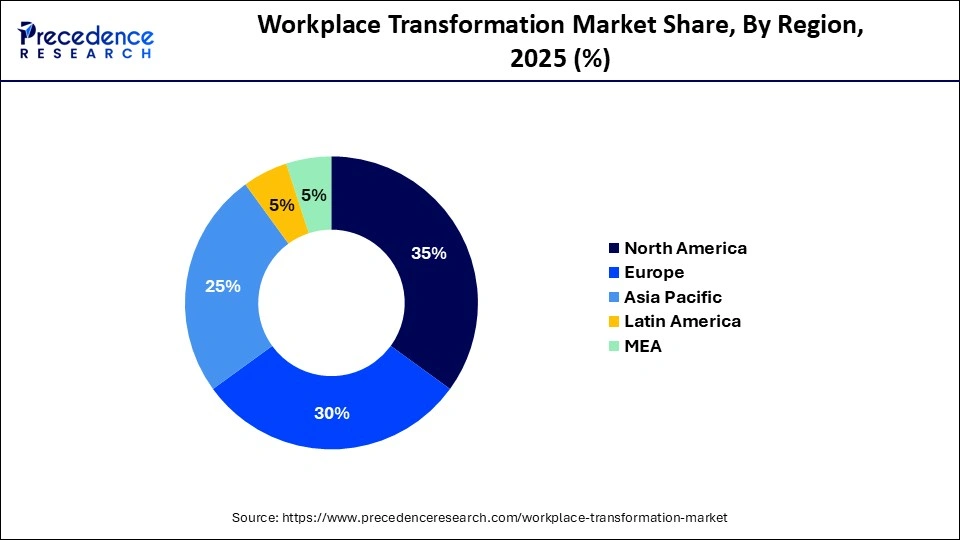
- North America dominated the market with the largest market share of 35% share in 2025.
- The Asia Pacific is expected to grow at the fastest CAGR from 2026 to 2035.
- By product type, the digital workplace solutions segment led the market while holding the biggest share of 35% in 2025.
- By product type, the cloud & virtualization tools segment is growing at a strong CAGR between 2026 and 2035.
- By application, the digital transformation and modernization segment contributed the highest market share of 40% in 2025.
- By application, the remote & hybrid work enablement segment is poised to grow at a healthy CAGR from 2026 to 2035.
- By technology, the cloud computing technologies segment held more than 35% of the market share in 2025.
- By technology, the artificial intelligence & machine learning segment is growing at a noteworthy CAGR from 2026 to 2035.
- By end-user, the large enterprises segment captured the highest market share of 45% in 2025.
- By end-user, the small & medium enterprises segment is projected to grow at a remarkable CAGR from 2026 to 2035.
- By service type, the IT & infrastructure management services segment accounted for the major market share of 35% in 2025.
What is the Workplace Transformation Market?
The workplace transformation market encompasses a broad set of solutions, technologies, and services designed to modernize traditional work environments and enhance workforce productivity, collaboration, and operational efficiency. It includes digital workplace platforms, cloud-enabled tools, mobility solutions, unified communication systems, automation, and smart office technologies that help organizations transition toward flexible, hybrid, and agile work models. Driven by rapid digitalization, post-pandemic adoption of hybrid work, an increasing emphasis on employee experience, and the integration of AI-driven workflows, the market focuses on optimizing workplace infrastructure, streamlining IT operations, enabling secure remote work, and reshaping physical office layouts through intelligent workplace design. Organizations across sectors are leveraging workplace transformation initiatives to improve business continuity, strengthen collaboration, reduce operational costs, and support the adoption of long-term digital strategies.
Key Technological Shifts in the Workplace Transformation Market
The workplace transformation sector is being reshaped by a wave of emerging technologies that change how employees work, collaborate, and connect. AI-driven, digitally integrated workplaces now leverage virtual assistants, automation, and adaptive workflows to streamline operations across HR, project management, and other functions. Cloud-native collaboration tools make it easier for cross-border teams to work seamlessly across devices and time zones, while digital twins allow organizations to simulate space usage, resource allocation, and employee movement to optimize real estate decisions. Meanwhile, augmented and virtual reality technologies are redefining training, remote maintenance, and immersive collaboration, driving the shift toward more agile, intelligent, and experience-focused work ecosystems.
Key Market Trends in the Workplace Transformation Market
- Hybrid working models are gaining traction, where companies combine physical presence with digital collaboration to increase flexibility and the well-being of employees.
- To create a more engaging and enjoyable work environment, Human Resources departments often organize various events to break up the monotony of daily routines. These efforts aim to boost employee morale and strengthen team bonds, giving staff opportunities to participate in activities that differ from their usual work tasks
- Organizations are investing heavily in experience-centered workplaces, focusing on ergonomics, mental wellness, smart sensors, and real-time analytics to boost engagement.
- The market is shifting from only digital enablement to a fully human-centric approach, where technology enhances both organizational efficiency and employee empowerment.
Workplace Transformation Market Outlook
- Industry Growth Overview: The workplace transformation market is set to experience significant growth from 2026 to 2035. The primary drivers influencing the market include the demand for AI-powered automation, cloud-native collaboration tools, and digital twins to optimize operations and the employee experience. Rising adoption of AR/VR for training, remote work solutions, and experience-driven workplaces further fuels the market expansion.
- Global Expansion: The market is growing worldwide due to increasing demand for digital, flexible, and AI-driven solutions that enhance productivity, collaboration, and employee experience. Emerging regions offer significant opportunities as businesses adopt cloud-based tools, remote-work technologies, and smart-workplace solutions to modernize operations and support growing, tech-savvy workforces.
- Major Investors: Major investors in the market include technology firms, venture capitalists, and private equity funds focusing on digital workplace solutions and smart infrastructure. They contribute by funding innovation, supporting the development of AI, cloud, and collaboration tools, and enabling the adoption of advanced workplace technologies across enterprises globally.
Market Scope
| Report Coverage | Details |
| Market Size in 2025 | USD 30.12 Billion |
| Market Size in 2026 | USD 35.80 Billion |
| Market Size by 2035 | USD 169.52 Billion |
| Market Growth Rate from 2026 to 2035 | CAGR of 18.86% |
| Dominating Region | North America |
| Fastest Growing Region | Asia Pacific |
| Base Year | 2025 |
| Forecast Period | 2026 to 2035 |
| Segments Covered | Product Type, Application, Technology, End-User, Service Type, and Region |
| Regions Covered | North America, Europe, Asia-Pacific, Latin America, and Middle East & Africa |
Workplace Transformation Market Segment Insights
Product Type Insights
The digital workplace solutions segment dominated the market, holding a 35% share in 2025, as these solutions enable structure, coherence, and seamless operations in increasingly complex work environments. Organizations rely on these platforms to unify communication, collaboration, project workflows, and analytics under a single digital ecosystem. Their widespread adoption across industries stems from their ability to reduce operational friction and enhance cross-team productivity. Serving as the core of both technological and cultural transformation, digital workplace solutions are central to the employee experience, which is becoming a key organizational focus. As businesses shift toward digitally fluent operating models, these suites continue to remain at the forefront of adoption.
The cloud & virtualization tools segment is expected to grow at the fastest CAGR during the forecast period, driven by organizations' need for flexibility and rapid scalability in increasingly uncertain business environments. These tools allow enterprises to expand digital capacity without costly hardware or complex physical upgrades. Their ability to support real-time collaboration, disaster recovery, and distributed workloads make them highly attractive. Additionally, mid-sized companies and startups are increasingly adopting virtualized environments to accelerate product releases and experiment freely without long-term commitments.
Application Insights
The digital transformation & modernization segment dominated the market by holding a share of 40% in 2024. This is mainly due to the need to redesign workflows, streamline operations, and implement technology-driven business models. The focus has shifted from incremental upgrades to comprehensive reinventions of processes, communication channels, and data utilization. Businesses of all sizes are rapidly adopting automation, integrated platforms, and advanced analytics, investing heavily to stay competitive in a digital-first economy. The segment's growth is also propelled by executive-level pressure to modernize legacy systems and meet rising employee expectations.
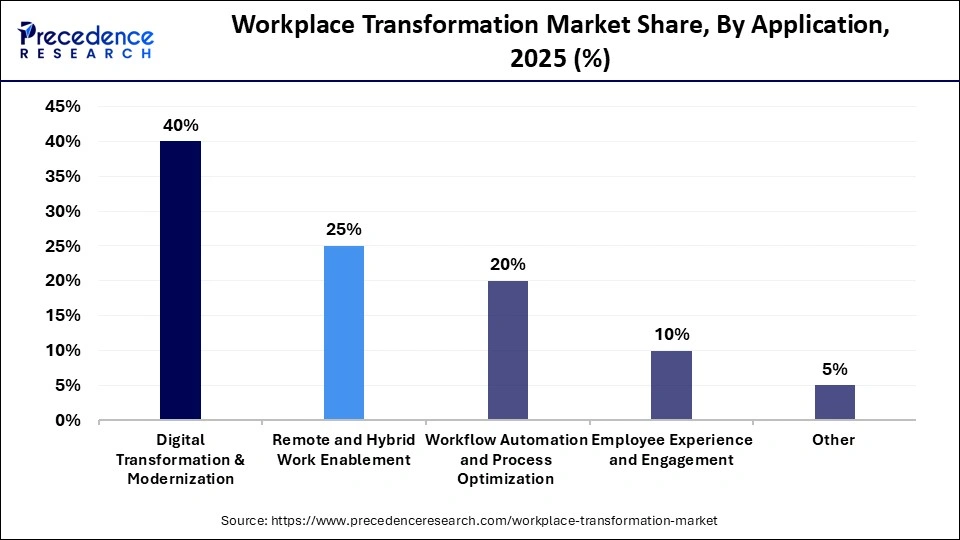
The remote & hybrid work enablement segment is expected to grow at the fastest rate over the projection period, driven by the shift away from traditional office setups. Organizations now require tools that ensure collaboration, security, and productivity across distributed locations. The rise of onsite and remote workflows has created strong demand for flexible, device-agnostic platforms. Enterprises are redesigning their digital infrastructure to support fluid team structures and global talent pools, making work-from-anywhere solutions a rapidly expanding segment for the future.
Technology Insights
The cloud computing technologies segment dominated the market by holding a 35% share in 2025, due to its flexibility, global applicability, and seamless integration capabilities, as companies increasingly adopt new tools without disruption. Organizations are leveraging cloud solutions for remote work, real-time collaboration, and large-scale data consolidation. Additionally, cloud technology's ability to support AI, automation, and advanced analytics has solidified its role as a cornerstone of the industry. Its dominance is widely recognized, with technology ecosystems increasingly converging around cloud-native architectures.
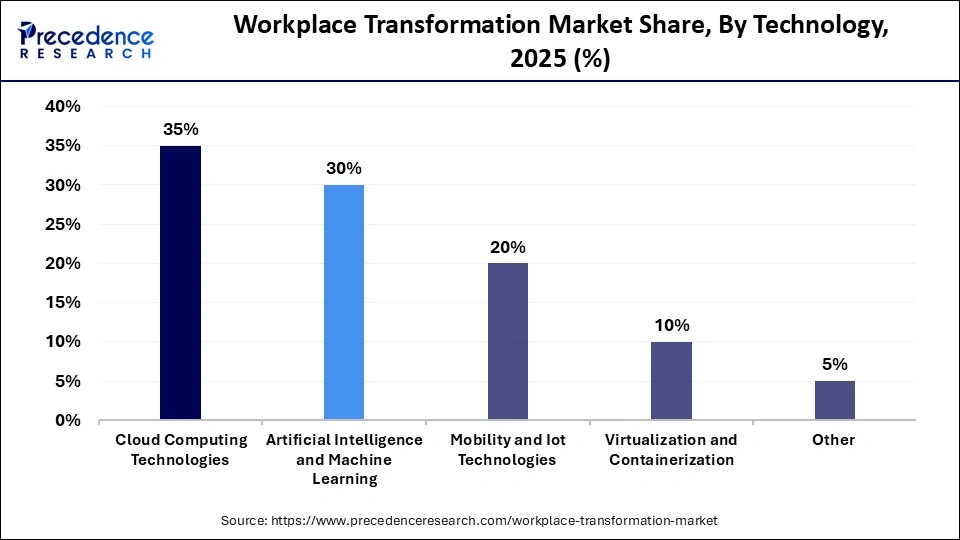
The artificial intelligence & machine learning segment is expected to grow at the highest CAGR in the coming years, as organizations increasingly recognize the value of embedding intelligence into even the most basic operational workflows. These technologies are enhancing employee experiences, automating routine tasks, and delivering insights from vast data sets. Both startups and established companies are turning to AI to improve decision-making, predict work patterns, and optimize productivity. Demand for intelligent virtual assistants, predictive analytics, and adaptive workflow engines is rising rapidly, driving strong market expansion.
End-User Insights
The large enterprises segment dominated the market with a 45% share in 2025, driven by their management of complex ecosystems that require continuous productivity improvements and modernization. For these organizations, digital transformation is a strategic necessity rather than a discretionary upgrade. They are investing heavily in integrated platforms, cybersecurity, and automation to support the operations of thousands of employees. Additionally, their financial capacity allows them to implement enterprise-wide systems with minimal disruption.
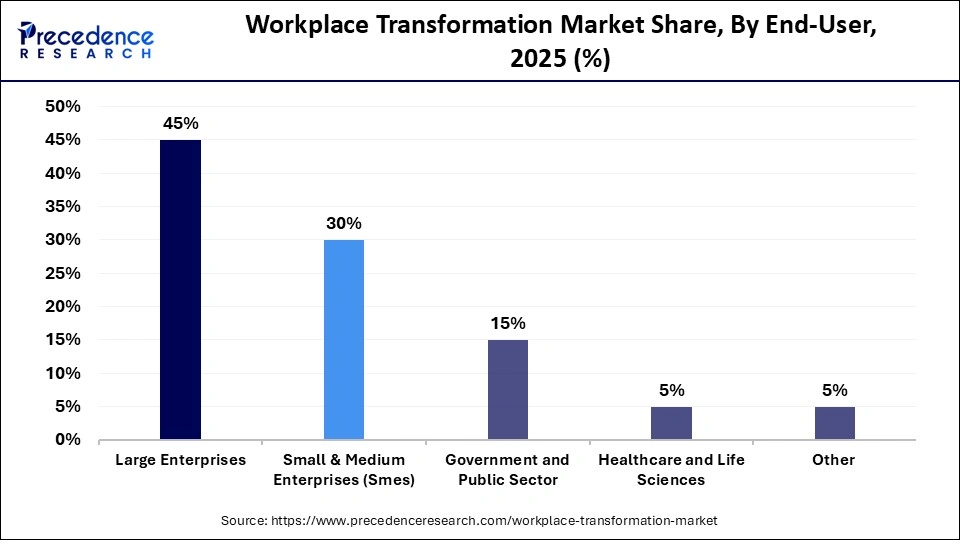
The small & medium enterprises segment is expected to expand at the fastest rate during the forecast period, driven by their shift from unstructured workflows to more structured, technology-driven operations. Affordable, cloud-based solutions with low entry barriers have enabled smaller companies to access tools that were once limited to large enterprises. SMEs are increasingly adopting digital solutions to support market expansion, automate tasks, and remain competitive against bigger players. They seek simple, flexible, and easy-to-implement solutions that require minimal IT support.
Service Type Insights
The IT & infrastructure management services segment led the market by holding a share of 35% in 2025, as these services are critical for supporting the smooth operation of dynamic digital environments. Organizations rely on them to maintain uptime, boost performance, and safeguard operations against disruptions. As workplaces become increasingly digitally complex, the demand for structured IT management grows. These services play a key role in helping organizations shift from a reactive to a proactive operational approach.
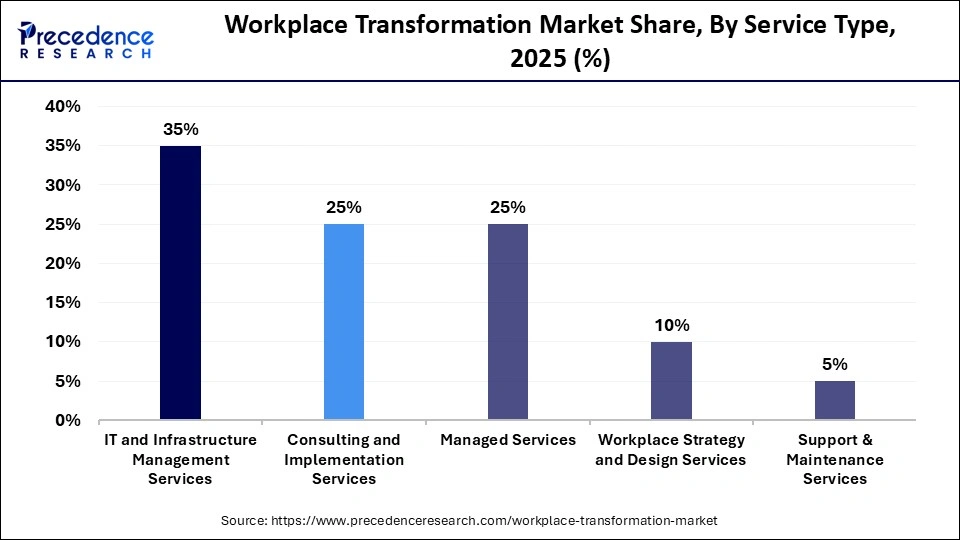
The managed services segment is expected to grow at the fastest CAGR in the upcoming period, driven by organizations' need for expert management of increasingly complex digital ecosystems. By outsourcing routine operations, companies can focus on strategic, high-value activities rather than operational upkeep. Managed service providers offer specialized expertise, faster implementation, and predictable costs, appealing to both large and mid-sized enterprises. With the rise of hybrid work, cloud adoption, and growing cybersecurity demands, the need for managed oversight is accelerating, reflecting a broader shift toward leaner and more agile operating models.
Regional Insights
North America Workplace Transformation Market Size and Growth 2025 to 2035
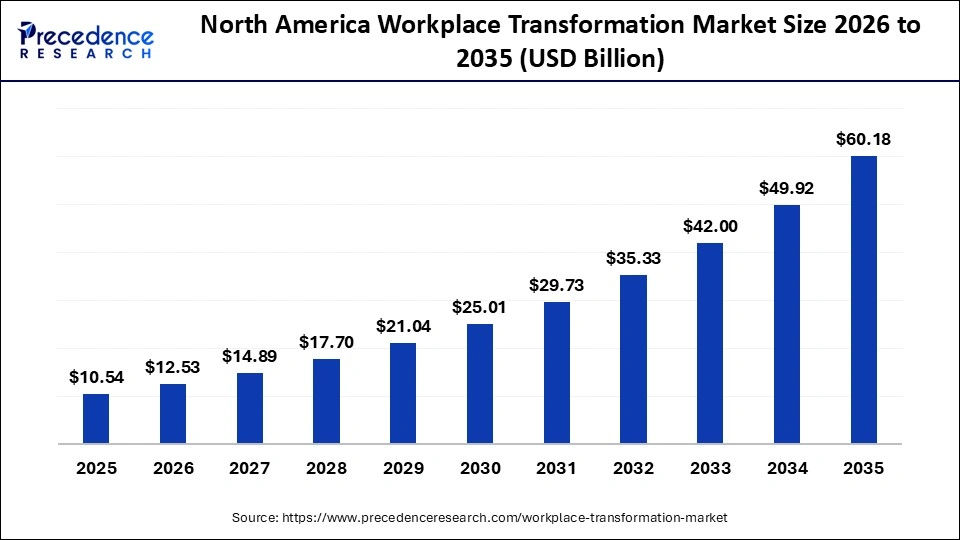
The North America workplace transformation market size is estimated at USD 10.54 billion in 2025 and is projected to reach approximately USD 60.18 billion by 2035, with a 19.03% CAGR from 2026 to 2035.
What Made North America the Dominant Region in the Workplace Transformation Market?
North America dominated the workplace transformation market by holding a share of 35% in 2025 due to its early adoption of digital workplace technologies and strong IT infrastructure. Enterprises in the region prioritize innovation, employee experience, and productivity, driving widespread implementation of AI, cloud computing, and collaboration tools. Significant investments by both large corporations and startups in advanced solutions further strengthen the market.
U.S. Workplace Transformation Market Size and Forecast 2026 to 2035
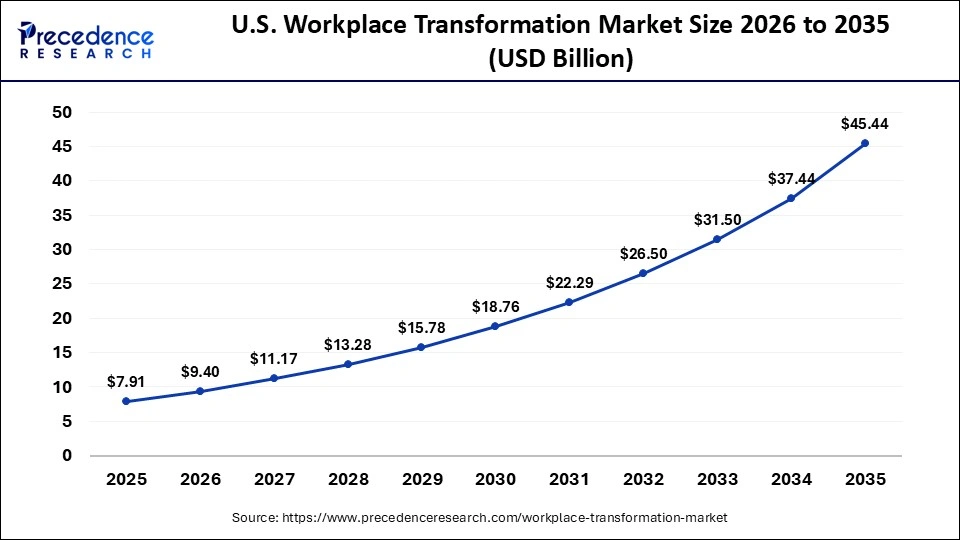
The U.S. workplace transformation market size is calculated at USD 7.91 billion in 2025 and is expected to reach nearly USD 45.44 billion in 2035, accelerating at a strong CAGR of 9.10% between 2026 and 2035.
U.S. Workplace Transformation Market Trends
In the U.S., the growth of hybrid and flexible work models remains a key trend. The adoption of artificial intelligence and automation is accelerating in the country. Companies are embedding AI into workflows, collaboration tools, HR processes, and analytics to boost productivity and streamline operations. Moreover, there is growing demand for cloud‑based, device‑agnostic platforms that support distributed teams and real‑time collaboration across locations, helping firms maintain agility, scale easily, and support remote or hybrid work effectively.
Asia Pacific Workplace Transformation Market Size and Forecast 2026 to 2035
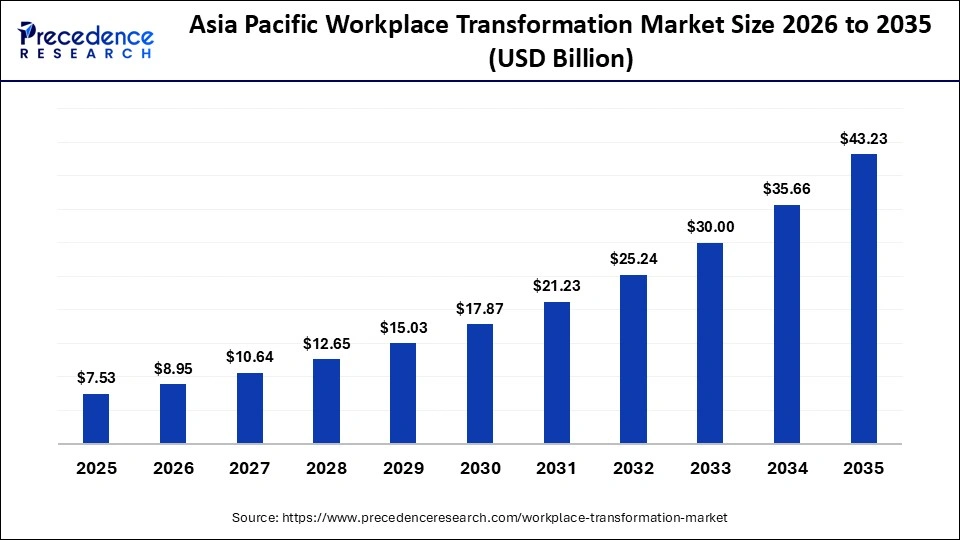
The Asia Pacific workplace transformation market size is expected to be worth USD 43.23 billion by 2035, increasing from USD 7.53 billion by 2025, growing at a CAGR of 19.10% from 2026 to 2035.
What Makes Asia Pacific the Fastest-Growing Region in the Workplace Transformation Market?
Asia Pacific is expected to grow at the fastest rate during the forecast period due to its young, tech-savvy population, rapid digital adoption, and a strong entrepreneurial ecosystem. Supportive government policies and innovation-focused initiatives are fostering the growth of startups and digital solutions across diverse markets. High mobile penetration and expanding sectors like fintech, edtech, and health tech further accelerate the region's shift toward flexible, technology-driven workplaces.
China Workplace Transformation Market Trends
In China, the market is being driven by a surge in hybrid and remote work adoption, leading many companies to invest heavily in cloud-based collaboration and conferencing platforms for seamless communication across locations. At the same time, widespread adoption of AI, automation, and digital employee tools is reshaping workflows and enabling firms to optimize productivity, reduce manual tasks, and support scalable operations. Emerging HR tech solutions and digital infrastructure upgrades further accelerate the shift toward smarter, more flexible workplace models.
Europe Workplace Transformation Market Size and Growth 2026 to 2035
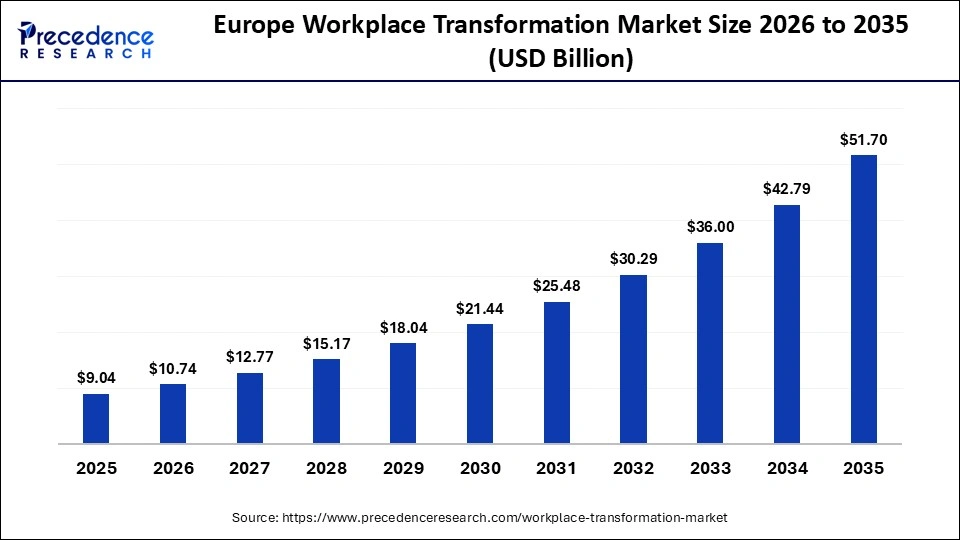
The Europe workplace transformation market size has grown strongly in recent years. It will grow from USD 9.04 billion in 2025 to USD 51.70 billion in 2035, expanding at a compound annual growth rate (CAGR) of 19.05% between 2026 and 2035.
Why is Europe Considered a Notably Growing Area in the Workplace Transformation Market?
Europe is a notably growing area in the market due to strong adoption of digital workplace solutions, a focus on hybrid and flexible work models, and significant investments in AI, automation, and cloud technologies. Stringent regulatory standards around data security, employee well-being, and sustainability are also encouraging organizations to modernize their workplaces. Additionally, Europe's mature technology ecosystem and emphasis on employee experience drive continuous innovation and adoption of advanced collaboration and productivity tools.
Germany in Workplace Transformation Market Trends
Germany is a major player in the European market. The widespread adoption of hybrid and remote work models is driving the market in Germany. Many companies now combine office and home‑based work to meet employee demand for flexibility and work-life balance. Additionally, organizations are investing heavily in digital collaboration tools, cloud and managed workplace services, and infrastructure modernization to support seamless, secure, and efficient remote workflows.
What are the Advancements in the Workplace Transformation Market in Latin America? 
The Latin American market is expected to witness significant growth, as companies upgrade outdated IT systems and embrace hybrid work arrangements. Banks, telecommunications, retailers, manufacturing companies, and other industries are investing in software tools tailored for cloud-based collaboration, digital employee experience, and technologies that automate processes to improve workplace productivity and flexibility. Investment in digital infrastructure, both by the public sector and private sector, is increasing to create an environment that is conducive to workplace modernization.
Brazil Market Trends
Brazil dominates the workplace transformation market due to its large enterprise base and advanced digital ecosystem. Strong demand for cybersecurity and compliance capabilities is shaping workplace technology investments as organizations manage increasingly distributed operations. Supported by expanding cloud infrastructure and continuous digitalization efforts among both public and private sectors.
How is the Middle East and Africa Region Growing in the Workplace Transformation Market? 
The Middle East and Africa are expected to have significant market growth in the upcoming years, facilitated by the rise of digital-first operation models for governments and companies alike. Hybrid work models, integration into cloud computing, and artificial intelligence collaboration tools are the most required tools for organizational modernization. Campaigns in the region that focus on smart cities, digital economies, and the digitization of the workforce are boosting investment in modern workplace solutions.
UAE Market Trends
The UAE is at the forefront of regional trends of modernization through constant investment in new technologies and upgrading of the digital infrastructure. Government's ongoing initiatives towards smart technologies, combined with programs to support a digital economy, still make investment into forward-looking office ecosystems a natural feature across the country. Analytics, automation processes, and secure cloud environments allow companies the possibility to forge richer environments.
Competitive Landscape
The workplace transformation market is semi-consolidated, characterized by competition between IT service providers worldwide, consulting firms, and digital workplace specialists. This sector has been dominated by key players such as Accenture, IBM Corporation, and Tata Consultancy Services because they have wide enterprise connections, offer end-to-end services from start to finish, and have strong delivery capabilities across geographies.
Businesses in this market are vying to forge partnerships, engage in cloud migration strategies, and make acquisitions to strengthen and expand their digital workplace solutions. Platforms that leverage artificial intelligence for employee experience management, automation tools for efficiency improvement, hybrid work infrastructure setups, and sophisticated collaboration ecosystems have become significant differentiators within the field. Barriers in the market include the complexity of implementation, stringent cybersecurity requirements, and a heavy demand for large-scale consulting expertise and significant consulting resources.
Top Companies in the Workplace Transformation Market
- IBM Corporation
- Accenture
- Cognizant
- Tata Consultancy Services
- Microsoft
- Google (Alphabet Inc.)
- Hewlett Packard Enterprise (HPE)
- Cisco Systems
- Dell Technologies
- NTT Data
- Capgemini
- Atos
- Fujitsu
- Unisys
- Citrix Systems
- VMware
- DXC Technology
Recent Development
- In July 2025, Infosys partnered with German energy giant RWE to advance digital workplace transformation and enhance operational efficiency. Using the Infosys Workplace Suite, the collaboration implemented automated processes and self-service solutions to support RWE's drive for operational excellence.(Source: https://www.prnewswire.com)
Workplace Transformation Market Segments Covered in the Report
By Product Type
- Digital Workplace Solutions
- Collaboration & Communication Platforms
- Unified Endpoint Management (UEM)
- Enterprise Mobility Solutions
- Mobile Device Management (MDM)
- BYOD enablement tools
- Cloud & Virtualization Tool
- Virtual Desktop Infrastructure (VDI)
- Cloud productivity suites
- Workplace Automation & AI Tools
- AI chatbots
- Intelligent workflow automation
- Workplace Design & Space Optimization Services
- Smart office layout solutions
- IoT-based occupancy sensors
By Application
- Digital Transformation & Modernization
- Remote & Hybrid Work Enablement
- Workflow Automation & Process Optimization
- Employee Experience & Engagement
- Other Applications
By Technology
- Cloud Computing Technologies
- Artificial Intelligence & Machine Learning
- Mobility & IoT Technologies
- Virtualization & Containerization
- Other Technologies
By End-User
- Large Enterprises
- Small & Medium Enterprises
By Service Type
- IT & Infrastructure Management Services
- Consulting & Implementation Services
- Managed Services
- Workplace Strategy & Design Services
- Support & Maintenance Services
By Region
- North America
- Europe
- Asia-Pacific
- Latin America
- Middle East and Africa
For inquiries regarding discounts, bulk purchases, or customization requests, please contact us at sales@precedenceresearch.com
Frequently Asked Questions





Ask For Sample
No cookie-cutter, only authentic analysis – take the 1st step to become a Precedence Research client
 Get a Sample




 sales@precedenceresearch.com
 Schedule a Meeting
