



Smart Cities Market Size, Key Companies, Company Product Portfolio, Digital Transformation, Technology Investment, Adoption Rates, Customer Acquisition, Company Market Share, and Market Outlook
Smart Cities Market (By Smart Utilities: Water Management, Waste Management, Energy Management; By Smart Governance: CCS, E-governance, City Surveillance, Smart Infrastructure, Smart Lighting; By Application: Smart Building, Smart Governance, Smart Utilities, Smart Transportation, Environmental Solution, Smart Healthcare, Smart Mobility Management, Smart Public Safety; By Component: Hardware, Software, Service; By Smart Transportation: Intelligent Transportation System, Parking Management, Smart Ticketing & Travel Assistance) - Global Industry Analysis, Size, Trends, Leading Companies, Regional Outlook, and Forecast 2026 to 2035
Source: https://www.precedenceresearch.com/smart-cities-market
 Get a Sample
 Table Of Content


What is Smart Cities Market Size?
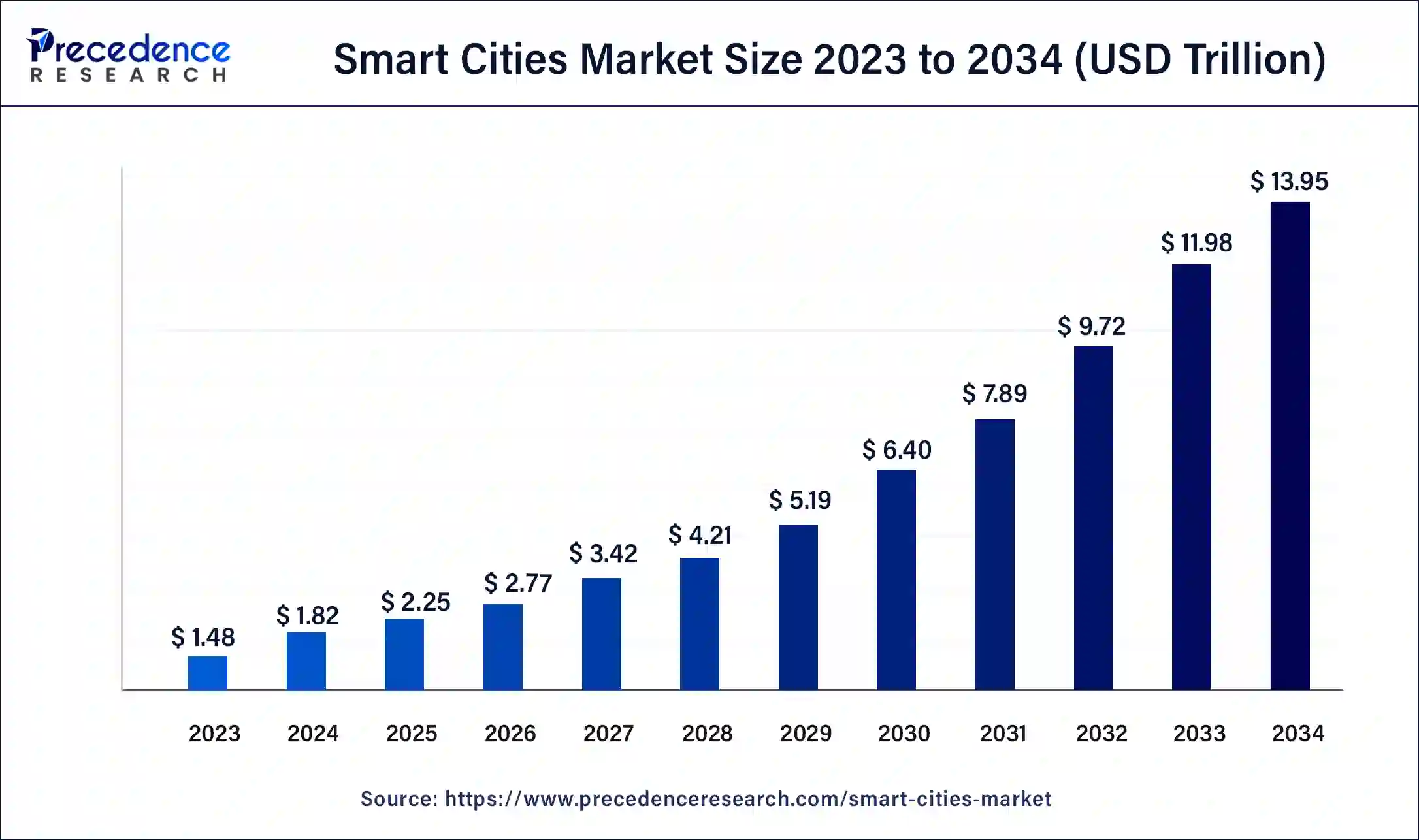
The global smart cities market size accounted for USD 2.25 trillion in 2025 and is predicted to increase from USD 2.77 trillion in 2026 to approximately USD 15.92 trillion by 2035, growing at a CAGR of 21.61% from 2026 to 2035. The smart cities market is driven by rapid urbanization, smart city initiatives, and digital infrastructure investments.
Market Highlights
- By Region, North America held a majority revenue share of the smart cities market in 2025.
- By Region, Asia Pacific is expected to grow at the fastest CAGR in the market during the forecast period.
- By smart utilities, the energy management segment held a dominant position in the market with a share in 2025.
- By smart utilities, the waste management segment is expected to grow at the fastest CAGR in the market between 2026 and 2035.
- By smart governance, the smart infrastructure segment accounted for a considerable revenue share in the market in 2025.
- By smart governance, the command and control center segment is expected to grow with the highest CAGR in the market during the studied years.
- By application, the smart transportation segment led the global market with a share in 2025.
- By application, the environmental solution segment is expected to expand rapidly in the market with a CAGR in the coming years.
- By component, the hardware segment dominated the global market with a share in 2025.
- By component, the service segment is expected to gain the highest market share with a CAGR between 2026 and 2035.
- By smart transportation, the intelligent transportation system segment held the largest revenue share in the market in 2025.
- By smart transportation, the parking management segment is expected to show the fastest growth with a CAGR over the forecast period.
Market Size and Forecast
- Market Size in 2025: USD 2.25 Trillion
- Market Size in 2026: USD 2.77 Trillion
- Forecasted Market Size by 2035: USD 15.92 Trillion
- CAGR (2026-2035): 21.61%
- Largest Market in 2024: North America
- Fastest Growing Market: Asia Pacific
What role does AI play in the Smart Cities Market?
AI is a major player in smart cities as it processes massive amounts of urban data to enhance energy, transport, and safety sectors. It facilitates the use of resources in an efficient way, the real-time control of city maintenance, and anticipatory action for improvement of the aforementioned systems. One way AI makes city management more effective and responsive is through automating the whole process, thus reducing operational costs, improving the environment among the citizens, and promoting sustainability.
Transforming the Smart Cities Market Through Digital Innovation
The smart cities market consists of technologies, platforms, and services that bolster the infrastructure of cities with digital solutions like cloud computing, artificial intelligence, Internet of Things, and advanced connectivity solutions. Smart cities combine intelligent transportation, energy management, public safety, waste management, smart utilities, and more to enhance the quality of life in the city and to maximize the utilization of its resources. Further, the rapid expansion of smart cities solutions is also due to the widespread use of 5G, IoT devices, and data-driven city planning.
Smart Cities Market Growth Factors
The rising urbanization, growing need for infrastructure management, and assets management are the various factors that are boosting the government investments towards the development of smart cities. As per the Consumer Technology Association, the global spending on the development of smart city is estimated to be US$34.35 billion in 2020. The advancements in the technology has fueled the adoption of the internet of things technology in the smart cities to manage traffic flows, monitoring city infrastructure, and monitor air and water quality. The rising need for ensuring public safety, efficient utilization of resources, rising demand for efficient energy consumption, and healthy environment are expected to boost the growth of the smart cities market during the forecast period. According to the United Nations Department of Economic and Social Affairs, the urban population in 2019 was 55.7%, which is projected to reach to 68.4% by 2050.
The rapidly increasing global population and rapid growth in the urban population is driving the demand for the sustainable infrastructure across the globe. The governments across various countries are taking steps and investing heavily to counter the concerns related to rising population rapid urbanization through the development of smart cities. Utility management, safety, and mobility are the major aspects that are efficiently handled in the smart cities. The surging adoption of the novel technologies like artificial intelligence, nanotechnology, big data analytics, cloud computing, internet of things, cognitive computing, and open data are the major drivers of the growth of the smart cities market across the globe.
The growing implementation of various public-private partnership models such as Build, operate, transfer (BOT), Build, own, operate (BOO), Organizational Behavior Management (OBM), and Bill of Materials (BOM) are significantly driving the implementation of the various smart city projects across the globe.
Market Outlook
- Industry Growth Overview: The smart cities market is experiencing a huge increase in size, the main driving forces being the use of AI, IoT, and digital transformation, which made the communication, being green, and the working of the cities more efficient on a worldwide basis.
Sustainability Trends: The market is heading towards long-term environmental and social sustainability due to green innovations, smart grids, energy efficiency, and eco-friendly technologies. - Global Expansion: Asia-Pacific and other developing regions are the ones creating the largest demand for smart infrastructure by digitalizing, investing, and the government actively supporting and initiating these processes.
Major Investors: Big companies, government funds, and venture capital investments are the main drivers of innovation and AI development in smart urban solutions. - Startup Ecosystem: Newcomers create AI-based technologies for mobility, energy, and governance solutions, which act as a catalyst for the whole smart city sector worldwide.
Market Scope
| Report Coverage | Details |
| Growth Rate from 2026 to 2035 | CAGR of 21.61% |
| Market Size in 2025 | USD 2.25 Trillion |
| Market Size in 2026 | USD 2.77 Trillion |
| Market Size by 2035 | USD 15.92 Trillion |
| Largest Market | North America |
| Base Year | 2025 |
| Forecast Period | 2026 to 2035 |
| Segments Covered | By Smart Utilities, By Smart Governance, By Application, By Components, and By Technologies and Region |
| Regions Covered | North America, Europe, Asia-Pacific, Latin America, and Middle East & Africa |
Market Dynamics
Driver
Sustainability Goals Accelerate Smart City Investments
As sustainability is becoming a major trend, investments in smart city infrastructure are increasing on a global scale. Governments and municipalities are implementing smart grids, intelligent lighting systems, and renewable energy to lower emissions and create energy efficiency. The need for sustainable and connected city ecosystems is further growing due to rising urbanization and climate commitments.
Restriction
Interoperability Obstacles to Integrating Systems
In the development of smart cities, interoperability is still a significant issue. Proprietary technologies with varying communication protocols are used by multiple vendors. This results in information silos and integration challenges within transportation, utilities, and public services. This complexity can lead to a high implementation cost and delay the deployment of city-wide solutions.
Opportunity
AI-Powered Analytics Transform Urban Management
AI is bringing in lots of opportunities in smart city applications. Real-time traffic optimization, predictive infrastructure maintenance, intelligent energy management systems, and automated parking systems can all be powered by AI-driven analytics. AI can analyze vast amounts of urban data to optimize operations, boost service efficiency, and aid in better decision-making for city administrators.
Segments Insights
Smart Utilities Insights
Based on the smart utilities, the energy management segment accounted for a market share of around 57% and dominated the global smart cities market in 2025. With rising urbanization and industrialization, the demand for the energy has spurred significantly, which has fostered the adoption of the virtual power plants that uses artificial intelligence, internet of things, and machine learning technologies to ensure safety and higher efficiency. The rising investments by the market players in the research and development to boost the introduction and development of technologically advanced energy management systems and integrate technologies like Blockchain have favored the growth of this segment.
The water management segment is anticipated to be the fastest-growing segment during the forecast period. The rising scarcity of drinking water and growing initiatives to promote sustainable living has resulted in the implementation of laws and regulations to implement water management systems across the globe. Rising technological advancements has led to the adoption of IoT-based water management systems like Advanced Metering Infrastructure smart water meters, which facilitates smart water utilization and distribution in the cities.
The waste management segment is expected to witness steady growth during the forecast period. With the help of these sensors, authorities are able to optimize collection routes and lower their operational costs. With growing urbanization, better waste management structures are needed. Increased smart sanitation is a part of the broader programs for smart city development in government agendas. Waste sorting, recycling, and landfill management have become easier due to the introduction of Smart systems of AI and Data Analytics.
Smart Governance Insights
The city surveillance was the dominating segment that accounted for 22% of the revenue in 2025 in the global smart cities market. The city surveillance plays a crucial role in the management and monitoring public assets, civil services, transportation systems, and community services in the smart cities. The increased concerns related to the public safety has led to the adoption of video management solutions IP cameras across the smart cities, which is boosting the growth of the city surveillance segment exponentially. Declining prices of IP cameras and rising advancements in the analytics and software technology are the major drivers of the city surveillance segment.
The command and control center (CCC) is anticipated to be the most opportunistic segment during the forecast period as it is expected to witness the highest CAGR of 21.5% from 2024 to 2033. Almost every smart city systems and applications such as smart lighting, city surveillance, waste management, energy management, intelligent traffic management systems, and water management system are accessed and controlled from the CCC. The CCC is considered to the brain of any smart city.
The smart lighting segment is projected to grow at a notable pace with a rise in investments in public projects with high energy efficiency. To reduce energy consumption, cities are switching from widely used street lights to connected lighting. It is possible to achieve remote monitoring and adaptive lighting control using a connection to IoT platforms. The advantage of the smart lighting system is enhanced public space safety due to enhanced visibility and reduced maintenance costs.
The e-governance segment is expected to witness steady growth during the forecast period, with the growing effort towards digital transformation in the governance sector. Digital citizen services enhancing governments' transparency and administration efficiency. AI and cloud-enabled technologies do help to provide speedy and responsive Public Services. The growth of the Internet and mobile phones has been a facilitator in expanding the use of e-governance.
Application Insights
Based on the application, the smart transportation segment garnered a revenue share of 21% and led the global smart cities market in 2025. The rapid urbanization and increasing economic activities has led to the increased traffic congestion. This factor is stimulating the various governments across the globe to adopt smart transportation solutions to manage assets and infrastructure. The growing adoption of the artificial intelligence and internet of things in the transportation field has led to the growth of the smart transportation segment across the globe. Further, the rising demand for the electric vehicles and on-demand ridesharing is significantly boosting the demand for the smart transportation solutions across the globe.
On the other hand, the smart governance segment is anticipated to be the fastest-growing segment during the forecast period. The rising adoption of the smart technologies by the government to improve and promote transparency, security, accountability, and collaboration is booting the growth of this segment. With the support of the distributors and OEMs, the various governments are deploying video surveillance solutions to ensure public safety and eliminate criminal activities, which are expected to improve smart governance.
The smart building segment is projected to grow at a healthy pace as enterprise investment in smart building management systems increases. Automating buildings using AI-driven technology is improving their performance, comfort, and efficiency. Application of more sustainable building technology in the construction of commercial and residential buildings is becoming more significant. In addition, green building regulations are contributing to the proliferation of green buildings.
The smart utilities segment is expected to experience considerable growth during the forecast period, driven by rising demand for smart meters, digital utility management systems, and smart grid systems. There is a start to the new era of energy intelligence solutions, as there are more renewables becoming part of the distribution grid. The operation of the utility network can be monitored, and using AI and IoT Technology, predictive maintenance can be offered to the utility network.
Component Insights
Which Hardware Segment Led the Smart Cities Market?
The hardware segment dominated the market in 2025 because sensors, cameras, smart meters, communication devices, and networking equipment were extensively used. The physical infrastructure needed to support connected services is sizable for smart city projects. Adoption of various intelligent transportation and surveillance systems went on in the government sector.
The service segment is expected to witness notable growth due to rising needs of consulting, system integration, managed services, and maintenance. The techno-economical ecosystem of a smart city is complex and requires specialized skills to implement and operate the city. The increase in importance of cloud migration and cybersecurity services is accentuated.
The software segment is expected to grow steadily, with the growth of digital transformation and continuous growth of application software. Governments use software to process and control transportation, utilities, and public safety systems. The dashboard of the smart city is used to get real-time monitoring and decision-making capabilities.
Smart Transportation Insights
Which Factors Contributed to the Intelligent Transportation System Segment Growth in the Smart Cities Market?
The intelligent transportation system segment dominated the market in 2025. AI solution providers are helping to revolutionize urban transportation by integrating traffic monitoring and adaptive traffic light control systems. By using Connected Vehicles, the safety and operational efficiency of the roadways were enhanced. Smart traffic management also contributes to lower emissions through optimized traffic flows.
The parking management segment is expected to witness notable growth due to the increase in the urban crowd and a shortage of parking spaces. Smart parking solutions are a combination of Internet of Things sensors and applications for mobile devices that are coupled with the functionality required for efficient parking processes. Smart parking: large cities shift to digital to reduce traffic because of parking searches.
The smart ticketing & travel assistance segment is expected to grow steadily. Enhancing passenger convenience is the solution that public transit agencies are implementing through digital fare collection systems. Seamless MaaS improves multimodal transportation journeys. Adoption of digital tickets has been boosted by the growth of smartphone penetration.
Regional insights
U.S. Smart Cities Market Size and Growth 2026 to 2035
The U.S. smart cities market size reached USD 0.52 billion in 2025 and is anticipated to be worth around USD 3.71 billion by 2035, poised to grow at a CAGR of 21.61% from 2026 to 2035
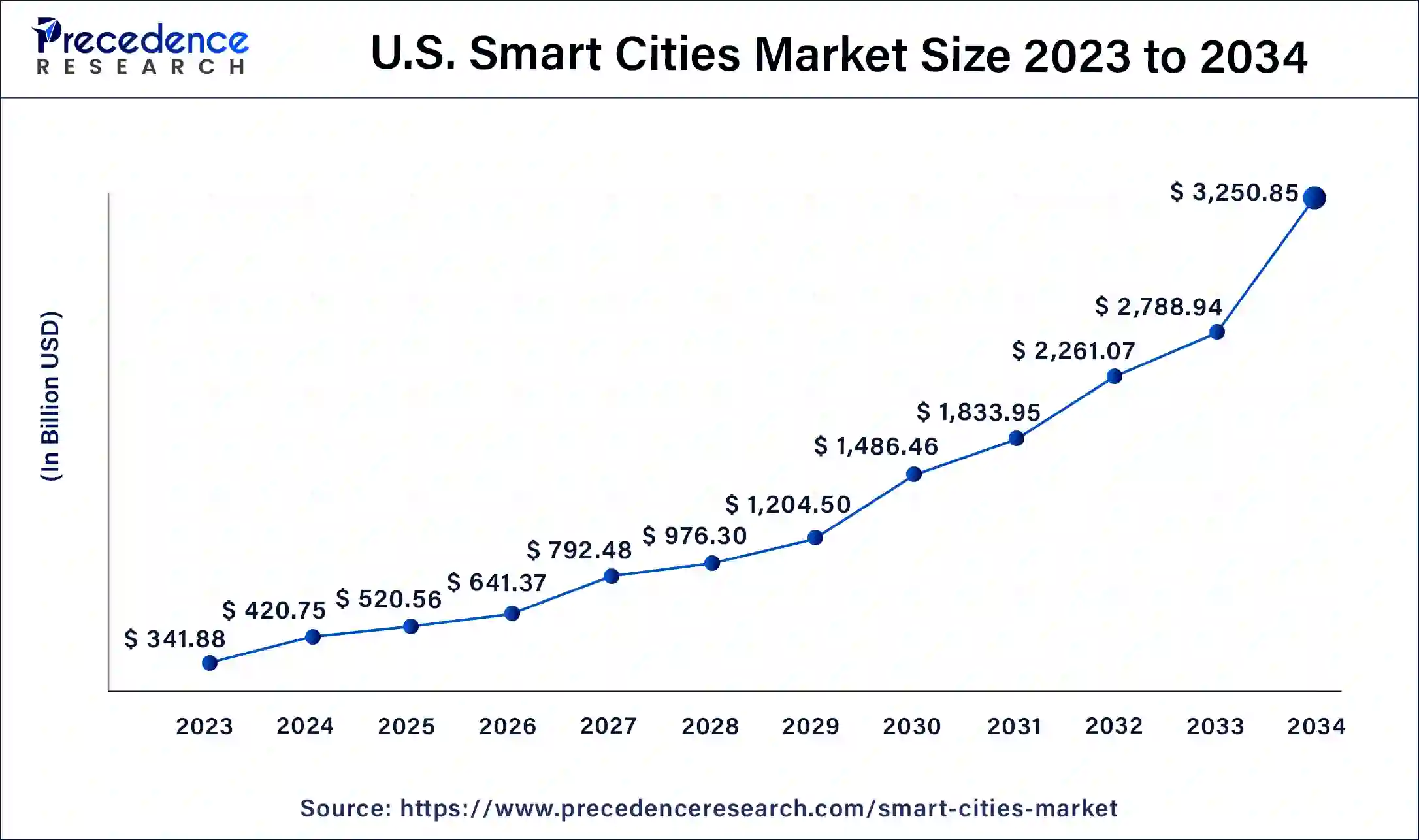
United States Smart Cities Market Trends:
The U.S. is the country that is leading in smart cities by bringing AI into transportation, governance, and energy systems. The R&D capabilities, supportive governments, and private funds make modernization effortless, leading to smart and efficient cities characterized by the continuous adoption of green practices and real-time management.
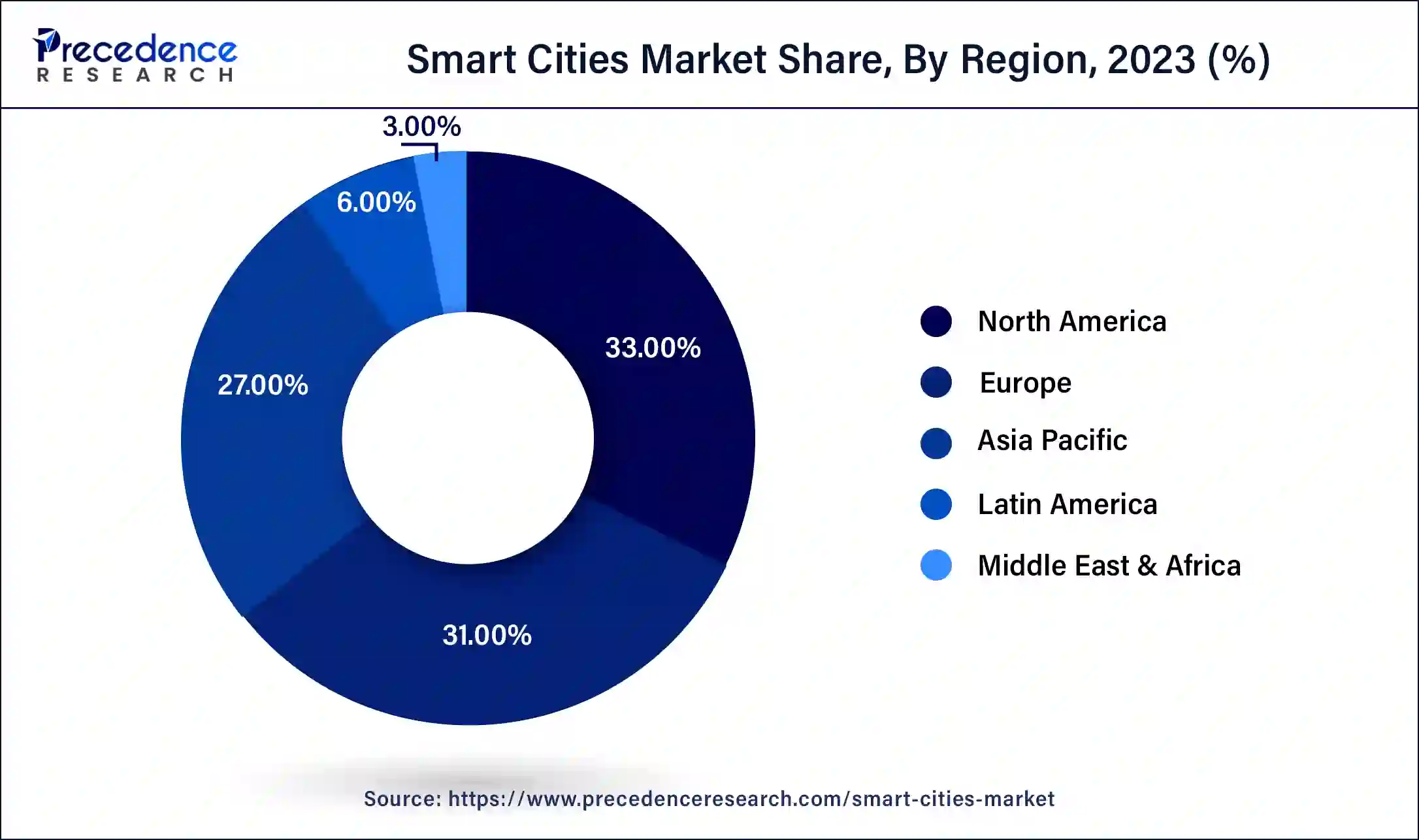
North America dominated the global smart cities market, accounting for around 33% of the market share in 2024. The rising technological advancements and digital transformations across various industry verticals such as telecommunications, IT, retail, and banking has led to the growth of the North America smart cities market. North America has well-established information and communication technology (ICT) infrastructure and the strong collaboration of the local and the Federal governments with the various startups and vendors in the ICT industry has significantly contributed to the growth of the North America smart cities market in the past few years. The rising deployment of the civic connectivity infrastructure will lead to the growth of the smart cities market growth. The US Department of Transportation and the Smart Cities Council together promote the smart cities concept in the North American region by organizing various networking events in the region.
Asia Pacific is expected to witness the highest CAGR of over 27.9% from 2026 to 2035. The increased focus of the government towards the digital infrastructure and digital transformation is spurring the growth of the smart cities market in Asia Pacific. Rapid urbanization, growing population, strong economic growth, and rise in globalization are the major factors that are expected to drive the growth of the Asia Pacific smart cities market during the forecast period. The rising government investments to spruce up various industries such as public security, transportation, and energy are anticipated to be the major growth drivers in the foreseeable future.
India Smart Cities Market Trends:
The Indian smart city grid is shaped by the government that supports the programs that promote the use of Artificial Intelligence in the mentioned areas of public life: energy, transport, and waste management. Digital transformation and tri-sector collaboration are making the cities and the less developed areas around them increasingly more efficient, safer, and sustainable.
South Korea Smart Cities Market Trends:
South Korea is recognized as a pioneer in putting AI urban innovations into practice. It connects smart mobility, health care, and green energy systems. The South Korean city model in which intelligent automation, efficient management, and database decision making are employed for improved citizens' well-being.
Smart Cities Industry Expansion in Europe
The European market is expanding steadily with strong double digit growth expected as cities adopt IoT, AI, and data analytics to improve urban services, sustainability, and resource management. It is expected to grow significantly through the rest of the decade, driven by supportive EU policies, public private collaboration, and investments in digital infrastructure.
Germany Market Trends
Germany market is anticipated to grow significantly, driven by the strong support extended by the government for the digitalization of cities and promotion of sustainable urban development. Smart city projects are growing in all areas of transportation, energy, and public services. Growth in investments in smart mobility and EV charging continues. Individual cities tinker with AI to enhance the efficiency of running operations, as well as integrate IoT devices. The country's focus on carbon neutrality also enables the deployment of intelligent energy management systems.
Smart Cities Transition in Latin America
The Latin America market is growing rapidly, with strong projected increases in market size and adoption of digital urban solutions as governments and cities invest in infrastructure and services that use technologies like IoT, AI, and data analytics. The market is expected to expand at a high compound annual growth rate through the late 2020s and early 2030s as cities modernize transportation, utilities, governance, and public services.
Brazil Market Trends
Brazil's smart cities market is anticipated to grow significantly, due to rising investments in smart cities and mobility projects. Local governments are increasing their investment in smart transportation and public safety applications. The increasing urbanisation is driving a need for streamlined management of utilities and infrastructure. Smart lighting and Smart Grid projects are taking off in all big cities. Market development is being assisted by government programmes to promote digital inclusion.
Smart Cities Industry Growth in MEA
The MEA smart cities industry is growing rapidly as governments adopt IoT, AI, and cloud solutions for smart governance, utilities, and transportation. The market is expected to expand at a strong CAGR through the late 2020s, driven by urbanization and national digital programs. Key trends include smart mobility, energy management, and innovation supported by public private partnerships.
Saudi Arabia Market Trends
Saudi Arabia market is anticipated to grow significantly, as the transformation of cities is facilitated by AI, IoT, and Digital Facilities. Transformations in urban communities are accelerated due to the investment by the government in AI, IoT, and facilities utilizing digital properties. Smart transportation, utilities, and public safety are still present areas of interest for investment. Smart energy management systems are becoming possible with the use of renewable energy.
Government Initiatives
United States
The U.S. Department of Transportation also provided funding for smart city and intelligent transportation projects in the Strengthening Mobility and Revolutionizing Transportation (SMART) Grants Program.
India
The Government of India also proceeded with the implementation of the “Smart Cities Mission” and continued to take initiatives for smart government and sustainable cities, providing Digital Infrastructure, managing Intelligent transportation, and helping the 100 cities on the Smart Cities Mission. The programme focuses on enhancing the quality of life in urban areas through technology-based services and smart utilities.
Saudi Arabia:
Saudi Arabia has been moving forward with Vision 2030 with large-scale smart cities initiatives like NEOM to foster AI, IoT, smart mobility, and digital infrastructure. These programmes aim to transform and have a focus on sustainability and diversification of the urban economy while also improving urban development.
United Arab Emirates
The United Arab Emirates contributed to the smart cities national efforts in the implementation of the UAE Digital Government Strategy and UAE Artificial Intelligence Strategy 2031. They apply many of the principles of digital governance, ‘smart' infrastructure, intelligent mobility, and artificial intelligence in public services in big cities.
Value Chain Analysis
- Inbound Logistics: Receiving, storing, and managing raw materials, components, and smart infrastructure inputs.
- Key players: TSMC, Samsung
- Operations: Transforming inputs into connected, AI-based smart city platforms and services.
- Key Players: Cisco, Siemens, IBM
- Outbound Logistics: Delivering integrated smart infrastructure and digital services to end users.
- Key Players: FedEx, Blue Dart Express
- Marketing and Sales: Promoting smart technologies, IoT platforms, and urban solutions to governments.
- Key Players: Apple, Cisco, and IBM
- Service of Smart Cities: Providing ongoing maintenance, technical support, and solution optimization services.
- Key players: IBM (IT services), Cisco
Competitive Landscape
The smart cities market is semi-consolidated, with some of the major technology companies vying with each other to win the market through their integrated digital infrastructure and IoT solutions. The key players are the ones working in the smart transportation, energy management, public safety, and urban analytics platforms. Partnerships and acquisitions grow companies' relevance, and ongoing innovations reinforce it.
- In May 2026, Siemens introduced a new AI-based building managed service, further underlining the importance of AI in managing urban infrastructure. The areas of AI, IoT, digital twins, and cloud platforms continue to be the differentiators. The barriers to entry are high capital requirements, interoperability issues, and regulatory compliance, and competition is growing as digital transformation continues.
- In March 2026, Siemens introduced digital twin solutions which, in cooperation with technologies from NVIDIA, provide the industry and infrastructure projects with the tools and insights needed for advanced simulation and visualization. The partnership allows for more efficient planning and management of assets, as well as the transformation of connected environments, through digitalization. (Source: https://news.siemens.com)
- In January 2026, Siemens united with NVIDIA in a new strategic agreement to continue meeting emerging needs for AI capabilities and solutions in industrial and infrastructure solutions that include smart buildings, intelligent infrastructure, and digital twin solutions. (Source: https://press.siemens.com)
Top Companies and their offerings
- Hitachi: Hitachi provides comprehensive Smart City solutions leveraging IT and OT, along with AI via its Lumada IoT platform to improve safety, efficiency, and sustainability.
- IBM: IBM provides a comprehensive suite of cloud-based, AI-powered, and IoT-enabled solutions designed to improve urban operations, citizen services, and sustainability.
- Microsoft: Microsoft aimed on transforming urban infrastructure and services via data-driven insights, artificial intelligence, and Internet of Things connectivity.
- Schneider Electric: Schneider Electric provides a comprehensive portfolio for the Smart Cities market designed to enhance urban efficiency, sustainability, and quality of life by up to 30%. Their solutions, thus, built on the EcoStruxure IoT platform, aim to integrate energy management, building automation, water systems, mobility, and digital public services.
Smart Cities Market Companies
Recent Development
- In June 2026, WeRide and Uber's Robotaxi GXR will launch in Madrid this year, collaborating with the regional government and progressively scaling their fleet. (Source: https://www.smartcitiesworld.net)
- In October 2025, World Cities Day 2025 emphasizes digital innovation's role in enhancing urban life, promoting the theme of People-Centred Smart Cities for inclusion, accessibility, and equal opportunities.(Source:https://www.citiesalliance.org)
- In September 2025, Hyundai Motor Group launched the Next Urban Mobility Alliance (NUMA) to transform urban transportation with advanced technologies, focusing on inclusive mobility innovation and transitioning to smart cities. (Source: https://www.hyundai.com/worldwide)
Segments Covered in the Report
By Smart Utilities
- Water Management
- Waste Management
- Energy Management
By Smart Governance
- CCS
- E-governance
- City Surveillance
- Smart Infrastructure
- Smart Lighting
By Application
- Smart Building
- Smart Governance
- Smart Utilities
- Smart Transportation
- Environmental Solution
- Smart Healthcare
- Smart Mobility Management
- Smart Public Safety
By Component
- Hardware
- Software
- Service
By Smart Transportation
- Intelligent Transportation System
- Parking Management
- Smart Ticketing & Travel Assistance
By Region
- North America
- Europe
- Asia Pacific
- Latin America
- Middle East and Africa
For inquiries regarding discounts, bulk purchases, or customization requests, please contact us at sales@precedenceresearch.com
Frequently Asked Questions





Ask For Sample
No cookie-cutter, only authentic analysis – take the 1st step to become a Precedence Research client
 Get a Sample




 sales@precedenceresearch.com
 Schedule a Meeting
