



Antiepileptic Drugs Market Size, Companies, Share, Patient Volume, Treatment Adoption Rates, Pricing Analysis, Regulatory Landscape, Competitive Positioning, and Demand Forecast
Antiepileptic Drugs Market (By Drug Generation: First Generation, Second Generation, Third Generation ; By Route of Administration: Oral, Injectable/Intravenous; By Distribution Channel: Hospital Pharmacies, Retail Pharmacies, Online Pharmacies) - Global Industry Analysis, Size, Trends, Leading Companies, Regional Outlook, and Forecast 2026 to 2035
Source: https://www.precedenceresearch.com/antiepileptic-drugs-market
 Get a Sample
 Table Of Content


What is the Antiepileptic Drugs Market Size in 2026?
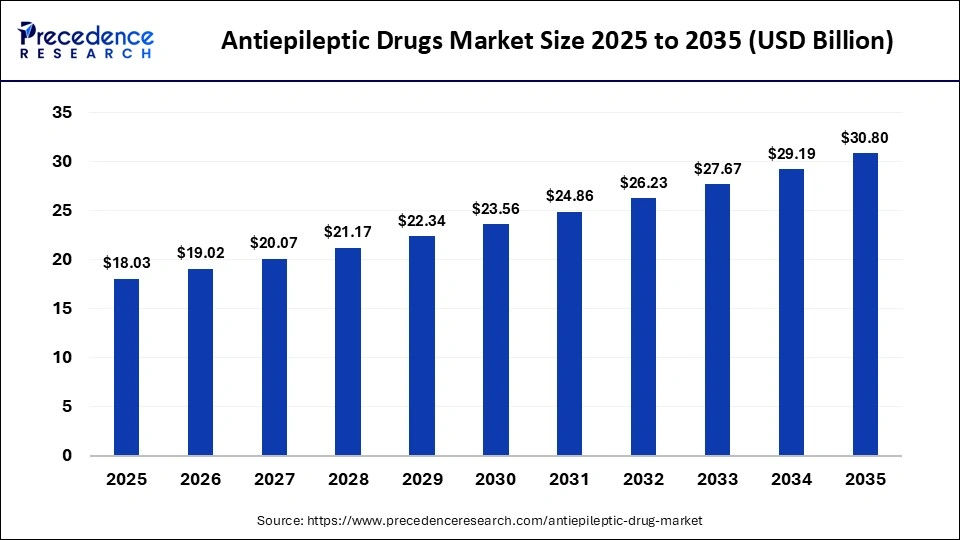
The global antiepileptic drugs market size was calculated at USD 18.03 billion in 2025 and is predicted to increase from USD 19.02 billion in 2026 to approximately USD 30.80 billion by 2035, expanding at a CAGR of 5.5% from 2026 to 2035.The antiepileptic drugs market is observed to grow lately due to the growing prevalence of epilepsy globally, leading to higher demand for safer and more efficient treatment for it. Improved healthcare infrastructure and advancements in drug development, along with higher demand for novel and third-generation treatment options, also help to fuel the growth of the market.
Key Takeaways
- North America dominated the antiepileptic drugs market in 2025, with approximately 48% share.
- Asia Pacific is observed to be the fastest-growing region in the foreseen period with the highest CAGR of 6.0%.
- By drug generation, the second-generation segment led the global market with approximately 47% share in 2025.
- By drug generation, the third-generation segment is observed to be the fastest-growing segment with a CAGR of 4.7% in the forecast period.
- By route of administration, the oral segment led the global industry with approximately 55% market share in 2025.
- By route of administration, the injectable/intravenous segment is observed to be the fastest-growing with a CAGR of 4.9% segment in the foreseen period.
- By distribution channel, the hospital pharmacies segment led the global market in 2025 by approximately 50% share.
- By distribution channel, the online pharmacies segment is observed to be the fastest-growing segment in the foreseen period, with the highest CAGR 5.2%.
What is the Antiepileptic Drugs Market?
The market encompasses pharmaceutical medications used to prevent and control seizures in individuals with epilepsy and related neurological disorders. These drugs, including first , second , and third-generation anticonvulsants, work by stabilizing electrical activity in the brain. Market growth is driven by rising epilepsy prevalence, innovation in drug development, and increased healthcare access. Consumption occurs through various channels, such as hospital and retail pharmacies, with North America holding the largest global share. The market also involves generic as well as branded products to stabilize normal electrical brain activity. The main aim of the market is to treat idiopathic and symptomatic epilepsy, along with neuropathic pain, which is helpful for the growth of the market.
Role of Technology in the Growth of Antiepileptic Drugs Market
Technological advancements have a major role in the growth of the market. Advancements in the form of technology-enabled, personalized, and targeted therapies that include efficacy and safety further fuel the growth of the market. Personalized treatment according to a patient's genetic profile, enhancing efficacy and reducing adverse effects, also helps to fuel the growth of the market.
Nano-based formulations to enhance bioavailability and improve patient compliance also help to fuel the growth of the market. Technologies in the form of AI and advanced research methods are helpful to identify new molecular targets, such as AMPA-glutamate receptors, further boosting the growth of the market. Use of digitally-advanced wearables to keep a track of seizure activity helps in better management of the disease, further elevating the growth of the market.
Antiepileptic Drugs Market Trends
- Third-Generation Dominance: Higher demand for third-generation medications due to their improved safety profile and elevated performance to treat epilepsy and other seizure issues, propelling the growth of the market.
- Growing Seizure Awareness: The growing prevalence of epilepsy and other seizure issues leading to higher demand for safe and effective treatment options helps to fuel the growth of the market.
- Growing Demand for Personalized Treatment: Higher demand for personalized medications as per a patient's medical history and health profile also helps to boost the growth of the market.
Market Scope
| Report Coverage | Details |
| Market Size in 2025 | USD 18.03 Billion |
| Market Size in 2026 | USD 19.02 Billion |
| Market Size by 2035 | USD 30.80 Billion |
| Market Growth Rate from 2026 to 2035 | CAGR of 5.5% |
| Dominating Region | North America |
| Fastest Growing Region | Asia Pacific |
| Base Year | 2025 |
| Forecast Period | 2026 to 2035 |
| Segments Covered | Drug Generation, Route of Administration, Distribution Channel and Region |
| Regions Covered | North America, Europe, Asia-Pacific, Latin America, and Middle East & Africa |
Segmental Insights
Drug Generation Insights
Which Component of the Drug Generation Segment Leads the Global Market in 2025?
The second-generation segment led the global antiepileptic drugs market in 2025 with approximately 47% share of the market due to improved performance, enhanced bioavailability, improved tolerability, and lower drug interactions, which will also help to fuel the growth of the market. The broader spectrum of activity against various seizure types and epilepsy syndromes also helps to propel the growth of the segment. Higher effectiveness, better safety profiles, lowered incidents of side effects, and convenient dosing are some of the major advantages. Higher demand for second-generation drugs for the paediatric population and in combination therapies also helps to boost the growth of the segment.
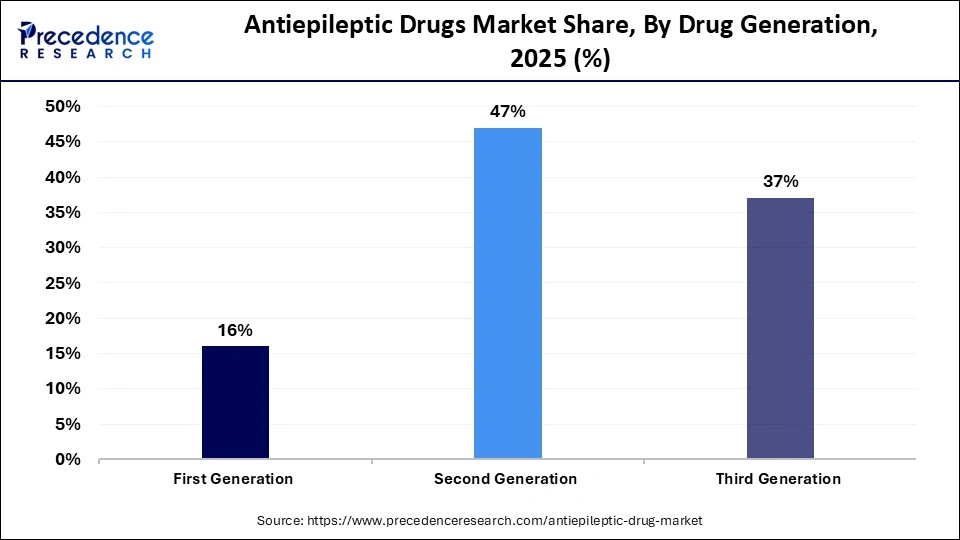
The third-generation segment is observed to be the fastest-growing with a CAGR 4.7% in the foreseen period due to improved efficacy, elevated safety profiles, and higher effectiveness compared to other generations. Improved bioavailability, enhanced safety profile, better tolerability, and lower side effects are some of the major benefits. The segment is also known for its high seizure freedom rates for treatment-resistant patients and efficiency in managing refractory conditions. Third-generation drugs have minimal impact on cognitive functions and hence are ideal for patients with sensitive conditions.
Route of Administration Insights
Why did the Oral Segment Lead the Global Market in 2025?
The oral segment led the global antiepileptic drugs market in 2025 with approximately 55% share due to factors such as patient convenience, high compliance, and ease of administration for patient management. Tablets and capsules have a major role in healthcare services. Higher demand for minimally invasive treatment options and suitability for long-term treatments majorly lead to oral medications. Better efficacy and lower side effects are also some of the lucrative factors helpful to boost the growth of the market. There are various other benefits of oral medications, such as long-acting formulations, enhanced safety, easy availability, and availability of child-friendly oral formulations.
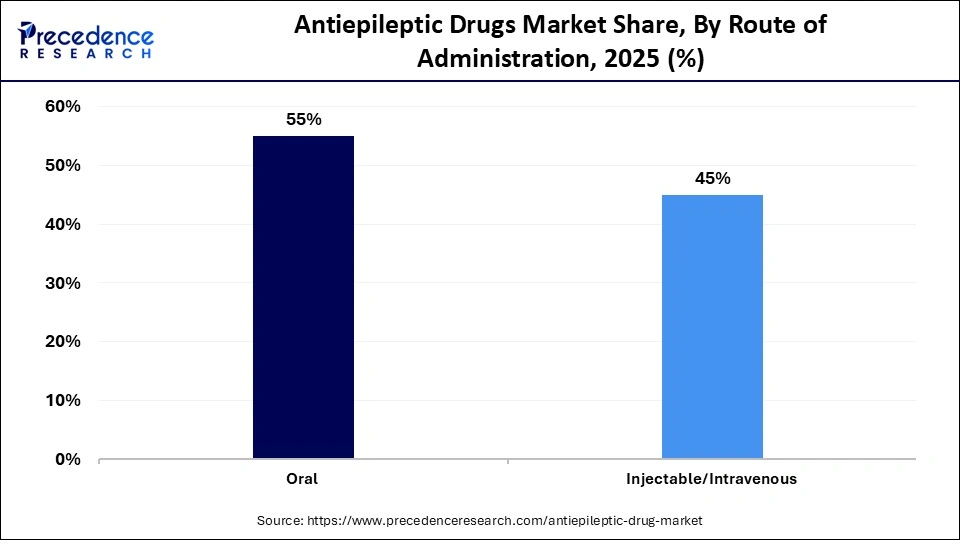
The injectable/intravenous segment is observed to be the fastest-growing segment in the foreseen period, with the highest CAGR of 4.9% due to higher demand for immediate and effective seizure control in case of emergency settings. Higher adoption of the method in healthcare facilities like hospitals and clinics also helps to propel the growth of the segment. Situations when patients are unable to take oral medications or in situations of status epilepticus, professionals suggest IV. IV is essential in case of emergency settings to avoid neuronal injury or death.
Distribution Channel Insights
Which Component of the Distribution Channel Segment Leads the Global Market in 2025?
The hospital pharmacies segment led the global antiepileptic drugs market in 2025 with approximately 50% market share due to factors such as high patient volume, specialized care for complex cases, and comprehensive inpatient/outpatient services. Special care, equipped facilities, and the use of advanced technology for elevated treatment and therapies also boost the growth of the segment. Rising epilepsy cases and the availability of experts in the field in hospitals and similar healthcare facilities also help to fuel the growth. Hospitals also serve as the first point-of-care, offering 24/7 access to therapeutic and critical care drugs.
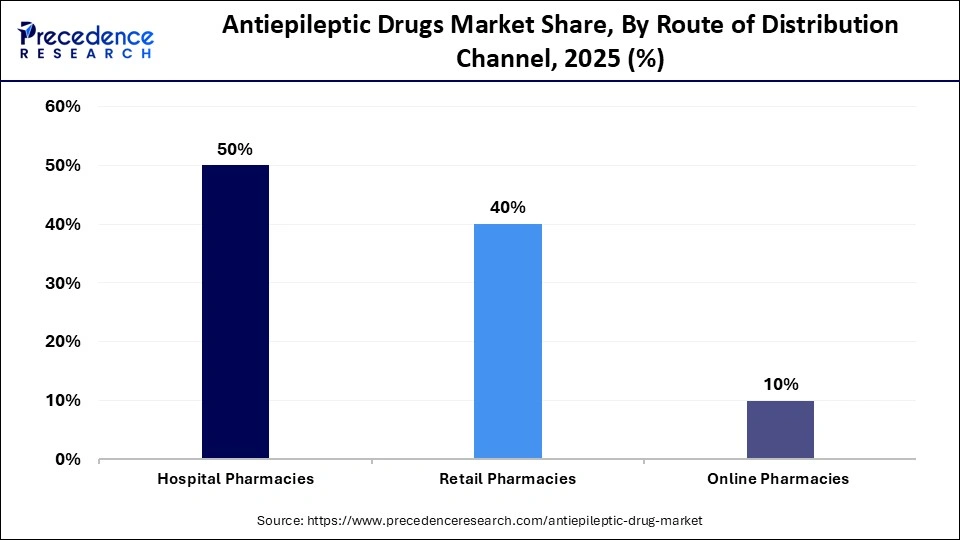
The online pharmacies segment is observed to be the fastest-growing segment in the foreseen period, with the highest CAGR of 5.2% due to growing digitization and higher demand for different types of drugs as per the patient's medical history. Higher demand for tele-neurology, higher demand for home-delivery, and other convenience factors also help to propel the growth. Expanded digital infrastructure in rural areas is another major factor. Higher adoption of digital healthcare services, broader product ranges, and detailed information about different forms of drugs also propel the growth of the segment.
Regional Insights
How Big is the North America Antiepileptic Drugs Market Size?
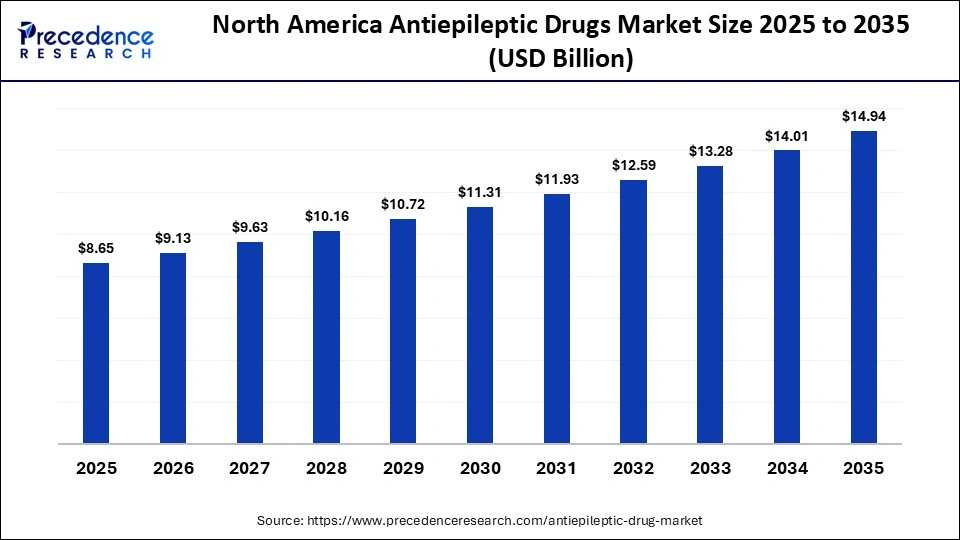
The North America antiepileptic drugs market size is estimated at USD 8.65 billion in 2025 and is projected to reach approximately USD 14.94 billion by 2035, with a 5.62% CAGR from 2026 to 2035.
Why did North America lead the Global Antiepileptic Drugs Market in 2025?
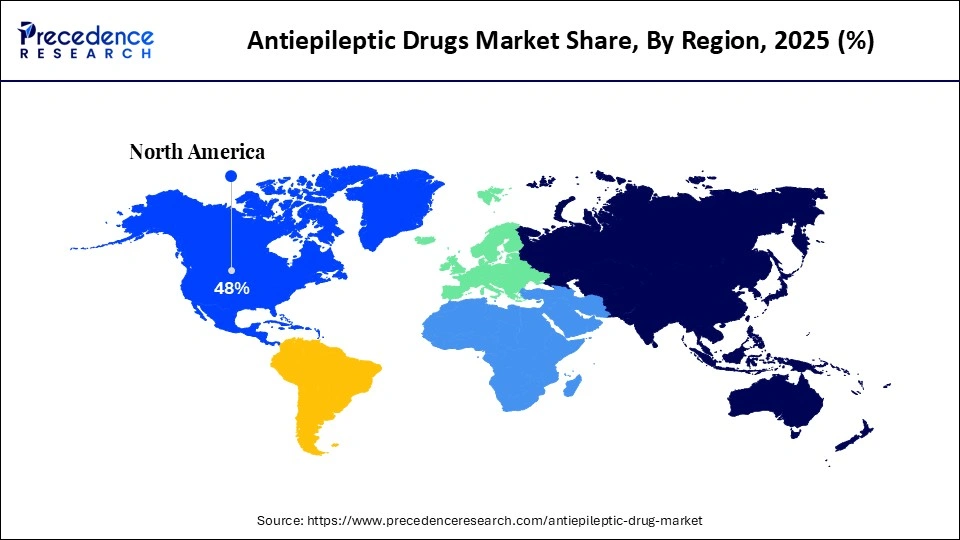
North America led the global industry with approximately 48% market share in 2025. Factors such as high epilepsy rates, high diagnosis rates, and improved healthcare infrastructure aid the growth of the market in the region. The major shift of the market towards second and third-generation drugs for improved efficacy, elevated safety, and better performance also helps to fuel the growth of the market.
The market also observes growth due to improved R&D of the industry, higher awareness, and easy reimbursement policies, which fuel the growth of the market. Neurological disorders, rising prevalence of seizures, rising elderly population, and neurological issues in the region also propel the growth of the market. Extensive neurology networks and specialized care programs of the region also help to fuel the growth of the market.
What is the Size of the U.S. Antiepileptic Drugs Market?
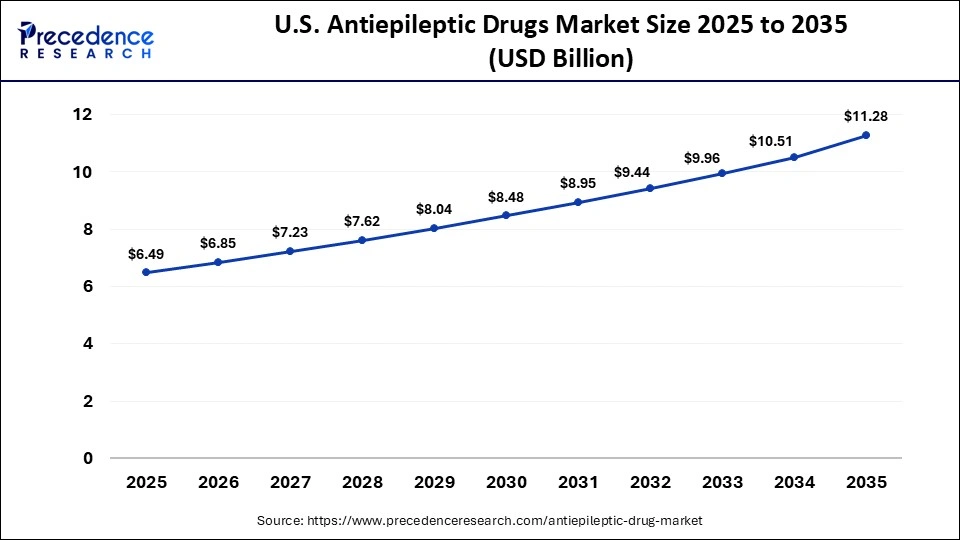
The U.S. antiepileptic drugs market size is calculated at USD 6.49 billion in 2025 and is expected to reach nearly USD 11.28 billion in 2035, accelerating at a strong CAGR of 5.68% between 2026 and 2035.
The U.S. Antiepileptic Drugs Market Trends
The U.S. has a major contribution to the growth of the market, mainly due to factors such as the rising prevalence of different forms of neurological disorders and the rising demand for treatment options for the same. Major shift of the industry towards second and third generation medications for efficient, improved, and elevated drug performance also helps to fuel the growth of the market in the foreseeable period. Higher demand for personalized medications, especially in the case of treatment-resistant epilepsy, also helps to propel the growth of the market.
Why is the Asia Pacific Observed as the Fastest Growing Segment in the Foreseen Period?
Asia Pacific is expected to be the fastest-growing region with a CAGR of 6.0% in the foreseen period due to the growing prevalence of epilepsy and other neurological issues in the region, growing expenditure for healthcare services, and higher demand for safe and effective epilepsy treatment options. The presence of major epilepsy drug manufacturers in the region and improving access to advanced care also help to fuel the growth of the market.
Improved healthcare infrastructure and government-funded healthcare improvements also help to propel the growth of the market in the foreseeable period. Higher supply of generic medications in the region, along with targeted therapies and use of personalized medications, also helps to fuel the growth of the market. Higher demand for treatment of focal seizures also helps to fuel the growth of the market in the foreseeable period.
India Antiepileptic Drugs Market Trends
India has a major contribution in the growth of the market in the foreseen period due to the rising prevalence of epilepsy in the region, leading to a major shift of the market from first-generation to second and third generation medications. Affordability, availability of generic drugs, and new drug launches simultaneously also help to propel the growth of the market in the foreseen period.
Which Factors Drive the Antiepileptic Drugs Market in Europe?
Europe is expected to grow at a notable CAGR in the foreseeable future, due to growing consciousness about the treatment of epilepsy, higher spending on health care, and robust encouragement for neurological research. The demand for antiepileptics was on the rise in hospitals and retail pharmacies since there was greater emphasis on making available neurological care over the long term.
Germany Market Trends
German markets have turned out to be very important because of the country's highly developed healthcare industry, advanced production of medications, and the widespread application of precision neurology techniques. Antiepileptic drugs were especially popular in treating various forms of focal seizures, generalized epilepsies, and resistant neurological disorders.
How is Latin America Growing in the Antiepileptic Drugs Market?
Latin America is expected to grow at a considerable CAGR in the upcoming period. It has stable growth due to the improvement of healthcare infrastructure, increased knowledge about the treatment of epilepsy, and increased availability of generic neuropharmaceuticals. Public health systems and the development of pharmacies facilitated the use of antiepileptic medication for seizure control.
Brazil Market Trends
The Brazilian market is growing due to high population number, increasing sector of pharmaceuticals, and growing importance of neurological health services. Hospitals and clinics started using antiepileptics more often for the treatment of epilepsy, while the government healthcare programs allowed making medications cheaper and available for everyone.
What are the Advancements of Antiepileptic Drugs Market in the Middle East and Africa?
The Middle East and Africa region is expected to grow at a notable CAGR in the foreseeable future, due to increased incidences of neurological disorders, better healthcare infrastructure, and more investment in specialty healthcare services. There was an expansion in the availability of antiepileptics owing to improved drug delivery systems and higher cases of epilepsy.
UAE Market Trends
The UAE market is driven by its improved health care structure, increased expenditure on health care, and the growing use of neurological medicines. Neurology clinics and specialty hospitals were concerned with improving the treatment of epilepsy through better diagnostic techniques and antiepileptic drugs.
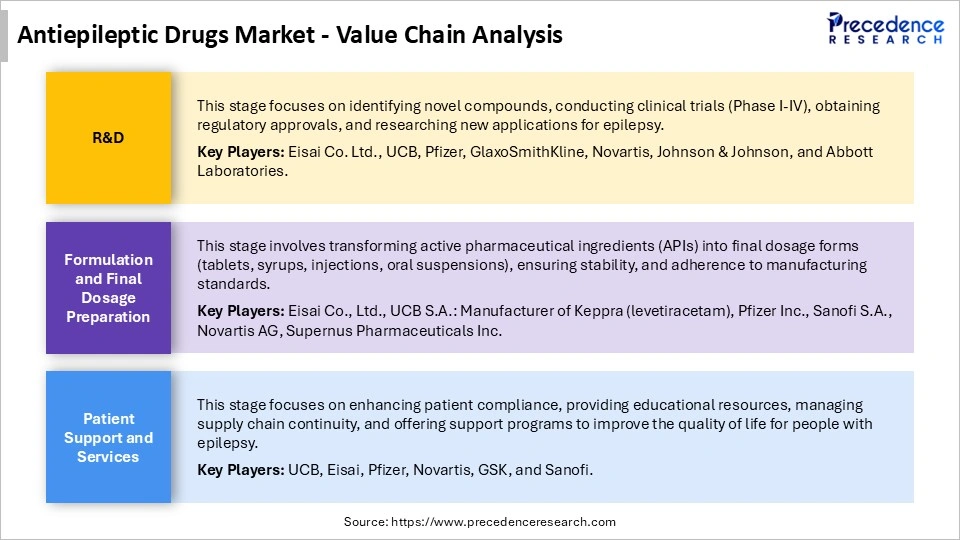
Antiepileptic Drugs Market Value Chain Analysis
Antiepileptic Drugs Market Companies
- Pfizer Inc. – Provides treatments for managing seizures using advanced neurological and central nervous system treatment offerings.
- UCB S.A – Engages in developing novel epilepsy treatments that include focal seizures and other neurological disorders.
- GlaxoSmithKline plc – Supplies antiepileptic drugs that assist in managing epilepsy on a long-term basis.
- Eisai Co., Ltd. – Produces epilepsy drugs that help control seizures and pediatric epilepsy, among others.
- Sanofi S.A. – Provides neurological and epilepsy treatments using branded and specialty pharmaceutical offerings.
Other Major Key Players
- Novartis AG
- H. Lundbeck A/S
- Johnson & Johnson
- Abbott Laboratories
- Sunovion Pharmaceuticals Inc.
- Teva Pharmaceutical Industries Ltd.
- Jazz Pharmaceuticals, Inc
- Dr. Reddy's Laboratories Ltd.
- Supernus Pharmaceuticals Inc.
- Cephalon (Teva)
Recent Developments
- In October 2025, SK Biopharmaceuticals, Co., Ltd., announced the establishment of Mentis Care, Inc., a joint venture with a leading Brazil-based pharmaceutical company, Eurofarma, with presence in 24 countries, including North America, Latin America, and Africa, to commercialize an AI-based epilepsy management platform. (Source- https://www.biospace.com)
- In April 2024, Eisai Co., Ltd. announced that the injection formulation of its in-house discovered antiepileptic drug (AED) Fycompa (perampanel hydrate) for intravenous (IV) infusion has been launched in Japan.(Source https://www.eisai.com)
Segments Covered in the Report
By Drug Generation
- First Generation
- Second Generation
- Third Generation
By Route of Administration
- Oral
- Injectable/Intravenous
By Distribution Channel
- Hospital Pharmacies
- Retail Pharmacies
- Online Pharmacies
By Region
- North America
- Europe
- Asia-Pacific
- Latin America
- Middle East & Africa
For inquiries regarding discounts, bulk purchases, or customization requests, please contact us at sales@precedenceresearch.com
Frequently Asked Questions
Tags





Ask For Sample
No cookie-cutter, only authentic analysis – take the 1st step to become a Precedence Research client
 Get a Sample



 sales@precedenceresearch.com
 Schedule a Meeting
