



B-Cell Maturation Antigen (BCMA) Targeted Therapies Market Size, Companies, Share, Patient Volume, Treatment Adoption Rates, Pricing Analysis, Regulatory Landscape, Competitive Positioning, and Demand Forecast
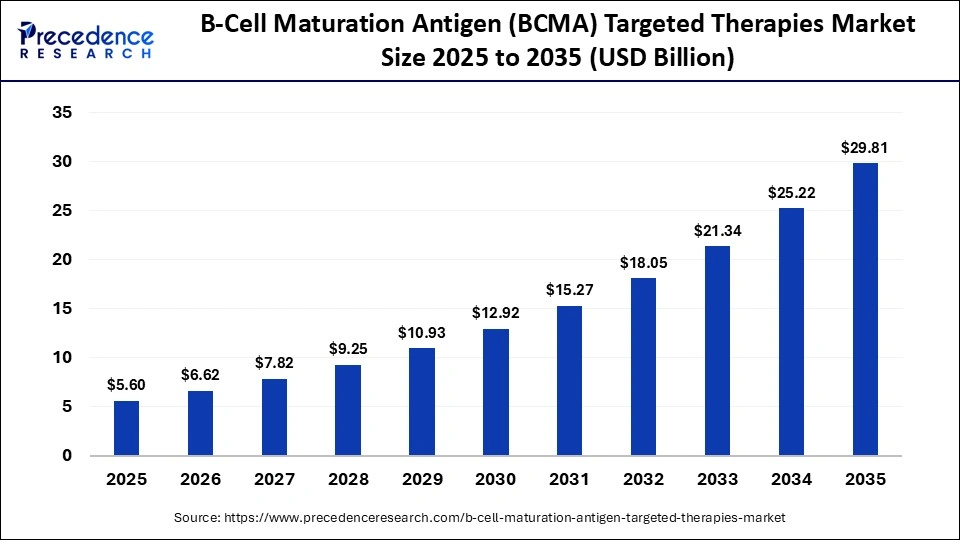
Rohan Patil, a Healthcare Industry Expert, highlights that the b-cell maturation antigen (BCMA) targeted therapies market has reached USD 6.62 billion in 2026 and is on track to reach USD 29.81 billion by 2035, advancing at a CAGR of 18.20%. Key b-cell maturation antigen (BCMA) targeted therapies market companies shaping the market include Bristol Myers Squibb, Johnson & Johnson, GSK plc, Amgen Inc., Regeneron Pharmaceuticals, Inc., while major growth segments span By Therapy Type, By Indication, By Targeting Mechanism, By Route of Administration, By End-Use.
Source: https://www.precedenceresearch.com/b-cell-maturation-antigen-targeted-therapies-market
 Get a Sample
 Table Of Content


What is the B-Cell Maturation Antigen (BCMA) Targeted Therapies Market Size in 2026?
The global B-cell maturation antigen (BCMA) targeted therapies market size accounted for USD 5.60 billion in 2025 and is predicted to increase from USD 6.62 billion in 2026 to approximately USD 29.81 billion by 2035, expanding at a CAGR of 18.20% from 2026 to 2035. The market is driven by the rising prevalence of multiple myeloma, increasing adoption of advanced immunotherapies such as CAR-T and bispecific antibodies, and strong clinical success of BCMA-targeted treatments in relapsed and refractory patients.
Key Takeaways
- North America dominated the B-cell maturation antigen (BCMA) targeted therapies market with a 45% share in 2025.
- Asia Pacific is expected to grow at the fastest CAGR of 22.5% between 2026 and 2035.
- By therapy type, the CAR-T cell therapies segment contributed the highest market share of 50% in 2025.
- By therapy type, the bispecific antibodies segment is the second-largest shareholder and is expected to grow at the fastest CAGR of 22.5% during the forecast period.
- By indication type, the multiple myeloma (relapsed/refractory) segment dominated the market with a 70% share in 2025.
- By indication type, the earlier-line multiple myeloma segment is expected to grow at a rapid CAGR of 22% in the coming years.
- By targeting mechanism, the BCMA-directed T-cell activation segment held a major market share of 55% in 2025.
- By targeting mechanism, the BCMA-targeted cytotoxic delivery segment held the second-largest market share in 2025 and is expected to grow at a 14.5% CAGR between 2026 and 2035.
- By route of administration, the intravenous (IV) segment contributed the highest market share of 75% in 2025.
- By route, the subcutaneous (SC) segment is the second-largest shareholder and is expected to grow at the fastest CAGR of 23.5% during the forecast period.
- By end-use, the hospitals & cancer centers segment contributed the highest market share of 60% in 2025.
- By end-use, the specialty oncology clinics segment is the second-largest shareholder and is expected to grow at the fastest CAGR of 20.5% during the forecast period.
Market Overview
The BCMA targeted therapies have rapidly moved from experimental concepts to a key treatment option for multiple myeloma, addressing a major unmet need as the disease remains largely incurable and its incidence continues to rise. While existing treatments extend survival, they often fail to deliver long-term remission, creating demand for more effective solutions. New approaches such as CAR-T therapies, antibody-drug conjugates, and bispecific antibodies are transforming patient outcomes. Strong regulatory support, increasing industry collaborations, and active clinical research are accelerating development, although high costs and reimbursement challenges remain important considerations for wider patient access.
How is AI Impacting the B-Cell Maturation Antigen (BCMA) Targeted Therapies Market?
Artificial intelligence technologies are making B-cell maturation antigen (BCMA) targeted therapies safe and more effective. They help researchers discover better treatments faster, design improved CAR-T cells, and identify the right patients for each therapy. AI also predicts how patients may respond, making treatments safer. At the same time, advanced technology is simplifying production, helping these life-saving therapies reach more people worldwide. For example, Ciltacabtagene autoleucel uses an advanced data-driven design to target cancer cells more precisely.
B-Cell Maturation Antigen (BCMA) Targeted Therapies Market Trends
- Emergence of Novel Therapeutics: New BCMA-targeted therapies are improving treatment effectiveness and patient outcomes. Combination approaches are gaining focus, offering more comprehensive management of multiple myeloma.
- Increased Investment in R&D: Pharma companies are increasing investments to develop advanced and more effective therapies. This is accelerating innovation and addressing unmet needs in multiple myeloma treatment.
- Regulatory Advancements: Faster approval pathways are enabling quicker access to new BCMA therapies. Stronger collaboration between regulators and industry is supporting timely treatment availability.
Market Scope
| Report Coverage | Details |
| Market Size in 2025 | USD 5.60 Billion |
| Market Size in 2026 | USD 6.62 Billion |
| Market Size by 2035 | USD 29.81 Billion |
| Market Growth Rate from 2026 to 2035 | CAGR of 18.20% |
| Dominating Region | North America |
| Fastest Growing Region | Asia Pacific |
| Base Year | 2025 |
| Forecast Period | 2026 to 2035 |
| Segments Covered | Therapy Type, Indication, Targeting Mechanism, Route of Administration, End-Use, and Region |
| Regions Covered | North America, Europe, Asia-Pacific, Latin America, and Middle East & Africa |
Market Dynamics
Drivers
Increasing Awareness of Multiple Myeloma
The B-cell maturation antigen (BCMA) targeted therapies market is primarily driven by increasing awareness of multiple myeloma and the growing adoption of advanced treatment options. Both patients and healthcare professionals are becoming more informed about the benefits of targeted therapies, leading to higher acceptance. The shift toward precision medicine is further accelerating demand, as treatments are tailored to individual patient profiles for better outcomes.
Restraint
High Costs of Treatments
High treatment costs remain a major challenge in the B-cell maturation antigen (BCMA) targeted therapies market, limiting access for many patients. Advanced therapies such as CAR-T involve complex manufacturing, specialized infrastructure, and intensive clinical management, making them expensive. In addition, reimbursement uncertainties and varying healthcare policies across regions can restrict adoption.
Opportunity
Development of Next-Gen Therapies
The market presents strong growth opportunities through the development of next-generation therapies and broader accessibility. Advances in allogeneic (off-the-shelf) treatments and gene editing technologies are expected to reduce costs and improve scalability. Expanding clinical trials and increasing collaborations between biotech companies and research institutions are accelerating innovation. Emerging markets also offer untapped potential due to improving healthcare infrastructure and rising awareness.
Segment Insights
Therapy Type Insights
B-Cell Maturation Antigen (BCMA) Targeted Therapies Market Share, By Therapy Type, 2025-2035 (%)
| Therapy Type | 2025 | 2035 | CAGR (%) |
| CAR-T Cell Therapies | 50.00% | 46.00% | 16.5% |
| Bispecific Antibodies | 30.00% | 38.00% | 22.5% |
| Antibody-Drug Conjugates (ADCs) | 20.00% | 16.00% | 14.0% |
The CAR-T Cell Therapies Segment Held a 50% Market Share in 2025
The CAR-T Cell therapies segment dominated the B-cell maturation antigen (BCMA) targeted therapies market with a major share of 50% in 2025, driven by their strong efficacy in relapsed and refractory multiple myeloma. These therapies work by reprogramming a patient's T-cells to target cancer more precisely, offering significant clinical benefits. Despite high costs and complex manufacturing, continued innovation and strong investment are supporting their growth and long-term potential in advanced cancer treatment.
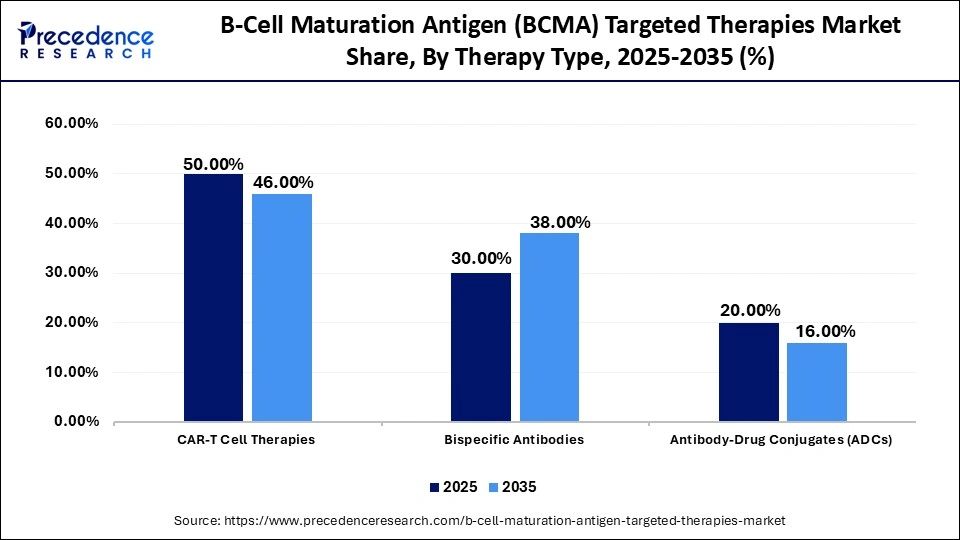
The bispecific antibodies segment held a 30% market share in 2025 and is expected to grow at the fastest CAGR of 22.5% during the projection period. This is due to their easier administration and scalability. They offer strong clinical outcomes with fewer logistical challenges, making them a more accessible alternative to CAR-T therapies.
The antibody-drug conjugates (ADCs) segment held a 20% share of the market in 2025 and is expected to grow at a significant CAGR of 14% during the projection period. This is because of their ability to deliver targeted chemotherapy directly to cancer cells. Their improved efficacy and safety profiles make them the preferred choice.
Indication Type Insights
B-Cell Maturation Antigen (BCMA) Targeted Therapies Market Share, By Indication, 2025-2035 (%)
| Indication | 2025 | 2035 | CAGR (%) |
| Multiple Myeloma (Relapsed/Refractory) | 70.00% | 60.00% | 15.5% |
| Earlier-line Multiple Myeloma | 20.00% | 30.00% | 22.0% |
| Other Hematologic Malignancies | 10.00% | 10.00% | 18.0% |
The Multiple Myeloma (Relapsed/Refractory) Segment Led the Market in 2025
The multiple myeloma (relapsed/refractory) segment dominated the B-cell maturation antigen (BCMA) targeted therapies market with the highest share of 70% in 2025, driven by current approvals of BCMA-targeted therapies primarily for relapsed/refractory multiple myeloma patients. The segment's dominance is also driven by rising patient populations and robust therapeutic developments, including the integration of combination therapies that enhance treatment outcomes.
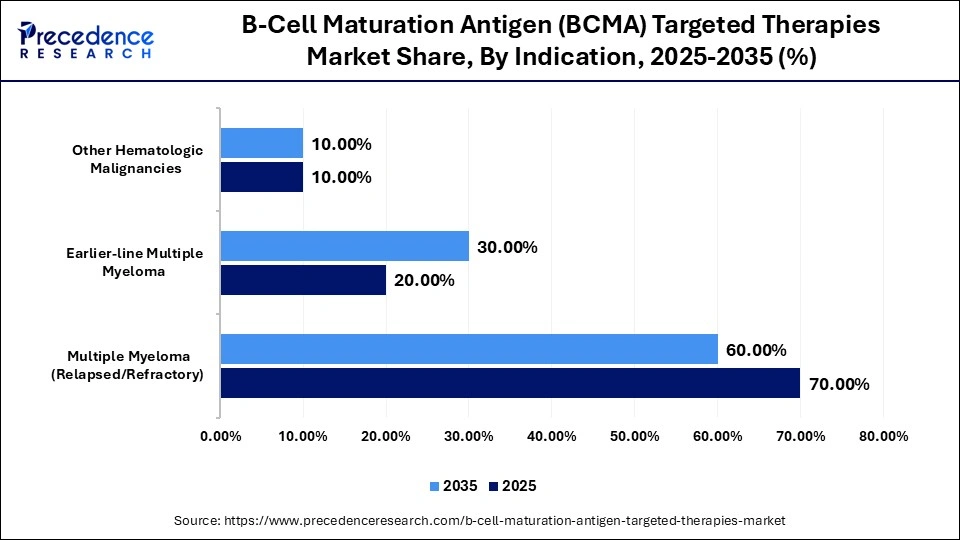
The earlier-line multiple myeloma segment held the second-largest market share of 20% in 2025 and is expected to grow at the fastest CAGR of 22.5% during the projection period, as therapies move to earlier treatment stages. Expanding use of BCMA targeted therapies in broader patient groups and a focus on personalized treatment are driving segmental growth.
The other hematologic malignancies segment held a 10% share of the market in 2025 and is expected to grow at a significant CAGR of 18% during the projection period due to ongoing research in exploring the potential of BCMA-targeted therapies. Emerging clinical trials in other blood cancers are creating future growth opportunities.
Targeting Mechanism Insights
B-Cell Maturation Antigen (BCMA) Targeted Therapies Market Share, By Targeting Mechanism, 2025-2035 (%)
| Targeting Mechanism | 2025 | 2035 | CAGR (%) |
| BCMA-directed T-cell Activation | 55.00% | 60.00% | 20.5% |
| BCMA-targeted Cytotoxic Delivery | 25.00% | 20.00% | 14.5% |
| Dual-targeting / Multi-antigen Approaches | 20.00% | 20.00% | 23.0% |
The BCMA-Directed T-Cell Activation Segment Dominated the Market in 2025
The BCMA-directed T-cell activation segment dominated the B-cell maturation antigen (BCMA) targeted therapies market with a major share of 55% in 2025, supported by the strong clinical efficacy of CAR-T therapies and bispecific antibodies. These approaches directly activate the patient's immune system to recognize and destroy cancer cells, delivering durable responses in difficult-to-treat cases. Growing clinical success, ongoing innovations, and expanding indications continue to strengthen its position as the preferred mechanism in BCMA-targeted therapy development.
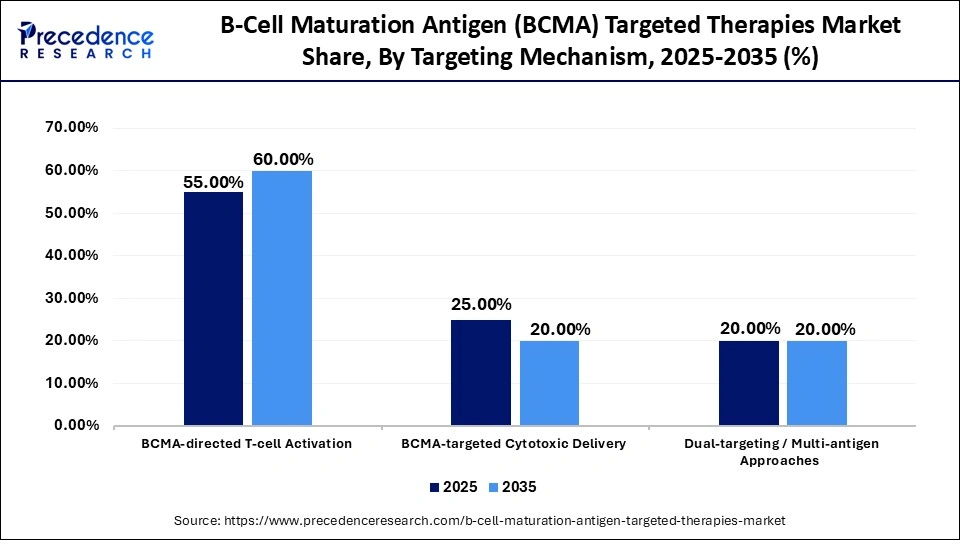
The BCMA-targeted cytotoxic delivery segment held a 25% market share in 2025 and is expected to grow at a CAGR of 14.5% during the projection period, driven by antibody-drug conjugates delivering targeted chemotherapy to cancer cells. However, its growth is gradually slowing as immune-based therapies gain preference due to better long-term outcomes and safety profiles.
The dual-targeting / multi-antigen approaches segment held a 20% share of the market in 2025 and is expected to grow at the fastest CAGR of 23% during the projection period. This is because dual-targeting approaches are rapidly emerging to overcome resistance and improve long-term outcomes in patients.
Route of Administration Insights
The IV Segment Held a 75% Share of the Market in 2025
The intravenous (IV) segment dominated the B-cell maturation antigen (BCMA) targeted therapies market with a major share of 75% in 2025, driven by CAR-T therapies and many antibody-based treatments requiring infusion in clinical settings. Its ability to deliver high drug doses quickly and effectively, resulting in rapid therapeutic effects. This method is particularly beneficial for treating complex conditions, where patient response time is critical.
B-Cell Maturation Antigen (BCMA) Targeted Therapies Market Share, By Route of Administration, 2025-2035 (%)
| Route of Administration | 2025 | 2035 | CAGR (%) |
| Intravenous (IV) | 75.00% | 65.00% | 16.0% |
| Subcutaneous (SC) | 25.00% | 35.00% | 23.5% |
The subcutaneous (SC) segment held a 25% market share in 2025 and is expected to grow at the fastest CAGR of 23.5% during the projection period due to its convenience and flexibility. It supports self-administration, reduces hospital visits, and improves patient comfort, making it increasingly preferred for long-term treatment use.
End-Use Insights
The Hospitals & Cancer Centers Segment Held a 60% Market Share in 2025
The hospitals & cancer centers segment dominated the B-cell maturation antigen (BCMA) targeted therapies market with a major share of 60% in 2025, supported by the advanced infrastructure needed for complex therapies like CAR-T. These facilities offer integrated care, specialized equipment, and continuous patient monitoring, making them the primary choice for treatment. Their ability to manage high-risk cases and deliver comprehensive oncology services sustains their dominant position.
B-Cell Maturation Antigen (BCMA) Targeted Therapies Market Share, By End-Use, 2025-2035 (%)
| End-Use | 2025 | 2035 | CAGR (%) |
| Hospitals & Cancer Centers | 60.00% | 55.00% | 16.5% |
| Specialty Oncology Clinics | 25.00% | 30.00% | 20.5% |
| Academic & Research Institutes | 15.00% | 15.00% | 18.0% |
The specialty oncology clinics segment held a 25% market share in 2025 and is expected to grow at the fastest CAGR of 20.5% during the projection period. Specialty clinics are the fastest-growing segment due to the expansion of outpatient cancer care and the administration of newer therapies. These facilities offer tailored therapies and patient-centric care models.
The academic & research institutes segment held a 15% share of the market in 2025 and is expected to grow at a significant CAGR of 18% during the projection period. This is because these institutions contribute to clinical trials, early adoption, and the development of next-generation therapies.
Regional Insights
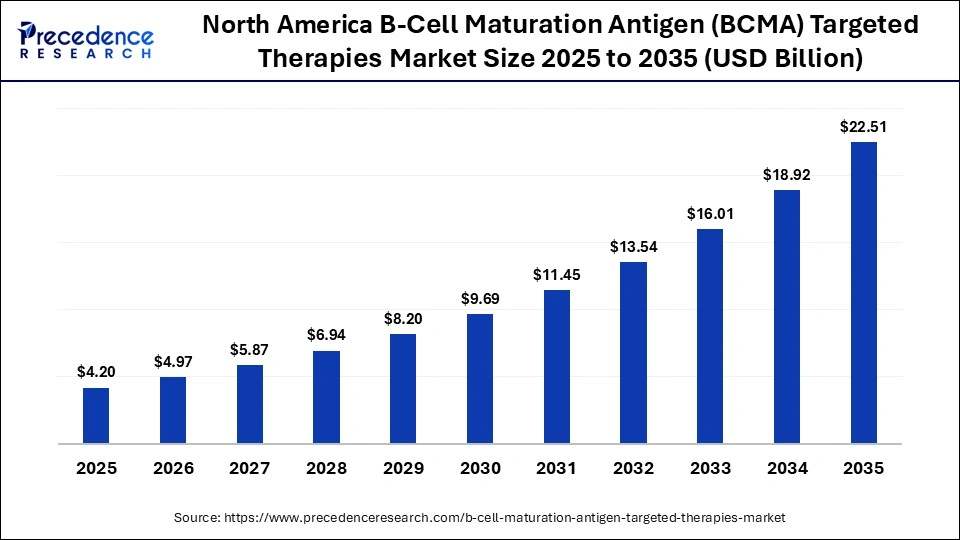
North America B-Cell Maturation Antigen (BCMA) Targeted Therapies Market Size and Growth 2026 to 2035
The North America B-cell maturation antigen (BCMA) targeted therapies market size is estimated at USD 4.20 billion in 2025 and is projected to reach approximately USD 22.51 billion by 2035, with a 18.28% CAGR from 2026 to 2035.
Why Did North America Lead the Market in 2025?
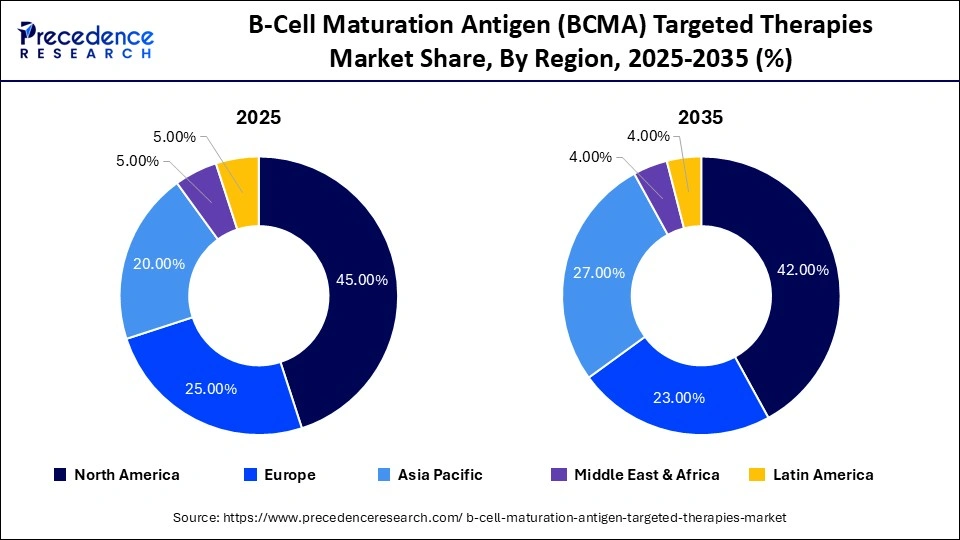
North America dominated the B-cell maturation antigen (BCMA) targeted therapies market by holding a major share of 45% in 2025. The region's dominance is supported by early therapy approvals, strong clinical pipelines, and the presence of leading biopharma companies. The region also benefits from advanced healthcare infrastructure and high R&D spending. Favorable regulatory support, especially from the U.S. Food and Drug Administration, continues to accelerate innovation in the market. Rising multiple myeloma cases is also driving the demand for BCMA-targeted therapies.
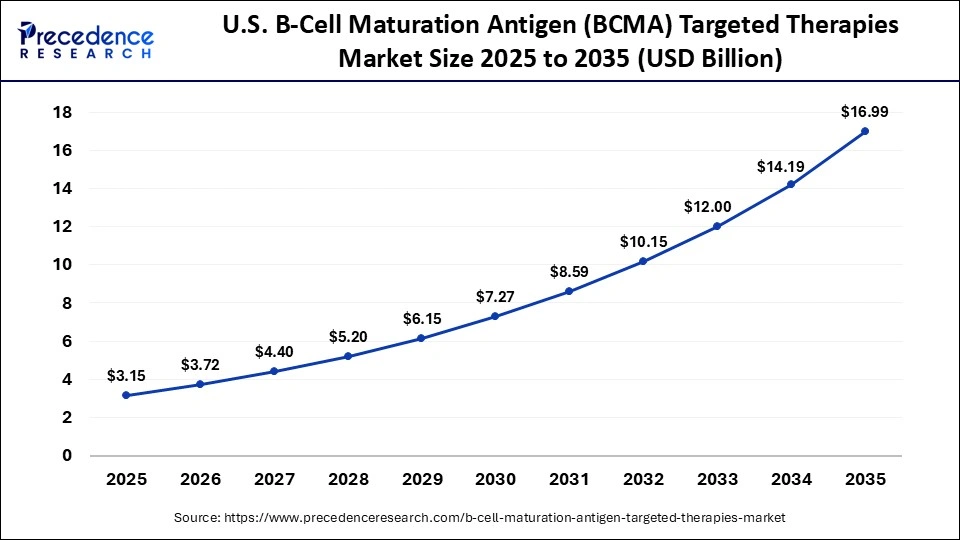
U.S. B-Cell Maturation Antigen (BCMA) Targeted Therapies Market Size and Growth 2026 to 2035
The U.S. B-cell maturation antigen (BCMA) targeted therapies market size is calculated at USD 3.15 billion in 2025 and is expected to reach nearly USD 16.99 billion in 2035, accelerating at a strong CAGR of 18.36% between 2026 and 2035.
U.S. Market Analysis
The U.S. is a major contributor to the North America B-cell maturation antigen (BCMA) targeted therapies market, supported by strong clinical research, early adoption of advanced therapies, and major industry players. High healthcare spending, robust reimbursement systems, and continuous innovation in oncology support market expansion and patient access.
Why is Asia Pacific Undergoing the Fastest Growth in the Market?
Asia Pacific held a 20% share of the B-cell maturation antigen (BCMA) targeted therapies market in 2025 and is expected to grow at the fastest CAGR of 22.5% during the projection period. The regional market growth is driven by rising healthcare spending, expanding clinical trials, and increasing awareness of targeted therapies. Strong government support and a growing patient base in countries like Japan and China are further accelerating adoption and improving treatment access.
China Market Analysis
China is a major player in the market within Asia Pacific, supported by strong government backing and rising investment in research and development. The country is rapidly advancing in innovative therapy development, while increasing participation from domestic and global companies is intensifying competition and speeding up innovation in BCMA-targeted treatments.
India Market Analysis
India is emerging as a rapidly growing market due to improving healthcare infrastructure and rising awareness of advanced cancer therapies. Increasing investments, growing clinical research activity, and better patient access to innovative treatments are steadily supporting market expansion and adoption across the country.
Why is Europe Experiencing Notable Growth in the Market?
Europe was the second-largest market in 2025, holding a 25% share, and is expected to grow at a notable CAGR of 16.5% during the projection period. This is mainly due to the rising cases of hematological cancers, supportive regulations, and strong research collaborations. Countries like Germany and the UK lead the market, supported by advanced healthcare systems and active pharmaceutical innovation, improving access to modern therapies.
Middle East & Africa B-cell Maturation Antigen (BCMA) Targeted Therapies Market
The Middle East & Africa (MEA) is experiencing steady growth in the market, driven by increasing healthcare investments, improving infrastructure, and rising awareness of cancer treatments. Collaborations with global pharmaceutical companies are supporting progress, though limited access and regulatory challenges still slow adoption. Countries like the UAE and South Africa are leading efforts to expand access to advanced therapies.
South America B-cell Maturation Antigen (BCMA) Targeted Therapies Market
South America is witnessing gradual growth, driven by the rising adoption of advanced oncology treatments. Improving healthcare systems, raising awareness, and increasing investments are helping expand access. While progress is steady, challenges such as affordability and uneven healthcare access continue to influence the pace of market development across the region.
B-Cell Maturation Antigen (BCMA) Targeted Therapies Market Companies
- Bristol Myers Squibb
- Johnson & Johnson
- GSK plc
- Amgen Inc.
- Regeneron Pharmaceuticals, Inc.
- Sanofi S.A.
- Novartis AG
- Pfizer Inc.
- Legend Biotech Corporation
- Bluebird Bio, Inc.
- BeiGene, Ltd.
- Fate Therapeutics, Inc.
- Cartesian Therapeutics, Inc.
- Autolus Therapeutics plc
- Allogene Therapeutics, Inc
Recent Developments
- On April 1, 2026, the FDA granted regenerative medicine advanced therapy (RMAT) designation to CB-011, an allogeneic anti–B-cell maturation antigen (BCMA) chimeric antigen receptor (CAR) T-cell therapy for the treatment of relapsed or refractory multiple myeloma (R/R MM).1 The designation is based on promising early clinical data from the ongoing CaMMouflage phase 1 trial (NCT05722418).(Source: https://www.targetedonc.com)
- On October 31, 2025, IASO Bio partnered with GC Cell to bring CAR-T therapy to Korea. Nanjing IASO Biotechnology has signed an agreement with Korea's GC Cell to introduce the CAR-T therapy "Fucaso" (Equecabtagene Autoleucel) to the South Korean market for the treatment of multiple myeloma.(Source: https://www.biospectrumasia.com)
Segments Covered in the Report
By Therapy Type
- CAR-T Cell Therapies (Autologous & Allogeneic)
- Bispecific Antibodies (T-cell Engagers)
- Antibody-Drug Conjugates (ADCs)
By Indication
- Multiple Myeloma (Relapsed/Refractory)
- Earlier-line Multiple Myeloma
- Other Hematologic Malignancies (Emerging Indications)
By Targeting Mechanism
- BCMA-directed T-cell Activation
- BCMA-targeted Cytotoxic Delivery (ADC-based)
- Dual-targeting / Multi-antigen Approaches
By Route of Administration
- Intravenous (IV)
- Subcutaneous (SC)
- By End-Us
- Hospitals & Cancer Centers
- Specialty Oncology Clinics
- Academic & Research Institutes
By Region
- North America
- Latin America
- Europe
- Asia-pacific
- Middle and East Africa
For inquiries regarding discounts, bulk purchases, or customization requests, please contact us at sales@precedenceresearch.com
Frequently Asked Questions





Ask For Sample
No cookie-cutter, only authentic analysis – take the 1st step to become a Precedence Research client
 Get a Sample




 sales@precedenceresearch.com
 Schedule a Meeting
