



Bioresorbable Coronary Stents Market Size, Share and Trends 2026 to 2035
Bioresorbable Coronary Stents Market (By Material: Polymer, Metal; By Drug: Sirolimus, Novalimus, Others; By End Use: Inpatient Facilities, Outpatient Facilities) - Global Industry Analysis, Size, Trends, Leading Companies, Regional Outlook, and Forecast 2026 to 2035
Source: https://www.precedenceresearch.com/bioresorbable-coronary-stents-market
 Get a Sample
 Table Of Content


What is the Bioresorbable Coronary Stents Market Size?
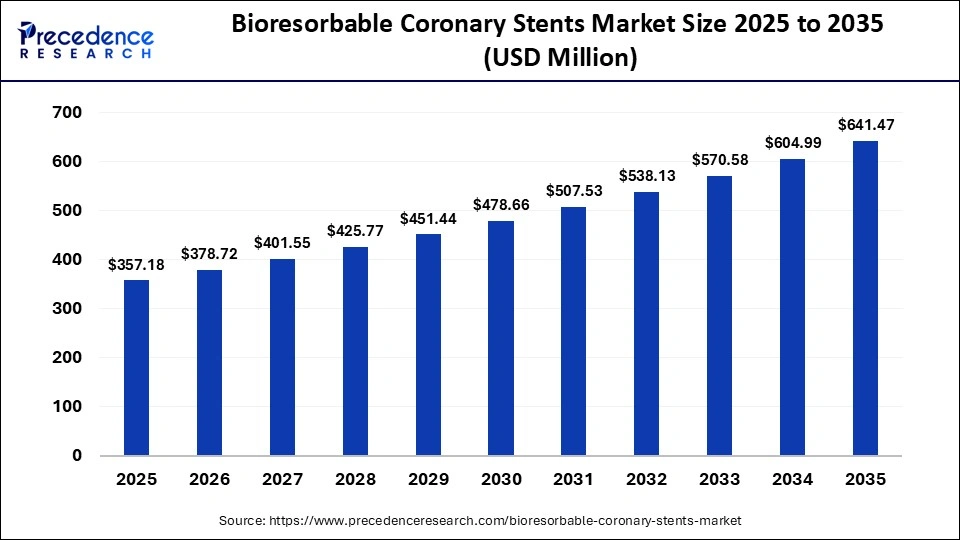
The global bioresorbable coronary stents market size was calculated at USD 357.18 million in 2025 and is predicted to increase from USD 378.72 million in 2026 to approximately USD 641.47 million by 2035, expanding at a CAGR of 6.03% from 2026 to 2035.The market is driven by the increasing prevalence of cardiovascular diseases and the rising demand for minimally invasive surgical options. Additionally, advancements in materials science and technology have led to the development of more effective and safer bioresorbable stents, further propelling market growth.
Market Highlights
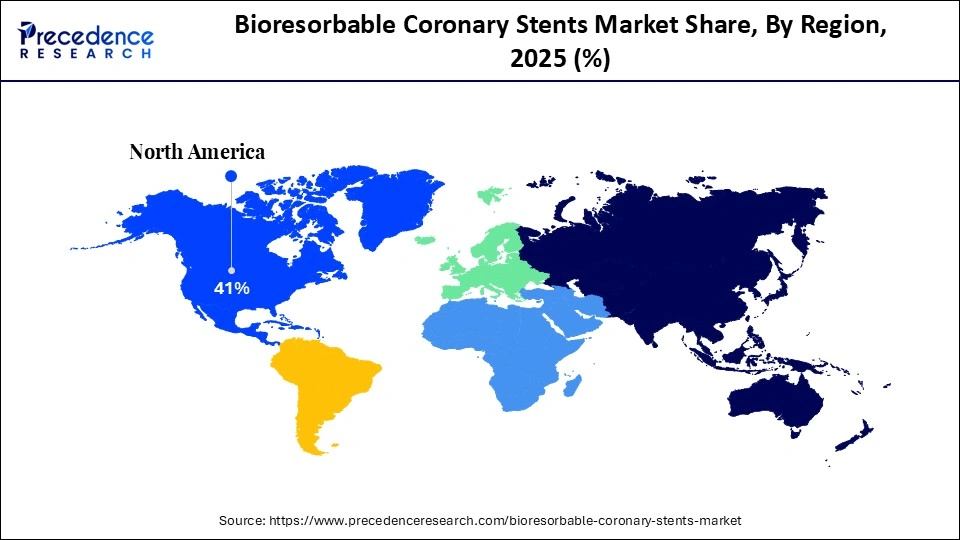
- North America dominated the global bioresorbable coronary stents market with the largest market share of 41% in 2025.
- Asia-Pacific is expected to grow at the fastest CAGR in the market during the forecast period.
- By material, the polymer segment held a dominant position in the market in 2025.
- By material, the metal segment is expected to grow at the fastest CAGR in the market between 2026 and 2035.
- By drug, the sirolimus segment accounted for a considerable revenue share in the market in 2025.
- By drug, the novalimus segment is expected to grow with the highest CAGR in the market during the studied years.
- By end use, the outpatient facilities segment led the global market in 2025.
- By end use, the inpatient facilities segment is expected to expand rapidly in the market in the coming years.
Healing the Heart, Then Disappearing: The Rise of Bioresorbable Coronary Stents
The bioresorbable coronary stents market is gaining attention as clinicians seek alternatives to permanent metallic implants for the treatment of coronary artery disease. These stents are designed to provide temporary vessel support and then gradually dissolve, restoring natural vascular function over time. The growing demand for minimally invasive cardiac procedures and improved long-term patient outcomes drives market growth. Advancements in material science and clinical validation are steadily reshaping the competitive landscape.
What is the Role of AI in the Bioresorbable Coronary Stents Market?
Artificial intelligence (AI) allows researchers to develop novel, advanced coronary stents with improved mechanical performance, endothelialization, and drug delivery. AI and machine learning (ML) algorithms can analyze vast amounts of patient data and suggest an appropriate stent type based on patients' conditions. They facilitate the development of bioinspired stents integrated with nanostructured surfaces and exosome-mimetic coatings, revitalizing natural vascular healing mechanisms through targeted, smart therapeutic applications.
AI also streamlines the manufacturing process of bioresorbable coronary stents by introducing automation and reducing human intervention. AI-based predictive maintenance allows manufacturers to detect potential errors and make proactive decisions. It enables quality control and process optimization, enhancing efficiency and reproducibility. AI can also be embedded in 3D printing techniques to facilitate the design and manufacturing of customized bioresorbable coronary stents, reducing material wastage and generating high-quality devices.
Bioresorbable Coronary Stents Market Trends
- Natural Vasomotion in Stent Resorption: Bioresorbable stents have a unique ability to disappear after a certain period, allowing the blood vessels to return to their natural physiological state and restore vasomotor function naturally.
- Slow Transition to Bioresorbable Solutions: The medical community demands more effective and safer alternatives to permanent metallic implants for treating coronary artery disease. With advancements in materials and technology, these stents not only provide temporary support but also promote natural healing within the vascular system, catering to a rising demand for minimally invasive procedures and improved patient outcomes.
- Data and Clinical Outcomes in Practice: Ongoing R&D by cardiovascular device makers addresses previous performance shortfalls. Advancements in material science facilitate the development of effective stents that provide temporary support before naturally dissolving, thereby enhancing patient outcomes and promoting natural vascular healing.
Market Scope
| Report Coverage | Details |
| Market Size in 2025 | USD 357.18 Million |
| Market Size in 2026 | USD 11.85 Million |
| Market Size by 2035 | USD 641.47 Million |
| Market Growth Rate from 2026 to 2035 | CAGR of 6.03% |
| Dominating Region | North America |
| Fastest Growing Region | Asia Pacific |
| Base Year | 2025 |
| Forecast Period | 2026 to 2035 |
| Segments Covered | Material, Drug, End Use, and Region |
| Regions Covered | North America, Europe, Asia-Pacific, Latin America, and Middle East & Africa |
Segmental Insights
Material Insights
Why Did the Polymer Segment Dominate the Bioresorbable Coronary Stents Market?
The polymer segment held a dominant position in the market in 2025, due to its extensive clinical history and early commercialization. Polymers provide predictable degradation profiles, allowing temporary vascular support followed by gradual resorption. Strong familiarity among interventional cardiologists has supported widespread adoption of coronary interventions. Polymer platforms also enable effective drug-eluting capabilities, reducing retention risk. Continuous improvements in polymer strength and biocompatibility reinforce the segment's growth.
The metal segment is expected to show the fastest growth over the forecast period, due to its superior radial strength compared to polymers. These stents provide improved acute vessel support during the critical healing phase. Faster and more uniform resorption reduces the long-term presence of foreign bodies in the arteries. Advancements in alloy composition are enhancing safety and performance. Increasing clinical confidence is driving rapid adoption of metal-based bioresorbable stents.
Drug Insights
How the Sirolimus Segment Dominated the Bioresorbable Coronary Stents Market?
The sirolimus segment held the largest revenue share of the market in 2025, owing to its proven efficacy in inhibiting smooth muscle cell proliferation and preventing restenosis. Its well-established safety profile has made it the preferred drug in biodegradable stent platforms. Sirolimus enables controlled drug release, supporting consistent vascular healing. Strong clinical evidence and physician familiarity reinforce its widespread use. Continued integration with advanced stent designs sustains its leadership.
The novalimus segment is expected to expand rapidly in the market in the coming years, driven by its potent antiproliferative properties and shorter half-life. This allows effective inhibition of neointimal hyperplasia while minimizing long-term drug exposure. Growing interest in optimizing healing and reducing late thrombosis is supporting adoption. Clinical studies are demonstrating favorable outcomes compared to first-generation drugs. As next-generation stent platforms evolve, novalimus-based systems are gaining momentum.
End Use Insights
Which End Use Segment Led the Bioresorbable Coronary Stents Market?
The outpatient facilities segment led the global market in 2025, driven by the growing popularity of same-day discharge and minimally invasive cardiac surgeries. New developments in interventional methods have shortened recovery time, and it has become feasible to conduct them in outpatient facilities. These facilities have affordable care and efficient processes. Stent procedures have a regular demand due to high patient throughput. Their dominance is supported by a strong preference towards efficiency.
The inpatient facilities segment is expected to grow with the highest CAGR in the market during the studied years, due to the increasing rates of complex and high-risk cardiac cases. Commonly, patients with multiple comorbidities need a long-term monitoring system and specialized care. Inpatient cardiac units in hospitals are on the rise to deal with advanced interventions. The implementation of new stent technologies helps achieve better outcomes in severe cases.
Regional Insights
How Big is the North America Bioresorbable Coronary Stents Market Size?
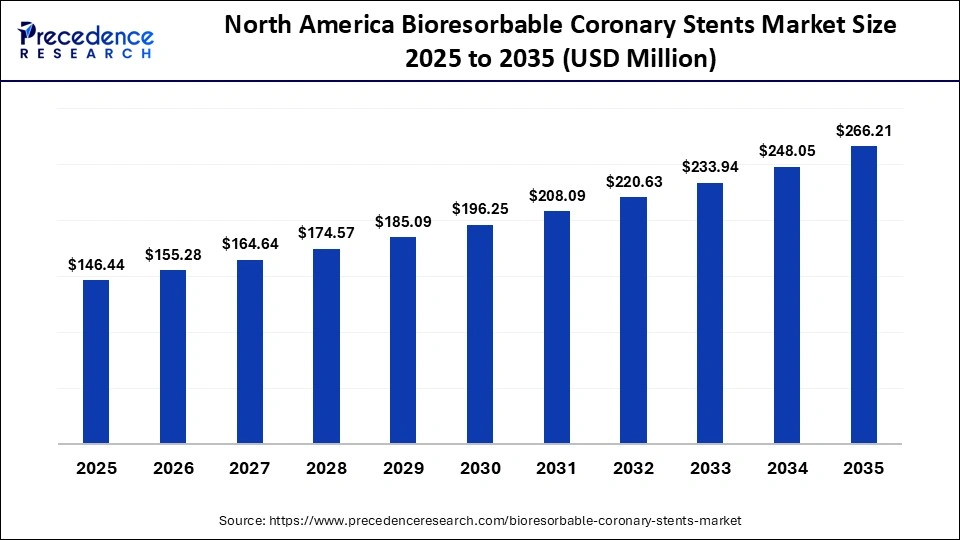
The North America bioresorbable coronary stents market size is estimated at USD 146.44 million in 2025 and is projected to reach approximately USD 266.21 million by 2035, with a 6.16% CAGR from 2026 to 2035.
Why North America Dominated the Bioresorbable Coronary Stents Market?
North America held a major revenue share of the market in 2025, driven by high rates of coronary artery disease and the rising number of elderly patients. Favorable reimbursement policies encourage the adoption of next-generation stent solutions in states and private healthcare facilities. The region benefits from major manufacturing companies of medical devices and dynamic clinical research systems. Well-established physician awareness and training programs can increase confidence in bioresorbable platforms. The combination of those factors helps North America sustain the leading position.
What is the Size of the U.S. Bioresorbable Coronary Stents Market?
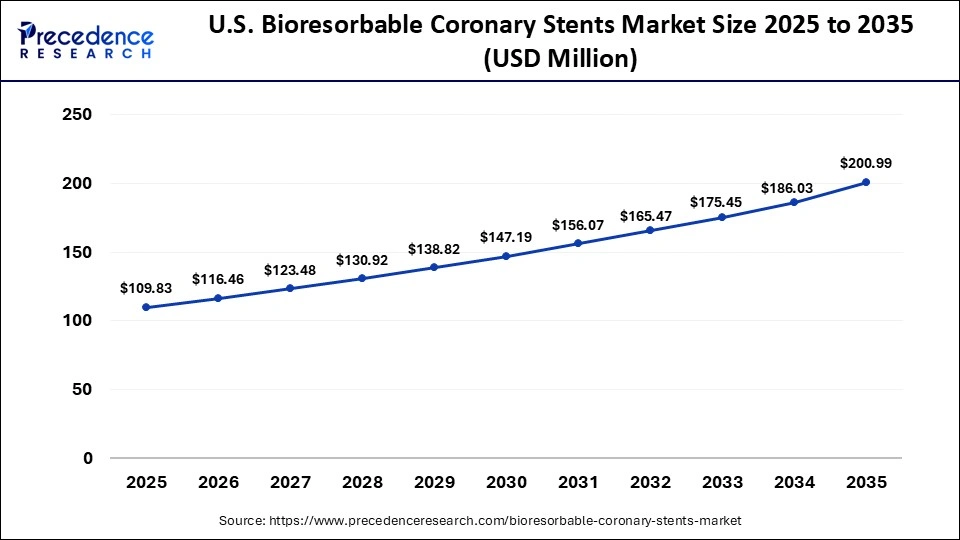
The U.S. bioresorbable coronary stents market size is calculated at USD 109.83 million in 2025 and is expected to reach nearly USD 200.99 billion in 2035, accelerating at a strong CAGR of 6.23% between 2026 and 2035.
Country Level Analysis
At the country level, the U.S. accounts for the highest regional share because of large volumes of percutaneous coronary intervention (PCI) and the quick adoption of new stent technology. There is a wide range of clinical trials and post-market surveillance programs to support early adoption. Innovation diffusion is achieved through strong cooperation between the device companies and larger cardiac centers. Canada is also making steady contributions based on universal healthcare insurance and increasing investments in interventional cardiology.
How is Asia-Pacific Growing in the Bioresorbable Coronary Stents Market?
Asia-Pacific is expected to host the fastest-growing market in the coming years, due to the increase in the burden of cardiovascular disease, mainly caused by rapid urbanization, lifestyle modifications, and an aging demographic. In response, governments are making substantial investments in healthcare infrastructure, particularly in the establishment of state-of-the-art catheterization laboratories equipped for interventional cardiology procedures.
Moreover, there is growing recognition among healthcare professionals of the long-term advantages associated with bioresorbable stents, which is facilitating their adoption in clinical practice. The rise in medical tourism in specific countries is also contributing to an increase in procedural volumes. Together, these factors position Asia-Pacific as a promising area for market growth.
Country Level Analysis
At the country level, China leads regional growth due to large patient volumes, expanding hospital networks, and strong domestic medical device manufacturing. India is emerging rapidly, supported by the increasing affordability of advanced stent technologies and the expansion of cardiac care centres in tier-2 cities.
Japan contributes through strong clinical research, technological innovation, and an aging population with high cardiovascular risk. South Korea is gaining traction due to advanced healthcare systems and early adoption of innovative cardiovascular devices. Australia supports steady growth with high clinical standards and reimbursement coverage.
Will Europe Grow in the Bioresorbable Coronary Stents Market?
Europe is considered to be a significantly growing area, due to the rising demand for advanced coronary procedures and long-term patient outcomes. Minimally invasive cardiovascular technologies are gaining traction in public healthcare systems across the region. Restoration of the function of natural vessels following stent resorption is of increasing interest to European clinicians. The progressive integration and broadening of clinical evidence in the real world are promising an increased uptake. Innovation is initiated through strong academic research and clinical networks. Europe is therefore emerging as a growth powerhouse in the bioresorbable coronary stents.
Country Level Analysis
Germany is the regional leader because of the high level of cardiovascular procedure volumes and the developed hospital infrastructure. France has been experiencing fast adoption with government healthcare financing and early integration of clinical practices. The UK is increasing utilization by NHS-supported appraisals and cardiac specialty facilities. Increased adoption is also being witnessed in Italy and Spain, owing to the rise in prevalence of cardiovascular diseases.
Bioresorbable Coronary Stents Market Value Chain Analysis
- R&D
R&D helps develop bioresorbable polymers and magnesium-based alloys to enhance radial strength, controlled degradation, and long-term safety. Significant efforts are also directed toward improving stent design and drug-elution profiles to reduce restenosis and thrombosis risks.
Key players: Abbott, Boston Scientific, BIOTRONIK, Elixir Medical, Medtronic
- Clinical Trials and Regulatory Approvals
Clinical trials play a critical role in validating safety, efficacy, and long-term outcomes due to the innovative nature of bioresorbable stents. Regulatory approvals require extensive real-world evidence and post-market surveillance to address earlier generation performance concerns.
Key players: Abbott, BIOTRONIK, Terumo Corporation, Elixir Medical
- Formulation and Final Dosage Preparation
This stage involves precise manufacturing of stent scaffolds, drug-eluting coatings, and polymer matrices to ensure consistent performance and predictable resorption. High-precision engineering and quality control are essential to maintain mechanical integrity during implantation.
Key players: Medtronic, Boston Scientific, Terumo Corporation, MicroPort Scientific
- Packaging and Sterilization
Packaging and sterilization processes ensure device sterility, structural stability, and extended shelf life under stringent regulatory standards. Specialized sterile barrier systems are used to protect delicate bioresorbable materials from environmental degradation.
Key Players: Steris, 3M Health Care, West Pharmaceutical Services, Nipro
- Distribution to Hospital Pharmacies
Distribution is primarily through direct sales channels to hospitals and cardiac catheterization labs, supported by specialized logistics for medical devices. Strong clinical training and supply reliability are critical to support interventional cardiologists.
Key players: Cardinal Health, Medline Industries, Owens & Minor
- Patient Support and Services
Patient support services focus on post-procedure education, adherence to antiplatelet therapy, and long-term follow-up monitoring. These services enhance clinical outcomes and build physician and patient confidence in bioresorbable technologies.
Key players: Abbott, Medtronic, Boston Scientific
Who are the Major Players in the Global Bioresorbable Coronary Stents Market?
The major players in the bioresorbable coronary stents market include Biotronik, Meril Life Sciences Pvt. Ltd., Elixir Medical, REVA Medical, LLC,, Arterial Remodeling Technologies SA LEPU Medical, Microport Scientific Corporation, LifeTech Scientific, Abbott Laboratories, Boston Scientific Corporation, Medtronic plc, Terumo Corporation, Johnson & Johnson, Braun Melsungen AG, R. Bard (acquired by BD), BIOTRONIK SE & Co. KG, Cook Medical, MicroPort Scientific Corporation
Recent Developments
- In November 2025, researchers from Asan Medical Center announced results of their proof-of-concept study evaluating the safety and efficacy of a minimally overlapping technique using bioresorbable scaffolds in a porcine coronary artery model. Their research suggests that the end-to-end method may be a favorable strategy for treating long diffuse coronary lesions.(Source: https://www.nature.com)
- In September 2024, researchers from Fribourg University and Hospital conducted the EverBio-2 trial to compare 10-year clinical outcomes of patients treated with bioresorbable vascular scaffolds (BVSs) and drug-eluting metallic stents (DESs). The rates of device-oriented composite events (DOCE) and patient-oriented composite events (POCE) were similar in BVSs and DESs.(Source: https://www.frontiersin.org)
Segments Covered in the Report
By Material
- Polymer
- Metal
By Drug
- Sirolimus
- Novalimus
- Others
By End Use
- Inpatient Facilities
- Outpatient Facilities
By Region
- North America
- Europe
- Asia-Pacific
- Latin America
- Middle East & Africa
For inquiries regarding discounts, bulk purchases, or customization requests, please contact us at sales@precedenceresearch.com
Frequently Asked Questions





Ask For Sample
No cookie-cutter, only authentic analysis – take the 1st step to become a Precedence Research client
 Get a Sample



 sales@precedenceresearch.com
 Schedule a Meeting
