



Blood Screening Market Size, Key Companies, Market Share, Technology Adoption, Healthcare Spending, Pricing Analysis, Regulatory Landscape, Competitive Positioning, and Growth Forecast
Deepa Pandey, a Healthcare Industry Expert, highlights that the blood screening market has reached USD 4.3 billion in 2026 and is on track to reach USD 11.5 billion by 2035, advancing at a CAGR of 11.7%. Key blood screening market companies shaping the market include Abbott Laboratories, Roche Diagnostics, Bio-Rad Laboratories, Inc., Thermo Fisher Scientific Inc, while major growth segments span By Technology, By Product, By Region.
Source: https://www.precedenceresearch.com/blood-screening-market
 Get a Sample
 Table Of Content


What is the Blood Screening Market Size?
The global blood screening market size accounted at USD 4.30 billion in 2025 and is expected to be worth around USD 11.5 billion by 2035, at a CAGR of 11.56% from 2026 to 2035.
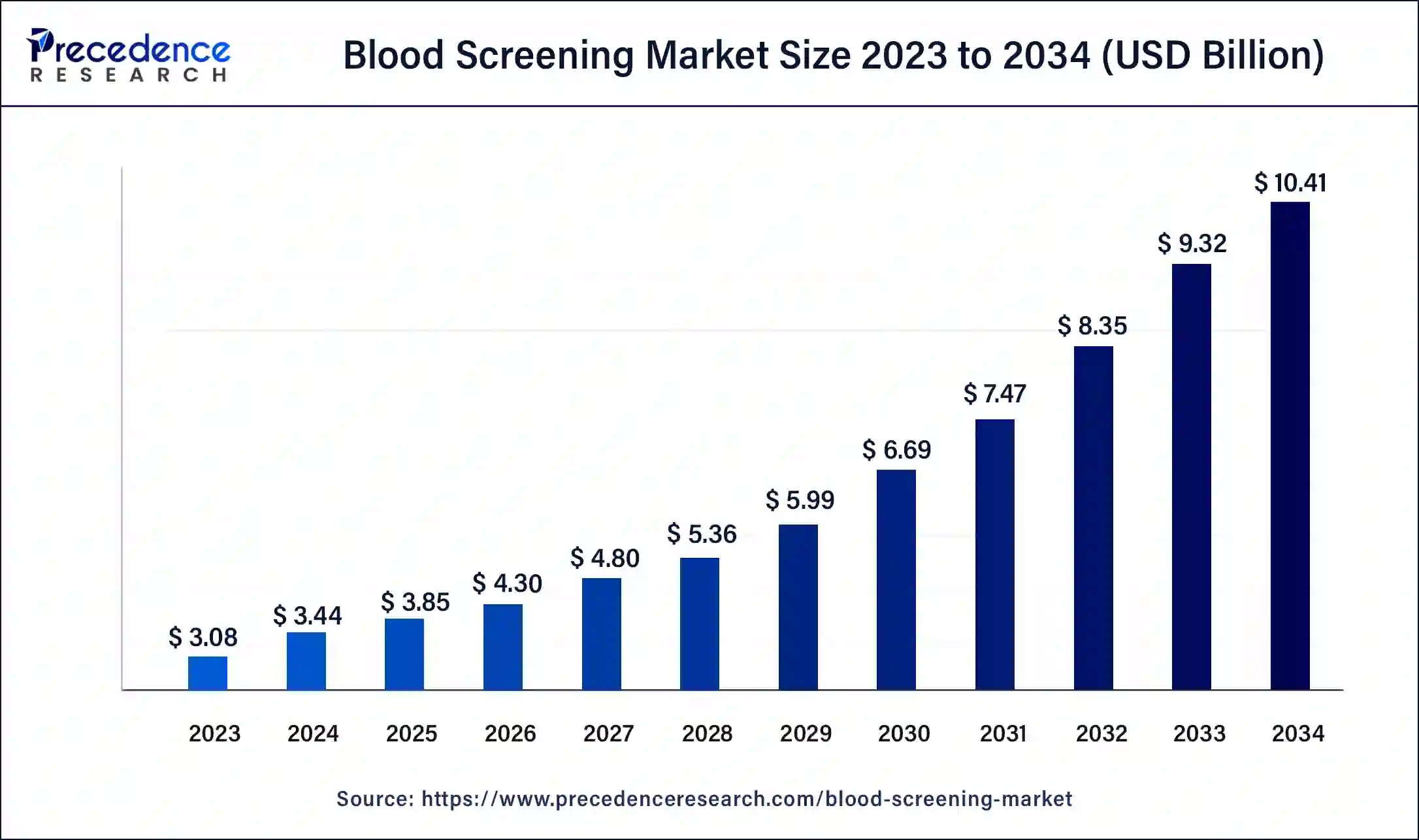
Blood Screening Market Key Takeaways
- The global blood screening market was valued at USD 3.85 billion in 2025.
- It is projected to reach USD 11.5 billion by 2035.
- The blood screening market is expected to grow at a CAGR of 11.56% from 2026 to 2035.
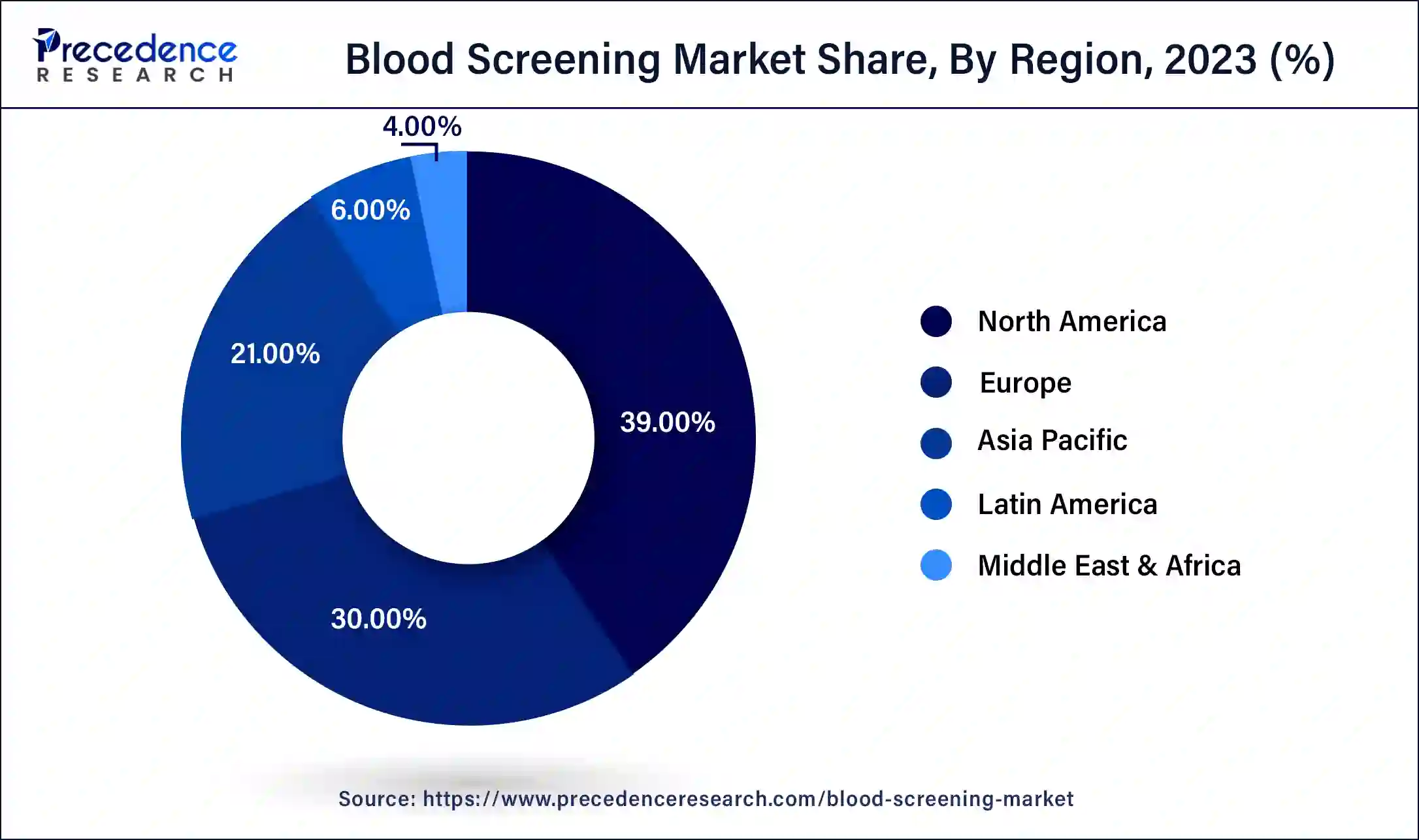
- North America contributed more than 39% of revenue share in 2025.
- Asia-Pacific is estimated to expand the fastest CAGR between 2026 and 2035.
- By technology, the NAT segment held the largest market share of 41% in 2025.
- By technology, the ELISA segment is anticipated to grow at a remarkable CAGR of 12.1% between 2026 and 2035.
- By product, the reagent segment generated over 73% of revenue share in 2025.
- By product, the instrument segment is expected to expand at the fastest CAGR over the projected period.
Market Overview
Blood screening is a vital medical procedure involving the analysis of blood samples to detect and pinpoint various health conditions and irregularities. This diagnostic method furnishes valuable insights into an individual's overall health, aiding in the early identification, prevention, and management of diseases. It encompasses the examination of blood cell counts, the identification of infectious agents like viruses and bacteria, and the measurement of different chemical levels, including cholesterol and glucose.
The significance of blood screening lies in its role as a comprehensive health evaluation tool, enabling healthcare professionals to spot potential issues before symptoms manifest. Routine blood screening is indispensable for diagnosing conditions such as anemia, diabetes, infections, and various cardiovascular diseases. Ongoing technological advancements and the development of specialized blood tests continually enhance the precision and efficiency of screening methods, contributing to improved patient outcomes. Regular blood screening is foundational in proactive healthcare, facilitating timely interventions and fostering overall health and wellness.
Blood Screening Market Growth Factors
- Technological Advancements: Continuous innovations in blood screening technologies, such as advanced analyzers and diagnostic tools, drive market growth by enhancing accuracy and efficiency.
- Rising Disease Awareness: Increasing awareness about the importance of early disease detection fuels demand for blood screening, promoting preventive healthcare practices.
- Aging Population: As the global population ages, the prevalence of diseases that require blood screening, such as cardiovascular conditions and cancers, is on the rise, contributing to market expansion.
- Government Initiatives: Supportive government initiatives and healthcare policies promoting regular blood screening contribute to market growth by encouraging broader adoption.
- Global Pandemic Preparedness: Events like the COVID-19 pandemic underscore the critical role of blood screening in managing infectious diseases, stimulating investments and advancements in the sector.
- Emerging Markets: The expansion of healthcare infrastructure in emerging markets creates new opportunities for blood screening services and products.
- Increasing Healthcare Expenditure: Growth in healthcare spending globally facilitates the adoption of advanced blood screening technologies and services.
- Point-of-Care Testing: The growing demand for point-of-care blood screening solutions accelerates market growth by providing rapid and convenient diagnostic options.
- Personalized Medicine: The trend toward personalized medicine increases the need for precise diagnostic tools, driving advancements and growth in the blood screening market.
- Integration of Artificial Intelligence (AI): Incorporating AI in blood screening processes enhances data analysis, interpretation, and diagnostic accuracy, contributing to market expansion.
- Preventive Healthcare Practices: Growing emphasis on preventive healthcare encourages regular health check-ups, including blood screening, boosting market demand.
- Increased Funding for Research: Investments in research and development activities focused on improving blood screening technologies foster market growth and innovation.
- Rising Incidence of Chronic Diseases: The global increase in chronic diseases necessitates frequent blood screening, sustaining market growth.
- Home-Based Testing Kits: The availability of user-friendly blood screening kits for home use contributes to market growth by promoting accessibility and convenience.
- Awareness Campaigns: Public awareness campaigns about the significance of blood screening drive demand and market growth.
- Expanded Applications: Diversification of blood screening applications beyond routine check-ups, such as genetic screening, expands the market's scope.
- Collaborations and Partnerships: Collaborative efforts between healthcare organizations and industry players foster innovation and drive market expansion.
- Regulatory Support: Stringent regulatory frameworks ensure the quality and safety of blood screening products, fostering trust and market growth.
- Remote Patient Monitoring: Increasing adoption of remote monitoring technologies amplifies the need for efficient blood screening, supporting market growth.
- Patient-Centric Approach: A shift toward patient-centric healthcare models emphasizes personalized diagnostics, stimulating growth in the blood screening market.
- Abbott Laboratories' annual revenue for 2021 was $43.075 billion, which was a 24.47% increase from 2020. In 2020, Abbott's revenue was $34.608 billion, which was an 8.48% increase from 2019.
Market Scope
| Report Coverage | Details |
| Growth Rate from 2026 to 2035 | CAGR of 11.7% |
| Market Size in 2025 | USD 3.85 Billion |
| Market Size in 2026 | USD 4.3 Billion |
| Market Size by 2035 | USD 11.5 Billion |
| Largest Market | North America |
| Base Year | 2025 |
| Forecast Period | 2026 to 2035 |
| Segments Covered | By Technology and By Product |
| Regions Covered | North America, Europe, Asia-Pacific, Latin America, and Middle East & Africa |
Market Dynamics
Driver
Increasing disease prevalence and government initiatives
Increasing disease prevalence and government initiatives play pivotal roles in surging the demand for blood screening in the healthcare market. As the global burden of diseases continues to rise, especially with the growing incidence of cardiovascular conditions, cancers, and infectious diseases, there is an escalating need for early detection and proactive healthcare measures. This trend is a key driver for the blood screening market, as routine screenings enable timely intervention and management of these health issues. Government initiatives further amplify market demand by promoting regular health check-ups and implementing screening programs.
Supportive healthcare policies, public health campaigns, and strategic investments contribute to creating awareness and facilitating easier access to blood screening services. Governments worldwide recognize the significance of preventive healthcare, and their proactive measures not only address the rising disease prevalence but also bolster the overall growth and accessibility of blood screening, thereby enhancing public health outcomes.
Restraint
Ethical concerns and infrastructure challenges
Ethical concerns and infrastructure challenges pose significant restraints to the blood screening market. Ethical considerations, particularly regarding the use of genetic information, may lead to hesitancy among individuals, impacting their willingness to undergo certain blood screening tests. Concerns about potential discrimination based on screening results further contribute to reservations about participating in screening programs. Infrastructure challenges, especially in developing regions, hinder the seamless integration of advanced blood screening technologies. Inadequate healthcare infrastructure limits accessibility to screening services, particularly in rural areas where the availability of sophisticated diagnostic tools and trained healthcare professionals may be scarce. The lack of proper infrastructure also impedes the efficient collection, processing, and analysis of blood samples, affecting the overall effectiveness of screening programs. Addressing these ethical and infrastructural barriers is essential for ensuring equitable access to blood screening services and realizing the full potential of early disease detection and prevention.
Opportunity
Point-of-care testing expansion and disease-specific screening programs
The expansion of point-of-care testing (POCT) in the blood screening market creates significant opportunities by addressing the growing demand for convenient and immediate diagnostics. POCT enables real-time results, reducing turnaround times and facilitating quicker decision-making in healthcare settings. This trend opens avenues for increased accessibility to blood screening, especially in remote or resource-limited areas, and enhances patient engagement by providing timely and on-the-spot diagnostic information. Furthermore, the development of disease-specific screening programs is a strategic opportunity in the blood screening market. Tailoring screening initiatives to target specific diseases, whether genetic disorders or infectious diseases, allows for more precise and targeted diagnostic approaches. This not only enhances the effectiveness of blood screening but also contributes to a proactive healthcare approach, emphasizing early detection and intervention. The customization of screening programs aligns with the broader trend of personalized medicine, presenting opportunities for specialized diagnostic services that cater to the unique needs of individuals and specific health conditions.
Segmental Insights
Technology Insights
In 2024, the NAT segment had the highest market share of 41% on the basis of the technology. The Nucleic Acid Amplification Test (NAT) segment in the blood screening market involves the detection of genetic material, providing highly sensitive and specific results. NAT has gained prominence due to its effectiveness in detecting infections, including HIV and hepatitis, with improved accuracy. As a trend, the increasing demand for early detection of infectious diseases and the continuous advancements in molecular diagnostics contribute to the growth of the NAT segment. Its ability to identify infections during the early stages enhances its utility in blood screening protocols, supporting comprehensive healthcare initiatives.
The ELISA segment is anticipated to expand at a significant CAGR of 12.1% during the projected period. Enzyme-Linked Immunosorbent Assay (ELISA) is a widely used technology in the blood screening market. It involves detecting antibodies, antigens, or proteins using an enzyme reaction. ELISA's high sensitivity and specificity make it valuable for disease detection and monitoring. A trend in ELISA technology involves continuous refinements, enhancing its precision and efficiency. Advancements such as automated ELISA systems and multiplexing capabilities are gaining prominence, allowing simultaneous analysis of multiple biomarkers. These trends contribute to the overall growth and utility of ELISA in blood screening applications.
Product Insights
According to the product, the reagent segment has held a 73% revenue share in 2025. In the blood screening market, the reagent segment encompasses essential substances used in diagnostic tests to elicit specific reactions for accurate results. Reagents play a pivotal role in various blood screening assays, including those for infectious diseases and blood typing. A notable trend in this segment involves continuous advancements in reagent formulations to enhance sensitivity, specificity, and overall test performance. Manufacturers are focusing on developing innovative reagents that contribute to the precision and efficiency of blood screening processes, meeting the increasing demand for reliable diagnostic solutions in healthcare settings.
The instruments segment is anticipated to expand fastest over the projected period. In the blood screening market, the instruments segment refers to the hardware and equipment used for analyzing blood samples. This includes sophisticated analyzers, diagnostic tools, and testing devices essential for conducting various blood screening tests. A notable trend in this segment involves continuous technological advancements, leading to the development of high-throughput analyzers and point-of-care testing instruments. These innovations aim to enhance the accuracy, efficiency, and accessibility of blood screening, catering to the growing demand for rapid diagnostics and improving overall healthcare outcomes.
Regional Insights
North America has Dominated the largest revenue share of 39% in 2025
North America has held the largest revenue share of 39% in 2025. North America holds a major share in the blood screening market due to a combination of advanced healthcare infrastructure, high healthcare expenditure, and robust regulatory frameworks. The region's emphasis on preventive healthcare and routine screenings, coupled with a well-established network of diagnostic laboratories and healthcare facilities, contributes to market dominance. Additionally, ongoing technological innovations and the presence of key market players further propel North America as a leader in blood screening, ensuring widespread adoption of advanced screening technologies and services.
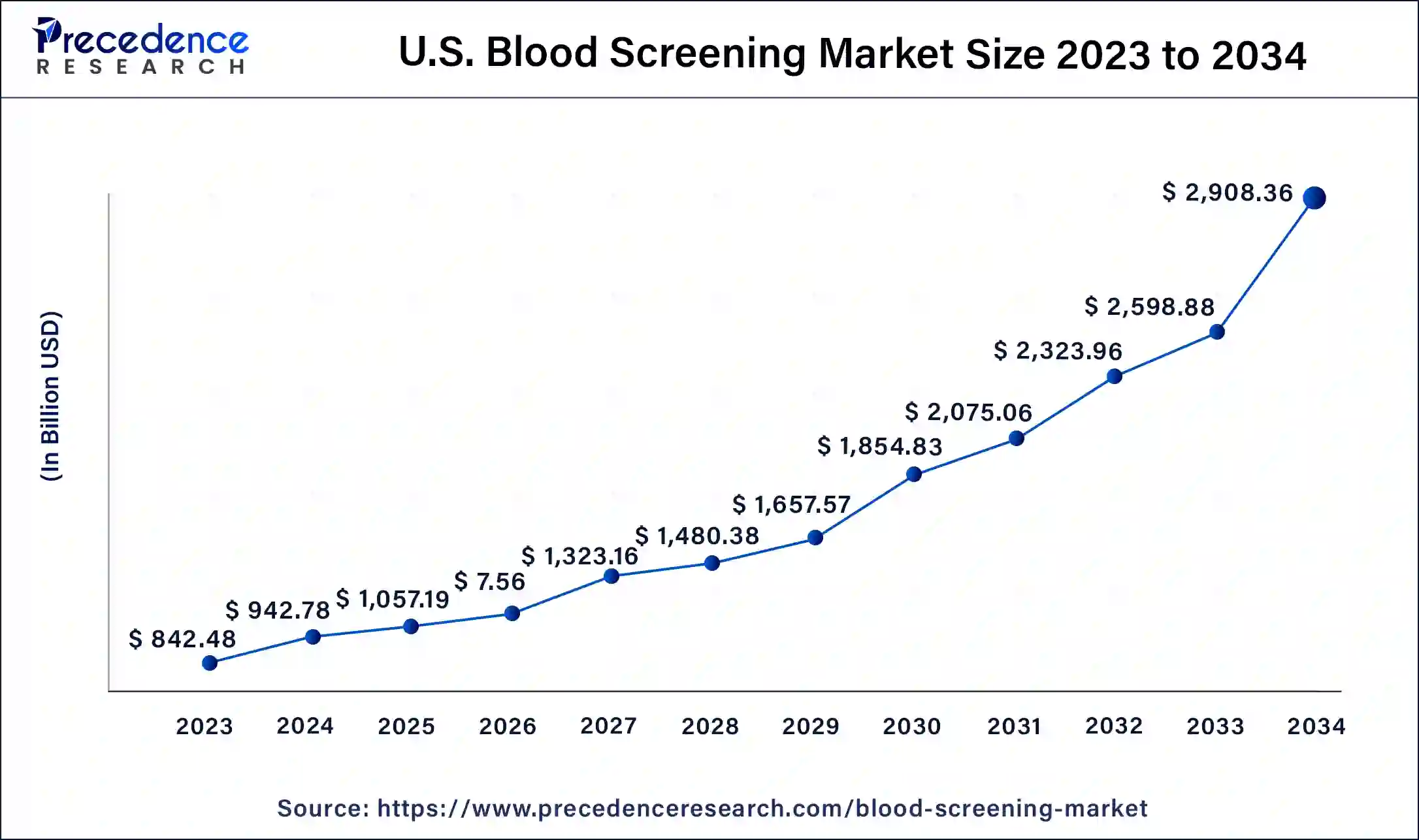
U.S. Blood Screening Market Size and Growth 2026 to 2035
The U.S. is the major contributor to the North American market. The country's growth is attributed to the advanced presence of diagnostic infrastructure, rising volume of blood donations, heavy R&D investments by major market leaders, strict FDA safety regulations, increasing demand for advanced screening methods, and growing adoption of automated Nucleic Acid Testing (NAT) and Next-Generation Sequencing (NGS). The strict safety mandates enforced by agencies like the FDA ensure high safety standards for transfusions, necessitating advanced screening for transfusion-transmissible infections such as HCV, HIV, and HBV. Additionally, an increase in organ transplants, surgeries, and treatments for chronic conditions is expected to bolster the demand for advanced blood screening in the country.
The U.S. blood screening market size was estimated at USD 1.06 billion in 2025 and is predicted to be worth around USD 3.22 billion by 2035, at a CAGR of 11.75% from 2026 to 2035.
Asia-Pacific is estimated to observe the fastest expansion. Asia-Pacific dominates the blood screening market due to its substantial population, rising healthcare awareness, and increasing prevalence of diseases. The region experiences robust economic growth, enabling greater healthcare investments. Moreover, government initiatives promoting preventive healthcare and the implementation of advanced technologies contribute to the market's expansion. The growing demand for diagnostic services, coupled with improving healthcare infrastructure, positions Asia-Pacific as a significant player in the blood screening market, with the potential for further growth and innovation in the coming years.
What Drives the Blood Screening Market Growth in Europe?
Europe is expected to grow at a notable CAGR in the foreseeable future, driven by stringent regulatory frameworks, advanced healthcare infrastructure, and a strong focus on transfusion safety. Countries like Germany emphasize automation and quality assurance, boosting the adoption of advanced screening technologies and ensuring high compliance with safety standards.
Germany Market Trends
Germany's market is driven by strong regulatory compliance, advanced healthcare infrastructure, and emphasis on quality assurance. Adoption of innovative technologies and rigorous testing protocols ensures high safety standards, while government-led health initiatives and rising awareness of blood-borne diseases continue to boost demand.
China Market Trends
China's market is expanding rapidly due to large-scale blood donation programs, the growing prevalence of infectious diseases, and strong government support. Increasing automation, centralised testing systems, and rising healthcare investments are accelerating the adoption of advanced screening technologies like NAT and AI-based diagnostics.
How is Latin America Advancing in the Blood Screening Market?
Latin America is considered to be a significantly growing area, due to national blood safety programs and improving healthcare systems. Brazil plays a key role in expanding screening initiatives, though budget constraints limit widespread adoption of advanced technologies, especially in rural areas.
Brazil Market Trends
Brazil is witnessing steady growth driven by expanding national blood safety programs and rising demand for screening services. Increasing adoption of advanced technologies such as nucleic acid testing and next-generation sequencing, along with improving healthcare infrastructure, supports market expansion despite cost constraints.
What Factors are Boosting the Blood Screening Market in the Middle East & Africa?
The Middle East & Africa market is expected to grow at a considerable CAGR in the upcoming period, driven by improving healthcare infrastructure and rising demand for safe blood transfusions. South Africa leads regional growth, supported by increasing investments, international health initiatives, and the gradual adoption of advanced screening technologies.
South Africa Market Trends
South Africa leads the market in the MEA region with growing investments in healthcare infrastructure and diagnostic services. The rising prevalence of infectious diseases and increasing awareness of safe blood transfusion practices are driving demand, alongside the gradual adoption of advanced screening technologies.
Supply Chain Analysis-Blood Screening Market
- R&D: Research and development involve advanced blood screening assays, diagnostic platforms, reagents, and molecular testing technologies. Organizations conduct pathogen detection and biomarker identification and improve screening accuracy to ensure blood safety.
- Clinical Trials and Regulatory Approvals: Blood screening products undergo analytical validation, clinical evaluation, performance testing, and regulatory review before becoming commercially available. Compliance with standards and requirements guarantees blood banks and transfusion services that they are accurate, reliable, safe, and suitable.
- Distributed in Hospitals, Pharmacies: Sent in special healthcare, lab, and diagnostics supply chains to blood banks, hospitals, labs, and testing centers. Enabling product quality and continuity of screening operations through distribution of temperature-controlled logistics, inventory management, and delivery.
- Patient Support and Services: Testing information, Information about results, Donor services, counseling, and follow-up services, if necessary, are patient-facing. Screens incorporate efficient legacy and clinical reference on screen, and to/from healthcare providers.
Competitive Landscape
The blood screening market consists of global blood diagnostic companies as well as life sciences companies providing automated blood screening, molecular and immunoassay technologies. Key players are Abbott Laboratories, Roche Diagnostics, Bio-Rad Laboratories, Thermo Fisher Scientific, and Ortho Clinical Diagnostics, which boast good market shares in relevant markets. Product innovation, superior testing platforms, automation, regulatory approval, and company-owned broad networks of laboratories all help companies compete.
Major companies are broadening their footprint over the world, forming strategic partnerships, investing in molecular and multiplex testing and blood banks/transfusion centre integrated solutions. Tight regulations, changing infectious disease threats, price pressures and advances in technology play a significant role in competitive dynamics. Highly sensitive, reliable, automated, and high-throughput blood screening technologies are gaining in popularity and will continue to grow in demand, generating new competition and growth opportunities.
Company Profiles - Blood Screening Market
Abbott Laboratories
HQ: Abbott Park, Illinois, U.S.
Founded: 1888
Ownership: Public
- Business Overview: Abbott Laboratories is a worldwide health care organization developing, manufacturing, and marketing diagnostic, medical device, nutritional, and pharmaceutical products. The diagnostics business encompasses technologies for the detection of infectious diseases, blood screening, transfusion medicine, and blood banks.
- Products: Alinity i, Alinity s, ARCHITECT, and molecular and immunoassay-based blood screening solutions.
- Geographic Presence: Abbott has a geographic presence in more than 160 countries around the world. It's prevalent worldwide in North America, Europe, Asia-Pacific, Latin America, the Middle East, and Africa.
- Revenue: The value of international sales in FY 2025 was cpmc$63.8bn.
- Recent Development: In 2025–2026, the laboratory continued to introduce and roll out new Advanced Alinity Assay and Molecular Diagnostic tests to further drive laboratory automation and the efficiency of the laboratory's assays.
- Key Strategies: Investigate lab automation diagnostics, develop lab solutions, and define new diagnostics / automate diagnostics.
Roche Diagnostics
HQ: Basel, Switzerland
Founded: 1896
Ownership: Public
- Business Overview: Roche Diagnostics is a worldwide healthcare diagnostics provider offering in-vitro diagnostics, molecular diagnostics, and laboratory solutions. Its technologies contribute to the fields of disease identification, blood screening, medical testing, bloodstream, and health personalization.
- Products: Cobas systems, immunoassays (Elecsys), molecular diagnostics platforms and blood screening assays, as well as laboratory automation.
- Geographic Presence: Roche sells its products in over 100 countries around the globe. It has six geographic regions that include: Europe, North America, Asia-Pacific, Latin America, the Middle East, and Africa.
- Revenue: Roche Diagnostics had sales of CHF 13.9 billion in 2025.
- Recent Development: Roche has kept on creating new diagnostic platforms and enhance its molecular diagnostic armamentarium through technology development and strategic partnerships. New projects mainly concentrate on three main areas of infectious disease identification – fast identification of infectious diseases, integrated testing, and automation.
- Key Strategies: Innovation in diagnostics and automation, molecular testing, digitalization, strategic partnerships, and expansion of personalized healthcare solutions.
Bio-Rad Laboratories, Inc.
HQ: Hercules, California, U.S.
Founded: 1952
Ownership: Public
- Business Overview: Bio-Rad is a world leader in developing and manufacturing products for life science research and the clinical diagnostics market. It has worldwide research, development, manufacturing,g and sales facilities to support hospitals, research laboratories, research institutions, and healthcare providers.
- Products: Blood typing reagents, Immunocompatibility systems, Quality control products, Diagnostic testing solutions, Immunohematology systems, IH-500 and IH-1000.
- Geographic Presence: Bio-Rad is represented on six continents—including more than 35 countries. It sells its products in the United States, Canada, Singapore, China, India, France, Germany, Hungary, South Africa, and Saudi Arabia.
- Revenue: FY 2025 revenue grew to $2.58 billion from FY 2024's $2.56 billion.
- Recent Development: In 2026, Bio-Rad introduced new products in the fields of antibody products and laboratory testing solutions, extending its footprint in the diagnostics and life sciences market. The company constantly builds partnerships and
Recent Developments
- In March 2026, Freenome, an early cancer detection company developing blood-based screening tests, announced initial development data for its investigational lung cancer screening test. The data demonstrate the potential of a multiomics approach that combines DNA methylation analysis and protein markers to detect lung cancer in high-risk individuals. (Source: https://www.prnewswire.com)
- In May 2026, Helio Genomics announced a strategic commercial partnership with Syneos Health, a leading fully integrated biopharmaceutical solutions organization. The collaboration is specifically designed to harness Syneos Health's extensive commercialization expertise, national field deployment capabilities, and proven ability to engage healthcare providers (HCPs) to drive awareness and adoption of HelioLiver, Helio Genomics' groundbreaking blood-based test for the early detection of hepatocellular carcinoma (HCC), the most common form of liver cancer. (Source: https://www.prnewswire.com)
- In February 2026, ClearNote Health announced the launch of its enhanced Avantect Pancreatic Cancer Test, which delivers improved detection performance for patients at elevated risk of pancreatic cancer. The updated blood-based test achieved 82.6% sensitivity and 97.5% specificity, with early-stage (I-II) sensitivity exceeding 76%.
(https://clpmag.com) - In December 2025, Octave Bioscience formed a partnership with Quest Diagnostics that allowed its MSDA test to be made available to more people with multiple sclerosis. Through the partnership, the test was made available throughout the country via Quest's large network.
(https://multiplesclerosisnewstoday.com)
Segments Covered in the Report
By Technology
- Nucleic Acid Amplification Test (NAT)
- ELISA
- Chemiluminescence Immunoassay (CLIA) and Enzyme Immunoassay (EIA)
- Next Generation Sequencing
- Western Blotting
By Product
- Reagent
- Instrument
By Geography
- North America
- Europe
- Asia-Pacific
- Latin America
- Middle East and Africa
For inquiries regarding discounts, bulk purchases, or customization requests, please contact us at sales@precedenceresearch.com
Frequently Asked Questions





Ask For Sample
No cookie-cutter, only authentic analysis – take the 1st step to become a Precedence Research client
 Get a Sample
.webp)



 sales@precedenceresearch.com
 Schedule a Meeting
