



Brain Pacemaker Market Size, Companies, Share, Patient Volume, Treatment Adoption Rates, Pricing Analysis, Regulatory Landscape, Competitive Positioning, and Demand Forecast
Brain Pacemaker Market (By Device Type: Single-Channel Brain Pacemaker, Next-Generation Neurostimulator Systems; By Implantation Type: Invasive, Minimally Invasive, Non-Invasive; By Indication: Parkinsons Disease, Epilepsy, Other Neurological Disorders; By Power Source: Rechargeable Implantabl, Non-Rechargeable Implantable; By End User: Hospitals, Neurology Clinics / Specialty Clinics, Academic & Research Institutes) - Global Industry Analysis, Size, Trends, Leading Companies, Regional Outlook, and Forecast 2026 to 2035
Source: https://www.precedenceresearch.com/brain-pacemaker-market
 Get a Sample
 Table Of Content


What is the Brain Pacemaker Market Size?
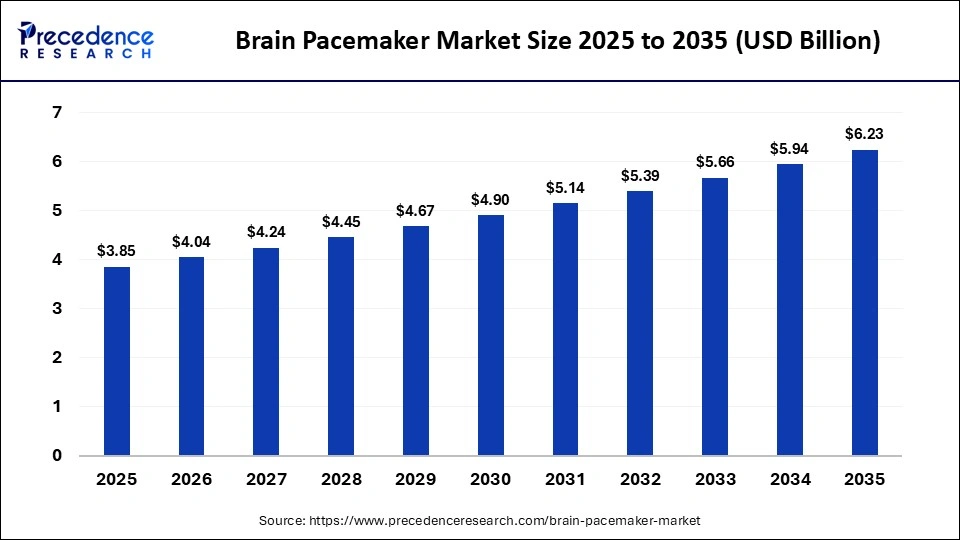
The global brain pacemaker market size was calculated at USD 3.85 billion in 2025 and is predicted to increase from USD 4.04 billion in 2026 to approximately USD 6.23 billion by 2035, expanding at a CAGR of 4.93% from 2026 to 2035. The increasing prevalence of neurological disorders and advancements in neuromodulation technologies drive the market.
Market Highlights
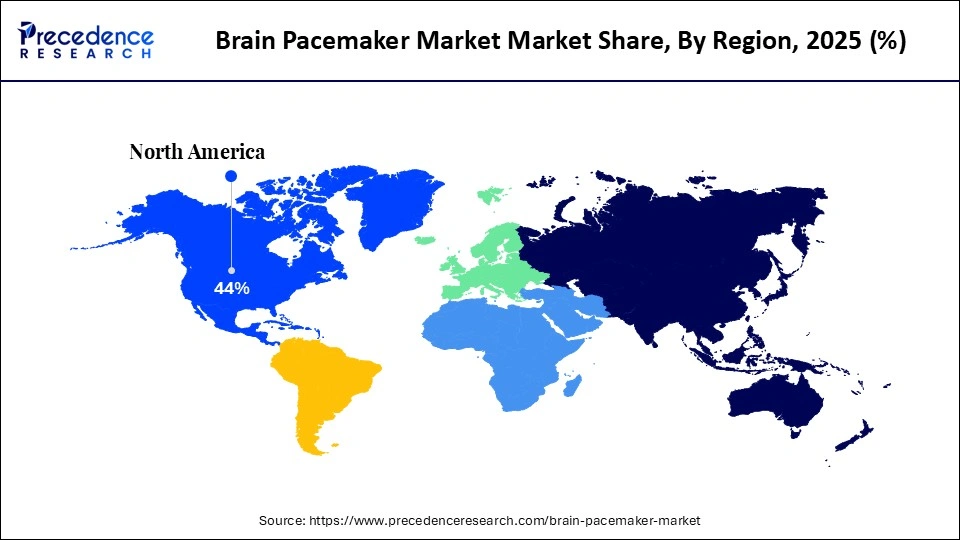
- North America dominated the global market with the largest market share of 44% in 2025.
- The Asia Pacific is expected to grow at the fastest CAGR in the market during the forecast period.
- By device type, the dual-channel brain pacemaker segment held a dominant position in the market in 2025.
- By device type, the multi-channel brain pacemaker segment is expected to grow at the fastest pace in the market between 2026 and 2035.
- By implantation type, the invasive segment accounted for a considerable revenue share in the market in 2025.
- By implantation type, the minimally invasive segment is expected to grow at the fastest rate over the studied period.
- By indication, the Parkinson's disease segment led the global market in 2025.
- By indication, the epilepsy segment is expected to expand rapidly in the market in the coming years.
- By power source, the rechargeable implantable segment held the market share of 60% in 2025.
- By power source, the non-rechargeable implantable segment is expected to witness the fastest growth over the forecast period.
- By end user, the hospitals segment dominated the global market in 2025.
- By end user, the neurology clinics/specialty clinics segment is expected to grow at the highest CAGR between 2026 and 2035.
What are the Major Factors Driving the Brain Pacemaker Market
The brain pacemaker market is experiencing robust growth, driven by the rising prevalence of neurological and movement disorders worldwide. Increasing rates of conditions such as Parkinson's disease, epilepsy, dystonia, and essential tremor have created a greater need for advanced therapeutic interventions capable of effectively managing chronic neurological symptoms. Additionally, the growing global aging population is leading to higher diagnosis rates of neurodegenerative disorders, expanding the pool of potential patients. Greater awareness among healthcare professionals about the clinical benefits of deep brain stimulation (DBS) has further contributed to its adoption across hospitals and specialized clinics.
How is AI Integration Influencing the Brain Pacemaker Market?
Artificial intelligence (AI) is revolutionizing the brain pacemaker market by enhancing device performance, supporting clinical decision-making, and improving patient outcomes. AI enables better symptom control, minimizes side effects, and optimizes energy consumption. In device development, AI is applied in signal processing, pattern recognition, and predictive modeling, helping manufacturers design more precise and effective neuromodulation systems. In clinical practice, AI-driven data analytics assist clinicians in optimizing programming settings, monitoring disease progression, and personalizing treatment to each patient's needs, ultimately improving the overall efficacy of therapy.
Major Market Trends
- Rising Clinical Adoption of DBS Therapies: Deep brain stimulation (DBS) is gaining wider adoption as global clinical evidence demonstrates its effectiveness in treating Parkinson's disease, epilepsy, and other complex neurological and movement disorders.
- Minimally Invasive Implantation: The growing demand for less invasive surgical procedures is transforming DBS implantation, reducing recovery time, hospital stays, and overall surgical risks.
- Rechargeable Implantable Devices: The use of rechargeable brain pacemakers is increasing due to their longer lifespan, fewer replacement surgeries, and enhanced patient convenience.
- Expansion of Neurology Centers: The growth of specialized neurology clinics and outpatient centers improves patient access to treatment and increases the adoption of brain pacemaker therapies.
- Innovation and Next-Generation Devices: Advancements in clinical research, innovation, and commercialization of next-generation neuromodulation devices are being driven by rising research funding and regulatory support.
Market Scope
| Report Coverage | Details |
| Market Size in 2025 | USD 3.85 Billion |
| Market Size in 2026 | USD 4.04 Billion |
| Market Size by 2035 | USD 6.23 Billion |
| Market Growth Rate from 2026 to 2035 | CAGR of 4.93% |
| Dominating Region | North America |
| Fastest Growing Region | Asia Pacific |
| Base Year | 2025 |
| Forecast Period | 2026 to 2035 |
| Segments Covered | Device Type ,I mplantation Type, Indication, Power Source, End User, and Region |
| Regions Covered | North America, Europe, Asia-Pacific, Latin America, and Middle East & Africa |
Segment Insights
Device Type Insights
Why Did the Dual-Channel Brain Pacemaker Segment Lead the Brain Pacemaker Market?
The dual-channel brain pacemaker segment led the market while holding a dominant share in 2025. This is because dual-channel brain pacemakers provide a balance of therapeutic accuracy, programmability, and affordability, making them the preferred choice for hospitals and specialized neurological centers. Their compatibility with current surgical procedures, along with strong clinician recognition, has further driven adoption, particularly in high-volume neurology institutions. Moreover, proven clinical evidence about safety and long-term effectiveness has enhanced the confidence of the physicians as well as patient acceptance.
The multi-channel brain pacemaker segment is expected to grow at the fastest rate in the market between 2026 and 2035. This is because multi-channel brain pacemakers allow stimulation of more than one part of the brain, and they also provide more therapeutic options to complex and treatment-resistant neurological conditions. Adaptive stimulation, closed-loop systems, and artificial intelligence programming are also technological advances that are encouraging the use of multi-channel devices. These inventions allow real-time adjustment of stimulation parameters based on patient-specific neural responses, improving clinical outcomes. Furthermore, increasing investment in research & development, a growing number of clinical trials, and broader commercialization efforts are facilitating wider applications of multi-channel devices.
Implantation Type Insights
What Made Invasive the Dominant Segment in the Brain Pacemaker Market?
The invasive segment dominated the global market in 2025. This is because invasive methods provide high precision, allowing electrodes to be accurately placed in targeted areas of the brain, which delivers the greatest therapeutic benefit for neurological conditions such as Parkinson's disease and epilepsy. This level of accuracy has made invasive implantation the gold standard for complex and advanced cases requiring stable symptom control. Additionally, proven safety, durability, and long-term efficacy, supported by strong clinical evidence, have strengthened physician confidence. Major specialty care centers and hospitals, equipped with skilled neurosurgeons and advanced surgical facilities, further facilitate the adoption of invasive procedures.
The minimally invasive segment is expected to grow at the highest CAGR in the market during the forecast period. This is mainly due to the reduced risk of surgery, shorter hospital stays, and faster patient recovery associated with minimally invasive procedures. These benefits make minimally invasive implantations more appealing to patients and medical personnel. Advances in imaging technologies, robotic-assisted surgery, and precision-guided systems are enhancing the accuracy and reliability of these procedures, allowing brain pacemaker implants to be performed with greater precision. These innovations are also expanding the applicability of brain pacemakers to a broader patient population, including older adults and individuals with comorbid conditions.
Indication Insights
Why Did the Parkinson's Disease Segment Lead the Brain Pacemaker Market?
The Parkinson's disease segment led the global market with a major share in 2025. This is mainly due to the widespread use of brain pacemakers to manage motor symptoms such as tremor, rigidity, and bradykinesia in patients with advanced Parkinson's disease. Their extensive adoption has been supported by long-term clinical research demonstrating improved symptom control and enhanced quality of life. Additionally, growing awareness among neurologists and patients about the benefits of neuromodulation, along with favorable reimbursement policies and established treatment guidelines in key healthcare markets, has further reinforced the segment's market leadership.
The epilepsy segment is expected to witness the fastest growth in the market over the forecast period. A significant proportion of epilepsy patients do not achieve adequate seizure control with conventional medications, creating a strong demand for alternative therapies such as neurostimulation. Brain pacemakers help regulate abnormal brain activity, reducing both the frequency and severity of seizures. Technological advancements, including responsive and adaptive stimulation systems, are further enhancing treatment effectiveness. In addition, growing awareness among healthcare professionals and patients about device-based therapies is driving increased adoption of brain pacemakers in epilepsy care.
Power Source Insights
Why Did the Rechargeable Implantable Segment Lead the Brain Pacemaker Market?
The rechargeable implantable segment led the global market in 2025 due to its ability to minimize the need for frequent battery replacement surgeries, reducing long-term healthcare costs, patient risk, and discomfort. These systems are particularly suited for chronic neurological conditions, such as Parkinson's disease, that require prolonged stimulation. Advances in battery efficiency, reliability, and patient-friendly charging have further boosted adoption, while clinicians prefer rechargeable devices because they enable continuous, uninterrupted therapy, improving overall treatment outcomes
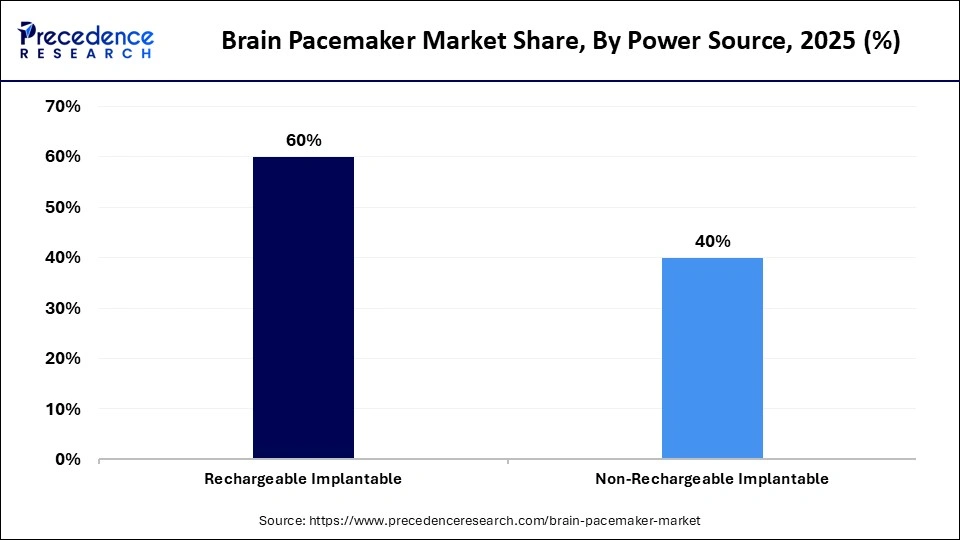
The non-rechargeable implantable segment is expected to expand rapidly in the market in the coming years due to its widespread adoption, particularly among elderly patients or those who may have difficulty managing regular device charging. These systems offer reliable performance with minimal patient involvement, making them well-suited for regions with limited access to follow-up care. Advances in battery life have reduced the need for frequent replacements and increased clinical acceptance. Additionally, hospitals and clinics often prefer non-rechargeable devices for short-term therapy requirements or specific patient groups, further driving their adoption.
End-User Insights
Why Did the Hospitals Segment Lead the Brain Pacemaker Market?
The hospitals segment held a major revenue share in the market in 2025. This is because hospitals are equipped with advanced surgical equipment, imaging systems, and interdisciplinary clinical expertise, making them the primary centers for complex implantations. They also serve as referral hubs for advanced-stage neurological disorders, treating patients who require device-based therapies. A high patient volume, combined with post-surgery monitoring and rehabilitation services, further strengthens their market leadership. Additionally, favorable reimbursement policies and government incentives for hospital-based neurological treatments have contributed to a higher number of procedures.
The neurology clinics/specialty clinics segment is expected to grow at the fastest CAGR over the forecast period. These clinics offer specialized expertise, shorter waiting times, and personalized treatment plans, making them increasingly attractive to patients. Advances in minimally invasive implantation techniques and remote patient monitoring have enabled clinics to deliver brain pacemaker therapies more efficiently. Furthermore, the growing number of specialized neurologists has expanded patient access to device-based treatments. The segment's growth is also supported by cost efficiencies and streamlined care delivery models, particularly in urban and semi-urban regions.
Region Insights
How Big is the North America Brain Pacemaker Market Size?
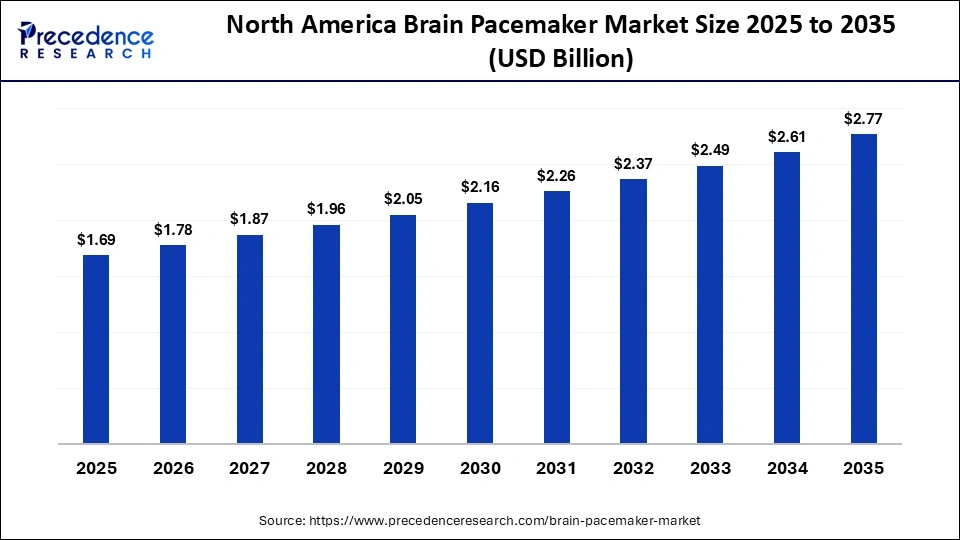
The North America brain pacemaker market size is estimated at USD 1.69 billion in 2025 and is projected to reach approximately USD 2.77 billion by 2035, with a 5.07% CAGR from 2026 to 2035.
What Made North America the Dominant Region in the Global Brain Pacemaker Market?
North America dominated the global brain pacemaker market by capturing the largest share in 2025. This leadership is driven by a well-developed healthcare infrastructure and high adoption of advanced neuromodulation technologies. The region also experiences a high prevalence of neurological disorders, including Parkinson's disease, epilepsy, and essential tremor, creating significant demand for brain pacemaker therapies. Highly equipped health institutions, a large pool of skilled neurosurgeons, and advanced diagnostic technologies have facilitated early adoption of device-based treatments. Additionally, favorable reimbursement policies and streamlined regulatory approvals, particularly in the U.S., have further supported the uptake of next-generation brain pacemaker systems.
What is the Size of the U.S. Brain Pacemaker Market?
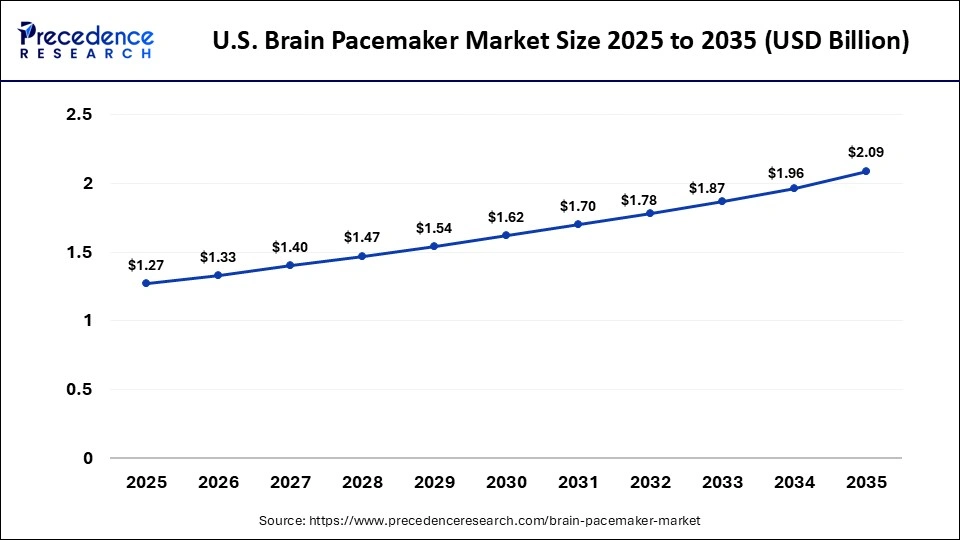
The U.S. brain pacemaker market size is calculated at USD 1.27 billion in 2025 and is expected to reach nearly USD 2.09 billion in 2035, accelerating at a strong CAGR of 5.11% between 2026 and 2035.
U.S. Market Analysis
The U.S. brain pacemaker market is growing due to the high prevalence of neurological disorders such as Parkinson's disease, epilepsy, and essential tremor, which drives demand for advanced neuromodulation therapies. Well-established healthcare infrastructure, access to skilled neurosurgeons, and sophisticated diagnostic technologies enable early adoption of brain pacemaker treatments. Additionally, favorable reimbursement policies and efficient regulatory pathways support the uptake of next-generation devices, further fueling market growth.
Why is Asia Pacific Undergoing the Fastest Growth in the Brain Pacemaker Market?
Asia Pacific is expected to grow at the fastest CAGR in the market during the forecast period. This is mainly due to the rising healthcare expenditure in emerging economies and increasing awareness of neurological disorders, which are driving demand for advanced treatment options. Additionally, aging populations and improved diagnostic capabilities are contributing to a steady rise in diagnosed cases of Parkinson's disease and epilepsy in countries such as China, India, and Japan. Market growth is further supported by the expansion of hospital networks, enhanced neurosurgical expertise, and greater access to advanced medical equipment across the region.
Japan Market Analysis
Japan is a major contributor to the brain pacemaker market within Asia Pacific. This is due to its advanced healthcare infrastructure, high prevalence of neurological disorders, and early adoption of innovative neuromodulation technologies. Additionally, skilled neurosurgeons, favorable reimbursement policies, and strong government support for medical device innovation have enabled widespread use of brain pacemakers, particularly for conditions like Parkinson's disease and epilepsy.
Who are the Major Players in the Global Brain Pacemaker Market?
The major players in the brain pacemaker market include Medtronic, Boston Scientific Corporation, Abbott Laboratories, LivaNova PLC, NeuroPace Inc., Aleva Neurotherapeutics SA, Functional Neuromodulation Ltd., Bioinduction Ltd,. SceneRay Corporatio, NeuroSigma, Inc., Sapiens Steering Brain Stimulatio, Synapse Biomedical Inc, NeuroPace, Inc., Aleva Neurotherapeutics, Beijing Pins Medical Co., Ltd. Renishaw plc, Neuronetics, Inc., Zynex NeuroDiagnostic, Nexstim Plc, Magstim Company Limited
Recent Developments
- In February 2025, Medtronic was approved by the U.S. FDA to use its BrainSense Adaptive DBS system, which helps to improve therapy customization in Parkinson's disease patients. The approval was a big step in the development of adaptive neuromodulation technology to be used worldwide.(Source: https://news.medtronic.com)
- In September 2024, Abbott began the TRANSCEND clinical trial to test its deep-brain stimulation system to treat treatment-resistant depression. The research broadened the range of possible DBS applications to movement disorders to psychiatric indications.(Source: https://www.prnewswire.com)
Segments Covered in the Report
By Device Type
- Single-Channel Brain Pacemaker
- Dual-Channel Brain Pacemaker
- Multi-Channel Brain Pacemaker
- Next-Generation Neurostimulator Systems
By Implantation Type
- Invasive
- Minimally Invasive
- Non-Invasive
By Indication
- Parkinson's Disease
- Epilepsy
- Depression
- Essential Tremor
- Obsessive-Compulsive Disorder
- Chronic Pain
- Other Neurological Disorders
By Power Source
- Rechargeable Implantable
- Non-Rechargeable Implantable
By End User
- Hospitals
- Neurology Clinics / Specialty Clinics
- Home Care Settings
- Rehabilitation Centers
- Academic & Research Institutes
By Region
- North America
- Europe
- Asia-Pacific
- Latin America
- Middle East & Africa
For inquiries regarding discounts, bulk purchases, or customization requests, please contact us at sales@precedenceresearch.com
Frequently Asked Questions





Ask For Sample
No cookie-cutter, only authentic analysis – take the 1st step to become a Precedence Research client
 Get a Sample



 sales@precedenceresearch.com
 Schedule a Meeting
